
Untitled Report Snapshot

Key Players

  • Vale S.A. (Brazil)
  • Manganese Metal Company (South Africa)
  • Ntsimbintle Mining (South Africa)
  • Assmang Limited (South Africa)
  • PT Indotama Ferro Alloys (Indonesia)
  • Sakura Ferroalloys Sdn Bhd (Malaysia)
  • Tata Steel (India)
  • Cometal S.A. (Spain)
  • JFE Steel Corporation (Japan)
  • Ferroglobe PLC (United Kingdom)

Market Size

Base Year 2024
$15.73 Bn
CAGR
5.6%
Forecast 2034
$27.12 Bn

Market Segments

By Grade
  • High Carbon
  • Refined
By Application
  • Carbon Steel
  • Stainless Steel
  • Alloy Steel
  • Cast Iron
  • Others

Market Dynamics

Drivers
  • Rising steel production
  • Increasing infrastructure development
Restraints
  • Limited manganese reserves
  • Stringent environmental regulations
Opportunities
  • Rising steel production demand
  • Growing infrastructure development projects

Market Size

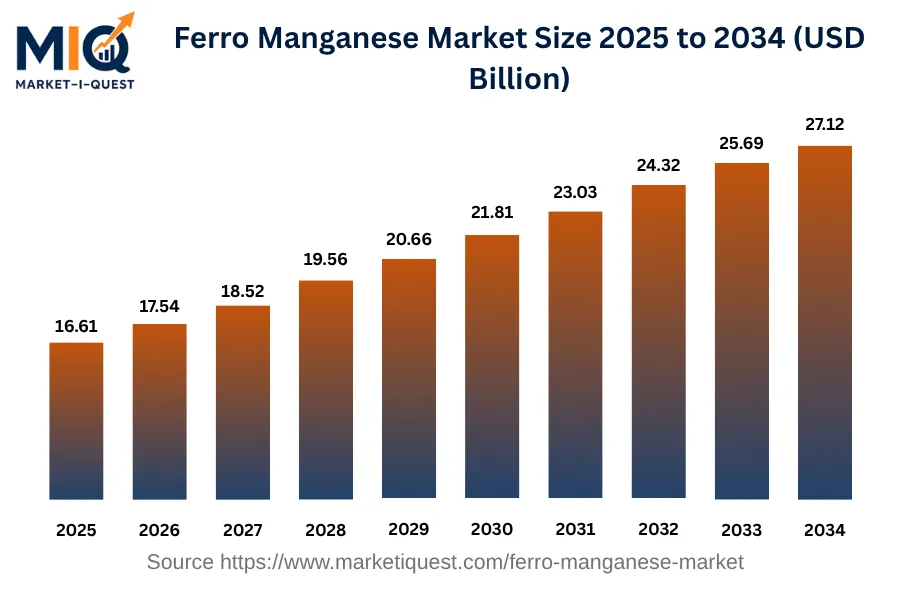
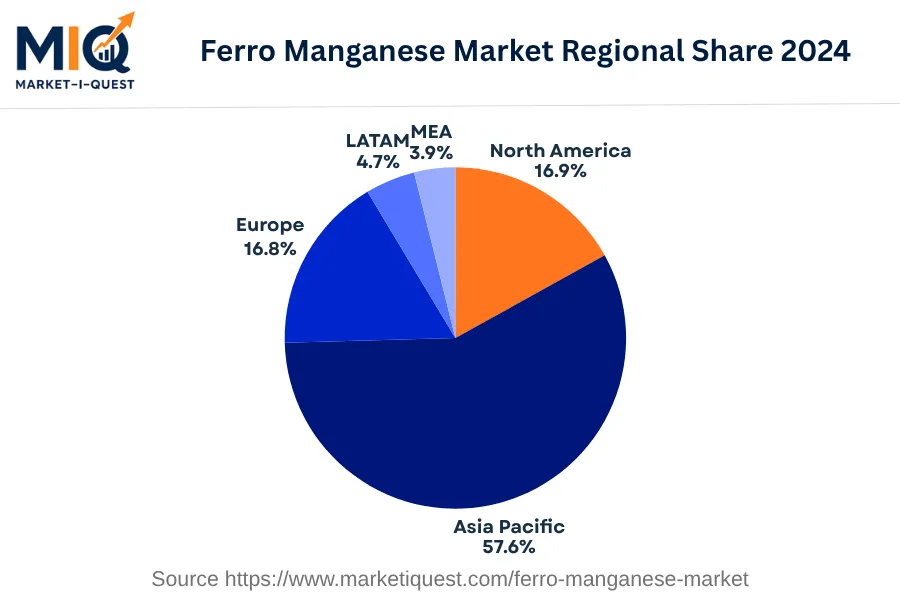
The Ferro Manganese Market was estimated to be worth $16.61 billion in 2025, and it is projected to grow to $27.12 billion by 2034, demonstrating a CAGR of 5.6%. The increase in value is substantial, considering that the market size stood at $15.73 billion only a year prior in 2024. The surge between these years and the subsequent growth until 2034 reflects the market's positive trajectory. In 2024, the Ferro Manganese Market's regional shares were distributed as follows: North America held a 16.9% share, while Asia Pacific led with a hefty 57.6%, followed closely by Europe with a 16.8% stake. Meanwhile, Lower America and Middle East & Africa had a lesser portion of the share, representing 4.7% and 3.9% respectively.

Key Takeaways

  • By Grade - High Carbon held the majority share in the Ferro Manganese Market in 2024.
  • By Application - Stainless Steel dominated accounting for a notable portion of market share in 2024.
ferro-manganese-market market size

Key Driving Factors

Strict Environment Regulations in Steel Making

Steel production, one of the main industries heavily utilizing ferro manganese, is increasingly regulated to limit environmental footprint, mainly focusing on reducing carbon emissions. Ferro manganese plays a significant role in the production of low carbon steel, reducing the reliance on traditional steel-making processes which have high carbon footprints. Steel manufacturers are turning to the use of ferro manganese, as a means to adapt to these stringent environmental regulations and protocols; in doing so, they reduce their carbon emissions significantly, ensuring regulatory compliance. In addition to aligning with emerging 'green steel' concepts, this process also ripples into enhancing the reputation of the companies among environmentally conscious consumers and stakeholders.
Rapid Infrastructure Development in Developing Countries

The ferro manganese market is experiencing substantial growth due to infrastructural development in rapidly developing economies, such as India and China. These nations have seen a significant uptick in building and construction activities in recent years. Ferro manganese, used in the manufacturing of steel, finds extensive application in these projects due to its high durability, tensile strength, and resistance to wear and tear. Thus, the demand for ferro manganese increases proportionately with the scale of infrastructure projects in these developing economies. The consequential need for more construction materials like steel directly drives the ferro manganese market, as developers procure higher volumes to meet their operational requirements in building infrastructures.

Market Evolution by Timeline

2019-2023
During this period, the demand for Ferro Manganese was largely driven by steel manufacturing industries, with major purchases coming from Asia, especially China and India. Their need for Ferro Manganese was tied directly to its role in steel production, where it brings essential properties like strength and resistance to wear and tear. Suppliers focused on enhancing manufacturing techniques to produce high-quality Ferro Manganese and meet increasing buyer demands. They faced constraints, however, linked to environmental and mining constraints. Regulations, such as China's strict pollution norms, put pressure on suppliers to utilize cleaner production methods. Commercial interactions commonly involved standard contracts with pricing influenced by market, input, and energy costs. The main risk was market volatility causing sudden changes in prices, to which most companies responded by maintaining lower inventory levels.
2024
In 2024, the market witnessed a surge in demand from emerging economies, with Latin America notoriously increasing its consumption rates. Reasons for the demand included rising urbanization rates and industrial activities requiring steel, where Ferro Manganese played a key role. Suppliers were tested by tighter regulations such as the application of a more aggressive carbon pricing mechanism. They also started piloting less energy-intensive techniques for producing Ferro Manganese. There was increased attention on forming longer-term contracts to stabilize pricing within the supply chain. The main risk faced was the high costs associated with adjusting to new production techniques. Many suppliers absorbed this by partnering with others to share costs.
2025-2029
In this period, sectors like construction and automotive showed a higher need for Ferro Manganese due to increased development activities, primarily in the Middle East and Africa. However, mining restrictions tightened, forcing suppliers to innovate in their production technologies. Several suppliers initiated pilot initiatives to utilize more eco-friendly production methods, but integration maturity was low. Increased pressure on carbon emissions influenced policy development, nudging players to adopt greener methodologies. This, in turn, reflected in pricing tendencies, with higher prices being associated with environmentally friendly products. The main risk was the low acceptance of higher prices, and some suppliers responded by offering flexible payment options.
2030-2034
The Ferro Manganese market saw an increased demand from clean energy industries during this period. The growth in renewable energy applications, particularly in Europe, called for suppliers to focus on optimizing their technologies. Suppliers were shipping products that adhered to newer industry standards focused on sustainability. There was also a notable increase in mergers between suppliers to share the costs of innovative yet expensive technologies. The trending procurement model involved more partnership contracts that factored in supplier's sustainability measures in determining prices. The key risk was ensuring the supply of clean Ferro Manganese while managing raw material prices and conservation regulations. Many companies mitigated this risk by investing in R&D to reduce dependence on traditional mining.

Future Market Outlook

Future Opportunities

Future opportunities in the ferro manganese market are emerging from both regulatory frameworks and shifting consumer preferences. In 2023, the International Energy Agency reported increased scrutiny on the carbon footprint of industrial production, leading to more stringent policies among major economies like Germany and Canada. This scrutiny encourages steel producers to seek sustainable inputs such as high-purity ferro manganese produced through less carbon-intensive processes. Concurrently, countries like India are expanding their steel production capacities which may drive the demand for ferro manganese locally, as they aim for self-sufficiency under the Atmanirbhar Bharat initiative implemented in 2020. Furthermore, with the global push towards electric vehicles, demand for high-strength steels incorporating ferro manganese is likely to rise. Companies like Tata Steel are already exploring this market adaptation. There is also a notable trend in recycling ferro alloys, as seen in operations in Japan, where companies are improving waste management practices and reintroducing ferro manganese into the production cycle. Such movements may not only improve resource efficiency but also enhance profitability in the long run. Collaborations among metallurgical firms, research institutions, and government bodies can further bolster the innovation cycle to meet evolving standards. Ultimately, these opportunities will likely define the pathways for growth and adaptation in an era of increasing environmental consciousness and technological advancement in metallurgy.

Segmentation Analysis

By Grade

The market is divided into subsegments including High Carbon and Refined. High Carbon accounted for the largest revenue share while Refined is expected to grow at the fastest CAGR during the forecast period.

Largest Revenue Share

High Carbon

Market Share Leader

The High Carbon subsegment represents the most significant portion of the market in terms of revenue. There are numerous reasons behind its leadership position. Firstly, it’s important to note the widespread use of high carbon materials in a vast array of industries, including aerospace, automotive, and construction. These high-performance industries have had large consistent demands historically due to the superior durability and strength that high carbon offers. It is often chosen predominantly due to the ability to withstand high amounts of stress without deformation. Secondly, geographical factors play a pivotal role in shaping the current market dynamics. Regions like Asia-Pacific and North America have emerging and developed economies respectively, that heavily invest in industries that require high carbon materials. Regulations and supply chain also influence the purchasing decisions, high carbon materials are more readily accessible and its production and use are often less regulated leading to an increase in procurement. Lastly, the purchasing criteria, switching costs, and channels further cement the position of the high carbon subsegment; customers often opt for tried-and-true materials rather than switching to newer, potentially unstable options.

Fastest CAGR

Refined

Forecast Period Growth Leader

The Refined subsegment, while currently not the leader in terms of revenue, shows promising signs of robust growth in the future. This growth is potentially driven by several key trends. Technological advancements are pushing breakthroughs in refining techniques, thereby improving the quality and applicability of refined materials. Increased capital expenditure in sectors such as clean energy and advanced manufacturing, which critically depend on refined materials, can lead to higher demand and growth rates. In addition, policy efforts towards greener and more sustainable industrial processes could act as catalysts for the refined materials market. Partnerships between material manufacturers and end-user industries can provide further acceleration. While significant growth is anticipated, the challenges lie integrating these refined materials within existing supply chains and overcoming customer resistance to deviate from tried and trusted materials. However, with strategic positioning and leveraging the growth catalysts, the refined subsegment could potentially outpace all other segments in growth.

By Application

The market is divided into subsegments including Carbon Steel, Stainless Steel, Alloy Steel, Cast Iron, and Others. Stainless Steel accounted for the largest revenue share while Alloy Steel is expected to grow at the fastest CAGR during the forecast period.

Largest Revenue Share

Stainless Steel

Market Share Leader

The Stainless Steel subsegment contributes the maximum share of revenue, due to its widespread usage in various applications, including construction, automotive, and machinery. With its unique stringency, resistance to corrosion, heat, and chemical damage, stainless steel remains an optimal choice across industries. This material meets strict regulatory policies globally, further boosting its adoption. Predominantly, it is procured by manufacturing industries where durability and resilience are crucial purchasing criteria. Besides, its versatile properties eliminate considerable switching costs for users, making it a preferred choice. Owing to mature distribution channels that ease its supply globally, stainless steel holds the highest revenue share in the segment, with key revenue contributions coming from industrialized regions, such as North America, Europe, and Asia-Pacific.

Fastest CAGR

Alloy Steel

Forecast Period Growth Leader

Alloy Steel is expected to be the fastest growing subsegment. Its increasing adoption is driven significantly by its superior physical properties, including enhanced strength, hardness, toughness, and wear resistance. It can be further customized to cater to unique industry needs by adding different elements, accounting for its expanding market. The evolving technology scenario facilitates more efficient extraction and processing methods, reducing capex and making Alloy Steel more competitive. The market could further gain from favorable government policies encouraging industrial growth and sustainability. However, despite the robust outlook, uncertainties lie in the near term risks associated with fluctuating raw material prices and environmental concerns, which may restrain the growth pace momentarily. Yet, these barriers are expected not to overshadow the promising growth trajectory of Alloy Steel as increasing partnerships and investments in the sector can mitigate these challenges.

Competitive Analysis

Key Market Players

Manufacturers / OEMs

Vale SA
Brazil
Tata Steel
India
Eramet SA
France

Key Suppliers & Raw Materials

Sandur Manganese and Iron Ores
India
Assmang Limited
South Africa
Jupiter Mines Limited
Australia

Distributors, Integrators & Channel Partners

Transalloys
South Africa
Jindal Steel & Power
India
Pertama Ferroalloys
Malaysia

Porter’s Five Forces Analysis

Porter's Five Forces analysis delves into the competitive landscape of the Ferro Manganese Market, outlining key market dynamics.

Supplier Bargaining Power

Medium

Power is medium due to a significant number of manganese ore suppliers worldwide, but influenced by price volatility in the regional markets.

Buyer Bargaining Power

High

Steel manufacturers, the major buyers, hold significant power due to their volume needs and availability of substitute alloys.

Threat of Substitutes

High

Other alloys can substitute Ferro Manganese in steel production, posing an ever-present threat.

Threat of New Entrants

Medium

Entry is not excessively barred by technological requirements, though adequate capital investment and regulatory hurdles moderate this.

Competitive Rivalry

High

Existing market players compete intensively on price, quality, and regional presence in the global Ferro Manganese market.

Regional Analysis

Geographic market dynamics and growth opportunities across key regions

Global Market Outlook

ferro-manganese-market market regional share

North America

In 2024, the North American ferro manganese market emerged with robust growth driven by factors like rising demand, technological enhancements, and supply chain improvements. Stringent regulations in U.S. and Canada stipulated increased use of ferro manganese alloys, enhancing structural strength and corrosion resistance in various applications like industry machinery and automotive. Additionally, significant investments were made in mining operations in Mexico to boost the supply. Advancements in metallurgical technologies brought efficiency in production methods, further enhancing the market prosperity.

Understanding these drivers revealed market trends significantly shaping the ferro manganese market in 2024. A distinct shift in buyer behavior was observed where enterprises largely opted for ferro manganese alloy-based equipment for their durability and strength. Technological advancements particularly in the alloy manufacturing processes steered the product shifts for the clients in manufacturing and utilities sectors. There was a substantial rise in partnerships and M&As between mining corporations in Mexico and alloy manufacturers in U.S. and Canada, adding fluidity to the supply chain. Certain specific industry standards regarding the quality and composition of ferro manganese alloys became widely enforced, predominantly in automobile and construction sectors, thereby encouraging production consistency. The base year 2024 saw a balanced blend of these factors, collectively fostering the North American ferro manganese market growth.

Asia Pacific

In 2024, the Ferro Manganese market in the Asia Pacific showed significant growth dynamics, driven by various factors and characterized by certain trends. Strong demand from the manufacturing sector, particularly in China and India, which are undergoing massive industrialization, was a key driver. Policies promoting steel manufacturing to bolster infrastructural growth, such as China's Made in China 2025 initiative, also boosted the market. Moreover, strategic investments in technology adoption in Japan and South Korea enhanced production efficiency, fuelling supply dynamics.

On the trend front, buyers, especially from sectors like retail and utilities, showed an inclination towards high carbon ferro manganese due to its cost-effectiveness. Rapid digitization seen in markets like Australia and ASEAN countries, notably Indonesia and Thailand, led to increased online sales channels, transforming the distribution dynamics. The year also witnessed multiple partnerships between ferro manganese producers and steel manufacturing companies to secure raw material supply consistently, a prime example being the deal between Nippon Denko and JFE Steel in Japan. Stricter policy enforcements on environmental standards, like India's National Clean Air Programme, resulted in the adoption of cleaner production technologies. In essence, 2024 marked a critical growth phase for the ferro manganese market in the Asia Pacific, shaped by robust demand, regulatory pivots, and significant advances in technology adoption and supply chain efficiencies.

Europe

In 2024, Europe's Ferro Manganese market was predominately influenced by the steel manufacturing industry. High demand from the automotive and construction sectors, chiefly in Germany, the UK, and France, drove the market. Regulatory norms promoting the use of high-grade steel in these sectors were a key driver, along with major investments in Italy and Spain's infrastructure development enhancing overall market expansion. In addition, technology adoption streamlined the Ferro Manganese production process, ramping up output in the Nordics, Benelux, and Central & Eastern Europe.

Simultaneously, the evolving buyer behavior towards eco-friendly materials propelled an uptake in the Ferro Manganese market, given its contribution to produce lightweight and efficient steel. Continuous research and development aiming for optimized production led to technology shifts in the market. Channel dynamics witnessed a significant shift towards online platforms buttressed by the ongoing digital transformation in Europe's industrial sector. Partnerships and M&A activities, especially in Germany and the UK, effectively consolidated the Ferro Manganese market. Lastly, strict policy enforcement concerning environmental standards in the steel manufacturing industry subtly reshaped the market dynamics while driving the demand for Ferro Manganese. Industries such as energy, automotive, construction, and manufacturing, were the key consumers of Ferro Manganese in 2024.

Latin America

In the base year of 2024, the Latin American Ferro Manganese market demonstrated vibrant activity. Drivers of this growth included an upsurge in demand from key sectors such as utilities, manufacturing, and enterprise. Specifically, Brazil and Mexico's investment in infrastructure development and technology adoption stimulated a surge in demand for Ferro Manganese. This was compounded by a significant increase in regional steel production, a major consumer of Ferro Manganese, particularly in Argentina and Chile. Regulatory changes, especially in Mexico and Colombia, also spurred the market as incentives were provided for domestic Ferro Manganese production.

In terms of trends, a shift in buyer behavior was discernible, with a growing preference for high-quality Ferro Manganese, notably among manufacturers in Peru and Chile. Additionally, an increase in channel distribution efficiencies was observed, with an emphasis on improving supply chain dynamics. While partnerships and mergers & acquisitions were relatively few in 2024, the few that did transpire had considerable impacts, notably the consolidation in Mexico's Ferro Manganese sector. Lastly, the increased enforcement of environmental and quality standards influenced market trends, especially in Brazil and Argentina, where strict controls and regulations have been implemented to minimize pollution and uphold product quality in the Ferro Manganese industry.

Middle East & Africa

The Ferro Manganese Market in the Middle East and Africa in 2024 experienced remarkable growth, primarily driven by escalating demand in steel production and the burgeoning construction industry. Rapid urbanization in Saudi Arabia, the United Arab Emirates, Qatar, and Egypt spurred investment in infrastructure development, indirectly stimulating the market for Ferro Manganese due to its crucial role in enhancing steel strength and resistance. Moreover, government regulations in countries like South Africa and Kenya, promoting local manufacturing, led to an uptick in the demand.

Several market trends were also observed in 2024. A shift towards environmentally sustainable technology in Ferro Manganese production significantly influenced the market landscape, including the adoption of energy-efficient production methods. Amidst this, significant partnerships were seen between local and international companies in regions like Nigeria and Israel aimed at improving product quality and increasing market share. In addition, buyers demonstrated a preference for suppliers adopting best practices adherence to international standards in production. Across regions, the main consumers were the construction sector, followed by manufacturing and automotive industries. There was also increasing usage in power and energy sectors, especially in South Africa and Israel. The healthcare sector displayed interest in regions like Saudi Arabia and the United Arab Emirates due to its application in dietary supplements. Consequently, the Middle East and Africa's Ferro Manganese Market presented a healthy growth landscape in 2024.

Recent Industry Developments

Latest market innovations, product launches, and strategic initiatives

February 2026

SHD Composites physically expanded its manufacturing capabilities. The company commissioned new, wider production lines to directly increase their output scale and handle larger industrial orders.

July 2025

The port finalized the construction of a dedicated industrial cluster. This site uses heat-based processing to break down and recycle end-of-life maritime boats and decommissioned wind turbine blades that would otherwise sit in landfills.

Frequently Asked Questions