
Untitled Report Snapshot

Key Players

  • KLK Oleo (Malaysia)
  • Willow Technology (UK)
  • Emery Oleochemicals (Malaysia)
  • Shanghai Soap Group (China)
  • Schill+Seilacher (Germany)
  • Lion Corp (Japan)
  • TOHO Chemical Industry (Japan)
  • Henkel AG (Germany)

Market Size

Base Year 2024
$1.12 Bn
CAGR
9.4%
Forecast 2034
$2.75 Bn

Market Segments

By Feedstock Source
  • Palm-Kernel Oil
  • Coconut Oil
  • Others
By Application
  • Personal Care
  • Detergents
  • Others

Market Dynamics

Drivers
  • Increasing demand in detergent industry
  • Rise in bio-based product consumption
Restraints
  • Stringent environmental regulations
  • Fluctuating raw material prices
Opportunities
  • Expanding eco-friendly product demand
  • Undeveloped emerging markets potential

Market Size

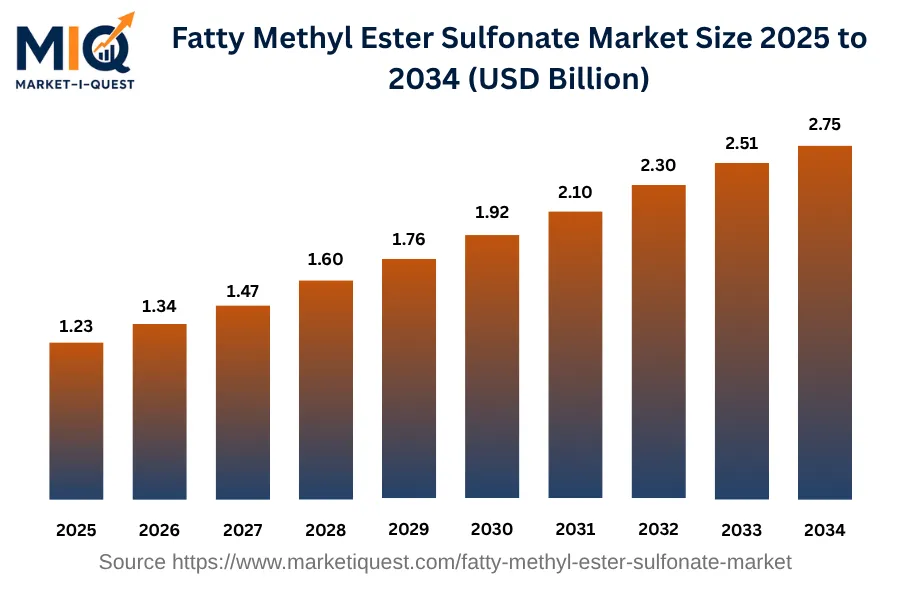
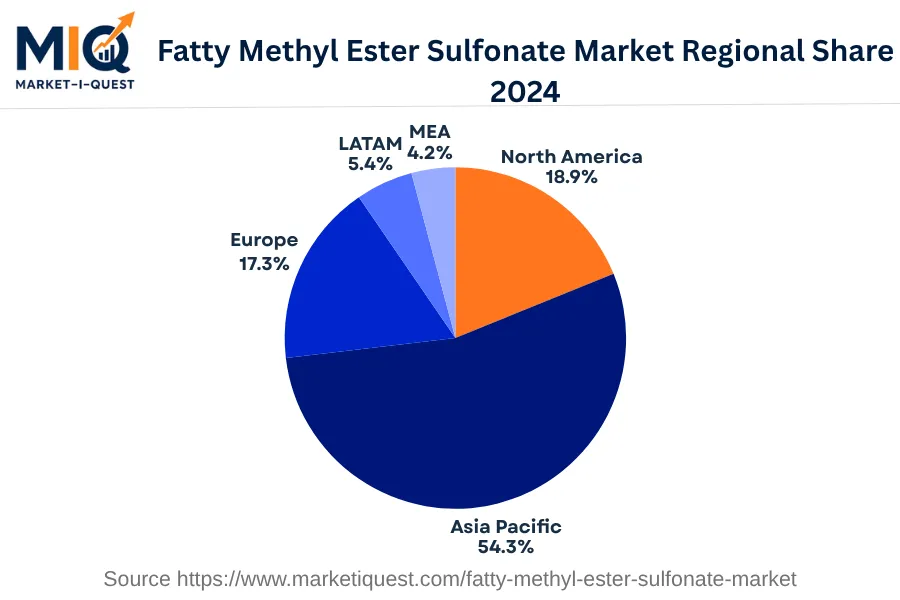
The Fatty Methyl Ester Sulfonate Market is set to experience notable expansion, going from a value of $1.23 billion in 2025 to a substantial $2.75 billion by 2034. This growth represents a CAGR of 9.4%. The upward trajectory of market size is anticipated to be steady over the time frame, attributed in major part to the rising demand for biodegradable surfactants and the substitution of petroleum-based surfactants with vegetable-based alternatives. Regional shares in 2024 indicate a robust spatial dynamic in the market. Here, the Asia Pacific region leads the market with 54.3% of the total share. This is followed by North America at 18.9%, Europe with 17.3%, Latin America at 5.4%, and the Middle East and Africa with 4.2%. This gives a hint into the uptake tendencies and potential areas of growth and market capture in the Fatty Methyl Ester Sulfonate industry.

Key Takeaways

  • By Feedstock Source - Palm-Kernel Oil held the majority share in the Fatty Methyl Ester Sulfonate Market.
  • By Application - Personal Care segment dominated accounting for a notable proportion of the market in 2024.
fatty-methyl-ester-sulfonate-market market size

Key Driving Factors

Implementation of Stringent Environmental Regulations

Increased environmental awareness and stricter government regulations are leading industries to adopt more eco-friendly elements in their product formulation. In the case of the Fatty Methyl Ester Sulfonate (FMES) market, this comes in the light of regulations like REACH (Registration, Evaluation, Authorization, and Restriction of Chemicals) in Europe that pushes for more sustainable and less harsh chemicals. Since FMES is biodegradable and does not disrupt aquatic life, it becomes a favored choice against its petrochemical-based counterparts. This fulfillment of regulation-based requirements, combined with a push from end-users for eco-friendly compositions, substantiates the growth of the FMES market.
Shift in Consumer Preferences Towards Plant-Derived Products

There is a significant shift in consumer behavior leaning toward plant-derived products, mainly as a part of the move towards a more sustainable lifestyle. FMES, derived from palm oil and coconut oil, among other vegetable oils, provides a natural, renewable, and sustainable alternative to petroleum-derived surfactants. Its usage in manufacturing personal care products, like liquid detergents and soaps, expands with this consumer trend. In addition, the interest in bio-based and comparatively less irritating products boosts FMES adoption in the personal care industry, driving the expansion of the FMES market.

Market Evolution by Timeline

2019-2023
During this period, the demand for Fatty Methyl Ester Sulfonate (FMES) primarily came from developing regions like Asia Pacific on account of its application in household detergents. Manufacturers began the commercial production of FMES-based detergents, with major companies such as BASF producing FMES at a large scale. The main challenge faced was the complex production process and the requirement of high-quality raw materials. Low-interest rates fuelled investment from the manufacturing sector in these regions, which was reflected in the supply availability. Policies and regulations mainly focused on the promotion of bio-based products, supporting the growth of FMES.
2024
In 2024, FMES began to replace Alkylbenzene Sulfonates in many applications including personal care products, driven by regulations aimed at reducing the use of non-biodegradable compounds. The primary demand was from developed regions such as North America and Europe. However, supply bottlenecks, due to constraints in raw material availability and complexities in FMES production, were a major hurdle. Manufacturers had to cope with high production costs which reflected on the final product pricing. Innovative contractual arrangements between FMES manufacturers and raw material suppliers arose to tackle these issues.
2025-2029
Over this period, the FMES market consolidated, with a few players such as Wilmar International, KLK Oleo and Godrej Industries dominating the market. FMES innovation at this stage was streamlined towards improved manufacturing processes, with emphasis on reducing the environmental impact and energy consumption. Policies during this period were a continuation of the focus on sustainable products, facilitating the adoption of FMES. The commercial pricing model changed from standard fixed pricing to flexible pricing models, aimed at mitigating the impact of raw material price volatility.
2030-2034
Towards this period, the demand for FMES expanded to industrial cleaning applications along with persistent demand from personal care and detergent industries. The use of FMES in industrial cleaning was primarily driven by stringent industrial waste disposal regulations in countries like China and India. Despite the advancements in technology, raw material availability was still a concern. The market witnessed a trend of long-term procurement agreements with raw material suppliers to ensure consistent supply. The main risk was related to the shift in regulatory focus to other biodegradable materials with easier production processes.

Future Market Outlook

Future Opportunities

As the FMES market evolves, multiple future opportunities emerge, particularly in the context of regulatory developments and shifting consumer preferences. The adoption of stringent biodegradable standards by government entities, including the United States Environmental Protection Agency (EPA), will likely drive demand for FMES in household and industrial cleaning products. As major brands, for instance, Procter & Gamble, re-evaluate their ingredient sourcing policies in line with consumer desire for greener solutions, FMES may experience a surge in usage. Additionally, the increasing focus on personal care formulations, indicated by companies like Colgate-Palmolive launching new products containing FMES, creates avenues for market expansion. The growth of the green cosmetics sector, especially in Asia-Pacific regions, aligns with the rising demand for naturally derived ingredients. Furthermore, the ongoing research into new applications in oil recovery and agriculture provides additional avenues for FMES utilization beyond traditional cleaning products. In 2023, a pilot project in Brazil demonstrated FMES's efficacy in enhancing oil recovery processes, suggesting further industrial opportunities. Companies prioritizing investments in sustainable production methods and biotechnologies stand to benefit from these evolving market dynamics as consumers and businesses continue to preference eco-friendly alternatives across various sectors.

Segmentation Analysis

By Feedstock Source

The market is divided into subsegments including Palm-Kernel Oil, Coconut Oil, and Others. Palm-Kernel Oil dominates by accounting for the largest revenue share while the Others category is foreseen to grow at the fastest CAGR during the forecast period.

Largest Revenue Share

Palm-Kernel Oil

Market Share Leader

Palm-Kernel Oil is leading the feedstock source segment in terms of revenue. This is primarily due to its widespread availability and the extensive application of this oil in various industries such as food, cosmetics, and biodiesel. It's rich in lauric acid, which is a prized chemical in industries because of its high oxidative stability. It's also worth noting that emerging markets such as Asia, particularly Malaysia and Indonesia, are major producers and consumers of palm-kernel oil due to its cost-effectiveness compared to other oils. Moreover, these regions have favorable conditions for palm cultivation, ensuring consistent supply. In terms of purchasing criteria, palm-kernel oil is often preferred due to its lower costs and higher yield compared to other vegetable oils. The switching costs from palm-kernel oil to any other oil are high due to the need to reformulate products and processes, which firmly roots its market dominance.

Fastest CAGR

Others

Forecast Period Growth Leader

The 'Others' category, encompassing diverse feedstock sources outside of palm-kernel and coconut oil, is predicted to experience the fastest growth. Technological advancements, policy incentives, and strategic partnerships are acting as vital catalysts for this growth. The push towards sustainability and diversified sources of feedstock in emerging markets is a key driver, reducing reliance on conventional sources. Furthermore, advancements in bioengineering and synthetic biology have opened new possibilities for alternative feedstocks. Factors such as volatility in commodity prices are also motivating firms to look for other feedstock options. Identified risks include potential resistance from stakeholders used to traditional feedstocks and possible regulatory barriers towards certain feedstocks.

By Application

The market is divided into subsegments including Personal Care, Detergents, and Others. Of these, the Personal Care subsegment accounted for the largest revenue share in 2024 while the Others segment is expected to display the fastest growth during the forecast period.

Largest Revenue Share

Personal Care

Market Share Leader

The Personal Care subsegment emerges as the highest revenue-generating category in 2024. This can be attributed to a multitude of market dynamics. Consumer pivot towards organic and natural personal care products has been a significant driving factor, as they become increasingly aware of the harmful effects of synthetic ingredients. Additionally, the beauty and personal care industry has been experiencing a boom, fueled by the younger demographic and their ever-growing interest in skin care and wellness products. The purchasing behavior of these segments is guided largely by product quality, ingredient profile and brand reputation. Furthermore, regulatory standards in many regions that encourage the use of safe and environmentally friendly personal care products have further boosted market growth. This segment is also marked by high switching costs on the consumer side, enabled by customer loyalty and trust towards established brands. These factors collectively underpin the revenue leadership of the Personal Care segment in the market.

Fastest CAGR

Others

Forecast Period Growth Leader

The Others subsegment in this market is projected to grow at the fastest pace. We attribute this projected growth to a range of factors. There is a broadening scope of applications not traditionally dominant that are seeing increased adoption, thus constituting the Others segment. The increased demand for organic and eco-friendly products is contributing to its expansion. Technological advancements fostering new product applications and evolving consumer trends are key catalysts for growth. Policy changes promoting sustainability and green chemistry act as another significant driver. However, the segment does face challenges that include high research and development costs, market uncertainty typical of emerging categories, and the hurdles of technology commercialization. Given these dynamics, it's reasonable to predict this subsegment's accelerated growth, while also acknowledging the inherent risks and entry barriers.

Competitive Analysis

Key Market Players

Manufacturers / OEMs

Wilmar International Ltd.
Singapore
KLK Oleo
Malaysia
Stepan Company
US

Key Suppliers & Raw Materials

Chemical Associates Inc.
US
Croda International Plc
UK
Kao Corporation
Japan

Distributors, Integrators & Channel Partners

Fenchem Biotek Ltd.
China
Elevance Renewable Sciences, Inc.
US

Porter’s Five Forces Analysis

This analysis highlights the competitive dynamics in the global Fatty Methyl Ester Sulfonate Market.

Supplier Bargaining Power

Medium

Supplier power is medium, based on the concentration of raw material providers in the market.

Buyer Bargaining Power

High

Buyers have high bargaining power due to the availability of numerous suppliers of fatty methyl ester sulfonate.

Threat of Substitutes

Low

The threat of substitutes is low due to the specific characteristics of fatty methyl ester sulfonate.

Threat of New Entrants

Medium

Capital requirements and regulatory standards pose medium entry barriers.

Competitive Rivalry

High

High competitive rivalry due to numerous international and domestic manufacturers.

Regional Analysis

Geographic market dynamics and growth opportunities across key regions

Global Market Outlook

fatty-methyl-ester-sulfonate-market market regional share

North America

In 2024, the North American market for Fatty Methyl Ester Sulfonate (FMES) registered a significant increase in demand, particularly driven by the industries in the U.S., Canada, and Mexico. Market drivers included investment in sustainable products, technological advancements in the production of FMES, and regulatory pushes towards environmentally friendly cleaning products. Increased market demand was triggered by environmental concerns over conventional surfactants, spurring investment in renewable, biodegradable alternatives like FMES. Adoption of advanced technology by leading FMES producers also streamlined the manufacturing process, leading to efficiencies in supply dynamics and pricing.

Market trends that emerged during this period featured shifts in buyer behavior and regulatory standards. As retail and manufacturing sectors emphasized green consumerism, FMES-based products saw a surge. Policy enforcement related to environmental protection and a push for biodegradability standards accelerated the transition towards FMES. This trend included a noticeable shift from traditional, petroleum-based surfactants to FMES in cleaning products within retail, healthcare, and industrial applications. Meanwhile, partnerships and M&A activities enabled FMES producers to expand their capacity and secure their supply chains. Thus, in 2024, both market drivers and evolving trends significantly influenced the North American FMES market, resulting in an increased interest and uptake of FMES across the region's key sectors.

Asia Pacific

In 2024, the Fatty Methyl Ester Sulfonate (FMES) market in Asia Pacific was influenced by a multitude of factors. The market saw significant growth drive from heightened consumer demand for bio-based products and the enforcement of strict regulations on synthetic detergents across prominent economies like China and India. Further, extensive private sector investment in the sustainable chemicals industry across Asia Pacific amplified supply dynamics, while advancing technologies enhanced production efficiency, maintaining stable FMES pricing.

Market trends showed a clear shift in buyer behavior towards the purchase of eco-friendly products in countries like Japan, South Korea, and Australia, which increased the consumer base for FMES in the detergents sector. A surge in product innovation to cater to this emerging demand was observed, with a substantial rise in patent filings for novel FMES formulations. Partnerships between leading FMES producers and major retail outlets strengthened distribution channels, capturing increased market share. Regulatory bodies in ASEAN markets had been notably active in policy enforcement, encouraging FMES adoption by manufacturers while concurrently ensuring quality standards—but falling short of setting a uniform policy across the region.

The FMES market picked up pace largely in sectors such as manufacturing and retail, incentivized by both market demand and stricter environmental regulations. The role of government programs in promoting sustainable practices was also pivotal in this scenario.

Europe

In 2024, the Fatty Methyl Ester Sulfonate (FMES) market in Europe witnessed a significant transformation. Drivers of this alteration included stringent environmental regulations with, for example, the EU's REACH regulation encouraging a shift to bio-based products like FMES. Technology adoption was another factor with advancements in the biodiesel industry directly benefiting FMES production. Demand rally in sectors such as personal care, home care, and industrial cleaners, triggered by the pursuit for sustainable solutions, further propelled FMES market growth.

Contrastingly, substantial trends were evident in the market. A noteworthy shift was discernible in buyer behavior, with a focus oriented toward eco-friendly alternatives in detergents and surfactants, boosting FMES utilization. Changes were also evident in product technology. For instance, increased efficiency in conversion methods amplified FMES output across the continent. Furthermore, the rise in strategic partnerships across countries, exemplified by Germany's prominence in digital manufacturing and biofuels, and the UK's stronghold in green consumerism, bolstered the FMES market stability.

Sectors such as manufacturing, retail, and healthcare emerged as the leading consumers, reflecting the compound's diverse applications. Given the environmentally friendly and cost-effective attributes of FMES, industries across Europe showed an inclination towards its adoption in various applications.

Latin America

In 2024, the Latin American (LATAM) market for Fatty Methyl Ester Sulfonate (FMES) presented a dynamic landscape driven by multiple factors. Intensified environmental regulations across Brazil, Mexico, Argentina, Colombia, Chile, and Peru prioritized the use of biodegradable cleaning agents in industries such as healthcare and manufacturing. There was a demonstrable shift in demand toward eco-friendly surfactants like FMES. Additionally, favorable investment climates in Argentina and Chile spurred increased plant capacities and technological adoptions, thus invigorating FMES supply chains. Despite global economic headwinds, the 2024 FMES pricing remained unaffected, providing market stability.

Trends observed in 2024 included a change in buyer behavior, with an increased preference for sustainable alternatives in retail and enterprise sectors, manifesting in augmented FMES sales. Advancements in biotechnology, especially within Mexico and Brazil, led to modifications in FMES production techniques, making it more cost-effective and efficient. There was also a notable rise in partnerships and mergers within the regional FMES industry, as seen in Colombia and Peru, offering scope for improved FMES formulations. Enhanced policy enforcement around the use of green surfactants in LATAM countries amplified the FMES market reach. Despite the prevailing complexity, the LATAM FMES market persevered in 2024 due to its strategic alignment with sustainable industrial practices.

Middle East & Africa

In 2024, the Fatty Methyl Ester Sulfonate (FMES) market in the Middle East and Africa illustrated pronounced growth due to an array of drivers and trends. The burgeoning demand for bio-based products, governmental eco-friendly policies, and cost-effective production in countries like Saudi Arabia, South Africa, and Nigeria mainly drove the market growth. Restructured strategies towards sustainable chemistry adopted in Egypt and Israel also amplified the demand for FMES.

In addition, the adoption of advanced technologies in the production to enhance efficiency and output surged in countries like the United Arab Emirates and Qatar. The continually evolving oil and gas sector across the region increased the demand for FMES, allowing for competitive pricing and supply dynamics which further stimulated market growth.

Concurrent trends that marked the landscape included a transition in buyer behavior with a preference for cost-effective, environment-friendly surfactants especially within the manufacturing and retail sectors. An apparent shift towards green production techniques was observed in the robust chemical industry of the region. Notable policy enforcement in Kenya to promote the bio-based product indirectly favored the FMES market, whilst an uptick in the telecom and utility sectors' use of FMES was also evident in 2024. The FMES market was further invigorated by alliances showcased by significant market players, promoting wider product access and enhanced distribution.

Recent Industry Developments

Latest market innovations, product launches, and strategic initiatives

June 2025

Wilmar acquired the remaining 50% stake in their joint venture, PZ Wilmar, taking full ownership. This move directly secures one of the largest sustainable palm oil businesses in the region, locking down the primary raw ingredient needed to manufacture FMES.

February 2025

KLK OLEO officially opened a new operational office, KLK OLEO India. This physical expansion was launched to directly supply the rapidly growing regional market with Methyl Ester Sulfonates for use in household detergents and personal care products.

Frequently Asked Questions