Untitled Report Snapshot

Key Players

  • Amicus Therapeutics (United States)
  • Sanofi Genzyme (France)
  • Takeda Pharmaceutical Company (Japan)
  • Shire plc (Ireland)
  • Protalix BioTherapeutics (Israel)
  • JCR Pharmaceuticals Co. Ltd. (Japan)
  • Freeline Therapeutics (United Kingdom)
  • Greenovation Biotech GmbH (Germany)
  • AVROBIO Inc. (United States)
  • Idorsia Pharmaceuticals Ltd (Switzerland)

Market Size

Base Year 2024
$2.46 Bn
CAGR
8.3%
Forecast 2034
$5.46 Bn

Market Segments

By Treatment
  • Enzyme Replacement Therapy (ERT)
  • Chaperone Treatment
  • Others
By Route of Administration
  • Intravenous
  • Oral
By End Use
  • Hospitals
  • Homecare Settings
  • Others

Market Dynamics

Drivers
  • Rising prevalence of Fabry disease
  • Increasing R&D activities in treatment
Restraints
  • High treatment cost
  • Limited patient population
Opportunities
  • Advanced treatment technologies
  • Unmet therapeutic needs

Market Size

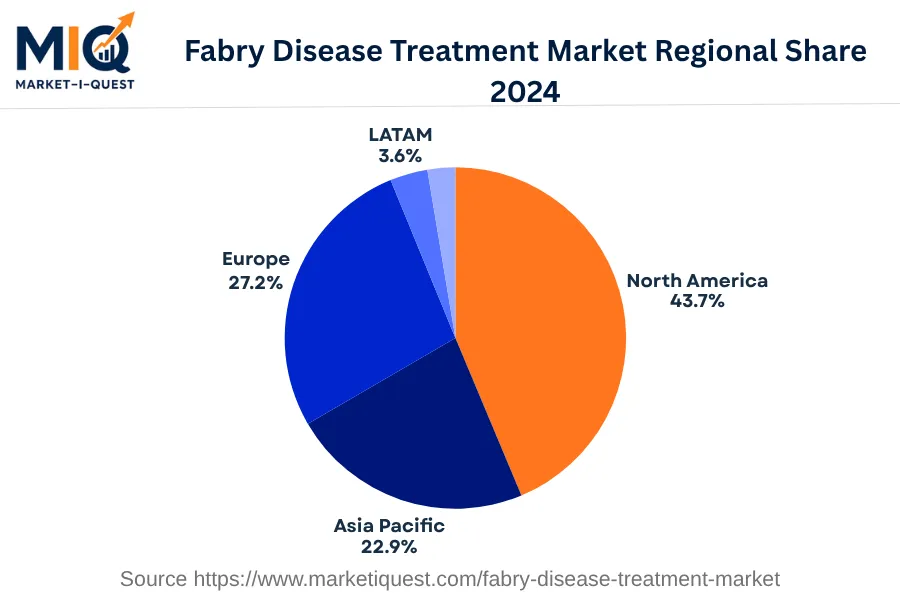
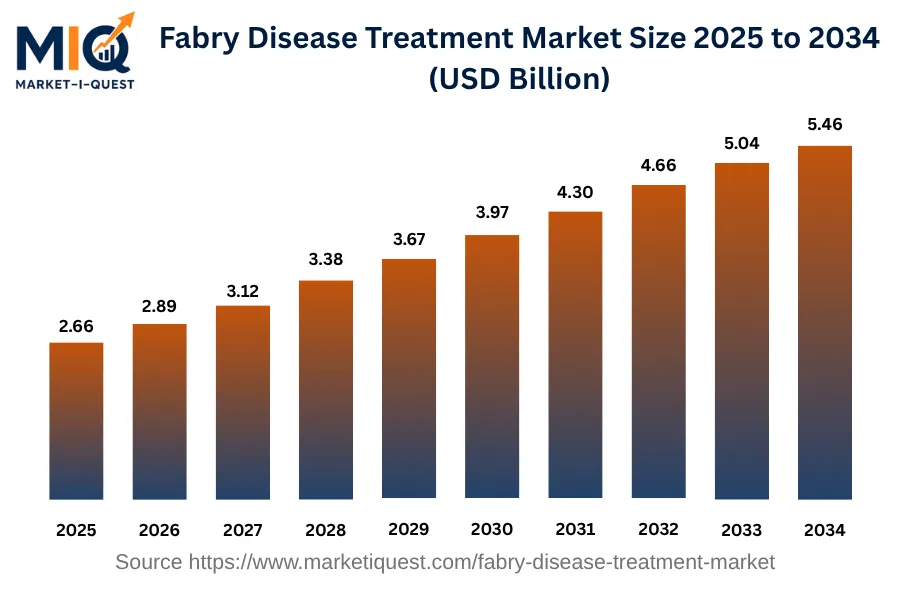
The Fabry Disease Treatment Market was worth USD 2.46 billion in 2024 and increased to USD 2.66 billion in 2025. By 2034, the market size is projected to rise to USD 5.46 billion, suggesting a Compound Annual Growth Rate (CAGR) of 8.3%. This steady growth from 2025 to 2034 implies that there has been a constant demand for Fabry Disease Treatment. The factors that could have contributed to this growth consist of an increase in diagnosed cases, advancements in treatment options, and increased funding and investments in biotechnological and pharmaceutical industries. A look at the regional market share in 2024 reveals that North America constituted 43.7%, Europe made up 27.2%, Asia Pacific accounted for 22.9%, while Latin America (LATAM) and the Middle East & Africa (MEA) held smaller shares of 3.6% and 2.6% respectively.

Key Takeaways

  • By Treatment - Enzyme Replacement Therapy (ERT) held a noteworthy position in the Fabry Disease Treatment Market in 2024.
  • By Route of Administration - Oral led accounting for the majority of the market in 2024.
  • By End Use - Hospitals led largest share within the market in 2024.
fabry-disease-treatment-market market size

Key Driving Factors

Introduction of Disease Specific Novel Drugs

One significant driving factor in the Fabry Disease Treatment market is the successful development and introduction of disease-specific novel drugs. Since Fabry disease is a rare genetic disorder, there was previously a scarcity of effective treatments. In recent years, pharmaceutical companies have been intensifying their R&D efforts to find innovative therapies to counter this disease. The introduction of these new therapies, such as Migalastat or Chaperone Therapy, has been a relevant driving factor for increased spending in this market. When novel therapies provide robust treatments for a previously under-serviced disease, they usually have better market penetration and higher adoption rates among healthcare providers and patients.

Increased global awareness and diagnosis rates

A second key driving factor in the Fabry Disease Treatment market is the rising global awareness and increased diagnosis rate of Fabry disease. Education and awareness campaigns from healthcare institutions and advocacy groups have highlighted the symptoms and risks of Fabry disease, leading to increasing numbers of diagnoses. Regulatory bodies like the FDA and EMA are also encouraging genetic testing and newborn screening programs, recognizing the necessity for early detection and treatment of genetic disorders like Fabry. With more people being diagnosed and the need for treatment becoming more urgent, market demand for effective Fabry disease treatments is being driven up.

Market Evolution by Timeline

2019-2023
During the period 2019–2023, the primary buyers in the Fabry Disease Treatment Market were healthcare providers and research institutions based in North America and Europe. The predominant reason for demand was the increasing number of diagnosed Fabry disease cases in these regions. The primary suppliers of Fabry disease treatment were multinational pharmaceutical companies who offered enzyme replacement therapies. Regulatory aspects were largely controlled by FDA and EMA, requiring rigorous clinical trials for approval. The commercial model was based on partnerships between pharmaceutical companies and research institutes, with patented enzyme replacement therapies setting price trends. The major risk was the high cost of treatment and limited insurance coverage, which could limit the access of treatment for patients.
2024
In 2024, the intensity of regional demand shifted to the Asia-Pacific markets, due to increased awareness and diagnosis rates. Enzyme replacement therapies remained the leading product type. The approval of 'Galafold', a new oral medication by the FDA, broadened the supply scope. Value-based pricing models were introduced, linking payment to patient outcomes. Pharmaceutical companies started offering patient assistance programs to mitigate the risk of unaffordability. Regulatory policies were revised to incentivize research and development for more Affordable treatment options. Progressive integration of artificial intelligence in drug discovery was noticed.
2025-2029
From 2025 to 2029, the demand for Fabry disease treatments notably increased from middle-income countries due to improved healthcare infrastructure and increased healthcare spending. This period marked the entry of generic versions of enzyme replacement therapies in the market, creating competitive pricing dynamics. The Orphan Drug Act incentivized companies to develop treatments for rare diseases, influencing company adoption. A move to outcome-based contracts was seen, where payment was associated with patient response to treatment. Risk remained in the availability of highly specialized healthcare professionals to administer the treatments.
2030-2034
In the 2030–2034 period, a rising demand for personalized treatments in the Fabry disease treatment market was seen due to advanced genetic testing and diagnostics. The advent of gene therapy offered potential curative treatment options. The fast-track approval processes implemented by the FDA and EMA for gene therapies influenced supply-side dynamics. The contracting model shifted towards risk-sharing agreements with a focus on long-term patient outcomes. However, potential risks included regulatory concerns and ethical issues related to genetic manipulation and the high cost of gene therapy.

Future Market Outlook

Future Opportunities

The current emphasis on personalized medicine provides substantial growth potential in the Fabry Disease treatment landscape. As clinical trials advance, like those exploring gene therapy developments from companies such as Voyager Therapeutics and ArmaGen, opportunities for novel treatment modalities are expanding. Ongoing collaborations between biotech firms and academic institutions, including partnerships announced in 2022 focused on exploring gene editing techniques to modify the underlying genetic defects associated with Fabry Disease, highlight a proactive approach to improving patient outcomes. Likewise, the establishment of treatment guidelines by organizations like the National Organization for Rare Disorders creates a framework for better patient management and integration of new therapies. Furthermore, with increasing awareness of rare diseases, initiatives like the Rare Diseases Act of 2002 in the U.S. promote funding for research that can lead to breakthrough solutions. This context encourages the exploration of combination therapies, where established ERT is used alongside emerging therapies. Also, health technology assessment bodies are recognizing the value of innovative treatments, leading to broader access and reimbursement strategies. As the patient advocacy community grows stronger, exemplified by the Global Fabry Action group formed in 2019, it influences regulatory decisions, thereby enhancing market opportunities tailored to patient needs and preferences.

Segmentation Analysis

By Treatment

The treatment market is divided into subsegments including Enzyme Replacement Therapy (ERT), Chaperone Treatment, and Others. ERT accounted for the largest revenue share while Chaperone Treatment is expected to grow at the fastest CAGR during the forecast period.

Largest Revenue Share

Enzyme Replacement Therapy (ERT)

Market Share Leader

The Enzyme Replacement Therapy (ERT) subsegment is leading the revenue generation in the treatment market. This large market share can be attributed to its established efficacy and reliability in the treatment of numerous lysosomal storage disorders. The physiological rationale behind ERT, replacing or supplementing a deficient enzyme, largely contributes to its widespread adoption. The therapy is performed globally in major healthcare institutions and is routinely considered the primary line of treatment. Favorable regulatory policies and numerous government initiatives incentivizing ERT research and development also support this subsegment's revenue dominance. The high treatment costs associated with ERT, coupled with the absence of alternative treatment options for some disorders, also contribute significantly to the generated revenue. Although the general costs associated with biological therapies are high, the benefits gained by patients in terms of improved quality of life and enhanced survival rates validate these costs, consequently driving demand and revenue.

Fastest CAGR

Chaperone Treatment

Forecast Period Growth Leader

While ERT dominates the current market revenue, the Chaperone Treatment is expected to display the fastest growth in the years ahead. This prediction is grounded in the increasing research and development investment into chaperone proteins and their diverse capabilities beyond enzyme stabilization. The approach of the Chaperone Treatment, which involves using small molecules to repair defective proteins instead of replacing them completely, has been showing promise for a wider variety of diseases. This expanding applicability is rapidly increasing the adoption of this treatment. However, the success of chaperone treatments relies heavily on ongoing advancements in molecular biology, further complicated by the unique tacit knowledge required for their development. Despite these hindrances, the Chaperone Treatment's potential benefits in reduced disease progression and improved patient outcomes justify the enthusiasm around its expected rapid growth.

By Route of Administration

The market is divided into subsegments including Intravenous and Oral routes of administration. In 2024, the Oral route accounted for the largest revenue share while the Intravenous route is expected to grow at the fastest CAGR during the forecast period.

Largest Revenue Share

Oral

Market Share Leader

The oral route of administration remains the largest revenue generator in the market. This can be attributed to multiple factors. Firstly, it's the simplest, most convenient, and safest mode of drug administration. The oral route is typically preferred over others due to its non-invasive nature, which reduces the risk of infections and complications, making it highly appealing to patients. Additionally, it allows for self-administration, which further drives demand, especially in chronic disease management where long-term medication is required. Geographically, mature markets such as North America and Europe have strong consumer preferences for oral medications due to the comfort and ease of use. Stringent regulatory norms also ensure the efficacy and safety of oral drugs, hence driving their adoption. From a supply perspective, the oral route is easier and more affordable to manufacture at scale, lowering costs for drug companies who pass these savings onto healthcare providers and patients.

Fastest CAGR

Intravenous

Forecast Period Growth Leader

Though the Intravenous route does not currently match the revenue generation of the Oral route, it shows the fastest growth rates. Intravenous administration is known for its rapid delivery and quick onset of action, which is crucial in emergency medical situations and intensive care where immediate systemic response is required. Also, it offers 100% drug bioavailability, which makes it an indispensable administration route for drugs that are poorly absorbed orally. Technological advancements like smart IV systems with inbuilt safety features are expected to further propel its growth. Partnerships between hospitals and device manufacturers to upgrade infusion therapies are another major market catalyst. One major barrier for the growth of the intravenous market is the need for trained personnel for administration and the higher cost. However, continuous innovation to simplify the procedure and make it more patient-friendly can potentially offset these hurdles.

By End Use

The market is divided into subsegments including Hospitals, Homecare Settings, and Others, where Hospitals accounted for the largest revenue share, while Homecare Settings is expected to be the fastest-growing subsegment.

Largest Revenue Share

Hospitals

Market Share Leader

Hospitals, in the base year of 2024, generated the majority of revenue in this segment. This is primarily attributed to the high patient influx and the diverse nature of services provided by hospitals. Hospitals cater to a wide range of medical needs of the population and consistently require resources to maintain their operations which keeps the demand and consequently, the revenue high. Another key reason is the purchasing power of hospitals as larger establishments with established supply chains, allowing for bulk purchases which translates into higher sales. The frantic pace of urbanization and the consequent rise in the number of hospitals also contribute to the significant revenue share. Moreover, government regulations, often favoring hospital settings for certain procedures or treatments due to compliance standards and patient safety, further drive demand in this subsegment.

Fastest CAGR

Homecare Settings

Forecast Period Growth Leader

The Homecare Settings subsegment is anticipated to exhibit the fastest growth in the coming years. A significant factor influencing this trend is the increasing inclination of patients for home care, driven by the convenience and comfort it offers. Moreover, advancements in technology have provided impetus to this subsegment, enabling a myriad of services to be rendered at home, which were previously limited to hospitals. Key areas such as post-surgical care, rehabilitation, and chronic disease management are increasingly being addressed within home care settings. However, the overall growth could be tempered by potential barriers such as regulatory compliance challenges and the requirement for substantial initial capital expenditure. Policies promoting home care services and strategic partnerships can act as catalysts and spur rapid growth in this subsegment.

Competitive Analysis

Key Market Players

Manufacturers / OEMs

Sanofi Genzyme
France
Amicus Therapeutics
US
Shire (Takeda)
Japan

Key Suppliers & Raw Materials

Pfizer Inc.
US
GlaxoSmithKline plc
UK
Novartis AG
Switzerland

Distributors, Integrators & Channel Partners

Threshold Pharmaceuticals
US
Johnson & Johnson Services
US
Bristol-Myers Squibb Company
US

Porter’s Five Forces Analysis

This is a Porter's Five Forces Analysis for the Fabry Disease Treatment Market.

Supplier Bargaining Power

Low

A few pharmaceutical companies dominate the supply, reducing supplier bargaining power.

Buyer Bargaining Power

Medium

High treatment costs elevate buyer bargaining power due to the need for affordable options.

Threat of Substitutes

Low

Limited substitutes due to the specialized nature of the treatments.

Threat of New Entrants

Low

Strict regulations and high R&D costs provide significant entry barriers.

Competitive Rivalry

Medium

Competition among existing firms is limited but significant due to the lucrative nature of rare disease treatments.

Regional Analysis

Geographic market dynamics and growth opportunities across key regions

Global Market Outlook

fabry-disease-treatment-market market regional share

North America

In 2024, the North American market for Fabry disease treatment experienced significant growth due to a combination of factors. Drivers included an increased disease prevalence, larger investments into R&D, advanced diagnostic techniques, and heightened awareness about this rare genetic disorder. U.S. biotech firms, like Amicus Therapeutics, have invested heavily in research and development to formulate effective therapies, while Canada and Mexico focused on importing innovative therapeutics from global manufacturers at competitive pricing to enhance affordability.

This growth was accompanied by certain trends affecting the market dynamics. To start, the adoption of enzyme replacement therapy (ERT) gained considerable momentum, with customers progressively opting for this treatment due to its efficacy. Then, partnerships like the one between Amicus Therapeutics and Sanofi became more common to promote R&D, demonstrating a shift towards cooperative development for rare disease treatment. Lastly, the regulatory landscape saw significant reform: the FDA’s Orphan Drug Act has expedited the approval process for the treatment of Fabry disease, resulting in multiple product launches in the U.S. market within 2024. Primary customers included healthcare providers, with a specific focus on specialty genetic disease clinics and hospitals. The role of government health departments was crucial in policy implementation and promoting accessibility of these rare disease treatments within the region. These sectors function both independently and collaboratively, contributing to strong market performance in 2024.

Asia Pacific

In 2024, the Fabry disease treatment market in the Asia Pacific presented a notable expansion predominantly owing to increased medical investment and improved disease awareness. Marked growth drivers included growing research initiatives in India and China, leading to advanced therapeutic options. Regulatory policies in Japan and South Korea investing heavily in rare disease management also shaped the market positively. Additionally, uptake of novel technologies in Australia and key ASEAN markets boosted diagnosis rates, positively influencing treatment demand.

Trends shaping the 2024 market encompassed a pivot towards personalized medicine in healthcare sectors, particularly in China and Japan. Moreover, increased digital health initiatives across Asia Pacific enhanced patient access to new Fabry disease treatments. The prevalence of strategic partnerships, especially in India and Australia, fostered the development and distribution of innovative therapeutics. Stringent policy enforcement was another key trend in the Asia Pacific, specifically in South Korea and Japan, promoting the market transparency and fair pricing essential to Fabry disease treatment accessibility. Lastly, robust advancements in gene therapy applications shaped the medical landscape across the region in base year 2024, further strengthening the market. In summary, factors such as medical advancements, strategic alliances, regulatory enforcement, and technological uptake propelled the Fabry disease treatment market in the Asia Pacific during 2024.

Europe

In 2024, the Fabry Disease Treatment Market in Europe was in a strong position due to various factors that drove demand and significant trends. Regulatory acceptance, increased investment, innovative technology adoption, and the amendments in disease treatment protocols in countries such as Germany, the United Kingdom, France, Italy, Spain, the Nordics, Benelux, and Central & Eastern Europe shaped the market dynamics. Advanced treatment procedures, reduced prices of enzyme replacement therapies, and the availability of genetic diagnostic tools stimulated market growth.

Increased awareness and diagnosis rates among healthcare providers and patients positively influenced the demand. Private sector entities, government bodies, and NGOs endeavored to enhance patient access to enzyme replacement therapies, consequently boosting the market.

Definite trends also prevailed in the Fabry Disease Treatment Market. A conspicuous shift towards personalised treatment options and gene therapies evidenced the evolving therapeutic landscape. The emergence of strategic alliances and partnerships among key players aimed to expedite drug development and leverage product portfolios. Policymakers enforced stringent regulations ensuring the safety and efficiency of novel therapies. The sectors majorly involved consisted of healthcare providers, genetic research institutions, pharmaceutical manufacturing industry, government health agencies, and hospital chains. Therefore, in 2024, the Fabry Disease Treatment Market in Europe was defined by a combination of driving factors and fundamental shifts in treatment procedures, regulatory landscape, and partnership models.
Latin America

In 2024, the Fabry Disease Treatment market in Latin America (LATAM) faced varied dynamics across its core countries, encompassing Brazil, Mexico, Argentina, Colombia, Chile, and Peru. Increased incidence of Fabry disease drove demand for treatments, as did augmented investment in healthcare infrastructure. Governments recognized the need for focused genetic disorder programs prompting the widespread adoption of enzyme replacement therapy – the prevailing treatment. In addition, pharmaceutical pricing policies in Brazil and Mexico led to growing affordability of and access to Fabry Disease drugs.

Conversely, market trends revealed shifting patient preference towards advanced treatment methods. Enhanced technology lead to increased acceptance of gene therapy within hospitals and healthcare institutions. A notable development was the South American genetic research cooperation, fostering partnerships for joint research and standards setting for patient care. The policy enforcement of Argentina’s Rare Disease Act indicated the nation's commitment to bolstering Fabry disease treatment provisions. The primary sectors impacted were healthcare and pharmaceuticals, with hospitals, specialized clinics, and retail pharmacies emerging as major customers. Patients, driven by improved affordability and advanced treatment options, showed an inclination towards therapeutic treatments offered by private pharmaceuticals, significantly boosting market demand within the region.

Middle East & Africa

In 2024, the Middle East and Africa showed significant strides in tackling Fabry Disease, with key countries making substantial moves. Increased awareness and diagnoses, paired with economic growth in nations such as Saudi Arabia, UAE, and South Africa, drove demand and heightened healthcare spending. Enhanced pharmaceutical regulations in Nigeria and the adoption of advanced diagnostic technologies in Israel also fueled market growth. However, high treatment costs hindered access in economically challenged regions like Egypt and Kenya.

In terms of trends, Israel's healthcare sector demonstrated a shift towards personalized medicine for more effective management of Fabry Disease. Nile Therapeutics' strategic partnership with Qatar's government underscored the value of collaborations for expanding access to innovative treatments. In Saudi Arabia, telemedicine saw increasing use in delivering care for conditions like Fabry disease, contributing to the changing provider-customer dynamics, particularly in the healthcare sector. Compliance with updated WHO guidelines was evident in South Africa's policy adjustments favoring affordable orphan drugs. Lastly, the UAE made strides in genomic research to harness gene therapy benefits for Fabry Disease, embodying the region's commitment to leveraging high-potential therapeutic approaches.

Recent Industry Developments

Latest market innovations, product launches, and strategic initiatives

April 2026

Researchers published the five-year results of a first-of-its-kind gene therapy trial, demonstrating that patients could safely stop their standard, time-consuming enzyme treatments while maintaining stable kidney function.

March 2026

Genomenon partnered with Amicus Therapeutics to expand a massive public database of genetic mutations related to Fabry disease. [Likely] This data expansion will improve diagnostic accuracy and help doctors identify patients who might otherwise go undiagnosed.

January 2026

The organization launched a new clinical study to test an existing daily pill for children aged two to eleven with Fabry disease. [Likely] The goal of this trial is to eventually replace standard hospital infusions with an at-home pill for younger patients.

Frequently Asked Questions