Enteral Feeding Devices Market Snapshot

Key Players

  • Medtronic (Ireland)
  • Nestlé Health Science (Switzerland)
  • Fresenius Kabi (Germany)
  • Boston Scientific (United States)
  • Cardinal Health (United States)
  • B. Braun Melsungen (Germany)
  • Danone Nutricia (France)
  • Moog (United States)
  • Amsino International (United States)
  • Avanos Medical (United States)

Market Size

Base Year 2024
$ 4.84 Bn
CAGR
6.2%
Forecast 2034
$ 8.83 Bn

Market Segments

By Type
Enteral Feeding Pumps, Enteral Feeding Tube
By Age Group
Adult, Pediatrics
By Application
Gastrointestinal Disease, Cancer, Malnutrition, Neurological Disorder, Others
By End User
Ambulatory Surgical Center, Hospital, Home Care, Others

Market Dynamics

Drivers
  • Rising chronic disease prevalence
  • Growing elderly population base
Restraints
  • High device cost
  • Risk of tube-related complications
Opportunities
  • Growing aging population
  • Rising home healthcare adoption

Market Size

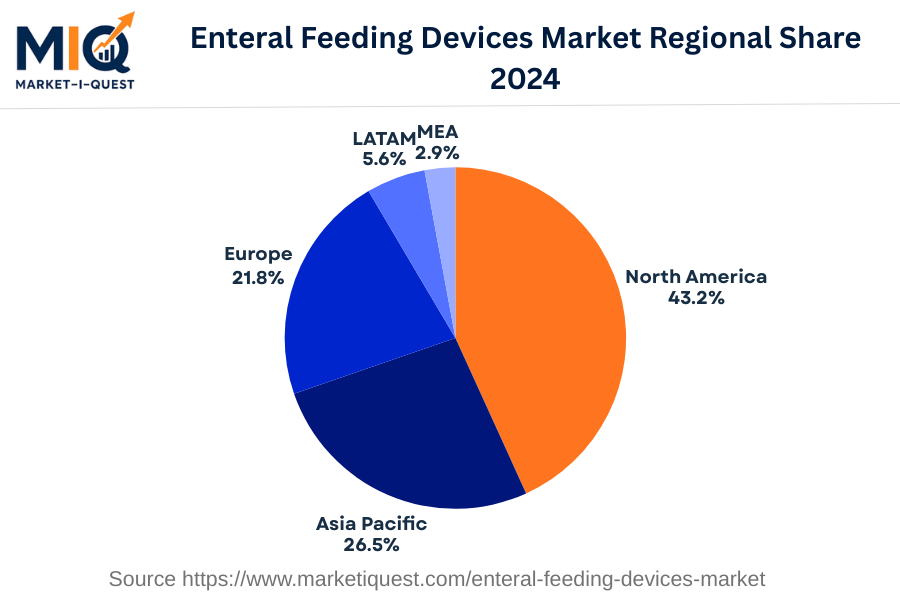
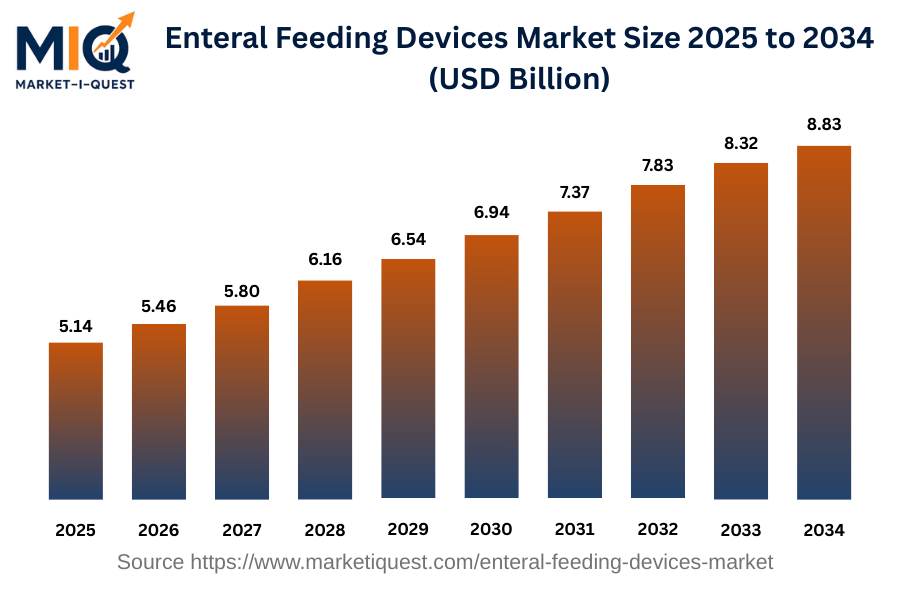
The Enteral Feeding Devices Market size in 2024 is 4.84 billion USD, and it is 5.14 billion USD in 2025. The market is projected to reach 8.83 billion USD by 2034, with a CAGR of 6.2% from 2025 to 2034. The progress path includes an increase to 8.83 billion USD in 2034. Factors contributing to this growth include increasing market demand for enteral feeding in healthcare settings and advancements in technology related to these devices. The regional segment mix in 2024 is North America at 43.2%, Asia Pacific at 26.5%, Europe at 21.8%, LATAM at 5.6%, and MEA at 2.9%.

Key Takeaways

  • By Type - Enteral Feeding Pumps held the leading position accounting for significant market share in 2024.
  • By Age Group - The Adult segment dominated representing the largest portion of the Enteral Feeding Devices Market in 2024.
  • By Application - Gastrointestinal Disease emerged as the fastest-growing category expanding its influence in the Enteral Feeding Devices Market significantly.
  • By End User - Hospitals accounted for the largest share affirming their critical role in the Enteral Feeding Devices Market in 2024.
enteral-feeding-devices-market market size

Key Driving Factors

Increasing Prevalence of Premature Births and Low Birth-Weight Infants

The incidence of premature births and low birth-weight in infants has surged globally over the last few years. Due to underdeveloped organs and low immunity, these infants often face difficulties in oral feeding and rely extensively on enteral feeding devices for proper nutrition. Moreover, enteral feeding is a preferred method over parenteral nutrition because it supports the development of the gut microbiota and the immune system. Neonatal intensive care units across the globe are heavily reliant on these devices, which significantly contributes to the development of the enteral feeding devices market.

Heightened Risk of Malnutrition in Elderly Population

The worldwide increase in the elderly population brings an array of associated health issues, most commonly malnutrition. Elderly patients often struggle with various illnesses, such as cancer or neurological disorders that cause dysphagia, making oral feeding difficult and enhancing the risk of undernutrition. Enteral feeding devices offer an effective solution for such patients, allowing for adequate supply of nutrients directly to the stomach or small intestine. Hence, healthcare providers are increasingly prescribing these devices to elderly patients experiencing nutrition absorption issues, thereby causing a consistent increase in the need for enteral feeding devices.

Market Evolution by Timeline

2019-2023
Between 2019 and 2023, the enteral feeding devices market saw significant utilization in hospitals and home healthcare. Major buyers included healthcare facilities in North America and Europe, influenced by the increasing widespread of chronic diseases such as diabetes and cancer. Hospitals in the United States adopted enteral feeding systems under reimbursement programs like Medicare, affecting procurement volumes. A prominent player, Abbott, released new feeding pumps that integrated with electronic health records, enhancing operational efficiencies. The market faced supply constraints due to global disruptions in logistics, affecting timely deliveries. Regulatory frameworks, including the FDA guidelines on enteral feeding devices, shaped product development and safety standards. Contracts were predominantly fixed-cost with hospitals, limiting flexibility in pricing. However, manufacturers explored partnerships with home care agencies for better market penetration. Risks included the lack of trained professionals to operate complex devices, leading to inconsistent usage in home settings. Overall, growth was steady, driven by a focus on patient-specific nutritional management.
2024
In 2024, the enteral feeding devices market adapted to new healthcare policies focusing on home-based care. Regions such as Asia-Pacific, particularly India and China, started increasing their market share as more hospitals incorporated enteral feeding in outpatient treatment. A key program, the Home Health Initiative, encouraged healthcare providers to transition patients to home-based feeding solutions, thereby boosting demand for portable devices. Several manufacturers began piloting smart feeding systems equipped with software for monitoring nutrition delivery. This period also saw a shift towards modular systems, allowing for customized configurations based on patient needs. Contract models began to favor value-based pricing structures as hospitals aimed to reduce costs associated with hospitalization. However, manufacturers faced challenges in compliance with evolving international standards, particularly ISO requirements for safety. The industry also contended with cybersecurity risks tied to connected devices, prompting companies to enhance their data protection measures. Overall, the market stabilized while remaining sensitive to regulatory changes and patient care with market trends.
2025-2029
From 2025 to 2029, the enteral feeding devices market evolved with notable advancements in technology and market strategies. Europe and North America were primary markets, but Africa began to emerge as a target region due to improving healthcare infrastructure. Use cases expanded, with enteral feeding increasingly adopted in pediatrics and geriatric care, prompting specialized product lines. Companies like Fresenius Kabi launched targeted marketing campaigns focusing on specific patient populations and conditions such as neurodegenerative disorders. Integration of artificial intelligence in feeding systems became more prevalent, enhancing personalized nutrition protocols. The industry started seeing cooperative purchasing models, where groups of hospitals negotiated as a single entity to obtain better pricing. Regulations remained stringent, expecting compliance with updated CE marking processes in the EU, complicating market entry for new players. However, issues such as device mismanagement and complications from feeding errors raised concerns among healthcare professionals. Education programs initiated by device manufacturers aimed to address such risks and improve user confidence.
2030-2034
In the period from 2030 to 2034, the enteral feeding devices market is likely to prioritize fully integrated solutions within broader healthcare management systems. Asia-Pacific is expected to dominate with rapid urbanization increasing requirements for healthcare innovations. Major buyers will include both hospitals and retail pharmacies as consumer awareness of nutritional products grows. New regulations, likely influenced by the WHO, may ensure higher safety and efficient standards for enteral devices. Supply dynamics will shift with increased automation in production processes, potentially reducing overall production costs. The rise of telehealth is anticipated to drive up the need for remote monitoring devices capable of tracking patient inputs and outputs. Contracting will likely evolve towards more adaptive agreements, allowing for dynamic pricing based on patient outcomes. Meanwhile, ongoing education and training programs will be essential to mitigate risks related to device mismanagement. Challenges may remain around device interoperability and integration into existing healthcare infrastructures, requiring continued dialogue between stakeholders in the value chain.

Future Market Outlook

Future Opportunities

As the population ages and chronic diseases continue to rise globally, particularly in regions like Europe and North America, the market demand for enteral feeding devices is poised to increase. The World Health Organization’s 2023 report on elderly care highlights the growing need for specialized nutrition solutions, creating a robust market for innovative product development. Partnerships between technology firms and healthcare providers are becoming common, exemplified by the 2022 alliance between Nestlé Health Science and Nutricia, focused on advancing home-enteral nutrition services to improve patient outcomes. Furthermore, the ongoing shift towards value-based care indicates a need for enteral feeding solutions that demonstrate clear efficacy and cost-effectiveness. Regulatory bodies, such as the FDA and the European Medicines Agency, are also emphasizing post-market surveillance and real-world evidence, which encourages manufacturers to adopt longer-term monitoring solutions. In Latin America, government investments in healthcare infrastructure are laying the groundwork for greater access to enteral feeding technologies, which reflects a broader trend in improving patient care in underserved regions. Additionally, the rise in e-commerce through platforms dedicated to medical supply distribution indicates untapped potential for advancement in accessible home healthcare products. As a result, strategic planning focused on these regions and connections between stakeholders will be essential in shaping the future landscape of enteral feeding solutions.

Segmentation Analysis

The enteral feeding devices market is segmented by Type (Enteral Feeding Pumps, Enteral Feeding Tube), by Age Group (Adult, Pediatrics), by Application (Gastrointestinal Disease, Cancer, Malnutrition, Neurological Disorder, Others), and by End User (Ambulatory Surgical Center, Hospital, Home Care, Others).

By Type

The market is divided into subsegments including Enteral Feeding Pumps and Enteral Feeding Tube. Enteral Feeding Pumps accounted for the largest revenue share while Enteral Feeding Tube is expected to grow at the fastest CAGR during the forecast period.

Largest Revenue Share

Enteral Feeding Pumps

Market Share Leader

Enteral Feeding Pumps lead the market primarily due to their essential role in providing precise nutrition to patients requiring enteral therapy. This subsegment appeals to a diverse customer base that includes hospitals, long-term care facilities, and home healthcare providers. The increasing prevalence of chronic conditions such as neurological disorders, cancer, and gastrointestinal diseases significantly drives demand for advanced enteral feeding solutions. Geographically, regions with robust healthcare infrastructures, like North America and Europe, dominate this subsegment due to higher adoption rates and government regulations supporting patient care standards. From a regulatory standpoint, stringent guidelines ensure that the products meet quality and safety, further convincing healthcare providers to invest in enteral feeding pumps. Purchasing criteria favor accuracy and reliability in delivery systems, which makes enteral feeding pumps a preferred choice over simpler alternatives. Finally, switching costs are relatively high due to training and integration with existing medical systems, locking in major customers to established brands that provide ongoing service and updates, which reinforces the leading revenue status of enteral feeding pumps.

Fastest CAGR

Enteral Feeding Tube

Forecast Period Growth Leader

The Enteral Feeding Tube subsegment is poised to grow at a rapid pace driven by technological advancements and an increasing number of patients needing nutritional support. Innovative designs, such as nasogastric and gastrostomy tubes, are being continuously refined to enhance patient comfort and ease of use, encouraging broader adoption in both clinical and home settings. Barriers to adoption primarily stem from concerns around complications such as dislodgement and infection, yet ongoing improvements in design and materials mitigate these risks. Additionally, a shift towards at-home care scenarios following recent healthcare trends further catalyzes the interest for enteral feeding tubes. Policy changes backing home healthcare services and reimbursement models facilitate easier access to these devices. However, near-term risks include fluctuations in raw material costs and market entry of substitute technologies, which could impact pricing strategies. Manufacturers must also navigate a landscape of regulatory compliance and product quality to maintain competitive advantage. As a result, while challenges exist, the enteral feeding tube segment can capitalize on its progress potential in upcoming years through strategic innovation and partnerships with healthcare providers.

By Age Group

The market is divided into subsegments including Adult and Pediatrics. The Adult subsegment accounted for the largest revenue share while the Pediatrics subsegment is expected to grow at the fastest CAGR during the forecast period.

Largest Revenue Share

Adult

Market Share Leader

The Adult subsegment leads the market primarily due to the larger population demographic and increased prevalence of chronic diseases that necessitate ongoing healthcare. Adults typically have higher disposable incomes, allowing for greater spending on healthcare services. Additionally, advances in medical technology and pharmaceuticals tailored for adult populations have fostered innovation and product expansion. Geographically, mature markets such as North America and Europe contribute significantly to this revenue, supported by comprehensive healthcare infrastructure and insurance schemes that encourage regular outpatient and inpatient care. Regulatory environments in these regions also tend to favor established adult care services, ensuring trusted and high-quality delivery. Moreover, adult patients often have established purchasing criteria influenced by personal experience, peer recommendations, and professional guidance, creating a stable customer base. The relatively low switching costs in adult healthcare services encourage competitively priced offerings, while the established channels for distribution, such as healthcare providers and insurance companies, further facilitate market access. Together, these factors solidify the Adult subsegment's status as the most lucrative sector in the healthcare market.

Fastest CAGR

Pediatrics

Forecast Period Growth Leader

The Pediatrics subsegment is poised for rapid growth due to several interlinked factors. A notable driver is the increasing awareness among parents regarding pediatric health issues, prompting heightened demand for specialized healthcare services for children. Moreover, technological advancements in healthcare, such as telemedicine and child-specific medical devices, have made accessing pediatric care more convenient and effective. Significant investments in pediatric research and the development of tailored treatment options further stimulate market potential. However, barriers to adoption exist, including limited specialist availability and varying healthcare regulations that can restrict service delivery. Catalysts such as public health initiatives focused on child health and rising birth rates in certain regions are likely to diminish these barriers and encourage greater focus on pediatric care. Partnerships between healthcare providers and education sectors aim to enhance outreach and service utilization. While these market opportunities present substantial increased potential, there are near-term risks, such as economic downturns impacting healthcare budgets and shifts in policy that could affect funding for pediatric services. Nonetheless, the Pediatrics subsegment is expected to thrive, capitalizing on a growing emphasis on child health amid evolving healthcare landscapes.

By Application

The market is divided into subsegments including Gastrointestinal Disease, Cancer, Malnutrition, Neurological Disorder, and Others. Cancer accounted for the largest revenue share while Neurological Disorder is expected to grow at the fastest CAGR during the forecast period.

Largest Revenue Share

Cancer

Market Share Leader

The cancer subsegment leads in revenue due to a combination of high prevalence and significant spending on therapies. A growing aging population is contributing to the rising incidence of various types of cancer, prompting healthcare providers and patients to seek advanced treatment options. Geographically, North America and Europe are at the forefront of investment in oncology research, with regulatory bodies facilitating quicker approvals for novel therapies, further bolstering the market. The increasing adoption of precision medicine, immunotherapy, and targeted therapies serves to diverse patient needs, enhancing treatment efficacy. Key purchasing criteria for stakeholders include treatment effectiveness, safety profiles, and the potential for scientific innovation. Additionally, established distribution channels and strong corporate funding ensure a steady supply of cutting-edge cancer treatments. As patients often face a complex decision-making process influenced by comprehensive information from healthcare professionals and support networks, the substantial switching costs associated with changing therapies solidify incumbent product dominance in this market.

Fastest CAGR

Neurological Disorder

Forecast Period Growth Leader

The neurological disorder subsegment is poised for rapid increase driven by increasing awareness of mental health and neurological conditions. Factors such as the global rise in mental health issues and neurological diseases, including Alzheimer’s and Parkinson’s, are creating urgent requirement for new therapies and improved care options. Regulatory initiatives aimed at mental health reform promote innovative treatment modalities, thus catalyzing expansion. However, adoption barriers such as regulatory barriers and the complexity of treatment protocols can slow the pace of market entry for new solutions. Partnerships between pharmaceutical companies and research institutions are essential for driving innovation and addressing regulatory challenges effectively. Despite the promising outlook, risks including market saturation and fluctuations in healthcare investment may impact the trajectory of development. Careful navigation of these factors will be crucial for companies looking to capitalize on the momentum in the neurological disorder segment while also addressing societal needs for better mental health solutions.

By End User

The market is divided into subsegments including Ambulatory Surgical Center, Hospital, Home Care, and Others. The Hospital subsegment accounted for the largest revenue share while the Home Care subsegment is expected to grow at the fastest CAGR during the forecast period.

Largest Revenue Share

Hospital

Market Share Leader

The Hospital subsegment leads in revenue due to its well-established infrastructure, advanced medical technologies, and a wide range of services offered. Hospitals typically serves to a higher volume of patients requiring complex care, contributing to greater overall expenditure compared to other settings. The presence of specialized departments, such as emergency, surgical, and diagnostic services, enhances the appeal of hospitals to patients and healthcare providers alike. Moreover, hospitals often benefit from higher reimbursement rates from insurance providers, further solidifying their financial position. Geographically, urban hospitals experience higher patient inflow owing to population density, while rural hospitals are crucial in serving local communities but often face operational challenges that can hinder revenue potential. Stringent regulations and approved requirements also emphasize the need for hospitals to maintain quality standards, which involves significant investment in both human and technological resources. As patient-centered care continues to gain importance, hospitals are increasingly focusing on enhancing services to attract and retain patients, ultimately driving revenue growth.

Fastest CAGR

Home Care

Forecast Period Growth Leader

The Home Care subsegment is expected to witness the fastest growth due to increasing preference for in-home health services among patients, particularly the elderly and those with chronic conditions. This shift is driven by a combination of factors, including cost efficiency, improved accessibility, and advancements in telehealth technologies which facilitate remote monitoring and consultations. Regulatory support and incentive programs aimed at reducing hospital readmissions further bolster adoption, as home care is recognized for its ability to provide quality care while ensuring patient comfort. However, barriers such as potential caregiver shortages and varying regulations across regions pose challenges to scalability. The progress will be catalyzed by partnerships between home care providers and healthcare systems, enabling integrated care solutions that reduce overall healthcare costs. Additionally, increased awareness around the benefits of home care settings is likely to stimulate need. Near-term risks include fluctuations in reimbursement rates and the need for continued investment in training and technologies to maintain care quality. Addressing these challenges proactively will be key for stakeholders aiming to capitalize on the development potential in the home care subsegment.

Competitive Analysis

Key Market Players

The Enteral Feeding Devices Market is competitive, with a mix of large established companies and smaller regional players. Most companies focus on improving their products/services, keeping prices attractive, and strengthening relationships with key customers. They also use partnerships, acquisitions, and new launches to expand their presence in existing and new markets. Overall, players compete on quality, reliability, and value, and competition is expected to remain strong over the forecast period.

Manufacturers / OEMs

Abbott Laboratories
US
Baxter International Inc.
US
Fresenius Kabi AG
Germany

Key Suppliers & Raw Materials

Medtronic Plc
US
B. Braun Melsungen AG
Germany
Smiths Medical
UK

Distributors, Integrators & Channel Partners

Henry Schein Inc.
US
McKesson Corporation
US
Cardinal Health Inc.
US

Porter’s Five Forces Analysis

This analysis examines the competitive dynamics of the enteral feeding devices market. It highlights the impact of suppliers, buyers, substitutes, new entrants, and rivalry.

Supplier Bargaining Power

Medium

Suppliers face moderate power due to limited specialized manufacturers and certification requirements.

Buyer Bargaining Power

High

Buyers have significant power driven by low switching costs and price sensitivity in healthcare purchasing.

Threat of Substitutes

Medium

Alternative feeding methods exist, yet clinical reliance on enteral devices limits direct substitution threats.

Threat of New Entrants

Low

High barriers to entry due to regulatory approval and substantial capital investment deter new entrants.

Competitive Rivalry

High

Intense competition exists among established players, driven by innovation, pricing pressures, and market growth.

Regional Analysis

Geographic market dynamics and growth opportunities across key regions

Global Market Outlook

enteral-feeding-devices-market market regional share

North America

In 2024, the enteral feeding devices market in North America is characterized by an increased interest for nutritional support in healthcare settings. Key drivers include the rising prevalence of chronic illnesses, such as diabetes and cancer, which necessitate enteral nutrition. Additionally, regulatory support from agencies like the FDA encourages innovations in device safety and efficacy, further stimulating market expansion. Investments in healthcare infrastructure, especially in hospitals and outpatient facilities, enhance the accessibility of these devices. The adoption of advanced technologies, such as smart feeding pumps, reflects the trend toward personalized patient care.

Trends indicate a shift in buyer behavior, with healthcare providers increasingly prioritizing patient-centric solutions, leading to higher market interest for portable and user-friendly devices. Collaborations between manufacturers and healthcare systems are on the rise, as organizations seek comprehensive nutritional support solutions. There is also a growing emphasis on standardization, as industry stakeholders push for uniform guidelines to improve administration practices and ensure quality control. Moreover, policy enforcement related to reimbursement for enteral feeding interventions strengthens market dynamics, as both public and private insurers adapt their coverage policies to include newer technologies. Overall, these factors contribute to a dynamic and evolving enteral feeding landscape across the U.S., Canada, and Mexico.

Asia Pacific

The enteral feeding devices market in Asia Pacific in 2024 is characterized by increasing demand driven by a rising prevalence of chronic diseases and an aging population. In China and India, government initiatives aimed at enhancing healthcare infrastructure spur investment in enteral nutrition solutions. Technological advancements in feeding devices, such as the development of safer and more efficient delivery systems, are facilitating greater adoption in healthcare settings. Furthermore, regulatory support, particularly in Japan and South Korea, is promoting the standardization of enteral nutrition practices, influencing supply dynamics and pricing.

Trends in the market reveal a shift in buyer behavior, with healthcare providers increasingly favoring advanced devices that offer improved patient comfort and accuracy. There is also a growing focus on partnerships between manufacturers and healthcare institutions to enhance service delivery, particularly in ASEAN markets where local companies collaborate with global firms. E-commerce channels are gaining traction, enabling better product accessibility for healthcare providers and patients. Regulatory enforcement of quality standards is evident across the region, ensuring devices meet the required safety benchmarks, particularly in Australia and Japan. These dynamics are shaping a competitive landscape focused on innovation and improved patient outcomes across various healthcare sectors.

Europe

The enteral feeding devices market in Europe in 2024 is characterized by growing demand driven by an increasing prevalence of chronic diseases, necessitating nutritional support for patients with conditions such as stroke and cancer. Regulatory frameworks across the region, particularly the European Medical Device Regulation (EU MDR), have heightened safety standards, compelling manufacturers to invest in compliance and quality improvements. This regulatory shift, coupled with technological advancements in feeding pumps and accessories, has fostered an environment beneficial to innovation and investment in enteral feeding solutions.

Buyer behavior is increasingly leaning towards home care, as healthcare providers and patients seek to optimize care settings, pushing a shift toward portable and user-friendly devices. Additionally, there is rising interest in integrated systems that combine nutrition management with digital health technologies, enhancing patient monitoring and outcomes. Collaborative efforts and mergers and acquisitions among key players, such as Nutricia and Abbott, signify a trend towards enhancing portfolio offerings and expanding market reach. Furthermore, reimbursement policies across Germany, France, and the UK are evolving to support enteral feeding, creating favorable conditions for market growth. Overall, the dynamic landscape is marked by technological shifts, regulatory compliance, and evolving care models.
Latin America

In 2024, the enteral feeding devices market in Latin America (LATAM) reflects a growing demand driven by an increasing prevalence of chronic diseases and an aging population. Brazil and Mexico lead in unit consumption, propelled by high hospitalization rates and inadequate nutritional intake among patients. Regulatory dynamics, such as Brazil's Anvisa guidelines for medical devices, facilitate market entry, promoting innovation and safety compliance.

Technological adoption is evident, with hospitals increasingly deploying smart enteral feeding systems that improve patient monitoring and adjust nutritional delivery dynamically. These shifts are influencing buyer behavior, as healthcare providers prioritize advanced solutions that enhance patient outcomes. Additionally, the demand for home healthcare solutions is rising, particularly in Argentina and Colombia, wherein patients prefer receiving enteral nutrition at home.

Partnerships among key hospitals and device manufacturers are shaping channel dynamics, fostering a competitive landscape where access to innovative products is crucial. Moreover, growing awareness of nutrition's role in recovery is prompting healthcare institutions to standardize enteral feeding protocols, further driving market growth. The overall investment in healthcare infrastructure remains critical, with significant government and private funding flowing into medical technology, bolstering market expansion throughout LATAM.

Middle East & Africa

The enteral feeding devices market in the Middle East and Africa saw significant activity in 2024, driven primarily by increasing instances of chronic diseases and malnutrition. Demand surged due to a growing elderly population and advancements in technology that enhanced the efficacy of feeding devices. Regulatory frameworks in key markets, such as Saudi Arabia's Vision 2030, supported health sector investments, boosting access to high-quality medical devices. Additionally, collaborations among healthcare providers and device manufacturers expanded product availability and education on enteral feeding.

Trends indicated a shift towards home healthcare solutions, with more patients opting for enteral feeding in home settings rather than hospitals, primarily influenced by growing patient autonomy. Digital health technology adoption, including remote monitoring systems, gained momentum, enhancing the management of enteral feeding. Partnerships between local distributors and international manufacturers strengthened market penetration. Even as private healthcare spending rose across the UAE and Qatar, government initiatives in Egypt and South Africa focused on improving healthcare infrastructure and accessibility, emphasizing enteral nutrition in clinical guidelines. Overall, increased awareness of malnutrition’s impact on health outcomes within healthcare systems across Nigeria and Kenya catalyzed requirement for enteral feeding technologies, underscoring the market's potential in the region.

Recent Industry Developments

Latest market innovations, product launches, and strategic initiatives

January 2026

Homeperf, backed by private equity, acquired ORKYN's entire enteral nutrition business in France, including 35 dietitian consultants specialized in pediatrics and chronic digestive conditions, positioning Homeperf as France's leading home enteral nutrition provider.

February 2025

Cardinal Health launched the Kangaroo OMNI™ enteral feeding pump in Europe, Australia, and New Zealand, following its US/Canada debut in 2023, with Asia planned later in 2025; the portable system supports thick formulas, hydration, flushing, and 30‑day data history for hospital‑to‑home transitions.

February 2025

NanoVibronix acquired ENvue Medical Holdings, integrating ENvue's innovative enteral feeding solutions to enhance patient safety, broaden commercial reach, and create operational synergies in therapeutic medical devices.

Frequently Asked Questions