
Endoscopic Vessel Harvesting Market Snapshot

Key Players

  • Getinge AB (Sweden)
  • Medtronic (Ireland)
  • Terumo Corporation (Japan)
  • LivaNova PLC (United Kingdom)
  • Saphena Medical Inc. (US)
  • Teleflex Incorporated (US)
  • Stryker Corporation (United States)
  • Vascular Solutions Inc. (US)
  • MAQUET Holding B.V. & Co. KG. (Germany)

Market Size

Base Year 2024
$0.638 Bn
CAGR
6.28%
Forecast 2034
$1.17 Bn

Market Segments

By Product
  • EVH Systems
  • Endoscopes
  • Accessories
By Usability
  • Reusable
  • Disposable
By Application
  • Coronary Artery Disease (CAD)
  • Peripheral Artery Disease (PAD)

Market Dynamics

Drivers
  • Rising prevalence of cardiovascular diseases
  • Technological advancements in medical devices
Restraints
  • High product costs
  • Stringent regulatory guidelines
Opportunities
  • Increased healthcare expenditure
  • Technological advancements in endoscopy

Market Size

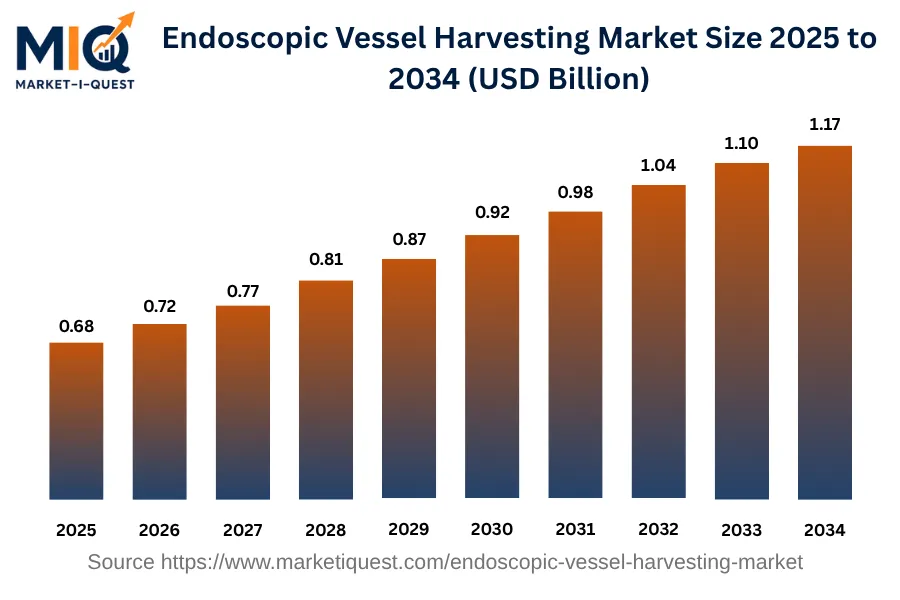
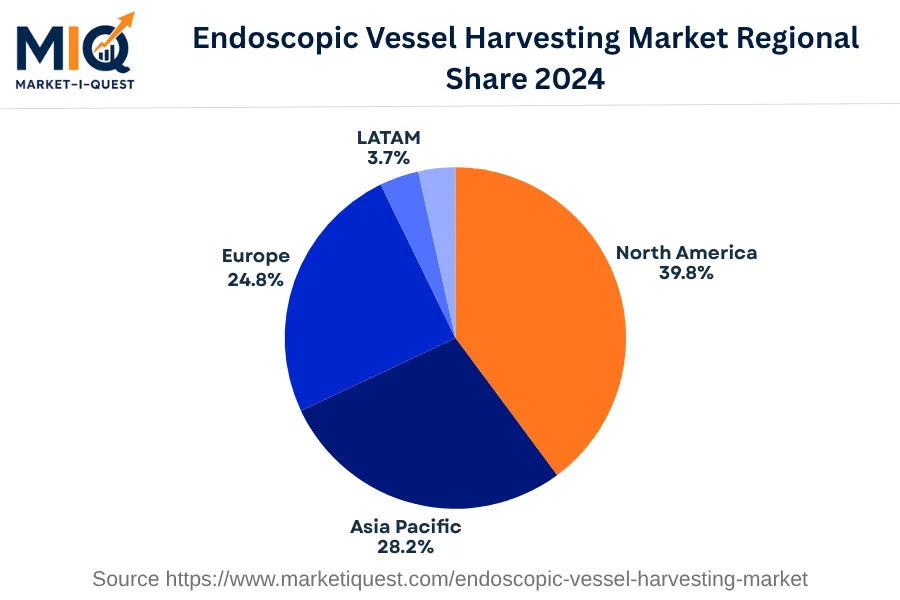
The Endoscopic Vessel Harvesting Market size is projected to increase from USD 0.68 billion in 2025 to USD 1.17 billion in 2034, growing at a compound annual growth rate (CAGR) of 6.28%. The market size, which was pegged at USD 0.64 billion in 2024, is expected to experience substantial growth in the following decade due to various contributing factors. Factors such as innovative developments in endoscopic vessel harvesting technology, increasing demand for procedures involving the use of these devices, coupled with the rise in disease incidence requiring the use, have been pivotal in this market expansion. Regarding regional markets' share in 2024, North America held the largest piece of the pie at 39.8%, followed by the Asia Pacific with 28.2%, Europe with 24.8%, LATAM at 3.7%, and MEA region accounted for 3.5% of the Endoscopic Vessel Harvesting Market.

Key Takeaways

  • By Product - Endoscopes held the dominant position in the Endoscopic Vessel Harvesting Market.
  • By Usability - Disposable products led the market in terms of overall use.
  • By Application - Coronary Artery Disease (CAD) is the leading segment within the Endoscopic Vessel Harvesting Market.
endoscopic-vessel-harvesting-market market size

Key Driving Factors

Increasing Adoption of Less Invasive Cardiovascular Procedures

The Endoscopic Vessel Harvesting (EVH) market is partly driven by the increasing adoption of minimally invasive cardiovascular procedures in various healthcare settings. It is seen as a proactive response to patient preference for less invasive treatment options associated with shorter recovery times and lesser post-operative complications. Surgeons and healthcare providers are increasingly adopting EVH due to benefits such as low surgical site infection and reduced leg wound complications. Achieving better patient outcomes and improving long-term survival rates are primary goals for hospitals and clinics, subsequently driving the growth of the EVH market.
Shift Towards Value-based Healthcare Systems

Another driving factor for the Endoscopic Vessel Harvesting market is the pacesetting shift towards value-based healthcare systems. Health insurance providers and payers are increasingly preferring therapies and procedures that can provide top-quality patient outcomes at lower costs. Endoscopic vessel harvesting meets these criteria through improved patient comfort, lesser complications, fewer hospital readmissions, and lower long-term healthcare costs. This compatibility with value-based healthcare models makes EVH more attractive, thereby stoking the growth of its market. This approach is particularly prevalent in developed markets such as North America and Europe, where cost-effectiveness is shaping healthcare procurement decisions.

Market Evolution by Timeline

2019-2023
During this period, the main demand in the Endoscopic Vessel Harvesting market came from heart disease patients requiring coronary artery bypass graft surgery primarily in North America and Europe. More cardiac surgeons adopted endoscopic vessel harvesting (EVH) driven by the minimal invasive nature of EVH. However, the market was constrained by a lack of skilled professionals, and cost concerns were also visible. Major suppliers like Medtronic, Maquet (Getinge Group), and Terumo developed and provided EVH systems. The FDA regulatory scrutiny over the safety and effectiveness of EVH technology was a notable factor. Commercial models typically involved hospitals purchasing EVH system units with aftermarket consumables supply agreements. A potential risk was the knowledge gap in EVH technique and patient outcomes.
2024
In 2024, European markets showed increasing adoption of EVH among the cardiac surgeon community. In response, suppliers like LivaNova and Cardiovations expanded their product offerings. The American Heart Association highlighted EVH as a standard practice in its guidelines. Still, the lack of universal insurance coverage for EVH procedures created affordability issues. On the supply front, OEMs shifted towards offering complete EVH solutions integrating harvesting system, EVH specific tools, and training. Cost containment strategies included bundled contracts with volume-driven pricing. The main risks during this period were maintaining EVH technique consistency among surgeons, patient safety, and regulatory compliance across different markets.
2025-2029
From 2025 to 2029, demand was a mix of CABG surgeries and vascular procedures spurred by an aging population globally, notably in Asia. The supply side saw the emergence of AI and robotic-assisted EVH addressing skill constraints and improving patient outcomes. Regulatory bodies like the European Medicines Agency recognized EVH standards, which accelerated product launches. EVH procurement became standard in public hospital tenders with a strong preference for inclusive contract models enabling long-term supplier relationships. Regulatory scrutiny over robotic assistance technology was a significant risk factor during this period, coupled with uptake barriers in emerging markets due to cost.
2030-2034
In the 2030s, the fight against cardiovascular diseases had high importance, bolstering the Endoscopic Vessel Harvesting market globally. The industry experienced maturity with significant progress in resolving challenges related to skills and costs and more widespread regulatory acceptance of AI and robotic technologies. Suppliers introduced innovative EVH systems, tailored to market needs and regulatory standards. The trend of integrated contract models continued dominating the commercial aspect with a strong emphasis on long-term service agreements. Main risks revolved around maintaining quality and ensuring equitable access to EVH procedures around the globe. The mitigation included initiatives promoting EVH education and advocating for wider insurance coverage.

Future Market Outlook

Future Opportunities

The endoscopic vessel harvesting market is poised for several expansion opportunities as healthcare systems evolve. With the ongoing global emphasis on value-based care, healthcare providers are increasingly attracted to technologies that improve patient outcomes while reducing overall costs. In this context, the World Health Organization in 2022 stated that policies favoring minimally invasive techniques could vastly improve care efficiencies. Collaborations between leading manufacturers and healthcare institutions, like the 2023 partnership between Boston Scientific and key hospitals in the UK, aim to enhance training for surgical staff on using advanced vessel harvesting systems. Moreover, increasing digital health integration trends present a significant opportunity to incorporate telehealth solutions alongside surgical innovations. The European Society of Cardiology has noted a growing interest in remote patient monitoring, which, combined with endoscopic techniques, can lead to improved long-term care. In 2024, the FDA plans to introduce new guidelines aimed at standardizing remote monitoring post-surgery, which may create pathways for further technological innovations in patient management. Advances in artificial intelligence, seen in applications from companies such as Siemens Healthineers, can enhance imaging and procedural outcomes, further driving demand for these technologies. Ultimately, regulatory compliance, industry partnerships, and ongoing technological advancements shape a favorable landscape for endoscopic vessel harvesting, aligning with contemporary shifts in surgical practices and patient care models.

Segmentation Analysis

By Product

The market is divided into subsegments including EVH Systems, Endoscopes, and Accessories. Endoscopes accounted for the largest revenue share, while Accessories is expected to grow at the fastest CAGR during the forecast period.

Largest Revenue Share

Endoscopes

Market Share Leader

Endoscopes are the primary revenue driver among the product segments, a fact closely tied to a couple of interconnected market dynamics. Firstly, there is increasing demand due to the rise in the number of minimally invasive surgeries, especially in advanced healthcare markets, where endoscopes play an essential part. Provided their ability to allow real-time imaging inside the human body, endoscopes are practically indispensable in such procedures. Secondly, the constant technological advancements, offering improved image quality and enhancements, further drive demand. In terms of buyers, hospitals and clinics are the prime customers, followed by diagnostic centers. Geographically, North America and Europe hold the larger share due to their advanced healthcare infrastructure, although Asia-Pacific region is also catching up fast. Supply and regulation-wise, while strict quality and safety standards necessitate higher switching costs, enhancing consumer trust. Lastly, sales are predominantly through direct sale channels between manufacturers and healthcare providers, although some regions also have a distribution model for deployment.

Fastest CAGR

Accessories

Forecast Period Growth Leader

Accessories associated with these systems illustrate the fastest growth in terms of CAGR. Following the presumption that these include but are not limited to camera heads, light cables, cleaning brushes, and biopsy valves, several factors can be pinned attributing to this high growth scenario. For one, the continuous replacement and upgrading due to wear and tear from extensive use propels demand. Furthermore, positive policy regulations encourage companies to invest in improved product quality and safety, which fosters market growth. Equally relevant is the role that innovations and technological advancements play in this context. Increased funding from both private and public sources encourage research and development that aims directly at eliminating adoption barriers, and this invariably aids growth. Notably, on the downside, cost might act as an inhibiting factor for growth in low-income regions given the higher initial expenses. However, this is gradually being addressed through strategic partnerships and gradual reduction in prices due to scaling.

By Usability

The market is divided into subsegments including Reusable and Disposable. In 2024, Disposable accounted for the largest revenue share while Reusable is expected to grow at the fastest CAGR during the forecast period.

Largest Revenue Share

Disposable

Market Share Leader

In the year 2024, the disposable segment holds the lion's share in terms of revenue in the market based on usability. Customers tend to prefer disposable products for its low-cost as compared to the reusable ones and its user-friendly nature, making it more easily adopted by the mass. Also, as the name suggests, disposable products are not meant for long-term use and hence, they necessitate frequent purchases, leading to higher revenue generation. There is an increasing demand in geographies with hectic lifestyle and high standard of living where the citizens have a higher ability and willingness to pay for disposable products for convenience. In addition, regulations in certain industries and sectors mandating the use of disposable items has further reinforced their demand. As the trend favors disposability, suppliers have also adapted to provide wider options and availability of these products, in turn, catering to and promoting customer demand.

Fastest CAGR

Reusable

Forecast Period Growth Leader

While the disposable segment is majorly contributing to the revenue, the reusable segment is forecasted to grow at the fastest rate. This growth comes in the wake of rising environmental concerns and advocates for sustainability. There is an increasing adoption of reusable products among eco-conscious customers and the growth of this demographic presents a significant catalyst for the segment's development. Additionally, policies encouraging the reduced use of single-use products owing to their environmental impact have similarly bolstered the demand for reusable products. Despite the initial higher capital expenditure required, in the long run, these reusable products prove to be cost-effective, driving consumer preference towards them. However, the challenge for the growth of this segment lies in changing the established purchasing behavior of customers used to disposable products and the need for further innovation to deliver the same level of convenience.

By Application

The market for Application is divided into subsegments including Coronary Artery Disease (CAD) and Peripheral Artery Disease (PAD) with CAD accounting for the largest revenue share while PAD is expected to register the fastest growth during the forecast period.

Largest Revenue Share

Coronary Artery Disease (CAD)

Market Share Leader

Coronary Artery Disease (CAD) is the leading subsegment, wielding a dominating presence in the market. This prevalence is driven by several factors. Firstly, CAD is globally recognized as one of the leading causes of death; an unfortunate fact that indicates a widespread prevalence and subsequently a large patient population requiring treatment. Secondly, the aging global population leads to a higher incidence rate of CAD. In most developed nations, an aging demographic is prevalent, therefore increasing the population susceptible to CAD. Furthermore, lifestyles in developed nations often lead to problems with obesity and poor cardiovascular health, contributing to CAD risk. Thirdly, advancements in CAD diagnosis and treatment are increasing the range and effectiveness of available services. With improving technology and understanding of the disease, medical professionals are able to identify and treat CAD more effectively than ever before. The purchasing criteria for CAD treatment are highly regulated, with strict protocols guiding their application, which ensures consistent demand in the market.

Fastest CAGR

Peripheral Artery Disease (PAD)

Forecast Period Growth Leader

Despite a smaller revenue share compared to CAD, Peripheral Artery Disease (PAD) shows significant growth potential in the market. One of the main drivers for this growth is the underdiagnosis and undertreatment of PAD, creating a large untapped patient population. This presents a potential for high growth as awareness of the condition improves and more cases are identified. Additionally, advances in technology are expanding the tools available for diagnosis and treatment, improving medical professionals’ ability to manage PAD. The trajectory of this subsegment could be further accelerated by policy-driven health initiatives that place emphasis on early detection and management of PAD. Increased capital expenditure in healthcare and strategic partnerships could facilitate better patient access to PAD treatment. However, barriers to adoption of PAD management solutions include high procedural costs and patient unawareness of the condition. Overcoming these barriers will be a significant factor in realizing the high growth potential of this subsegment in the near term.

Competitive Analysis

Key Market Players

Manufacturers / OEMs

Getinge AB
Sweden
Terumo Cardiovascular Systems Corporation
US
Medtronic
Ireland

Key Suppliers & Raw Materials

Estech
US
Sorin Group
Italy
Cardio Medical
Germany

Distributors, Integrators & Channel Partners

Siemens Healthineers
Germany
Maquet Getinge Group
Germany
Johnson & Johnson Services, Inc.
US

Porter’s Five Forces Analysis

An analysis of competitiveness and attractiveness within the endoscopic vessel harvesting market.

Supplier Bargaining Power

Medium

Dependent on a select few manufacturers, but alternative suppliers exist.

Buyer Bargaining Power

Low

Physicians' need for quality and consistency limits bargaining power.

Threat of Substitutes

High

Increasing presence of less invasive and cost-effective cardiovascular procedures.

Threat of New Entrants

Medium

Meet regulatory requirements and high R&D costs can be barriers.

Competitive Rivalry

High

Market has numerous competitors with advanced technological offerings.

Regional Analysis

Geographic market dynamics and growth opportunities across key regions

Global Market Outlook

endoscopic-vessel-harvesting-market market regional share

North America

In 2024, the North American endoscopic vessel harvesting market experienced a dynamic shift due to various drivers and trends. The increasing prevalence of cardiovascular diseases, primarily in the United States, led to a higher demand for EVH procedures, accelerating market growth. Regulatory support from the FDA for technological advancements in EVH devices influenced increased uptake of this less invasive treatment option. Investment in healthcare technology by the United States, Canada, and Mexico amplified the market growth.

Advanced EVH devices introduced in the market ignited shifts towards minimally invasive surgeries and shorter hospital stays. A noticeable trend emerged in the form of strategic partnerships between pharmaceutical and medical device companies to foster product innovation. Enforcement of stricter health standards boosted the compliance rate for EVH procedural quality, contributing to heightened patient safety in the healthcare sector.

The primary customers fuelling the demand for EVH were from healthcare and utilities sectors. Because of the high incidence of cardiovascular diseases in the United States, hospitals witnessed a surge in EVH procedures. Simultinously, health plans offered by utilities companies emphasized preventative cardiovascular care, stimulating interest in EVH. Thus, the combination of these drivers and trends paced the growth of the North American endoscopic vessel harvesting market in 2024.

Asia Pacific

In the base year of 2024, the Endoscopic Vessel Harvesting (EVH) market in the Asia Pacific experienced significant momentum. An aging population, particularly in Japan, China, and Australia, has escalated the demand for EVH procedures. Advancements in technology, with China and South Korea taking the lead, have enabled minimally invasive approaches, thereby increasing patient acceptance. Additionally, supportive government policies in India have sparked investment inflow into the healthcare sector, enhancing EVH infrastructure.

Key trends that shaped the 2024 market include an amplified focus on patient safety and comfort in EVH procedures, predominantly seen in Australia's healthcare sector. The increased wireless and remote monitoring in South Korea's hospitals shifted device functionality towards advanced EVH equipment. High-profile partnerships, witnessed in India between domestic companies and foreign medical device giants, spurred technological advancements and widened product offerings. Stricter enforcement of healthcare standard regulations, such as those in Japan's Pharmaceuticals and Medical Devices Agency (PMDA), elevated the market's overall quality threshold.

The primary sectors driving these factors in Asia Pacific comprised of healthcare providers such as hospitals and clinics, and key business-to-business clienteles included utility companies and manufacturing enterprises. Established multinational corporations and emerging local players together formed the supply side dynamics of the EVH market in the region. The base year substantiated a transformative phase for the EVH market in the Asia Pacific region.

Europe

In 2024, the European endoscopic vessel harvesting market was marked by an increasingly ageing population and rise in cardiovascular diseases. The increased demand for minimally invasive surgeries led to a surge in the adoption of endoscopic vessel harvesting procedures, particularly in Germany and the United Kingdom, which housed the largest ageing cohorts. The adoption of innovative technologies amplified this trend. Regulatory approvals, such as that of the Mobi-C cervical disc in France, also catalyzed market growth.

In parallel, a growing emphasis on cost-effective healthcare services in Spain and Italy impacted both demand and supply dynamics. Reimbursements for endoscopic procedures, mandated by health policies in these countries, stimulated market growth and shaped buyer's behavior. Additionally, several notable partnerships and mergers occurred, including Medtronic’s acquisition of HeartWare and Teleflex's strategic alliance with OptiMedica.

An increase in government funding for healthcare Research and Development across the Nordics, within sectors such as manufacturing and retail, further hastened technology adoption. In the Benelux region, and Central and Eastern Europe, a high predominance of cardiovascular disorders bolstered the endoscopic vessel harvesting market. Overall, in 2024, the market signaled growth influenced by demand factors, heightened technology adoption and strategic partnerships.

Latin America

In 2024, the Endoscopic Vessel Harvesting (EVH) market in Latin America showed significant growth, driven predominantly by innovation in surgical procedures, increased demand due to cardiovascular diseases, and healthcare investments. Technological advancements and adoption of minimally invasive EVH procedures, due to the benefits such as faster recovery, reduced trauma and lower risks of infection, were central to this rise. Developed healthcare infrastructures in countries like Brazil and Mexico contributed to the market expansion as well, alongside government investment in public health services across the region.

Emerging trends in 2024 included a shift towards automation and robotics in EVH operations, significantly impacting patient outcomes and operational efficiency. In particular, the use of automated EVH systems saw increased adoption in hospitals and clinics in Argentina and Colombia. Additionally, partnerships between public hospitals and private healthcare providers in Chile and Peru were instrumental in creating opportunities for EVH market penetration. Increased emphasis on regulatory compliance and product quality standards, particularly in Brazil, also shaped the market dynamics. The healthcare sector, specifically hospitals and specialty clinics, remained the prominent customer segment driving the demand for EVH in Latin America during this period.

Middle East & Africa

In 2024, the Endoscopic Vessel Harvesting (EVH) market in the Middle East and Africa experienced significant growth as clinicians favored minimally invasive cardiovascular operations.

Drivers of this market growth included the rising incidence of cardiovascular diseases in countries like South Africa and Saudi Arabia, prompting a strong demand for less invasive interventions. Government investments in healthcare infrastructure, particularly in the United Arab Emirates and Qatar, played a significant role in making advanced surgical procedures readily available. Moreover, the adoption of technologically advanced medical devices in well-funded healthcare systems, such as those in Israel, facilitated the growth of the EVH market.

Identifiable trends in the region's EVH market reflected shifts towards healthcare digitalization and quality improvement. For instance, there was a noticeable leaning towards automation and robotics in operations such as EVH in Egypt and Nigeria, responding to the global need for precision in medical procedures. In Kenya and other nations, government policy enforcement on minimum healthcare standards was shaping providers' shift to innovative surgeries, like EVH. Furthermore, partnerships between medical device manufacturers and local clinics or hospitals were relatively high, as these provided a platform for the adoption and use of EVH technology. Lastly, an evident trend of EVH usage was among customers in the public sector hospitals across these nations, driven by government initiatives to incorporate advanced medical technologies.

Recent Industry Developments

Latest market innovations, product launches, and strategic initiatives

July 2025

Getinge reported the first clinical use of the Vasoview Hemopro 3 EVH System in the U.S., with positive results and plans to begin larger-scale deliveries in Q3 2025.

April 2025

The FDA posted additional Class 2 recall actions for the VasoView HemoPro 2 Endoscopic Vessel Harvesting System on April 16 and April 18, 2025.

Frequently Asked Questions