Endodontic Devices Market Snapshot

Key Players

  • Dentsply Sirona (United States)
  • Danaher Corporation (United States)
  • Ivoclar Vivadent AG (Liechtenstein)
  • Ultradent Products Inc. (United States)
  • Septodont Holding (France)
  • FKG Dentaire SA (Switzerland)
  • Micro-Mega SA (France)
  • Brasseler USA (United States)
  • Coltene Holding AG (Switzerland)
  • DiaDent Group International (Canada)

Market Size

Base Year 2024
$2.84 Bn
CAGR
5.85%
Forecast 2034
$5.01 Bn

Market Segments

By Product
  • Consumables
  • Endodontic Burs
  • Instruments
By End User
  • Dental Clinics
  • Dental Hospitals
  • Laboratories
  • Dental Academic & Research Institutes

Market Dynamics

Drivers
  • Rising dental disorders prevalence
  • Advanced Endodontic treatments adoption
Restraints
  • High cost of equipment
  • Low awareness in emerging economies
Opportunities
  • Rising dental disorders prevalence
  • Increased healthcare expenditure

Market Size

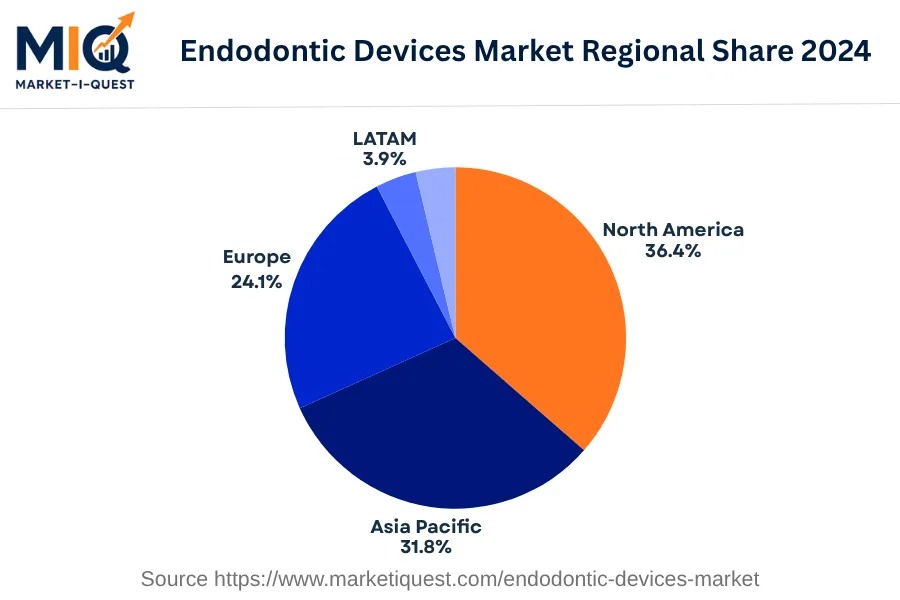
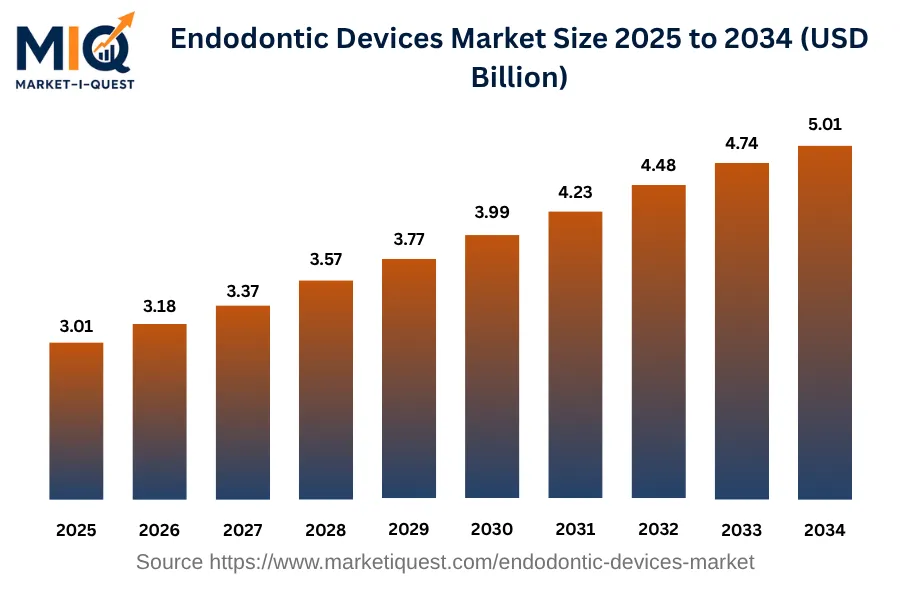
The Endodontic Devices Market is projected to grow from a size of USD 3.01 billion in 2025 to USD 5.01 billion by 2034, driven by a CAGR of 5.85%. The market was valued at USD 2.84 billion in 2024, would witness steady growth over the years. The growth is mainly due to the increasing market size year-on-year, highlighting a higher acceptance and adoption of these devices. However, the regional share distribution, North America held the largest regional share of 36.42%, closely followed by the Asia Pacific region with a share of 31.84%. Followed by Europe with a regional share of 24.13%, while the remaining market share was split between Latin America and the Middle East & Africa (MEA) with 3.86% and 3.75% respectively.

Key Takeaways

  • By Product - Instruments held the leading position in the Endodontic Devices Market in recent years.
  • By End User - Dental Clinics accounted for the major share of the Endodontic Devices Market.
endodontic-devices-market market size

Key Driving Factors

Expansion of Dental Insurance Coverage

The expansion of dental insurance coverage in several parts of the world is one major driver of the market. Insurance providers are gradually widening their coverage plans for including endodontic and other specialized dental treatments which previously were considered as optional add-on services. Such a move directly increases the affordability of endodontic treatments for policyholders. This insurance-fueled demand is robust particularly in developed regions such as North America and Europe, where insurance penetration is higher. Dental insurance companies are reacting to the global increase in oral health awareness and demand for endodontic treatments, specifically root canal treatment, making it a significant driver for the market.

Increasing Prevalence of Dental Diseases

The rising prevalence of dental diseases is another critical driver influencing the market. However, conditions such as dental caries and periodontal disease lead to an increasing demand for endodontic treatment or root canal procedures, thereby rising the demand for endodontic devices. Regions with high consumption of sugar and tobacco, such as North America and parts of Asia, are witness a sharp growth in cases of dental diseases. Moreover, the growing adoption of unhealthy lifestyle choices such as poor oral hygiene habits and dietary negligence contribute to the rise in dental disease prevalence.

Market Evolution by Timeline

2019-2023
During this period, the demand for endodontic devices rose majorly in the North American and European regions due to the high frequency of dental disorders in these parts. Buyers mainly formed dental clinics and hospitals, primarily motivated by the demand for effective endodontic therapy. On the supply side, devices such as endodontic motors, apex locators and handpieces featured prominently in the market, although their integration with new technologies such as AI was in the early stages. A significant policy influence was the rigorous safety standards mandated by regulatory bodies such as the FDA. The commercial model was largely defined by the direct procurement model.
2024
By 2024, the Asia-Pacific region highlighted significant demand growth for endodontic devices due to rising awareness about dental hygiene. Major buyers included dental clinics and hospitals, but there was increased purchase from dental schools for training purposes. On the supply side, significant advancements were evidenced as more manufacturers started integrating AI into their endodontic devices. Regulatory bodies continued to increasingly analyze endodontic device safety standards, alongside increased stress on bio-compatibility. Risks shifted towards data security breaches as AI integration increased.
2025-2029
From 2025-2029, a considerable increase in demand from developing countries will likely be documented, due to improved healthcare infrastructure. Furthermore, the buyer base will likely expand for including sizable purchases from academic institutions. Technological innovations will likely move at an accelerating pace, with companies offering products with improved AI capabilities and robot-assisted endodontic devices emerging into the market. Regulatory bodies will likely set stricter standards for AI's ethical use in healthcare. A new commercial model will likely be developed shared equipment facilities or 'hardware as a service', especially helpful for smaller healthcare providers.
2030-2034
Within this period, demand is expected to continue growing globally with an exponential increase from South America. The buyer segment will further diversified to include elderly care facilities as the aging population rose the need for endodontic therapies. Producers will likely serve to a growing demand for advanced, AI-powered and robot-assisted endodontic devices. AI's ethical use in healthcare continued to be a central regulation point, will likely be supplemented by guidelines on robot-assisted therapies. The 'hardware as a service' model is projected to become more widespread, with leasing and subscription options steadily gaining demand.

Future Market Outlook

Future Opportunities

Future opportunities in the market will likely emerge from the ongoing integration of digital technologies and biologically-oriented materials. Many dental practices globally are adapting to digital workflows, creating potential for partnerships with technology firms working on software solutions for treatment staging and diagnostic support. For instance, companies such as Carestream Dental have introduced advanced imaging solutions that are being rapidly adopted in Europe, promising to improve efficiency and patient outcomes. Additionally, the embrace of telemedicine in the dental sector can expand access to consultations, particularly in regions with insufficient access to specialized care. Regulatory bodies, such as the European Dental Association, have been supporting for telehealth initiatives, which could boost the demand for related endodontic devices. Furthermore, advancements in regenerative endodontics suggest a shift toward products that promote pulp regeneration rather than traditional root canal therapies. Research institutions are increasingly exploring stem cell therapies as a viable option, potentially altering the course of endodontic treatments. Collaborations between dental researchers and biotech firms are expected to increase, driven by mutual interest in biologically-based innovations.

Segmentation Analysis

By Product

The product market is divided into subsegments including Consumables, Endodontic Burs, and Instruments. Instruments accounted for the largest revenue share while Consumables are expected to grow at the fastest CAGR during the forecast period.

Largest Revenue Share

Instruments

Market Share Leader

Instruments holds the largest revenue share of the market. This can primarily be due to their significant role in a wide range of procedures and broader application areas. Instruments are indispensable tools in diagnostics, preventive and corrective treatments, making them high-demand products globally. Regionally, developed regions with more established healthcare sectors such as North America and Europe contribute significantly to the market share. From the perspective of customers, reliability, precision, longevity and cost-effectiveness are integral purchasing criteria. The majority of these instruments reach the market via direct sales channels or through medical equipment distributors.

Fastest CAGR

Consumables

Forecast Period Growth Leader

Consumables is projected as the fastest-growing subsegment. The growth of this subsegment is driven mainly by their recurrent need and usage in healthcare procedures. Increasing routine and elective procedures globally, along with an augmentation in preventative care, drive up the demand for Consumables. The adoption of Consumables is somewhat hindered by their perishability and the need for regular replacements, driving up costs. Capital investments on the manufacturing side could also influence the price and availability of consumables. Increased partnerships with suppliers and practitioners might also aid in overcoming barriers and fuel quick growth.

By End User

The market is divided into subsegments including Dental Clinics, Dental Hospitals, Laboratories, Dental Academic & Research Institutes. Dental clinics accounted for the largest revenue share while Dental Academic & Research Institutes is expected to grow at the fastest CAGR during the forecast period.

Largest Revenue Share

Dental Clinics

Market Share Leader

The dominant position of Dental Clinics in the market can be attributed to several factors. Primarily, dental clinics form the crux of the dental services industry, where most oral care procedures ranging from routine check-ups to advanced dental surgeries are performed. Furthermore, a prevailing trend of private practice in dentistry contributes largely to this segment. Also, the widespread geographic presence of dental clinics and more frequent visits by patients owing to oral conditions drives revenue growth in this segment. Progressive adoption of advanced equipment and adoption of innovative dental practices in dental clinics enhances this sector's profitability.

Fastest CAGR

Dental Academic & Research Institutes

Forecast Period Growth Leader

Dental Academic & Research Institutes segment is predicted to register the fastest growth during the forecast period. This can be aligned with the increasing institutional focus on dental research, leading to a surge in demand for innovative dental solutions. Collaborations and initiatives between academic institutes and dental industry players also fuel this growth. Moreover, crucial role of these industries in developing newer techniques and performing clinical trials for innovative products supports this expedited growth. However, the adoption of these institutions might face barriers due to high capital expenditure. Moreover, policy reforms promoting dental research or granting research funds can further act as a catalyst driving growth in this segment.

Competitive Analysis

Key Market Players

Manufacturers / OEMs

Dentsply Sirona
US
Danaher Corporation
US
Ivoclar Vivadent
Liechtenstein

Key Suppliers & Raw Materials

3M
US
GC Corporation
Japan
VOCO GmbH
Germany

Distributors, Integrators & Channel Partners

Patterson Dental Supply, Inc.
US
Henry Schein, Inc.
US
Benco Dental Supply Company
US

Porter’s Five Forces Analysis

This analysis evaluates the competitive environment within the Endodontic Devices Market.

Supplier Bargaining Power

Medium

Suppliers have moderate influence due to various elements such as technological advancements and product differentiation.

Buyer Bargaining Power

High

Buyers hold immense power due to the availability of numerous endodontic devices and brands in the market.

Threat of Substitutes

Low

Low threat as specific functionality and certification barriers hinder the entry of substitute products.

Threat of New Entrants

Medium

Moderate threat due to the involvement of substantial capital investments and stringent regulatory frameworks.

Competitive Rivalry

High

Rivalry is high due to the presence of numerous prominent players continuously innovating their offerings.

Regional Analysis

Geographic market dynamics and growth opportunities across key regions

Global Market Outlook

endodontic-devices-market market regional share

North America

In 2024, the North American endodontic devices market experienced significant changes due to several key drivers and trends. Demand for endodontic devices escalated as awareness of the importance of oral health grew among consumers in the U.S., Canada, and Mexico. Advancements in technology accelerated the market growth, introducing innovative devices, such as advanced root canal obturation devices and apex locators, which reduced treatment times and enhanced patient comfort. In addition, favorable government regulations, such as FDA's stringent guidelines on sterilization of dental devices, contributed to refining the quality of endodontic devices.

On the trend side, manufacturers increasingly prioritized ergonomic design in their products to facilitate easy handling by endodontists, which boosted their product adoption rate. Amidst the drive for digitization, many dental facilities in North America shifted from manual to automated endodontic devices. Furthermore, strategic partnerships and mergers among leading players, such as Dentsply Sirona and Ivoclar Vivadent, were observed, aiming to strengthen their product portfolio and market presence. Lastly, reinforcing industry standards, like the ADA’s regulations on infection control in dental settings, maintained market integrity and drove the proliferation of high-quality endodontic devices across dental practices in this region.

Asia Pacific

In 2024, the Endodontic Devices Market in Asia Pacific witnessed significant growth, propelled by various drivers and trends. Increasing prevalence of dental diseases and growing accessibility to advanced healthcare facilities were primary demand factors in the region. Regulatory policies favouring industry growth in countries like China and India induced large-scale investment in the Endodontic Devices Market. Rapid adoption of cutting-edge technologies in these countries was one of the key driving factors. Supply dynamics were influenced by the introduction of efficacious devices by leading market players, which created a competitive pricing environment.

Shifts in buyer behaviour were evident, with an increased preference for minimally invasive endodontic procedures across China, Japan, South Korea, Australia, and key ASEAN markets. Adoption of root canal irrigants saw an upturn, widely attributed to the growing awareness about dental health. The influence of digitalisation in the healthcare sector spilled over to this market with increasing virtual consultations and online sales. There was a rise in strategic partnerships between endodontic device manufacturers and healthcare facilities augmenting accessibility of advanced devices. Policy enforcement was evident in the form of stringent quality and safety checks for domestically manufactured devices, particularly in China and India. These elements, collectively, shaped the contours of the Asia Pacific Endodontic Devices Market in 2024.

Europe

In 2024, the Endodontic Devices Market recorded significant expansion in Europe, driven by increasing demand, advancements in technology, and prevalence of oral diseases. A surge in dental prophylaxis due to a growing awareness of oral hygiene was a leading demand factor. Regulations such as the Medical Devices Regulation (MDR) compelled companies to invest in high-quality, compliant devices, boosting the market. Adoption of advanced technology like rotary systems for root canal treatment notably elevated in Germany, the UK, France, and Italy. Several trends were prominent across the market. Patients in Spain, the Nordics, and Benelux showed a preference for single-visit endodontics, forcing clinics to adopt efficient devices. Mergers and Acquisitions, as seen in the case of Dentsply Sirona's acquisition of Byte, were common, consolidating the market. In light of GDPR, companies were cautious about patient data, impacting the digital technology in endodontic devices.

The main customers were dental clinics and hospitals, where demand was driven by the healthcare sector, particularly in Central and Eastern Europe. Private practices in the UK and Germany also notably impacted the market. A shift towards adoption of advanced endodontic devices such as apex locators, endodontic motors, and endodontic scalers was prevalent across all these sectors.

Latin America

In 2024, the Endodontic Devices Market in Latin America witnessed remarkable growth, underpinned by increasing demands, advancing technology, and evolving regulations. Driver factors, such as an expanded focus on dental health across Brazil, Mexico, Argentina, Colombia, Chile, and Peru, spurred demand for endodontic devices. Improvement in medical infrastructure and increased healthcare investment in these countries also drove market growth. The adoption of innovative technologies, like 3D imaging and nickel-titanium rotary tools, increased due to their efficiency in root canal treatments. However, cost considerations presented a barrier to widespread adoption, particularly in economically disadvantaged areas. Simultaneously, increased regulation around dental device safety, particularly in Brazil and Mexico, further influenced market dynamics.

Emerging trends in the market revolved mainly around consumer behavior, technology adoption, and industry collaboration. Consumers increasingly sought timely and preventive dental care, thereby pushing demand for effective endodontic devices. The use of digital dentistry tools gained prominence, emphasizing the growth of the tech-health nexus. Finally, the market saw heightened partnership activities between local and international endodontic device makers, increasing market competitiveness. Governments, healthcare institutions, and private practices emerged as the primary sectors holding significant market shares. Overall, these drivers and trends solidified the endodontic devices market's growth narrative in Latin America.

Middle East & Africa

In 2024, the Endodontic Devices Market in the Middle East and Africa witnessed noticeable market dynamics. This was primarily driven by the rise in dental health awareness, investment in healthcare infrastructure, and adoption of advanced endodontic technology across countries such as Saudi Arabia, United Arab Emirates, and South Africa. Government initiatives to improve dental care services in these countries, like the Saudi Vision 2030 healthcare transformation, have surged the demand for innovative endodontic devices. Moreover, growth was spurred by increased disposable income and changing lifestyles in the United Arab Emirates, Kenya, and Qatar, escalating the demand for cosmetic dental procedures.

Trends shaping the market included an upswing in patient-centric endodontic treatments, adoption of rotary techniques for root canal procedure, and technological advancements like the nano-titanium technology in Egypt and Israel. This was propelled by an increased focus on less invasive, pain-free procedures. Digitization in dental clinics especially in Nigeria, and partnerships between local dental clinics and global manufacturers to keep up with these enhancements surged. Finally, the standardization of dental practices and strict enforcement of such policies were pivotal trends, stimulating growth in both government and private healthcare sectors for countries like South Africa, Saudi Arabia, and United Arab Emirates, thereby consistently nurturing the market.

Recent Industry Developments

Latest market innovations, product launches, and strategic initiatives

December 2025

ISO published ISO/DIS 3630-1:2025, specifying general requirements and test methods for endodontic instruments including enlargers, compactors, accessory instruments, and shaping and cleaning instruments, along with a numeric coding system.

February 2025

Denjoy Dental Co., Ltd. received FDA 510(k) clearance for its Integrated Endo System (Meet Endo-II), a standalone AC-powered dental control unit that combines an endo motor, a dental obturator, an electronic apex locator, and an ultrasonic handpiece into a single system for root canal cleaning, preparation, and obturation.

Frequently Asked Questions