
Electrophotographic Printing Market Snapshot

Key Players

  • Xerox Corporation (United States)
  • Canon Inc. (Japan)
  • HP Inc. (United States)
  • Ricoh Company Ltd. (Japan)
  • Kyocera Corporation (Japan)
  • Fuji Xerox Co. Ltd. (Japan)
  • Konica Minolta Inc. (Japan)
  • Lexmark International Inc. (United States)
  • Toshiba Corporation (Japan)
  • Sharp Corporation (Japan)

Market Size

Base Year 2024
$3.67 Bn
CAGR
5.43%
Forecast 2034
$6.23 Bn

Market Segments

By Component
  • Toners
  • Drums
  • Fusers
  • Transfer Belts
  • Others
By Type
  • Monochrome Printing
  • Color Printing
By End User Industry
  • Advertising
  • Packaging
  • Manufacturing
  • Education
  • Others

Market Dynamics

Drivers
  • Rising demand for digital prints
  • Integration of print software solutions
Restraints
  • High equipment cost
  • Rapid digital technology advancement
Opportunities
  • Growing demand in packaging industry
  • Advancements in digital print technology

Market Size

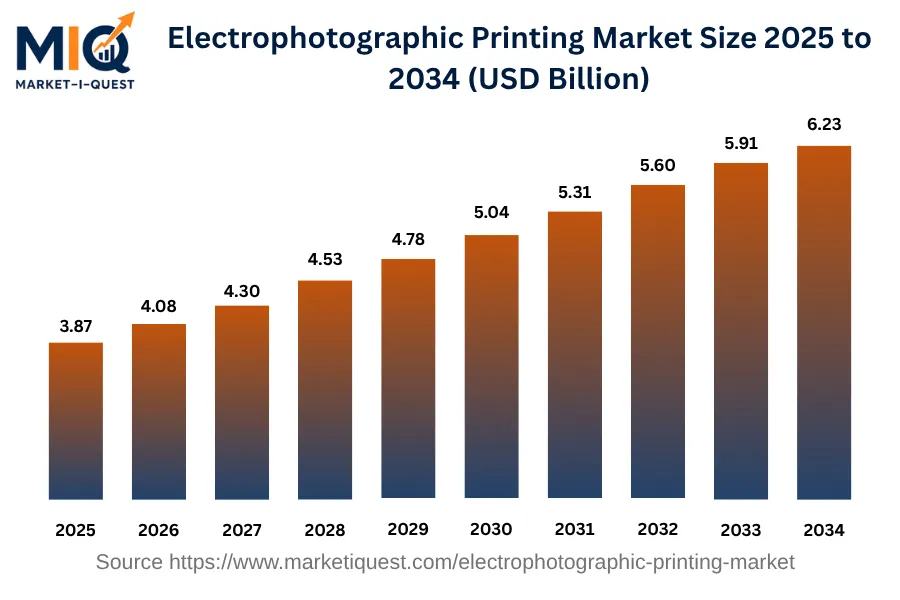
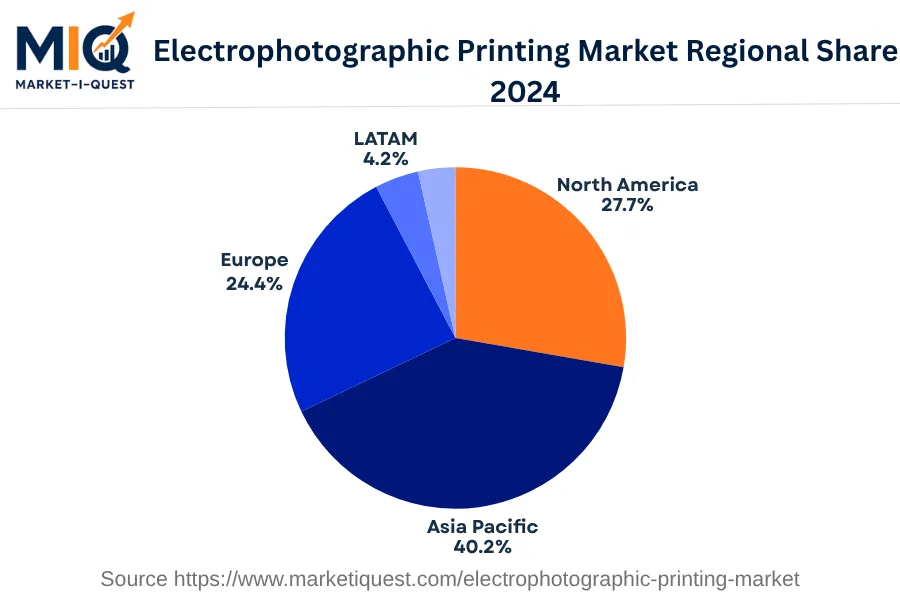
The Electrophotographic Printing Market was sized at USD 3.87 billion in 2025 and will grow to reach USD 6.23 billion by 2034, with an overall CAGR of 5.43%. This growth trajectory signifies an increase in market value from 2024 size of USD 3.67 billion. The expansion over these years is a reflection of increased demands and technological innovations in the industry. The market has been buoyed by technological advancements and growing demands leading to a steadily rising growth rate. In terms of regional share in 2024, Asia Pacific region accounted for highest share at 40.18%, followed by North America at 27.73%, and Europe at 24.41%. The shares of Latin America and Middle East & Africa were 4.16% and 3.52% respectively.

Key Takeaways

  • By Component - Toners led the Electrophotographic Printing Market in terms of usage in recent years.
  • By Type - Monochrome Printing dominated in the base year.
  • By End User Industry - Advertising held a significant position in the Electrophotographic Printing Market.
electrophotographic-printing-market market size

Key Driving Factors

Transition of Hardcopy to Digital Documentation

As mainstream workflows are moving towards digitization, there is an increasing need for printers capable of translating digital files into hardcopies accurately. Electrophotographic printing has become a key technology being adopted, due to its ability to render fine details and accurate colors, making it an optimal choice for professional sectors like publishing, photography, and advertising. The shift is particularly seen in developed regions like North America and Europe, where digital transformation is in advanced stages and demand for high-quality printed output is high. Hence the transition from traditional documentation methods to digital workflows is significantly driving adoption of electrophotographic printing solutions.
Stricter Environment regulatory measures

Increasing focus on sustainable operations and stringent environmental regulations demand businesses to adopt more eco-friendly procedures. Traditional printing methods use solvents that can be harmful to the environment. Electrophotographic printers, however, rely on toners that are less harmful and produce less waste, making them a preferred choice for environmentally conscious organizations around the globe. In areas where environmental regulations regarding hazardous waste produced by the printing industry are rigid, the shift towards electrophotographic printing becomes almost mandatory. Hence, the thrust towards sustainability and rising regulatory pressure are fostering adoption of electrophotographic printing technology.

Market Evolution by Timeline

2019-2023
In 2019-2023, Asia-Pacific region, led by China and India, witnessed a rising demand for electrophotographic printing mainly from advertising and packaging industries. Significant technological advancements like HP's duplex speed technology started shipping in this period. But the integration of these technologies faced some initial hiccups. Regulatory policies like ISO/IEC 24734 encouraged manufacturers to ensure print speed accuracy. Contractually, usage-based pricing gained popularity, and partnerships were primarily between printer manufacturers and ink suppliers. The primary risk during this period was the compatibility issues between different manufacturer's hardware and software.
2024
In 2024, the electrophotographic printing market experienced a shift in demand towards North America, particularly by corporations in healthcare sector. The supply side saw Canon introducing UV gel electromechanical printing technology providing a basis for complete workflow automation. The integration of these new technologies matured. The revisions in Energy Star Program directed manufacturers to incorporate energy-efficient features. The commercial model remained usage-based pricing but witnessed a surge in partnerships between manufacturers and automation software providers. The risk of inconstant energy usage rates impacted profitability of manufacturers.
2025-2029
During 2025-2029, the demand for electrophotographic printing was well distributed across North America, Europe, and Asia-Pacific regions due to a spike in e-commerce industry. Significant technological developments like Epson's Precision Core technology started making waves in the market. This technology needed considerable lead time to integrate. European Union's Ecodesign Directive encouraged manufacturers to adopt eco-friendly measures. The pricing model shifted to flat-rate contracts, and manufacturers started partnering with e-commerce platforms. The risk of depleting resources negatively affected the overall market sentiment.
2030-2034
In 2030-2034, Latin America, especially Brazil and Mexico, showed higher demand for electrophotographic printing, mostly from the retail sector. On the supply side, advancements like Ricoh's VCSEL technology transformed the landscape. However, seamless integration of this technology took a substantial amount of time. Environmental regulations like the Brazilian Forest Act induced the use of sustainable materials. The commercial model evolved with most contracts becoming subscription-based, and saw tie-ups between manufacturers and sustainability consultancies. The risks of non-compliance to environmental regulations gained prominence.

Future Market Outlook

Future Opportunities

The future landscape of the electrophotographic printing market is poised for notable changes supported by current strategic partnerships and innovation initiatives. For instance, as sustainability becomes paramount, companies like Epson are investing in 2023's research to develop printers that utilize less energy and generate fewer carbon emissions. Collaborative ventures between printing firms and software companies to create smart manufacturing platforms will likely drive efficiencies, with IBM recently announcing a new partnership aimed at integrating AI technologies into print production. The adoption of Industry 4.0 practices is anticipated to encourage firms to refine their operations through automation and real-time monitoring solutions. Emerging markets in Asia-Pacific, particularly in countries such as India and Vietnam, are witnessing increased demand for affordable printing solutions, creating a fertile ground for manufacturers to expand their footprint. Furthermore, as remote work practices remain prevalent, opportunities in on-demand printing services are positioning themselves as a vital asset to cater to fluctuating market needs. The rise in personalization trends is pushing companies to explore specialized applications in packaging and label printing, prompting shifts in production capabilities. Regulatory frameworks that favour digital ink solutions, including standards introduced by the FTA in 2022 to promote safe printing practices, will likely incentivize investment and innovation in the sector. Such developments suggest that the electrophotographic printing market is navigating towards a future characterized by greater efficiency, enhanced product offerings, and increased consumer engagement, all while addressing pressing environmental concerns.

Segmentation Analysis

By Component

The market is divided into subsegments including Toners, Drums, Fusers, Transfer Belts, and others. Out of these, Toners accounted for the largest revenue share while Fusers is expected to grow at the fastest CAGR during the forecast period.

Largest Revenue Share

Toners

Market Share Leader

Toners, as a component in the printing industry, generate the largest revenue, primarily driven by their high demand and fundamental role in the printing process. They are the most consumed component and require frequent replacements, maintaining a constant demand in the market. Their universal applicability across different printing devices adds to the high revenue generation. Toners are widely preferred by customers for their affordability and superior print quality, especially in professional and business domains where high-quality prints are essential. Significant demand originates from the commercial sectors, which include offices, educational institutions, and print service providers, contributing to their large market share. Geographically, regions with high corporate and industrial density reported increased usage of toners, attributing to their wide-scale adoption in developed regions like North America and Europe. The purchasing channels are also quite mature, with offline stores, online marketplaces and direct dealings from manufacturers. Regulation and supply constraints somewhat exist but have minimal impact on the overall toner segment's revenue generation.

Fastest CAGR

Fusers

Forecast Period Growth Leader

While Toners generate the most revenue, the fastest-growing segment is Fusers, driven primarily by evolving technology and a growing requirement for efficient printing. The primary role of Fusers in creating crisp, clear images while ensuring no smudging underlines their importance in high-quality printing processes. Fusers are essential for modern, fast, and high-volume printers, attributable to the increase in demand, especially from commercial printing sectors. However, limited awareness about the role and significance of Fusers in improving print quality acts as a barrier to their adoption. Technological advancements that increase the lifespan of Fusers or enhance their efficiency can act as a growth catalyst. Better fuser technology can also reduce the total cost of ownership of printers, making them more popular among cost-conscious commercial establishments. Partnerships between printer manufacturers and component suppliers can help overcome adoption barriers and push growth. Companies may face near-term risk from the overall downtrend in the printing industry, but the demand for Fusers in high-volume printing provides definite growth potential.

By Type

The market is divided into subsegments including Monochrome Printing and Color Printing. Monochrome Printing accounted for the largest revenue share while Color Printing is expected to grow at the fastest CAGR during the forecast period.

Largest Revenue Share

Monochrome Printing

Market Share Leader

Monochrome Printing remains the largest revenue contributing sub-segment in light of its longstanding prominence in various sectors, taking the lion share of market revenue. Monochrome printers represent a solution for businesses aiming to maintain printing costs down while achieving quality outputs. They are commonly utilized in business operations that require substantial text-based print outputs such as legal, finance, education, government, and corporate environments where color printing isn't paramount. Additionally, monochrome printers are typically faster, more durable and have lower maintenance requirements compared to their color counterparts, making them a more favorable option for high-volume printing, thereby driving revenue generation. They also have affordable supplies, a factor that encourages businesses to opt for these printers to meet their needs, contributing to its position as the revenue leader in 2024.

Fastest CAGR

Color Printing

Forecast Period Growth Leader

Despite Monochrome Printing's dominance in revenue terms, Color Printing is projected as the fastest-growing sub-segment. This growth is primarily driven by the increasing demand for high-quality, vibrant prints in various industries such as advertising, graphic arts, and packaging. Technological advancements have reduced the cost-per-print for color printers, making them a feasible option for more businesses. Furthermore, the advent of advanced color printers offering improved image quality and versatility accelerates its market adoption. Businesses are now capable of creating impressive marketing materials in-house instead of outsourcing, providing cost-saving opportunities. However, higher maintenance costs and the need for frequent replacements of multiple color cartridges could pose adoption barriers. Overall, with the progressive shift towards digitization and personalized printing solutions, color printers are expected to experience rapid market growth.

By End User Industry

The market is divided into subsegments including Advertising, Packaging, Manufacturing, Education, Others, out of which Advertising held the largest revenue share in 2024 while Packaging is expected to grow at the fastest CAGR during in the future period.

Largest Revenue Share

Advertising

Market Share Leader

In 2024, Advertising emerged as the subsegment with the highest revenue. The advertising industry has been a critical cornerstone in the global economy, driving the promotion of goods and services across diverse platforms. The increase in digitalization and online media platforms has led to an escalated demand for advertising services. The profound impact of social media and online marketing has facilitated advertisers to reach a broader audience, thus contributing to revenue growth. Core factors driving revenue include increased customer engagement on online platforms, the integration of AI & big data for targeted advertising, and the rise of influencer marketing. Besides, the endeavor of businesses to expand their customer base and increase market share continually fuels demand. Even countries with robust economies contribute significantly as the spread of internet services and digital devices provides a lucrative platform for advertisers.

Fastest CAGR

Packaging

Forecast Period Growth Leader

Despite not being the largest revenue subsegment in 2024, Packaging is anticipated to experience the fastest growth in years to follow. Advanced technology integration into the packaging sector, like smart packaging and the rise in sustainable and eco-friendly packaging solutions, may lead to market expansion. Policy drivers, such as public awareness and stringent regulations regarding plastics and waste management, also act as a catalyst for industry growth. Further, the surge in e-commerce and online retailing has led to increased demand for innovative packaging solutions that ensure product safety while enhancing user experience. However, the global instability and ever-changing industry norms can pose as risks in this subsegment's accelerated growth journey. Future capex, strategic partnerships, and joint ventures hold promising potential in overcoming these barriers to adoption and expanding market reach.

Competitive Analysis

Key Market Players

Manufacturers / OEMs

Xerox Corporation
US
HP Inc.
US
Canon Inc.
Japan

Key Suppliers & Raw Materials

3M Company
US
FujiFilm Holdings Corporation
Japan
ARC Document Solutions Inc.
US

Distributors, Integrators & Channel Partners

Electronics For Imaging, Inc.
US
Epson America, Inc.
US
Staples, Inc.
US

Porter’s Five Forces Analysis

This analysis will explore the competitive forces at play within the Electrophotographic Printing Market.

Supplier Bargaining Power

Medium

The market depends on proprietary technologies and raw materials, giving suppliers moderate bargaining power.

Buyer Bargaining Power

High

Numerous suppliers and digital alternatives increase the buyers' bargaining strength.

Threat of Substitutes

High

Rapid advancement in digital technologies poses a significant threat of substitutes.

Threat of New Entrants

Low

Market entry requires large capex and proprietary technology, setting entry barriers high.

Competitive Rivalry

High

Intense rivalry exists among existing players due to low differentiation and high industry growth.

Regional Analysis

Geographic market dynamics and growth opportunities across key regions

Global Market Outlook

electrophotographic-printing-market market regional share

North America

In 2024, the North American Electrophotographic Printing Market demonstrated notable growth due to several influencing factors and trends. Adoption of this technology was spurred by regulatory approvals increasing investment in both the United States and Canada, where the Federal Communications Commission and Industry Canada respectively endorsed electrophotographic printing. Pricing agility was also a significant driver, with the Mexican market reaching competitive levels, facilitating supply dynamics and enhancing market penetration in the country.

Changing buyer behavior revealed a rising preference for high-quality, digital prints and non-impact printing methods, resulting in a rising demand from sectors such as healthcare, manufacturing, and retail. An observable shift within product development saw greater R&D focus on color electrophotographic printers, reflecting the industry’s response to the market’s burgeoning needs. Channels altered as well, with e-commerce gaining traction, especially in the United States.

Industries started embracing end-to-end electrophotographic printing solutions, marked by notable partnerships and Mergers & Acquisitions, such as Xerox's acquisition strategy to consolidate its market position. A stricter enforcement of environmental policies also propelled the market, mandating the use of eco-friendly printing technology across industries. In summary, the North American Electrophotographic printing market in 2024 was largely shaped by regulatory developments, evolving customer demands, and a commitment towards sustainable practices.

Asia Pacific

In 2024, the electrophotographic printing market in the Asia-Pacific region evidenced a noticeable growth propelled by increasing demand from emerging economies, technological advancements, and favorable regulatory norms.

Fundamental drivers included the growing adoption of electrophotographic printing technology in developing nations, like India and China, owing to rapid industrialization and an uptick in various sectors such as retail, healthcare, and manufacturing. Furthermore, governmental initiatives in these countries, encouraging digitalization in public administration, propelled the demand for efficient printing techniques, directly sparking growth in the market.

Marked trends in the market were led by shifting buyer preferences with a lean towards high-speed and high-resolution printing for applications in enterprise solutions. Additionally, technological advancements in color electrophotographic printing and rising demand from the publishing industry significantly shaped the market dynamics.

Trade liberalization under the Comprehensive and Progressive Agreement for Trans-Pacific Partnership further facilitated supplier and consumer interactions in key markets like Japan, Australia, and ASEAN countries. A surge in partnerships and M&A activities, primarily in South Korea, also augured well for the market, enabling technology transfer and capacity expansion.

In summary, the electrophotographic printing market in 2024 in the Asia Pacific witnessed robust growth driven by technology adoption in diverse sectors and favorable policies, coupled with evolving buyer-tastes and strategic collaborations.

Europe

In 2024, the European market for electrophotographic printing significantly thrived due to various drivers and emerging trends. Key drivers include tightened environmental regulations across EU member states, which prompted a shift to more sustainable, electrophotographic methods. The surge in remote work fostered by the pandemic in previous years encouraged businesses and entities within sectors such as enterprise, government, and healthcare to invest in improved print technology. The consequent expansion of digital infrastructure also facilitated wider technology adoption especially in regions such as Germany, the United Kingdom, Italy, France, Spain, and the Nordics. Lastly, cost-effective supply dynamics for raw materials, coupled with competitive pricing strategies, fueled the market's growth.

Trends, on the other hand, were shaped by the demand for enhanced print quality and efficiency. Buyers gravitated towards electrophotographic technology due to its superior output, which subsequently shifted the product dynamic. Multi-business alliances to promote such technology and M&A activities were observable, particularly in industries including utilities, manufacturing, and retail. The adherence to European standards for print technology significantly influenced these partnerships. Moreover, policy enforcement, particularly in Benelux and Central & Eastern Europe, accelerated market consolidation, creating a more competitive environment.

Latin America

In 2024, Latin America's Electrophotographic Printing Market experienced substantial growth propelled by various demand factors and technology adoption. The expansion in sectors like healthcare, retail and manufacturing underpinned the increased demand for electrophotographic printing technology. In Brazil and Mexico, governmental investments in public sector digitization accelerated the market, boosting demand for high-quality and efficient printing solutions. Additionally, progressive reduction in technology costs bolstered market growth, particularly in Argentina and Colombia, where small and medium enterprises significantly adopted this technology due to its cost-efficiency.

Trends propelling this market included a substantial shift towards personalized printing services in the retail sector, seen notably in Chile and Peru. This was primarily driven by consumer preference evolution and increasing online retail penetration. In addition, innovative partnerships merged, notably among tech and manufacturing companies, fueling technology development and market competitiveness. There was also an increase in regulation enforcement in environmental sustainability. Squared on the rise of paperless operations, this enforced standards promoting durable and energy-efficient printing models. Consequently, manufacturers in Brazil and Argentina focused on developing electrophotographic printing systems fulfilling these standards. Overall, the key drivers and trends paint a picture of a market responding proactively to demands and challenges.

Middle East & Africa

In 2024, the Electrophotographic Printing Market in the Middle East and Africa showcased a continuing growth, driven by several essential factors. The market saw an increasing demand, particularly in sectors such as telecom, financial services, healthcare, and utilities, with countries like Saudi Arabia, UAE, and South Africa leading the region's market. Increased investment in technology was one significant driver, as entities in these sectors sought to improve their document processing capabilities. The implementation of favorable regulations, such as Saudi Arabia's Vision 2030 and UAE's Strategy for the Fourth Industrial Revolution, also facilitated the technology's adoption.

The limited supply dynamics in some nations like Nigeria and Kenya intensified the competition and elevated pricing. Strong trends emerged as well. There was a notable shift in buyer behavior, emphasizing efficient and quality printing. Israel's manufacturing sector, for example, leaned towards electrophotographic printing for high-quality material output. The rise of partnerships and M&As, especially in countries like Egypt, fueled the market growth, and standardization efforts, such as South Africa's National Norms and Standards for the management of electronic records, boosted the market confidence in electrophotographic printing. Finally, the enforcement of stringent document handling policies within governmental bodies in Qatar stirred more interest in this technology.

Recent Industry Developments

Latest market innovations, product launches, and strategic initiatives

February 2026

Researchers successfully synthesized activated carbon black from coconut shell waste using a low-temperature alkali treatment to serve as a sustainable black colorant in electrically conductive toner powders. This directly addresses the electrophotographic printing industry's reliance on expensive, non-renewable coal and lignite for toner production, establishing a fully bio-derived alternative.

March 2025

A novel digital twin-based hybrid simulation-prediction framework was established exclusively for electrophotographic digital printing to optimize key performance indicators (KPIs) in sustainable production. This framework allows manufacturing units to operate autonomously and respond dynamically to changes in orders and operational disturbances within an Industry 4.0 paradigm.

Frequently Asked Questions