
Electric Shavers Market Snapshot

Key Players

  • Philips N.V. (Netherlands)
  • Braun GmbH (Germany)
  • Panasonic Corporation (Japan)
  • Remington Products (US)
  • Société BIC (France)
  • Conair Corporation (US)
  • Wahl Clipper Corporation (US)
  • Spectrun Brands (US)
  • Andis Company (US)
  • Hangzhou Xute Sanitary Ware Co. Ltd. (China)

Market Size

Base Year 2024
$13.86 Bn
CAGR
5.6%
Forecast 2034
$23.90 Bn

Market Segments

By Product Type
  • Foil Shavers
  • Rotary Shavers
  • Wet & Dry Shavers
  • Clippers
  • Others
By Distribution Channel
  • Offline
  • Online
By End User
  • Male
  • Female

Market Dynamics

Drivers
  • Rising consumer disposable income
  • Increasing male grooming trends
Restraints
  • High product cost
  • Availability of alternatives
Opportunities
  • Rising consumer disposable income
  • Increasing male grooming trend

Market Size

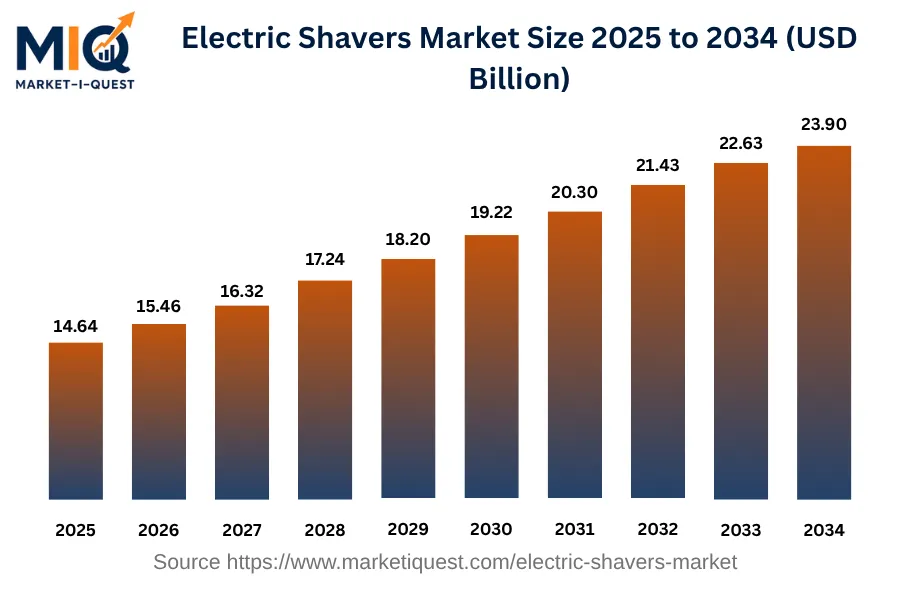
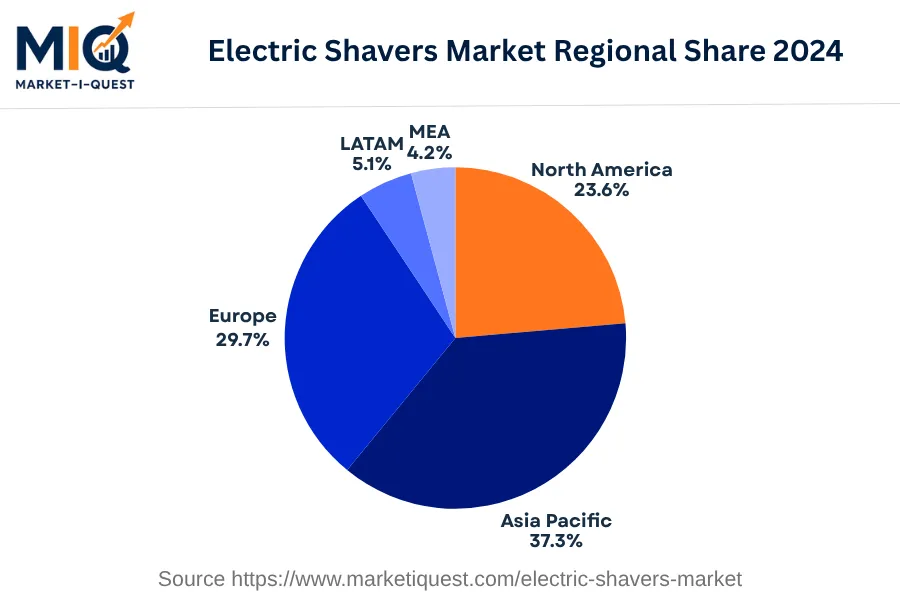
The Electric Shavers Market valued at USD 14.64 billion in 2025 and projected to grow to USD 23.90 billion by 2034, with a CAGR of 5.6%. The market growth is attributed to technological advancements and shifting customer preferences for personal grooming products. In 2024, regional share data shows that highest percentage of market was in Asia Pacific region, accounting for 37.3% of total market. North America with 23.6% and Europe with 29.7%. The remaining market percentage was divided between LATAM and MEA, accounting for 5.1% and 4.2% respectively.

Key Takeaways

  • By Product type - Foil Shavers emerged as the leader in 2024.
  • By Distribution Channel - Offline held the majority share in 2024.
  • By End User - Female subsegment accounted for a significant portion of the market in 2024.
electric-shavers-market market size

Key Driving Factors

Shift towards Men's Grooming Trends

In recent years, with a noticeable shift in public sentiments on male grooming with a growing demand on personal appearance and hygiene. Men are increasingly investing in grooming products, including electric shavers for maintaining a well-groomed appearance as it is often regarded with professional success and personal satisfaction. This shift is more common within millennials and gen Z consumers. Due to emergence of social media influencers and celebrity endorsements of grooming products, younger consumer are more likely to regularly use electric shavers for beard styling and body grooming. Companies are capitalizing on this trend by producing a wide range of electric shavers designed for varying grooming needs, thereby driving the market growth.
Impact of COVID-19: Home Grooming Preferences

The recent COVID-19 pandemic has significantly affected electric shavers market. Lockdown and social distancing measures have led to the closure of salons and barber shops in various regions, forcing consumers to adopt at-home grooming routines. This has driven demand of electric shavers making it essential tool for at-home grooming. Hence, consumers are preferring electric shavers that offer the convenience of use and hygienic grooming solution at home. Thus, transition to home-grooming routines due to impact of COVID-19 is a major factor driving growth of electric shavers market.

Market Evolution by Timeline

2019-2023
During this period, electric shavers market experienced a shift from wired to wireless models, driven by consumer preferences for convenience and mobility. North America and Europe remained significant buyer markets due to higher disposable incomes and greater acceptance of premium product categories. Technologically, the period saw a trend towards more integrated shaving systems, including self-cleaning and lubricating models. Key manufacturers such as Panasonic and Braun remained leading the market. The industry followed regulatory standards like ISO 9001 shifting around quality management. Thus, manufacturers often integrated electric shavers with grooming kits and offered them through e-commerce channels.
2024
In 2024, electric shavers market saw a rise in demand from Asian markets, particularly from China and India, due to rising disposable income and grooming awareness. In terms of supply, technologies allowing for customizations like adjustable speeds and guards. This year indicated maturation of wireless electric shavers supply chain, leading to a reduction in prices. The entry of new local manufacturers in Asian markets led to stringent compliance to IEC 60335-2-8 regulations for safety features in electric shavers. Thus, traditional retailing channel remained dominant, but online sales saw a steady rise with sellers tying up with retailers for exclusive online launches.
2025-2029
This period will be characterized by sustainability is likely to become a key buying factor, leading to an increase in adoption of energy-efficient and eco-friendly electric shavers. With increasing usage of recyclable materials in production became common due to policies such as EU's Eco-design Directive. With the increasing adoption of smart technologies and IoT connectivity, allowing features such as automated troubleshooting and settings optimization. Partnership models with cosmetics companies became commonplace, leading to co-branded products and improved distribution channels. Thus, pricing models began to include warranty and maintenance services, adding value for customers.
2030-2034
By this time, electric shavers smart features will be standard, driven by mature IoT technologies. Buyer profiles had significantly expanded, including younger and a growing female market segment. Demand is likely to remain higher in Asia with Africa showing increasing growth due to improved access and affordability. Manufacturers will start adopting AI for predictive maintenance and personalized experiences. Local regulations in multiple countries will start requiring energy consumption labeling, reflecting EU's Eco-design Directive. Thus, commercial strategies will involve partnering with lifestyle brands, and subscription models will become common for providing replacement blades and cleaning solutions.

Future Market Outlook

Future Opportunities

The shifting consumer preferences for customization and personalization are presenting numerous growth opportunities within the electric shavers market. In 2023, companies such Remington launched electric shavers with adjustable settings, allowing users to tailor their shave according to skin sensitivity and hair thickness enhancing user satisfaction. Additionally, as more consumers engage with grooming through social media platforms, brands are utilizing this trend for creating interactive marketing strategies. Manufacturers are increasingly led by data insights from social media, leading to developed products that address consumer needs highlighted by user-generated content. Regions like North America and Europe are seeing a rise in subscription models for personal care products, presenting an avenue for electric shaver brands to offer recurring delivery services. Companies like Dollar Shave Club are establishing within industry by targeting customers who prefer convenient grooming experiences. The current focus on health and wellness adds an engaging dimension to the market, encouraging manufacturers to explore features such facial cleansing attachments and skin health monitoring. By 2024, collaborations with tech firms led to advancements in connected devices, integrating artificial intelligence to analyze shaving performance. As regulatory bodies highlights user safety and product quality, compliance to certifications from organizations like ASTM is likely to boost consumer confidence and shape future innovations.

Segmentation Analysis

By Product Type

The market is divided into subsegments including Foil Shavers, Rotary Shavers, Wet & Dry Shavers, Clippers, and Others. Among these subsegments, Foil Shavers accounted for the largest revenue share while Wet & Dry Shavers is expected to grow at the fastest CAGR during the forecast period.

Largest Revenue Share

Foil Shavers

Market Share Leader

Foil shavers held the largest revenue share of the segment due to their superior functionality and performance, delivering a closer shave than other options. With the unique design, consisting of thin, perforated metal foils covering blades contributes to providing exceptional precision, a feature highly prioritized by consumers focusing on close and quick shave. As traditional shaving method, foil shavers hold strong awareness and trust within users significantly enhancing demand. Majorly promoted targeting men making them a large consumer base for shaving products. Thus, these factors together have led to foil shavers controlling a significant market share.

Fastest CAGR

Wet & Dry Shavers

Forecast Period Growth Leader

Wet & Dry Shavers are projected to be fastest-growing segment, primarily driven by their convenience and versatility. These shavers are waterproof, allowing users to shave either with foam or gel for a comfortable shave, making them highly attracting to a broad customer base. The rising consumer trends toward electric shavers offering both wet and dry shaving capabilities has accelerated their demand. Technological advancements enhancing battery life and cutting efficiency of such shavers are likely to act as catalyst for their growth. With the projection of reduction in prices in near-future with various technological advancements is further driving the growth. This, with this investment in R&D might supporting in holding higher market share.

By Distribution Channel

The market is divided into subsegments including Offline and Online distribution channels. In 2024, the Offline channel accounted for the largest revenue share while the Online channel is expected to grow at the fastest CAGR during the forecast period.

Largest Revenue Share

Offline

Market Share Leader

The Offline channel continue leading the market revenue due to several factors. Whereas, established businesses are likely to be anchored in traditional methodologies, having places where goods or services are sold or exchanged. This allows rapid fulfillment and in many cases, allows for customer interaction and instant feedback that many businesses value. Geographic analysis plays a major role with offline distribution being prevalent in less developed regions with low internet usage. Moreover, Specific goods have essential qualities such as high-value items, perishables. Thus, regulatory aspects like taxes, tariffs and laws surrounding e-commerce may also influence to switching to offline channel.

Fastest CAGR

Online

Forecast Period Growth Leader

Online channel is expected to exhibit fastest growth within forecasted period. Due to rapid technological advancements with improving globa; digital infrastructure. The COVID-19 pandemic significantly accelerated shift towards increased digitalization and change in behavior are likely to have lasting impact. The rise of e-commerce has likely to reach wider range of customers from various geographical locations with lower capital expenditure. Furthermore, technological innovations such as AI and data analytics can provide businesses with valuable information on consumer behavior, allowing more targeted and efficient marketing strategies. Thus, policies for encouraging digital transformation is also a significant driver for growth of the sector.

By End User

The market is divided into sub-segments including male and female end users. In the base year 2024, the female sub-segment accounted for the largest revenue share while the male segment is expected to grow at the fastest CAGR during the forecast period.

Largest Revenue Share

Female

Market Share Leader

The female subsegment leads the market in terms of revenue generation due to several reasons. Primarily, a wider selection of products and services are available for female consumers, spanning personal care, fashion, healthcare and even traditionally male-dominated industries such as automobiles and technology. Females subsegment indicates a higher propensity for recurring purchases and loyalty to particular brands. The rise in female spending power due to significant rise in females subsegment highlighting in workforce and leadership roles subsequently drove this trend. Expansion of female-focused marketing campaigns has strengthened purchasing behaviors. Notably in certain regions, specifically in developing regions. Thus, increased focus on women empowerment and education led to rise in female consumer behavior.

Fastest CAGR

Male

Forecast Period Growth Leader

Male subsegment indicate a promising and speedy growth with a steady CAGR. Increasingly, companies are recognizing emerging potential of male consumer market, particularly in sectors such as personal care and fashion which have traditionally been female-dominated. Whereas, male consumers have shown an increased interest to spend on personal grooming and lifestyle products. Technological advancements combined with strategic advertising campaigns aimed towards male profile begun to dismantle existing barriers, leading to increased adoption rates. Additionally, rising trend of self-care and fitness with males contributes to this growth. A detailed understanding of male consumer behavior, preferences and spending patterns will be critical for sustainable growth in this fast-growing market segment.

Competitive Analysis

Key Market Players

Manufacturers / OEMs

Philips
Netherlands
Braun (P&G)
Germany
Panasonic
Japan

Key Suppliers & Raw Materials

Murata Manufacturing
Japan
Global Tungsten & Powders
US
Sandvik Coromant
Sweden

Distributors, Integrators & Channel Partners

Amazon
US
Argos
UK
Alibaba
China

Porter’s Five Forces Analysis

This analysis evaluates the competitive intensity and attractiveness of the Electric Shavers Market.

Supplier Bargaining Power

Medium

Relatively balanced power due to the availability of suppliers and necessary manufacturing inputs.

Buyer Bargaining Power

High

Numerous options and information access drives high buyer bargaining power.

Threat of Substitutes

Medium

Threat is moderate due to alternatives like razors, but comfort and convenience limit it.

Threat of New Entrants

Low

Technology, brand recognition and distribution network form significant entry barriers.

Competitive Rivalry

High

Large industry players and frequent product innovations lead to high competitive rivalry.

Regional Analysis

Geographic market dynamics and growth opportunities across key regions

Global Market Outlook

electric-shavers-market market regional share

North America

In 2024, the North American Electric Shavers market experienced distinct changes driven by various socioeconomic elements and market dynamics. The escalating demand for grooming products and increased aesthetic consciousness among consumers refined the market. In Canada, stringent regulations necessitating energy-efficient appliances sparked some investment into innovative solutions. Meanwhile, in the U.S., the growing adoption of cutting-edge shaving technologies such as gyroflex 3D systems was evident. Furthermore, the mushrooming of online retail platforms reshaped supply dynamics, offering competitive pricing and amplifying sales.

Simultaneously, key trends shaping the market included shifting buyer preferences towards multifunctional, rechargeable electric shavers, largely driven by the American youth population. Technological advancements, like the integration of IoT in grooming devices, gained popularity across North America. Fierce competition led businesses to form strategic partnerships, consolidating their position in the market. In response to environmentally conscious consumers, the U.S. Federal Trade Commission enforced the 'Appliance Labeling Rule,' obliging manufacturers to provide energy consumption information.

Asia Pacific

In 2024, the electric shavers market in Asia Pacific witnessed robust growth, spurred by several defining factors. Primary drivers included an increasing fashion-conscious urban populace (most notably in China, India, and ASEAN markets) and rigorous investment in grooming and personal care products. An upsurge in disposable income and rapid technology adoption led to a proliferation of product variants, escalating competition in supply dynamics. China's uregulation of e-commerce platforms also influenced pricing, making electric shavers more affordable.

In terms of trends, Chinese and Japanese manufacturers launched AI and IoT-enabled shavers, catering to a technologically adept customer base. The proliferation of these advanced shavers shaped buyer behavior, bolstering demand for integrated and multi-functional electric shavers, particularly in markets like South Korea and Australia. A shift to online retailing platforms, fueled by China's E-commerce Law and India's Digital India initiative, was another observable trend. In Japan and South Korea, manufacturers honed in on women consumers, strengthening partnerships with beauty and personal care enterprises.

In sectors like healthcare, electric shavers for clinical applications saw steady demand, while in retail and e-commerce, comprehensive product offerings and competitive prices heightened market influence. Overall, electric shavers market in Asia Pacific demonstrated strong growth potential in 2024, marked by nuanced perceptions of grooming and shifting channel dynamics.

Europe

In 2024, Europe's electric shavers market saw significant dynamism reflecting changing consumer behaviors and technological advances. Driven by rising personal grooming standards, particularly in countries like UK, Germany, and Nordics, demand for electric shavers substantially rose. A surge in online shopping in Spain, France, and Italy fueled this growth further, making these devices readily available. Investment in R&D by companies like Braun and Philips, coupled with wide-ranging adoption of novel technologies, enhanced product efficiency, promoting market expansion.

Trends spotlighted a shift in consumer preference towards environmentally friendly and energy-efficient devices, obliging manufacturers to focus on sustainability. Rise of e-commerce platforms as preferred distribution channel was prominent, prompted by the convenience of online shopping and varied product options. Mergers and acquisitions were frequently observed in this market, with Braun's acquisition of Remington standing out for its impact on shaping the market landscape. Regulators enforced strict standards on quality and safety of electric shavers, steering companies towards innovation and stringent quality control. The electric shavers' market in 2024 intersected with various customer sectors, from individuals seeking personal grooming tools, retail stores selling these devices, to companies in manufacturing sector that produce these devices.

Latin America

In 2024, Latin America's electric shavers market demonstrated robust growth, driven primarily by changing consumer grooming habits and augmented purchasing power. Countries like Brazil, Mexico and Argentina, accounted for a substantial proportion of the market due to increased awareness and adoption of products. Key drivers included advances in battery technology, leading to enhanced product longevity, along with a surge in investments by global electric shaver manufacturers focusing on innovation. This propelled supply dynamics favorably in line with demand. Regulatory relaxation also facilitated expansion of international brands in countries like Colombia. Moreover, competitive pricing strategies were implemented to lure a larger customer base, notably in Chile and Peru, where disposable income levels showed considerable growth.

Shifting trends, on the other hand, centered around a rise in e-commerce sales of electric shavers. Consumers exhibited increased preference for online shopping due to wide range of products it offers and promising guarantees. Meanwhile, partnerships and mergers between local retailers and international manufacturers became more frequent to consolidate the market share. Furthermore, stricter policy enforcement around traditional blade razors in public places resulted in increased adoption of electric shavers by enterprises, particularly in hospitality and tourism sectors. This was most noticeable in Brazil and Mexico, where these sectors thrive.

Middle East & Africa

In 2024, Electric Shavers Market in Middle East and Africa experienced a substantial development phase. Key drivers included rising aesthetic consciousness, a surge in disposable income, and significant technological improvements in electric shavers. In nations like Saudi Arabia and United Arab Emirates, governments relaxed strict regulations, providing a conducive environment for market growth. The adoption of advanced shaving technologies by younger demographics was particularly noticed in countries like Qatar, Egypt, and South Africa.

Simultaneously, certain trends shaped the market in 2024. Consumer preference for convenient and quick grooming solutions led to increased demand for premium and technologically advanced electric shavers. Additionally, distribution channel shifts were observed, with a preference for buying these products online, particularly in Egypt, Nigeria, and Kenya. Corporate partnerships, like Unilever's partnership with Philips in electric shavers sector in Saudi Arabia also influenced market dynamics. Key consumers emerged from telecom, financial services, and government sector, where demand for a well-groomed appearance was high. In Israel, healthcare sector showed a substantial demand for electric shavers. The increasing population in urban areas across these regions, coupled with rise in modern retail outlets, fostered growth for electric shavers market in Middle East and Africa in 2024.

Recent Industry Developments

Latest market innovations, product launches, and strategic initiatives

May 2026

Panasonic officially released Generation 4 of its Arc 5 PRO electric shavers in US market. This development marks a significant shift in their hardware ecosystem, as the company finally abandoned its proprietary charging ports in favor of universal USB-C charging for its premium shaver line.

June 2025

Braun released its newest generation of Series 9 PRO+ (the 96xx series) onto its UK platform, months before it became available in other regions like US. This update to their flagship foil shaver line introduced a new 96M foil head and an upgraded beard density sensor, continuing their strategy of incremental high-end market updates.

April 2025

Philips announced the launch of its new i9000 range of rotary electric shavers. This release heavily integrated AI-driven personalization, featuring an intelligent sensor that reads hair density 500 times per second to automatically adjust the motor's cutting power.

Frequently Asked Questions