Dual Clutch Transmission Market Snapshot

Key Players

  • Eaton Corporation (United States)
  • ZF Friedrichshafen (Germany)
  • Getrag (Germany)
  • Schaeffler (Germany)
  • BorgWarner (United States)
  • Hyundai Powertech (South Korea)
  • Mitsubishi Motors Corporation (Japan)
  • LuK GmbH (Germany)
  • Porsche (Germany)
  • Dongfeng Motor Corporation (China)

Market Size

Base Year 2024
$36.92 Bn
CAGR
7.58%
Forecast 2034
$76.66 Bn

Market Segments

By Type
Dry, Wet
By Clutch Type
Single Plate Clutch, Multi Plate Clutch
By Gearbox Type
Manual Gearshift, Automated Gearshift
By Application
Passenger Vehicles, Commercial Vehicles

Market Dynamics

Drivers
  • Rising vehicle production
  • Technological advancements in automotive industry
Restraints
  • High maintenance costs
  • Limited market awareness
Opportunities
  • Growing electric vehicle industry
  • Technological advancements in transmission systems

Market Size

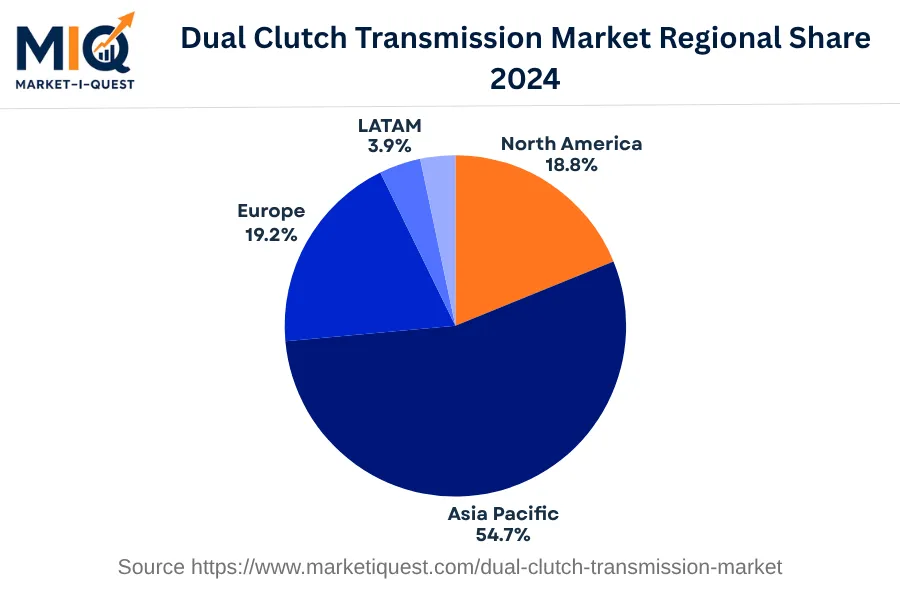
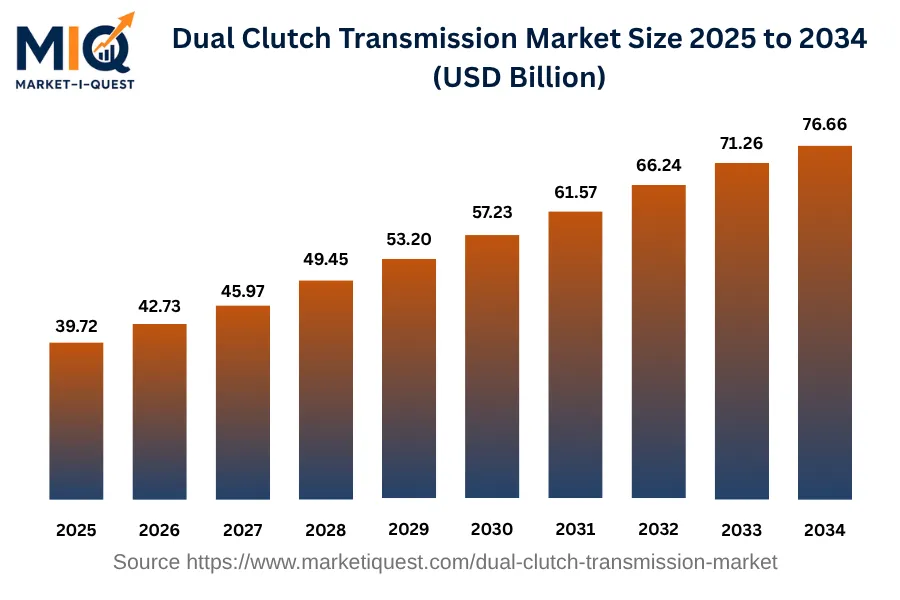
The Dual Clutch Transmission Market was valued at 39.72 billion USD in 2025 and is projected to increase to 76.66 billion USD by 2034, representing a compound annual growth rate (CAGR) of 7.58%. This growth represents a significant increase over nearly a decade, more than doubling in value from an initial value of 36.92 billion USD in 2024. The notable rise is indicative of the trend towards more streamlined, efficient technologies in the automotive industry and the increasing demand for seamless driving experience. As of 2024, market shares by region demonstrate the following distribution: Asia Pacific held the majority share with 54.73%, followed by Europe and North America with 19.18% and 18.84%, respectively. Meanwhile, the remaining markets, LATAM and MEA, held a smaller portion with 3.94% and 3.31%, respectively.

Key Takeaways

  • By Type - Wet segment led the Dual Clutch Transmission Market accounting for a significant share in 2024.
  • By Clutch Type - Single Plate Clutch held the dominant position in the market in 2024.
  • By Gearbox Type - Manual Gearshift expanded by taking a leading role in 2024.
  • By Application - Passenger Vehicles held a significant share in the Dual Clutch Transmission Market in 2024.
dual-clutch-transmission-market market size

Key Driving Factors

Stringent Emission Standards

One significant driver for the Dual Clutch Transmission market is the implementation of stringent emission standards globally. Governmental bodies like European Union's Euro 6 and China's China 6 are pushing automakers to adopt more efficient transmission systems to comply with their tough emission norms. Dual Clutch Transmission, offering improved fuel efficiency and lower CO2 emissions compared to conventional transmission systems, serve as an appropriate solution to meet these standards. Consequently, its adoption is being accelerated by automakers, particularly in regions strictly enforcing these regulations.

Consumer Preference for High-Performance Vehicles

Another driving factor for the market is the increasing demand for high-performance vehicles. Car enthusiasts and racing professionals prefer Dual Clutch Transmission because of its ability to alter gear rapidly without interrupting the power flow from the engine. This results in smoother acceleration, enhances the vehicle's performance and boosts driving comfort and pleasure. Moreover, it provides more control which is crucial during high-speed driving. Therefore, the preference of this consumer segment for vehicles equipped with DCTs is actively pushing the demand and hence market growth.

Market Evolution by Timeline

2019-2023
During this period, Dual Clutch Transmission (DCT) technology was primarily required by automotive original equipment manufacturers (OEMs), with a significant demand coming from Europe as European Union regulations favored the technology. The industry witnessed integration of DCTs with hybrid drivelines and the piloting of DCT systems for electric vehicles. Constraints included the complex manufacturing process and high costs. No significant policy changes caught the attention of the industry during this period. As far as commercial models, markets operated on long-term contracts with manufacturers selling DCT systems to Tier 1 suppliers. One typical risk observable was that a downturn in auto sales could impact the DCT market, with OEMs expected to respond by shifting toward other transmission technologies.
2024
In this year, DCT continued to gain popularity in the luxury and performance car sector, primarily in Europe. More technology releases for DCT in electric vehicles were noted, with EVs becoming a significant consumer segment. Production complexities continued to be a challenge, affecting the supply chain. There were no substantial changes in policy during this time. The commercial model remained consistent, with manufacturers using long-term contracts and partnerships with Tier 1 suppliers. The saturation of the luxury vehicle market posed a potential risk, with manufacturers showing a tendency to diversify into other consumer segments to offset this.
2025-2029
In this period, DCT technology use expanded into broader vehicle categories, including mid-range passenger cars, in regions such as Asia Pacific. The continuing trend of electrification saw further integration of DCT technology with EVs. Procurement became a significant issue due to raw materials cost and supply. There were still no major policy changes impacting the market. The standard commercial model persisted, with some slight shifts towards contractual partnerships with EV manufacturers. Market risks primarily revolved around the procurement of raw materials and potential volatility in price.
2030-2034
This future phase could see broader adoption of DCT technology in numerous vehicle segments globally. Suppliers are anticipated to focus on improving the energy efficiency and driving experience of DCT technology for a wide array of vehicles. Supply could be influenced by a broader shift towards sustainable and cost-efficient production processes in response to market demands and possible regulatory changes. The commercial model could likely see contracts inclusive of post-sales service offerings as end-user requirements evolve. Procurement issues could persist as a significant risk factor, spurred by environmental constraints and fluctuating global geopolitics.

Future Market Outlook

Future Opportunities

The global movement towards electrification presents various opportunities for dual clutch transmission systems in hybrid vehicles. As regulatory bodies, including the European Union, mandate stricter emissions standards by 2025, automotive players are compelled to innovate. Companies such as General Motors are collaborating with technology partners to enhance their DCT offerings for hybrid models, which align with global sustainability goals. Additionally, the advancements in artificial intelligence and machine learning in automotive applications could significantly improve DCT effectiveness. For instance, engineers from Toyota are exploring AI-driven analytics to better predict maintenance needs, enhancing the longevity of DCT systems. Another area of opportunity lies in the integration of alternative fuels, as seen with the research efforts of BMW, which are focusing on tuning DCT for optimal performance with biofuels. Advancements in connectivity technologies, such as Vehicle-to-Everything (V2X), are expected to further refine DCT operations, allowing for smarter gear shifts based on real-time traffic data. Additionally, the rising popularity of autonomous vehicles opens avenues for developers to integrate advanced dual clutch systems that can operate seamlessly without human intervention. The convergence of these factors indicates a crucial future for DCTs where they could play an integral role in the automotive sector's transition to more sustainable and advanced vehicles. Overall, the emphasis on collaboration, regulation, and technological enhancements will shape the DCT landscape in the coming years [Automotive Tech Review 2023].

Segmentation Analysis

By Type

The market is divided into subsegments including Dry and Wet, with Wet accounting for the largest revenue share and Dry is expected to grow at the fastest CAGR during the forecast period.

Largest Revenue Share

Wet

Market Share Leader

Wet type dominates the market in terms of revenue share. The wet type's share is driven by several factors, such as its popularity among consumers due to benefits including added hydration and nutritional value. Customers often prefer wet type due to its high moisture content, which is essential for preventing dehydration and promoting urinary health in certain consumer demographics such as pets and elderly population. Moreover, the wet type's demand is further spurred by its superior appealing and improved palatability, which attracts consumers, leading to high purchasing frequency. Various packaging solutions like cans, pouches, and trays have also contributed to the upswing in demand for wet type. The demand can be seen in both developing and developed geographies due to increasing consumer spending on comfort products. Furthermore, favorable regulatory framework around quality and safety standards boosts the industry's confidence, maintaining its steady supply amid challenging times. While the purchasing criteria largely depend on customer's preference, health-conscious consumers might have a higher inclination towards premium segments, reflecting in higher sales revenue.

Fastest CAGR

Dry

Forecast Period Growth Leader

Despite Wet reigning in terms of revenue share, the Dry type shines through as the fastest-growing subsegment. Key growth drivers include cost-effectiveness, easy storage, and longer shelf life. The dry type, due to its low moisture content, requires minimal to no refrigeration, reducing storage costs and enhancing its convenience factor in comparison to the wet type. This convenience, paired with longer shelf life, serves as a significant purchasing catalyst for consumers who buy in bulk or have less frequent shopping schedules. Recent advancements in technology have also allowed the production of more nutritionally balanced dry type products, breaking the stigma of lesser nutritional value associated with dry type, and fostering its adoption. Despite these advantages, there are barriers to adoption; primarily revolving around the less appealing texture of dry type compared to wet type, and the perception of lesser nutritional value. Policies promoting transparency in ingredient quality and nutritional content can further boost the market reach of dry type. In the near-term, market risks include fluctuating raw material prices and the constant need to balance cost-efficiency with nutritional value.

By Clutch Type

The market is divided into subsegments including Single Plate Clutch and Multi Plate Clutch, with the Single Plate Clutch segment accounting for the largest revenue share while Multi Plate Clutch is expected to grow at the fastest CAGR during the forecast period.

Largest Revenue Share

Single Plate Clutch

Market Share Leader

The Single Plate Clutch subsegment dominates the market due to its wide utilization across various vehicle types, ranging from passenger vehicles to commercial vehicles. Its simplicity in design and cost-effectiveness make it a preferred choice among vehicle manufacturers. Additionally, it occupies less space, making it compatible with compact vehicle designs, thereby contributing to its revenue leadership. Other pertinent factors include its easy maintenance due to lesser wearing parts, which significantly reduces the total cost of ownership for customers. Its mature presence in developed regions like North America and Europe due to the high prevalence of vehicles also contributes to its larger revenue share. Nevertheless, developing markets in the Asia-Pacific region also offer robust demand due to rapid urbanization and growing middle-class population, making it a universal choice across different geographies.

Fastest CAGR

Multi Plate Clutch

Forecast Period Growth Leader

The Multi Plate Clutch subsegment, although smaller in present revenue terms, shows the potential to be the fastest-growing segment in the clutch market. This growth is underpinned by the rising demand for high-performance vehicles, such as race cars and motorcycles, where the multi-plate clutch’s capability to transmit high torque is of great advantage. The technological advancements and increasing capital investments in the automotive industry are catalyzing the adoption of Multi Plate Clutches. They also hold the advantage of being more compact for the same transmission capacity as a Single Plate Clutch, making them valuable to manufacturers seeking to optimize vehicle space. Barriers to adoption include the typically higher costs of Multi Plate Clutches and their complex maintenance requirements. Near-term risks to growth include economic stagnation and resultant slowdown in the automotive industry.

By Gearbox Type

The market is divided into subsegments including Manual Gearshift and Automated Gearshift. Of these, the Manual Gearshift accounted for the largest revenue share while Automated Gearshift is expected to grow at the fastest CAGR during the forecast period.

Largest Revenue Share

Manual Gearshift

Market Share Leader

Manual gearshifts continue to dominate in terms of revenue due to their widespread use in automotive industries across both emerging and established markets worldwide. They have seen continued preference among drivers due to the precise control they offer, enhancing the overall driving experience. Furthermore, vehicles with manual gearshifts have a lower upfront cost than those with automatic gearboxes, making them a more economical choice for consumers. Another vital factor adding to the revenue of the manual subsegment is their low maintenance cost related to their simpler mechanical structure compared to their automated counterparts. Geographically, both emerging and mature markets contribute to this demand, with key revenue contributions from Asia-Pacific countries where manual transmissions continue to represent a significant percentage of the car fleet. Regulations or supply have not significantly impacted this market segment as manual gearshift technology has been perfected over the years and is readily available.

Fastest CAGR

Automated Gearshift

Forecast Period Growth Leader

The Automated Gearshift segment, while not the current market leader in revenue terms, is projected to grow at the fastest CAGR during the forecast period. The rise in global demand for passenger comfort and stringent emission norms worldwide is expected to drive the growth in this segment. Automated gearshifts offer drivers a more comfortable and simpler driving experience and are gaining popularity in congested urban environments where ease of use can be a significant deciding factor. In addition, advanced technologies such as Adaptive Cruise Control and Automated Parking Systems benefit greatly from automated transmissions, creating a strong adoption catalyst. However, the high cost of these systems compared to their manual counterparts presents a barrier to adoption, particularly in cost-sensitive markets. Also, the upcoming regulations favoring reduced emissions and increased fuel efficiency potentially serve as the growth catalyst in the near-term for the automated gearshift market.

By Application

The market is segmented into applications such as Passenger Vehicles and Commercial Vehicles. Passenger Vehicles accounted for the largest revenue share while Commercial Vehicles are anticipated to be the fastest-growing during the forecast period.

Largest Revenue Share

Passenger Vehicles

Market Share Leader

Passenger Vehicles was the largest contributor to the revenue in 2024, driven by a few key factors. A steadily rising world population and an expanding middle class, especially in developing regions like Asia, Africa, and South America, increased the demand for passenger vehicles. Regulatory changes that prompt consumers to replace older, less efficient cars also maintained steady market buoyancy. Furthermore, the constant improvement in vehicle features, safety and fuel efficiency compelled the customers for periodic upgrades. Besides, the growing financing options along with low-interest rates facilitated vehicle ownerships. Themselves being the direct channels to the customers, dealerships played a pivotal role in driving sales. Their presence in tier-2 and tier-3 cities not only increased the access to vehicles but also provided post-sales services, keeping the growth momentum intact.

Fastest CAGR

Commercial Vehicles

Forecast Period Growth Leader

Despite passenger vehicles accounting for the largest revenue share, Commercial Vehicles are set for the fastest compound annual growth rate in the coming period. Primary growth drivers include robust urbanization and increasing investment in infrastructure development projects that require substantial logistics and transport capabilities. Policy-wise, governments' initiatives to enhance intracity and intercity transport networks significantly contribute to the market growth. A surge in e-commerce activities has been noticed, pushing the requirement for efficient logistics and delivery vehicles. Technological advancements in commercial vehicles, particularly towards hybrid and electric vehicles, offer a significant opportunity for commercial vehicle market growth. However, it's also essential to acknowledge certain risks. High capital expenditure on commercial vehicle's manufacturing and customers' concerns related to the cost of ownership could potentially impede the market growth rate in the near term.

Competitive Analysis

Key Market Players

Manufacturers / OEMs

Volkswagen AG
Germany
ZF Friedrichshafen
Germany
Continental AG
Germany

Key Suppliers & Raw Materials

Schaeffler AG
Germany
Torotrak PLC
UK
FTE automotive Group
Germany

Distributors, Integrators & Channel Partners

Magneti Marelli S.p.A.
Italy
GKN Driveline International GmbH
Germany
Eaton Corporation Inc.
US

Porter’s Five Forces Analysis

This analysis investigates the competitive forces impacting the Dual Clutch Transmission Market's direction and profitability.

Supplier Bargaining Power

Medium

Suppliers of transmission components can leverage their capabilities but are counterbalanced by other transmission technologies.

Buyer Bargaining Power

High

Large automobile manufacturers have high bargaining power due to their ability to switch between transmission suppliers.

Threat of Substitutes

High

Alternative transmission systems like Continuously Variable Transmissions and Automated Manual Transmissions pose a severe threat.

Threat of New Entrants

Low

High capital costs, technical know-how, and established brand relationships impose significant entry barriers.

Competitive Rivalry

High

Intense competition due to presence of established players like Getrag, ZF, and BorgWarner.

Regional Analysis

Geographic market dynamics and growth opportunities across key regions

Global Market Outlook

dual-clutch-transmission-market market regional share

North America

In 2024, the North American Dual Clutch Transmission (DCT) Market showed definitive signs of growth driven primarily by enhanced fuel efficiency demands, technological advancements, and changing regulatory standards. Growing pressure on automobile manufacturers to meet stringent fuel economy and emission regulations catalyzed the adoption of DCTs. Increasing investments from tier-1 companies in U.S and Canada, such as Magna International and BorgWarner, spurred technological advancements in the DCT space, fostering market growth. Distinctive pricing strategies, primarily cost-based, also drove the DCT market amidst competitive supply dynamics.

Several trends underscored the market's trajectory. The rise in consumer preference for vehicles with automatic transmissions, due to their convenience and smooth gear shifts, stimulated DCT demand, especially in urban areas. Automobile manufacturers' move toward implementing DCTs in electric and hybrid vehicles emerged as a discernible trend. Partnerships and mergers amongst key players, e.g., Volkswagen's strategic collaboration with Ford, further buoyed the market. The enforcement of stringent emissions standards by bodies like the U.S. Environmental Protection Agency shaped market dynamics markedly, pushing for advanced transmission systems. The customer base spanned across various sectors including manufacturers of passenger and commercial vehicles, and government fleets, with increasing traction among utility vehicles. In summary, demand factors, regulatory changes, and market trends collectively propelled the North American DCT market in 2024.

Asia Pacific

In the base year of 2024, the Dual Clutch Transmission (DCT) market in Asia Pacific was characterized by strong growth and innovations, particularly in major economies like China, India, Japan, South Korea, and Australia. The demand was primarily driven by the increasing consumer interest in fuel-efficient vehicles, government regulations aimed at carbon emissions reduction, and substantial investments in automotive technology development by key players. The adoption of advanced transmission systems in commercial vehicles to enhance fuel efficiency and reduce operating costs was also a significant driver.

Reflecting trends in buyer behavior, consumers showed a growing preference for DCT systems, particularly in high-performance vehicles. There was a significant shift towards more sophisticated transmission technology, with DCT becoming a standard feature in modern vehicles. Partnerships and M&A activities were prevalent among automotive component manufacturers to capitalize on this demand. China's policy enforcement around emission standards played a significant part in shaping market dynamics.

The DCT market influenced several sectors, including automotive manufacturing and retail. With more vehicles equipped with DCT rolling out of the manufacturing units, retailers experienced increased sales. Furthermore, DCT found applications in the government sector in public transport systems for its fuel efficiency. The increased focus on sustainability within enterprise sectors also drove the adoption of DCT technology.

Europe

In 2024, the Dual Clutch Transmission market in Europe is highly active, with key dynamics influenced by various drivers and trends. The mass adoption of electric vehicles plays a significant role, as most of them utilise dual clutch transmissions. The market also flourishes due to increasing investments in vehicle innovation by leading manufacturers in countries like Germany, UK, and France. Furthermore, stringent emission regulations across Europe enforce automobile industries to incorporate energy-efficient components like dual clutch transmissions, which significantly contributes to market expansion.

In terms of trends, buyer preference leans towards vehicles offering smooth gear changes and high fuel-efficiency, which promotes the demand for dual clutch transmissions. Technological advancements lead to new partnerships and M&As among key players to capitalise on market opportunities. For instance, Volkswagen collaborates with Porsche to produce sport cars equipped with dual clutch transmissions, setting new standards in the market.

Moreover, the policy enforcement in Central and Eastern Europe focusing on environmental preservation by reducing CO2 emissions pushes the uptake of these transmissions. The customer base primarily includes manufacturers in the automobile industry, along with retail outlets that deal in vehicle parts and accessories. Overall, the ongoing technological adaptation and regulatory measures shape the dynamics of the Dual Clutch Transmission market in Europe for 2024.

Latin America

In 2024, the Dual Clutch Transmission (DCT) market in Latin America portrayed a highly competitive landscape, primarily driven by advanced technology adoption and consumer demand. Crucial demand-side drivers involved the affinity for fuel-efficient vehicles across the urban regions of Brazil, Mexico, Argentina, Chile, and Colombia, thereby delivering substantial market growth. Environmental regulations mandating reduced carbon emissions in Peru and Mexico stimulated the shift towards vehicles equipped with DCTs. Additionally, substantial investment in the automobile sector and affordable pricing strategies boosted the market.

Distinct trends shaping the market included evolving consumer preferences towards smoother and faster ride experiences and higher horsepower. Manufacturers capitalized on these shifting behaviors by partnering with automotive companies to integrate versatile DCT technologies. For instance, in Argentina, enterprises engaged in partnerships to facilitate technology transfer. Scrappage programs in Colombia and Chile, encouraging older vehicle retirement, indirectly contributed to the rise in DCT vehicle sales. The policy enforcement by governments to propel emission standards fostered the market growth. The customer base comprised primarily automotive manufacturing sectors, with subsequent use among enterprise, retail, and utility segments across LATAM. Technology adoption spurred by these sectors benchmarked a transformative stage for the LATAM Dual Clutch Transmission market scenario in 2024.

Middle East & Africa

In 2024, the Dual Clutch Transmission (DCT) market in the Middle East and Africa saw a noticeable incline driven by factors such as technological adoption, investment trends, and pricing dynamics. Significant investment in automotive technology by countries like Saudi Arabia and UAE spurred demand. Simultaneously, reduced import duties in Egypt sparked interest in high-end vehicles equipped with DCT. Israel's emphasis on developing electric vehicles (EVs), where DCT is highly compatible, also fuelled the market growth.

The market trends were mainly steered by shifting consumer preferences and government policies. An increased preference for high-speed, fuel-efficient vehicles among customers in Nigeria and South Africa supported DCT demand. In Saudi Arabia and UAE, the prevailing luxury car culture created a favorable environment for DCT-equipped vehicles. Government policies, particularly the UAE's 'Vision 2021', which aims at environmental sustainability, boosted DCT's market presence due to its fuel efficiency and low emission characteristics.

Sector-wise, DCT saw significant adoption in manufacturing, primarily in the production of high-end, luxury, and electric vehicles embracing the innovative technology. Among customers, demand was particularly evident in government and corporate sectors in the region. In summary, the DCT market in the Middle East and Africa in 2024 navigated through an intersection of technology, policy support, consumer trends, and sectoral dynamics.

Recent Industry Developments

Latest market innovations, product launches, and strategic initiatives

July 2026

Haosi Power and Hofer Technology Group signed a cooperation agreement in Ningbo, China, to jointly develop an 8-speed dual-clutch transmission for mid-engine rear-drive high-performance sports cars. Haosi Power leads the R&D effort with Hofer providing technical support.

August 2025

Punch Powertrain announced the start of mass production for its DT2C Dual Clutch Transmission, developed for the Indian market through its joint venture with TACO Punch Powertrain Pvt. Ltd. With a torque capacity of 350 Nm, the DT2C transmission is set to debut in a sub-compact crossover SUV and will feature in two more car models later in the year.

Frequently Asked Questions