Drug Device Combination Products Market Snapshot

Key Players

  • Johnson & Johnson (US)
  • Medtronic Plc. (Ireland)
  • GlaxoSmithKline Plc. (United Kingdom)
  • Boston Scientific Corporation (United States)
  • Novartis AG (Switzerland)
  • Becton Dickinson and Company (US)
  • Zimmer Biomet Holdings Inc. (US)
  • Bayer AG (Germany)
  • Smith & Nephew Plc. (United Kingdom)
  • Abbott Laboratories (US)

Market Size

Base Year 2024
$154.93 Bn
CAGR
8.72%
Forecast 2034
$357.46 Bn

Market Segments

By Product
  • Drug Eluting Stents
  • Transdermal Patches
  • Infusion Pumps
  • Drug Eluting Balloons
  • Inhalers
  • Other Products
By Application
  • Cardiovascular
  • Diabetes
  • Cancer Treatment
  • Respiratory Diseases
  • Others
By End User
  • Hospitals
  • Ambulatory Surgical Centres
  • Others

Market Dynamics

Drivers
  • Rising chronic diseases prevalence
  • Technological advancements in medical field
Restraints
  • Regulatory compliance challenges
  • High product development costs
Opportunities
  • Emerging biomedical technologies
  • Untapped developing markets

Market Size

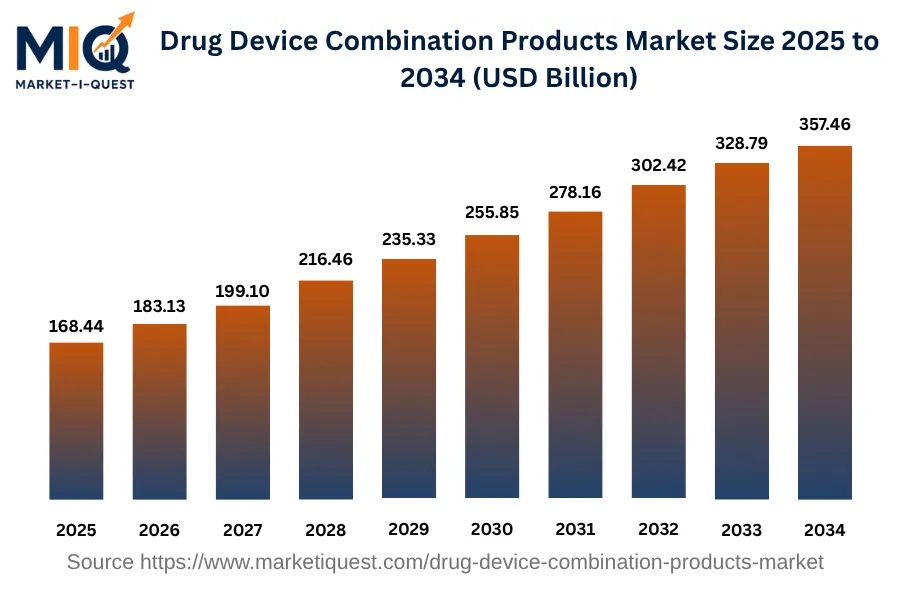
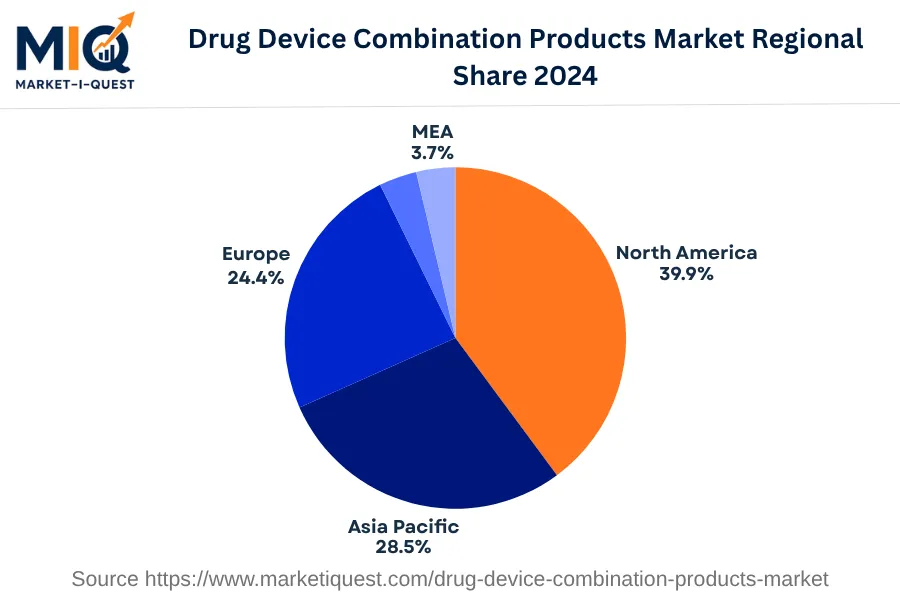
The Drug Device Combination Products Market size was USD 154.93 billion in 2024 and rose to USD 168.44 billion in 2025. The market is projected to grow to USD 357.46 billion by 2034, with a compound annual growth rate (CAGR) of 8.72%. This growth over the decade is marked by the profound increase in market value from 2025 to 2034. The augmented usage and integration of enhanced functionality products in healthcare setups appears to be the dominant factor contributing to this escalade. Optimal application benefits and overall health improvement potentials of such products further substantiate the growth. On a regional scale in 2024, North America had the highest market share at 39.86%, followed by Asia Pacific at 28.46% and Europe at 24.41%. The regions with lesser shares were Latin America and the Middle East & Africa, with 3.58% and 3.69% respectively. These regional shares provide an understanding of the geospatial distribution of the market.

Key Takeaways

  • By Product - Inhalers held a significant share in the Drug Device Combination Products Market.
  • By Application - Cancer Treatment were most addressed with an increase demand for Drug Device Combination Products.
  • By End User - Hospitals held the largest share in need for Drug Device Combination Products.
drug-device-combination-products-market market size

Key Driving Factors

Stringent Regulatory Guidelines on Product Safety

The Drug Device Combination Products Market is increasingly influenced by rigid regulatory guidelines related to product safety and efficacy. Key global bodies such as the Food and Drug Administration (FDA) in the U.S and the European Medicines Agency (EMA) in Europe enforce strict rules to ensure product safety and efficiency. For instance, FDA's Quality System Regulation (QSR) and ISO 13485 mandate certain quality and safety standards that directly impact the market. These regulations prompt manufacturers to improvise and refine their products to comply with the guidelines, driving innovation and development in the market. The stringent regulations, while challenging, provide a structured and clear pathway for the manufacturers setting the market trends.
Focus on Pain Management and Chronic Diseases

The prevalence of chronic ailments such as cardiovascular diseases, diabetes, cancer, and various neurological disorders has given rise to the demand for drug-device combination products. These devices play an integral role in disease management due to their precise, targeted modes of action and controlled drug delivery mechanisms. The expansion of the market hinges on the healthcare sector's response to the need for effective management of such conditions. The demand for better pain management solutions also pushes the growth as drug-device combinations often offer less invasive yet efficient options. Manufacturers focus on delivering solutions that improve patient comfort and efficacy, thereby spurring advancements in the market.

Market Evolution by Timeline

2019-2023
During this period, demand continued to increase with North America leading in terms of adoption, driven by large pharmaceutical companies seeking efficient ways to administer therapies. Typically, diabetes management and cardiovascular treatments were major applications. Supply was characterized by mature integration of drug and device technologies, however complexities in manufacturing limited the number of players in the market. The U.S. FDA maintained a stringent regulatory process, demanding rigorous compliance to standards such as the Good Manufacturing Practice. A common commercial model involved long-term supply contracts with pharmaceutical companies including milestone payments. The primary risk was product recalls due to compliance issues, prompting an industry-wide focus on quality systems revision and training.
2024
In 2024, an increased interest in home healthcare led to growing demand in Asia, especially China, for self-administered drug-device combination products. Diabetes management remained a priority but smart inhalers for respiratory conditions also gained traction. The challenge continued to be compliance with complex manufacturing standards, causing many companies to partner with experienced contract manufacturing organizations. The FDA introduced the Drug-Device Combination Product Assistant Program to support companies navigating regulatory hurdles. Pricing mostly depended on the specific drug involved and its market competitors. Insufficient quality controls still posed a significant risk, with several high-profile recalls impacting the market.
2025-2029
This period saw further demand growth in emerging markets as access to healthcare improved. Chronic diseases dominated the application landscape, with growth areas including cancer and neurological treatments. The industry made significant strides in integrating supply chains, with several breakthrough products passing rigorous FDA and EU certifications. Regulation tightened, with more rigorous enforcement of ISO 13485 for quality management. High upfront costs coupled with pay-per-use models became a successful pricing strategy in most regions. However, despite tighter regulation, reliability issues with critical components emerged as a key risk, particularly in complex neurological devices.
2030-2034
In these years, clinical advances spurred demand for drug-device combinations designed for genetic and personalized treatments. North America maintained its lead in procurement, but African markets also showed strong potential. Supply chains faced disruption due to the increased need for personalized products, which often required specific manufacturing settings. Regulatory bodies like the FDA and EU introduced new standards to accommodate these more complex technologies. The pricing strategy leaned towards risk-sharing arrangements, often involving milestone payments or pay-per-use models. Intellectual property disputes brought significant risk, leading companies to invest more in IP protection strategies.

Future Market Outlook

Future Opportunities

Future opportunities in the drug device combination products market are primarily influenced by a growing understanding of personalized medicine and patient-centric approaches. In 2023, the World Health Organization unveiled initiatives to bolster integrated care solutions focusing on improved therapeutic outcomes, especially in regions with high incidences of chronic diseases, such as diabetes and cardiovascular disorders. Companies like Roche and Novartis are actively involved in research partnerships aimed at developing tailored treatment regimens, combining both drug therapy and innovative medical devices to address specific patient needs. In the realm of digital health, telehealth platforms are gaining traction; for instance, Medtronic's partnership with a telehealth provider in 2022 has enabled remote patient monitoring, showing significant potential for seamless integration of drug delivery and feedback mechanisms. Additionally, the completion of clinical trials for several new drug-device systems is anticipated to drive partnerships between pharmaceutical and medtech companies, enhancing the ecosystem's responsiveness to regulatory changes introduced by bodies like the FDA. As regulatory approval processes evolve, faster pathways for combination products, such as the FDA's Breakthrough Devices Program initiated in 2019, create an environment ripe for innovation. Consequently, as market actors embrace a multidisciplinary approach to product development, the scope for inventive solutions addressing unmet medical needs is broadening significantly.

Segmentation Analysis

By Product

The market is divided into sub segments including Drug Eluting Stents, Transdermal Patches, Infusion Pumps, Drug Eluting Balloons, Inhalers, and Other Products. Inhalers accounted for the largest revenue share while Drug Eluting Balloons is expected to grow at the fastest CAGR during the forecast period.

Largest Revenue Share

Inhalers

Market Share Leader

Inhalers emerge as the segment with the most revenue in 2024, primarily driven by the widespread prevalence of respiratory disorders such as asthma, COPD, and others. The high occurrence rate of these conditions both in developed and emerging economies contributes to the substantial demand for inhalers. The extensive range of inhaler products, including MDIs and DPIs, facilitate greater consumer choice, catering to diverse consumer preferences and medical requirements. Regulatory bodies in various countries are driving adoption by advocating for inhaler use as a safer method due its targeted drug delivery approach, which minimizes side effects. Geographic factors such as high pollution levels in urban settings further fuel the demand. Sales channels for inhalers are well-distributed via pharmacies, online platforms, and direct hospital supplies, ensuring an extensive reach to the consumer base. Additionally, switching costs are high as users typically stick with a format they are comfortable with over time.

Fastest CAGR

Drug Eluting Balloons

Forecast Period Growth Leader

Belying its relatively low base in 2024, the Drug Eluting Balloons segment is projected to experience the fastest CAGR. Core growth drivers include the escalating prevalence of cardiovascular diseases, together with the aging population, and the drive towards minimally invasive percutaneous procedures. The technological advancements in balloon catheter technology and coatings further serve as a catalyst for adoption. The transition towards Drug Eluting Balloons from traditionally used drug-eluting stents is becoming increasingly popular due to the reduced risk of restenosis and thrombosis. Despite such prospects, barriers such as regulatory hurdles and potential risk of balloon rupture could slow down the rapid growth. Parent company investment in R&D may mitigate these risks over time, while strategic industry partnerships could leverage shared resources for tech advancements. However, in the near term, market participants should be cautious of these potential risks.

By Application

The market is divided into subsegments including Cardiovascular, Diabetes, Cancer Treatment, Respiratory Diseases, and Others. The Cancer Treatment accounted for the largest revenue share while the Diabetes subsegment is expected to grow at the fastest Compound Annual Growth Rate (CAGR) during the forecast period.

Largest Revenue Share

Cancer Treatment

Market Share Leader

Cancer treatment holds the largest share of the market owing to multiple factors. First, the increasingly aging population adds to high cancer prevalence rates, leading to a surge in demand for treatments. Moreover, the breakthroughs in cancer research, leading to innovative and more effective treatments, often at higher cost, have bolstered revenues significantly. Secondly, governments worldwide are intensifying their efforts towards cancer control, which, in turn, has led to increased funding in cancer research and advancements in therapeutical strategies. Furthermore, the robust oncology pipeline, characterized by the widespread clinical trials across geographies, has boosted market growth. Lastly, patient purchasing behaviors are driven by its life-saving nature, often prioritizing effectiveness over cost. The high switching-costs attributed to the chronic nature of cancer and limited alternative treatments also contribute to the high revenue share. These factors have collectively established cancer treatment as the segment leader in the market.

Fastest CAGR

Diabetes

Forecast Period Growth Leader

The Diabetes subsegment is projected to register the fastest CAGR due to an alarming escalation in diabetes prevalence and the growing demand for innovative treatment options. The global surge in cases is primarily driven by lifestyle changes, including unhealthy dietary habits and a sedentary lifestyle, along with genetics. Second, increased investment in research and development promises potential advancements in diabetes treatment. Technological breakthroughs like insulin pumps and continuous glucose monitoring systems have already achieved significant adoption and will likely continue to drive the market. Third, capital investments and public-private partnerships have been key to developing cost-effective solutions, essential to address the diabetes burden in low and middle-income countries. However, the road ahead is fraught with near-term risks, including regulatory constraints and the affordability of state-of-the-art treatments, which must be navigated astutely to unleash the market’s full potential.

By End User

The market is divided into subsegments including Hospitals, Ambulatory Surgical Centres, and Others, with Hospitals accounting for the largest revenue share while Ambulatory Surgical Centres is expected to grow at the fastest CAGR during the forecast period.

Largest Revenue Share

Hospitals

Market Share Leader

Hospitals being the major revenue contributors is predominantly due to the high volume of patients they serve, combined with the high intensity of services required. Notably, the high frequency of complicated cases treated in hospital settings often necessitates the use of sophisticated equipment, contributing to the higher revenue generation. Moreover, hospitals, being larger institutions, have more substantial budgets to allocate towards the purchase of high-cost equipment, driven by competitive pressures to offer advanced facilities. In comparison to other segments, hospitals have a broader service portfolio, driving the need for a wider variety of equipment and thereby leading to greater revenue. Geographically, populated urban areas which have a high concentration of hospitals also contribute significantly to this trend. Regulatory policies, with more stringent standards for hospitals, further drive higher investments into quality equipment, again propelling the revenue from this segment.

Fastest CAGR

Ambulatory Surgical Centres

Forecast Period Growth Leader

The fastest growth is anticipated in the Ambulatory Surgical Centres segment due to a variety of emerging factors. Chief among them is the growing trend towards outpatient surgeries, driven by advancements in surgical and anesthetic techniques that have made it possible to perform an increasing number of procedures outside of the traditional hospital setting. Additionally, regulatory policies favoring Ambulatory Surgical Centres to reduce hospital congestion are propelling growth. In combination, technological advancements enabling minimally invasive surgeries, and the drive towards cost-efficient healthcare, are supporting the move towards these centres. Nevertheless, high capital investments and the requirement for partnerships with healthcare providers may limit growth. However, the adoption of these centres is expected to continue, spurred by the need for more efficient healthcare systems and increased patient comfort.

Competitive Analysis

Key Market Players

Manufacturers / OEMs

Boston Scientific Corporation
US
Medtronic
US
Abbott Laboratories
US

Key Suppliers & Raw Materials

Royal DSM
Netherlands
Evonik Industries AG
Germany
ZEUS Industrial Products, Inc
US

Distributors, Integrators & Channel Partners

Cardinal Health
US
McKesson Corporation
US
AmerisourceBergen Corporation
US

Porter’s Five Forces Analysis

A comprehensive overview of the competitive dynamics within the Drug Device Combination Products Market.

Supplier Bargaining Power

Medium

Pharma ingredient and medical device suppliers retain some power due to specialized production requirements.

Buyer Bargaining Power

Low

High switching costs and the critical nature of these products limit buyer power.

Threat of Substitutes

Low

Limited viable substitutes due to stringent regulations and unique product designs.

Threat of New Entrants

Low

High entry barriers due to significant R&D costs, regulatory hurdles, and patent protections.

Competitive Rivalry

High

Intense rivalry due to high stakes, innovation-based competition and presence of global pharma companies.

Regional Analysis

Geographic market dynamics and growth opportunities across key regions

Global Market Outlook

drug-device-combination-products-market market regional share

North America

The North American drug device combination products market in 2024 experienced robust expansion on the back of growing demand, advanced regulatory guidance, investment flux, and technological innovation. Several key drivers propelled the sector's escalation in 2024. Aging population across the U.S., Canada, and Mexico accelerated demand for innovative healthcare solutions, fueling the market. Regulatory advances, pronounced specifically in the revised FDA's guidance on combination products, injected an air of confidence, encouraging entrepreneurs and pharmaceutical companies to invest in product development. Technological breakthroughs in drug-delivery devices further invigorated the market by offering improved patient compliance and efficacy.

Distinct trends were also discernible throughout the year. Shifting consumer preference for minimally invasive drug delivery methods was significant, triggering high demand for transdermal patches and implantable devices. Innovation focused on enhanced patient safety and convenience became paramount, attracting substantial funding for research and development. The distribution channel witnessed a swing towards online platforms, facilitated by the eCommerce boom, reshaping the purchasing dynamics of the end-users notably in the healthcare sector. Mergers and acquisitions flourished, drove large pharmaceutical firms to collaborate with device manufacturers to expedite product development and tap into new consumer segments. Lastly, stricter policy enforcement around product safety and efficacy became prominent, crystallizing the market’s standards.

Asia Pacific

In 2024, the Asia Pacific Drug Device Combination Products market was vibrant due to rising healthcare needs, supportive governmental policies, and increased investment. Key drivers included the demand for effective therapies in chronic diseases and the embrace of minimally invasive procedures. For example, China's regulatory reform, which fast-tracked medical innovation, spurred industry growth that year. Evolved healthcare infrastructure, particularly in India and ASEAN countries, fueled market expansion. Technological advancement and increased investment in healthcare within Japan and South Korea led to the development of high-quality combination products.

There were significant trends influencing the market, primarily shifting consumer preferences toward home-based healthcare, escalating the demand for self-administered drug-device combination products. Additionally, the arrival of nanotechnology in the healthcare sector played a crucial role in tailor-making treatment options. For instance, Australian biomedical companies concentrated on bringing nanotherapeutics into the market in 2024. Strenuous policy enforcement in drug safety and efficacy assured the quality of the products. Notable were the growing strategic alliances amongst pharmaceutical and medical device companies especially in China and Japan to co-develop advanced products. Lastly, the e-commerce boom in India played a part in expanding the reach of these products across remote sectors, accounting for a market surge that year.

Europe

In 2024, the Drug Device Combination Products Market displayed substantial growth in Europe due to several significant factors. Regulatory support, particularly the revised Medical Device Regulation (MDR) and In Vitro Diagnostics Regulation (IVDR) in the European Union, facilitated the expansion of market players, supported by robust investments from key healthcare corporations. A rise in chronic diseases across regions like Germany, UK, France, and Spain drove the demand, compounded by an aging population heavily reliant on drug device combination products. Also, technology adoption increased rapidly, particularly in the Nordics and Benelux areas, with advanced manufacturing techniques enhancing product quality and efficiency.

Trends in 2024 revolved primarily around the transformation of customer behaviour, motivated by an increased awareness regarding health and pharmaceutical necessities. Central and Eastern European countries saw significant growth due to a rise in healthcare infrastructure and policy reforms. A shift towards digital platforms happened in Italy and Spain, enhancing market visibility and accessibility. Collaborative efforts, especially merger and acquisitions between pharmaceutical companies and technology firms, were noted, fostering innovation and market expansion. Lastly, heightened policy enforcement was seen in Germany and the UK, which ensured the quality and effectiveness of these drug-device products, providing impetus to the market.

Latin America

In 2024, the Latin American (LATAM) market for Drug Device Combination Products experienced considerable expansion. Demand was driven by an aging populace requiring more extensive healthcare and innovative solutions in Brazil, Mexico, Argentina, Colombia, Chile, and Peru. Changes in government regulations favoring these advanced health solutions stimulated this growth, inviting substantial investments into the market. For example, Brazil relaxed certain restrictions on the import of medical devices and Argentina followed their lead. This strategic maneuver by these key LATAM countries boosted the availability and adoption of these products across the region.

Buyers showed an increased preference for local, trusted brands, demonstrating a shift in consumer behavior. Technological advancements, specifically in implantable devices, were a dominant trend. This shift was stimulated by an increasing need for long-term drug delivery systems as chronic disease rates surged. Competitive dynamics played out with some significant mergers and acquisitions, typically involving multinational companies partnering with local businesses to leverage their market expertise. The standards for quality and efficacy of these products also became stricter - a direct result of increased policy enforcement, specifically in Chile and Peru. The primary customers were healthcare organizations including hospitals, clinics, and care homes which witnessed increasing investment to meet the growing demand for these innovative solutions.

Middle East & Africa

In 2024, the Drug Device Combination Products Market in the Middle East and Africa experienced significant growth. This was driven by increased demand from countries like Saudi Arabia and United Arab Emirates, which are expanding their healthcare infrastructure, in part to cope with chronic diseases such as diabetes and cardiovascular issues. Further, the adoption of advanced medical technology across healthcare providers, notably in Israel and South Africa, stimulated growth. The imposition of stringent regulatory standards, particularly in Egypt and Kenya, contributed to higher market demand as hospitals and medical institutions sought to comply with these policies. This was supported by increasing investment from both government and private sectors within these nations, leading to increased affordability of these products.

Trends shaping this market included the rise in patient awareness and a shift towards preventative healthcare, leading to an increased uptake of drug-device combination products. The merger and acquisition activities, particularly in Nigeria and Qatar, also reshaped market dynamics, helping companies strengthen their market presence. Furthermore, changes in policy enforcement, especially in Saudi Arabia and Israel, led many institutions towards the adoption of these combination products in routine healthcare services. On the supply side, manufacturers have further refined their business models to accommodate the rising demand for combination products, leading to increased availability and product diversity.

Recent Industry Developments

Latest market innovations, product launches, and strategic initiatives

July 2026

The FDA approved subcutaneous isatuximab-irfc (Sarclisa) delivered via an on-body delivery system for multiple myeloma indications, including use in combination with pomalidomide and dexamethasone for patients who have received at least one prior line of therapy.

December 2025

A U.S. legislative proposal was introduced to amend the Federal Food, Drug, and Cosmetic Act regarding the approval of combination products consisting of a generic drug and a device.

Frequently Asked Questions