Disruptive Behavior Disorder Treatment Market Snapshot

Key Players

  • Pfizer Inc. (United States)
  • Eli Lilly and Company (United States)
  • GlaxoSmithKline plc (United Kingdom)
  • AstraZeneca (United Kingdom)
  • Johnson & Johnson Services Inc. (United States)
  • Sanofi (France)
  • Novartis AG (Switzerland)
  • Teva Pharmaceutical Industries Ltd. (Israel)
  • Bristol-Myers Squibb Company (United States)
  • Celltech Group plc (United Kingdom)

Market Size

Base Year 2024
$1.48 Bn
CAGR
6.85%
Forecast 2034
$2.87 Bn

Market Segments

By Type
  • Oppositional Defiant Disorder
  • Conduct Disorder
  • Intermittent Explosive Disorder
By Treatment
  • Medication Management
  • Comprehensive Evaluation
  • Family Therapy
  • Parenting Modification
  • Group Therapy
  • Individual Therapy
  • Social and Emotional Skills Training
  • Otherse

Market Dynamics

Drivers
  • Growing mental health awareness
  • Increase in treatment accessibility
Restraints
  • Stigma associated with mental disorders
  • Lack of trained professionals
Opportunities
  • Rising mental health awareness
  • Increasing healthcare expenditure

Market Size

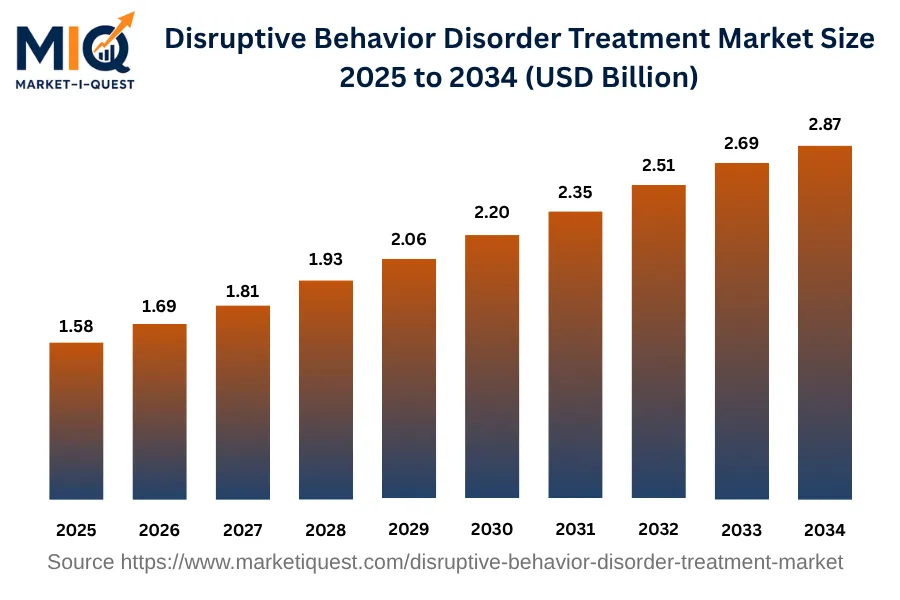
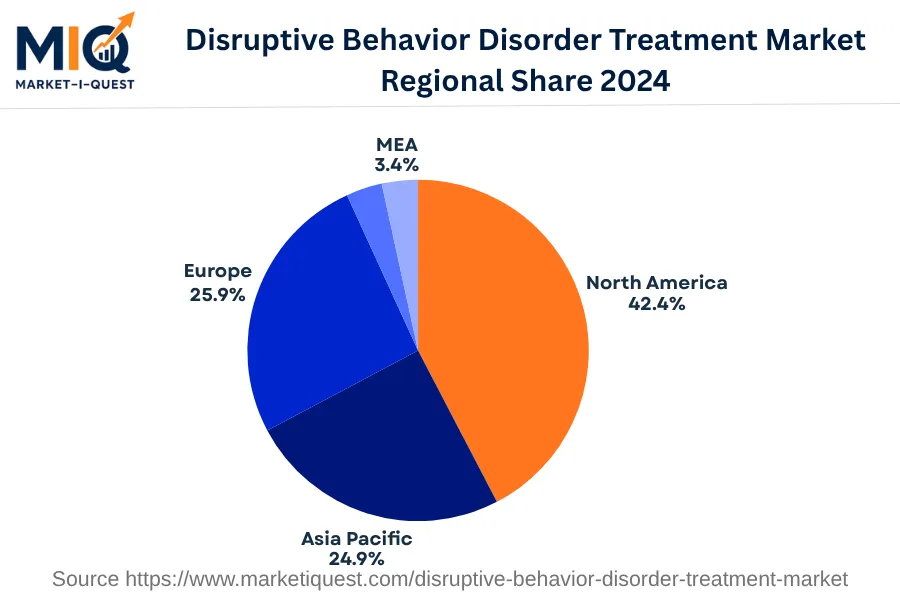
The Disruptive Behavior Disorder Treatment Market is projected to grow substantially over the coming years. The market was valued at USD 1.48 billion in 2024 and rose marginally to 1.58 billion in 2025. Continued growth is expected, specifically as the market size is forecasted to reach USD 2.87 billion by 2034. This represents a CAGR of 6.9% over the period from 2025 to 2034. Factors contributing to this steady increase can be attributed to advances within the industry and a heightened emphasis on mental health treatment. Regionally, North America accounted for the largest portion of the market in 2024 with a 42.4% share. Europe followed with a 25.9% share and Asia Pacific held a 24.9% share. Less substantial market shares were seen in the MEA and LATAM regions, with both holding around 3.4% respectively. This regional distribution highlights key areas of global influence in Disruptive Behavior Disorder Treatment.

Key Takeaways

  • By Type -Oppositional Defiant Disorder was observed to be the fastest-growing subset during the forecast period.
  • By Treatment - Medication Management held the majority share in the year 2024.
disruptive-behavior-disorder-treatment-market market size

Key Driving Factors

Government and Institutional Initiatives in Mental Health

Worldwide, the emergence of government and institutional initiatives surrounding mental health is one significant driver of the disruptive behavior disorder treatment market. Policies and programs that bring mental health issues into focus, especially among children and adolescents, are increasing awareness and creating demand for professional intervention. For instance, in the U.S., initiatives such as the Substance Abuse and Mental Health Services Administration's (SAMHSA) 'Now Is The Time' grant program promote the importance of mental health treatment in school settings. In the UK, the NHS Long Term Plan also aims to expand children's mental health services over the next few years. These governmental initiatives directly drive the growth of the market as they promote accessibility and affordability of treatment solutions.
Increasing Acceptance and Declining Stigmatization of Mental Health Disorders

Another important driver for the disruptive behavior disorder treatment market is the increasing societal acceptance and declining stigma surrounding mental health disorders. This shift has resulted in an increasing number of individuals willingly seeking help and approaching healthcare professionals for treatment options. This is in large part due to extensive global efforts by organizations like the World Health Organization, which actively works to reduce the stigma associated with mental health. This shift in societal norms has led to a rise in demand for treatments for disorders like Oppositional Defiant Disorder and Conduct Disorder, thus fueling the growth of the disruptive behavior disorder treatment market.

Market Evolution by Timeline

2019-2023
During this period, the U.S. and Canada were the major regional buyers, driven primarily by advancements in diagnosis and increase in healthcare expenditure. Cognitive Behavioral Therapy (CBT) was the standard treatment approach for disruptive behavior disorders (DBD). Medical stakeholders adopted Electronic Health Record (EHR) systems to integrate patients' medical histories into treatment plans. However, limitations like privacy concerns and inadequate IT infrastructure acted as constraints. Federally sponsored initiatives, like the Substance Abuse and Mental Health Services Administration's (SAMHSA) program, have influenced policy. Payers typically opted for bundled payment models and the market saw a trend of partnerships between schools and healthcare providers. Key risks encountered were misdiagnosis and inconsistency in treatment protocols.
2024
In 2024, Asia Pacific region showed a spike in demand due to increased awareness and better diagnosis tools. Telepsychiatry services emerged as a significant tool, allowing providers to extend their services to remote locations. However, technological infrastructure continued to be a bottleneck for integrated services. Countries like Australia favored treatment guidelines by the National Health and Medical Research Council (NHMRC), shaping the policy in this year. Advances in artificial intelligence caused revisions in pricing models, with an emphasis on outcomes-based pricing. A considerable risk during this period was exposure to cybersecurity threats due to increased use of digital tools.
2025-2029
As we moved into this period, Europe emerged as a potent market due to increasing healthcare budgets and gross domestic products. The employment of Machine Learning (ML) algorithms for patient triage and managing treatment schedules became common benefiting from seamless integration capabilities. However, the ethical implications of AI use in healthcare became a subject of global debate influencing regulatory policy worldwide. Prices continued to be outcome-based, but procurement strategies incorporated shared risk clauses. During this period, the risk of AI interpretability, essentially understanding how ML models make decisions, became increasingly crucial.
2030-2034
By this period, Latin America and Middle East and Africa expanded as major markets due to improving healthcare facilities and increasing health awareness. The use of Augmented Reality (AR) and Virtual Reality (VR) in DBD treatments became widespread, but faced integration challenges with existing systems. On the policy front, World Health Organization's (WHO) standards for AR and VR in mental health treatments held sway. Value-based pricing models became more prevalent with the rise of personalized treatments. A major risk faced during this period was reliably measuring treatment effectiveness with the advent of new technologies.

Future Market Outlook

Future Opportunities

Future opportunities in the disruptive behavior disorder treatment market hinge on collaboration between technology providers and healthcare practitioners. For instance, partnerships formed in 2023 between companies like Cerebral and major healthcare networks are aimed at improving access and quality of care for patients. With the rise of integrated care models, there is an increasing demand for treatment modalities that incorporate behavioral therapy alongside pharmacological interventions. The National Institute of Mental Health has shown ongoing support for research into combination therapies that could prove especially beneficial for children and adolescents with attention-deficit/hyperactivity disorder (ADHD) and associated disruptive behaviors. In 2022, several states in the U.S. began implementing policy changes to allow for funding of holistic treatment approaches. As regulatory bodies emphasize outcomes-based funding, providers that demonstrate effective evidence-based practices will find new opportunities for reimbursement. Additionally, the expansion of school-based mental health services will significantly enhance access to care, given that roughly 13% of children experience a mental disorder, according to the Centers for Disease Control and Prevention in 2021. These trends indicate a shift toward community-based treatment strategies, creating fertile ground for practitioners focused on comprehensive and accessible care pathways.

Segmentation Analysis

By Type

The market is divided into subsegments including Oppositional Defiant Disorder, Conduct Disorder, and Intermittent Explosive Disorder. Conduct Disorder accounted for the largest revenue share while Oppositional Defiant Disorder is expected to grow at the fastest CAGR during the forecast period.

Largest Revenue Share

Conduct Disorder

Market Share Leader

Attributing to factors such as higher prevalence, better diagnostic and therapeutic tools, and increased public awareness, the Conduct Disorder segment holds the largest market revenue. Furthermore, extensive research and development activities in this space contributes to a favorable market environment for growth. The social cost attributed to Conduct Disorder in adolescence is significantly high, making the diagnosis and treatment a public health priority. Regulatory bodies have undertaken several initiatives to combat this disorder, resulting in the increased demand for innovative and efficient solutions. Geographically, this segment has a larger footprint in developed regions where access to healthcare facilities and public awareness about the disorder’s severity are higher. The standard purchasing routes involve health practitioners or institutions that get their supply through authorized channels. The notable switch cost associated with changing therapies and treatments further reinforces its dominant market position.

Fastest CAGR

Oppositional Defiant Disorder

Forecast Period Growth Leader

Mirroring the industry's dynamics and analysis, the Oppositional Defiant Disorder segment is expected to register the fastest growth rate during the upcoming forecasting period. The primary growth drivers for this segment include improvements in diagnostic tools, growing global prevalence, and increasing awareness about the disorder. Technological advancements and broadening treatment horizons keep the segment on a growth trajectory despite potential barriers such as low awareness in certain regions, stigma, and therapy costs. Governmental and non-profit organization initiatives to improve mental health accessibility and awareness are expected to catalyze the growth of this segment. Collaborative efforts from all stakeholders can significantly accelerate market penetration. Notwithstanding the promising outlook, potential regulatory challenges and unanticipated disruptions, such as the ongoing global pandemic, pose near-term risks to the forecasted growth.

By Treatment

The market is divided into subsegments including Medication Management, Comprehensive Evaluation, Family Therapy, Parenting Modification, Group Therapy, Individual Therapy, Social and Emotional Skills Training, and Others. In 2024, Medication Management accounted for the largest revenue share while Family Therapy is expected to grow at the fastest CAGR during the forecast period.

Largest Revenue Share

Medication Management

Market Share Leader

Medication management held the largest revenue share in the treatment market in 2024 due to several factors. The increased prevalence of mental health disorders has resulted in an escalated demand for medication therapies. Secondly, the development of new pharmaceutical interventions for mental health disorders has contributed significantly to the revenue growth of this segment. Advancements in technology have facilitated the efficient management and dispensation of medication, leading to greater adoption of this treatment method by healthcare institutions. In addition, Medication Management is typically considered as a primary mode of treatment due to its high effectiveness in immediate symptom relief, making it a popular choice among practitioners. Geographic variables have also influenced the dominance of this segment with developed countries exhibiting a higher preference for medication-based treatment. Lastly, the introduction of regulatory frameworks favoring pharmaceutical treatments for mental health disorders has further bolstered the growth of the Medication Management segment.

Fastest CAGR

Family Therapy

Forecast Period Growth Leader

Family Therapy is projected to be the fastest-growing segment. The rise in adoption is driven by an increasing understanding of the role a patient's environment, particularly family dynamics, plays in their mental health and recovery process. This therapy type focuses on building collective resilience and empowering family support systems, making it a preferred option in holistic treatment methodologies. Breakthroughs in therapeutic technologies and methodologies have made this form of therapy more effective and readily acceptable. Furthermore, policy-level engagement to promote integrated, human-centric care is creating a conducive environment for the growth of family therapy. Capital investments in training and development resources for practitioners to provide this therapy also support this trend. However, barriers to adoption such as stigma and the time commitment required by family members could slow down growth. The possibility of policy changes and varied adoption rates across regions pose near-term growth risks.

Competitive Analysis

Key Market Players

Manufacturers / OEMs

Eli Lilly and Company
US
Pfizer Inc.
US
GlaxoSmithKline plc
UK

Key Suppliers & Raw Materials

Lonza
Switzerland
BASF SE
Germany
Dow Chemical Company
US

Distributors, Integrators & Channel Partners

Cardinal Health
US
McKesson Corporation
US
AmerisourceBergen Corporation
US

Porter’s Five Forces Analysis

This analysis explores the competitive landscape of the Disruptive Behavior Disorder Treatment market.

Supplier Bargaining Power

Medium

The strength of suppliers is influenced by the restriction in supply of specialized drugs and therapies.

Buyer Bargaining Power

High

Buyers, mainly healthcare providers and patients, have high power due to numerous treatment options.

Threat of Substitutes

Medium

Alternative treatments like psychotherapy and self-help resources pose a moderate threat.

Threat of New Entrants

Low

Significant investment and regulatory compliances create high barriers for new entrants.

Competitive Rivalry

High

The market is highly competitive with several established players providing similar products.

Regional Analysis

Geographic market dynamics and growth opportunities across key regions

Global Market Outlook

disruptive-behavior-disorder-treatment-market market regional share

North America

In 2024, the North American market for Disruptive Behavior Disorder (DBD) treatment showcased significant expansion. Key drivers included health policy initiatives, increased healthcare expenditure, and the growing adoption of advanced diagnostic techniques. Firstly, the U.S and Canada's government health policies focusing on mental health promotion positively steered the demand. Secondly, amplified health budgets across these countries led to an increased investment in DBD treatment facilities. Last but not least, the broad acceptance of contemporary diagnostic methods like Cognitive Behavioral Therapy (CBT) within healthcare sectors boosted the market growth.

Trending in 2024, the shift towards online therapy sessions exemplified changes in patient behavior due to the convenience of remote access and busy urban lifestyles. In technology, AI and predictive modeling implanted in assessing DBD risk factors made waves. In terms of channel dynamics, partnerships between healthcare providers, and EdTech firms provided unique opportunities for holistic child development models to mitigate DBD. The implementation of standards like the Diagnostic and Statistical Manual of Mental Disorders (DSM–5) by American Psychiatric Association also promoted consistency in diagnosing and managing DBD. Clients spanned numerous sectors, primarily schools, healthcare providers, and community centers, leveraging DBD treatment as a preventative measure in their overarching health strategies.

Asia Pacific

In 2024, the Asia Pacific market for Disruptive Behavior Disorder (DBD) treatment experienced significant growth catalyzed by several key factors. Rising awareness about mental health, governmental investments in healthcare sectors, and increased accessibility to psychiatric treatments boosted this growth, particularly in China, India, and Japan. Technological advancements, such as telepsychiatry, and favorable insurance policies also facilitated larger patient reach in South Korea and Australia.

Simultaneously, several trends began to shape the DBD treatment market. Patient preference shifted towards non-invasive therapies such as cognitive-behavioral therapy and parent management training, especially in affluent regions such as key ASEAN markets. Increasing use of digital platforms for delivering mental health services gained popularity, owing to their convenience and accessibility. Partnership models among healthcare providers, government agencies, and tech companies gained momentum, to enhance digital health infrastructure for better treatment provision.

In the base year, healthcare and retail sectors were prominent customers, investing significantly in making mental health services more accessible to their employees and customers respectively. Government sectors, primarily in China and India, also played a key role in uplifting DBD treatment market, with policies aiming towards affordable and widespread availability of mental health services. In conclusion, increasing social acceptance and understanding of DBD, technological advances and unprecedented sector-wide collaborations marked a progressive year for the DBD treatment market in the Asia Pacific.

Europe

In 2024, Europe's market for Disruptive Behavior Disorder (DBD) Treatment was primarily influenced by growing awareness, technological advancements, and government regulation. Drivers included increased demand owing to a rise in proneness to psychological disorders across European nations, particularly Germany and the UK, and high investment in R&D, leading to novel treatment technologies. Laws mandating mental health support in educational institutes across Europe advocated for DBD treatment accessibility.

Prominent trends in 2024 involved a shift in buyer behavior and an increase in partnerships. The healthcare sector registered considerable growth as more individuals sought professional advice for DBD, heightening the importance of hospitals and clinics. Telehealth adoption, particularly in Italy, Spain, and the Nordics, escalated due to its benefits, such as anonymity, comfort, and ease of access. Partnerships and M&A activity proliferated, illustrated by consolidation among health-tech firms in the Benelux and Central & Eastern Europe. The availability of treatment on digital platforms grew, demonstrating the retail sector's participation in supplementing treatment access points. The year saw the European Union's continued enforcement of GDPR, ensuring data protection and privacy in digital mental health provisioning.

Latin America

In 2024, the Disruptive Behavior Disorder (DBD) Treatment market in Latin America witnessed impactful dynamics, reshaping mental healthcare services. Driver factors included a growing awareness of DBD within the region’s populous countries, catalyzing demand for related medical services, particularly in Brazil and Mexico. Furthermore, dedicated government initiatives like Argentina's National Mental Health Law fostered an accessibility of DBD-treatments. Investment in novel youth-oriented therapies in urban Centers of Chile showcased how modern techniques gained traction. Supply-side specifics were underscored by Colombian healthcare authorities’ enhanced focus on training local therapists to identify and treat DBD, boosting the treatment capacity. Additionally, the eased safety regulations in Peru allowed for increased production and dissemination of DBD medication, impacting pricing favorably.

Burgeoning trends involved a shift toward digital technology-enabled therapy, most notably Telepsychiatry in Brazil's retail health sector. Private-public partnerships, led by Argentine mental health organizations and international healthcare providers, reflected growing collaborations to tackle DBD. A noteworthy policy enforcement occurred in Mexico, where mandatory DBD screenings were implemented in public schools, triggering a surge in early diagnosis. Lastly, Chile's healthcare standard reforms championed a holistic approach, including both pharmacological and non-pharmacological treatments, manifesting an exceptional canvas for DBD recovery in Latin America. The sectors most impacted included healthcare facilities, pharmaceutical companies, schools, and retail health service providers.

Middle East & Africa

In 2024, the Disruptive Behavior Disorder (DBD) treatment market in the Middle East and Africa demonstrated dynamic growth patterns. Numerous drivers influenced the growing demand, including heightened awareness of mental health disorders in Saudi Arabia, United Arab Emirates, Qatar, Egypt, South Africa, Nigeria, Kenya, and Israel. In these nations, governmental and non-governmental organizations invested significantly in mental health services, causing a surge in DBD treatment supplies. A surge in digital health adoption, prominently in healthcare and telecommunication sectors, enhanced the accessibility and effectiveness of DBD treatment methods, stimulating market growth.

Simultaneously, identifiable trends shaped the DBD treatment behavior. Parental concerns propelled a rise in demand for non-medical DBD treatments, triggering subtle shifts towards therapy and counseling kits. The shift was particularly evident in Nigeria, where many parents opted for behavioral therapy over medication. Partnerships between healthcare institutions and educational facilities emerged in Egypt to offer comprehensive student-focused DBD treatment programs to raise awareness and facilitate early diagnosis. Lastly, the increased policy enforcement in South Africa around DBD treatment standards safeguarded patients' rights and optimized market practices, encouraging trust and favorability towards DBD treatment market in the region.

Recent Industry Developments

Latest market innovations, product launches, and strategic initiatives

January 2026

A California state bill took effect prohibiting health insurance plans from requiring rediagnosis for individuals previously diagnosed with pervasive developmental disorder or autism to maintain coverage for behavioral health treatment.

Frequently Asked Questions