Disposable Lead Wires Market Snapshot

Key Players

  • Oscar Boscarol (Italy)
  • BD (United States)
  • Schiller AG (Switzerland)
  • GE Healthcare (United States)
  • 3M (United States)
  • Mindray (China)
  • B. Braun Melsungen AG (Germany)
  • Bionet (South Korea)
  • Spacelabs Healthcare (United States)

Market Size

Base Year 2024
$0.875 Bn
CAGR
5.85%
Forecast 2034
$1.54 Bn

Market Segments

By Material
  • TPE
  • TPU
  • Others
By Machine Type
  • 3 Lead
  • 5 Lead
  • Others
By End Use
  • Hospitals
  • Clinics
  • Long-Term Facilities
  • Ambulatory & Home Care Settings

Market Dynamics

Drivers
  • Increasing healthcare expenditure
  • Rising technological advances
Restraints
  • Price sensitivity
  • Healthcare budget constraints
Opportunities
  • Rising healthcare concerns
  • Technological advancements in monitoring equipment

Market Size

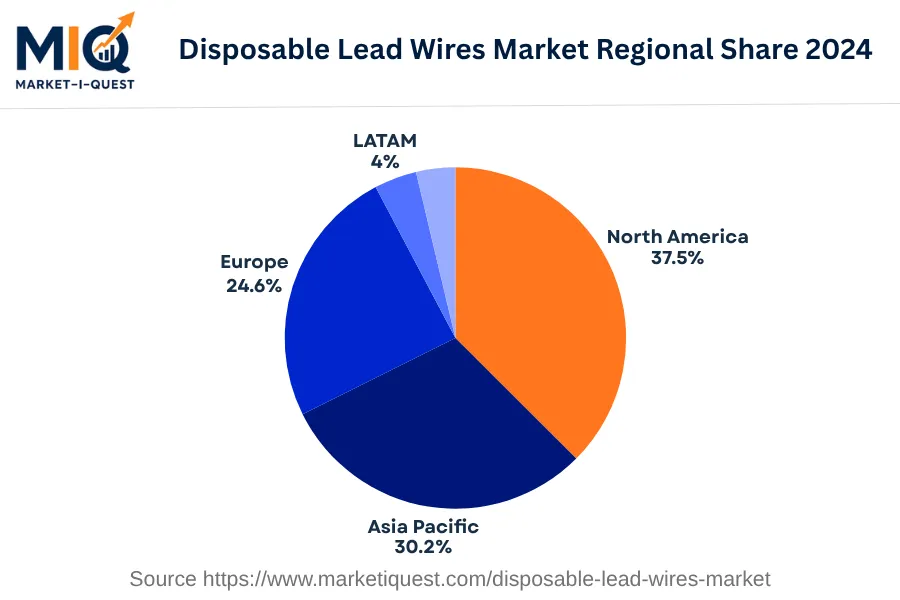
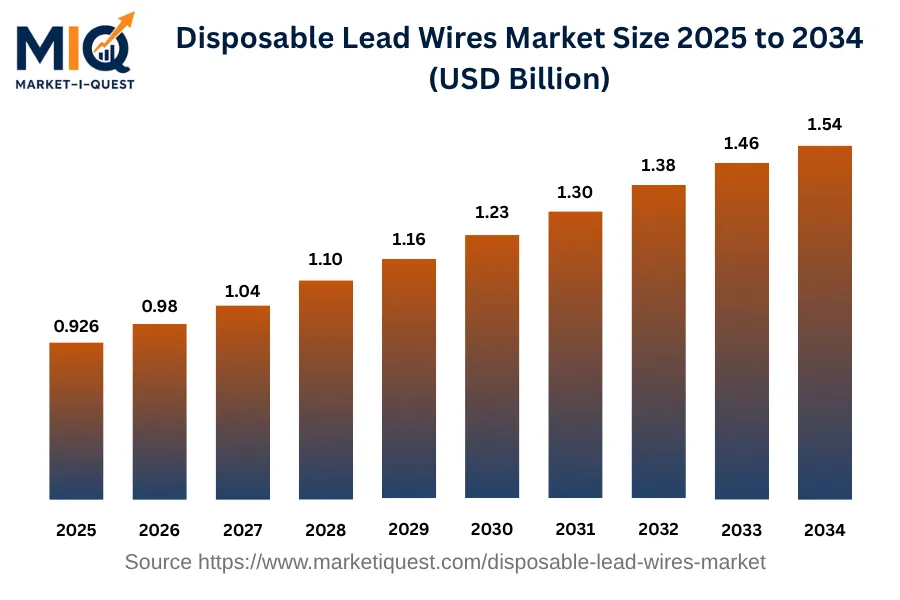
The Disposable Lead Wires Market held a size of $0.93 billion in 2025 and is estimated to reach $1.54 billion by 2034, growing at a CAGR of 5.85%. This forward trajectory manifests in the market size expansion from $0.93 billion in 2025 to approximately $1.54 billion by 2034. The increased reliance on disposable lead wires within diverse medical operations contributes to the substantial market expansion over this decade period. Analyzing the regional share in 2024, North America held 37.5% of the market. An almost equal distribution is noted for the Asia Pacific and Europe regions, with shares of 30.2% and 24.6% respectively. Lesser contributions are observed from LATAM and MEA, recording shares of 4.0% and 3.7% correspondingly. This regional market share distribution underscores the global relevance of disposable lead wires, despite disparate regional market sizes.

Key Takeaways

  • By Material - TPE led the Disposable Lead Wires Market accounting for the largest share in the base year.
  • By Machine Type - 5 Lead segment held the dominant position in the market in the base year.
  • By End Use - Hospitals accounted for the highest market share in the Disposable Lead Wires Market in the base year.
disposable-lead-wires-market market size

Key Driving Factors

Strict Sanitary Regulations in the Healthcare Industry

Sanitary regulations across various healthcare systems worldwide have a significant impact on the disposable lead wires market. These laws mandate the use of disposable sanitary equipment and supplies, particularly in critical care and surgery scenarios. In a bid to reduce cross-contamination risks and the spread of healthcare-associated infections among patients, regulatory agencies are strengthening protocols for the usage of disposable medical supplies, including lead wires. As a result, hospitals are opting for disposable lead wires over their reusable counterparts which, in turn, fuels market growth. Furthermore, occasional updates to these sanitary regulations, necessitating the replacement of existing supplies, cause an ongoing demand, ensuring the market's constant expansion.

Upsurge in Prevalence of Cardiovascular Diseases

The rising burden of cardiovascular diseases (CVDs), which demand regular and precise monitoring, is another crucial force driving the disposable lead wires market. Disposable lead wires are integral components in ECG machines and monitors, tools extensively used in the diagnosis and monitoring of CVDs. Globally, an aging population and lifestyle changes leading to conditions like hypertension and obesity, which are precursors to CVDs, are driving up the number of patients requiring cardiac monitoring. This increased need for monitoring tools and, consequently, disposable lead wires, is pushing the market growth. The pattern is particularly notable in densely populated regions with a rapidly aging demographic, like Asia-Pacific and the Middle East.

Market Evolution by Timeline

2019-2023
During this period, demand for disposable lead wires increased significantly in North America due to the increased incidence of cardiovascular diseases and increased patient admissions in hospitals. Manufacturers, such as 3M and Becton Dickinson, introduced efficient products boasting technological improvements like better connection stability and bio-compatibility. Regulatory compliance to ISO 13485 and ISO 10993 standards became key for market penetration. A common business model used was bundle pricing, where disposable lead wires were sold with other essential medical equipment. Despite growing demand, supply faced constraints due to rising raw material costs and scarcity of skilled workforce.
2024
This year saw European countries, notably Germany and the UK, seeing increased demand for disposable lead wires in homecare settings. This was due to aging populations and increased preference for home healthcare services. Medtronic launched advanced disposable lead wires integrating with their existing medical devices, providing seamless patient monitoring. The European Union's Medical Device Regulation (EU-MDR) heavily impacted producers. Commercial models exploring long-term supply contracts became prominent. However, risks included increasing competition and stringent regulatory norms.
2025-2029
Between these years, Asia-Pacific region (especially China and India) witnessed booming demand due to improving healthcare infrastructure. With advancements in integrated technologies, disposable lead wires coupled with IoT and AI features were developed. Standardized norms like CE and CFDA governed product quality. Suppliers often opted for value-based pricing models to gain edge over others. The risk menacing the market was counterfeit products which resulted into serious quality concerns and legal liabilities.
2030-2034
Trend towards 'green' practices led manufacturers to shift towards eco-friendly alternatives to traditional lead wires, affecting market dynamics. Rising demand in Middle-East and African countries was attributed to increased awareness and penetration of healthcare services. Regulatory standards became stricter with new WHO regulations in place. Most transactions involved comprehensive service agreements including maintenance and product replacement clauses. Business risks involved increased R&D costs due to the necessity of constant innovation and adaptation to new standards.

Future Market Outlook

Future Opportunities

The potential for growth in the disposable lead wires market lies significantly in the ongoing global transition towards environmentally friendly practices in healthcare. As of 2023, various hospitals in the United Kingdom have started pilot programs aimed at reducing medical waste by utilizing more sustainable materials in medical devices, including disposable lead wires. Companies that prioritize sustainable practices may gain a competitive advantage as healthcare providers become increasingly conscious of their environmental impact. In addition, the rising prevalence of chronic illnesses globally calls for improved monitoring solutions, creating opportunities for disposable lead wires linked to advanced telemetry systems. For instance, Baxter International plans to expand its connectivity solutions for chronic disease management in the Asia-Pacific region, targeting markets that have shown an increased need for remote patient monitoring. Furthermore, the pandemic has underscored the importance of enhanced hygiene protocols in healthcare settings, prompting regulatory bodies worldwide to support the advancement of single-use medical technologies. This growing emphasis suggests that manufacturers focusing on enhancing product safety and efficacy will be well-positioned to meet evolving healthcare demands. The integration of disposable lead wires with telemedicine platforms is also anticipated, leveraging this trend toward remote patient care and ongoing management solutions.

Segmentation Analysis

By Material

The market is divided into subsegments including TPE, TPU, and Others. TPE accounted for the largest revenue share while Others is expected to grow at the fastest CAGR during the forecast period.

Largest Revenue Share

TPE

Market Share Leader

The subsegment TPE, also known as Thermoplastic Elastomers, takes the lead in terms of revenue in 2024. The reason for the dominance of TPE in the market primarily rests on its extensive applications across various sectors such as automotive, building and construction, footwear, and consumer products. The automotive industry, in particular, has a high demand for TPE due to its flexibility, durability, and recyclability, adding substantially to the revenue stream of this subsegment. Additionally, TPE meets the requirements of numerous health and safety regulations, which further enhances its adoption globally. There is also a considerable cost advantage associated with TPE, which further aids its market standing. The switching costs from TPE to another material for manufacturers are high due to the intricacies involved in altering manufacturing systems, which solidifies the subsegment's dominant position. Therefore, although other subsegments hold potential, TPE remains the highest revenue generating subsegment in 2024.

Fastest CAGR

Others

Forecast Period Growth Leader

The 'Others' subsegment is projected to exhibit the fastest CAGR during the forecast period. Growth in this subsegment is primarily driven by the constant innovation and development of new materials that cater to the varying needs of different industries. New materials are characterized by their improved features such as enhanced durability, rigidity, and thermal stability, which have significantly propelled their adoption. Additionally, partnerships between material developers and end-user industries have also bolstered the growth of this subsegment, as these associations facilitate the development of customized solutions that optimally meet the needs of the end-users. However, the growth might face obstacles due to regulatory challenges and a higher initial R&D cost. Nonetheless, the overall trend towards sustainability and efficiency in materials strongly supports the predicted higher growth rate for this subsegment.

By Machine Type

The market is divided into subsegments including 3 Lead, 5 Lead, and Others. The 5 Lead subsegment accounted for the largest revenue share while the 3 Lead subsegment is expected to grow at the fastest CAGR during the forecast period.

Largest Revenue Share

5 Lead

Market Share Leader

The 5 Lead segment leads the market due to its extensive usage, versatility, and compatibility with a range of devices. The 5 lead machines are generally designed to monitor both arrhythmias and ischemia, making them versatile for several diagnostic and patient monitoring requirements within the medical field. They are the gold standard in critical care settings due to their enhanced patient monitoring capabilities. Hence, they find widespread adoption in hospitals and healthcare facilities across various geographies which drive their sales volume. Stringent regulatory standards favor the use of advanced monitoring machines including 5 Lead machines. Moreover, the incumbent advantage, the entrenched role of purchasing departments in healthcare facilities and high initial setup and switching costs contribute to the sustained revenue lead of this subsegment.

Fastest CAGR

3 Lead

Forecast Period Growth Leader

The 3 Lead subsegment is projected to be the fastest growing. This can be attributed to their simplified design and cost-effectiveness which promotes adoption, particularly in developing regions where budget constraints are more pronounced. Tech advancements and increased capital expenditure on healthcare technology are also key drivers. Increased automation and technological improvements in the 3 Lead machines are lowering barriers to entry, making it more accessible for smaller healthcare facilities and home-use. However, potential risks lie in the regulatory constraints that could delay the adoption of this technology. Furthermore, this subsegment’s future also depends heavily on forming partnerships with healthcare practitioners to boost user-confidence and thus speed up market penetration.

By End Use

The market by end use is divided into several subsegments including Hospitals, Clinics, Long-Term Facilities, and Ambulatory & Home Care Settings. In 2024, Hospitals accounted for the largest revenue share while Ambulatory & Home Care Settings is anticipated to represent the fastest growing subsegment.

Largest Revenue Share

Hospitals

Market Share Leader

Hospitals hold the largest share of the market revenue due to the complexity of procedures and treatments offered that require advanced products and services. Their capacity to handle a large influx of patients, coupled with high cost of individual treatments contributes to higher revenue. Furthermore, hospitals, being primary healthcare providers, get a regular patient base, resulting in continuous demand for healthcare supplies and equipment. This generates a steady revenue stream. They are often more equipped and funded compared to other healthcare facilities, enabling them to invest in state-of-the-art medical technologies. Regional policies and healthcare schemes also tend to offer financial support to hospitals in various forms, bolstering their purchasing power. However, high competition and rigorous regulatory scrutiny might dampen the revenue growth rate slightly.

Fastest CAGR

Ambulatory & Home Care Settings

Forecast Period Growth Leader

The Ambulatory & Home Care Settings segment is forecasted to grow the fastest. This rapid growth is largely attributed to the increasing shift towards outpatient care and a rising popularity in home healthcare. Policy reforms favoring ambulatory care and home care, along with advances in remote patient monitoring systems, have spurred this growth. Partnerships between home care agencies and medical technology firms are increasing, enhancing home care capabilities. The booming demand for home care comes from an aging population preferring the comfort of home, especially post operations or with chronic diseases. Similarly, advancement in technology has made ambulatory care more effective and convenient, further pushing its adoption rate. Yet, barriers such as the insufficiency in medical professionals in home care settings, and the high upfront investment required in ambulatory care facilities may pose as risks mitigating the growth rate.

Competitive Analysis

Key Market Players

Manufacturers / OEMs

3M Company
US
Becton, Dickinson and Company
US
Medtronic plc
Ireland

Key Suppliers & Raw Materials

Dupont
US
BASF
Germany
Dow
US

Distributors, Integrators & Channel Partners

Cardinal Health
US
McKesson Corporation
US
AmerisourceBergen Corporation
US

Porter’s Five Forces Analysis

An analysis of the disposable lead wires market using Porter's Five Forces methodology.

Supplier Bargaining Power

Medium

Key inputs are low-cost but some suppliers have technologically advanced offerings that increase their bargaining power.

Buyer Bargaining Power

High

Medical facilities have a high number of suppliers to choose from, increasing their purchasing power.

Threat of Substitutes

Low

Few direct substitutes for disposable lead wires exist, contributing to low substitution threat.

Threat of New Entrants

Medium

While entry barriers related to manufacturing can be moderate, brand recognition and distribution networks form notable hurdles.

Competitive Rivalry

High

Multiple established suppliers are in competition, sustaining a high level of rivalry in the market.

Regional Analysis

Geographic market dynamics and growth opportunities across key regions

Global Market Outlook

disposable-lead-wires-market market regional share

North America

In 2024, the North American disposable lead wires market experienced considerable shifts influenced by demand, regulations, supply dynamics, and pricing. Crucial drivers comprised the adoption of latest technology by healthcare providers, regulatory directives for patient safety, and increased investment in the healthcare sector. For instance, the advancements in technology facilitated real-time patient monitoring, propelling market growth. Moreover, stringent regulations, such as those mandated by the FDA, concerning patient safety contributed to a surge in demand for disposable lead wires, enhancing market expansion. The rise in healthcare investments, particularly in the United States, optimized the supply chain, ensuring wide-spread product availability.

Market trends revealed changing buyer behavior, evidence of technological evolution, and robust M&A activities. New product introductions, showcasing improved usability and durability, indicated a shift towards advanced technology in the healthcare sector. Concurrently, healthcare providers, majorly in the U.S., Canada, and Mexico, exhibited a preference for high-quality, disposable lead wires due to enhanced patient safety features. The year captured a dramatic increase in partnerships and M&A activities, most notably within healthcare and medical manufacturing sectors, aimed at consolidating market position and optimizing supply chain efficiency. In essence, the disposable lead wires market in North America in 2024 experienced significant expansion, driven by technological advancement, regulatory milieu, and strategic market alliances.

Asia Pacific

In 2024, the Disposable Lead Wires market in Asia Pacific demonstrated significant growth. This spike was driven by an intensifying demand in the healthcare sector, especially in China, India, and Australia, where aging populations and the rising occurrence of cardiovascular disease necessitated increased investment in healthcare infrastructure. The adoption of advanced technologies in Japan and South Korea also fueled the market, as these countries implemented high-quality disposable lead wires in critical healthcare applications. In ASEAN markets, aggressive pricing strategies propelled supply dynamics, further stimulating market growth.

Concurrently, several notable trends emerged. First, a distinct shift towards hygienic and infection-free solutions in healthcare dictated buyer behavior, as consumers across all markets looked to minimize cross-contamination risks associated with reusable lead wires. This was particularly the case in healthcare institutions across China and India. Second, technological advancements in Japan, South Korea, and Australia saw an uptake in biocompatible material-based disposable lead wires. Third, as regulatory bodies, especially in China and Australia, bolstered their policy enforcement around patient safety, the market observed a surge in international standards-compliant products. Lastly, a series of partnerships and mergers & acquisitions occurred particularly in key ASEAN economies, encouraging the standardization of disposable lead wires.

Europe

In 2024, the disposable lead wires market in Europe experienced substantial demand predominantly driven by the healthcare sector. Key drivers included increased healthcare provisions, such as the widespread adoption of disposable lead wires in telemetry, government regulations promoting patient safety and reducing cross-contamination, and investments into technological advancements within the European Union, particularly from Germany and the United Kingdom. Supply dynamics also showed progressive trends, with manufacturers escalating production to meet market demands, therefore leading to a relatively stable pricing environment.

Trends observed in 2024 include shifts to patient-customer behavior, with increased preference for disposable over reusable lead wires, primarily driven by concerns over patient safety, the risk of hospital-acquired infections, and compliance with stringent healthcare standards. Significant enhancements in technology also resulted in the development of high-quality, advanced disposable lead wires in markets of Italy and Spain, thereby stimulating their adoption. Additionally, partnerships and M&A activities became prominent, particularly amongst enterprises within Benelux and Central & Eastern Europe, as companies sought to expand their footprint and reinforce market position. Lastly, policy enforcements at a national level, focused on single-use medical devices, further underpinned the growth of the disposable lead wires market in countries including France and the Nordics.

Latin America

In 2024, the disposable lead wires market in Latin America experienced remarkable growth due to various driving factors and emerging trends. This boost was driven by increased investments in healthcare infrastructure, especially in countries such as Brazil, Mexico, Argentina, Colombia, Chile, and Peru. Advances in insulated medical wire technology positively impacted the market, enabling the production of more efficient and safer wires. The adoption of stringent healthcare regulations in Brazil and Mexico also fueled the market growth by demanding higher quality standards. Chile and Argentina saw an uptick in buyer preference for disposable lead wires that afford greater patient comfort and improved diagnostic efficacy. In Peru and Colombia, digitization within healthcare providers accelerated, triggering a shift towards technologically advanced products. M&A activities were notable in Brazil and Mexico, with multinational manufacturers seeking local partners to extend their reach in the regional market.

In Argentina, policy enforcement related to the safe disposal of medical waste influenced the demand for eco-friendly lead wires in hospitals and clinics. The manufacturing sector in Chile showed a rising demand for these wires due to safety requirements in industrial settings. In all, this wave of technological advancement, regulatory driving forces, and evolving customer preferences shaped the disposable lead wires market in 2024 in Latin America.

Middle East & Africa

In 2024, the Middle East and Africa's Disposable Lead Wires Market saw notable activity due to several drivers and prevailing trends. The emphasis on minimizing cross-contamination in medical facilities led to a heightened demand for disposable lead wires, particularly in healthcare sectors of Saudi Arabia, South Africa, and Kenya. The implementation of stricter health regulations towards infection control by governments in UAE and Qatar also stimulated market growth, encouraging investment in disposable medical supplies. Technological innovation saw significant adoption in Israel, where advanced disposable lead wires with enhanced reliability and safety features found increased usage. Additionally, competition-driven pricing strategies in the market stimulated activity in Egypt and Nigeria.

Notable trends in the market during the same year included the rising patient awareness in South Africa, Kenya, and Qatar, regarding cardiac health monitoring. These nations saw a pattern in patients opting for disposable lead systems for their hygienic advantage. Shifts in procurement methods were observed in Egypt and Saudi Arabia, with a significant move towards bulk purchasing to manage cost efficiencies. Lastly, partnerships between local healthcare providers and international disposable lead wires manufacturers were fostered, as a strategy to meet the growing demand. In the UAE and Israel, increased policy enforcement in healthcare standards for disposable medical products reshaped the market landscape considerably.

Recent Industry Developments

Latest market innovations, product launches, and strategic initiatives

January 2025

Medical equipment providers shifted high-volume manufacturing lines toward advanced Thermoplastic Polyurethane (TPU) and Thermoplastic Elastomer (TPE) lead jacketings. The materials are deployed to replace legacy PVC lines, offering high-fidelity signal transmission and reduced electrical noise interference required for sensitive telemetry monitoring.

Frequently Asked Questions