
Diesel Generator Market Snapshot

Key Players

  • Caterpillar Inc. (United States)
  • Cummins Inc. (United States)
  • Kohler Co. (United States)
  • Generac Power Systems (United States)
  • Mitsubishi Heavy Industries (Japan)
  • MTU Onsite Energy (Germany)
  • Yanmar Co. Ltd (Japan)
  • Kirloskar Oil Engines Ltd. (India)

Market Size

Base Year 2024
$21.34 Bn
CAGR
5.9%
Forecast 2034
$35.60 Bn

Market Segments

By Power Rating
  • Low Power Generator
  • Medium Power Generator
  • High Power Generator
By Application
  • Industrial
  • Commercial
  • Residential

Market Dynamics

Drivers
  • Increased demand for stable power supply
  • Rising industrialization in developing economies
Restraints
  • High maintenance costs
  • Stringent environmental regulations
Opportunities
  • Growing energy demand globally
  • Emerging markets development

Market Size

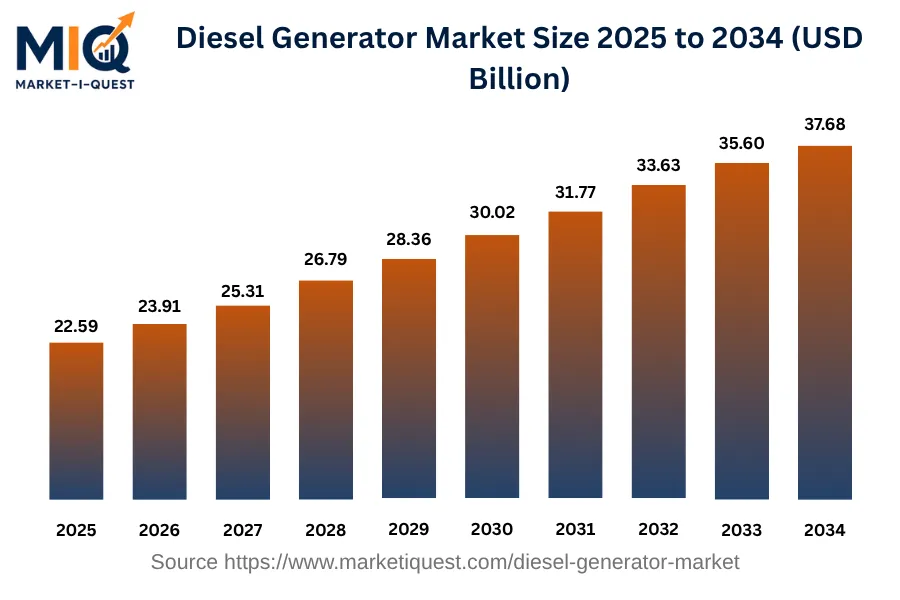
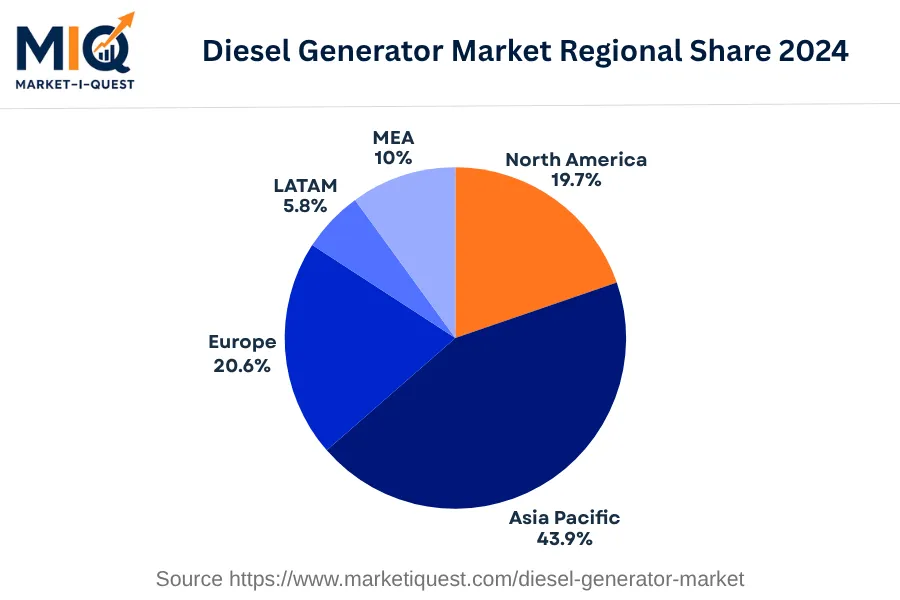
The Diesel Generator Market in 2025 is projected to be worth USD 22.59 billion, up from USD 21.34 billion in 2024. By 2034, the market value is expected to increase to USD 37.68 billion, with a CAGR of 5.9% from 2025 to 2034. The growth trajectory over the decade will be fairly accompanied by the increasing demand and market value for diesel generators. While considering the regional market share in 2024, Asia Pacific held the largest share of 43.9%. North America followed with 19.7%, Europe with 20.6%, Middle East and Africa with 10%, and Latin America held the smallest regional market share at 5.8%. These shares represent the market distribution and exhibits this industry’s reach on a global scale.

Key Takeaways

  • By Power Rating - Medium Power Generator held the majority share in 2024.
  • By Application - Industrial usage led the market accounting for the largest portion in the same year.
diesel-generator-market market size

Key Driving Factors

Stringent Regulatory Standards on Carbon Emissions

In response to the impending climate crisis, regulatory bodies worldwide, such as the Environmental Protection Agency (EPA) in the US, are enforcing stringent policies to decrease carbon emissions. Diesel generators, which are significant contributors to carbon emissions, are one of the main targets. To comply, manufacturers are being driven to innovate and design more eco-friendly, energy-efficient diesel generators resulting in a surge in market demand for these improved models. Commercial sectors are particularly attracted to these new generators, viewing them as a way to meet their own corporate sustainability goals while ensuring reliable energy sources. As a result, the diesel generator market is experiencing a specific increase due to innovation spurred by emission regulations.
Accelerated Demand for Reliable Power Supply in Emerging Economies

Emerging economies such as India and countries within the African continent are experiencing rapid industrialization and urbanization. This development is indirectly driving the diesel generator market due to an increased need for a reliable, uninterrupted power supply. Particularly, sectors like manufacturing and IT heavily depend on continuous electricity to function efficiently. Regular interruptions or fluctuations in power supply can cause significant losses to these sectors. Diesel generators serve as an immediate solution to this, given their ability to provide constant power in areas where the grid supply is either erratic or non-existent. Thus, the growing need for a consistent power supply in budding economies is distinctly fueling the expansion of the diesel generator market.

Market Evolution by Timeline

2019-2023
During this period, demand for diesel generators originated mostly from construction, telecom, and IT sectors worldwide, with emerging markets like Africa and Asia recording higher demands. Power outages in these regions triggered the needs. Continuous power supply being critical in these sectors, the operational utility of diesel generators was acclaimed. Manufacturers trended towards producing low-noise, compact units. However, regulatory challenges around emission standards like the EU Stage V emission standards impacted their design. Carbon emission regulations saw manufacturers turning to cleaner, biodiesel-powered units. Commercial models shifted towards rental contracts for temporary power requirements. Risks included fluctuating fuel prices and the emergence of renewable energy sources, particularly solar power.
2024
For this year, the demand for diesel generators can be observed from mining sectors and off-grid locations, especially in developing countries. The main reason is the necessity for uninterrupted power supply and backup in remote locations. Suppliers focused on hybrid technologies, combining diesel generators with renewable sources for increased efficiency. However, this raised compatibility and integration issues. The introduction of low emission zones in urban areas, like London's, posed challenges for diesel generator use. Flat-rate pricing models were common as customers prioritized predictable expenses. Major risks were potential supply chain disruptions caused by international trade tensions.
2025-2029
The period saw high demand from healthcare and disaster recovery sectors as resilience to power failures became of utmost importance. Regions with high occurrences of natural disasters, such as Southeast Asia and the Caribbean, were key markets. Advanced control systems aiming to enhance performance and fuel economy were notable supply enhancements, although frequent maintenance remained an issue. Policy-wise, stricter emission regulations, like California's Tier 4 standards, catalyzed technological improvements. The emergence of performance-based contracts, where payment is linked to the generator's operational efficiency, was a significant commercial development. The expansion of the electric grid in developing countries constituted a considerable risk to the diesel generator market.
2030-2034
Throughout these years, demand from agriculture and manufacturing sectors was prominent, largely in regions like South America and Africa. Higher power demands and grid instability were the primary drivers. Suppliers focused on hybrid models and automation for fluid load management, but technology adoption met resistance due to high costs. Government initiatives promoting renewable energy, like India's National Biofuel Policy, impacted the diesel generator market. We also saw a rise in long-term leasing agreements, offering cost-effective solutions to end-users. One primary risk was technology advancements in battery storage systems offering reliable, cleaner alternatives to diesel power generation.

Future Market Outlook

Future Opportunities

Future opportunities in the diesel generator market are increasingly connected to the current regulatory frameworks and technological advancements. The global push towards cleaner energy sources has led several countries, including Germany and the U.K., to implement policies promoting the use of hybrid diesel systems, creating a favorable environment for manufacturers to innovate. Recently, in March 2023, the United Nations announced initiatives aimed at reducing dependency on fossil fuels, which encourages research into alternative fuels for diesel generators, such as biodiesel and renewable diesel. Manufacturers like Kohler have begun testing alternatives to traditional diesel fuel, aiming to make significant product lines compatible with biofuels. The expansion of data centers, especially in North America, presents an ongoing demand for reliable power systems, offering growth potential for diesel generator providers capable of customizing solutions for such clients. Additionally, partnerships between technology firms and generator manufacturers are likely to enhance the efficiency and reliability of diesel systems, as seen in the agreement between Generac and various tech companies in December 2022 to develop smart grid solutions. Lastly, with several countries investing in disaster recovery abilities, diesel generators are positioned as essential components of resilience strategies, ensuring energy supply during emergencies, particularly in regions vulnerable to natural disasters.

Segmentation Analysis

By Power Rating

The market is divided into subsegments including Low Power Generator, Medium Power Generator, and High Power Generator. The Medium Power Generator accounted for the largest revenue share while the High Power Generator is expected to grow at the fastest CAGR during the forecast period.

Largest Revenue Share

Medium Power Generator

Market Share Leader

The Medium Power Generator predominates the market due to their extensive applicability across numerous sectors. Power backup is a critical requirement in sectors such as construction, manufacturing, commercial establishments, and residential areas and Medium Power Generators hit the sweet spot of offering the required power without escalating cost restraints. The growing industrialization and commercialization, particularly in evolving economies, are driving the demand for medium power generators. Additionally, factors such as an increase in power outages and power deficiency owing to climate change and varying weather conditions have further elevated the demand. Medium power generators are also popular choice among consumers due to their favorable total cost of ownership, including aspects like fuel consumption, maintenance cost, and lifespan of the generator. However, it is noteworthy that the market dynamics may change in response to emerging technology, regulatory shifts, or changes in end-user habits.

Fastest CAGR

High Power Generator

Forecast Period Growth Leader

Despite producing less revenue as of the base year, High Power Generators are expected to the fastest growing subsegment. This is largely due to escalating energy requirements, driven by industrial growth and infrastructure development. High Power Generators are typically employed in industries that necessitate heavy power, such as heavy industry, large commercial buildings, data centers, and large-scale events. Technological advancements enabling more efficient and reliable high power generators can act as a significant catalyst to this growth. While the initial investments for adopting High Power Generators may pose a barrier, declining costs of components and increasing efficiency are projected to promote adoption. Nonetheless, the volatility in fuel prices and stringent environmental regulations concerning emissions may pose challenges to this growth trajectory. It is thus imperative to keep abreast of shifts in the energy sector, governmental policies, and advancements in alternative power sources.

By Application

The market's application sector is divided into subsegments including Industrial, Commercial, and Residential. Among these, the Industrial subsegment accounted for the largest revenue share, while the Residential subsegment is anticipated to grow at the fastest CAGR during the forecast period.

Largest Revenue Share

Industrial

Market Share Leader

The Industrial subsegment holds the major share in terms of revenue due to several underlying factors. Primary among these is the recurrent need for equipment maintenance and repairs in the industrial sector, which occurs more frequently due to heavy-duty applications and harsh operating conditions. Furthermore, the industrial sector has a variety of machinery and equipment that require regular upkeep, contributing to the high revenue share. In addition to that, regulations and compliances laid down by different government bodies regarding safety and efficiency standards in the industrial sector also drive the need for regular monitoring and maintenance, thus adding to the revenue. Geographically, industrial hubs and markets with a strong manufacturing sector exhibit a higher revenue share in this segment. The purchasing criteria in this sub-segment rely on quality, durability, after-sales service, and reliability of the products or services being offered, creating a solid and constant revenue stream for the segment.

Fastest CAGR

Residential

Forecast Period Growth Leader

The Residential subsegment is projected to register the fastest CAGR within the forecast period. This growth is primarily driven by the increasing urbanization and a growing trend towards intelligent and connected homes, leading to increased adoption of advanced products and services in the residential sector. Other factors driving growth are changes in lifestyle, increased disposable income, and a heightened emphasis on home maintenance and aesthetics. Technological catalysts such as the advent of smart home technologies, as well as policy catalysts that encourage energy-efficient and smart living, also contribute to the growth in this subsegment. However, near-term risks include the adoption barrier due to the perception of high costs and complex installation procedures of advanced residential products. Yet, strategies such as partnerships with finance companies and providing user-friendly installation guides can help overcome these barriers and accelerate adoption.

Competitive Analysis

Key Market Players

Manufacturers / OEMs

Caterpillar Inc.
US
Cummins Inc.
US
Kohler Co.
US

Key Suppliers & Raw Materials

Bosch Limited
Germany
Denso Corporation
Japan
Valeo SA
France

Distributors, Integrators & Channel Partners

Wajax
Canada
AP Electric & Generators LLC
US
Power Electrics (Bristol) Ltd
UK

Porter’s Five Forces Analysis

This analysis assesses the competitive dynamics and attractiveness of the Diesel Generator Market.

Supplier Bargaining Power

Medium

Several suppliers exist, but crucial parts are controlled by a select few, leading to medium supplier power.

Buyer Bargaining Power

High

Multiple competing products allow buyers to demand more at lower prices, resulting in high bargaining power.

Threat of Substitutes

Medium

Alternative energy sources like solar power pose a medium substitution threat to diesel generators.

Threat of New Entrants

Low

High entry costs and technological expertise barriers keep the threat of new entrants low.

Competitive Rivalry

High

Several established players are vying for market share, making the competitive rivalry high.

Regional Analysis

Geographic market dynamics and growth opportunities across key regions

Global Market Outlook

diesel-generator-market market regional share

North America

In 2024, the North American diesel generator market was stimulated by growing energy requirements, an emphasis on reliable power, and increased investment in infrastructural developments. Demand grew significantly due to frequent power outages in regions like California, driving investment in backup power solutions. In Canada, stringent regulations around power reliability in critical facilities notably heightened the market activity. Meanwhile, the adoption of advanced technologies like remote monitoring systems and auto shutdown features enhanced the functionality of diesel generators, heightening their appeal to consumers.

Adaptations in the market saw a shift towards compact, lightweight generators with lower emission rates, aligning with the environmental policies prevalent in the region. An uptake in renewable-diesel hybrid generators also marked a significant trend, predominantly driven by enterprises and utilities aiming for greater sustainability. Major market players like Caterpillar and Cummins facilitated this transition with strategic partnerships and mergers. The awareness and enforcement of the U.S. Tier 4 Final standards influenced sales, stimulating the replacement of old, inefficient generators. Customer sectors included healthcare and manufacturing, where power supply reliability is paramount, as well as government and retail sectors, underlining the critical need for uninterrupted power across industries.

Asia Pacific

In 2024, the diesel generator market in the Asia Pacific exhibited significant momentum, fueled by several key factors and trends. Government investment in critical industries, namely manufacturing and healthcare, drove demand for reliable power sources, enhancing market growth. Stringent emission regulations in countries like China, Japan, and Korea compelled industries to adopt advanced, low-emission diesel generator technologies, creating positive supply dynamics. Rapid urbanization and increasing energy consumption in India and key ASEAN markets also heightened the demand for diesel generators.

Simultaneously, distinct market trends were noticed. Technological advancements, such as telematics and remote monitoring, became favored, specifically in Australia's mining sector, where they optimized generator performance and longevity. The implementation of global manufacture standards spurred the market towards highly efficient and durable diesel generators. In China, state-level policy enforcement of clean energy principles accelerated adoption of 'greener' diesel generators. Moreover, buyer behavior shifted significantly towards online procurement due to the rapid digitalization across the region, altering traditional channel dynamics. Across the region, strategic partnerships and M&A activities heightened, particularly within utilities and enterprise sectors. For example, the cooperation between Chinese and Japanese diesel generator manufacturers promoted technology transfer and shared production goals, pointing to increasingly globalized operations within the Asia Pacific market.

Europe

In 2024, Europe's Diesel Generator Market witnessed a shifting landscape guided by divergent forces. Drivers included new regulatory measures from the European Union pushing industries toward more green energy solutions, enhancing demand for bio-diesel generators. High investment in infrastructure development, particularly in Germany and the United Kingdom, increased the requirement for continuous power backup solutions. Furthermore, adoption of smart grid technology sparked an interest in diesel generators equipped with remote monitoring features, particularly in tech-heavy regions like the Nordics and Central & Eastern Europe.

Market trends saw a growing appetite for renting serviced generators, especially within retail and construction sectors, demonstrating a changing consumer behavior. New technological advancements led to the emergence of hybrid diesel generators, predominantly employed by utilities and manufacturing sectors for better energy efficiency. Increased channel dynamics was reflected by heightened online sales, propelled by the overall digitalization trend in Europe. Moreover, strategic collaborations prevailed, such as Rolls-Royce Power Systems securing a contract with the British Army, thereby reinforcing its position in the military sector. Lastly, an intensified policy enforcement trend was observed, with countries like France and Italy imposing stringent emission standards, pushing manufacturers to develop lower emissions diesel generators.

Latin America

In 2024, the Diesel Generator Market in Latin America demonstrated significant growth due to various drivers and trends. Factors such as persistent power outages, increasing industrialization, and investment in infrastructure in key economies like Brazil, Mexico, and Argentina accelerated the demand for diesel generators. Strict emission policies in Chile and Colombia enforced the adoption of advanced technologies, leading to an uptick in demand for energy-efficient and cleaner diesel generators. Rapid growth in sectors such as healthcare, utilities, and manufacturing further bolstered the diesel generator market.

Emerging trends in the base year included a shift towards consumers prioritizing energy efficiency and low-maintenance generators stemming from technology upgrades. The increasing digitization of retail in countries like Peru amplified the need for reliable power backup, resulting in a surge in diesel generator sales. High-profile partnerships took place, particularly in the manufacturing sector, intensifying the business landscape and competition among diesel generator providers. Governments across LATAM countries, notably Mexico and Brazil, reinforced regulatory guidelines, ensuring compliance with regional emission standards. In aggregate, these drivers and trends in 2024 significantly shaped the evolution of the Diesel Generator market in LATAM.

Middle East & Africa

In 2024, the Diesel Generator Market in the Middle East and Africa experienced significant activity due to the growing demand for uninterrupted power. Power outages, primarily in areas like Nigeria and South Africa, drove the need for reliable backup power, encouraging the purchase of diesel generators. Additionally, investment in telecommunication infrastructure in countries like Kenya and the United Arab Emirates saw the increased adoption of diesel generators for off-grid sites. During this period, price stability in the diesel fuel market also positively impacted the market.

Trends observed within the base year included a shift towards higher-capacity diesel generators in Saudi Arabia's industrial sector. Also, a rise in strategic partnerships, like the collaboration between Telkom Israel and generator supplier, Caterpillar, aided in expanding diesel generator market coverage. Governments, like Egypt, reinforced their energy security policy, thus leading to a surge in demand from the public sector. Key sectors buying diesel generators include the government, oil and gas industry, especially prominent in Qatar, telecom sector in Kenya due to off-grid site growth, manufacturing industries in United Arab Emirates, and health care facilities in South Africa due to the critical need for reliable power. The market's functionality saw a broad array of industries relying on diesel generator for stable and consistent power.

Recent Industry Developments

Latest market innovations, product launches, and strategic initiatives

December 2025

Cummins India launched a new, highly fuel-efficient, and low-noise diesel generator. This model was built specifically to comply with stricter pollution rules while serving the commercial and construction sectors without relying on complex, external modifications.

April 2025

NTT DATA and Neysa Networks signed an agreement with the local government to build a massive artificial intelligence data center cluster. This infrastructure investment establishes a long-term demand pipeline for high-capacity backup generators in the region.

Frequently Asked Questions