Untitled Report Snapshot

Key Players

  • IDEX Corporation (United States)
  • Flowserve Corporation (United States)
  • Graco Inc. (United States)
  • SPX Flow Inc. (United States)
  • Almatec Maschinenbau GmbH (Germany)
  • Yamada Corporation (Japan)
  • TAPFLO AB (Sweden)
  • Verder Liquids BV (Netherlands)
  • DEPA Pumpen (Germany)
  • Xylem Inc. (United States)

Market Size

Base Year 2024
$4.62 Bn
CAGR
3.9%
Forecast 2034
$6.52 Bn

Market Segments

By Type
Single Acting, Double Acting
By Operation
Electrically Operated, Air Operated
By Discharge Pressure
Below 80 Bar, 80 To 200 Bar, Above 200 Bar
By Application
Wastewater & Water, Oil & Gas, Petrochemical & Chemical, Pharmaceuticals, Food & Beverages, Others

Market Dynamics

Drivers
  • Rising industrialization rates
  • Increasing wastewater treatment projects
Restraints
  • High production costs
  • Strict environmental regulations
Opportunities
  • Rising industrialization
  • Growth in pharmaceutical industry

Market Size

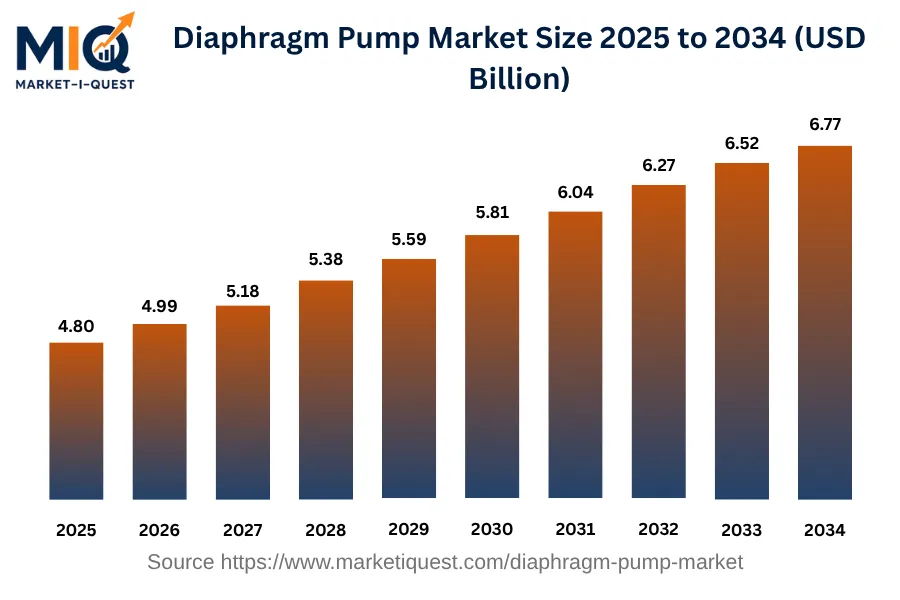
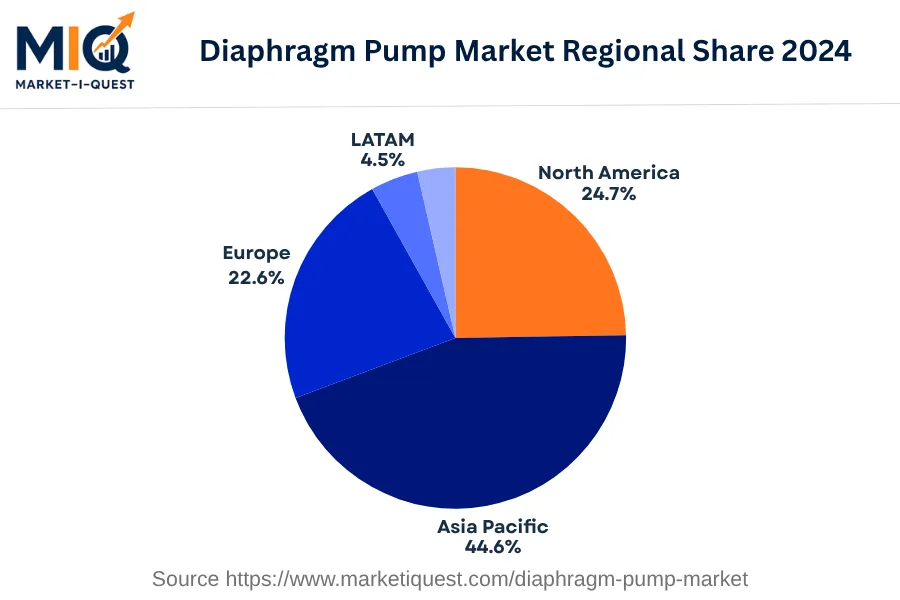
The Diaphragm Pump Market was valued at USD 4.80 billion in 2025 and is projected to reach USD 6.77 billion by 2034, growing at a CAGR of 3.9%. The market has seen a steady expansion from 2025 onwards, driven by the broadening application scope and the increased adoption of these pumps across industries. The decade-long period of growth, with a sizeable increase in the overall market size, could be traced back to industry demand for more efficient, reliable, and cost-effective pumping solutions. Evaluating the regional market shares in 2024, Asia Pacific had the lion's share at 44.6%, followed by North America at 24.7% and Europe with 22.6%. This suggests a substantial chunk of the market is concentrated in these regions. Meanwhile, LATAM had 4.5%, and MEA held a 3.6% share of the market, suggesting developing market presence in these areas.

Key Takeaways

  • By Type - Double Acting dominated the Diaphragm Pump Market delivering key functionality.
  • By Operation - Electrically Operated pumps led in popularity due to their enhanced performance.
  • By Discharge Pressure - 80 to 200 Bar pumps held a notable position due to their high efficiency.
  • By Application - Oil & Gas led the pack owing to widespread industrial applications.
diaphragm-pump-market market size

Key Driving Factors

Stringent Environmental Regulations

One of the notable driving factors for the Diaphragm Pump Market is the imposition of stringent environmental regulations globally. As governments worldwide become more concerned about environmental protection, they are implementing strict laws to minimize pollution caused by industrial activities. For instance, wastewater discharge standards established by the U.S. Environmental Protection Agency (EPA) require industries to use efficient pumping equipment like diaphragm pumps that minimize leakage and waste. These pumps are favored because of their leak-proof construction and ability to handle high-viscosity fluids, making them an optimal choice for industries striving to meet these regulations. This scenario pushes the adoption of diaphragm pumps, stimulating growth in this market.
Food & Beverage Industry Hygiene Requirements

Another significant stimuli for the Diaphragm Pump Market revolves around hygiene requirements of the food and beverage industry. This industry demands high standards of cleanliness and hygiene, driving companies to adopt pumps best suited for food-grade applications. Diaphragm pumps are increasingly preferred given their ability to handle a wide range of viscosities and solids without causing food contamination. Furthermore, these pumps can be easily cleaned and sanitized, a feature that aligns with the strict sanitation standards in food processing. The need to uphold these standards propels food and beverage companies to invest in diaphragm pumps, thus favoring growth in this market.

Market Evolution by Timeline

2019-2023
During this period, there was a significant uptick in the demand for diaphragm pumps from municipal wastewater treatment plants, particularly in rapidly urbanizing regions like South Asia and Southeast Asia. EU regulatory standards and other environmental guidelines, like the Water Framework Directive, pushed for updates in equipment, driving growth in pump procurement. Supply wise, producers focused on improving energy efficiency, with pilot programs integrating IoT technologies for predictive maintenance. However, integration maturity varied, and supply chain disruptions due to geopolitics posed constraints. The commercial model predominantly consisted of single purchase orders, with a focus on service-based contracts to mitigate these challenges. While tariff issues and supplier-switching caused short-term pricing volatilities, manufacturers often absorbed the cost to maintain long term buyer relationships.
2024
In 2024, the demand for diaphragm pumps shifted, with noticeable growth in the food and beverage industry. With the FDA and EU implementing stricter health and safety regulations, companies invested in highly sanitary pump models. On the supply side, companies that experienced success with IoT integration in previous years scaled these technologies across their product lines. However, interoperability issues were common. A move towards performance-based contracts was evidenced, offering predictable costs and service assurances to buyers. Manufacturers also experimented with partnerships and co-manufacturing agreements to manage supply-chain risks, a move triggered by increasing global uncertainties and unpredictable raw material costs.
2025-2029
The period from 2025–2029 witnessed demand diversification, with chemical and pharmaceutical industries dominating diaphragm pump procurement. This trend was driven by improved pumping capabilities that facilitated the handling of reactive and hazardous chemicals. In terms of policy, the REACH Regulations affected the buyer behavior in European markets, pushing them to adopt more environment-friendly pumping solutions. Supply-side innovation saw the maturation of IoT integration, improving supply predictability and reducing maintenance costs. Commercially, increased use of long-term contracts and strategic partnerships was noticed, allowing companies to stabilize costs and mitigate risks. But with rapid technological changes, obsolescence risk arose, challenging manufacturers to stay on top of trends.
2030-2034
Emerging trends from 2030-2034 indicated increased global demand for diaphragm pumps within the oil and gas sector, particularly from North America and the Middle East. Demand was fueled by the need for reliable pumps that could handle heavy-duty applications and harsh environments. In response to the Paris Agreement standards, manufacturers started piloting carbon-neutral manufacturing processes. Technology-wise, AI integration began making outsized contributions to predictive maintenance. Commercial models shifted towards lease-based models, providing flexibility and reducing upfront costs for buyers. An increasing trend of local production to reduce supply chain risks was seen. The period also witnessed volatility in raw material prices, affecting the final product pricing and hence, increasing financial risks for manufacturers.

Future Market Outlook

Future Opportunities

The diaphragm pump market is positioned for a range of future opportunities influenced by existing market dynamics and innovations. As industries increasingly prioritize sustainability, the adoption of eco-friendly diaphragm pumps is anticipated to gain momentum. In 2020, several leading manufacturers like Wilden unveiled diaphragm pumps designed to minimize energy consumption and environmental impact, aligning with global sustainability targets. The growing demand in sectors such as water treatment and food processing further underpins potential growth, evidenced by initiatives from the United Nations to improve water quality globally by 2030. Moreover, regulatory pressures surrounding safety and efficiency are prompting industries to replace outdated systems with modern diaphragm pumps that meet stringent regulatory frameworks, such as the European Union's Machinery Directive. Partnerships between technology providers and traditional pump manufacturers, like the collaboration announced in 2023 between Parker Hannifin and IBM, highlight the trend of integrating AI analytics to optimize pump performance and lifecycle management. Additionally, the expansion of industries such as pharmaceuticals due to increased demand for vaccines and medicines creates a pressing need for reliable pumping solutions. Finally, investment in R&D, as seen with companies like Ebsray, focusing on developing next-generation materials for diaphragm pumps, offers opportunities to enhance durability and reliability while maintaining compliance with evolving industry standards. These factors collectively point to a robust potential for diverse applications and improved functionality in the diaphragm pump market.

Segmentation Analysis

By Type

The market operates via two key types, namely Single Acting and Double Acting. Among these, the Double Acting segment stands out as the highest revenue generator, while the Single Acting sector is poised to experience the most rapid CAGR growth during the forecasted period.

Largest Revenue Share

Double Acting

Market Share Leader

The Double Acting segment reports the highest revenue, largely attributable to its inherent operational efficiencies and broad applicability. The double-acting design allows force to be applied in two directions, increasing utility in various industrial processes that require precise, bi-directional control. Additionally, the double-acting mechanism reduces the overall energy consumption by almost half compared to single-acting variants, driving preference from sectors particularly attentive to operational efficiencies and sustainable practices. From a geographical standpoint, the Double Acting segment sees significant demand from developed markets due to their advanced manufacturing sectors and rapid uptake of efficiency-improving technologies. It's important to note, however, potential regulatory challenges pertaining to safety and environmental concerns surrounding pressurised systems, while a potential barrier, equally serve to solidify the Double Acting segment's performance as more stringent standards often necessitate the adoption of more efficient equipment.

Fastest CAGR

Single Acting

Forecast Period Growth Leader

The Single Acting sector is projected to witness the highest CAGR growth during the forecasted period. Despite current lower revenues compared to its double-acting counterpart, it is expected to fill a unique market niche presented by small-scale operations and unique use cases where the additional cost and complexity of double-acting systems is not justified. The simple design of single-acting technology reduces upfront costs, and easy installation appeals to industries with limited technical resources or in developing markets. The current technological advancements focusing around miniaturization and lowering operational costs act as a prime growth catalyst. A noteworthy risk involves the susceptibility to cylinder contamination, potentially affecting reliability and service life. However, we expect continued innovation and refinement of the design, driven in part by the flourishing start-up scene, to mitigate such risks over time and drive the Single Acting sector's growth.

By Operation

The market is divided into subsegments including Electrically Operated and Air Operated with the Electrically Operated subsegment accounting for the largest revenue share while the Air Operated is expected to grow at the fastest CAGR during the forecast period.

Largest Revenue Share

Electrically Operated

Market Share Leader

The Electrically Operated subsegment leads the market in revenue generation due to a number of factors. Advanced technologies and automation in many industries have increased the adoption of electrically operated systems, driving their demand and thus, their market revenue. Industries such as manufacturing, construction and automotive widely use these systems due to their reliability, precision and efficiency. In addition, electrically operated systems are often more eco-friendly and cost-effective in the long run, compared to other types, making them a preferred choice in markets where environmental regulations are strict or where cost efficiency is particularly valued. Furthermore, the geographic distribution of consumers also plays a significant role in this preference, as developed regions with advanced infrastructure tend to favour electrically operated systems, thus contributing to their high revenue generation.

Fastest CAGR

Air Operated

Forecast Period Growth Leader

Despite not leading in revenue generation, the Air Operated subsegment is expected to experience the fastest growth. These systems are becoming increasingly popular due to their own set of unique advantages. Air operated systems are rugged and reliable, making them suitable for tough industrial environments. They can handle more aggressive media and operate in more extreme temperatures compared to electrically operated systems, driving their adoption in industries like oil and gas, petrochemicals or any other sector where such conditions are prevalent. Their growth is further spurred by technological innovations in air operated systems and supportive government policies promoting the adoption of efficient industrial equipment. However, as with any high growth sector, there are also near-term risks. Fluctuating raw material prices and the development of advanced and cost-effective alternatives could pose challenges to the growth trajectory of air operated systems.

By Discharge Pressure

The market, as determined by discharge pressure, is split into several brackets, including those operating below 80 Bar, those running between 80 and 200 Bar, and ones above 200 Bar. The segment capturing the largest revenue share in this respect is the 80 to 200 Bar category, while the fastest growing segment is the above 200 Bar segment.

Largest Revenue Share

80 To 200 Bar

Market Share Leader

The 80 to 200 Bar subsegment garners the most significant revenue share due to a confluence of factors. These machines are favorable in numerous industries owing to its perfect balance of efficacy, performance and safety. This category is recognized for its applicability in a wide variety of operations, from industrial processes to manufacturing, where safety codes demand a certain level of pressure control. Their widespread popularity is due to the lower switching costs involved when moving from below 80 Bar machines. Also, the regulation protocols favor this category as it maintains a specific pressure range encouraging more demand. Geographically, this pressure range has found its largest market in developed countries, where industrial safety standards are very strict. This category has witnessed consistent revenue due to reliable supply chains making it easier for purchasers to procure machines in this pressure range.

Fastest CAGR

Above 200 Bar

Forecast Period Growth Leader

The subsegment showing the quickest growth is the above 200 Bar category. This segment's growth is driven by demand from specific industries such as petroleum, chemical engineering, and high-pressure application areas willing to undertake the higher capital expenditure requirements for high-performance equipment. Adoption barriers are often linked to the increased safety and technical expertise required in dealing with these high-pressure systems. However, advancements in technology and policy developments favoring energy-efficient systems have provided a necessary boost to the adoption of high-pressure systems in these sectors. Additionally, collaborations between manufacturers and end-use industries have enabled shared risk and increased adoption. Near-term risks may arise from regulations limiting high-pressure operations due to safety concerns. With more industries adopting efficient production methodology, this segment is expected to chart faster growth.

By Application

The market is divided into subsegments including Wastewater & Water, Oil & Gas, Petrochemical & Chemical, Pharmaceuticals, Food & Beverages, and Others. The Oil & Gas subsegment accounted for the largest revenue share while the Pharmaceuticals are expected to grow at the fastest CAGR during the forecast period.

Largest Revenue Share

Oil & Gas

Market Share Leader

The Oil & Gas sector has historically held the most significant share in the market applications, and as of the base year 2024, continues to do so. This dominance derives from the critical role this sector plays in a wide range of industrial applications, plus its essential place in power production and infrastructure. High capital investments and vast geographical spread add to the expansive nature of the industry. Furthermore, the constant need for search and extraction of new reserves, alongside maintenance of existing wells and pipelines create continuous demand for the market. Regulatory mandates to ensure environmental safety additionally increase the sector's demand. Operators prioritize safety, efficiency, and meeting regulatory standards when purchasing, which will further maintain Oil & Gas' dominant position.

Fastest CAGR

Pharmaceuticals

Forecast Period Growth Leader

While the Pharmaceuticals sector does not hold the most significant share in 2024, it is anticipated to grow at the quickest rate in the forthcoming years. Growth is expected to be driven by increasing demand from the continuously expanding pharmaceutical and healthcare industries. Technological advancements and the push for faster product development and launches likely stimulate the increasing adoption of applications in this sector. Strict quality and safety regulations in pharmaceutical manufacturing necessitate advanced tools and resources, establishing realized and potential demands. Global trends towards personalized medicine and rising healthcare expenditures, especially in emerging economies, are predicted to significantly support the segment's growth. However, the industry also faces potential growth barriers. Regulatory hurdles, high capital investment requirements, and patent cliff risks may slow the sector's growth.

Competitive Analysis

Key Market Players

Manufacturers / OEMs

Graco Inc
US
IDEX Corporation
US
Dover Corporation
US

Key Suppliers & Raw Materials

Saint-Gobain
France
The Chemours Company
US
Elkay Manufacturing Company
US

Distributors, Integrators & Channel Partners

Aro Equipment
US
Almatec Maschinenbau GmbH
Germany
Wilden Pump and Engineering Company
US

Porter’s Five Forces Analysis

This analysis evaluates the competitive forces within the Diaphragm Pump Market.

Supplier Bargaining Power

Medium

Limited suppliers lead to moderate power , but diversified material requirements constrain this power.

Buyer Bargaining Power

High

High competition and low differentiation between products grants buyers strong negotiating power.

Threat of Substitutes

Low

Few viable alternative pumping solutions exist, keeping threat of substitutes low.

Threat of New Entrants

Medium

High initial manufacturing cost and complex certifications constitute moderate barriers to entry.

Competitive Rivalry

High

Numerous local and global competitors lead to a highly competitive market.

Regional Analysis

Geographic market dynamics and growth opportunities across key regions

Global Market Outlook

diaphragm-pump-market market regional share

North America

In 2024, North America’s Diaphragm Pump Market displayed noticeable fortitude. Increased industrialization contributed to escalated demand, particularly from sectors including manufacturing, utilities, and oil & gas. Second, stringent regulations mandated by government bodies like EPA in U.S. fostered market growth by necessitating waste water treatment that uses diaphragm pumps. Lastly, the adoption of smart pumping solutions gained traction as it enabled real-time tracking of pumps' performance.

Market trends revealed a shift towards online sales platforms, as companies like Dover Corporation in Canada and IDEX Corporation in the U.S. sought to improve customer accessibility and global market reach. Demand for hygienic diaphragm pumps increased among healthcare and food & beverage sectors due to their high sanitation standards, not forgetting their prominence in U.S. and Mexico. Partnerships, like Leaddream’s collaboration with SPX Flow in Canada, shaped the market landscape by pooling resources and expertise to improve product efficiency and address consumers' evolving needs. Lastly, enforcement of ISO 9001: 2015 by major suppliers ensured high-quality benchmarking, further solidifying customer trust in the industry. This rule played a crucial role, especially in the manufacturing and retail sectors, where high-quality pumps were deemed essential.

Asia Pacific

In 2024, the Diaphragm Pump Market in the Asia Pacific witnessed significant growth. Market expansion was driven by burgeoning demands in end-use industries such as wastewater treatment and chemical manufacturing, especially in China and India. Strict government regulations on waste disposal across the region also intensified demand, prompting businesses to invest heavily in diaphragm pump technologies. Innovations like air-operated diaphragm pumps gained traction in Japan, South Korea, and Australia, influenced by their higher efficiency and lower maintenance costs.

The market encountered several distinctive trends. A wave of digitization created a shift towards automated diaphragm pumps, specifically within the manufacturing and utility sectors. Notably, these sectors prioritized pumps with IoT capabilities for remote monitoring and predictive maintenance. An increase in voluntary environmental standards upheld by multinational corporations stimulated the demand for energy-efficient diaphragm pumps. M&A remained active, primarily involving major manufacturers from China and key ASEAN players, facilitating shared technology and market access. Lastly, a strong enforcement of environmental policies by governments, particularly related to industrial effluents, compelled companies to opt for environmentally-friendly pumping solutions. These driving forces and trends defined the Diaphragm Pump Market in the Asia Pacific region during 2024.

Europe

In 2024, the European Diaphragm Pump Market was defined by notable industry expansion across significant economies, specifically Germany, the United Kingdom, France, Italy, Spain, the Nordics, Benelux, and Central & Eastern Europe. Key drivers for this growth included increased industrial investments, particularly in the chemical and water treatment sectors. Additionally, stringent environmental regulations pushed the need for reliable, efficient pumping solutions, fuelling demand. Advancements in diaphragm pump technology played an integral role, catering to the need for energy efficiency and process optimization in manufacturing and utilities sectors. Moreover, the pricing dynamics, influenced by enhanced supply chain processes, contributed to market growth.

Trending in 2024 was the shift in buyer behavior towards intelligent pump technologies in response to the industry's move towards Industry 4.0. The growing implementation of IoT in diaphragm pumps among chemical manufacturers was apparent. Notably, industry partnerships and M&A were prevalent, aiming to deliver comprehensive pump solutions. Furthermore, there was an increased emphasis on standards and policy enforcement in the manufacturing sector, reflecting the regulatory landscape in the European Union. A diverse range of customers from sectors such as healthcare, manufacturing and utilities benefited from these developments, leveraging the improved efficiency and reliability offered by advanced diaphragm pumps available on the market in 2024.

Latin America

In 2024, the Latin America (LATAM) Diaphragm Pump Market exhibited notable growth, driven by diversified industrial sectors demanding efficient fluid handling solutions. Technological upgrades, along with governmental regulations promoting clean energy use, spurred the market's robust growth in Brazil, Mexico, Argentina, Colombia, Chile, and Peru. The market’s key driver was the rising demand for productive, energy-efficient pumps across manufacturing industries to lower operational costs and increase profit margins. In addition, heightened investments in the chemical and pharmaceutical sectors led to a surge in demand for diaphragm pumps, especially in Brazil and Mexico. Moreover, government regulations aimed at reducing pollution, like Mexico’s General Law for Sustainable Forestry Development, incited industries to adopt environmentally friendly pumping technologies.

Market trends in 2024 included an increased preference for air-operated diaphragm pumps due to their low maintenance requirements and energy-efficient operations, particularly in Colombia’s food and beverage industry. Technological shifts towards the Internet of Things (IoT) enabled remote monitoring, thereby boosting pump performance while minimizing downtime. Mergers and acquisitions occurred at a high rate, mainly propelled by companies aiming for expansion and improved market presence, exemplified by the alliance between Ingersoll Rand and PFS Pumps. Across LATAM, governments tightened policy enforcement in various industrial sectors, thereby ensuring myriad avenues for consistent market growth.

Middle East & Africa

In 2024, the Diaphragm Pump Market in the Middle East and Africa was primarily characterized by robust demand in sectors such as oil and gas, utilities, and manufacturing. Driving its growth were factors like the increasing exploration activities in oil and gas sector, especially in countries like Saudi Arabia, UAE, and Nigeria. Stringent environmental regulations across the region also bolstered the demand and investments for diaphragm pumps. Furthermore, rapid technological adoption, specifically in South Africa and Israel's mature manufacturing sectors, boosted the market dynamics.

In terms of trends, there was a notable shift in buyer behavior towards energy-efficient pumps, in line with Israel and South Africa's energy conservation policies. The adoption of digital technologies for operations facilitated this shift. This was demonstrated in Egypt's utilities sector where smart pumps gained prominence. A rise in strategic partnerships and M&A activities was also observed, particularly in the UAE, aiming to expand market reach and to synergize resources. Overall, driven by specific demand factors, regulatory push, and technological transformations, the Diaphragm Pump Market in the Middle East and Africa in 2024 showed a substantial growth trajectory with key trends shaping up its future course.

Recent Industry Developments

Latest market innovations, product launches, and strategic initiatives

April 2025

Graco released upgraded electric diaphragm pumps with new motors and higher voltage compatibility, designed specifically to lower energy costs and simplify maintenance.

February 2025

IDEX Corporation purchased Mott Corporation for $1 billion to expand its fluid handling and water purification capabilities.

Frequently Asked Questions