Denture Adhesives Market Snapshot

Key Players

  • GlaxoSmithKline (United Kingdom)
  • 3M (United States)
  • DS Healthcare Group (United States)
  • Dentsply Sirona (United States)
  • Colgate-Palmolive (United States)
  • Ivoclar Vivadent (Liechtenstein)
  • Procter & Gamble (United States)
  • Sea-Bond (Netherlands)
  • Lion Corporation (Japan)
  • Dr. Reddy’s Laboratories (India)

Market Size

Base Year 2024
$3.87 Bn
CAGR
5.8%
Forecast 2034
$6.80 Bn

Market Segments

By Product Form
Cream, Powder, Strip, Pad
By Denture Type
Full Denture, Partial Denture
By Distribution Channel
Pharmacy, Online, Dental Clinics
By Adhesive Type
Zinc-based, Zinc-free
By End User
Adults, Geriatric

Market Dynamics

Drivers
  • Aging population growth
  • Increased oral health awareness
Restraints
  • Limited consumer awareness
  • Stringent regulatory frameworks
Opportunities
  • Population aging trends
  • Technological advancements in adhesive formulas

Market Size

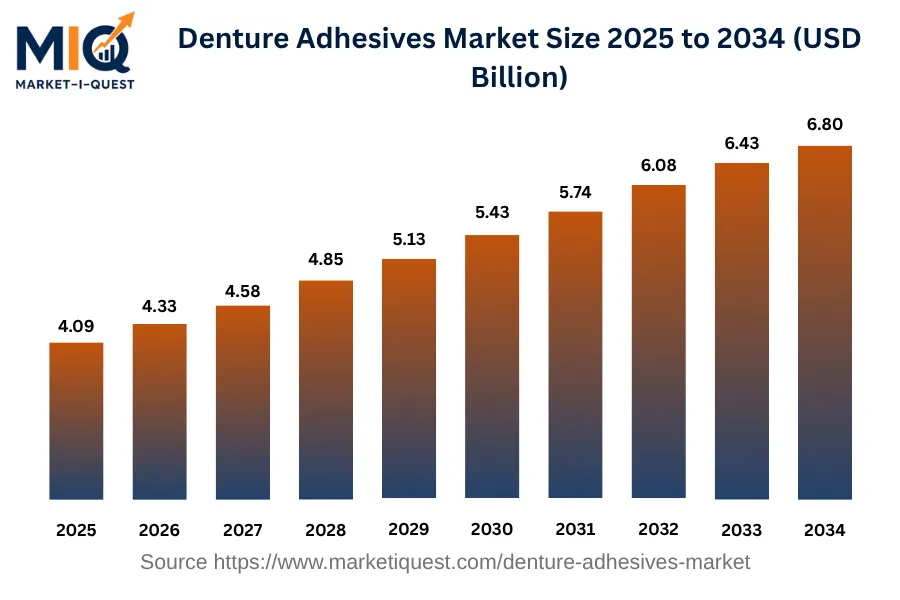
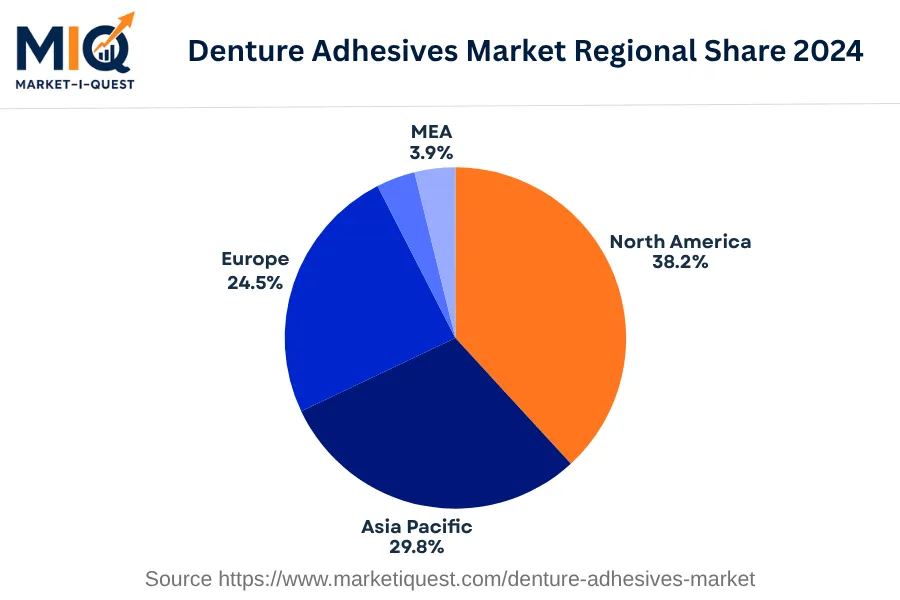
The market size in 2025 is expected to be $4.09 billion, an increase from its 2024 figure of $3.87 billion. By 2034, the market size is expected to reach $6.80 billion, growing at a CAGR of 5.8% from 2025 to 2034. Steady market expansion is forecasted for this period, supported by a consistent demand for denture adhesives due to a growing geriatric population and the increasing frequency of dental diseases. However, the regional share distribution indicated North America accounted for the largest share of the worldwide market in 2024 with 38.2% of the share, followed by Asia Pacific at 29.8%, Europe with 24.5%, and remaining regions Middle East & Africa and Latin America holding minor shares at 3.9% and 3.7% respectively.

Key Takeaways

  • By Product Form - Cream emerged as the dominant subsegment in the market in 2024.
  • By Denture Type - Partial Dentures is positioned to achieve the fastest CAGR during the forecast period.
  • By Distribution Channel - Online subsegment is expected to record the fastest CAGR during the forecast period.
  • By Adhesive Type - Zinc-free subsegment emerged as the revenue leader in 2024.
  • By End User - Geriatric subsegment is expected to record the fastest CAGR during the forecast period.
denture-adhesives-market market size

Key Driving Factors

Aging Population Increasing Denture Use

In many developed regions such as Europe and North America, society is managing with an aging population. This demographic shift increases the number of individuals relying on dentures as a viable solution for teeth loss. Denture adhesives act as essential components to ensure comfort and security. Subsequently, dental clinics and elderly care homes, the primary buyers, increase purchases of denture adhesives to meet this rising demand, thereby fueling market demand. Moreover, these organizations are less likely to delay the purchase due to the immediate necessity of the product for their patients. This trend creates a situation where the demand for denture adhesives grows organically along with the growing elderly population who depend on dentures for their oral health needs.
Evolving Consumer Expectations for Comfort and Functionality

Current consumers value comfort and ease of use significantly. As a result, organizations involved in the production and sale of denture adhesives are being driven to seek products that less likely compromise on these attributes. Denture users, the principal purchasers, specifically look for products that provide a secure fit, are easy to use, deliver comfort and allow them to maintain their regular dietary practices. This direct consumer demand drives organizations for investing in quality denture adhesives to satisfy their consumers. Consequently, the evolving consumer preferences for comfort and functionality consistently drive market demand for advanced and user-friendly denture adhesives.

Market Evolution by Timeline

2019-2023
This period indicates a notable increase in the aging population, which consequently has led to a rise in demand for denture adhesive products. The primary buyers during this time were dental clinics and senior care facilities, primarily in developed regions such as North America and Europe, due to the higher percentage of their aging population. Suppliers witnessed increased strain to diversify their sourcing and production capabilities considering the rising demand. Regular commercial practices included bulk purchasing agreements and distributor partnerships, which maintained flow of the supply chain. Regulatory shifts primarily revolved around product safety standards and labeling requirements, which had manufacturers investing in R&D to meet these standards. Thus, this period significantly contributed in the growth of the market.
2024
The year marked a distinct shift in the market as ecommerce began to play a crucial role in the distribution and sales strategy. Individual patients started to purchase directly online. This development modified the dynamic of the market, with manufacturers and retailers increasingly focused on digital marketing and online product presentation. Manufacturers consequently engaged in partnerships with credible ecommerce platforms to mitigate these challenges. The procurement policies saw minimum alterations, with minor adjustments aimed at accommodating online sales. Thus, this year presented various advancements with shifting market dynamics.
2025-2029
In this period, manufacturers would likely invest in developing more sustainable and organically sourced denture adhesives. Demand would potentially spur from eco-conscious consumers and support from environmental regulations would encourage the shift towards greener manufacturing practices. The rise of telehealth consultations and home care might also influence the commercial models, with the possibility of direct sales from providers to patients becoming more common. Manufacturers might further vertical integrate or collaborate with farm cooperatives to secure raw materials. Thus, this period is expected to make significant improvements and shifts within the market.
2030-2034
By this period, the market would possibly be substantially driven by sustainability and direct-to-patient commerce. The aging population in developing countries like India and China would offer new avenues for market expansion, with wider adoption of denture adhesives. Manufacturers, sensing the market potential, could invest in establishing local production facilities, thereby overcoming import logistics and cost barriers. The commercial model might shift majorly on subscription pricing, given the recurrent need for denture adhesive products. Government initiatives promoting healthcare accessibility and product standards could further shape the market landscape.

Future Market Outlook

Future Opportunities

The market holds promising future opportunities driven by current industry trends and consumer demands. As the global geriatric population continues to rise, there is an increasing demand for high-quality denture adhesives adapted to this demographic. Companies can expand into emerging markets, where denture usage is growing due to rising dental care awareness. Compliance with ISO and FDA regulations indicates a requirement for innovative product development, allowing firms to differentiate their offerings. Collaborations with dental professionals could facilitate the development of specialized products designed to meet distinctive patient demands. Manufacturers can also explore contract manufacturing agreements to diversify their supply chains, ensuring consistency and reliability in production. The increasingly focus on sustainable practices creates potential for eco-friendly adhesive solutions that interest to environmentally conscious consumers. Additionally, aftermarket services, such as personalized fitting consultations, could enhance customer loyalty. Furthermore, expanding into adjacent applications like oral hygiene products presents a lucrative opportunity for companies looking to enhance their market offerings.

Segmentation Analysis

By Product Form

The market is segmented by By Product Form into Cream, Powder, Strip, Pad. Cream accounted for the largest revenue share in 2024, while Powder is expected to register the fastest CAGR during the forecast period.

Largest Revenue Share

Cream

Market Share Leader

Cream held the largest revenue share of the segment. Majorly due to its versatility and wide acceptance from a breadth of customer base across multiple markets. Its ease of application and compatibility with existing infrastructures also contributed to its widespread market adoption. Moreover, cream products enjoy mature distribution channels, resulting in robust supply availability. Certain regulatory bodies favor cream forms, enhancing its market attractiveness. Its commercial availability in diverse configurations, potency, and price points facilitated its purchasing frequency. Moreover, the care taken for the formulation of creams, including the integration of soothing and beneficial ingredients, has made them a preferred choice over other forms. This preference further increased due to their longer shelf life compared to strips and pads, which often have specific storage requirements. For these reasons, the cream subsegment was able to generate the most revenue in 2024 among the other listed subsegments.

Fastest CAGR

Powder

Forecast Period Growth Leader

The powder subsegment is projected to record the highest growth during the forecast period. This is largely because of its lower initial penetration and the evolving preference of customers for powdery texture, which is perceived to be more natural and easy to integrate into several applications. Technological improvements in the production and packaging of powder versions are also expected to positively influence its growth. Rapid commercialization has resulted in powder-based options becoming more widely available, facilitating customer adoption. There is also an increasing trend towards eco-friendly packaging, and powder products have been able to meet these demands more effectively than cream or strip forms. Additionally, given the ease of manufacturing and distribution, supply chain improvements are expected, further aiding growth.

By Denture Type

The market is segmented by Denture Type into Full Denture and Partial Denture. Full Denture accounted for the largest revenue share in 2024, while Partial Denture is expected to register the fastest Compounded Annual Growth Rate (CAGR) during the forecast period.

Largest Revenue Share

Full Denture

Market Share Leader

Full Dentures held the largest revenue share in 2024. Full Dentures are often the more preferable choice for customers dealing with total tooth loss, this being a widespread consequence of aging, and have thus, a broad market adoption. Their purchasing frequency is high as they typically require replacement every 5-7 years. Additionally, they are well recognized and accepted in the regulatory landscape, and hence qualify for insurance coverage more often compared to Partial Dentures. Full Dentures are also compatible with the traditional dental care ecosystem which enhances their commercial availability. Regular developments in their design and comfort level also have encouraged their adoption. Distribution maturity also plays a key role, with Full Dentures being widely available even in semi-urban or rural areas. Further adding to its commercial success,

Fastest CAGR

Partial Denture

Forecast Period Growth Leader

Partial Dentures is positioned to achieve the fastest CAGR during the forecast period. This is largely attributed to its increasing acceptance among younger demographics who prefer this Denture Type due to it being less invasive for treating partial tooth loss and allowing the inclusion of natural teeth. The market also sees a shift in customer preferences with increasing demand for a more comfortable and practical solution as opposed to full extraction and replacement. Technological advancements are also supporting growth in this subsegment with the introduction of flexible and metal-free options, which provide improved comfort and aesthetics. This evolution in product design is likely to shift the purchasing behavior of the customers. Regulatory changes favoring Partial Dentures and the expansion of insurance reimbursement options are all factors expected to fuel faster adoption of Partial Dentures.

By Distribution Channel

The market is segmented by Distribution Channel into Pharmacy, Online, and Dental Clinics. The Pharmacy subsegment accounted for the largest revenue share in 2024, while Online is expected to register the fastest CAGR during the forecast period.

Largest Revenue Share

Pharmacy

Market Share Leader

The Pharmacy subsegment held the largest revenue share of the segment majorly due to its well-established, wide-reaching distribution network that serves to the majority of customers. Pharmacies are the first point of contact for customers due to their physical presence and established trust. They offer consultation services, ensuring customers understand the products and are comfortable with their use, a factor that significantly influences purchasing decisions. Regulatory acceptance further strengthens the position of pharmacies, allowing them a wider range of products to distribute compared to other channels. Their purchasing frequency is high due to prevalent health conditions and regular demand for healthcare products. Pharmacies have a large installed base and their qualification requirements are generally more practical, speeding up procurement processes.

Fastest CAGR

Online

Forecast Period Growth Leader

The Online subsegment is expected to record the fastest CAGR during the forecast period. Due to the increasing internet penetration and the shift in consumer behavior towards online purchasing. Technological advancements allow online platforms to offer a wider range of products. Online platforms often provide detailed product descriptions and customer reviews, influencing customer's purchasing decisions. Their ability to reach a wider audience and operate round the clock offers a convenience that traditional channels struggle to match. Furthermore, regulations favoring e-commerce are expected to provide an impetus for growth. Evolution in customer requirements towards ease, speed, and transparency of transactions will likely boost the growth of the Online subsegment.

By Adhesive Type

The market is segmented by Type into Zinc-based and Zinc-free. Zinc-free accounted for the largest revenue share in 2024, while Zinc-based is expected to register the fastest CAGR during the forecast period.

Largest Revenue Share

Zinc-free

Market Share Leader

The Zinc-free subsegment emerged as the revenue leader in 2024 due to increasing consumer awareness regarding oral health safety and growing preference for denture adhesive formulations without zinc content. The subsegment gained significant demand due to the availability of advanced formulations offering strong adhesion, improved comfort, reduced irritation and extended wearing time. Furthermore, major manufacturers have expanded their zinc-free product portfolios across creams, powders and adhesive strips, improving accessibility and consumer acceptance. Strong distribution networks through pharmacies, online platforms and dental care channels have further supported market penetration. The increasing adoption of zinc-free products among elderly denture users, combined with rising focus on preventive oral healthcare, has allowed this subsegment for capturing the largest revenue share of the market in 2024.

Fastest CAGR

Zinc-based

Forecast Period Growth Leader

The Zinc-based subsegment is expected to register the fastest growth during the forecast period, supported by continued demand for products offering high adhesive strength and reliable denture adherence. Zinc-based formulations have maintained strong acceptance among denture users due to their effective holding capability and ability to improve confidence during daily activities such as eating and speaking. Growth in the aging population, increasing frequency of tooth loss and rising denture adoption in emerging economies are expected to create new opportunities for zinc-based adhesive products. Additionally, manufacturers are focusing on improving formulation safety, enhancing product performance and developing innovative solutions to address consumer. Expansion of dental care infrastructure, improved product availability, and increasing awareness regarding denture maintenance are expected to further accelerate the adoption of zinc-based denture adhesives, allowing the segment to achieve the highest CAGR during the forecast period.

By End User

The market is segmented by end user into Adults and Geriatric. The Adults subsegment accounted for the largest revenue share in 2024, while the Geriatric subsegment is expected to register the fastest CAGR during the forecast period.

Largest Revenue Share

Adults

Market Share Leader

Adults subsegment held the largest revenue share of the segment. Majorly due to the fact that adults, being the working-age population, expected to have a greater purchasing power. Majorly due to this being the primary adopters of market-driven technologies and purchase more frequently due to broader market adoption and a higher replacement demand. Besides, wider ecosystem compatibility and developed distribution networks also support the prominent commercial availability of the products for adults. Notably, that qualification requirements and regulatory acceptance are likely to be more relaxed for adults rather than geriatric population. Factors such as ecosystem compatibility, distribution maturity and commercial availability have also supported the prominence of this subsegment in terms of revenue in 2024.

Fastest CAGR

Geriatric

Forecast Period Growth Leader

Geriatric subsegment is expected to record the fastest CAGR during the forecast period. This assumption is anchored in the emerging customer demand due to a rapidly aging global population. However, improvements in technology and expansion of distribution channels are likely to make products more accessible to this consumer group. Regulatory developments with introductions of senior-friendly policies could also enable the way for the increased adoption of products within this market by the geriatric population. Another influencing factor is the likely evolution in purchasing behavior, with the geriatric population becoming more technologically advanced and comfortable with technology-based purchases. Further, partnerships with organizations focused on senior citizen welfare and services may provide a boost.

Competitive Analysis

Key Market Players

Manufacturers / OEMs

Procter & Gamble
US
GlaxoSmithKline
UK
Colgate-Palmolive
US

Key Suppliers & Raw Materials

DowDuPont
US
3M
US
BASF
Germany

Distributors, Integrators & Channel Partners

Henry Schein
US
Patterson Dental
US
Benco Dental
US

Porter’s Five Forces Analysis

This is a deep-dive into the competitive environment within the Denture Adhesives Market.

Supplier Bargaining Power

Medium

Suppliers have some leverage due to the need for specialized, high-quality materials in adhesive production.

Buyer Bargaining Power

High

Variety of product offerings amplifies customers' ability to switch brands based on preference or price.

Threat of Substitutes

Low

There are few efficient alternatives to denture adhesives, reducing the threat of substitutes.

Threat of New Entrants

Medium

High setup costs and certification barriers limit entry, but growth potential of the aging population attracts new players.

Competitive Rivalry

High

Existing players compete intensively on features, branding, and pricing strategies.

Regional Analysis

Geographic market dynamics and growth opportunities across key regions

Global Market Outlook

denture-adhesives-market market regional share

North America

In 2024, the North American market reflected sharp changes in consumer oral care trends, particularly in the United States, Canada and Mexico. Industry behemoths, such as Procter & Gamble and GlaxoSmithKline, responded to a rising preference for organic and non-toxic products among denture wearers, altering their product formulations to include more natural components, ultimately contributing to changes in procurement choices. Simultaneously, manufacturers acclimated to the mounting demand for improved holding power and comfort in denture adhesives, significantly influencing the production dynamics witnessed that year.

Organizational responses to these consumer preferences were influenced by Department of Health regulations in Canada, placing stricter scrutiny on product safety. This together with an increased focus on quality assurance and consumer protection in the US and Mexico heavily influenced the dental industry. These shifts in regulatory environments prompted a refocus on R&D, encouraging companies to develop adhesives exhibiting enhanced hold and ease-of-use. The competitive landscape was also reshaped, with key players like 3M and DENTSPLY Sirona merging and recalibrating marketing and distribution strategies across North America. While distribution continued primarily through drug stores and online platforms, companies also explored partnerships with dental clinics for increased reach and accessibility. This scenario in 2024 carved out a distinct narrative for the North American market, centering around consumer preferences, regulatory changes and strategic company responses.

Asia Pacific

In 2024, the market in Asia Pacific witnessed a significant transformation primarily due to the aging population and increasing oral health awareness. Countries such as China and Japan, with their substantial aging population and expanding healthcare infrastructure, became central to market growth. Meanwhile, nations like India and Vietnam saw an increase in the adoption of denture adhesives owing to growing oral health awareness and retail availability of these products. Critical advancements that shaped purchasing behavior involved the introduction of easy-to-use, residue-free adhesive products that catered to consumers' convenience demand.

Additionally, the implementation of regulations ensuring product safety further influenced buyers' trust, positively impacting procurement. This emphasis on regulatory compliance prompted manufacturers to invest in developing healthier, secure denture adhesive formulas, creating a ripple effect on the operational workflows and production processes. Manufacturers in the region leaned more towards direct-to-consumer selling via online platforms, altering traditional distribution channels, and thereby introducing a new dynamic in the market behavior. This change was triggered by customer preference for convenient and discreet purchase experiences. Suppliers collaborated with regional e-commerce giants, establishing strong online distribution networks.

Europe

During 2024, the market in Europe was shaped by a combination of demographic shifts, updates to EU regulations, and changing consumer preferences. A surge in the aging population, especially in countries like Germany, Italy, and the UK, escalated the demand for denture adhesives, with buyers leaning towards more comfortable and long-lasting products. Manufacturers responded quickly, introducing innovative adhesive formulations boasting enhanced grip and duration, a move that influenced distribution practices and saw a significant increase of these premium products in retail channels across Europe. Furthermore, rigorous EU regulations around product safety and efficaciousness led to a prevalence of CE-marked denture adhesives, affecting procurement behavior across commercial and institutional sectors.

In France and the Netherlands, for instance, a clear preference was noted for medically-approved adhesives due to their guaranteed safety and efficacy. This regulatory environment also encouraged enterprises such as Procter & Gamble and GlaxoSmithKline Pharmaceuticals to invest in advanced manufacturing technologies for compliant production. Lastly, the Digital Markets Act influenced the way denture adhesive products were marketed, with brands opting for more transparent and consumer-friendly online marketing strategies. This move further boosted sales, leading to channel expansion, with increased deployment of products on ecommerce platforms.

Latin America

In 2024, the Latin American market was remarkably shaped by several strategic moves among key players and some crucial demographic trends. Notably, Brazil's regulatory authority, ANVISA, implemented new benchmarks to increase quality consistency for denture adhesives, creating a competitive market environment that pushed local manufacturers to adapt. Subsequently, this regulation-driven shift in manufacturing practices substantially reshaped the procurement behavior within the buyer groups; healthcare institutions started prioritizing adhesives compliant with the new standards, thereby altering distribution channels.

Furthermore, Argentina, through its regulatory body ANMAT, promoted localized product manufacturing, contributing to decreased import dependence and reinforced the domestic supply chain. Commercialization efforts accelerated in Peru and Colombia, with established companies investing in distributor expansion to accommodate increased enterprise purchasing, driven by a rise in aging populations requiring dentures. Meanwhile, in Mexico, COFEPRIS' initiatives focused on ensuring product safety, pushed companies to keep a tight rein on their operational workflows and manufacturing activity, thus leading to a leaner production. On a regional scale, the Pacific Alliance facilitated intra-regional trade, striking deals that directly reciprocated in decreased prices for denture adhesives, enriching competitive dynamics, and driving significant market realignments.

Middle East & Africa

In 2024, the market in the Middle East & Africa was significantly influenced by various factors. Amid aging population growth, multinational manufacturers collaborated with local distributors in countries like Saudi Arabia, United Arab Emirates, and Qatar to ramp up production and distribution networks. Dental clinics and hospitals in UAE, under the flag of the Ministry of Industry and Advanced Technology, actively adopted denture adhesives, contributing to market expansion. Moreover, urbanized regions like Dubai witnessed a rise in acceptance of the product, driven by increased awareness of dental health and public procurement policies.

The burgeoning e-commerce sector also played a pivotal role in molding the market as it redefined the commercial and distribution channels, leading to a surge in online sales. Conversely, the strict regulatory environment imposed by SFDA and DHA mandated safety standards, exerting an indirect influence on the market. In parallel, in South Africa, SAHPRA's certification requirements necessitated importation of quality denture adhesives, altering the procurement behavior. The enactment of AfCFTA indirectly supported the market by boosting intra-African trade, thereby stimulating the penetration of multinational brands into less explored markets such as Nigeria, Kenya, and Morocco.

Recent Industry Developments

Latest market innovations, product launches, and strategic initiatives

December 2025

Procter & Gamble Co. (Fixodent) and Haleon / GSK (Poligrip) launched next-generation flavor-neutral and antibacterial adhesive creams. Featuring precision nozzle applicators, the creams form an airtight seal between acrylic denture bases and mucosal tissue, preventing micro-food particle trapping and suppressing oral bacteria growth.

Frequently Asked Questions