
DC Motor Control Devices Market Snapshot

Key Players

  • ABB Ltd. (Switzerland)
  • Siemens AG (Germany)
  • Schneider Electric SE (France)
  • Rockwell Automation Inc. (United States)
  • Mitsubishi Electric Corporation (Japan)
  • Hitachi Ltd. (Japan)
  • Texas Instruments Incorporated (United States)
  • Fuji Electric Co. Ltd (Japan)
  • Nidec Corporation (Japan)
  • Infineon Technologies AG (Germany)

Market Size

Base Year 2024
$1.33 Bn
CAGR
6.8%
Forecast 2034
$2.57 Bn

Market Segments

By Type
Brushed, Brushless
By Technology
Analog Controller, Digital Controller, Pulse Width Modulation(PWM), H-bridge Controller
By Position Control
Close Loop, Open Loop
By Application
Industrial Automation, Robotics, Healthcare, Aerospace & Defense, Consumer Electronics, Energy & Power, Automotive, Others

Market Dynamics

Drivers
  • Rising automation trends
  • Increased industrialization rates
Restraints
  • High production costs
  • Technological complexity
Opportunities
  • Emerging robotics industry
  • Increase in automation demand

Market Size

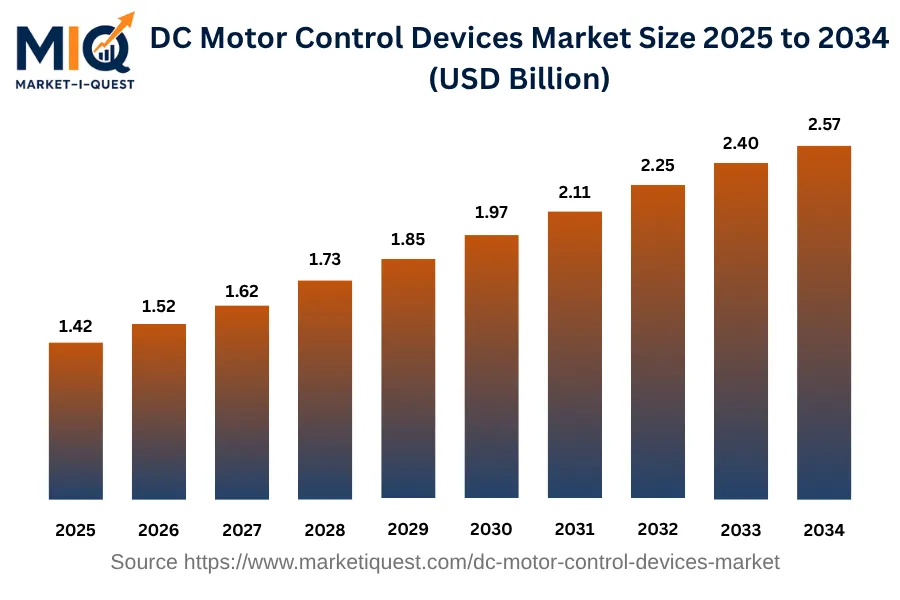
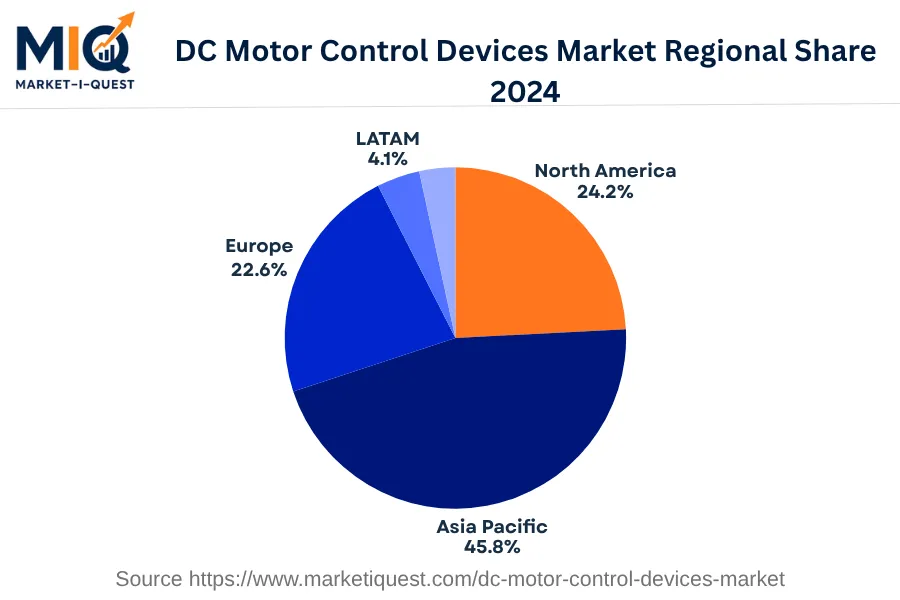
The DC Motor Control Devices Market stood at USD 1.420 billion in 2025, starting from a value of USD 1.33 billion in 2024. Over the years it demonstrated an upward trend, ultimately reaching a worth of USD 2.57 billion by 2034. This increasing path corresponds to a CAGR of 6.8% in the period from 2025 to 2034. The growth during these years was largely attributed to the rising demand for energy-efficient motor control devices. Other factors contributing to the growth were the need for lowering electricity consumption and the surge in the adoption of advanced motor control in industrial automation. In terms of regional share mix in 2024, the Asia Pacific region held the largest market share at 45.76%, followed by North America at 24.18% and Europe at 22.57%. Other regions like Latin America, and Middle East and Africa, had smaller shares of the market at 4.08% and 3.41%, respectively.

Key Takeaways

  • By Type - Brushed emerged as the leading segment in the DC Motor Control Devices Market in 2024.
  • By Technology - Analog Controller held the top position indicating its wide adoption in 2024.
  • By Position Control - Close Loop led the market accounting for a high market share in 2024.
  • By Application -Consumer Electronics led the sector in 2024 witnessing an expansive application in DC Motor Control Devices Market.
dc-motor-control-devices-market market size

Key Driving Factors

Compliance With Energy Efficiency Standards

In a bid to mitigate adverse impact of manufacturing operations on environment, there has been growing enforcement of energy efficiency standards worldwide. Industries are mandated to use energy-saving machines and devices, influencing adoption of optimized DC motor control devices. International Electrotechnical Commission (IEC) and US Department of Energy (DOE) have set specific energy efficiency standards for industrial motors. IEC 60034-30 and DoE's 10 CFR Part 431 regulations, for instance, require use of energy-efficient motors. As DC motor control devices can control speed, direction, and torque of motors, inevitably leading to energy conservation, industries are integrating these devices to meet these regulatory requirements. This has emerged as a significant driving factor for DC Motor Control Devices Market.
Shift Toward Automation in Manufacturing Industries

Manufacturing industry is witnessing an evolving shift towards automation to streamline production processes and improve operational efficiency. As DC motor control devices are pivotal in automated systems to control and adjust speed of motors used in these systems, there has been an increased adoption of these devices. Whether it's in robotic operations on assembly lines or process automation in diverse industries like automotive, food and beverage, pharmaceuticals, and more, the role of DC motor control devices is indispensable. The rise in automation has, hence precipitated an increase in demand for DC motor control devices, serving as a crucial market growth stimulant.

Market Evolution by Timeline

2019-2023
During this period, automotive companies were major buyers in DC motor control devices market. Demands emerged from European zones due to burgeoning electric vehicles manufacturing. Suppliers like Texas Instruments, STMicroelectronics, and NXP Semiconductors offered enhanced products with intelligent programmability and high operation efficiency. These technical upgrades improved DC motor controller integration with overall electromechanical systems. Implementation of International Electro-technical Commission's standard (IEC 61800) impacted market positively by improving safety and reliability. Fixed rate contracts were typical in this period with occasional partnerships between controller and motor manufacturers. However, supply chain disruptions caused by global trade tensions posed risks, leading to an increased focus on domestic sourcing.
2024
For the year 2024, a marked increase in uptake of advanced automation technologies drove new demand for DC motor controllers in industrial applications. North American region due to its thriving manufacturing sector acted as a major demand hub. Technological strides resulted in devices with enhanced networked control capabilities. Yet, these advancements highlighted lack of standardization in communication protocols that posed integration challenges. The World Industrial and Commercial Networks' new regulation aimed at bridging this gap. Cost plus contracts flourished between system integrators and controller manufacturers. A striking risk was accelerating cybersecurity threat on connected devices, which prompted some manufacturers to invest in onboard security features.
2025-2029
From 2025-2029, burgeoning renewable energy projects mainly from Asia-Pacific regions created demand for these control devices. Innovative and energy-efficient devices were manufactured by leading companies like Fuji Electric and Schneider Electric. Soft start and other energy-saving features were added due to International Energy Agency's (IEA) stringent standards on energy efficiency. A distinctive shift towards subscription model was observed with suppliers offering device monitoring and maintenance services. Market faced considerable risk due to ongoing raw material price fluctuations, mainly due to geopolitical issues. Companies countered this by adopting flexible procurement practices.
2030-2034
In this period, strong demand was predicted from emerging smart city projects worldwide, requiring effective motor control in various municipal infrastructure. Web-based controllers offering remote control and monitoring became progressively popular due to rise of Internet of Things (IOT). Requirements from International Organization for Standardization (ISO) for IOT connectivity guided this technology shift. Market trends tilted towards partnerships with system integrators, backed by long-term agreements. Lack of skilled workforce to handle sophisticated devices was a potential risk. Industry's efforts were typically seen shifting towards reskilling available workforce, in addition to adoption of AI for automation.

Future Market Outlook

Future Opportunities

Several opportunities are emerging in DC motor control devices market as industries continue embracing automation and smart technologies. By 2025, regulations set forth by European Union (EU) regarding energy consumption for motor-driven systems could necessitate a shift towards more efficient DC motor controls. Concurrently, automotive industry is expected to bolster demand for advanced DC motor controllers, as major players like Ford and General Motors transition toward electric vehicles. The strategic collaboration between technology firms such as Rockwell Automation and global manufacturers facilitates innovations that will streamline production processes in 2023. In renewable energy sectors, firms like Vestas are now focusing on DC motors for wind turbine pitch control, marking a significant opportunity to integrate sophisticated motor controls that enhance turbine efficiency. Furthermore, as countries like Japan and South Korea gear towards smart city developments, there is increasing interest in DC motor controls that align with sustainable urban mobility solutions. The recent trend in robotics, especially with companies like ABB and KUKA expanding their product lines, emphasizes the necessity for precise and reliable DC motor controllers. These evolving dynamics suggest that increased investments in R&D for DC motor control devices will not only assure compliance with forthcoming regulations but also propel market participants into new verticals such as aerospace and marine applications, heightening competitive advantages in the global arena.

Segmentation Analysis

By Type

The market is segmented into Brushed and Brushless types. While the Brushed type constituted the largest revenue share, the Brushless type is projected to display the fastest CAGR in the coming years.

Largest Revenue Share

Brushed

Market Share Leader

Among the market segments, Brushed motors currently hold the largest revenue share. This is largely due to their extensive utilization across multiple industries, including automotive, industrial manufacturing, and consumer appliances. These motors are preferred for their simplicity, reliability, and low-cost manufacturing in comparison to other types of motors. Their widespread consumer recognition also contributes to their market dominance. Despite their technological disadvantages, such as less efficiency and more maintenance needs, brushed motors continue to capture substantial market demand in cost-sensitive applications and geographies. Moreover, certain regulations that advocate for low-cost and energy-efficient products further contribute to the substantial revenue share of brushed motors. However, this scenario is gradually changing with technological advancements and market maturity.

Fastest CAGR

Brushless

Forecast Period Growth Leader

Even though the Brushed type dominates in terms of revenue, the Brushless type is projected to grow at the fastest CAGR. This can be accounted for the various advantages they offer over the Brushed type. Brushless motors offer better durability, efficiency, and longer operational life, which dictates their increasing adoption in various end-use industries, including drones, electric vehicles, and HVAC. Technological advancements and falling costs are acting as significant catalysts for their growing popularity. Meanwhile, the high initial investment and complex control system might slow down their adoption pace. However, strategic partnerships and investments in R&D are expected to overcome these barriers, propelling the growth rate of the Brushless subsegment.

By Technology

The Technology market, in 2024, is segmented into Analog Controller, Digital Controller, Pulse Width Modulation(PWM), and H-bridge Controller subsegments. Among these segments, the Analog Controller holds the lions share in the market revenue while the Digital Controller is anticipated to witness the highest growth rate in the forecasted period.

Largest Revenue Share

Analog Controller

Market Share Leader

The Analog Controller segment accounts for the highest revenue in the market on the back of its comprehensive usage in various industries. These controllers dominate the market due to their extensive demand in applications such as temperature, current, and voltage control systems. Their superior features like simple design, low cost, and reliability have contributed significantly to the market revenue. The demand is especially high in industries where precise calculations and controls are indispensable, such as in manufacturing and automotive sectors. Additionally, consumer goods requiring temperature regulation or any form of analog control also contribute significantly to their sales. Also, due to the low complexity, the replacements or switching costs are high, which bodes well for steady revenue. The prime geographic markets are developed regions with a high degree of automation and control systems in place - such as North America, Europe, and parts of Asia-Pacific.

Fastest CAGR

Digital Controller

Forecast Period Growth Leader

The Digital Controller segment appears poised for the fastest growth rate in the forecast period. The growth of digital controllers can be attributed to the increased emphasis on precision and accuracy in process controls, which they offer. They are increasingly being adopted by industries undergoing digital transformations in an effort to enhance operational efficiency. Digital Controllers are also gaining traction due to advancements in digitization and a growing trend of wireless networks. Several tech partnerships and collaborations have spurred the growth of the digital controller market. However, there remain adoption barriers, primarily the high cost of implementation and the need for specific technological expertise for operations. Yet, its high operating speed and ability to store large amounts of data make it a strong candidate for future growth. Regions driving growth for digital controllers encompass developed markets with ongoing digitization initiatives and emerging economies investing in advanced control systems.

By Position Control

The market is divided into two subsegments including Close Loop and Open Loop, with Close Loop accounting for the largest revenue share, while the Open Loop is anticipated to grow at the fastest CAGR during the forecast period.

Largest Revenue Share

Close Loop

Market Share Leader

The Close Loop subsegment has consistently led the market in terms of revenue generation due to several contributing factors. Primarily, this subsegment benefits from its inherent mechanism which ensures higher efficiency and precision in controlling the position of various devices within a given industrial setup. This leads to cost savings for clients in the long term as it reduces energy usage and the incidence of mechanical failures. The reduced risk of system malfunctions considerably lowers maintenance costs for operators, making Close Loop systems a more attractive choice for cost-conscious clients. Offering customers the potential for significant cost and energy savings, Close Loop systems have gained considerable popularity in the market. Furthermore, the ability to withstand environmental variations, such as fluctuations in temperature and voltage, reinforce its dominance in various geographical markets. Continuous technological advancements and favorable regulations supporting the adoption of energy-efficient systems continue to bolster the market position of Close Loop control systems.

Fastest CAGR

Open Loop

Forecast Period Growth Leader

Despite not being the biggest revenue generator, the Open Loop subsegment is projected to grow at the fastest CAGR. This growth is driven by several factors including its simplicity, affordability, and broad applicability across different industries. An Open Loop system operates independently of any feedback and is typically easier to construct than a Close Loop system. This simplicity reduces the upfront expenses and makes this system more attractive to small and medium-sized businesses, for whom sophisticated automation may not be economically feasible. Additionally, the Open Loop control system finds numerous applications across varied industries, such as manufacturing and energy production, expanding its market footprint. The system's potential growth is also boosted by strategic partnerships between key market players and technology innovators. However, potential risks like sudden voltage surges and gradual degradation in performance may pose as adoption barriers. Yet, with technological advancements and increasing digitization, Open Loop systems are expected to surge forward at a brisk pace.

By Application

The market is divided into subsegments including Industrial Automation, Robotics, Healthcare, Aerospace & Defense, Consumer Electronics, Energy & Power, Automotive, Others. The Consumer Electronics subsegment accounted for the largest revenue share while the Healthcare subsegment is expected to grow at the fastest CAGR during the forecast period.

Largest Revenue Share

Consumer Electronics

Market Share Leader

The Consumer Electronics subsegment registered the largest revenue share, indicative of the large market for sophisticated, high-tech appliances and gadgetry. The proliferation of connected and smart devices facilitates various applications in daily life, such as entertainment, communication, and home automation, driving demand for advanced components integral to their functioning. The rapid pace of technological advancements, especially in emerging markets, propels revenue growth as economies scale up. Geographically, Asian nations with massive consumer electronics industries, like China and India, play a significant part in increasing the subsegment's revenue, as many world-leading electronics companies are based here. However, regulations within the market influence revenue due to varying standards for products between regions. The purchasing criteria often revolves around factors such as reliability, performance quality, and brand value in Consumer Electronics. The substantial investment in the replacement or upgrading of electronic devices also contributes to its revenue dominance.

Fastest CAGR

Healthcare

Forecast Period Growth Leader

Healthcare is the fastest-growing subsegment in the forecast period, bolstered by technological advancements, policy reforms, and partnerships aimed at improving healthcare delivery. Its growth can primarily be attributed to a rise in demand for telemedicine, electronic health records, and other digital health initiatives during the recent pandemic. Furthermore, an aging global population and the increasing prevalence of chronic diseases necessitate advanced healthcare infrastructure and technology, acting as important growth drivers. However, the high costs associated with the adoption of advanced healthcare technology could pose a barrier in the short term. Nonetheless, the capital expenditure in the healthcare industry is anticipated to be high due to a move towards improved services and enhanced patient satisfaction. While the efforts to integrate advanced technology into traditional healthcare settings continue, there may be risks related to data security and patient privacy. Amidst these challenges, the future outlook indicates robust growth driven by technological advancements and strong demand for improved healthcare services.

Competitive Analysis

Key Market Players

Manufacturers / OEMs

ABB Ltd
Switzerland
Siemens AG
Germany
Schneider Electric
France

Key Suppliers & Raw Materials

Texas Instruments
US
Fairchild Semiconductor
US
STMicroelectronics
Switzerland

Distributors, Integrators & Channel Partners

Arrow Electronics
US
WPG Holdings
Taiwan
Avnet Inc
US

Porter’s Five Forces Analysis

Analysis of the competitive forces within the DC Motor Control Devices Market.

Supplier Bargaining Power

Medium

Driven by the moderate number of suppliers and influence of material pricing.

Buyer Bargaining Power

High

Buyers have high negotiation power due to a variety of alternatives and low switching costs.

Threat of Substitutes

Medium

Existing technological advances can introduce substitute products.

Threat of New Entrants

Low

Barriers such as high capital investment and tech-specific knowledge deter entrants.

Competitive Rivalry

High

Intense competition, with several established, innovative companies in the industry.

Regional Analysis

Geographic market dynamics and growth opportunities across key regions

Global Market Outlook

dc-motor-control-devices-market market regional share

North America

In 2024, the North American market for DC Motor Control Devices continued to show robust activity, energized by a considerable demand in industrial automation. The surge in automation across sectors like manufacturing, retail, and healthcare triggered an increased need for DC motor control devices. Several U.S. and Mexican manufacturers gravitated towards energy-efficient motors due to stringent federal regulations and an intensified focus on sustainability, further boosting market growth. Technology adoption, particularly in Canada, drove the sector as companies invested heavily in smart motors integrated with IoT capabilities.

As for market trends, the inclination towards digitization and AI-driven motor control systems continued to mould the market dynamics, with U.S. technology enterprises leading this shift. There was a notable rise in partnerships and M&A activity, as firms sought to consolidate their market positions and enhance their product offerings. Supplier's attention to industry 4.0 standards and policies continued throughout the year, with companies reinforcing compliance as part of their sustainable and competitive business strategies. Customers turned to IoT-enabled DC motor controls to improve operational efficiency and reduce maintenance costs, majorly observed in manufacturing and retail sectors. Therefore, the consistent demand coupled with the evolving tech landscape influenced the North American market growth for DC Motor Control Devices in 2024.

Asia Pacific

In 2024, the Asia Pacific DC Motor Control Devices Market experienced robust dynamics following regional industrial diversification, increased automation needs, and evolving technologies. Drivers of the market included a surge in factory automation demands from countries such as China and India, triggering enhanced uptake of DC Motor Control Devices. Government initiatives towards industrialization in these nations further fueled the market. Increased technology adoption across various sectors, including utilities and manufacturing, resulted in a shift in supply chain dynamics and made way for substantial market growth.

Additionally, renewable energy initiatives from Australia and Japan caused a rise in the application of DC motor controllers in this sector. Competitive pricing, due to the entrance of new local players in markets, also drove up sales. On the trend side, buyer behavior was influenced by energy-efficient and compact devices, prompting manufacturers to innovate. Consequently, partnerships and Mergers and Acquisitions saw a marked swell, with strong dice seen in key ASEAN markets such as Indonesia and Vietnam.

There were noticeable product shifts as channel dynamics adjusted with B2B businesses opting for online platforms for procurement, influenced by growing digitalization across the region. Lastly, policy enforcement bolstered the market as government-backing for industrial automation encouraged the adoption of these devices.

Europe

In 2024, the European DC motor control devices market was characterized by a mature, yet dynamic landscape. Key drivers included increasing industrial automation demands, specifically in Germany and the United Kingdom, where manufacturing sectors adopted the technology for better efficiency. Stringent EU regulations aimed at energy conservation also substantially influenced the market, encouraging the adoption of more energy-efficient DC motor control devices. Additionally, increased investment in smart homes, predominantly noticeable in France and Italy, added to the demand.

The prominent trends shaping the market encompassed the shift towards digitalization and IoT integration. Instances of connected motor control devices were widespread, primarily in the retail and utility sectors of Spain, the Nordics, and Benelux. Moreover, a pattern of strategic alliances between leading companies and tech startups, particularly evident in Central & Eastern Europe, emerged to augment technological advancements. The move toward adopting international energy-efficient standards was also trending, largely in response to policy enforcement for reducing carbon emissions.

Overall, enterprise, government, manufacturing, retail and utility sectors were dominant customers contributing to the robust demand for DC motor control devices in Europe during 2024.

Latin America

In 2024, the DC Motor Control Devices Market in Latin America advanced as key economies embraced new technologies.

A surge in industrial automation fueled demand in Brazil and Mexico, as digitization drove the adoption of IoT-enabled DC motor control devices. In Argentina, government-led initiatives to retrofit traditional industries with energy-efficient systems propelled the market. Major energy players in Colombia expanded the offshore and commercial sector's electrification, increasing demand for reliable control devices. Moreover, favorable pricing strategies by local suppliers facilitated wider market penetration.

Concurrently, a trend towards sustainability shaped buyer behavior across the region, with Chilean enterprises promoting 'green' motor controls that reduce energy consumption. Technological shifts were evident in Peru, where advanced wireless control systems illustrated a move away from conventional devices. Digital channels, spurred by the pandemic, became essential for motor control transactions and customer engagement. Throughout LATAM, partnerships and acquisitions aimed to consolidate market positions and capitalize on the digital transformation wave in sectors like manufacturing and utilities. A key example is Brazil's adherence to Industry 4.0 norms, encouraging the industry to adopt smart, energy-efficient DC motor controls.

Overall, the LATAM DC motor control market in 2024 was shaped by demand for new technology and sustainable solutions, coupled with policy-induced market shifts and innovative business strategies.

Middle East & Africa

In 2024, the DC Motor Control Devices market in the Middle East and Africa experienced noticeable growth. Driven by the rising industrialization in countries like Saudi Arabia, UAE, and Qatar, the demand for DC motor control devices escalated, particularly in sectors such as oil and gas, utilities, healthcare, and manufacturing. Technological advancements in the extraction of oil also played a significant role in driving the demand for these devices, for better precision and control. Infrastructure investments in off-grid renewable power in Egypt, South Africa, Nigeria, Kenya, and Israel stimulated the demand further, contributing positively to the supply dynamics.

Buyer behaviour tended towards energy-efficient and low-maintenance DC motor control devices, due to increasingly strict energy policies and cost-effectiveness. New partnerships formed between local manufacturers and global entities, including mergers and acquisitions, reinforced the supply chain prowess. The telecom sector's adoption of advanced automated technologies increased reliance on DC motor control devices, pushing the market trend towards higher performance, compact motor control devices. Standards imposed by the region's governments in adherence with international guidelines for equipment safety and efficiency also influenced the market in 2024.

Recent Industry Developments

Latest market innovations, product launches, and strategic initiatives

May 2024

Siemens and ABB formed a strategic collaboration specifically focused on advancing DC motor control technology. This partnership is actively developing next-generation industrial DC motor controllers that integrate IoT and artificial intelligence to enhance overall motor efficiency and operational reliability.

April 2024

Rockwell Automation officially unveiled its Power Flex brand, a new line of energy-efficient DC motor controllers. The controllers utilize proprietary control algorithms alongside embedded IoT connectivity to facilitate remote diagnostics and predictive maintenance, significantly reducing energy consumption for industrial clients.

January 2024

ABB launched a new AI-enabled motor controller designed explicitly for smart factory environments. The device uses onboard machine learning algorithms to optimize DC motor performance in real-time and predict maintenance requirements before a mechanical failure causes costly operational downtime.

Frequently Asked Questions