Craniomaxillofacial Devices Market Snapshot

Key Players

  • Johnson & Johnson (United States)
  • Stryker Corporation (United States)
  • Zimmer Biomet (United States)
  • Medtronic (Ireland)
  • Smith & Nephew (United Kingdom)
  • DePuy Synthes (Switzerland)
  • KLS Martin Group (Germany)
  • B.Braun Melsungen AG (Germany)
  • Osteotec Ltd (United Kingdom)
  • Integra LifeSciences (United States)

Market Size

Base Year 2024
$2.86 Bn
CAGR
7.27%
Forecast 2034
$5.77 Bn

Market Segments

By Device Type
Fixation Devices, Bone Graft Substitute, CMF Plates and Screws, Distraction Systems, Temporomandibular Joint Implants
By Material
Metal, Biomaterials, Polymers, Ceramics
By Application
Orthognathic Surgery, Craniofacial Reconstruction, Trauma Reconstruction, Oral Surgery, Dentoalveolar Surgery
By End User
Hospitals, Ambulatory Surgical Centers, Specialty Clinics

Market Dynamics

Drivers
  • Rising incidence of facial injuries
  • Technological advancements in devices
Restraints
  • High cost of devices
  • Limited skilled professionals
Opportunities
  • Advancements in Biocompatible Materials
  • Rising Facial Injuries Cases

Market Size

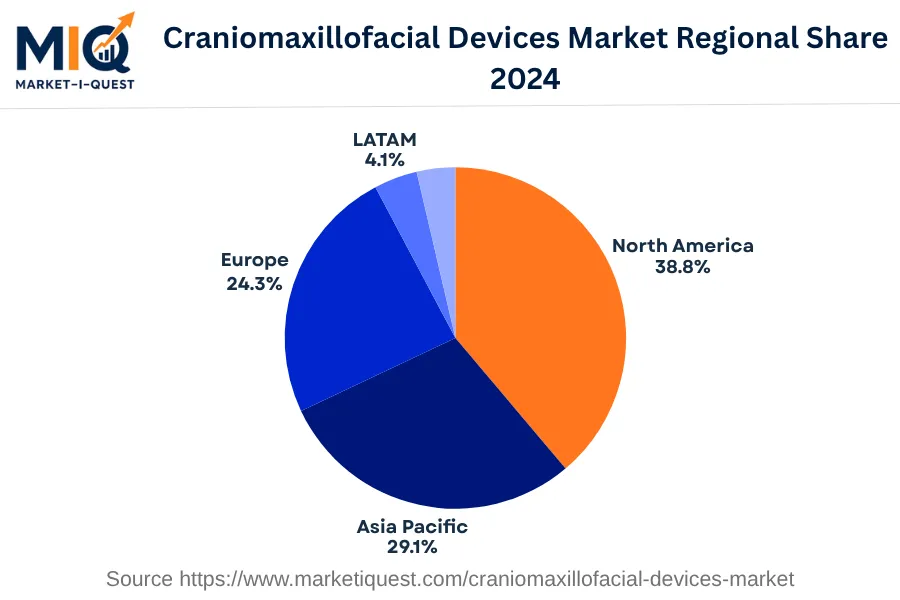
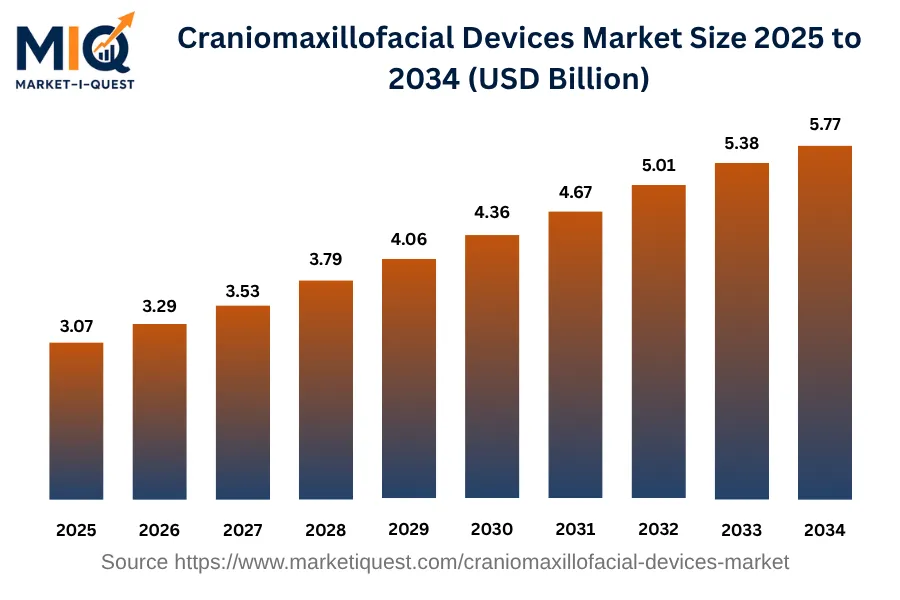
The Craniomaxillofacial Devices Market had a valuation of US$3.07 billion in 2025, which increased from US$2.86 billion in 2024. Over the period from 2025 to 2034, the market size is expected to further grow to US$5.77 billion, with a CAGR of 7.27%. This upward trajectory in the market's size bespeaks a consistent improvement over the decade. However, the regional share distribution indicated North America held the highest market share in the Craniomaxillofacial Devices Market with 38.84%, followed closely by Asia Pacific at 29.14%. Meanwhile, Europe made up a respectable 24.26% of the market share. The remaining proportions were occupied by LATAM with 4.11% and the Middle East and Africa (MEA) with 3.65%. These figures underline the global spread of the market across varying regions and its diversified presence.

Key Takeaways

  • By Device Type - Fixation Devices led the market accounting for the highest share in 2024.
  • By Material - Metal held the leading position in terms of use in 2024 due to its strength and durability.
  • By Application - Oral Surgery held the largest share in 2024 as trauma cases surged globally.
  • By End User - Hospitals accounted for the greatest market share in 2024 due to the high volume of surgeries performed.
craniomaxillofacial-devices-market market size

Key Driving Factors

Increasing incidence of road accidents and facial injuries

The craniomaxillofacial devices market is experiencing a rise in demand due to the growing number of road accidents and sports-related collisions leading to serious facial injuries. These incidents often result in damages to the facial structure that require immediate medical intervention for treatment and rehabilitation. Craniomaxillofacial devices act as essential aids during such procedures by assisting medical professionals to restore normalcy in the affected areas and improve the quality of life of patients. Furthermore, rising participation in high-impact sports contributes to facial injuries, thereby boosting the demand for these medical devices.

Adoption of bionic technology and 3D printed implants

A significant driver for the craniomaxillofacial devices market is the adoption of bionic technology and 3D printed implants. Bionic technology allows for the creation of advanced prosthetics that imitate natural facial structure, offering a better fit and improved aesthetics as compared to traditional prostheses. Moreover, 3D printing technology allows the creation of highly accurate and patient-specific implant designs. These novel technologies not only enhance the functionality of the prosthetics but also decrease the number of postoperative complications, providing patients with improved surgical outcomes. As more healthcare settings adopt such technologies, the demand for high-quality craniomaxillofacial devices continues to grow.

Market Evolution by Timeline

2019-2023
During this period, the primary demand for craniomaxillofacial devices emerged from hospitals and ambulatory surgical centers, largely in North America and Asia-Pacific regions. This was driven by an increase in road accidents and facial injuries. Suppliers, mainly companies like Johnson & Johnson and Stryker, introduced bioresorbable materials and 3D-printed solutions but faced challenges in successful integration due to high costs. The United States' FDA's Unique Device Identification (UDI) system rules effectively played a significant role in the adoption of these devices due to enhanced traceability. The commercial model favored premium pricing, with biocompatibility and innovation being the key differentiators. However, the high costs of advanced materials were a major risk factor, causing many patients to seek for traditional procedures.
2024
In 2024, dental clinics joined hospitals and ambulatory surgical centers as significant buyers of Craniomaxillofacial devices. Demand spread to new regions, notably Middle East and Africa, due to increased awareness and healthcare infrastructure. Major providers introduced smart implants with sensor-led technology, yet faced integration issues due to lack of standardized guidelines. Regulatory complications also persisted with a lack of distinguishing rules for smart devices. Commercially, bundled pricing models started appearing thanks to partnerships between device companies and healthcare networks.
2025-2029
Pediatric applications might gain prominence during this period, adding to the existing demand from hospitals and clinics globally. While Asia-Pacific will likely maintain its demand, Latin America is projected to emerge as a new region due to improved healthcare infrastructure. Device capabilities further might evolve with AI integrated implants; however, the high costs of AI may pose a significant constraint. Additionally, stringent regulations around data security for AI devices will likely influence the adoption rates. Unit-based pricing models will likely become prevalent, and acquisition of tech firms by device manufacturers will likely be visible.
2030-2034
This period is expected to mark the rise of home healthcare as a significant buyer due to an aging population and the growth of telehealth services. The demand will likely remain high in North America and Asia-Pacific. The integration of bioresorbable materials and 3D printing might reach maturity in this era, making devices more affordable. Data privacy laws are expected to become stricter, impacting AI-based devices. Commercially, partnerships between device manufacturers and telehealth service providers will likely be observed, favoring subscription-based pricing models.

Future Market Outlook

Future Opportunities

The future of the craniomaxillofacial devices market is closely tied to ongoing developments in telemedicine and minimally invasive surgical techniques. The COVID-19 pandemic has accelerated the adoption of telehealth solutions, allowing surgeons to remotely consult with patients and refine surgical approaches; this is evident in various pilot programs launched across the United States. Partnerships, such as the one between 3D Systems and the University of Michigan, highlight the increasing focus on custom-fabricated devices tailored to individual patient anatomies. Additionally, the rise in traffic accidents in regions like Southeast Asia creates a sustained demand for reconstructive surgeries, presenting an opportunity for device manufacturers to expand their offerings. The recognition of craniofacial abnormalities has led organizations like the World Health Organization to emphasize early intervention strategies, enabling devices such as distraction osteogenesis tools to see broader application. Furthermore, advances in imaging technologies, for instance, cone-beam computed tomography, have improved diagnostic capabilities, spurring interest among healthcare providers in regions such as Europe. Collaborations between academic institutions and industry players are likely to pave the way for novel solutions, as demonstrated by the interdisciplinary initiatives in research facilities in Canada.

Segmentation Analysis

By Device Type

The market is divided into subsegments including Fixation Devices, Bone Graft Substitute, CMF Plates and Screws, Distraction Systems, and Temporomandibular Joint Implants. Among them, Fixation Devices accounted for the largest revenue share while Distraction Systems demonstrates the fastest CAGR growth during the forecast period.

Largest Revenue Share

Fixation Devices

Market Share Leader

Fixation Devices, being a significant part of the market segment, are leading in terms of revenue due to their widespread application in orthopedic surgeries. The surge in demand for these devices is primarily driven by the ever-increasing number of orthopedic surgeries worldwide, as well as the innovations and developments happening at a faster pace in this segment. Countries with advanced healthcare systems and higher health expenditure, like the US and Germany, are the key contributors to the revenue pool. Regulations around health policies in these countries also emphasize using high-quality Fixation Devices thus further driving the demand. The decision-making power of clinicians and patients also influences the market as they opt for quality products to get better surgical outcomes. The only switching cost involved here is if an alternative product can offer cost and therapeutic benefits. The channels involved in the distribution are both direct and indirect sales which are facilitated through an array of various healthcare facilities and e-commerce platforms.

Fastest CAGR

Distraction Systems

Forecast Period Growth Leader

Distraction Systems are emerging as the fastest-growing subsegment. The driving force behind this growth involves factors like technological advances, strategic partnerships among key players, and increasing capital investment in research and developmental activities. Market risks in the near term might include regulatory changes and unforeseen technical glitches. Despite these hurdles, an increase in the incidence of orthopedic and craniofacial conditions is producing a significant demand for these systems. Moreover, their potential to deliver non-invasive, painless treatments escalates their appeal to both physicians and patients alike.

By Material

The market is divided into subsegments including Metal, Biomaterials, Polymers, and Ceramics. In the base year 2024, Metals accounted for the largest revenue share while Polymers is expected to grow at the fastest CAGR during the forecast period.

Largest Revenue Share

Metals

Market Share Leader

Metals had a stronghold in the market rendering high revenue streams. They are widely adopted due to their high durability, strength, electrical and thermal conductivity, and resistance to wear and tear. Versatility is another driver, with metals catering to sectors like automotive, aerospace, construction, and more. Their ease of availability and simplicity in terms of manufacturing processes makes them a preferred choice of material, thereby attracting heavy investments. Also, various governments globally have introduced policies to boost domestic metal industries, which has further propelled the sector. Geostrategically, areas rich in metal ore resources or having established metal refining and processing infrastructure display high revenue figures.

Fastest CAGR

Polymers

Forecast Period Growth Leader

Polymers are anticipated to have the fastest growth, owing to their extensive demand in modern applications. Low cost, good elasticity, high resistance to impact, and corrosion and thermal resilience make them an asset in diverse industries including packaging, electronics, healthcare, and more. Advancements in material science have enabled the development of high performance, functional polymers, which further drives their adoption. However, high initial investments and complex manufacturing processes pose barriers. Technological innovations, policy support, strategic partnerships, and collaboration in R&D activities are seen as catalysts for growth.

By Application

The market is divided into subsegments including Orthognathic Surgery, Craniofacial Reconstruction, Trauma Reconstruction, Oral Surgery, and Dentoalveolar Surgery; with Oral Surgery being the largest revenue generating segment and Craniofacial Reconstruction showing the fastest growth rate.

Largest Revenue Share

Oral Surgery

Market Share Leader

Oral Surgery is identified as the subsegment with the highest revenue in 2024 primarily due to its broad applicability and high demand. Oral Surgery encompasses a wide range of common procedures such as tooth extractions, dental implants, and treatments for oral diseases, which drive its high consumption. The market demand is further bolstered by the growing prevalence of oral health issues that result not only from bad dietary habits, smoking, and alcohol consumption, but also due to increases in certain medical conditions like diabetes. In terms of geography, the North American and European regions contribute significantly to this segment's revenue due to high healthcare expenditure, aging population and growing awareness about oral health. However, the increased access to healthcare services in developing regions is expected to contribute more to the revenue in the coming years. The high purchasing criteria reflect on the importance of skilled professionals delivering these services, supplemented by enhanced dental equipment.

Fastest CAGR

Craniofacial Reconstruction

Forecast Period Growth Leader

Craniofacial Reconstruction subsegment is anticipated to exhibit the fastest growth during the forecast period. There are various catalysts driving this assertion. Technological advancements in imaging systems and surgical tools are increasing the precision and outcomes of cranial surgeries. These medical achievements are making these surgeries more mainstream, reducing the fear factor and increasing their adoption rates. On the policy front, an increase in health coverages catering to these surgeries, particularly in the developed world, is also facilitating growth. However, with time this subsegment is expected to grow at a rapid pace as healthcare systems around the world continually adapt to changes in surgical approach while ensuring equitable access to such medically necessary procedures.

By End User

The market is divided into subsegments including hospitals, ambulatory surgical centers, and specialty clinics. Hospitals accounted for the largest revenue share while specialty clinics are expected to grow at the fastest CAGR during the forecast period.

Largest Revenue Share

Hospitals

Market Share Leader

Hospitals form the largest revenue-generating subsegment in the market with our base year as 2024. This is due to several factors. Hospitals provide comprehensive care, treating a wide spectrum of diseases and health conditions. Given this, they invariably require a broad range of medical equipment and disposables, in turn driving the market upward. The rising prevalence of chronic diseases and emergent healthcare issues necessitates frequent hospital visits, which also contribute to this increased demand. In many countries, hospitals are also the primary points of access for healthcare services, particularly in regions with less developed healthcare infrastructure. Additional factors contributing to the dominance of hospitals in this market segment include the scale of purchases and the regularity of demand. As a result of these demand drivers, hospitals have remained the top subsegment by revenue.

Fastest CAGR

Specialty Clinics

Forecast Period Growth Leader

Specialty clinics are projected to have the fastest CAGR for the forecast period. This growth can be attributed to the rising preference for specialized healthcare services due to their targeted and individualized treatments. Specialized care usually involves advanced technologies, innovative procedures, and expert practitioners, making specialty clinics a desirable healthcare option. This has led to a considerable increase in patient footfall, subsequently driving market growth. Collaborations with medical device companies, favorable healthcare reforms, and strategic partnerships for technological advancements are expected to mitigate these challenges and foster growth. Potential risks include changes in medical policies or regulations and disruptive innovations that could alter market dynamics. Therefore, stakeholders should keep abreast with policy changes and technological innovations.

Competitive Analysis

Key Market Players

Manufacturers / OEMs

Stryker Corporation
US
Medtronic plc
Ireland
Johnson & Johnson
US

Key Suppliers & Raw Materials

Invibio
UK
Carpenter Technology Corporation
US
Royal DSM
Netherlands

Distributors, Integrators & Channel Partners

Integra LifeSciences
US
Zimmer Biomet Holdings
US
Smith & Nephew
UK

Porter’s Five Forces Analysis

Analysis of the craniomaxillofacial devices market using Porter's five forces model.

Supplier Bargaining Power

Medium

Constrained by specialized material requirements but buoyed by low substitution.

Buyer Bargaining Power

Low

Buyers lack bargaining power due to the specialized nature of devices and lack of alternatives.

Threat of Substitutes

Low

Low threat due to the highly specific and critical nature of these medical devices.

Threat of New Entrants

Low

High entry barriers due to intense regulations, patent protections, and high R&D costs.

Competitive Rivalry

High

Intense competition among established players with advanced technology and strong relationship with healthcare facilities.

Regional Analysis

Geographic market dynamics and growth opportunities across key regions

Global Market Outlook

craniomaxillofacial-devices-market market regional share

North America

In 2024, North America's craniomaxillofacial devices market was shaped by several key drivers and evolving trends. Increased investment in healthcare infrastructure and technological advances in medical devices significantly stimulated market growth. Regulatory requirements from the U.S. FDA mandated stringent testing and quality checks for craniomaxillofacial devices, ensuring improved safety and efficacy. Additionally, the rising prevalence of facial injuries and conditions in North America encouraged greater demand for these medical devices. On the trend front, the medical devices sector witnessed an increased adoption of bio-absorbable materials in craniomaxillofacial devices. This shift was supported by healthcare providers' increasing inclination toward minimally invasive procedures that offer faster recovery times. E-commerce platforms became vital distribution channels, with providers appreciating the benefits of online procurement. In terms of policy enforcement, North American governments showed a heightened focus on ensuring product compliance with health and safety standards.

The main customers for these devices remained hospitals and clinics, as well as surgical centers. In addition, due to increasing trends of facial aesthetic treatments, cosmetic clinics and the enterprise retail sector also evolved as significant consumers. Interestingly, partnerships and M&A activities surged in this market, with key players striving to increase their market shares or extend product offerings, exemplifying the dynamic nature of North America’s craniomaxillofacial devices arena.

Asia Pacific

The Craniomaxillofacial Devices Market in the Asia Pacific posted a significant stride in 2024, with primary contributions from China, India, Japan, South Korea, Australia, and key ASEAN markets. Market growth drivers included rising healthcare expenditure, government initiatives promoting facial surgeries, and a surge in accidents and trauma cases requiring complex medical attention. Demand experienced a spike due to the widespread adoption of technologically advanced products like Bioresorbable devices, reflecting the sector's inclination towards minimally invasive surgeries. Amid tightening regulations, several companies enhanced investment in R&D and product innovation to meet robust safety and quality standards.

Market trends ranged from expanding medical tourism in India to a shift in China's buyer behavior fueled by increased awareness and disposable income. Japan saw a growing reliance on online channels for knowledge dissemination and consultations, while policies endorsing partnerships and M&A like Australia’s Prostheses List reform fostered industry growth. The South Korean market saw an upsurge in the use of 3D printed CMF implants, reflecting the rapid advancement and adoption of 3D technology. The healthcare sector emerged as a significant consumer, with growing preference for these devices in hospitals, clinics, and ambulatory surgical centers. The market landscape of ASEAN countries was shaped by rigorous policy enforcement ensuring the quality and efficacy of these devices.

Europe

In 2024, the European craniomaxillofacial devices market demonstrated a robust dynamic rooted in advanced healthcare standards, technology adoption, and governmental regulations. Increased demand for these devices was driven by a growing number of trauma cases and facial deformities, especially in Germany, France, and the UK. The implementation of favourable healthcare policies, like France's Health Insurance Act, amplified the procurement capacities of the healthcare sector. Furthermore, widespread adoption of 3D-printing technology in Spain and Italy notably streamlined the production and supply of customized implants, enhancing patient outcomes whilst driving down costs.

Trends in the market in 2024 were largely shaped by consumer behaviour and technological advancements. Driven by an elevated consumer demand for minimally invasive procedures across Europe, manufacturers were inclined to invest in development of bioabsorbable implants. The focus of many device producers also pivoted to biocompatible materials, especially in the highly regulated markets of Germany, the Nordics, and Benelux. Channel dynamics saw a shift towards e-commerce, triggered by the need for expeditious distribution of devices during urgent cases, especially in Central and Eastern Europe. Policy enforcement around data privacy remained a focal point, demanding strict compliance from market participants. In this milieu, collaboration among device producers, healthcare providers and governments continued to play a pivotal role in market dynamics, ensuring a balance between economic growth and patient well-being.

Latin America

In 2024, the Latin American (LATAM) Craniomaxillofacial Devices market experienced a notable surge primarily due to factors such as widespread technological adoption, investment influx, and regulatory changes. Government initiatives in countries like Brazil, Mexico, Argentina, Colombia, Chile, and Peru provided substantive support for the import, production, and distribution of innovative craniomaxillofacial devices. Moreover, a sizable increase in healthcare expenditure across hospitals and specialized orthopedic clinics in the region accelerated demand for these devices.

In terms of trends, patient inclination towards minimally invasive surgeries greatly impacted the adoption pattern of craniomaxillofacial devices within LATAM. Technological advancements also led to a shift towards bioresorbable and 3D-printed implants, influencing buyer behavior, and setting new standards in the market. Additionally, an uptick in strategic partnerships and mergers & acquisitions was seen among major players operating in the region to expand their product portfolio and strengthen their market footprint. On the legal front, reinforcement of regulatory policies around device standards and patient safety boosted market dynamics. The increasing prevalence of facial fractures and disorders within the civilian and military sectors respectively, also played a pivotal role in the growth of the craniomaxillofacial devices market in LATAM in 2024.

Middle East & Africa

In 2024, the Craniomaxillofacial Devices Market in the Middle East and Africa experienced robust growth driven by increased healthcare investments and advanced technology adoption. Saudi Arabia and the UAE, in particular, saw an upsurge in demand due to increased government healthcare spending and rising incidences of road accidents. Meanwhile, Egypt implemented favorable regulations urging the use of advanced Craniomaxillofacial Devices in healthcare institutions. Key market trends included a shift towards minimally invasive surgical procedures, spurring product innovation across Kenya, Nigeria, and South Africa. Notably, Israel demonstrated significant influence over the market through cutting-edge R&D in Craniomaxillofacial Devices, catalyzing technology shifts across the region.

Buyer behavior gravitated towards quality and effectiveness of devices, further reinforced by the policy enforcement across the region prioritizing patient safety and healthcare delivery standards. Mergers and acquisitions marked the competitive landscape, as seen in strategies adopted by leading healthcare providers in Qatar and UAE. Increasing applications in government hospitals, trauma centers, and private clinics also marked the market's growth. Lastly, technology adoption and supply dynamics strongly manifested in Saudi Arabia's Craniomaxillofacial Devices market, with the introduction of 3D printing technology stimulating demand and bolstering the market's competitive edge.

Recent Industry Developments

Latest market innovations, product launches, and strategic initiatives

February 2026

The U.S. Quality Management System Regulation (QMSR) mandate requiring ISO 13485:2016 compliance took effect, pushing craniomaxillofacial fixation device manufacturers toward harmonized global quality systems.

January 2026

China's NMPA issued the "Registration Review Guideline for Craniomaxillofacial Internal Fixation Systems" (Announcement No. 4 of 2026), establishing technical requirements for Class III cranial and maxillofacial fixation devices, covering metallic and PEEK-based plate and screw systems.

November 2025

Acumed acquired the assets of TECHFIT Digital Surgery, gaining full ownership of its proprietary digital surgical planning and reconstruction platform to strengthen its patient-tailored craniomaxillofacial (CMF) portfolio and support expansion into orthognathic, trauma/reconstruction, and neurosurgery.

Frequently Asked Questions