Cosmetic Chemicals Market Snapshot

Key Players

  • BASF SE (Germany)
  • Dow Chemical Company (United States)
  • Evonik Industries (Germany)
  • Givaudan (Switzerland)
  • Clariant (Switzerland)
  • Ashland Global Holdings Inc. (United States)
  • Croda International Plc (United Kingdom)
  • Koninklijke DSM N.V. (Netherlands)
  • Lanxess (Germany)
  • Elementis PLC (United Kingdom)

Market Size

Base Year 2024
$24.62 Bn
CAGR
5.39%
Forecast 2034
$41.62 Bn

Market Segments

By Type
Surfactants, Emollients, Humectants, Preservatives, Antioxidants
By Source
Synthetic, Natural, Organic
By Function
Cleansing, Moisturizing, Exfoliating, Conditioning, Protecting
By Application
Skincare, Haircare, Makeup, Personal Care

Market Dynamics

Drivers
  • Rising beauty consciousness
  • Advances in chemical engineering
Restraints
  • Stringent regulatory norms
  • Increasing raw material cost
Opportunities
  • Growing consumer awareness
  • Inclination towards organic products

Market Size

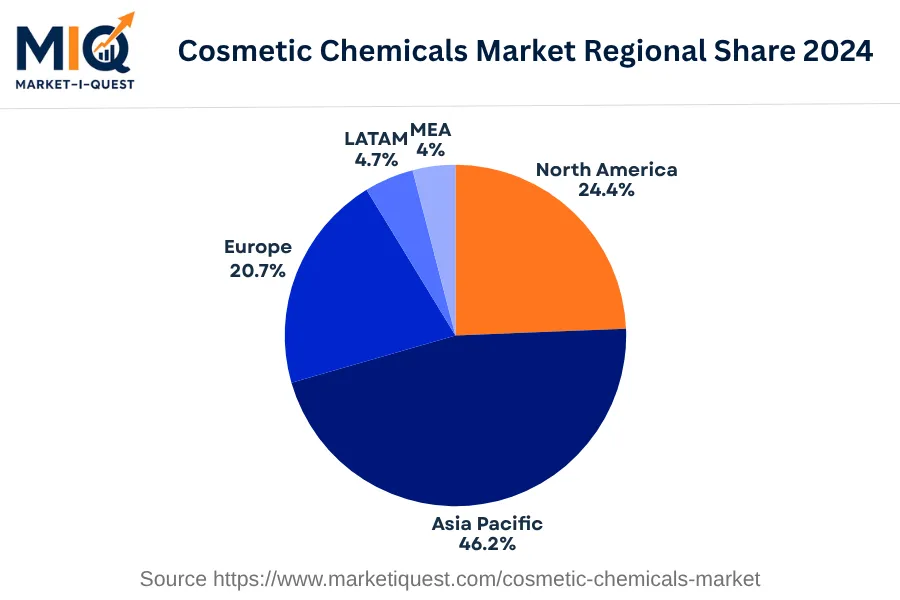
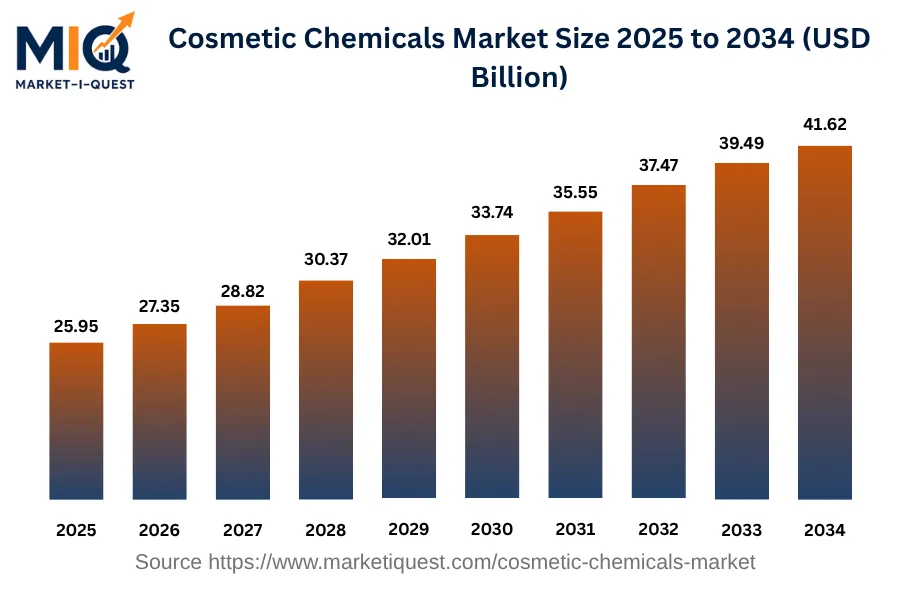
The Cosmetic Chemicals Market sized at $25.95 billion in 2025 and is projected to grow to $41.62 billion by 2034. This represents a CAGR of 5.39% over the nine years. The market size expanded steadily throughout this period, largely due to continuous industrial and economic development across several regions. The development, in turn, leads to an increase in disposable income and improved standard of living, which encourages consumer spending on cosmetic products. Accordingly, the escalating consumer demand for sophisticated personal care products substantially contributes to the growth in the market size of Cosmetic Chemicals. However, the regional share distribution indicated the market was predominantly led by the Asia Pacific region with 46.18% of the global share, followed by North America with 24.36% and Europe with 20.74%. Latin America and the Middle East and Africa held smaller shares of 4.68% and 4.04% respectively.

Key Takeaways

  • By Type - Surfactants maintained highest share in the Cosmetic Chemicals Market due to their wide application range.
  • By Source - Synthetic-based cosmetic chemicals led the market due to their cost-effectiveness and versatility.
  • By Function - Moisturizing was the top attribute sought after in cosmetics reinforcing emollients' market leadership.
  • By Application - Skincare continued its dominance reflecting high demand for hydrating and anti-ageing products.
cosmetic-chemicals-market market size

Key Driving Factors

Regulations Redefining Permissible Ingredients

Globally, increasing regulatory scrutiny is reshaping the Cosmetic Chemicals Market. Authorities such as the European Chemical Agency (ECHA) and the United States Food and Drug Administration (FDA) are continually updating ingredient standards, prohibiting chemicals with potential health risks. For instance, the ECHA has classified certain parabens and formaldehyde releasers as endocrine disrupters. Similarly, the FDA has set limitations upon the use of substances like lead acetate. Such changes force cosmetic manufacturers to innovate and adopt safer chemical alternatives. This creates a rising demand for compliant and non-toxic cosmetic chemicals, impacting the overall landscape of the market.

Consumer Shift Towards Natural and Organic Products

The drive towards environmentally friendly and non-toxic beauty products is another driving factor for the Cosmetic Chemicals Market. An increasing number of consumers are now focusing on 'clean beauty' and actively seeking products free from harmful synthetic chemicals. This is due to growing awareness about potential health impacts and a broader shift towards sustainable personal care habits. Thus, the onus falls on cosmetic manufacturers to meet this demand by reformulating their products with natural and organic ingredients. This shift initiates a parallel change in the market for cosmetic chemicals, creating opportunities for suppliers of natural, plant-based, and biodegradable substances.

Market Evolution by Timeline

2019-2023
During 2019–2023, the ascension of Asian economies notably India, and China led to increased demand for cosmetic chemicals, specifically for sunscreen agents, conditioning polymers and emollients. Cosmetic manufacturers mostly sought for paraben-free preservatives due to a notable rise in consumer awareness about the harmful effects of synthetic ingredients. Tightening regulations such as the International Fragrance Association Standards (IFRA) on allergenic substances used in cosmetics built a reality check for suppliers. Prices for rare ingredients experienced an upward trend due to restricted supply. Collaborations among chemical suppliers and cosmetic companies became common. High cost of organic and natural products posed significant challenges for suppliers, and many responded by adopting in-house production.
2024
In 2024 the concern over synthetic ingredients led North American and European consumers to consider natural ingredients, driving a change in procurement models towards plant-derived extracts high in antioxidants and vitamins. Suppliers focused on delivering products compliant with the California Proposition 65 ruling on labeling of potentially harmful substances in cosmetics. Commercial models leaned towards stability, with standard contracts and pricing, however, some suppliers partnered with local manufacturers for better distribution. A major risk was overdependence on the Asia Pacific region which faced political uncertainties and changing consumer trends.
2025-2029
During the period 2025-2029, the Middle East will likely emerge as a promising market with demand might be spurred by growing popularity of halal cosmetics and luxury products. The use of bio-based ingredients might gain momentum with greener technologies reaching maturity. European Chemicals Agency (ECHA) might strengthen their regulatory controls on banned substances, which are expected to obligate suppliers to invest in R&D of safer alternatives. Subscription-based purchases made their way into contracts, allowing consumers to get regular supplies at locked prices. Rising raw material prices will likely identify as a possible risk, and responses may include diversifying the supply chain to avoid over-dependence on a single source.
2030-2034
The years 2030–2034 might witness a rise in demand for skin care cosmetic chemicals, especially in anti-aging and skin protection categories. However, green chemistry's adoption will likely face challenges due to lack of technical expertise and high conversion costs. Regulatory bodies are expected to push for stricter norms on animal testing, reinforcing the demand for alternative testing methods. The prevalent contract structure will likely be based on the model of long-term partnerships with key strategic producers. Risks prevalent in this period may include those of recessionary pressures and changes in consumer preferences. Suppliers might responde by focusing on providing products with wider applications and investing in alternative cosmetic technologies.

Future Market Outlook

Future Opportunities

The cosmetic chemicals market is poised to benefit from expanding clean and sustainable practices in response to evolving consumer preferences and regulatory frameworks. By the United Nations Environment Programme, global initiatives aimed at reducing plastic waste in beauty products are prompting companies like Estée Lauder and Revlon to invest in recyclable and biodegradable packaging solutions. With tightening regulations focused on microplastics, such as the proposed ban in the European Union, manufacturers are exploring innovative formulations that align with these sustainability goals. The growing influence of social media and digital marketing platforms presents an opportunity for brands to engage consumers, particularly Generation Z, who prioritize eco-friendly products. The American Academy of Dermatology conducted surveys indicating a rising consumer awareness of how cosmetic ingredients affect health and the environment. This awareness underscores the importance of responsible sourcing and ingredient transparency, paving the way for brands to highlight their sustainability efforts. Additionally, partnerships focused on biotechnology, like that of Ecover and Amyris, are fostering the development of new, biobased cosmetic ingredients that promise lower environmental impact.

Segmentation Analysis

By Type

The market is divided into subsegments including surfactants, emollients, humectants, preservatives, and antioxidants. Surfactants accounted for the largest revenue share while antioxidants are expected to grow at the fastest CAGR during the forecast period.

Largest Revenue Share

Surfactants

Market Share Leader

The surfactants subsegment dominates the market in terms of revenue generation. This prominence is driven by a broad range of customer applications, including its deployment in most types of cleaning and personal care products from shampoos to industrial degreasers. Geographically, surfactants see significant demand especially in developed markets where sustained demand for hygiene products exists. Further, regulatory landscapes play a significant role in this, where environmentally benign surfactants are being sought after, contributing to their increased pricing and profitability. As far as purchasing criteria, customers seek surfactants that deliver the required cleaning performance at a low cost. Overall, their expansive user base, varied applications, and stark regulation standards, underline the surfactants subsegment's commanding hold on the market revenue share.

Fastest CAGR

Antioxidants

Forecast Period Growth Leader

Antioxidants subsegment is the fastest growing in the market. Contributing factors to this rapid growth are advancements in technology that enabled antioxidants to be sourced or synthesized more economically and effectively. The antioxidants market is also seeing an uptick due to policy-driven incentives promoting their use, such as those seen in food and cosmetic industries where oxidative stability is a critical product attribute. Interestingly, the market sees a trend of increasing capital expenditure in R&D by existing and emerging companies in this segment which is expected to pay off in the form of market growth. Partnerships, too, are being formed between companies to collectively benefit from accessing wider customer bases and shared knowledge pools. Nevertheless, the antioxidants segment is poised for swift expansion in the near future.

By Source

The market is divided into subsegments including Synthetic, Natural, and Organic. In 2024, the Synthetic type accounted for the largest revenue share while Organic type is expected to grow at the fastest CAGR during the forecast period.

Largest Revenue Share

Synthetic

Market Share Leader

Being the largest revenue generating subsegment in 2024, the Synthetic sector takes the lead, largely due to its wide range of applications and cost-effective production methods. Synthetic products are commonly found in a variety of consumer products and industrial settings, making them a crucial market necessity. In terms of geographical dispersion, key markets for Synthetic substances encompass all prominent regions, including Asia, Europe, and North America, indicating a global acceptance. Regulatory environments also support synthetic product manufacturing and usage due to their proven safety records and economic significance. Additionally, consumer purchasing decisions often lean towards synthetic products due to their durability, functionality, and cost-effectiveness. Finally, the supply chain for synthetic products is well established, with distributors and channels ensuring swift and efficient delivery to markets.

Fastest CAGR

Organic

Forecast Period Growth Leader

Expected to exhibit the fastest growth rates in the coming years, the Organic sub-segment is gaining traction worldwide. This growth is primarily augmented by increased consumer awareness and a shifting preference towards sustainable and eco-friendly products. Technological advancements in organic product production, coupled with supportive regulations aimed at promoting sustainable practices further galvanize the market prominence for Organic substances. Moreover, investment influx in this domain will likely empower innovations and affordability. Furthermore, the establishment of strategic partnerships across the value chain aids in overcoming traditional adoption barriers, making it easier for consumers to switch to organic products. Near-term risks are mainly related to supply chain disruptions and pricing volatility.

By Function

The market is divided into subsegments namely Cleansing, Moisturizing, Exfoliating, Conditioning, and Protecting. The Moisturizing subsegment accounted for the largest revenue share in 2024, while the Protecting segment is expected to grow at the fastest CAGR during the forecast period.

Largest Revenue Share

Moisturizing

Market Share Leader

The Moisturizing segment's commanding revenue share is fueled by consumer behavior and market dynamics unique to the segment. Dry skin is a widely prevalent condition among consumers across different demographics, which is a core driver of the demand for moisturizing products. The routine use of these products, as part of daily skincare, further bolsters demand and, consequently, the revenue. In terms of geography, regions with harsh cold climates typically experience higher demand for such products, contributing substantially to the revenue. Regulatory bodies worldwide generally view moisturizing products as essentials, easing market entry and expansion. Switching costs are often low in this segment as consumers are open to trying new products, but brand loyalty can offer competitive advantage. The sales channels for moisturizing products are also diverse, ranging from over-the-counter sales in physical stores to online platforms, increasing access to a wide consumer base.

Fastest CAGR

Protecting

Forecast Period Growth Leader

The Protecting segment is projected to exhibit the fastest growth in terms of CAGR. This growth is anticipated to stem from the increasing awareness and concern among consumers about skin damage due to environmental factors such as sun exposure and pollution. Technological advancements in skincare have brought about innovative products with superior protective qualities, further promoting adoption. Policy regulations advocating consumer safety play a role in this growth, driving product improvements and competitive pricing. Partnerships between companies for shared technological advancement can serve as a catalyst for growth in this segment. Near-term risks that could potentially slow down growth include regulatory changes and market disruption from emerging, innovative competitors.

By Application

The market is divided into subsegments including Skincare, Haircare, Makeup, and Personal Care. Skincare accounted for the largest revenue share while Makeup is expected to grow at the fastest CAGR during the forecast period.

Largest Revenue Share

Skincare

Market Share Leader

Skincare has emerged as the segment with the largest revenue in the base year 2024. This can be attributed to multiple factors. The primary reason is the growing global awareness about skin health, accelerated by education and information dissemination through digital media platforms. Regulated by both societal norms and individual needs, the skincare market caters to a wide customer base that includes both men and women across different age groups. Furthermore, the emergence of skincare as a part of the daily routine across various regions, especially in Asia's booming economies like China and India, plays a significant role in driving the revenue. Regulations have also encouraged the growth of this segment, with increased scrutiny on ingredients leading to the popularity of organic and natural products. Product innovation and expansion of skincare lines by major global brands have significantly influenced purchasing behaviors, driving revenue growth in this segment.

Fastest CAGR

Makeup

Forecast Period Growth Leader

Makeup subsegment is projected to exhibit the fastest growth during the forecast period. Key growth drivers include a combination of factors such as technological advancements, capital expenditure in R&D, expanding consumer base, and influential partnerships. A notable catalyst in the makeup segment is the rise of e-commerce and digital media. These have facilitated the rapid adoption of new products, trends, and techniques by providing a global platform for influencers and beauty brands. These factors can impact marketing strategies and manufacturing processes. Yet, proactive steps by the brands to align themselves with these demands can potentially turn these challenges into opportunities, thus accelerating the growth in the Makeup subsegment.

Competitive Analysis

Key Market Players

Manufacturers / OEMs

Evonik Industries AG
Germany
Ashland Global Holdings Inc.
US
Lonza Group Ltd
Switzerland

Key Suppliers & Raw Materials

BASF SE
Germany
Croda International Plc
UK
Solvay SA
Belgium

Distributors, Integrators & Channel Partners

Univar Solutions Inc.
US
Avantor, Inc.
US
Brenntag SE
Germany

Porter’s Five Forces Analysis

An analysis of competition dynamics within the cosmetic chemicals market using Porter's Five Forces model.

Supplier Bargaining Power

Medium

Suppliers moderately control pricing due to scarce resources and variability in raw material costs.

Buyer Bargaining Power

High

Buyers have high bargaining power due to the availability of multiple suppliers and low switching costs.

Threat of Substitutes

Low

Low threat due to unique chemical compositions that are difficult to substitute.

Threat of New Entrants

Medium

Barriers like capital expense, regulatory environment, and technology give a moderate entry threat.

Competitive Rivalry

High

High due to presence of global players and constant innovation in the industry.

Regional Analysis

Geographic market dynamics and growth opportunities across key regions

Global Market Outlook

cosmetic-chemicals-market market regional share

North America

In 2024, the North American cosmetic chemicals market experienced a significant measure of growth and transformation. Driving this upward trajectory was a surge in consumer demand for organic and natural cosmetics, which led to greater investment in bio-based cosmetic chemical production. Regulatory bodies in the U.S., Canada, and Mexico also played a role, imposing stringent standards for product safety that compelled industry players to innovate and diversify their chemical portfolios. Additionally, digital technology played a part, transforming supply dynamics as e-commerce platforms became the preferred channel for cosmetic sales due to their convenience.

In line with customer trends, significant movement occurred towards cruelty-free and eco-friendly cosmetic products, influencing the chemical constituents of items in the market. Major manufacturers leveraged new technologies to produce sustainable alternatives, enhancing their brand image while meeting consumer demands. As part of this shift, significant strategic partnerships between chemical suppliers and cosmetic manufacturers were formed, redefining the industry landscape. Enforcement of policies such as the U.S. Safe Cosmetics Act also influenced market trends, pushing companies to ensure the safety and quality of their products. This environment influenced sectors including retail and manufacturing, both major customers in the cosmetic chemical market, driving increased demand for compliant, consumer-friendly products.

Asia Pacific

In 2024, the Asia Pacific Cosmetic Chemicals Market witnessed pronounced dynamics driven by various demand factors, technological adoption, and evolving regulations. China's strengthening regulations on toxicity and eco-friendliness of cosmetic chemicals resulted in substantial investment in research and development within the sector. Meanwhile, the rapid adoption of green technology in South Korea's cosmetic industry stimulated demand for organic and natural cosmetic chemicals. Additionally, the Indian government's promotion of the "Make in India" initiative boosted domestic production and supply of cosmetic chemicals in 2024.

Trends were influenced predominantly by changing buyer behavior, standards, and regulatory enforcement across the region. Younger demographics in Australia and ASEAN markets showed a strong preference for beauty products with natural ingredients, signaling a noteworthy shift towards organic cosmetic chemicals. This product shift was reinforced by stricter industry standards resulting from extensive policy enforcement, as exemplified by Japan’s Cosmetic Act, leading to increased demand for compliant chemicals. Moreover, a significant trend of partnerships and M&A was observed among major players in China and India capitalizing on this growing market, diversifying the supply chain of cosmetic chemicals in the sector. Consequently, sectors like retail, healthcare, and manufacturing were considerably impacted as they strived to meet these evolving market demands and regulatory standards. The year 2024 for the Asia Pacific Cosmetic Chemicals Market was characterized by rigorous activity catalyzed by regulatory changes, buyer behavior shift, and a surge in green technology adoption.

Europe

In 2024, the European Cosmetic Chemicals market experienced significant dynamism aided by a plethora of factors and trends. Market drivers included the high consumer demand for natural and organic cosmetics, particularly in Germany and the United Kingdom, leading companies to invest heavily in the development and sourcing of natural ingredients. Regulatory factors also played a crucial role, with the French government imposing strict regulations regarding hazardous chemicals in cosmetics, thus promoting safer products. Additionally, the adoption of advanced manufacturing technologies allowed for efficient production and the delivery of high-quality cosmetics, especially in Italy and Spain.

Trends observed during the year reflected a shift towards sustainability and eco-friendly production methods. Consumer behavior saw inclination towards brands endorsing environmentally-friendly practices, predominantly in the UK and the Nordics. At the same time, partnerships and M&A activities were rife, with European beauty giants like L'Oreal and Unilever acquiring smaller, niche brands to diversify their product portfolio - a notable example being L’Oréal's acquisition of Thayers Natural Remedies. Furthermore, new industry standards were set in Central and Eastern Europe where cruelty-free and vegan products reigned supreme. Finally, increased policy enforcement was evident with Benelux countries mandating clear and accurate labeling of cosmetic products, thereby securing customer trust in the region. The rise in the cosmetic chemicals market was palpable through sectors such as retail, healthcare, and manufacturing.

Latin America

In 2024, the Latin American cosmetic chemicals market emerged in a robust state due to a surge in cosmetics consumption. Driving the sector were factors such as increased disposable incomes in countries like Brazil and Mexico, resulting in higher demand for premium cosmetic products. Additionally, regulatory reforms supporting non-animal testing in Colombia spurred new investment and advanced technological adoption in the sector. Consumer preferences heavily dictated market trends, with a significant shift toward sustainable natural ingredients and ethically produced cosmetics observed across LATAM. These notions transformed purchasing behaviors, particularly in the retail and online sectors, inspiring market participants to forge innovative partnerships for value addition.

Moreover, a wave of M&As in Argentina's cosmetic chemical industry was noted, aiming to improve operational efficiency and capture a larger market share. In compliance with the region-wide policy enforcement, the industry aimed at reduced carbon footprints, featuring lower energy consumption and limitation on harmful emission. Key customers in this market included large-scale cosmetics manufacturers, who commanded significant demand for cosmetic chemicals. Additionally, the healthcare sector in Peru showed progressive trends toward utilization of cosmetic chemicals in skincare treatments. The notable shift to ecommerce in countries such as Chile also created new growth channels for cosmetic chemicals, echoing the region's digital transformation curve.

Middle East & Africa

In 2024, the Cosmetic Chemicals Market in the Middle East and Africa (MEA) showed significant dynamism, driven by various factors and underpinned by evolving trends. Market growth was primarily driven by the booming beauty and personal care industries in countries such as Saudi Arabia, South Africa, and the United Arab Emirates, where an upscale lifestyle and increasing disposable income led to high consumption of cosmetic products. Regulatory policies, especially in Israel and South Africa, promoting safer cosmetic ingredients, stimulated the demand for aesthetic chemicals. In addition, technology adoption in manufacturing processes offered higher quality production, particularly in Saudi Arabia and the UAE.

Regarding trends, there was a visible shift towards organic and natural cosmetic products as consumers in Nigeria, Kenya, and Qatar became more aware of the potential hazards of synthetic ingredients. The advent of e-commerce channels fueled cosmetic sales in Egypt, enhancing market reach. However, this was not without challenges due to the digital divide in some African countries. Notably, strategic partnerships, especially in Kenya and Saudi Arabia, provided local cosmetics manufacturers with international exposure, access to innovative raw materials, and advanced technology. Lastly, policy enforcement for environmental sustainability, particularly in Israel, was a key trend, spurring the development of eco-friendly cosmetic chemicals. The major customers spanned across healthcare, retail, and manufacturing sectors.
Recent Industry Developments

Latest market innovations, product launches, and strategic initiatives

June 2026

Ingredion announced a recommended all-cash offer to acquire Tate & Lyle for approximately £3.7 billion (US$5 billion) enterprise value, uniting specialty ingredient portfolios that extend into personal care formulation.

January 2026

Sweetch acquired Laboratoire Greenpharma, strengthening its leadership in natural, sustainable cosmetic ingredients through Greenpharma's expertise in phytochemistry and green extraction technologies.

Frequently Asked Questions