Corrosion Resistant Resin Market Snapshot

Key Players

  • Ashland Inc. (United States)
  • BASF SE (Germany)
  • Aditya Birla Chemicals (India)
  • Huntsman Corporation (United States)
  • Hexion Inc. (United States)
  • Polynt- Reichhold (Italy)
  • Eastman Chemical Company (United States)
  • Olin Corporation (United States)
  • Sinopec (China)
  • Arkema (France)

Market Size

Base Year 2024
$8.97 Bn
CAGR
5.6%
Forecast 2034
$15.47 Bn

Market Segments

By Type
Polyester Resins, Epoxy Resins, Polyurethane Resins, Vinyl Ester Resins, Phenolic Resins
By Resin Form
Liquid Resins, Solid Resins, Flake Resins, Powder Resins
By Properties
High-Temperature Resistance, Chemical Resistance, Mechanical Strength, Electrical Insulation, Flame Retardancy
By Application
Chemical Processing, Oil and Gas, Marine and Offshore, Transportation, Construction, Others

Market Dynamics

Drivers
  • Increasing industrial processes
  • Growing demand in automotive industry
Restraints
  • High production costs
  • Stringent environmental regulations
Opportunities
  • Expanding industries' need for durability
  • Shift towards sustainable materials

Market Size

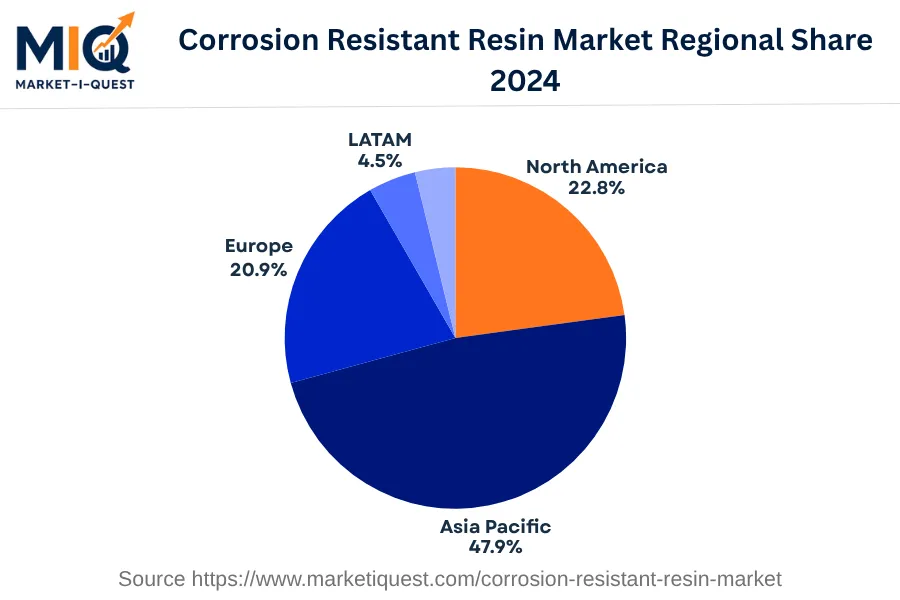
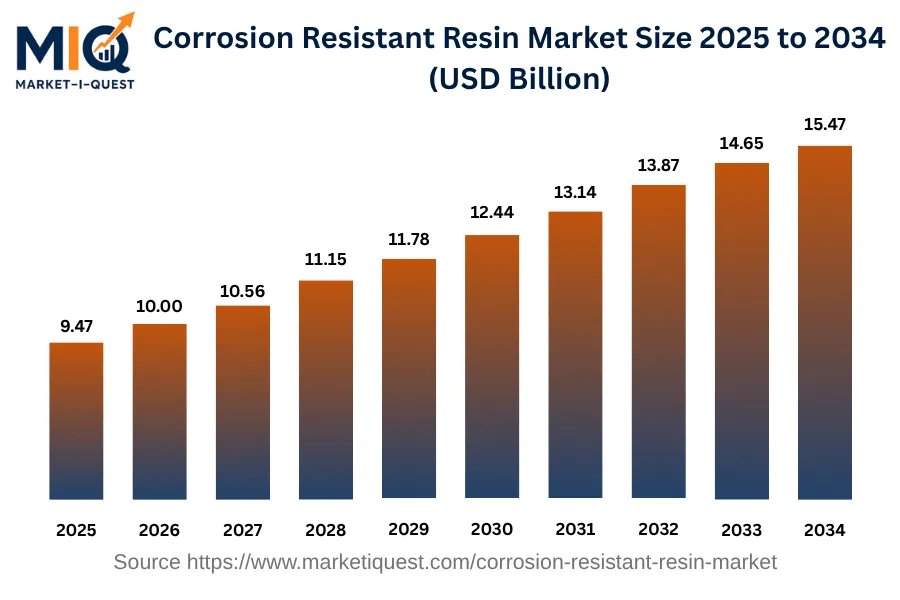
The Corrosion Resistant Resin Market valued at $9.47 billion in 2025 and is expected to grow to $15.47 billion in 2034, with a CAGR of 5.6%. This growth trajectory implies a consistent and steady increase in market size throughout the decade. Elements contributing to this growth include, among other factors, an increased demand for corrosion-resistant solutions across diverse industries and technological advancements resulting in the development of highly effective corrosion-resistant resins. However, the regional distribution indicated a significantly large portion held by the Asia Pacific region with a 47.9% presence in the market, followed by North America at 22.8% and Europe at 20.9%. The regions LATAM and MEA held 4.5% and 3.8% respectively, indicating a lesser but considerable stake in the market.

Key Takeaways

  • By Type - Polyurethane Resins held dominance accounting for the major market share in 2024.
  • By Resin Form - Solid Resins were the market leaders commanding the largest market portion in 2024.
  • By Properties - Chemical Resistance expanded the fastest accounting for the highest CAGR over the forecast period (2025–2034).
  • By Application - Oil and Gas was the prevailing segment accounting for a major market share in 2024.
corrosion-resistant-resin-market market size

Key Driving Factors

Implementation of Regulatory Norms Regarding Corrosion Control

A significant driver for the corrosion-resistant resin market is the implementation of specific regulations for reducing corrosion in vital industries such as the chemical, oil & gas, and marine sectors. Regulatory bodies such as the Environmental Protection Agency (EPA) and the Occupational Safety and Health Administration (OSHA) require strict control over anti-corrosion measures for equipment and machinery. The use of corrosion-resistant resins is an effective way for meeting these requirements. Consequently, companies are compelled to invest in these materials. With these regulations expected to remain in place or even become stricter, corrosion-resistant resins will remain essential, further driving their market demand.

Shift towards Lighter and Durable Materials in Automotive Industry

The automotive industry is steadily shifting towards the use of materials that are less prone to corrosion, lighter, and more durable to ensure the long-term functionality of vehicles. Corrosion-resistant resins are proving to be beneficial in this regard. They are increasingly being used in car components such as fuel tanks, piping and clamps which are exposed to high levels of moisture and corrosive chemicals. This trend is expected to continue as the emphasis on vehicle longevity, performance, and customer safety intensifies amidst mounting competition in the automotive industry. Therefore, this shift towards using more robust materials in the automotive industry serves as a significant driver for the corrosion-resistant resin market.

Market Evolution by Timeline

2019-2023
During 2019-2023, the Corrosion Resistant Resin Market witnessed a significant demand from oil and gas industries, especially within North America and Asia Pacific due to increased exploration activities and infrastructure development. New resin formulas, like vinyl ester and epoxy resins, were introduced and implemented with mature integration. Meanwhile, environmental standards set by EPA, especially its Volatile Organic Compound Emissions Standards, influenced producers to adopt eco-friendly practices. The pricing dynamics were governed by fluctuating petroleum prices, the major raw material for resins, leading to variable contract types. This period saw a boost in partnerships between resin manufacturers and end-user industries. However, high production costs and fluctuating raw material prices posed risks for this market.
2024
In 2024, the aerospace industry emerged as a considerable buyer for Corrosion Resistant Resins, majorly in Europe and North America, favoured by growth in air travel and cargo shipment. Pilot programs for a new class of polyurethane-based corrosion resistant resins showed promise. Regulations like REACH in Europe, focusing on safer chemical use, shaped the market. Costs were predominantly driven by increasing petroleum prices causing shift towards long-term contracts. There was a typical rise in collaborations between resin suppliers and aircraft manufacturers. The major risk remained the veracious consumption of raw materials and the unpredictable petroleum market.
2025-2029
The period of 2025-2029 will likely be marked by a substantial rise in demand from wind energy projects across Europe, North America, and China. Innovative majorly epoxy-based resin systems, fit for harsh off-shore environments, are expected to be deployed. The standard IEC 61400-25 concerning wind turbines' communication might heavily influence this adoption. An interesting commercial model that might emerge as 'pay-per-use' contracts, allowing flexibility in variable turbine growth. Market consolidations will likely be typical, with many mergers and acquisitions within the resin manufacturing sector. The prime risk during this period may be the uncertainty linked with future energy policies and regulations.
2030-2034
Asia Pacific will likely become the central region for demand in the Corrosion Resistant Resin market during 2030–2034, due to rapid industrialization and infrastructure development. Advanced resin systems using sustainable components might make headway in commercial application. Regulatory standards, such as the European Union's 'Green Deal', will likely play a significant role in driving demand in Europe. A common commercial model is expected to be 'bulk purchase' contracts as a response to increasing raw material prices. Companies might focus on research partnerships with universities and institutes to develop cost-effective, high-performance resins. The risk of supply chain disruption due to geopolitical issues are projected to be arise as a concerns for the market.

Future Market Outlook

Future Opportunities

As industries increasingly prioritize sustainability and regulatory compliance, opportunities for growth in the corrosion resistant resin market emerge. The European Union’s Green Deal highlighted the need for more sustainable manufacturing practices, which directly influences the resins market as manufacturers seek eco-friendly alternatives. Companies like Owens Corning are already exploring recycled content in their resin formulations to comply with these guidelines while addressing consumer preferences. Additionally, advancements in additive manufacturing present new avenues for resin usage, especially in sectors such as aerospace, where companies such as Boeing are beginning to implement 3D-printed components made with high-performance resins. The International Organization for Standardization (ISO) has also recognized the significance of sustainable practices by publishing ISO 14001:2015, which encourages organizations to improve their environmental performance. These initiatives trigger companies for identifying innovative ways to enhance resin properties while meeting environmental standards. Collaborations between resin producers and research institutions, such as the partnership announced between DuPont and various universities, are expected to accelerate research into more efficient production processes.

Segmentation Analysis

By Type

The market is divided into subsegments including Polyester Resins, Epoxy Resins, Polyurethane Resins, Vinyl Ester Resins, and Phenolic Resins, with Polyurethane Resins generating the largest revenue and Epoxy Resins projected to grow at the fastest CAGR during the forecast period.

Largest Revenue Share

Polyurethane Resins

Market Share Leader

Polyurethane Resins currently hold the largest market share. Their dominant position is driven primarily by their versatile nature and wide range of applications across industries such as automotive, construction, furnishing, and electronics. Polyurethane Resins' unique characteristics such as flexibility, durability, and resistance to environmental degradation are highly sought after in these sectors, leading to robust demand worldwide. Additionally, the vast geographical spread of these industries contributes to the segment's high revenue as demand for these resins is unwavering across continents. Regulatory policies in some regions advocating for the use of environment-friendly and energy-efficient materials also favor the sale of polyurethane resins as they are known for their thermal insulation properties, further strengthening their market position.

Fastest CAGR

Epoxy Resins

Forecast Period Growth Leader

Epoxy Resins are forecasted to experience the swiftest growth in the coming years. Several factors contribute to this projection, including technological innovations, favorable investment climates, and strategic partnerships. Recent technological advances have enhanced the properties and capabilities of epoxy resins, broadening their application base to encompass new industries such as aerospace, wind energy, and marine industry. Additionally, the influx of investments in infrastructure and construction projects can be a significant catalyst for the adoption and growth of epoxy resins as they are known for their strong adhesion, corrosion resistance, and electrical insulation properties. Barriers to growth are minimal given the resins' potential and adaptability to evolving industrial needs.

By Resin Form

The resin form market is divided into subsegments including liquid resins, solid resins, flake resins, and powder resins. Solid resins have accounted for the largest revenue share while the liquid resins category is anticipated to grow at the fastest CAGR during the forecast period.

Largest Revenue Share

Solid Resins

Market Share Leader

Solid resins hold an upper hand in the resin market due to their versatile application across various industries. Preferred majorly due to extraordinary properties such as toughness, rigidity, resistant to high temperature, and chemical resistance, making them the favourable choice for end-user industries such as automotive, construction, aerospace, and electrical & electronics. Geographically, the Asia-Pacific region, led by China and India, contributes to a significant share in the solid resin market due to rapid industrialization and growth in the construction and automotive sectors. The strict regulation by environmental bodies for low VOC emission is further augmenting the adoption as solid resins are more environmentally friendly.

Fastest CAGR

Liquid Resins

Forecast Period Growth Leader

Liquid resin represents the fastest-growing segment in the forecast period due to several factors. New technological advancements, increased capital expenditure on research and development, and strategic collaborations are enhancing their usage in an array of applications, including coatings, adhesives, and inks. The ease of use and excellent properties like rapid drying/curing time, high heat resistance and optimal adhesion are driving the adoption of liquid resins in various industries. However, this segment faces adoption barriers in the form of regulatory approvals and high switching costs. Developments in renewable liquid resins producing less environmental impact could be a game changer.

By Properties

The Properties segment is diversified into High-Temperature Resistance, Chemical Resistance, Mechanical Strength, Electrical Insulation, Flame Retardancy. Among these, Electrical Insulation generated the largest revenue share in 2024, while Chemical Resistance is projected to evolve at the highest CAGR during the forecast period.

Largest Revenue Share

Electrical Insulation

Market Share Leader

The Electrical Insulation subsegment outperformed others in terms of revenue in the base year 2024. The primary driver of this performance is the increasing reliance on electrical systems in several industrial operations, transportation and commercial sectors. Furthermore, enhanced regulatory scrutiny over electrical safety in many geographic jurisdictions prompts businesses to invest heavily in high-quality insulation properties to avoid potential regulatory issues, and public safety concerns, indicating a strong customer need. Limited switching options because of product specificity and multiplied costs underline the demanding purchasing criteria and prevent customers from exploring alternative options. Direct distribution and e-commerce have emerged as predominant channels rendering the bulk of sales for electrical insulation products, suggesting a wide-spread market presence.

Fastest CAGR

Chemical Resistance

Forecast Period Growth Leader

The Chemical Resistance subsegment is anticipated to manifest the fastest growth among its counterparts. As manufacturing processes become more advanced, the usage of harsh chemicals has increased, prompting businesses across sectors to seek materials with superior chemical resistance properties. However, higher costs and knowledge barriers slightly impede the quick adoption of these high-performing materials. These obstacles are being overcome through technological advancements that lower production costs and extensive industrial outreach programs focusing on the significance and long-term cost-effectiveness of these materials. Regulatory policies favoring safety in chemical handling and partnerships with research institutions for innovation are catalysts accelerating the growth of this sub-segment.

By Application

The market, as per applications, is divided into subsegments including Chemical Processing, Oil and Gas, Marine and Offshore, Transportation, Construction, and Others. Out of these, the Oil and Gas sector accounted for the largest revenue share in 2024, whereas the Chemical Processing segment is expected to exhibit the fastest CAGR in the coming years.

Largest Revenue Share

Oil and Gas

Market Share Leader

Oil and Gas sector was dominant in terms of revenue. This revenue leadership primarily results from the substantial demand for oil and gas in energy production, heat generation, and as raw materials for various industries. The international laws for energy security further encourage countries to maintain and increase their oil and gas production capacities, directly contributing to the market size. Moreover, the complexity of extraction processes often requires advanced equipment, leading to significant expenditures and thus high revenue generation. Geographically, regions rich in oil reserves like the Middle East, North America, and parts of Asia-Pacific majorly contribute to the revenue of this market.

Fastest CAGR

Chemical Processing

Forecast Period Growth Leader

Chemical Processing sector is projected to grow at the fastest pace. This prediction is based on several factors. Primarily, the rise in global industrialization has necessitated increased chemical processing for a range of products like plastics, toiletries, and chemicals for various industries, driving growth in this segment. Technological advancements, enabling more efficient and safer chemical processing, have lowered the barrier to adoption and accelerated the segment's expansion. Oversight regulations mandating replacement or upgrade of chemical processing equipment also frequently stimulate market demand. Collaborations with tech firms to innovate eco-friendly solutions will likely be a significant catalyst for accelerated growth in this segment.

Competitive Analysis

Key Market Players

Manufacturers / OEMs

Ashland Inc.
US
Huntsman Corporation
US
Hexion Inc.
US

Key Suppliers & Raw Materials

BASF SE
Germany
Mitsubishi Chemical Corporation
Japan
Dow Inc.
US

Distributors, Integrators & Channel Partners

Interplastic Corporation
US
Reichhold LLC
US
The Sherwin-Williams Company
US

Porter’s Five Forces Analysis

An analysis on the competitive forces within the Corrosion Resistant Resin Market.

Supplier Bargaining Power

Medium

Diverse supplier base, but production process costs are high.

Buyer Bargaining Power

High

Buyers have significant power due to a variety of resin distributors.

Threat of Substitutes

Low

Unique properties of corrosion resistant resin results in low threat of substitutes.

Threat of New Entrants

Low

High capital costs and technical expertise barriers limit new entrants.

Competitive Rivalry

High

Significant competition exists among existing players due to increased industrial applications.

Regional Analysis

Geographic market dynamics and growth opportunities across key regions

Global Market Outlook

corrosion-resistant-resin-market market regional share

North America

In 2024, North America's Corrosion Resistant Resin Market expanded due to increased demand from multiple sectors and changing industry standards. Growing industrialization bolstered by strict regulations for corrosion control in the manufacturing sector increased the adoption of corrosion resistant resin. The energy sector, specifically oil and gas industry, in the United States boosted demand as they prioritized corrosion-proof materials for pipelines and storage facilities. Regulatory standards in the US and Canada for clean drinking water also saw an increased use of these resins in water treatment plants thus driving growth.

Trends that influenced the market were led by shifts towards greener alternatives and technological developments. With sustainability influencing buyer behavior, demand for plant-based corrosion resistant resins saw an uptick. Technological advancements like the integration of nanotechnology in resin production redefined the market scenario. The need for low maintenance and long-lasting products led to partnerships between resin manufacturers and end-user industries. Intensified enforcement of environmental and safety policies encouraged stricter adherence to the use of corrosion resistant materials in manufacturing, with significant impact seen in sectors like aerospace, defense, and heavy machinery. With Mexico rapidly embracing manufacturing practices akin to its North American counterparts, its share in the corrosion resistant resin market also noted an increase in 2024.

Asia Pacific

In 2024, the Corrosion Resistant Resin Market in the Asia Pacific was characterized by firm growth and seemed poised for further expansion.
Driving the market were increasing industrialization and urbanization, particularly in China and India. Proactive government regulations, such as China’s anti-corrosion policy, also compelled businesses to adopt corrosion resistant resins, thus sparking increased demand. Moreover, significant investments in the construction and transportation sectors in Japan and South Korea led to greater resin utilization, further bolstering productivity. Technology adoption played a critical role, as manufacturers increasingly prioritized high-performing, corrosion-resistant materials to ensure product durability and longevity.

In terms of trends, a shift towards renewable energy systems in Australia and key ASEAN countries triggered greater use of these resins in wind turbines and photovoltaic panels due to their stability and durability. There was a noticeable increase in demand from sectors like healthcare and utilities, where corrosion resistance is of paramount importance. Further, partnerships and mergers were apparent in the resin industry, with companies like Japan's Toray Industries investing heavily in the market. The enforcement of strict quality standards became a significant trend, causing a shift towards high-quality corrosion-resistant resins. Therefore, the Corrosion Resistant Resin Market in the Asia Pacific demonstrated steady expansion in 2024, assisted by multiple stirring drivers and observable trends.

Europe

In 2024, the European Corrosion Resistant Resin (CRR) Market experienced a heightened demand due to various drivers and trends. The market grew substantively because of robust demand from key sectors such as manufacturing, automotive and construction. An increase in regulations pertaining to environmental sustainability led to a surge in demand for CRRs due to their eco-friendly nature and durability. In addition, promising investments in technology adoption spurred the supply dynamics of CRRs, particularly in Germany, UK and France. Moreover, competitive pricing catalyzed market activity in regions like Benelux and the Nordics.

Trends in Europe's CRR market were overwhelmingly driven by significant shifts in buyer behavior and technological advancements. Enhanced awareness about the benefits of CRR use, such as increased component lifespan and reduced maintenance costs, shaped consumer purchasing decisions. In Italy and Spain, the rapid adoption of new technologies for CRR production streamlined processes, reducing production costs and thereby customer pricing. Furthermore, alliances and mergers particularly within manufacturing, retail and government sectors boosted the CRR market stance. Finally, stricter adherence to international quality standards across Central and Eastern Europe stimulated purchase and use of high-quality CRRs across various sectors, creating a conducive environment for growth and advancement of the market in 2024.

Latin America

In 2024, the Latin American market for corrosion-resistant resin received strong impetus from various sectors, notably manufacturing and utilities, in countries including Brazil, Mexico, Argentina, Colombia, Chile, and Peru. Rapid industrialization, diverse range of applications, and increased awareness of product performance stimulated demand. Exemplifying drivers, crucial infrastructure investments in utilities such as water treatment plants facilitated the growth, while technological adoption in manufacturing industries for resistant products enforced the usage of corrosion-resistant resin. Likewise, practices across countries like stringent environmental regulations in Brazil and supply dynamics in Chile resulting from increased mining activities intensified the market's energy. Mexico's aggressive polices on corrosion control in oil pipelines and gas plants significantly affected resin prices, confronting the market with higher costs.

Simultaneously, emerging trends such as the surge in buyer preference for lower maintenance and longer-lasting products, primarily from the construction sector, underlined noticeable shifts in the market. The trend of adopting advanced technologies and high-performance resins in marine applications across Argentina and Colombia highlighted channel dynamics. High-profile partnerships like that of Spanish resin manufacturer Polynt with Brazil's petrochemical giant Braskem set the tone for more such alliances in the region's market landscape. Furthermore, enforcement of stricter quality standards by Latin American governments shaped policy enforcement, laying a strong market foundation for corrosion-resistant resins.

Middle East & Africa

In 2024, the market for corrosion-resistant resin in the Middle East and Africa was predominantly driven by the increased demand in several key sectors. A surge in infrastructure investment in Saudi Arabia and the United Arab Emirates, as both countries undertook significant construction developments, led to augmented usage of corrosion-resistant resin. Egypt’s strong drive for improved waste water treatment systems also influenced demand, as did Nigeria's expanding oil and gas sector. Technology adoption played a key role across the region, with companies in Israel and Qatar notably adopting advanced manufacturing techniques that incorporated corrosion-resistant resin to prolong the life and safety of their products and facilities. Price volatility, however, posed a potential hurdle to market growth, notably in South African manufacturing industries.

Consumer preference for sustainable materials was a clear trend in 2024, particularly evident in the construction sectors in Kenya and Nigeria, consequently fueling demand for eco-friendly corrosion-resistant resin alternatives. In the healthcare sector, a significant number of hospitals across Israel, the UAE and South Africa adopted corrosion-resistant resin for medical devices. Mergers and acquisitions in the industrial sector, particularly in Qatar and Saudi Arabia, also heavily impacted supply dynamics. Moreover, stringent environmental policies in the UAE and Egypt, prioritizing environmentally friendly materials, steered manufacturers towards the use of corrosion-resistant resin.

Recent Industry Developments

Latest market innovations, product launches, and strategic initiatives

February 2026

BASF completed the expansion of its epoxy and vinyl ester resin production lines at its Ludwigshafen facility, achieving full operational capacity with a 15% output increase and incorporating AI-driven blending technologies for consistent product quality.

January 2026

Huntsman Corporation completed the acquisition of a specialty resin manufacturer to enhance its portfolio for marine and offshore applications, aligned with increasing global regulations for corrosion protection of maritime vessels.

March 2025

Scott Bader unveiled Crestapol® 1240 urethane acrylate resin at JEC World, enabling bulkhead bonding in marine construction without sanding or priming while maintaining saltwater corrosion resistance.

Frequently Asked Questions