
Corrosion Resistant Alloys Market Snapshot

Key Players

  • VDM Metals GmbH (Germany)
  • Haynes International Inc. (United States)
  • Nippon Steel Corporation (Japan)
  • AK Steel Holding Corporation (United States)
  • Carpenter Technology Corporation (United States)
  • Outokumpu OYJ (Finland)
  • Allegheny Technologies Incorporated (United States)
  • Voestalpine AG (Austria)
  • Sandvik Materials Technology AB (Sweden)
  • Tibnor AB (Sweden)

Market Size

Base Year 2024
$10.24 Bn
CAGR
4.12%
Forecast 2034
$15.33 Bn

Market Segments

By Material Type
  • Nickel Alloys
  • Cobalt Alloys
  • Titanium Alloys
  • Stainless Steels
  • Copper Alloys
By Form
  • Bars
  • Sheets
  • Pipes
  • Plates
  • Wires
By Application
  • Oil and Gas
  • Aerospace
  • Marine
  • Chemical Processing
  • Power Generation
  • Others

Market Dynamics

Drivers
  • Rising industrialization rates
  • Increasing demand in aerospace sector
Restraints
  • High production cost
  • Limited supply chain
Opportunities
  • Increasing industrial applications
  • Offshore oil & gas developments

Market Size

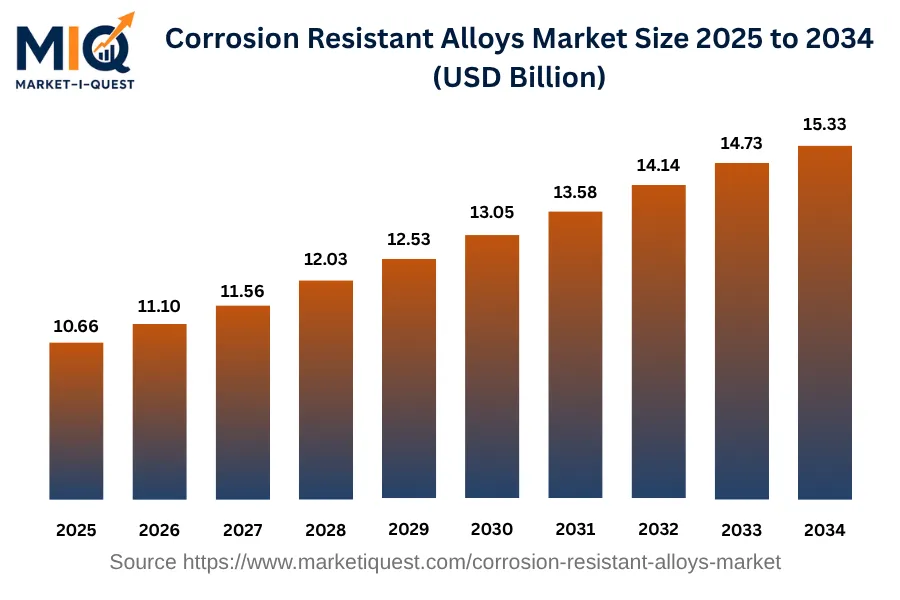
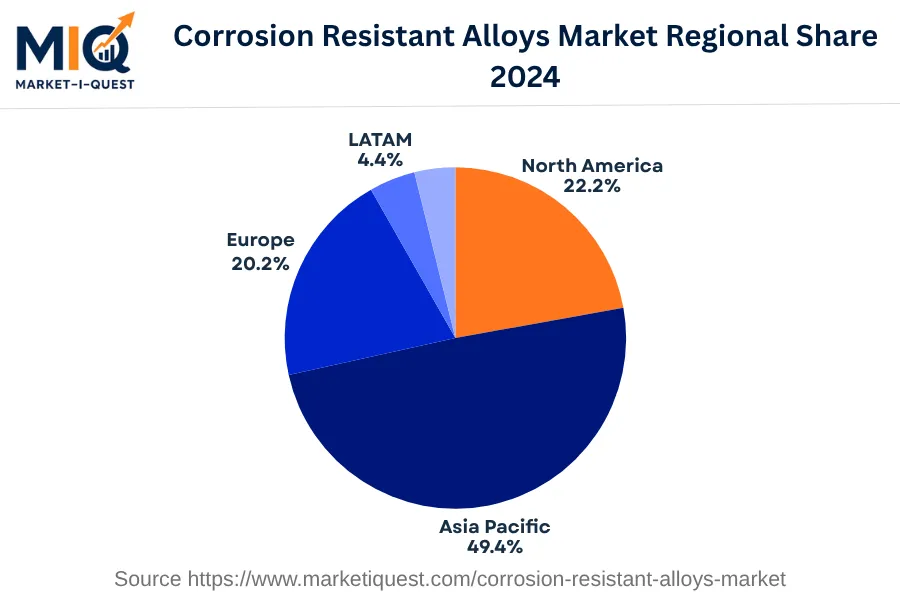
The Corrosion Resistant Alloys Market was worth USD 10.66 billion in 2025 and is projected to reach USD 15.33 billion by 2034, growing at an annual compounded rate of 4.12%. The year 2024 had demonstrated a market size of USD 10.24 billion. The rise from 2024 to 2025 is indicative of the steady growth trend of the Corrosion Resistant Alloys Market during the period. The upturn over these years was mainly due to an increase in demand for such alloys in various industries, demonstrating a growth trajectory that would continue through 2034. Regional market shares in 2024 were as follows: North America had a 22.2% share, Asia Pacific led with 49.4%, Europe followed with 20.2%, while LATAM and MEA held smaller shares of 4.4% and 3.9% respectively. This shows the dominance of Asia Pacific in the Corrosion Resistant Alloys Market, while other regions are still significant contributors.

Key Takeaways

  • By Material Type - Stainless Steels held a substantial market leadership in recent years.
  • By Form - Plates reported an impressive growth in the past
  • leading in the corrosion resistant alloys market.
  • By Application - Power Generation sectors exhibited a prominent ascent
  • accounting for a leading position in the market.
corrosion-resistant-alloys-market market size

Key Driving Factors

Stringent Environmental Regulations

The Corrosion Resistant Alloys Market is propelled by the strict environmental guidelines imposed by regulatory bodies worldwide, such as the Environmental Protection Agency (EPA). These regulations mandate industries, notably oil, gas and chemical sectors, to utilize corrosion-resistant materials in their machinery and infrastructure to prevent hazardous environmental contamination due to leaks caused by corrosion. For instance, in the oil and gas industry, uncontrolled corrosion can lead to the spillage of harmful compounds, posing significant environmental risks. The need to avoid hefty non-compliance fines and combat potentials for damaging lawsuits is compelling many industries to rely more on corrosion-resistant alloys, stimulating market growth.
Infrastructure Development in Emerging Economies

The massive infrastructural development in emerging economies like India, China, and Brazil is another impelling factor for the Corrosion Resistant Alloys Market. As these nations advance on their path to urbanization and industrialization, construction and transportation sectors require materials that last longer and resist environmental degradation. Specifically, the construction of bridges, highways, and buildings in coastal areas requires materials highly resistant to saltwater corrosion. Similarly, due to the growing intensity of traffic, and thus vehicle emissions, materials required must resist acid rain corrosion. Hence, the demand for corrosion-resistant alloys is catapulting in these regions due to their longevity and resilience against various forms of corrosion.

Market Evolution by Timeline

2019-2023
Between 2019 and 2023, the leading buyers of corrosion-resistant alloys included oil and gas industries, the maritime sector, and the automotive industry. The alloys were primarily demanded for their high resistance to extreme environments. North America and Asia-Pacific dominated the demand due to active industrial sectors. Supply-wise, significant production came from countries like China, Japan, and the US. Some constraints were found in the form of resource scarcity and fluctuating raw material prices. Adoption was encouraged by environmental directives like ISO 9227:2017, regulating how corrosion tests are performed. Pricing remained volatile due to unstable input costs and supply-demand equilibrium. Major risks included inconsistent raw material pricing and potential for environmental regulatory changes.
2024
In 2024, corrosion-resistant alloy demand got a slight boost due to the growing interest in green energy initiatives globally, driving the use of these alloys in environments with high corrosion risk, such as offshore wind farm structures. Strategic alliances formed among alloy manufacturers to meet the rising demand, which led to more mature and efficient supply chains. Pricing remained a challenge attributed to the fluctuating costs of nickel, a significant ingredient in corrosion-resistant alloys. The adaptation of ISO 15156-3:2015 standard for metallurgical selection in oil and gas production reflected stricter regulations.
2025-2029
Between 2025 and 2029, buyers from high-growth sectors such as renewable energy, aerospace, and marine engineering expanded the demand for corrosion-resistant alloys significantly. Sub-Saharan Africa and South Asia also emerged as notable markets due to industrialization. The industry became more dependent on recycling and scrap metal, helping address raw material scarcity. The use of digital platforms for buying alloys became more common, owing to increased internet penetration. The industry saw a shift in contract types, with more long-term, volume-based contracts signed to secure raw material pricing. The extension of regulations such as ISO 16111:2007 on transportable gas storage devices signaled more stringent standards.
2030-2034
From 2030 to 2034, the demand for corrosion-resistant alloys was dominated by the renewable energy sector, particularly wind and solar, amid the global energy transformation trend. Supply-chains were heavily influenced by technology, primarily digitalization, enabling the optimization of logistics and resource allocation. Implementation of AI and IoT technologies in production became the norm. Net-zero carbon directives globally impacted the operating standards, adding to production costs and leading to the adoption of 'green' production methods. Extreme weather conditions posed risks, calling for the development of more resilient alloys.

Future Market Outlook

Future Opportunities

The future of the corrosion resistant alloys market is shaped by intensified focus on sustainable solutions and enhanced longevity of materials. The European Green Deal, introduced in 2019, has propelled the demand for eco-friendly materials, influencing industries to adopt alloys that minimize environmental footprints. In 2023, the US Environmental Protection Agency (EPA) emphasized the need for corrosion management in infrastructure, creating opportunities for innovative alloy applications in construction. Additionally, the collaboration between DuPont and Siemens in 2022 aimed at developing next-gen coatings that complement corrosion resistant alloys is indicative of growing partnerships focused on sustainability. Companies are also pivoting toward producing alloys that comply with updated standards like ASTM B865, which specifies minimum requirements for corrosion resistance in various environments. The offshore wind energy sector, specifically in regions like the North Sea, projects a demand for corrosion resistant materials capable of enduring the harsh marine climate. Moreover, increasing interest from the automotive sector in lightweight alloys that enhance fuel efficiency forms another key area for growth. By leveraging technologies such as machine learning for predictive maintenance, manufacturers can anticipate corrosion issues before they escalate. The convergence of these factors positions the corrosion resistant alloys market to capitalize on emerging industries while retaining compliance with tightening regulations and industry standards.

Segmentation Analysis

By Material Type

The market is divided into subsegments including Nickel Alloys, Cobalt Alloys, Titanium Alloys, Stainless Steels, and Copper Alloys, of which Stainless Steels accounted for the largest revenue share while Titanium Alloys are expected to grow at the fastest CAGR during the forecast period.

Largest Revenue Share

Stainless Steels

Market Share Leader

Stainless steels, as a material type, command the largest revenue share primarily due to their broad range of applications across various industries including construction, automotive, and manufacturing, among others. This is largely due to their superior characteristics including high corrosion resistance, excellent mechanical properties, and long lifespan, making them an ideal choice for diverse applications. Further, stainless steels are easily available and cost-effective, increasing their attractiveness as a material. Geographically, Asia Pacific contributes a significant share to the Stainless Steels market owing to the rapid industrialization and urbanization in the region. Regulatory policies favoring the use of durable and high-strength materials in construction and manufacturing industries also contribute to its large revenue share. Customers typically prioritize quality, cost-effectiveness, and durability in their purchasing criteria, providing an advantage to Stainless Steels. The supply chain for Stainless Steels is mature and well-established, reducing switching costs and increasing its attractiveness to customers.

Fastest CAGR

Titanium Alloys

Forecast Period Growth Leader

Titanium Alloys are projected to exhibit the fastest CAGR in the forecast period. The growth drivers for Titanium Alloys majorly include its rising demand in major end-use industries like aerospace and defense due to its high strength-to-weight ratio, superior properties including high-temperature resistance and corrosion resistance. Furthermore, there has been a significant increase in investments in the aerospace industry, which utilises Titanium Alloys extensively due to their capability to withstand harsh flight conditions. However, the high cost of Titanium Alloys acts as a barrier to adoption, especially in cost-sensitive industries. Advancements in technology and research & development in the materials sector are expected to bring about cost-efficient methods of Titanium Alloys production, thus aiding its growth in the coming years. Potential partnerships and collaborations can streamline the supply chain, reducing the prices in turn. However, market players need to watch out for near-term risks such as volatile raw material prices and global economic uncertainties.

By Form

The market is divided into subsegments including Bars, Sheets, Pipes, Plates, Wires, where Plates accounted for the largest revenue share while Wires is expected to grow at the fastest CAGR during the forecast period.

Largest Revenue Share

Plates

Market Share Leader

In the base year 2024, Plates emerged as the subsegment with the highest revenue. This is primarily due to the widespread application of Plates across different industries such as construction, manufacturing, and automotive. Their robust and flat structure allows for versatility in both building and fabrication, making Plates an essential material for many industries. Geo-economic factors also support the demand growth – developing regions are investing heavily in infrastructure and urbanization projects, driving strong Plates demand. Further, stringent regulations and norms concerning the safety and strength of the construction materials compel the industry players to opt for high-quality Plates. As for the purchasing criteria, most customers prioritize durability, ease of application, and cost-effectiveness – areas where Plates have convincing selling propositions. Proven distribution channels have also cemented Plates' leading position in the market.

Fastest CAGR

Wires

Forecast Period Growth Leader

On the other hand, the Wires subsegment is seen to have the fastest Compound Annual Growth Rate (CAGR) outlook. This growth is fuelled by the ongoing advancements in technology and the growing need for electrical connectivity. In the era of digital transformation, the demand for wires, especially in industries such as telecommunications, electronics, and power, is skyrocketing. Adoption isn't without barriers though. Many countries are still struggling with the proper disposal and recycling of wires. However, technological improvements aim to make wires more sustainable and cost-effective, acting as catalysts for further adoption. In addition to this, strategic partnerships and regulation-driven capex in renewable energy sectors are also an important growth driver. These factors outweigh near-term risks related to volatile raw material prices and supply chain disruptions.

By Application

The application market is segmented into Oil and Gas, Aerospace, Marine, Chemical Processing, Power Generation, and Others, with Power Generation accounting for the largest revenue share, while Oil and Gas is foreseen to grow at the fastest CAGR during the forecast period.

Largest Revenue Share

Power Generation

Market Share Leader

Power Generation has emerged as the subsegment with the largest revenue share in the application market in the base year 2024. This dominance is primarily due to the worldwide expansion of power generation capacities in tandem with increasing consumption patterns. Rapid industrialization and urbanization, particularly in developing economies, have significantly contributed to the rise in demand for power generation. Additionally, stringent government policies mandating the incorporation of efficient power management systems play a pivotal role in stimulating market growth. The global shift towards renewable sources of energy and the mounting pressure to reduce carbon emissions have further nurtured the demand for solutions enhancing power generation efficiency. Furthermore, advancements in power generation technologies and the increasing infrastructural development activities globally have augmented the usage of power management systems, thereby bolstering the revenue generation ensued in this subsegment.

Fastest CAGR

Oil and Gas

Forecast Period Growth Leader

Despite constituting a lower share in revenue than Power Generation, the Oil and Gas subsegment is expected to witness the fastest growth. The growth projected for this sector can be primarily attributed to the critical role of Oil and Gas in the global energy mix. The increasing global energy demand, coupled with the endeavour to achieve energy security and diversity, are the key drivers contributing to the growth in this segment. Additionally, recent discoveries of new oil and gas reserves and the rising capital expenditures in upstream activities further fuel the demand. Innovations and advancements in extraction techniques, such as hydraulic fracturing and horizontal drilling, have made unconventional reserves economically viable, thereby providing impetus for growth. However, regulatory uncertainties, environmental concerns, and market volatility could pose potential risks to this growth trajectory. The strategic alliances formed and technological partnerships could act as significant catalysts in overcoming these barriers and accelerating growth in the segment.

Competitive Analysis

Key Market Players

Manufacturers / OEMs

Nippon Yakin Kogyo Co., Ltd.
Japan
VDM Metals GmbH
Germany
ATI
US

Key Suppliers & Raw Materials

BHP Billiton Group
Australia
Rio Tinto
UK
Vale S.A.
Brazil

Distributors, Integrators & Channel Partners

Metals USA, Inc.
US
Thyssenkrupp Materials NA, Inc.
Germany
Ryerson Holding Corporation
US

Porter’s Five Forces Analysis

Analyzing the competitive forces within the Corrosion Resistant Alloys market.

Supplier Bargaining Power

Medium

Limited suppliers cause medium power due to the specialized nature of alloy production.

Buyer Bargaining Power

High

High due to variety of source material and number of suppliers in the market.

Threat of Substitutes

Low

Low threat as corrosion resistant alloys are specific and unique in properties.

Threat of New Entrants

Low

Entrance barriers include high capital expenditure, technology, and regulatory compliances.

Competitive Rivalry

High

High competition due to presence of numerous well-established players.

Regional Analysis

Geographic market dynamics and growth opportunities across key regions

Global Market Outlook

corrosion-resistant-alloys-market market regional share

North America

In 2024, the North American market for corrosion resistant alloys registered notable growth primarily driven by the increasing demands from sectors such as utilities, oil & gas, and automotive. This rise in demand can be attributed to regulatory measures set by governments advocating for exceptional durability in infrastructural materials and growing investments focused on enhancing vehicle longevity. Favorable pricing dynamics also played a significant role in boosting the market.

Trends observed include an accelerated adoption of high-performance alloys like stainless steel and aluminum for their superior resistance to rust and chemicals. The transition was largely driven by the auto industry in its attempt to reduce vehicle weight, thereby improving fuel efficiency. Other significant trends noted include increased online sales channels and partnerships aimed at strengthening supply chains. There is active reinforcement of policies on material quality control, particularly in the construction, manufacturing, and aerospace sectors. The demand was particularly high in the United States due to increased focus on infrastructure development. In Canada and Mexico, the utilization of these alloys has increased in the oil and gas industry, driven by the need to resist highly corrosive environments and reduce maintenance costs. Overall, the market's growth in North America in 2024 is largely due to regulatory encouragement, technology adoption, and changing buyer preferences.

Asia Pacific

In 2024, the Asia Pacific market for corrosion resistant alloys underwent notable changes dictated by various factors. The market drivers included increased demand from the oil & gas sector in China, where the need for durable pipe infrastructure initiated a rise in procurement of these alloys. Additionally, India's stricter environmental regulations pushed manufacturers towards these alloys for reduced environmental impact. Furthermore, substantial investment in technological advancement in Japan led to the implementation of higher quality production methodologies, catalysing supply dynamics and pricing structures.

In terms of market trends, consumer behavior shifted towards prioritizing long-term durability and quality in South Korea and Australia, resulting in a higher demand for corrosion resistant alloys. This was complemented by a prominent technological shift towards advanced alloy materials with increased life-cycle in key ASEAN markets. Additionally, strategic M&A activities were observed, specifically in the manufacturing sector, to secure stable supply chains of corrosion-resistant alloys. There was an increased enforcement of the ISO 9227 NSS standard, especially in industries like utilities and healthcare that demand corrosion resistant infrastructure. With the government's efforts in promoting sustainable and durable materials for industrial use, both enterprise and retail players opted for corrosion-resistant alloys, further propelling the market in the mentioned geographies.

Europe

In 2024, the corrosion resistant alloys market in Europe witnessed substantial growth due to diverse factors. The implementation of stringent environmental regulations coupled with increased demand in industries such as aerospace and automotive acted as catalysts for market expansion. Investment in advanced technology and increase in raw material availability also positively influenced the market. Amplified consumption in Germany and the UK, largest markets in the region, set the tone for trends in the industry. A surge in demand from the manufacturing sector and a shift towards sustainable practices redefined the market landscape. Enhanced production capabilities coupled with increased partnerships and mergers between key players in France, Italy and Spain further reinforced market strength.

While uptake was robust across the region, Central & Eastern Europe lead in adoption, particularly in the utilities sector. The policy enforcement of stringent anti-corruption laws in this region also contributed to a transparent and competitive market environment. The corrosion resistant alloys market in Benelux and the Nordics saw a steady increase driven by governmental and enterprise segments. Conclusively, while the demand dynamics and production capacities largely drove the market, strategic partnerships and adherence to policies and standards shaped trends and practices in the corrosion resistant alloys market in 2024.

Latin America

In 2024, the Corrosion Resistant Alloys Market in Latin America demonstrated significant growth, propelled by a multitude of drivers and trends. The escalating demand from key sectors such as manufacturing, utilities, and oil & gas primarily fuelled the market expansion. Several nations, including Brazil, Argentina, and Chile intensified their focus on renewable energy projects, necessitating corrosion resistant alloys for longer lifespan and reduced maintenance. Simultaneously, Mexico and Colombia saw increased usage of these alloys in the automotive and aerospace industries, driven by technology adoption and need for higher durability and performance. The stringent environmental policies added another layer to market growth, especially in Peru, where regulatory compliance enforced the use of corrosion-resistant materials in industrial operations. Additionally, falling alloy prices influenced the market positively by making products more affordable, encouraging demand.

Buyer behavior evolved with a discernible tilt towards high-grade alloys due to their better resistance to extreme environments. The market also witnessed several partnerships and M&A, notably in Brazil and Argentina, aimed at enhancing technological capabilities and increasing production. Another crucial trend was the gradual shift in distribution channels, moving from traditional retail to digital platforms due to the proliferation of eCommerce, efficiently connecting sellers and buyers. The enforcement of quality standards also shaped the corrosion resistant alloys market, ensuring industry-wide quality consistency and reliability.

Middle East & Africa

In 2024, the Corrosion-Resistant Alloys Market exhibited dynamic growth in the Middle East and Africa, particularly within countries such as Saudi Arabia, United Arab Emirates, Qatar, Egypt, South Africa, Nigeria, Kenya, and Israel. This growth was propelled by several key drivers, including increasing demand in sectors such as oil and gas, utilities, and manufacturing. Stricter regulatory frameworks advocating enhanced material performance amidst challenging environments, particularly in the oil and gas sector, steered the increased adoption of corrosion-resistant alloys. Moreover, technological advancements in the manufacturing sectors led to an increase in the production, thereby escalating the market's availability and affordability.

Several distinct trends emerged in 2024. Elevated standard requirements across sectors prompted the shifting preference towards higher-quality alloys. The growing importance of sustainability significantly influenced manufacturers and buyers to consider environment-friendly manufacturing processes and waste management strategies. Mergers and acquisitions began to reshape the competitiveness of the market, enhancing manufacturing capabilities and product portfolios. Additionally, a growing emphasis on policy enforcement was observed, leading to increased compliance to standards set by governing bodies. In essence, the Corrosion-Resistant Alloys Market in the Middle East and Africa was strongly dictated by heightened demand within several sectors, advancements in production technology, policy enforcement and evolving market behavior.

Recent Industry Developments

Latest market innovations, product launches, and strategic initiatives

March 2026

NALCO launched IA91, a new high-performance aluminium alloy ingot offering enhanced corrosion resistance for gravity and low-pressure die casting applications in automotive, electrical, and industrial sectors.

February 2026

Jindal Stainless Ltd signed an agreement under India's PLI 1.2 scheme for specialty steel to augment capacity for value-added corrosion-resistant products, including specialised alloys and forged products.

January 2026

Nippon Steel began sales of nickel-based corrosion-resistant Alloy 825 thick plates (6–30 mm), produced at its Hachiman Thick Plate Factory, targeting demand from chemical and LNG projects in India and the Middle East.

Frequently Asked Questions