Conductive Silicone Rubber Market Snapshot

Key Players

  • Specialty Silicone Products Inc. (US)
  • Dow Corning Corporation (US)
  • Shin-Etsu Chemical Co. Ltd. (Japan)
  • Momentive Performance Materials Inc. (US)
  • Wacker Chemie AG (Germany)
  • Stockwell Elastomerics Inc. (US)
  • KCC Corporation (South Korea)

Market Size

Base Year 2024
$9.13 Bn
CAGR
7.3%
Forecast 2034
$18.47 Bn

Market Segments

By Type
  • Electrically Conductive
  • Thermally Conductive
By End Use Industry
  • Automotive
  • Electrical & Electronics
  • Industrial
  • Others

Market Dynamics

Drivers
  • Rising electronic appliances demand
  • Growing automotive sector
Restraints
  • High production costs
  • Environmental regulations
Opportunities
  • Growing electronics industry
  • Increasing automotive applications

Market Size

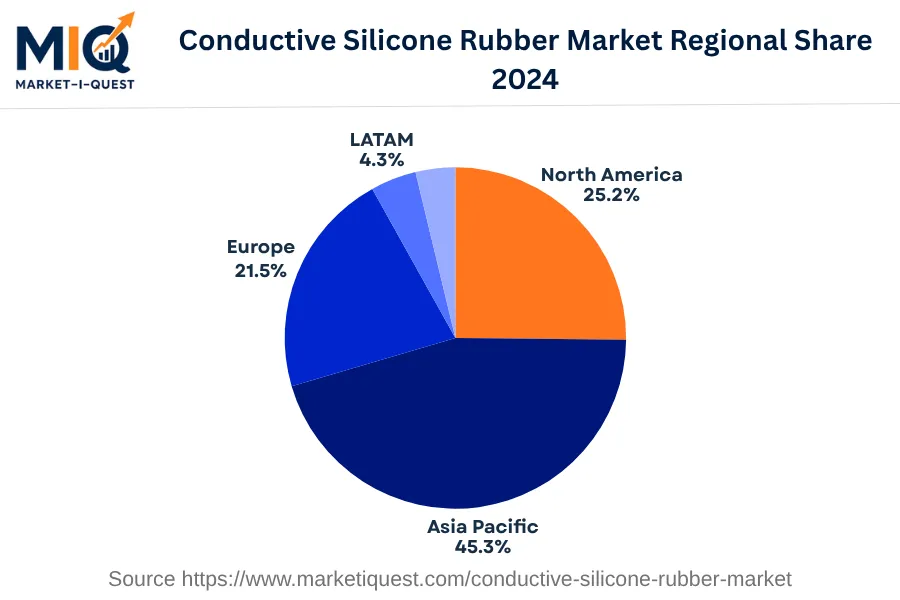
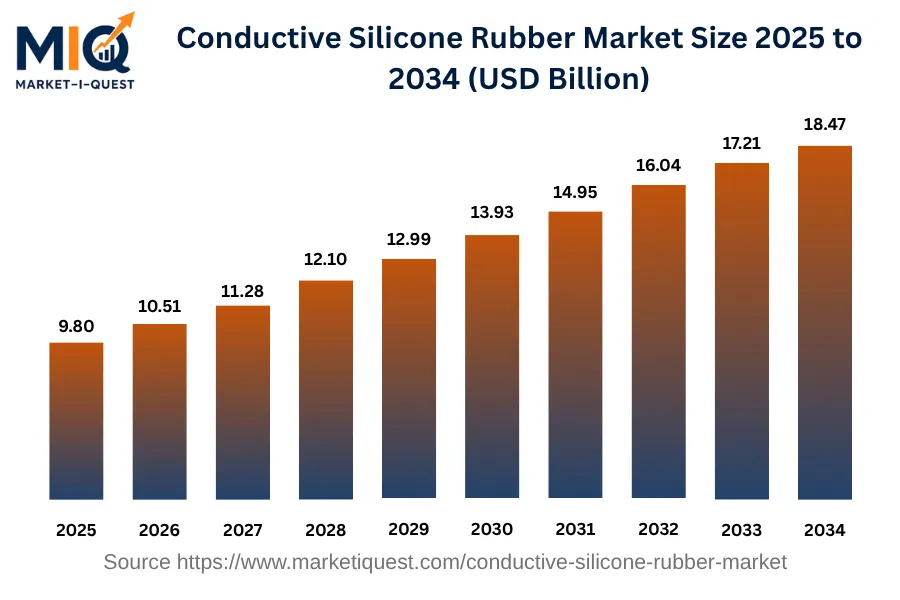
The Conductive Silicone Rubber market in 2025 had a size of 9.80 billion USD, rising from a size of 9.13 billion USD in 2024. Over the following nine years, it expanded notably to reach a size of 18.47 billion USD in 2034, an overall CAGR of 7.3% from 2025 to 2034. The sturdy growth experienced over this period is attributable to rising demand in various industrial applications and advances in manufacturing technologies. Enhancements in production processes have facilitated increased output, resulting in a greater supply to meet the escalating demand. Further, the widening scope of applications for conductive silicone rubber has aided in market growth, opening new revenue streams for manufacturers within the industry. On a regional basis in 2024, Asia Pacific held the largest share of the market at 45.3%, followed by North America at 25.2%, Europe at 21.5%, Latin America at 4.3%, and Middle East and Africa at 3.8%.

Key Takeaways

  • By Type - Electrically Conductive segment led accounting for a substantial market share in 2024.
  • By End Use Industry - Automotive sector held a dominant position expanding at a increased pace.
conductive-silicone-rubber-market market size

Key Driving Factors

Implementation of Stricter Environmental Regulations

Tighter environmental standards and regulations, such as the Restriction of Hazardous Substances (RoHS) directive in Europe, are compelling industries to shift towards eco-friendly materials, especially in the electronics sector. Conductive silicone rubber is viewed as a safer alternative to traditional materials due to its low toxicity and recyclability. Its electrical conductivity makes it a valuable resource in applications such as EMI shielding and electrical components. Businesses and manufacturers are leaning towards these materials in a bid to comply with environmental standards and improve their brand image.

Increasing Utilization in Automotive Industry

The automotive industry is also a crucial catalyst for the demand for conductive silicone rubber. With the rise in vehicle electrification, the usage of electrically conductive materials has become critical for safety and functionality. Conductive silicone rubber offers durability, flexibility, and effective heat resistance, making it a desirable choice for applications like gaskets, keypads, and connector seals. The trend towards hybrid and electric vehicles further amplifies the need for such materials, as they offer superior performance when subjected to thermal stress in high voltage applications. This focus on vehicle electrification by major global automotive manufacturers is driving the conductive silicone rubber market.

Market Evolution by Timeline

2019-2023
The conductive silicone rubber market experienced significant uptick in sectors such as automotive, electronics, and aerospace between 2019 and 2023. Specific buyers from these sectors included manufacturers like Tesla and Airbus. Popular use cases were electrical conductivity, thermal conductivity, and resistance to weathering and chemicals. Supply during this period was sustained by companies like Wacker Chemie AG and Dow Chemical Company. However, supply faced constraints due to the limitations of raw materials and environmental considerations. Regulations such as European Union's RoHS and REACH influenced manufacturers to produce environment-friendly products. Typically, large scale contracts were observed with distribution through direct sales and distributor channels. Notably, price fluctuations of raw materials posed some serious risks to the industry.
2024
In 2024, demand of conductive silicone rubber expanded in the healthcare sector due to its increasing applications in medical devices. Buyers in this segment included Medtronic and Boston Scientific. Supply was largely provided by Momentive and Elkem Silicones. The sector was influenced by FDA regulations pertaining to medical devices, encouraging greater quality control in production. The commercial model remained steady, with most contracts being long-term supply agreements paired with projections for consistent growth. Ongoing reliance on limited raw materials continued to re-emerge as a risk during this year.
2025-2029
Between 2025 and 2029, construction and defense sectors emerged as key buyers due to elevation in infrastructural projects and military expenditures. Greater production efficiency was evinced by newer technologies introduced by companies like Shin-Etsu and KCC Corporation which also improved integration maturity. Adoption was additionally influenced by stricter government regulations on building and safety standards. Typically, cost-plus contracts were found to be predominant in this period, unveiling a new pricing mechanism. Raw material price fluctuations and environmental regulations continued to be a major source of risk in this window.
2030-2034
From 2030 to 2034, renewable energy sector emerged as a significant buyer due to the material's use in solar and wind installations. This phase also marked an increase in demand from Asian markets, especially China and India. Progress in nanotechnology further ensured that newer, more efficient products hit the market. The sustainability directive from the UN influenced the procurement models, encouraging companies to use recycled materials. A response to these risks saw some companies seek price revision clauses in their contractual agreements to navigate the raw material price volatility.

Future Market Outlook

Future Opportunities

The future of the conductive silicone rubber market is poised to expand, fueled by increasing adoption in electric vehicle (EV) manufacturing and consumer electronics. As government bodies across the globe, including the European Union, push for stricter emissions regulations aimed at promoting EVs, companies like Tesla and Nissan are exploring advanced materials to enhance battery performance. The integration of conductive silicone rubbers into battery enclosures and components is likely to become more prevalent. Additionally, major electronics manufacturers, such as Samsung, are investing in R&D for more efficient thermal management solutions that utilize silicone rubber compounds, aligning with ongoing trends in heat dissipation management. Partnerships between material science firms and automotive giants are expected to intensify, as seen in the collaboration between Toyota and Mitsui Chemicals announced in 2022, aimed at developing new rubber composites. Furthermore, as telecommunications gear transitions to 5G, the demand for reliable insulating and conductive materials will rise, leading manufacturers to adapt their offerings. The increasing focus on sustainability will also drive the market towards more eco-friendly formulations. This confluence of regulatory demands, technological enhancements, and partnerships indicates a favorable environment for conductive silicone rubber applications to expand across various industries in the forthcoming years.

Segmentation Analysis

By Type

The market is divided into subsegments including Electrically Conductive and Thermally Conductive. Electrically Conductive accounted for the largest revenue share while Thermally Conductive is expected to grow at the fastest CAGR during the forecast period.

Largest Revenue Share

Electrically Conductive

Market Share Leader

The Electrically Conductive subsegment takes the lead in market revenue mainly due to its wide applications in various industries such as automotive, aerospace, electronics, and industrial applications. Most systems and devices in these sectors require high electrical conductivity. One of the primary factors driving this segment's revenue is the increasing use of electrically conductive components in electronic devices. Moreover, the automotive industry heavily relies on electrically conductive materials for the production of advanced and smart automotive systems, contributing significantly to the revenue share. With the boom in electronics and the rise in the automotive industry, especially electric vehicles, the need for electrically conductive substances has risen sharply. The reliability of these materials coupled with their superior properties such as durability and conductivity makes them favorable among end-users. Geographically, developed regions like North America and Europe are key revenue contributors due to the high adoption rate of advanced technologies and the presence of major manufacturers.

Fastest CAGR

Thermally Conductive

Forecast Period Growth Leader

The Thermally Conductive subsegment is expected to witness the fastest growth rate. This is primarily driven by its increasing adoption in heat management applications across a wide range of industries, including electronics, automotive, and industrial. A contributing factor to this growth is the rising miniaturization of electronic components which increases the necessity for efficient heat dissipation solutions to safeguard these components from overheating and attain maximum efficiency. Furthermore, government regulations advocating for energy-efficient products are also propelling the growth of this subsegment. The increasing prevalence of electric vehicles has also sparked a growing need for thermal management systems, boosting the demand for thermally conductive materials. However, high initial investment and the need for technical expertise are obstacles to market growth. Nevertheless, technological advancements and research in reducing the production cost of the materials are expected to act as catalysts for growth in the near future. It's important to note that this inference is based on typical market structures, and actual market conditions may vary.

By End Use Industry

The market is divided into subsegments including Automotive, Electrical & Electronics, Industrial, and Others. The Automotive subsegment accounted for the largest revenue share while the Electrical & Electronics subsegment is anticipated to grow at the fastest CAGR during the forecast period.

Largest Revenue Share

Automotive

Market Share Leader

In 2024, the Automotive subsegment demonstrated its domination by generating the highest revenue amongst other categories. This leading position is largely attributed to the steadily increasing demand for automobiles globally. With a steady economic progression, there is a rise in the consumer purchasing power, resulting in the boosted sales of vehicles. This surge then indirectly influences the industry to maintain production and supply chain efficacy. Ever-growing technological advancements also come into play. As more vehicles are becoming equipped with advanced features and technologies, it requires more intricate components. Regulations and standards related to vehicular safety and emissions are becoming more stringent worldwide, obliging automotive manufacturers to revamp their production process. This scenario prompts the industry to procure high-quality, durable components, providing a considerable revenue opportunity for our targeted market. Thus, a combination of economic growth, customer demand, technological advancements, and regulatory standards drive the Automotive subsegment to hold the largest revenue share.

Fastest CAGR

Electrical & Electronics

Forecast Period Growth Leader

While the Automotive subsegment currently leads in terms of revenue, the future growth seems promising for the Electrical & Electronics subsegment. It projects the fastest CAGR during the projected period due to the rapid digitalization and automation trends globally. These trends directly resonate with the increasing demand for electrical goods and electronic devices. The growing popularity of energy-efficient appliances is also igniting a demand surge in the market. However, barriers to adoption exist, such as high initial costs and a lack of consumer awareness regarding technological advancements. There is a constant requirement for advanced electronic components for new-age devices, acting as a catalyst for the robust growth of this subsegment. It is expected that timely policy interventions, technological upgrades, and strategic partnerships can help overcome the near-term risks associated with product obsolescence and cost-related challenges.

Competitive Analysis

Key Market Players

Manufacturers / OEMs

Dow Inc.
US
Wacker Chemie AG
Germany
Shin-Etsu Chemical Co. Ltd.
Japan

Key Suppliers & Raw Materials

Momentive Performance Materials Inc.
US
Elkem ASA
Norway
Evonik Industries AG
Germany

Distributors, Integrators & Channel Partners

RS Components
UK
MSC Industrial Direct Co., Inc.
US
Farnell
UK

Porter’s Five Forces Analysis

This analysis explores the competitive forces affecting the Conductive Silicone Rubber Market.

Supplier Bargaining Power

Medium

The market has several suppliers, but specific product requirements limit their bargaining power.

Buyer Bargaining Power

High

A myriad of options and low switching costs increase the buyer's bargaining power.

Threat of Substitutes

Low

Conductive silicone rubber's unique properties limit the threat of substitutes.

Threat of New Entrants

Medium

Despite considerable capex, the expanding applications promise attractive returns for new entrants.

Competitive Rivalry

High

Significant presence of matured firms and rising newcomers create high competitive rivalry.

Regional Analysis

Geographic market dynamics and growth opportunities across key regions

Global Market Outlook

conductive-silicone-rubber-market market regional share

North America

In 2024, the North American conductive silicone rubber market evolved based on various drivers and trends. Drivers included increased demand in various sectors, regulatory compliances, and technological adoption. A surge in demand from industries like automotive, aerospace, and electronics influenced market expansion. Regulations, particularly in US healthcare and utility sectors, compelled businesses to implement conductive silicone rubber for safety and performance reasons. Furthermore, technology innovation drove market diversification, with Canada leading in advanced material processing technologies. Fluctuating prices of raw materials, owing to supply chain discrepancies caused by the pandemic outbreak, added another layer of complexity.

On the trend front, buyers shifted towards customized solutions, reflecting diverse industrial needs of countries, specifically in Mexico with its burgeoning manufacturing sector. Channel dynamics altered with online sales gaining momentum in light of contactless operations. Notably, partnerships and M&A activities increased, focusing on expanding production capabilities and geographical reach. Stricter policy enforcements reinforced safety standards, particularly in the US and Canada. An example is the adoption of specific ANSI/ESD standards in electronics manufacturing which demanded the use of conductive silicone rubber to minimize electrostatic discharge risks. In essence, the North American conductive silicone rubber market in 2024 was substantially shaped by these drivers and trends.

Asia Pacific

In 2024, the Conductive Silicone Rubber market witnessed substantial growth in the Asia Pacific region. Drivers of this upturn include rising demand from the automotive and electronics manufacturing sector, particularly in countries like China, India, and South Korea. The adoption of stringent regulations on electrical conduction and sustainability across these markets also spurred the demand for conductive silicone rubber. An increased investment in technology adoption, towards the R&D of high-performance materials in Japan and Australia, accelerated its production and distribution.

Simultaneously, prominent trends in 2024 included a shift in consumer preference towards products with higher durability and flexibility. As customer behavior evolved, technological advancements in conductive silicone rubber, especially in terms of heat resistance and electrical conductivity, reshaped the market. Online sales platforms flourished, and the supply chain streamlined due to increased partnership and M&A activities majorly by industry leaders in China and ASEAN markets.

The key sectors driving the growth were the automotive, electronics, and utility sector. Government bodies across the region also caused significant ripple effects by enforcing stricter environmental and safety policies to standardize the use of conductive silicone rubber across various industries. These specifics for China, India, Japan, South Korea, Australia, and the ASEAN markets largely characterized the conductive silicone rubber landscape in the Asia Pacific for 2024.

Europe

In 2024, the Conductive Silicone Rubber Market in Europe showed a notable level of demand, specifically in Germany, the United Kingdom, France, Italy, Spain, the Nordics, Benelux, and Central & Eastern Europe. Heightened investment in the automotive and electronics industries was a significant driver of this demand, as improvements in technology necessitated the use of conductive silicone rubber in integral components. Additionally, new regulatory requirements regarding safety standards in these sectors encouraged further adoption of this material.

Simultaneously, an evident shift in buyer preference towards products featuring this material, particularly in the automotive sector, was recorded. Advancements in manufacturing technology also enabled easier production and application of conductive silicone rubber, thus making it more attractive to industries such as healthcare, utilities, and manufacturing. There was an increase in partnerships and M&A activities amongst key players within the market, primarily aimed at expanding product offerings and consolidating market position. The UK government’s enforcement of strict safety and efficiency standards in the electronics and automotive sectors also contributed to an increased demand for conductive silicone rubber. Customers from a broad range of sectors, including enterprise, government, healthcare, utilities, manufacturing and retail, showed increased interest in adopting technologies and products featuring conductive silicone rubber, further bolstering its market presence in 2024.

Latin America

In 2024, the Conductive Silicone Rubber Market in Latin America displayed significant dynamism. Key drivers included increased demand from the automotive and electronics industries across countries like Brazil and Mexico. Stricter environmental regulations in Argentina led manufacturers to transition to conductive silicone rubber's eco-friendly properties. Moreover, Colombia's robust industrial investment raised the uptake of conductive silicone rubber in production lines to improve efficiency and safety. Technological advancements in Chile and Peru further bolstered the market, with innovative materials supporting superior product performance and cost-effectiveness.

Market trends witnessed in 2024 were influenced largely by changing buyer behaviors and product shifts. Major players leveraged e-commerce channels for product distribution, driven by the increased internet penetration in countries like Brazil. In Mexico, a focused shift towards consumer electronics witnessed a surge in the use of conductive silicone rubber for keypads, remote controls, among others. Additionally, significant partnerships and M&A activities were observed, especially in Argentina's automotive sector to meet growing industry demands.
In terms of sectors, the manufacturing and enterprise sectors stood out prominently in this market, with considerable uptake in industries like automotive, aerospace, and electronics. The utility sector, predominantly in Colombia and Chile, also engaged significantly with conductive silicone rubber, particularly in insulating high voltage cables and connectors. Heavy policy enforcement on green manufacturing in Peru pushed manufacturers to switch to conductive silicone rubber as an eco-friendly substitute.

Middle East & Africa

The Conductive Silicone Rubber Market in the Middle East and Africa experienced notable dynamism in 2024. Robust demand was driven by the rising consumer electronics sector in countries like Saudi Arabia, UAE, and South Africa, coupled with sizeable investments in technological innovation. Stricter regulations pertaining to fire safety in the construction and automotive sectors, particularly in Egypt and Israel, contributed to increased consumption. Fluctuating raw material prices presented supply-side challenges, although producers worked towards cost-effective production methodologies to mitigate the impact.

Notable trends in the market included a shift towards environmentally-friendly production practices, especially in Kenya and Nigeria. Contextual regulations enforcing sustainability prompted businesses to modify strategies. There was increased interplay between the healthcare and manufacturing sectors and the market, with increased adoption of conductive silicone rubber in medical devices and equipment manufacturing. M&A activity was evident, with companies seeking to strengthen their position and expand production capacities. A crucial trend was the amplified demand from the oil and gas sector in Qatar and Saudi Arabia, where conductive silicone rubber found applications due to its heat-resistance properties. The telecom sectors in UAE and South Africa also contributed to demand, utilizing the material in cable and wire insulation. Despite competitive pressure and supply-side obstacles, the conductive silicone rubber market maintained a resilient output in the base year.

Recent Industry Developments

Latest market innovations, product launches, and strategic initiatives

October 2025

Elkem released a new type of electrically conductive silicone rubber specifically designed to be safe for human skin contact, targeting the production of wearable health and medical devices.

Frequently Asked Questions