Cell Line Development Market Snapshot

Key Players

  • Thermo Fisher Scientific Inc. (United States)
  • Lonza Group AG (Switzerland)
  • GE Healthcare (United States)
  • Selexis SA (Switzerland)
  • Sartorius AG (Germany)
  • Merck KGaA (Germany)
  • Danaher Corporation (United States)
  • Corning Incorporated (United States)
  • Proteintech Group Inc. (United States)
  • WuXi AppTec Co. Ltd. (China)

Market Size

Base Year 2024
$7.97 Bn
CAGR
12.83%
Forecast 2034
$26.65 Bn

Market Segments

By Type
  • Hybridoma Cell Lines
  • Recombinant Cell Lines
  • Continuous Cell Lines
  • Primary Cell Lines
By Process
  • Cell Line Development
  • Cell Line Banking
  • Characterization
  • Quality Control
By Application
  • Drug Discovery
  • Bioproduction
  • Toxicity Testing
  • Stem Cell Research
  • Genetic Engineering
  • Others

Market Dynamics

Drivers
  • Rising biopharmaceutical investments
  • Biologics production growth
Restraints
  • High development costs
  • Regulatory hurdles
Opportunities
  • Increased demand in biologics
  • Advanced automation technologies

Market Size

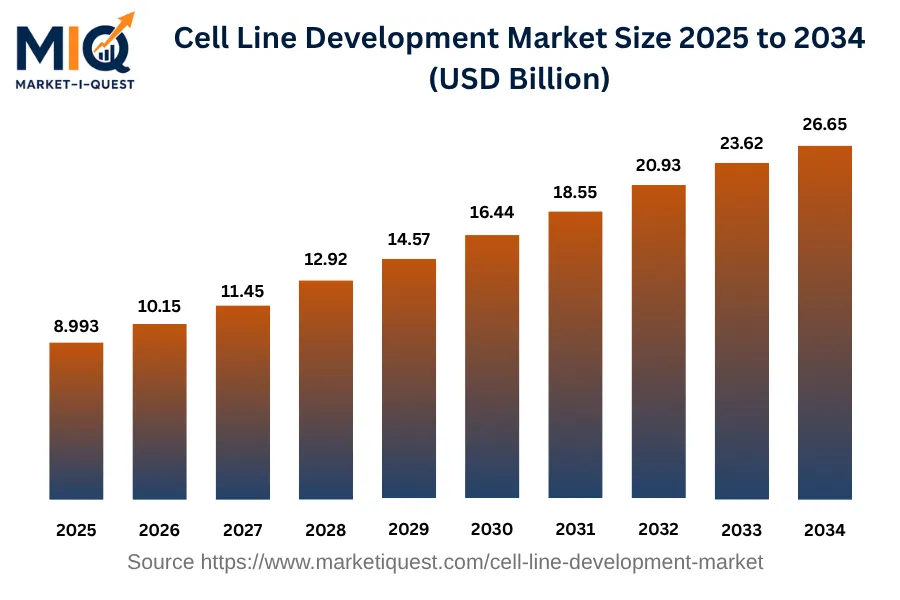
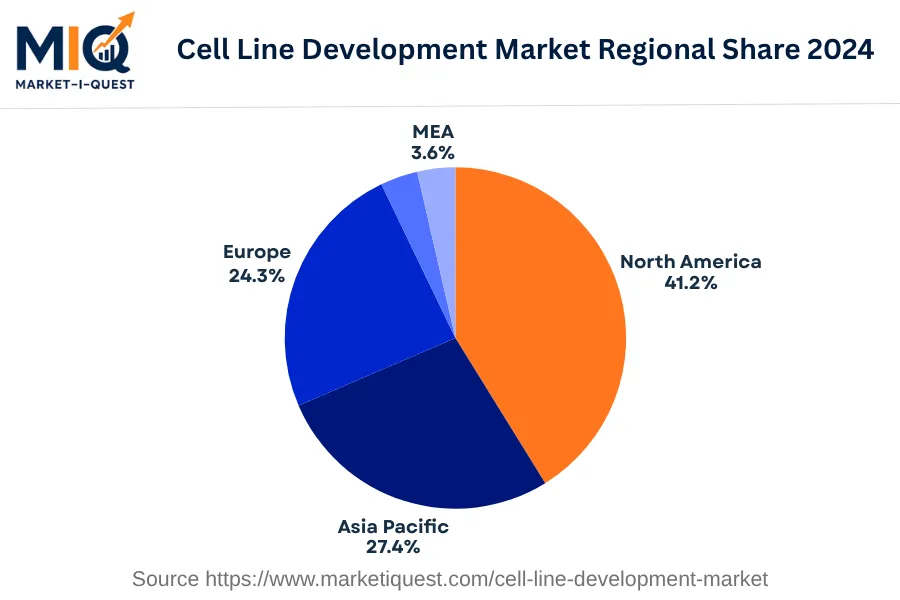
The Cell Line Development Market stood at USD 7.97 billion in 2024, expanded to a size of USD 8.99 billion in 2025, and is projected to grow to a market size of USD 26.65 billion by 2034. This represents a steady CAGR of 12.83% over the period from 2025 to 2034. Key factors propelling the market growth include advancing technologies in stable cell line development, the rise in demand for biologics and biosimilars, and increase in the prevalence of chronic diseases. Additionally, supportive regulations for cell-based research and swelling investments fuel the development of innovative therapy and drug discovery which stimulate market expansion. The regional market share in 2024 was distributed as follows: North America accounted for 41.2%, Asia Pacific represented 27.4%, Europe contributed 24.3%, Latin America held 3.5%, and the Middle East and Africa made up the remaining 3.6% of the global Cell Line Development Market.

Key Takeaways

  • By Type - Continuous Cell Lines were leading the segment with a notable market share in 2024.
  • By Process - Cell Line Development remained dominant holding the largest percentage of the market share.
  • By Application - Drug Discovery led the segment accounting for the majority of the market share in 2024.
cell-line-development-market market size

Key Driving Factors

Introduction of Regulatory Guidelines for Biosimilar Production

The increasing institution of regulatory guidelines concerning the production of biosimilars is a key factor driving the Cell Line Development Market. The World Health Organization, Food and Drug Administration, and European Medicines Agency are adopting stringent rules for the production of biosimilars, including their cell line development process. This is compelling biopharmaceutical companies to invest in advanced cell line technologies, ultimately leading to the growth of the market. Key players in the market are focusing on qualifying their master cell banks and working cell banks to meet these regulatory standards. Quality control parameters, such as stability, purity, and potency instituted as requirements for these cell banks, are directly influencing the dynamics of the market.
Increased Adoption in Oncology Research

The upswing in the utilization of cell lines in oncology research serves as another critical driving factor for the Cell Line Development Market. Cancer studies require the growth of large quantities of cells for drug testing, and efficient cell lines speed up both the volume and pace of this process. Leading pharmaceutical companies and research institutions are leveraging cell line technologies to better understand the disease's biochemistry, identify targets for new treatments, and evaluate the efficacy of prospective drugs. As cancer continues to be a dominant public health challenge and pharmaceuticals fight for breakthroughs, the demand for robust cell line development technologies is expected to stay strong.

Market Evolution by Timeline

2019-2023
In this period, the demand for cell line development surged primarily from pharmaceutical and biotechnological companies for drug discovery and disease research. Particularly, North America and Europe saw augmented usage, triggered by a rise in chronic diseases. As for the technological aspect, single-cell cloning became more prevalent, but the high cost of efficient cell line systems limited its accessibility. New policy measures were significant, such as the introduction of the FDA's 'Biosimilars Action Plan' in the US, which positively impacted market entry. The commercial model leaned towards cost-per-use pricing with significant collaborations amongst market participants to speed up drug discovery. The main risks included stringent regulatory protocols for biosimilar clearance and ethical issues in some regions.
2024
In 2024, commercial sectors, academia, and research organizations heavily drove demand for cell line development, especially in Asia-Pacific, where biologic drugs adoption rose. Technological improvements in protein expression and throughput miniaturization were significantly advanced, yet maintaining cell line purity remained challenging. Regulatory entities encouraged cell line standardization, with the European Medicines Agency (EMA) releasing guidelines on biological products. Pricing mechanisms saw a shift towards product-based pricing models, and strategic partnerships further accelerated cell line development initiatives. However, Intellectual Property (IP) rights issues related to cell lines posed a considerable risk.
2025-2029
During this period, the cell line development market may continue to expand, supported by growing applications in gene therapy and cancer research worldwide. Emerging regions such as Africa and Latin America could experience rising demand. Technological advancements may improve the development of stable cell lines, although lengthy culture periods and high costs could remain significant constraints. Stringent approval processes for genetically modified organisms (GMOs) may create barriers for new market entrants. Contract-based service agreements could become the dominant commercial model, while persistent intellectual property (IP) challenges may remain a major risk for industry participants.
2030-2034
During these years, personalized medicine may emerge as a significant driver of the cell line development market. Adoption could increase across the Middle East and South Asia, supported by greater investment in healthcare infrastructure. Advances in custom cell line development may create new opportunities, although scalability and reproducibility challenges could persist. Regulatory authorities may strengthen oversight of genetic modification, with WHO guidelines on human genome editing potentially influencing industry practices. Outcome-based contracts could become more common, alongside increased partnerships with technology providers. Meanwhile, biosecurity risks associated with the potential misuse of cell lines may become a growing concern for market participants.

Future Market Outlook

Future Opportunities

As regulatory frameworks strengthen, opportunities within the cell line development market are becoming more pronounced. The FDA implemented guidelines for evaluating cell and gene therapies, which invite new players into a market that demands compliance and advanced methodologies. Collaborations between firms like Genzyme and Astellas focus on leveraging proprietary cell lines for advanced research, emphasizing the synergy between biotechnology firms and pharmaceutical giants. Such partnerships not only pave the way for innovative therapies but also facilitate knowledge transfer regarding best practices in cell line operations. Emerging markets, particularly in Asia, have been capitalizing on the global demand for cell line development services as increased investment in biomanufacturing capabilities is observed in countries like China and India. Furthermore, the 2020s have seen a notable rise in demand for personalized medicine, with cell lines being modified to match patient-specific therapies, thereby enriching research and development avenues. Regulatory bodies continuously adapt their guidelines to meet the growing scientific landscape, ensuring that companies adhere to rigorous standards while fostering innovation. The confluence of regulatory evolution, strategic collaborations, and increased focus on personalized medicine signifies a fertile environment for growth opportunities in the cell line development market as it responds to evolving healthcare needs.

Segmentation Analysis

By Type

The market is divided into subsegments including Hybridoma Cell Lines, Recombinant Cell Lines, Continuous Cell Lines, and Primary Cell Lines. Continuous Cell Lines accounted for the largest revenue share while Recombinant Cell Lines are expected to grow at the fastest CAGR during the forecast period.

Largest Revenue Share

Continuous Cell Lines

Market Share Leader

Continuous cell lines have led the market in terms of revenue. These cell lines, with their ability to reproduce indefinitely, significantly reduce costs and time in research and therapeutic production. This makes them an appealing choice for many pharmaceutical and biotechnological companies. Their use has substantially grown within the therapeutic production market, given their suitability in the production of vaccines, therapeutic proteins, and monoclonal antibodies. Geographically, regions with substantial investments in pharmaceutical and biomedical research, such as North America and Europe, contribute significantly to this segment's leading market position. The regulatory environment also favors these cell lines due to the reproducibility and consistency they offer, which is vital in ensuring the safety of therapeutics. It's important to make clear, however, that the domination of Continuous Cell Lines is based on current market behavior and inherent characteristics of these cell lines.

Fastest CAGR

Recombinant Cell Lines

Forecast Period Growth Leader

Recombinant cell lines are projected to witness the fastest growth during the forecast period. They are becoming instrumental in biopharmaceutical manufacturing, specifically in the production of therapeutic proteins and monoclonal antibodies. Driving this growth are significant technological advancements that allow faster and more efficient generation of these cell lines. Furthermore, partnerships focusing on utilizing recombinant cell lines for production purposes are gaining traction in the industry contributing to their rising adoption. However, there are still hurdles impeding its rapid growth. The complexity of developing and maintaining these cell lines may restrict their adoption in some instances. That said, current trends in investment and technological growth point towards a rapid expansion of this segment in the coming years. It's essential to recognize that these trends are not guarantees and that unexpected industry shifts could potentially alter this projected growth.

By Process

The Process market is divided into subsegments including Cell Line Development, Cell Line Banking, Characterization, and Quality Control; of which Cell Line Development accounted for the largest revenue share, while Quality Control is expected to grow at the fastest CAGR during the forecast period.

Largest Revenue Share

Cell Line Development

Market Share Leader

Cell Line Development has yielded the highest revenue in the Process segment and continues to do so. This can be attributed to advancements in biotechnology and the critical role cell line development plays in research, diagnostics, and therapeutic applications. Innovation and technological advancements have enabled the creation of more efficient cell lines that translate to more significant profit margins for businesses. Factors such as increasing demand for monoclonal antibodies, vaccines, and therapeutic proteins have substantially driven the growth of this subsegment. Additionally, geographic areas with robust healthcare and technological sectors like North America and Europe have notably contributed to this subsegment's revenue. Cell Line Development also benefits from favorable government policies and regulations that encourage advancements and investments in this field. Customer preference for high-quality biosimilars also adds to the purchasing criteria, making this subsegment a lucrative one.

Fastest CAGR

Quality Control

Forecast Period Growth Leader

Quality Control is showing signs of rapid growth pattern and is projected as the fastest-growing subsegment in the base year forecast. Several factors facilitate this growth. The increasing stringency of regulatory mandates concerning product quality and safety is the primary driver, making Quality Control an essential part of processes. Additionally, growing awareness and demand for high-quality end products from consumers is accelerating this growth. Innovations and technological advancements like automation and digitization in Quality Control processes act as significant catalysts. Future investments in this sector are also expected to rise with the growing emphasis on maintenance of product standards and increased adoption by industries globally.

By Application

The market is divided into subsegments including Drug Discovery, Bioproduction, Toxicity Testing, Stem Cell Research, Genetic Engineering, and Others. In the base year 2024, Drug Discovery accounted for the largest revenue share while Stem Cell Research is expected to grow at the fastest CAGR during the forecast period.

Largest Revenue Share

Drug Discovery

Market Share Leader

Drug Discovery subsegment emerged as the leader in terms of revenue. Several factors influenced this prominence. The ongoing demand for new drugs due to an increasing prevalence of chronic and infectious diseases was a pivotal factor. This, coupled with the need for highly efficient and cost-effective solutions in the drug discovery process, led to the growth of this subsegment. The uptick in investment towards research and development by pharmaceutical companies also contributed significantly to the revenue share of drug discovery. Furthermore, the advancement in technology like high throughput screening and bioinformatics brought about gains in productivity driving revenue growth. The increasing outsourcing of drug discovery services played a part as well, as many pharmaceutical firms utilize the services of contract research organizations to trim costs and speed up the drug discovery process.

Fastest CAGR

Stem Cell Research

Forecast Period Growth Leader

The Stem Cell Research subsegment is expected to grow at the fastest CAGR during the forecast period. This growth is anticipated due to the increased focus on regenerative medicine and therapy development. The escalating prevalence of diseases demanding stem cell therapies, such as Parkinson's disease, heart disease, and cancer, acts as a substantial driver. The expanding knowledge base in stem cell understanding and application, as well as advancements in technology and methodologies pertinent to stem cell research, will catalyze growth. Additionally, alliances, collaborations, and partnerships among institutes, organizations, and companies are expected to expedite the progress.

Competitive Analysis

Key Market Players

Manufacturers / OEMs

Thermo Fisher Scientific Inc.
US
GE Healthcare
US
Merck KGaA
Germany

Key Suppliers & Raw Materials

Sigma-Aldrich Co. LLC
US
Corning Incorporated
US
Lonza Group AG
Switzerland

Distributors, Integrators & Channel Partners

Bio-Rad Laboratories, Inc.
US
Agilent Technologies, Inc.
US
Takara Bio Inc.
Japan

Porter’s Five Forces Analysis

Analyzing the competitive dynamics within the Cell Line Development Market.

Supplier Bargaining Power

Medium

Controlled by few suppliers with specialized skills, raising the cost of switching.

Buyer Bargaining Power

Low

Fragmented buyers with a high dependency on advanced products limit bargaining power.

Threat of Substitutes

Low

Advanced technological aspects of products reduce the risk of substitutes.

Threat of New Entrants

High

Lower capital requirement and rapid industry growth encourage new entrants.

Competitive Rivalry

High

Severe competition among well-established entities in pursuit of innovation.

Regional Analysis

Geographic market dynamics and growth opportunities across key regions

Global Market Outlook

cell-line-development-market market regional share

North America

In 2024, North America's cell line development market became the hub for advancing therapeutic research and biopharmaceutical production. The significant growth drivers were the rising investment in pharmaceutical R&D, increasing demand for monoclonal antibodies, and rapid adoption of new technologies such as single-cell cloning. Policy enforcement targeting the reduction of the use of animal testing also encouraged industry stakeholders to develop quality-assured cell lines for drug development. Changing buyer behavior heavily impacted the market trends, exemplified by the shift towards bio-similars over small-molecule drugs in the healthcare sector. Additionally, technologies such as high-throughput screening were adopted by key pharmaceutical enterprises to optimize cell line development processes, demonstrating an impactful product shift. Significant channel dynamics were highlighted by collaboration and M&A activities, with numerous pharmaceutical giants and research institutes partnering for joint research endeavors.

In the base year, the industry's primary sectors were healthcare, government-funded research institutes, and biopharmaceutical manufacturers. The U.S. led in terms of demand and technological advancement, followed closely by Canada, while Mexico showed promise with improving research infrastructure. Furthermore, regulations such as the U.S. FDA's guidance on development and characterization of cell lines used to produce biologicals ensured quality control, shaping the North American market landscape in 2024.

Asia Pacific

In 2024, the Asia Pacific cell line development market reflected vigorous growth in biopharmaceutical sectors. Key drivers included escalating pressures for innovative drugs in China and India, incentivizing significant investments in cell line development technologies. Regulatory flexibility in Japan allowed for expedited tech adoption, significantly enhancing supply dynamics and reducing production costs. South Korean technological advancements improved capacity, ensuring steady supplies even during peak demand periods. The major trend centered on India's heightened adoption of advanced cell line development procedures influenced by established cellular research practices in Australia. China saw a significant shift in gene therapeutic product development, with leading biopharmaceutical companies focusing on strategic partnerships to expand their market presence.

Noteworthy was the emergence of Australia as an incubator for start-ups specialized in therapeutic antibody production, influencing regional standards. Regulatory enforcement of Good Manufacturing Practice (GMP) for cell and gene therapies in key ASEAN markets, such as Singapore, also played a significant role in shaping the market landscape. Healthcare and pharmaceutical sectors in these regions exhibited high reliance on cell line development, with a growing number of enterprise-level biopharmaceutical companies investing heavily in these procedures. Despite ongoing cost-related challenges in less-developed markets, the overall market growth showed positive signals, driven by the growing demand for novel therapeutics and technological advancements in cell line development.

Europe

In 2024, Europe's Cell Line Development Market experienced remarkable growth, steered by advancements in biotechnology and increasing demand for biologics. Significant drivers included government-backed bio-industry funding, particularly from Germany and the United Kingdom, where regulatory frameworks were actively promoting cellular and gene therapeutics research. This, along with significant investment in technology adoption by biopharma companies, intensified the market's expansion. France, Italy and Spain also recorded a surge in therapeutic demand which catalysed innovation by industry players across the continent.

Trends in 2024 showed a shift towards monoclonal antibodies and vaccine production due to widespread prevalence of chronic diseases and pandemics. Adoption of high-throughput screening methods and advanced cell culturing techniques was evident amongst enterprises, particularly in the healthcare and pharmaceutical sectors. Partnerships and merger activities heightened to exploit these trends, particularly in regions like Benelux and the Nordics where capabilities in cell line development services are sophisticated. Stricter policy enforcement on the validation of cell lines in Central and Eastern Europe additionally propelled demand for authentic and well-characterized cell lines.

Latin America

In 2024, the Latin American Cell Line Development Market experienced significant growth due to the regional expansion of biopharmaceutical companies and increased investment in research and development. Market drivers included the growing prevalence of chronic diseases, spurring demand for novel therapeutics and pushing governments like Brazil's and Mexico's to amend regulations for biologics approval. With the proliferation of advanced technologies like high-throughput screening, cell line optimization witnessed increased adoption across Argentina, Colombia, Chile, and Peru. Government funding towards startups in Cell Line Development and favorable pricing policies also significantly contributed to market upsurge in LATAM.

Trends shaping the market in 2024 included a noticeable shift towards the outsourcing of cell line development processes, majorly by biopharma enterprises. Biopharmaceutical companies like Brazil-based Fiocruz and Mexico's Liomont closed partnerships for cell line development, while Argentina's mAbxience continued channeling investments into innovative technologies. Monoclonal antibodies surfaced as the lead product segment, driven by its usage in treating chronic disorders. In the domain of policy enforcement, health regulatory bodies in Colombia, Chile, and Peru strengthened oversight of biologic production. Mounting clinical trials for cancer therapies further molded the dynamism of cell line development across LATAM's healthcare sector.

Middle East & Africa

In 2024, the Cell Line Development Market in the Middle East and Africa displayed a dynamic landscape of growth and innovation. Leading market drivers included a significant spike in biopharmaceutical investments, particularly in Saudi Arabia and United Arab Emirates, supported by government initiatives and favorable regulations. Advanced technology adoption was another key driver, with countries like Israel and South Africa embracing automatization processes for the industrial production of antibodies and proteins. Furthermore, the demand for monoclonal antibodies, mainly in healthcare sectors across Nigeria and Kenya, created a robust supply dynamic.

Market trends were earmarked by changes in buyer behavior, with an increased preference for cell therapeutic procedures in the healthcare sector, especially in regions like Egypt and Qatar. The proliferation of partnerships and acquisitions empowered the market, with Israel and South Africa seeing major M&A activities. Interestingly, a shift towards stem cell and regenerative medicine technologies was witnessed, encouraged by the larger healthcare sectors of Saudi Arabia and UAE. Policy enforcement around ethical cell line development, predominantly in Saudi Arabia and Egypt, influenced the market's operational framework. Across sectors, ranging from healthcare to biotechnology manufacturing, these trends and drivers outlined the future path of the cell line development market in 2024.

Recent Industry Developments

Latest market innovations, product launches, and strategic initiatives

July 2026

RoslinCT and BlueRock Therapeutics partnered to expand access to clinical-grade pluripotent cell lines for cell therapy developers, with RoslinCT augmenting its offering to include BlueRock's clinical-grade iPSC lines alongside its own cell lines.

December 2025

CHITOSE and FUJIFILM Biosciences formed a strategic alliance combining CHITOSE's CHO-MK cell line development expertise with FUJIFILM's advanced culture media development and GMP-manufacturing capabilities.

Frequently Asked Questions