Cell Banking Outsourcing Market Snapshot

Key Players

  • Thermo Fisher Scientific Inc. (US)
  • Wuxi AppTec (China)
  • Sigma-Aldrich Corporation (US)
  • BGI (China)
  • CCBC Biosciences Inc. (United States)
  • LifeCell (India)
  • Cordlife (Singapore)
  • Reliance Life Sciences (India)

Market Size

Base Year 2024
$16.94 Bn
CAGR
15.98%
Forecast 2034
$74.60 Bn

Market Segments

By Cell Type
  • Stem Cell Banking
  • Non-Stem Cell Banking
By Application
  • Cell Bank Storage
  • Cell Bank Preparation
  • Bank Characterization & Testing
  • Others

Market Dynamics

Drivers
  • Increased demand for biopharmaceuticals
  • Rapid growth in regenerative medicine
Restraints
  • High operational costs
  • Regulatory compliance issues
Opportunities
  • Increasing biopharmaceutical R&D
  • Emerging gene therapy adoption

Market Size

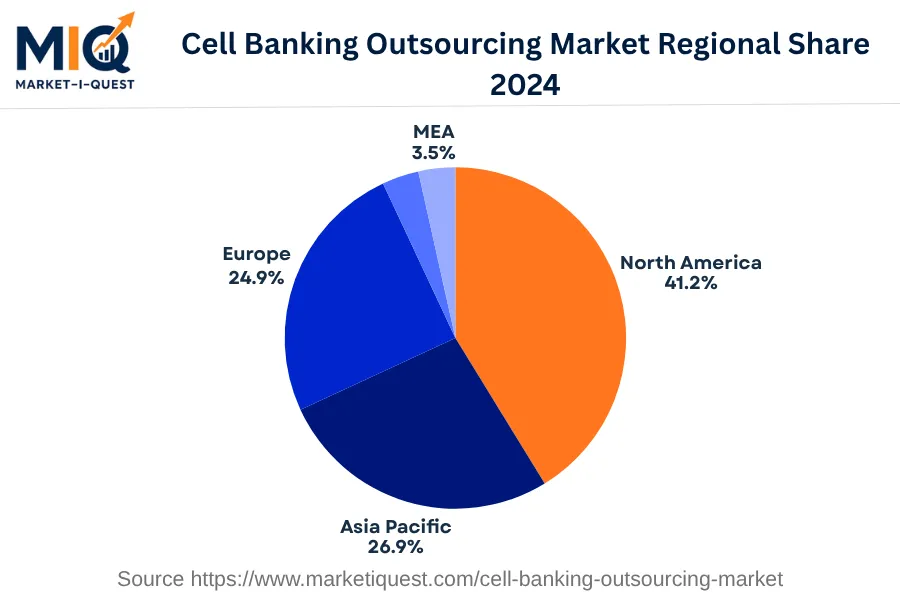
The Cell Banking Outsourcing Market was sized at a value of $19.65 billion in 2025, up from $16.94 billion in 2024. This momentum is projected to continue, on track to reach a market size of $74.60 billion by 2034, producing a CAGR of 15.98% from 2025 to 2034. This marked growth over the decade is primarily attributable to the steady increase in demand for cell bank storage services and outsourcing of cell banking activities. The expansion in financing for cell-based research projects is also contributing to the overall market growth. In terms of geographical distribution in 2024, North America held the lion’s share of the market at 41.2%, followed by the Asia Pacific region at 26.9%. Europe wasn't far behind, accounting for 24.9% of the market. Meanwhile, regions such as LATAM and the Middle East and Africa displayed less market presence, each accounting for around 3.5% of the total market share.

Key Takeaways

  • By Cell Type - Stem Cell Banking led in market domination accounting for noteworthy market share.
  • By Application - Cell Bank Storage held a major share innovatively contributing to market advancement.
cell-banking-outsourcing-market market size

Key Driving Factors

Increasing Complexity of Biopharmaceutical Production

The production process for biopharmaceuticals is complex, requiring specialized expertise and facilities. Companies are often limited by both capacity and expertise, hence they turn to outsourcing to speed up development and ensure quality control. The cell banking process, involving the storage of cells that will later be used in research or production, is a crucial part of this process. This is a clear driver for the Cell Banking Outsourcing Market. Outsourced cell banking services provide a flexible solution that can meet the stringent requirements for biotherapeutic development. This wider outsourcing trend in the pharmaceutical industry, which hinges on the complexity of biopharmaceutical production, is an essential driver for cell banking outsourcing.

Globalization of Pharmaceutical Industry

The pharmaceutical industry is increasingly global. Companies that once concentrated activities in a single region are now expanding, often entering countries with different regulations and requirements. Those regulatory variations place additional burdens on companies to ensure compliance across geographies. The expertise provided by cell banking outsourcing providers helps companies navigate the complexities of international regulations. It reduces the burden of compliance, ensures the quality of cell bank management, and supports companies' global operations. This globalization trend, coupled with the evolving regulatory landscape, is a pivotal driver for the expansion of the cell banking outsourcing market.

Market Evolution by Timeline

2019-2023
During this period, pharmaceutical companies and research institutions emerged as primary buyers in the Cell Banking Outsourcing Market, intending to reduce costs and increase speed of drug development. Asia Pacific, particularly China and India, featured notable activity due to robust biopharma growth and favorable regulations. Regenerative medicines and immunotherapies drove increased demand for cell banking outsourcing services. Key suppliers developed established good manufacturing practice (GMP) facilities for cell banking services. However, shortages in highly skilled personnel and high setup costs constrained further growth. The US FDA and EU GMP guided the market adoption through their safety and efficiency regulations. The commercial model largely involved long-term contracts, attributed to the nature of cell banking as a long-term resource. Biosafety testing emerged as a significant risk, due to variability in regulatory requirements globally, prompting service providers to develop comprehensive testing suites.
2024
Single-use technology became popular within the Cell Banking Outsourcing Market in 2024, due to its benefits regarding cost effectiveness and scalability for cell banks. Repercussions of COVID-19 pandemic still influenced the market, with outsourcing's role in bridging supply gaps of biological materials gaining recognition. North America, boasting a robust biotech ecosystem and stringent regulatory framework, held a considerable market share. The market also exhibited a trend towards consolidation, as companies expanded their cell banking service portfolios to increase their competitiveness. Bundled services provided under medium-term contracts became common. With increased outsourcing, concerns regarding intellectual property rights surfaced due to increased cross-border collaborations, necessitating legally sound contracts and cybersecurity measures.
2025-2029
Demand within the Cell Banking Outsourcing Market during this period expanded to personalized therapies and advanced treatment areas, encouraging a move towards specialized services. Buyers from Latin America and Middle East started outsourcing cell banking activities due to better access to leading global players and improving healthcare infrastructure. Suppliers adopted automation and AI in cell banking operations, to offset resource limitations and control human errors. Regulatory harmonization, primarily between leading markets US and EU, increased synergies of global operations. Commercial models with performance-based pricing became a feature, promoting delivery efficiency and quality. Concerns around dissemination of vital genomic data became a prominent risk, stimulating discussions and initiatives towards data privacy and governance in cell banking activities.
2030-2034
By 2030-2034, the trend of personalized genetic therapies increased demand in the Cell Banking Outsourcing Market, leading to new verticals like induced pluripotent stem cell banking. The market expanded to Africa following public health initiatives and local biotech ecosystem developments. Suppliers experimented with blockchain technology to ensure data security and traceability. Adoption of ISO 20387:2018, a biobanking standard promoting reliability and interoperability, gained momentum, promoting trust in the sector. Contract manufacturing organizations (CMOs) evolved as strategic partners, instead of vendors, to clients, implying shared risks and benefits in the commercial model. Risks related to uncontrollable factors such as geopolitical issues, natural disasters impacting the supply chain were addressed through robust risk management strategies and collaborations with local players in diverse geographies.

Future Market Outlook

Future Opportunities

The ongoing development of cell banking outsourcing services opens new avenues for growth, driven by the rising demand for personalized therapies and advanced medicinal products. Notably, companies such as Lonza are focusing on expanding their cell manufacturing capabilities to support gene and cell therapy applications, which are predicted to proliferate in the coming years. With regulatory bodies such as the FDA emphasizing expedited approval pathways for innovative treatments, outsourcing providers are capitalizing on this trend by bolstering their quality assurance processes to ensure compliance. Moreover, advancements in genomic editing tools like CRISPR-Cas9 in 2020 have led organizations to seek specialized biobanking solutions for engineered cell lines, creating opportunities for niche service providers. Collaborations among stakeholders are also likely to increase; for instance, in 2023, a partnership between Cryoport and the Mayo Clinic was formed to enhance logistics for cell therapy products, indicating a demand for improving distribution networks. In regions such as Asia-Pacific, the fast-growing biopharmaceutical sector has driven significant interest in outsourcing strategies, prompting local firms to seek alliances with established global players. As companies navigate these dynamics, the integration of cloud technology for data management will likely enhance the efficiency of biobanks, allowing them to meet the evolving demands of the healthcare landscape while staying compliant with regulatory frameworks.

Segmentation Analysis

By Cell Type

The market is divided into subsegments including Stem Cell Banking and Non-Stem Cell Banking, of which Stem Cell Banking accounted for the largest revenue share, while Non-Stem Cell Banking is expected to grow at the fastest CAGR during the forecast period.

Largest Revenue Share

Stem Cell Banking

Market Share Leader

Stem Cell Banking dominates the market in terms of revenue primarily due to the growing awareness regarding the potential uses of stem cells in disease treatment. Stem cell therapy is widely recognized for its effectiveness in several serious illnesses, including cancer, spinal cord injuries, and diabetes, amongst others. As a result, an increasing number of people are opting for stem cell banking to store their own or their family's stem cells for future use, fueling market growth. In addition, regulatory support in many countries encourages stem cell research and use, positively affecting the stem cell banking market. As technologies become more efficient and accessible, stem cell banking is predicted to increase even further, keeping it at the forefront of Cell Type market revenue. It should be noted that this analysis assumes no major disruption in current market trends and regulations.

Fastest CAGR

Non-Stem Cell Banking

Forecast Period Growth Leader

Non-Stem Cell Banking, although not the largest subsegment, is expected to witness the fastest CAGR growth. This is because of a surge in research activities relating to non-stem cell therapies and increasing knowledge about their potential in treating a variety of disorders. Factors such as advancements in technology, increased funding for research activities, and favorable government regulations are working as catalysts for this rapid growth. However, there are some hurdles to adoption. The high cost of non-stem cell banking and therapy, coupled with the lack of awareness in emerging economies, act as barriers. Nevertheless, increased collaboration between organizations, both public and private, to improve healthcare infrastructure and offer accessible therapies, is expected to mitigate these issues and spur growth. It is important this growth assumption is premised on continuation of the current regulatory and investment climate.

By Application

The market is divided into subsegments including Cell Bank Storage, Cell Bank Preparation, Bank Characterization & Testing, and Others. In 2024, the Cell Bank Storage subsegment accounted for the largest revenue share, while Bank Characterization & Testing is expected to grow at the fastest CAGR during the forecast period.

Largest Revenue Share

Cell Bank Storage

Market Share Leader

The primary reason Cell Bank Storage holds the largest segment by revenue is due to the imperative need for robust and reliable storage facilities for cells used in research and therapeutic solutions. Various factors such as increased investment in regenerative therapies, advancements in stem cell therapies and the rise in cell and gene therapies have all contributed to the increase in demand for cell bank storage. This demand has been further strengthened by the prevalence of chronic diseases and an aging population which push for innovative treatments. Moreover, the fact that the Cell Bank Storage acts as a guarantee against loss of unique cell lines also drives its growth. Geographically, developed regions with a high emphasis on healthcare and research, such like North America and Europe, account for a significant portion of the market revenue.

Fastest CAGR

Bank Characterization & Testing

Forecast Period Growth Leader

Bank Characterization & Testing is predicted to be the fastest-growing segment, fuelled largely by the increasing pressure from regulators for robust characterization and validation of cells used in therapies. In addition, the surge in personalized medicine has led to an increase in the use of stem cells, necessitating comprehensive characterization of these cells to ensure their safety and efficacy. Questions about the consistency, stability, and integrity of cell banks are key stress points that drive the growth of this segment. Looking ahead, stringent regulatory frameworks, rising investments in R&D, and the expansion of biopharmaceutical industries are set to further propel the growth of this segment. However, high costs and technical expertise required for these tests may curb the growth rate to some extent.

Competitive Analysis

Key Market Players

Manufacturers / OEMs

WuXi AppTec
China
Covance
US
Lonza
Switzerland

Key Suppliers & Raw Materials

Thermo Fisher Scientific
US
Merck KGaA
Germany
GE Healthcare
US

Distributors, Integrators & Channel Partners

BioReliance
US
SGS Life Sciences
Switzerland
Charles River Laboratories
US

Porter’s Five Forces Analysis

This analysis explores the competitive dynamics within the Cell Banking Outsourcing Market.

Supplier Bargaining Power

Medium

Cell banking providers have medium power due to their specialized skills and equipment.

Buyer Bargaining Power

High

Highly regulated market and numerous suppliers increase the power of buyers.

Threat of Substitutes

Low

Low threat as the specialized nature of services limits substitutes.

Threat of New Entrants

Low

High entry barriers—such as lofty regulatory requirements and significant R&D costs—restrict new participants.

Competitive Rivalry

High

Many players in a slow-growing market intensify competitive rivalry.

Regional Analysis

Geographic market dynamics and growth opportunities across key regions

Global Market Outlook

cell-banking-outsourcing-market market regional share

North America

In 2024, the North American cell banking outsourcing market was primarily driven by robust demand in sectors such as healthcare and pharmaceuticals. This demand originated from increased investment in advanced cell-based therapies and the adoption of new biotechnological methodologies for drug discovery and development, particularly in the U.S. Furthermore, stringent regulatory compliances related to cell characterization, storage, and testing propelled the need for specialist outsourcing.

Key trends in the market included a shift towards specialized cell banks for genome editing techniques like CRISPR-Cas9. This was noticeable among major drug developers, notably in the U.S., where there was a demand for high-yield, good manufacturing practice (GMP) compliant cell banking services. Partnerships and M&A activity were widespread particularly in the Canadian and U.S. markets as businesses sought to expand their capabilities. In addition, due to the United States Food and Drug Administration's (FDA) enforcement of precision medicine initiatives, there was a significant trend towards personalized cell banking, that is, the storage of patients' cells for potential future therapeutic use. In Mexico, despite a smaller market share, there was a symbiotic relationship with the thriving U.S. market, primarily providing lower-cost labor for American enterprises. The healthcare sector in all three countries remained the biggest consumer of these services.

Asia Pacific

In 2024, the Cell Banking Outsourcing Market in Asia Pacific saw significant development owing to multiple drivers and trends. The increasing demand for cell therapies in the healthcare sector, particularly in China and South Korea, fueled market growth. Biopharmaceutical companies in India and Japan invested heavily in cell banking services as a response to the rise in drug discovery and development activities. Strict regulations in Australia and key ASEAN markets around manufacturing and storage of cell banks led to increased outsourcing. Rapid adoption of advanced technology, such as fully-automated cell banking systems, further catalyzed the market. Higher costs were absorbed by outsourcing, easing financial pressure.

Key trends included the rise in strategic partnerships within the region. For instance, major Japanese enterprises collaborated with local biotechnology startups to meet the growing demand for stem cells. A shift towards ethical cell banking practices was noted in Australia, and adopted in other markets to meet stringent standards. Technological advancements dominated product shifts, with the utilization of cryopreservation technology becoming commonplace in cell banking mechanisms. Regulations in China and South Korea enforced stricter safety and quality standards for outsourced facilities, influencing the broader policy trends. Customers ranged from healthcare providers to biopharmaceutical manufacturers, pharmaceutical retailers, government entities, and research and development organizations. Therefore, the industry experienced a multi-sector influence, primarily driven by healthcare and enterprise sectors.

Europe

In 2024, the Cell Banking Outsourcing Market in Europe was characterized by a progressive increase in demand and the growing adoption of innovative biotechnological procedures. Drivers for this included the rising prevalence of chronic diseases and consequently, a surge in research for therapeutic solutions, significantly escalating the requirement for cell banking in Germany, the United Kingdom, France, and Italy. Further, stringent European Union biobanks regulations necessitated proficient management of cell samples, boosting outsourcing demand in Spain, the Nordics, Benelux, and Central & Eastern Europe.

Trending was the growth in the use of stem cells, particularly in healthcare and research institutions, fortifying cell banking partnerships and mergers. Meanwhile, advancements in cryopreservation technologies transformed storage and retrieval routines, positively influencing the market in healthcare and government sectors. Lastly, standardization efforts by the European Cell Culture Collection (ECCAC), aimed at securing the quality of stored cells and tissues, reinforced the market’s credibility and growth.

Sectors specifically tapping into this market included healthcare industries, manufacturing units, research institutes, and government institutions. In concrete terms, such as the emergence of advanced genetic technologies in France and the United Kingdom, underscored the increased dependency on cell banking by the healthcare and enterprise sectors respectively. Equally significant were the biotechnological advancements in Italy and Germany, redefining the standards for cell and tissue preservation and driving the market trend.

Latin America

In 2024, the Cell Banking Outsourcing Market in Latin America (LATAM), underscored by nations such as Brazil, Mexico, Argentina, Colombia, Chile, and Peru, demonstrated growing dynamism. The key drivers were the escalating demand for efficient cell banking services due to the rise in pharmaceutical and bio-pharmaceutical companies, matched with regulatory support that facilitated foreign direct investment (FDI) in localized outsourcing services. Technological adoption and the growing need for cost-efficient operations also impacted supply dynamics, stimulating significant investment in the sector.

New trends included shifts in buyer behavior towards seeking end-to- end solutions considering service efficiency and cost effectiveness. Also evident were alliances and strategic partnerships aimed at expanding reach and capabilities in cell banking, alongside refined standardizations for quality assurance and regulatory compliance. Novel regulatory policies such as Brazil's RDC 302/2005, governing health-related institutional operations, had significant impact.

Critical sectors driving this growth included healthcare and pharmaceutical industries, manufacturing companies needing research in cellular materials, and government institutions involved in medical research. Enterprises, particularly in bio-pharma, utilized outsourcing as a strategy to minimize costs and streamline cell banking operations. Thus, 2024 saw LATAM’s cell banking outsourcing market actively responding to regional shifts in regulation, technology, and market demands.

Middle East & Africa

In 2024, Cell Banking Outsourcing in the Middle East and Africa saw a significant rise in demand, driven by advancements in biopharmaceuticals and exponential growth in genetic engineering. Investments from countries like Saudi Arabia, United Arab Emirates, and Qatar into genetic studies propelled the market, while Egypt and South Africa saw increased adoption of advanced cell banking technologies. Moreover, the stringent regulatory framework in these regions boosted the credibility of cell banking services, effectively encouraging market growth.

The market witnessed several defining trends including increased buyer interest from healthcare and pharmaceutical industries due to the growing need for high-quality cells for research and clinical applications. Technological shifts in Israel and Kenya exhibited a move towards automation and sophistication in cell banking processes, predominantly to ensure the accuracy and transparency of procedures. The market saw an increase in partnerships and merger activities especially involving companies from Nigeria. These actions were mainly strategized to accelerate the adoption of cell banking outsourcing services in their respective sectors. Growing policy enforcement in areas of cell safety and ethical handling in most of these nations further fostered the market's credibility and reliability. In conclusion, both investment from key players and rising demand on account of advanced research sectors broadly steered the Cell Banking Outsourcing Market across the Middle East and Africa in 2024.

Recent Industry Developments

Latest market innovations, product launches, and strategic initiatives

July 2025

StemCell Institute Inc. announced the conclusion of a joint venture agreement with Big Railway Investment Pte. Ltd., expanding its cell banking and therapy development capabilities.

January 2025

FDA released additional draft guidance: Recommendations for Determining Eligibility of Donors of Human Cells, Tissues, and Cellular and Tissue-Based Products (HCT/Ps), updating donor eligibility requirements for cell-based products.

Frequently Asked Questions