Cardiovascular Needle Market Snapshot

Key Players

  • Becton
  • Dickinson and Company (United States)
  • Medtronic PLC (Ireland)
  • B. Braun Melsungen AG (Germany)
  • Teleflex Incorporated (United States)
  • Johnson & Johnson Services Inc. (United States)
  • Cook Group Incorporated (United States)
  • Smith & Nephew PLC (United Kingdom)
  • CONMED Corporation (United States)
  • Boston Scientific Corporation (United States)
  • Terumo Corporation (Japan)

Market Size

Base Year 2024
$0.107 Bn
CAGR
7.7%
Forecast 2034
$0.225 Bn

Market Segments

By Type
  • Round-Bodied Needles
  • Cutting Needles
By Usage
  • Single Use
  • Multiple Uses
By Application
  • Open Heart Surgery
  • Cardiac Valve Procedures

Market Dynamics

Drivers
  • Rising cardiovascular diseases
  • Increasing surgical procedures
Restraints
  • Strict regulatory guidelines
  • High procedural costs
Opportunities
  • Increasing cardiovascular disease prevalence
  • Advancements in surgical procedures

Market Size

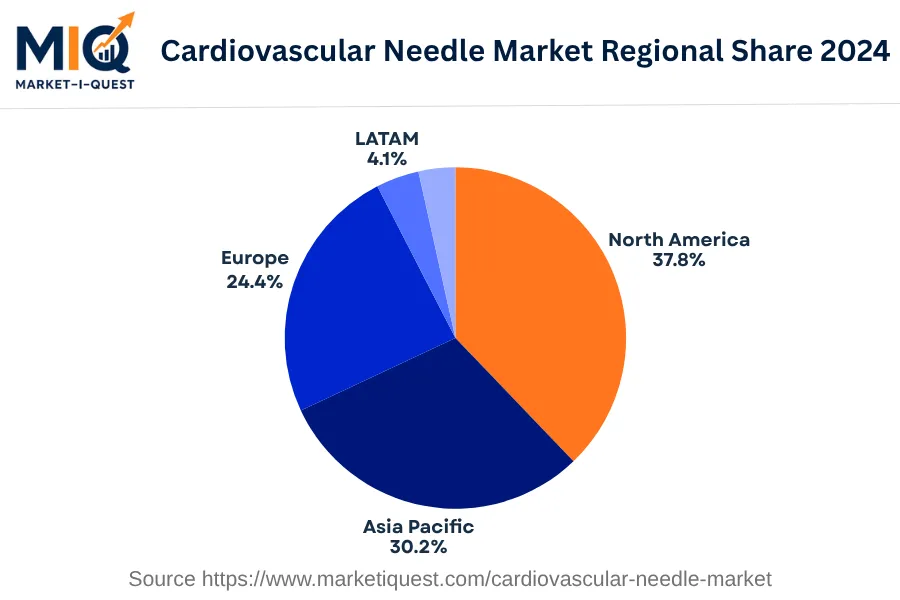
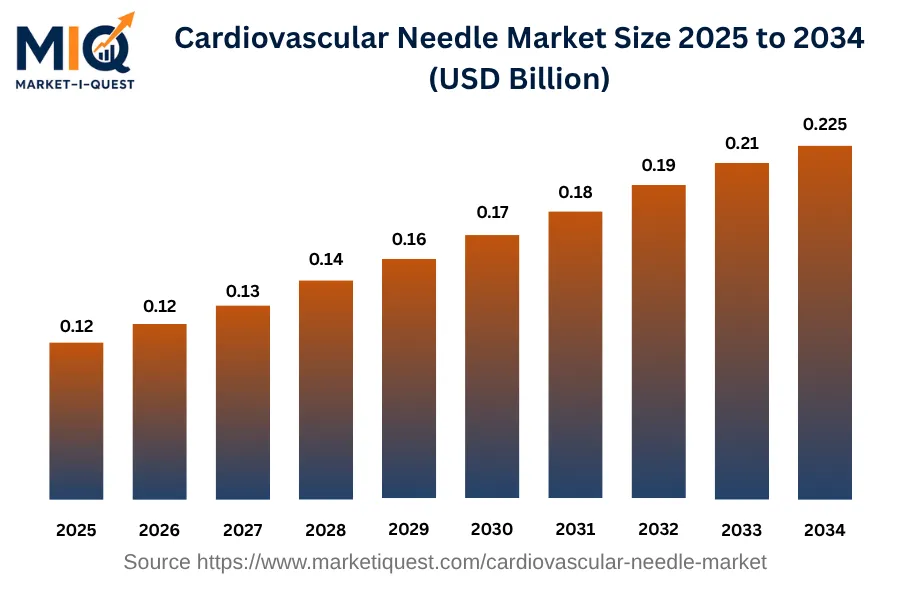
The Cardiovascular Needle Market in 2025 is projected to reach a size of $0.12 billion, up slightly from $0.11 billion in the previous year 2024. By the year 2034, this market is forecasted to more than double in size, achieving a market value of $0.22 billion. This progression represents a compound annual growth rate (CAGR) of 7.7%. This growth can be attributed to both an increase in cardiovascular surgeries necessitating needles and an overall rise in healthcare expenditures in general. It's also worth noting the regional share of this market. As of 2024, North America accounts for 37.8% of the global market for cardiovascular needles, followed by Asia Pacific with a share of 30.2%. Europe claims the third largest regional share at 24.4%, with considerably lower shares recorded in Latin America and the Middle East and Africa, accounting for just 4.1% and 3.5% respectively.

Key Takeaways

  • By Type - Round-Bodied Needles held a significant market share in the Cardiovascular Needle Market.
  • By Usage - Multiple Use needles led the market signifying a higher demand in medical procedures.
  • By Application - Open Heart Surgery was the primary procedure for which cardiovascular needles were utilized in 2024.
cardiovascular-needle-market market size

Key Driving Factors

Prevalence of Cardiovascular Diseases Worldwide

The cardiovascular needle market is being significantly affected by the increasing prevalence of cardiovascular diseases (CVDs) such as coronary artery disease, heart failure, and arrhythmias all around the globe. Several health organizations, including the World Health Organization (WHO), have highlighted the growing incidence of these diseases, leading to elevated demand for cardiovascular surgery. Consequently, it drives the necessity for reliable and robust cardiovascular needles. The continues rise of CVDs exacerbated by factors like unhealthy diets, lack of physical activity, and tobacco use, supports this lasting demand.

Aging Population and Associated Health Risks

Equally significant driving factor of the cardiovascular needle market is the increasing aging population worldwide. With age, the risks of chronic diseases including CVDs magnify. This demographic shift puts considerable stress on healthcare systems and increases the demand for cardiovascular surgical procedures. Countries with large aging populations like Japan and Italy are experiencing high demand for heart-related surgeries, thus increasing the need for cardiovascular needles. Here, cardiovascular needle manufacturers often find a stable and growing procurement trigger with space for innovation targeting specific age-related needs.

Market Evolution by Timeline

2019-2023
From 2019-2023, the global demand for cardiovascular needles primarily stemmed from hospitals in developed markets like North America and Europe due to aging populations and increasing cases of cardiac diseases. Manufacturers focused on developing suture needles that could assist in minimally invasive cardiovascular surgeries. Regulatory standards emphasized the sterility, structural robustness, and sharpness of the needles. There were no significant shifts in pricing dynamics, with relative stability observed across major manufacturers. However, product recalls due to defective batches were common risks faced by businesses during this period.
2024
In 2024, Asian markets, particularly China and India, saw a surge in demand for cardiovascular needles. This was largely fueled by rapid urbanization and higher incidence of cardio-vascular diseases in these regions. On the supply side, manufacturers adopted advanced production techniques like laser cutting and grinding to enhance needle sharpness and durability. Regulatory frameworks requiring safety testing for these needles were further tightened. Complex procurement models including long-term contracts and bulk-buy discounts were common in the sector.
2025-2029
During 2025-2029, the demand for cardiovascular needles was further driven by technological integration in surgeries, specifically robotic surgeries that used virtual 3D models of patient anatomy including the heart structure. It became a standard for manufacturers to offer needles that could be manipulated through robotic arms. Policy focus was towards increasing transparency in the production process by necessitating manufacturers to provide detailed breakdowns of costs. This led to pricing dynamics becoming more competitive.
2030-2034
From 2030-2034, biodegradable cardiovascular needles came into the market, designed to decompose naturally after completing their function. This innovation was a response to growing environmental concerns and changes in regulatory requirements calling for sustainable medical solutions. Manufacturers were exploring partnerships with biotech companies to improve production. Price levels were affected by the higher cost of raw materials needed for these biodegradable needles, but long-term contracts and volume discounts helped maintain relative pricing stability.

Future Market Outlook

Future Opportunities

The future opportunities within the cardiovascular needle market are being shaped by current regulatory initiatives and technological advancements. The shift towards minimally invasive procedures is creating a demand for specialized needles that can support such techniques, an urgency recognized by the Food and Drug Administration in its 2023 guidance advocating for innovation in needle manufacturing. Similarly, the rise in chronic cardiovascular diseases, particularly in developing regions like Southeast Asia, outlines a pressing need for efficient and cost-effective interventions. In response, companies such as B. Braun have initiated local production facilities to better meet regional healthcare demands, as seen in their 2022 investment in a manufacturing site in Thailand. Additionally, as telehealth continues to expand, the need for devices that can interface seamlessly with telehealth platforms will increase, prompting research into needle integration with remote patient monitoring systems. Ongoing clinical trials, such as those conducted by Abbott Laboratories in Europe for new catheter-based therapies using advanced needle technologies, will likely yield critical data to support further innovations. Consequently, stakeholders in the cardiovascular needle market must align their strategies with these emerging trends, fostering partnerships and investing in R&D to capitalize on the opportunities presented by regulatory changes and local market needs.

Segmentation Analysis

By Type

The market is divided into subsegments including Round-Bodied Needles and Cutting Needles. Round-Bodied Needles accounted for the largest revenue share while Cutting Needles is expected to grow at the fastest CAGR during the forecast period.

Largest Revenue Share

Round-Bodied Needles

Market Share Leader

While dissecting based on revenue, Round-Bodied Needles emerge as the subsegment with the highest revenue. This dominance can be attributed to several factors. Firstly, Round-Bodied Needles are most commonly used in surgeries and suturing due to their ability to effectively penetrate tissues without cutting them. The demand is perpetuated by the growing number of surgical procedures conducted globally. Secondly, customers, most notably healthcare professionals, exhibit a higher preference for these types of needles due to their reliability and effectiveness. Geographically, regions with high surgical procedure volume, such as North America and Europe, significantly contribute to the subsegment's revenue. Regulatory supply also frames the market dynamics where Round-Bodied Needles do not pose substantial compliance challenges. In terms of purchasing criteria, durability, efficiency, and cost-effectiveness often sway the decision in favor of Round-Bodied Needles. Lastly, due to high switching costs and the channels through which these products are distributed, changing to alternative options isn't a common occurrence.

Fastest CAGR

Cutting Needles

Forecast Period Growth Leader

While Cutting Needles do not command the same market revenue as Round-Bodied Needles, they represent the subsegment projected to experience the most rapid growth. The primary driver for this growth lies in their specialized use for tough, difficult-to-suture tissues, a demand that is growing with advances in complex surgeries. However, their broader adoption faces barriers such as higher costs and the need for specialized training to use them effectively. Technological developments are lowering these barriers, with firms investing in R&D to make cutting needles more user-friendly and accessible. Policy regulations encouraging the lower cost of complicated surgeries are also fostering growth in this subsegment. In the short term, risks such as increased regulatory scrutiny and the effects of global economic fluctuations on the healthcare sector could potentially impede the rapid growth. Despite these challenges, the subsegment is poised to see significant expansion.

By Usage

The market is divided into subsegments including 'Single Use' and 'Multiple Use'. In 2024, 'Multiple Use' dominated the market by generating the most revenue, whilst 'Single Use' is anticipated to grow at the most rapid pace in the forecast period.

Largest Revenue Share

Multiple Use

Market Share Leader

The 'Multiple Use' segment led the ranking due to its extensive use in various industries and for diverse applications. The demand for multiple use products has been on the rise due to their durability and ability to serve multiple purposes, this tends to reduce costs for businesses in the long run. Consumers prefer this product due to its versatility and efficacy. This segment's dominance was also bolstered by aggressive spending and expansive distribution networks globally. The regulatory environment, whilst complex, has actually played a positive role in supporting its growth, especially in regions with strict cost-efficiency and sustainability laws. The convenience, utility, and value provided by multiple use products, along with the widespread distribution networks, have led to this segment generating the most revenue in 2024.

Fastest CAGR

Single Use

Forecast Period Growth Leader

The 'Single Use' segment is predicted to witness the fastest growth due to its convenience and the increasing consumer preference for disposable products. These products reduce the effort and time spent on maintenance and cleaning, making them an attractive option for consumers seeking convenience. Despite the higher potential waste generation, advancements in technology and policies encourage the production of more environment-friendly, single-use products. Thus, making it a viable choice for consumers conscious about environment. Partnerships with companies that can promote and distribute these products effectively will help this segment achieve substantial growth. It presents a substantial opportunity for new market entrants and existing players looking to diversify, although the regulatory risk and potential backlash from environmentally conscious consumers remain significant hurdles.

By Application

The Application market segment is subdivided into Open Heart Surgery and Cardiac Valve Procedures. Open Heart Surgery generated the highest revenue in 2024, while Cardiac Valve Procedures is projected to grow at the fastest CAGR in the future.

Largest Revenue Share

Open Heart Surgery

Market Share Leader

Open heart surgery leads in revenue in the application segment for several reasons. First and foremost, the increasing prevalence of severe cardiovascular diseases that require comprehensive surgeries for treatment is a key demand driver for this subsegment. Geographically, regions with higher incidence rates contribute significantly to the revenue. Highly industrialized districts show a higher pace of such severe cases, leading to a rise in open heart surgeries. In terms of customer demographics, both an aging population and younger demographic with unhealthy lifestyle habits contribute to the demand for these surgeries. Moreover, advancements in surgical technology and procedures have improved the success rate of these surgeries, contributing to their increased adoption. The rigorous regulation in this field ensures high standards of medical procedures, further driving demand. Lastly, extensive insurance coverage underlies some of the cost-intensive nature of these surgeries. Thus, despite high procedural and recovery costs, patients are more willing and able to opt for open heart surgeries, leading to higher revenues.

Fastest CAGR

Cardiac Valve Procedures

Forecast Period Growth Leader

Despite currently trailing in revenue, Cardiac Valve Procedures subsegment promises to be the fastest growing in the market. The technology advancements in minimally invasive procedures have lowered the risks associated with these surgeries. This has increased the adoption rate among patients and healthcare providers. Innovations in valve prosthesis and the rise of procedures like Transcatheter Aortic Valve Replacement (TAVR) are additionally fuelling the segment’s growth. Regulatory approvals for new and advanced cardiac valve devices also contribute to this trend. On the customer front, the growing awareness about the benefits and effectiveness of these procedures is a key catalyst for growth. However, the subsegment faces challenges in terms of the cost-effectiveness and patient adaptability of the procedures. Additionally, the comparatively longer recovery periods and the requirement of highly skilled surgeons can act as barriers to its growth. For this subsegment to achieve its growth potential, overcoming these barriers through technological advancements and training medical personnel in these complex procedures is critical.

Cardiovascular Needle Market Competitive Analysis

Key Market Players

Manufacturers / OEMs

Ethicon US, LLC.
US
B. Braun Melsungen AG
Germany
CP Medical, Inc.
US

Key Suppliers & Raw Materials

Johnson & Johnson Services, Inc.
US
Becton, Dickinson and Company
US
Boston Scientific Corporation
US

Distributors, Integrators & Channel Partners

Medtronic PLC
Ireland
Tau Steril Srl
Italy
Olympus Corporation
Japan

Porter’s Five Forces Analysis

This analysis scrutinizes the competitive environment of the Cardiovascular Needle Market.

Supplier Bargaining Power

Medium

Component providers are diversified but specialized materials can increase bargaining power.

Buyer Bargaining Power

High

Numerous choices and low switching costs grant the buyers higher power.

Threat of Substitutes

Low

Specialized nature of cardiovascular needles diminishes the threat of alternatives.

Threat of New Entrants

Medium

High regulatory barriers exist yet profitable nature encourages new entrants.

Competitive Rivalry

High

The market is highly fragmented with considerable competition among existing players.

Regional Analysis

Geographic market dynamics and growth opportunities across key regions

Global Market Outlook

cardiovascular-needle-market market regional share

North America

The North American cardiovascular needle market in 2024 is primed by significant demand due to an ageing population coupled with rising cardiovascular disease prevalence. Heightened investment within the healthcare sector extensively contributes to the market activity, combined with the rapid adoption of advanced surgical technology in the US, Canada, and Mexico. Simultaneously, increasing regulatory control on medical devices quality and safety, especially in the US with the FDA's scrutiny, affects the market's supply dynamics and pricing. Adoption of robotics within surgery rooms, specifically in the US and Canada, enhances precision, thereby, driving demand for specialized cardiovascular needles.

With a change in patient preferences towards minimally invasive surgeries, a trend of buyers seeking needles equipped for such procedures is prominent. Healthcare providers are responding to this shift, leaning towards products that minimize post-operative complications. Partnerships and mergers among key market players notably influence the market, as companies strategize to expand their product portfolio and geographical reach. The enforcement of stringent standards and regulations by healthcare authorities in North America to ensure patient safety further influences the market. High consumption sectors include hospitals, ambulatory surgical centers, and specialty clinics. With the American Hospital Association and Canadian Medical Association's active participation, the adoption of premium quality cardiovascular needles gains momentum, shaping the North American market landscape in 2024.

Asia Pacific

In 2024, the Asia Pacific cardiovascular needle market experienced significant growth in response to escalating cardiac disease rates and growing medical procedures. Rapid urbanization, lifestyle changes, and increased smoking led to a surge in heart-related ailments in China and India, driving an augmented demand for cardiovascular needles. Government schemes such as the National Rural Health Mission in India further fueled market growth by improving the healthcare infrastructure. Advanced technology adoption, especially in Japan and South Korea, resulted in superior quality needles, thus strengthening market positions. Major trends shaping the market included a shift toward minimally invasive surgeries, necessitating specialized cardiovascular needles. Rising health-consciousness also saw Australia phasing out low-quality needles, pushing manufacturers to develop safer alternatives. In China and key ASEAN markets, an increase in strategic partnerships among local and international firms influenced production and supply chain dynamics. Rigid policy enforcement for product standardization in Japan set an industry benchmark, promoting quality over quantity.

Main customers originated from sectors such as healthcare, manufacturing, information technology, and government-operated hospitals. The utility industry, particularly in developed regions like Australia, contributed significantly to the procurement of cardiovascular needles. Meanwhile, digitalization promoted e-retail, with consumers increasingly adopting online purchase of these products, reshaping the traditional buying pattern. Overall, in 2024, the drivers and trends observed indicate a robust growth period for the Asia Pacific cardiovascular needle market.

Europe

In 2024, Europe's cardiovascular needle market experienced significant growth driven by an increase in cardiovascular diseases, technological advancements, and healthcare investment. The increasing prevalence of cardiovascular conditions, particularly in countries like Germany, France, and the UK, spurred the demand for precise and advanced cardiovascular needles. Favorable government regulations, particularly in Italy and Spain, incentivized the development of new needle technologies and facilitated an easier route to market. Furthermore, investments in healthcare infrastructure across Central and Eastern Europe, particularly in clinical research and hospitals, bolstered the supply dynamic of the market.

On the trends front, consumer behavior showed a preference for minimally invasive procedures, promoting the adaptation of novel needle technologies. Countries like Germany witnessed a shift towards biodegradable cardiovascular needles reflecting environmental responsibility in healthcare practices. Notably, strategic partnerships and M&A activities, especially in the Nordics and Benelux regions, played a pivotal role in expanding businesses and optimizing resources. Concurrently, the enforcement policy in the UK and France for stringent product standards has influenced the quality of cardiovascular needles in the market. These trends largely benefitted sectors such as healthcare, manufacturing, and the enterprise market that heavily rely on the supply of quality cardiovascular needles, thereby shaping the market dynamics in 2024.

Latin America

In 2024, the Latin American (LATAM) Cardiovascular Needle Market was a focal point in the medical manufacturing sector, shaped by several drivers and trends. Key demand-side factors included the rising prevalence of cardiovascular diseases in countries such as Brazil and Mexico, necessitating more surgical procedures and boosting the need for cardiovascular needles. Regulatory adjustments in Argentina and Colombia residing in stricter controls of medical supplies directly influenced market dynamics. The adoption of technologically advanced needle designs supported by investments in the healthcare sector also served as a critical growth driver, notably in Chile and Peru where public health funding saw substantial increments.

Regarding market trends, buyer behavior in the LATAM region leaned towards safety-enhanced needles in a bid to minimize occupational hazards among healthcare professionals. Product shifts were noticeable, with more healthcare providers in Brazil and Mexico favoring cardiovascular needles with additional safety features. The LATAM region also experienced an evolution in distribution channel dynamics, with an increased reliance on online selling platforms for medical supplies. A proliferation of partnerships among needle manufacturers and local healthcare providers characterizes the sector, aimed at securing supply and mitigating import-dependency. Lastly, policy enforcement to ensure high-quality standards for cardiovascular needles further shaped the market landscape.

Middle East & Africa

In 2024, the cardiovascular needle market in the Middle East and Africa experienced significant changes due to several market drivers and trends. Increased investment in healthcare infrastructure in countries such as Saudi Arabia, United Arab Emirates, and South Africa led to an upsurge in demand for cardiovascular needles. Technological advancements also boosted the rapid adoption of quality cardiac surgical staples, especially in major hospitals within Israel and Qatar. Moreover, the stringent regulation standards by authorities like Saudi Food & Drug Authority changed the market's supply dynamics, creating a demand for premium accreditation-certified needles.

Market trends in 2024 showed a notable shift towards bioabsorbable cardiovascular needles, influenced by advancements in bio-technologies and growing patient cognizance about post-surgery complications. Egypt and Kenya led the way in channel dynamics that amplified the availability of these needles across many distribution channels. Customer preference for minimally invasive cardiovascular surgeries grew in Nigeria, necessitating specialized needle types. Furthermore, partnerships and M&A activities, for instance, in the South African healthcare sector, were prevalent, engaging major players to enhance their product portfolios. Overall, the increasing incidence of cardiovascular diseases across these regions and the growing emphasis on improved healthcare services dictated the market behavior in the base year.

Recent Industry Developments

Latest market innovations, product launches, and strategic initiatives

April 2025

CardioVia received FDA clearance for its ViaOne concealed blunt-tip epicardial access needle, offering a non-sharp alternative for treating cardiac arrhythmias with reduced perforation risk, with a US commercial launch planned.

April 2025

CardioVia received FDA clearance for its ViaOne concealed blunt-tip epicardial access needle, offering a non-sharp alternative for treating cardiac arrhythmias with reduced perforation risk, with a US commercial launch planned.

Frequently Asked Questions