Cardiovascular Devices Market Snapshot

Key Players

  • Medtronic (Ireland)
  • Boston Scientific Corporation (United States)
  • Abbott Laboratories (United States)
  • Siemens Healthineers (Germany)
  • Biotronik (Germany)
  • Edwards Lifesciences (United States)
  • Terumo Corporation (Japan)
  • Koninklijke Philips NV (Netherlands)
  • GE Healthcare (United States)
  • Teleflex Incorporated (United States)

Market Size

Base Year 2024
$68.58 Bn
CAGR
8.63%
Forecast 2034
$156.93 Bn

Market Segments

By Device Type
Diagnostic Devices, Monitoring Devices, Therapeutic Devices, Surgical Devices
By Technology
Implantable Pacemakers, Cardiac Stents, Ablation Devices, Heart Valve Devices
By Application
Coronary Artery Disease, Heart Failure, Arrhythmia, Valvular Heart Disease, Others
By End User
Hospitals, Cardiac Centers, Ambulatory Surgical Centers, Home Healthcare

Market Dynamics

Drivers
  • Aging global population
  • Advancements in technology
Restraints
  • High manufacturing costs
  • Strict regulatory framework
Opportunities
  • Emerging economies growth
  • Technological advancements

Market Size

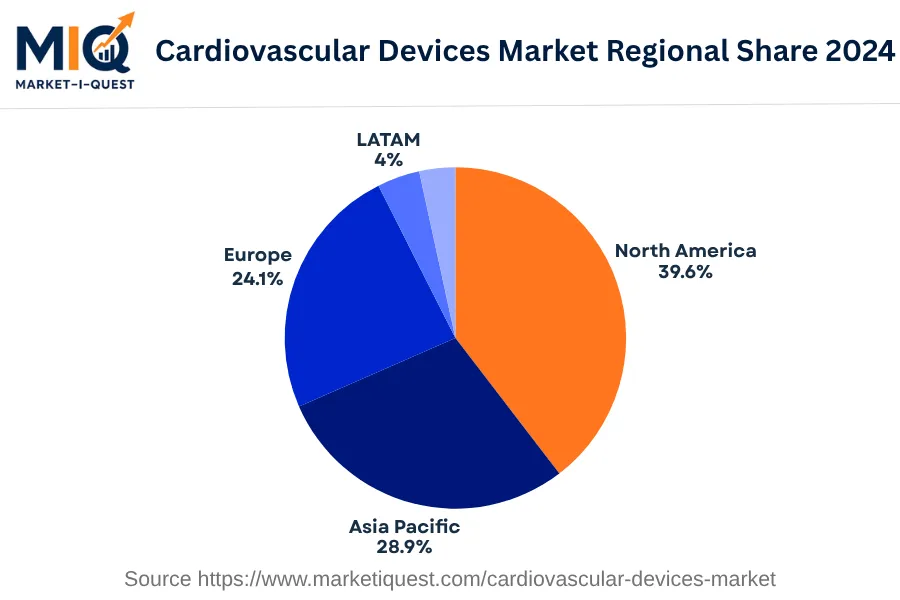
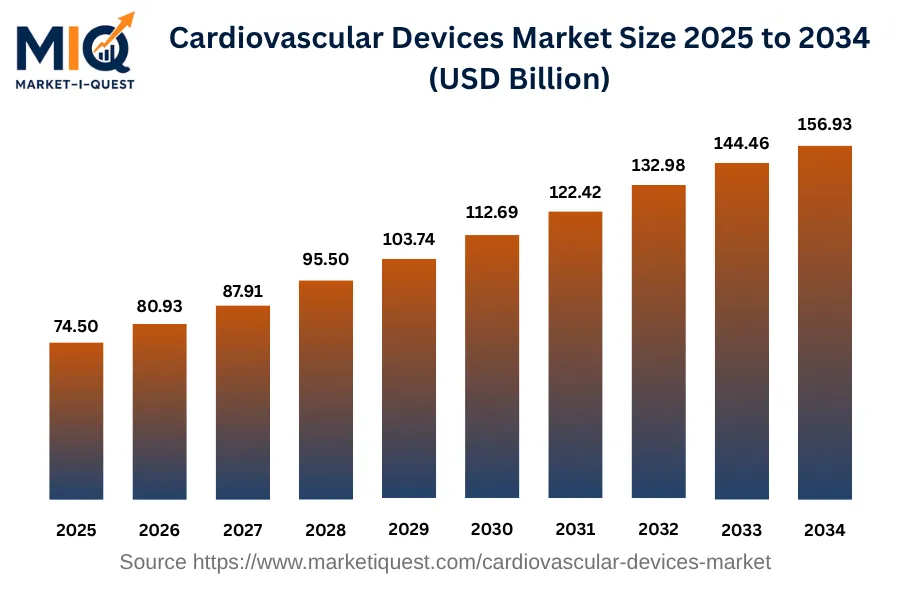
The Cardiovascular Devices Market had a size of USD 74.50 billion in 2025 and is projected to reach 156.93 billion by 2034, with a Compound Annual Growth Rate (CAGR) of 8.63%. The market experienced consistent growth throughout the analyzed period, slightly increasing each year consecutively. This constant growth is attributable to continuous advancements in cardiovascular technology and medical procedures, which have boosted the demand for these devices during the period. In terms of regional share in 2024, North America held 39.6% of the market, followed by the Asia Pacific with a 28.9% share. Europe had a 24.1% share, while LATAM and the MEA held smaller portions of the market with 4.03% and 3.41% respectively. The global distribution of the market share underlines the universal demand for cardiovascular devices.

Key Takeaways

  • By Device Type - Therapeutic Devices led the market accounting for a significant portion of market share in 2024.
  • By Technology - Cardiac Stents held the top position exhibiting impressive growth in the past year.
  • By Application - Coronary Artery Disease was the leading cause requiring cardiovascular devices in 2024.
  • By End User - Hospitals were the biggest users of cardiovascular devices in healthcare settings.
cardiovascular-devices-market market size

Key Driving Factors

Strict Regulatory Guidelines for Device Approval

The increase in strict regulatory guidelines for the approval of cardiovascular devices is driving the market growth. Regulatory bodies like the U.S. Food and Drug Administration - the FDA and the European Medicines Agency - the EMA have stringent rules for the approval of such devices. This ensures their effectiveness and safety before they're introduced to the market. Manufacturers are therefore investing in extensive research and trials to comply with these norms. These efforts often result in the development of innovative and efficient devices, fueling a progressive expansion in the global cardiovascular devices market.

Increasing Incidence of Cardiovascular Diseases

Cardiovascular devices play a critical role in the treatment and control of heart diseases. The increasing incidence of cardiovascular diseases across the world poses a public health concern, which makes managing these conditions a critical healthcare priority. Society's need to manage and treat heart diseases is currently driving the need for advanced cardiovascular devices. The surge in cases of chronic conditions like hypertension and diabetes is contributing to the increased prevalence of heart diseases. This has led to an increased demand for cardiovascular devices, consequently driving the growth in the cardiovascular devices market.

Market Evolution by Timeline

2019-2023
In the period 2019-2023, cardiovascular device manufacturers such as Medtronic, Boston Scientific, and Abbott largely focused on North America and Europe due to their awareness and affordability of advanced healthcare. Demand was fueled by the escalating cases of chronic diseases such as hypertension, obesity, and diabetes, which lead to cardiovascular diseases. Supplementing this was the aging population in these regions. Smart wearable devices, such as smartwatches with heart monitoring capabilities, were notably adopted. The devices, however, were expensive, and thus not accessible to all socio-economic classes. Regulations such as EU's Medical Device Regulation (MDR) of 2017 were implemented, prompting companies to adhere to higher safety standards. Procurement, often through health insurance policies, tended to be long-term as these devices were used continuously by the patients.
2024
In 2024 there was a significant push towards the emerging economies of Asia Pacific and Central and South America in the cardiovascular devices market. Countries like India and Brazil experienced an increase in affordability and awareness in healthcare technologies. The affordability issue from the previous cycle seemed to lessen, giving a rise to the demand. Multinational companies partnered with local manufacturers for production and distribution, aiming to leverage the growth potential. Stent retrievers and thrombectomy devices were in demand owing to increasing cases of strokes. Procurement followed the same pattern as earlier with health insurance playing a key role.
2025-2029
In the 2025-2029 period, we saw further expansion of the cardiovascular devices market into African nations. This resulted from governmental programs aimed at elevating the healthcare sector in nations like Kenya, South Africa, and Nigeria. A surge in non-communicable diseases due to lifestyle changes changed the demand dynamic. More advanced devices such as pacemakers with remote monitoring capability increased in usage. Increased regulatory scrutiny on high-risk devices was observed under policies such as the FDA's Unique Device Identification System. These devices became part of more comprehensive healthcare packages and were often part of long-term patient treatment plans.
2030-2034
In the 2030-2034 period, the democratization of access to cardiovascular devices spread globally. In this period, the rise of telemedicine played a significant role in promoting access to these devices. This was aided by various healthcare policies promoting home healthcare, such as the Centers for Medicare & Medicaid Services' (CMS) Increase to Home Health PPS rates in the US. This deal structure allowed patients to have access to these devices at home, making them more convenient and accessible. However, this period also saw rising cybersecurity threats targeting these devices, prompting manufacturers to invest more in securing their devices.

Future Market Outlook

Future Opportunities

The future of cardiovascular devices is shaped by a combination of regulatory developments, technological advancements, and clinical needs. As regulatory bodies, including the FDA, push for enhanced cybersecurity measures within medical devices, companies are expected to adopt resilient designs to protect patient data actively. The successful integration of artificial intelligence within device functionality is likely to open doors for enhanced predictive analytics, allowing for earlier interventions. Companies like Medtronic are currently investing in remote monitoring capabilities that align with patients' demands for convenience. In 2023, the World Health Organization emphasized non-communicable diseases, including cardiovascular conditions, boosting the importance of early detection solutions. This attention could fuel demand for devices that offer proactive risk assessment tools. Additionally, with an increasing aging population globally, particularly in regions like Europe, the imperative for portable and user-friendly devices such as wireless monitoring systems is expected to rise significantly. Partnerships between technology firms and hospitals are already forming under initiatives like the Smart Health Partnership in Canada, highlighting a collaborative approach to patient care. As healthcare systems increasingly emphasize value-based care, device manufacturers may pivot towards solutions that demonstrate tangible improvements in patient outcomes. This environment encourages the exploration of innovative therapeutic approaches, potentially redefining cardiovascular care in the coming years.

Segmentation Analysis

By Device Type

The market is divided into subsegments including Diagnostic Devices, Monitoring Devices, Therapeutic Devices, and Surgical Devices. Therapeutic Devices accounted for the largest revenue share while Monitoring Devices is expected to grow at the fastest CAGR during the forecast period.

Largest Revenue Share

Therapeutic Devices

Market Share Leader

Therapeutic devices take the lead due to a multitude of factors. Key among these is the direct impact of the aging population and the consequent increased prevalence of chronic diseases. This demographic trend, amplified by the drive for more personalized, effective treatments, leads to high demand for therapeutic devices. The regulatory environment further favors these devices. Tightened healthcare expenditure and strict quality compliance standards have pushed healthcare providers towards more efficient and less-risky therapeutic procedures. Therapeutic devices, in this regard, allow for targeted treatment, minimizing risks and costs. Purchasing criteria among end users lean towards devices offering greater effectiveness, longer service life, and user-friendliness, further solidifying the dominance of the subsegment. In addition to their compelling value proposition to customers, the high switching costs and long replacement cycles contribute to stable revenue streams. Additionally, the market dynamics are shaped by strong distribution networks, usually based on long-standing relationships with healthcare facilities. Lastly, while the Therapeutic Devices subsegment is dominant across many regions, it is particularly strong in developed geographies where the healthcare infrastructure is robust.

Fastest CAGR

Monitoring Devices

Forecast Period Growth Leader

Monitoring devices constitute the fastest-growing subsegment. Adoption barriers are being rapidly overcome due to the escalating need for home-based and remote patient monitoring, which is driven largely by technology advancements and the shift toward proactive patient care. Various catalysts are propelling this trend forward, primarily the technological progress in real-time and wireless monitoring devices, the growth in IoT applications in healthcare, and the response to Covid-19 showcasing the necessity and efficiency of remote monitoring. On the policy front, increased focus on preventive healthcare is moving the regulatory needle in favor of monitoring devices. However, near-term risks include data security and privacy concerns. It could also be assumed that the capital expenditure associated with advanced monitoring equipment may pose a challenge to this growth. Despite these, the partnership between device manufacturers, technology firms, and healthcare service providers simplify market penetration and is expected to bolster the CAGR in the forecasted period.

By Technology

The market is divided into subsegments including Implantable Pacemakers, Cardiac Stents, Ablation Devices, and Heart Valve Devices, with Cardiac Stents accounting for the largest revenue share while Ablation Devices are expected to grow at the fastest CAGR during the forecast period.

Largest Revenue Share

Cardiac Stents

Market Share Leader

Cardiac Stents have the largest revenue share for a variety of reasons. Firstly, the increasing prevalence of cardiovascular diseases globally necessitates the use of these devices. As per typical industry logic, this rise in cardiac ailments includes coronary artery disease and peripheral artery disease, both of which need stents for treatment. Alongside this, there have been dramatic improvements in stent technology, making them more effective and easier to implant, which further increases their demand. Moreover, regions like Asia-Pacific have seen surges in cardiac diseases due to lifestyle changes, further propelling the demand for stents. However, it's not just demand driving revenue; the supply side plays a part too. High investment in R&D by major market players leads to the introduction of advanced products into the market, opening up new revenue streams. For instance, drug-eluting stents, a type of cardiac stent with lower restenosis rates, are gaining popularity which reinforces the revenue growth.

Fastest CAGR

Ablation Devices

Forecast Period Growth Leader

Ablation Devices are projected to grow at the fastest CAGR in the forecast period. The primary driver for this growth is the rising incidence of cardiac arrhythmias, notably atrial fibrillation. As ablation is often the first line of treatment for such conditions, an increase in these diseases directly results in the increased adoption of these devices. However, it is not only the disease prevalence propelling the growth. The development and adoption of advanced technologies, such as radiofrequency and laser ablation techniques, have made these procedures more successful and less invasive, which encourages more healthcare providers and patients to opt for this method. Moreover, key market players' continuous focus on partnerships and collaborations for technological advancements and geographic expansion can also serve as a significant growth catalyst. Nevertheless, the high cost of these devices and procedures may pose a risk for the segment’s growth in the shorter term.

By Application

For the Application segment, the market is divided into subsegments including Coronary Artery Disease, Heart Failure, Arrhythmia, Valvular Heart Disease, and Others. Coronary Artery Disease accounted for the largest revenue share, while the Arrhythmia subsegment is expected to grow at the fastest CAGR during the forecast period.

Largest Revenue Share

Coronary Artery Disease

Market Share Leader

Coronary Artery Disease (CAD) led the market segment in terms of revenue in 2024 due to several drivers. The most prominent factor is the high prevalence of the disease, driven by lifestyle factors such as sedentary behavior, stress, and high consumption of unhealthy diet. In addition, the aging population contributes to the high revenue as the risk of CAD increases with age. Regulatory support and government initiatives for CAD diagnosis and treatment also play a significant role. These policies have resulted in an increase in the availability of state-of-the-art treatments, further pushing up demand. Recent technological advancements in CAD interventions have also influenced the purchase decisions of key buying segments significantly. Lastly, the high switching costs for CAD treatment centers act as a barrier to entry, thereby sustaining the revenue for existing providers. Notably, developed economies like the USA and those in Europe contribute the most while emerging markets like Asia demonstrate substantial growth potential due to rising healthcare spending.

Fastest CAGR

Arrhythmia

Forecast Period Growth Leader

The Arrhythmia segment is projected to grow at the fastest rate during the forecast period. This rapid growth is attributed to key factors such as advancements in technology, particularly in the development and miniaturization of implantable cardiac devices like pacemakers and defibrillators. Technological advances are not only improving the effectiveness of Arrhythmia treatments, but also making the procedures safer and more patient-friendly, contributing to increased adoption. Policy-level changes and increasing investments into healthcare infrastructure development are also acting as catalysts to this growth. Partnerships between Arrhythmia device manufacturers and healthcare providers are further pushing the adoption. However, adoption might face barriers, especially in low and middle-income countries due to affordability issues and lack of necessary healthcare infrastructure. There also exist near-term risks such as stringent regulatory barriers for approval of new devices, which could slow down the pace of adoption. Overall, the Arrhythmia segment constitutes a growing market with substantial potential for the near future.

By End User

The market is divided into subsegments including Hospitals, Cardiac Centers, Ambulatory Surgical Centers, and Home Healthcare. Of these, Hospitals accounted for the largest revenue share while Home Healthcare is expected to grow at the fastest CAGR during the forecast period.

Largest Revenue Share

Hospitals

Market Share Leader

Hospitals have traditionally dominated the market, primarily due to the broad range of services they provide and their accessibility to the general population. Hospitals serve a large volume of patients across various demographics and are equipped with the latest technology and skilled personnel. Another reason is the scalability they offer - they cater not only to inpatients but also to outpatients. Hospitals invest heavily in upgrading their infrastructure to provide better patient care, which translates to significant consumption of market resources. Furthermore, many critical cases requiring immediate and intensive care are usually handled in hospitals, driving higher revenue. Geographically, densely populated cities contribute substantially as they usually have multiple large-scale hospitals. There could also be a supply-induced demand - patients might opt for hospitals due to lack of awareness about alternatives, contributing to the hospitals segment's revenue dominance.

Fastest CAGR

Home Healthcare

Forecast Period Growth Leader

Home Healthcare is projected to be the fastest-growing segment during the forecast period. As an industry, Home Healthcare is experiencing rapid transformation driven by technology and policy changes. Technological advancements such as telemedicine and remote patient monitoring systems have made it possible to provide effective health care services at the patient's home. This not only makes medical care more convenient for patients but also vastly expands the potential customer base for providers. Additionally, changing healthcare policies, particularly in developed countries, are making home healthcare an increasingly viable and cost-effective alternative to hospitalization. High hospitalization costs and a growing population of elderly people, who generally prefer the comfort of their homes over hospital stays, are other key drivers for this segment's growth. However, certain barriers such as regulatory challenges and initial setup costs could potentially offset some benefits in the short term.

Competitive Analysis

Key Market Players

Manufacturers/OEMs

Medtronic
Ireland
Boston Scientific
US
Abbott Laboratories
US

Key Suppliers & Raw Materials

Nissha Medical Technologies
US
Avery Dennison Corporation
US
DSM Biomedical
Netherlands

Distributors, Integrators & Channel Partners

Becton, Dickinson and Company
US
Johnson and Johnson
US
Cardinal Health
US

Porter’s Five Forces Analysis

This analysis provides insights into the competitive forces in the Cardiovascular Devices Market.

Supplier Bargaining Power

Medium

Suppliers moderate influence due to specialization and concentration in the medical devices industry.

Buyer Bargaining Power

Low

Buyers have limited power due to specific regulatory and quality requirements for medical devices.

Threat of Substitutes

Low

Substitutes are minimal due to the specific, vital nature of cardiovascular devices.

Threat of New Entrants

Medium

Advanced technology can lower barriers; though, high development costs and regulatory barriers persist.

Competitive Rivalry

High

Fierce competition due to evolving technologies and consolidation of manufacturers.

Regional Analysis

Geographic market dynamics and growth opportunities across key regions

Global Market Outlook

cardiovascular-devices-market market regional share

North America

In 2024, the North American cardiovascular devices market was primarily driven by an increase in the aging population, lifestyle diseases, and healthcare expenditure. The demand for minimally invasive surgeries spurred the growth, as these procedures generally promote quicker recovery times and reduced hospital stays. Notably, the U.S. government's prompt approval process for cardiovascular devices, pegged on the strict regulations from the FDA, ensured the influx and adoption of innovative devices. Investment in research and development activities by major companies across the U.S., Canada, and Mexico also fostered market growth.

Market trends in 2024 were largely guided by evolving consumer preferences and the adoption of advanced technology. There was a notable shift towards wearable technology and remote patient monitoring systems, fueled by the drive to deliver better cardiovascular healthcare to patients beyond the hospital environment. Mergers and acquisitions proliferated, with market leaders striving to expand their product portfolios and increase their market share. Heightened policy enforcement, particularly in compliance to safety and manufacturing standards, characterized the regulatory landscape in all three countries. Enterprise-level customers such as healthcare facilities, medical research institutes, and government health agencies dominated the client base for these cardiovascular devices.

Asia Pacific

In 2024, the Asia-Pacific Cardiovascular Devices Market reflected significant dynamism fueled by technological advancements and population growth. Several key drivers shaped this market landscape. First, an aging demographic, particularly in China and Japan, propelled by an increase in cardiovascular diseases such as hypertension and obesity, intensified demand for cardiovascular devices. Second, government initiatives in India and Australia enhanced healthcare infrastructure and accessibility, increasing device deployment. Furthermore, Japan and South Korea recorded significant investment in R&D, leading to notable innovations like bio-absorbable stents. Lastly, favorable pricing policies in key ASEAN markets supported market proliferation by making essential devices affordable.

Simultaneously, certain trends shaped buyer behaviors and market standards. A clear preference for minimally invasive techniques reshaped product portfolios, with manufacturers focusing on developing state-of-the-art catheters and guidewires. Shifting channel dynamics were observed as telehealth adoption in China and Australia escalated the online purchase of cardiovascular devices. Regulatory rigor was heightened, particularly in India and Japan, emphasizing product safety and efficacy. Amidst this landscape, partnerships focused on technology transfer, as seen in Medtronic’s collaboration with Samsung, underscored the thirst for innovation. Overall, the Asia-Pacific cardiovascular devices market sturdily grew in 2024, reflecting an intricate interplay of end-user demands, technological advancements, and policy directives. The healthcare sector remained the key purchaser across all economies—a clear testament to the sector's significance in this market.

Europe

In 2024, Europe saw a significant expansion in its cardiovascular device market primarily driven by technological innovation, aging demographics, improved diagnostic capabilities, and overall enhanced healthcare investment. Increased adoption of minimally-invasive cardio technologies, such as transcatheter aortic valve replacement (TAVR) catheters and implantable cardioverter-defibrillators (ICDs), notably accelerated demand in Germany, France, and the United Kingdom, impacting market dynamics. Meanwhile, new regulatory policies implemented by the European Medical Device Regulation (MDR) in member states exerted a pivotal influence on device manufacturing and distribution, particularly in Italy and Spain.

The year was marked by shifts towards personalized cardiovascular solutions, underscored by the rise of smart, wearable heart monitors and AI-integrated diagnostic systems. The UK and Nordic countries witnessed substantial growth in digital health partnerships, aimed at enhancing patient self-monitoring and telemedicine services for heart conditions. M&A activity also intensified as device manufacturers aimed to consolidate share in high-growth market segments, notably between Benelux and Central & Eastern Europe. The alignment of these trends with the ongoing drive towards policy enforcement highlighted the critical role of government and healthcare sectors in shaping the region's cardiovascular device landscape in 2024. Both sectors were poised on the frontline, navigating the challenges and opportunities presented by an evolving market.

Latin America

In 2024, the Latin American cardiovascular devices market experienced significant growth, fueled by various drivers and shaped by key trends. A rapidly aging population, increasing prevalence of cardiovascular diseases, and heightened awareness of health issues contributed to increased demand for cardiovascular devices in this region. Technological advances in the region also spurred adoption of novel devices, improving diagnosis, monitoring, and treatment of heart conditions. Notably, governments in Brazil, Mexico, and Argentina implemented supportive healthcare policies, incentivizing the use of advanced cardiac technology in hospitals and clinics.

Concurrently, LATAM consumers trended towards smart wearable devices capable of heart monitoring, reflecting a larger global shift towards health and fitness technology. Manufacturers, in response, offered more technologically-advanced and user-friendly products. In addition, healthcare systems in Brazil, Mexico, Chile, Colombia, and Peru saw an increase in partnerships between hospitals and manufacturers, enhancing both product development and accessibility. Compliance with international standards remained a major emphasis, shaping policies in the medical device sector, particularly amongst manufacturing and healthcare entities. Overall, the LATAM cardiovascular devices market in 2024 reflects a blend of end-user demand, regulatory support, technological innovation, and continuous adherence to global standards.

Middle East & Africa

In the base year 2024, the Cardiovascular Devices Market witnessed substantial growth in the Middle East and Africa, particularly driven by factors such as demand expansion, regulatory shifts, and technology adoption. Accelerated demand was observed owing to the rising prevalence of cardiovascular diseases in countries such as Saudi Arabia, UAE, Qatar, Egypt, South Africa, Nigeria, Kenya, and Israel, boosting the usage of cardiovascular units. Regulatory changes in these regions encouraged the incorporation of advanced cardiac technologies, facilitating propitious conditions for market expansion. Substantial investment sourced from healthcare and financial sectors endorsed by governments and private entities amplified market evolution.

Parallelly, changes in buying behavior were observed where customers exhibited preference for technologically advanced, user-friendly cardiovascular devices. Shifts towards digitized models that offered real-time patient monitoring transformed the product landscape. Channel dynamics changed substantially with e-commerce platforms becoming a popular medium for purchase in countries like UAE and Saudi Arabia due to easy access and convenience. Increased partnerships and M&A activities across the healthcare, telecom, and manufacturing sectors were also observed, fostering the growth of the market. Enforcement of stringent quality standards by governments across these regions ensured premium quality cardiovascular devices, thereby improving patient trust and further driving the market expansion.

Recent Industry Developments

Latest market innovations, product launches, and strategic initiatives

January 2026

Diasorin entered into an exclusive U.S. hospital-channel distribution agreement with Fisher Scientific for its LIAISON NES molecular point-of-care platform and Flu A/B, RSV & COVID-19 panel, following recent FDA 510(k) clearance and CLIA-waiver.

November 2025

Abbott acquired Exact Sciences for $23 billion, marking the largest transaction in in vitro diagnostics history and signaling renewed deal-making momentum in the sector.

October 2025

Hologic agreed to be acquired by Blackstone and TPG in an $18.3 billion take-private deal expected to close in H1 2026.

Frequently Asked Questions