
Cardiopulmonary Stress Testing Systems Market Snapshot

Key Players

  • GE Healthcare (United States)
  • Philips Healthcare (Netherlands)
  • Schiller AG (Switzerland)
  • MGC Diagnostics Corporation (United States)
  • COSMED srl (Italy)
  • Cardinal Health (United States)
  • Siemens Healthineers (Germany)
  • Ergoline GmbH (Germany)
  • Medset Medizintechnik GmbH (Germany)
  • Spacelabs Healthcare (United States)

Market Size

Base Year 2024
$4.82 Bn
CAGR
4.6%
Forecast 2034
$7.56 Bn

Market Segments

By Product Type
  • Stress Blood Pressure Monitors
  • Stress ECG Systems
  • Others
By Application
  • Disease Diagnostics
  • Pre-Operative Risk Evaluation
By End User
  • Hospitals
  • Specialty & Cardiology Clinics
  • Others

Market Dynamics

Drivers
  • Increasing prevalence of cardiovascular diseases
  • Advancements in stress testing technologies
Restraints
  • High equipment costs
  • Lack of skilled professionals
Opportunities
  • Increasing heart-related health issues
  • Adoption of preventive healthcare measures

Market Size

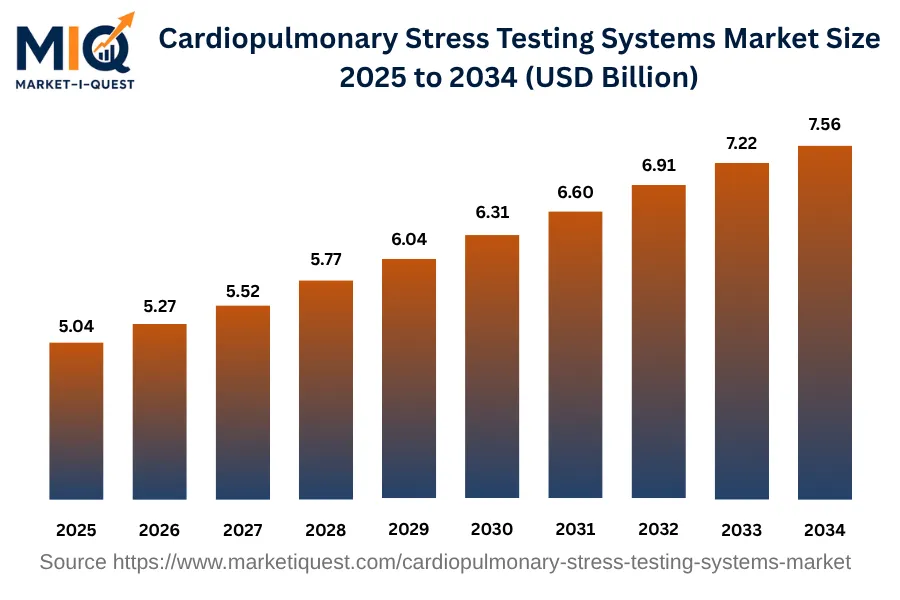
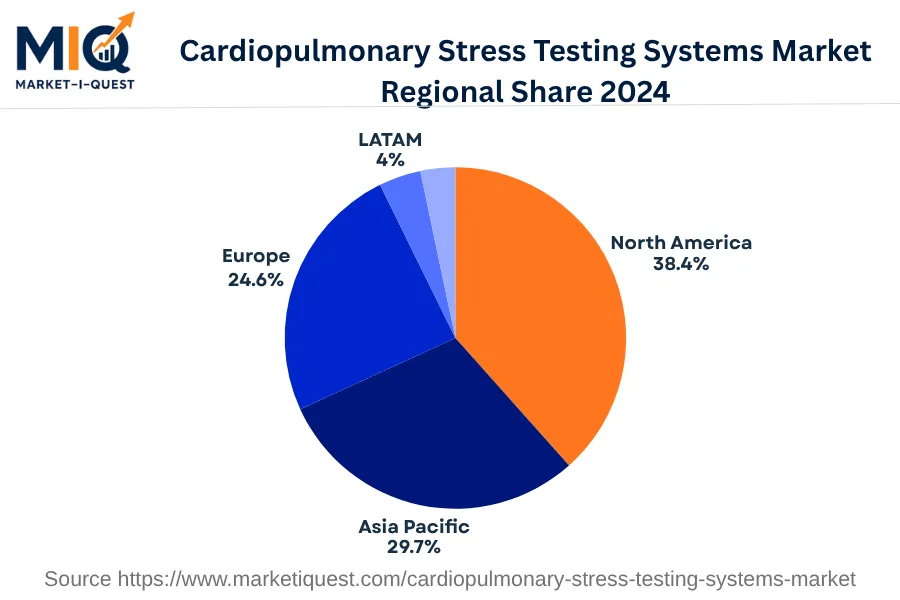
The Cardiopulmonary Stress Testing Systems Market valued $5.04 billion in 2025 and is projected to grow to $7.56 billion by 2034, representing a CAGR of 4.6%. The growth over this period reflects an emphasis on the early detection of cardiopulmonary conditions, which is leading to an increased demand for stress testing systems that deliver fast and accurate results. This testing enables healthcare professionals to make effective therapy decisions, which has contributed to a higher adoption rate of these systems. Also, advancements in testing systems such as portability and ease of use are also supporting the market demand. However, the regional share distribution indicated North America attaining 38.4%, followed by the Asia Pacific with 29.7%, Europe with 24.6%, LATAM with 4.0%, and the MEA region with 3.3% respectively. Indicating the demand for such systems is high in North America due to advanced healthcare infrastructure and health awareness among individuals. However, the Asia Pacific region is also presumed to have considerable demand due to improving healthcare facilities.

Key Takeaways

  • By Product Type - Stress ECG Systems led the segment contributing significantly in the projected period.
  • By Application - Disease Diagnostics represented the most dominant section over the last year.
  • By End User - Hospitals held the major share indicating a robust demand for the testing system in these establishments.
cardiopulmonary-stress-testing-systems-market market size

Key Driving Factors

Widespread Adoption of Preventive Healthcare Measures

Globally, there's a growing recognition of the importance of preventive healthcare. This shift is particularly evident among middle-aged and older demographics who are at a higher risk of cardiovascular and pulmonary diseases. Government-run campaigns and initiatives are empowering these individuals, adopting awareness about the benefits of early diagnosis. Cardiopulmonary stress testing systems play a critical role in this diagnosis process. They are used for evaluating both heart and lung function, making them integral to preventive health check-ups. This proactive approach of medical institutions and conscious patients is thriving the market for cardiopulmonary stress testing systems.
Shift Towards Home-Based Health Monitoring Systems

The current health landscape is undergoing significant changes, with a decisive shift towards home-based health monitoring systems. These systems offer convenience and reduce frequent hospital visits for patients with chronic diseases. Cardiopulmonary stress testing systems are a part of this trend. The demand for portable and user-friendly devices is high, and manufacturers are quick for addressing this demand. This market tends to be driven by patients with pulmonary conditions and chronic heart diseases requiring regular check-ups. Hence, the shift towards in-home care and easy-to-use equipment is serving as a potent factor in driving the market for cardiopulmonary stress testing systems.

Market Evolution by Timeline

2019-2023
During this period, hospitals were the primary buyers of cardiopulmonary stress testing systems, influenced by incidents of cardiovascular diseases primarily in regions of North America and Europe. Systems based on oxygen consumption emerged to assist in patients' exercise tolerance assessments. Integration with existing hospital tech was a common challenge due to advanced and varied technology infrastructures. Policies such as the Affordable Care Act in the United States impacted purchase decisions. Most transactions used leasing as the preferred commercial model, easing financial strains for hospitals. Risks included falsified test results and procedural errors, leading manufacturers to differentiate based on system reliability.
2024
For this year, diagnostic centers increased their procurement of cardiopulmonary stress testing systems, particularly in middle-income regions such as Southeast Asia. Systems integrating resting ECG and stress ECG became prevalent. Interoperability issues with Electronic Health Records remained. Regulations such as the EU's Medical Device Regulation influenced procurement and usage guidelines, requiring systems for meeting high safety and performance standards. Vendors offered subscription-based pricing models. The key risk was operational complexity in these systems impacting test accuracy, dealt with by providing technician training.
2025-2029
The buyer group might shift to include more physical therapy centers and rehabilitation clinics across developed markets such as Japan and the US. The adoption of systems with metronome-assisted self-paced protocols will likely rise. Technological integration with AI for data assessment and machine learning for pattern detection is expected to be witnessed. Frameworks such as Health Insurance Portability and Accountability Act (HIPAA) and Federal Information Security Management Act (FISMA) might be responsible to dictate the handling of recorded patient data. Changing transaction patterns may witness an increase in outright purchase. A growing concern will likely be the software security risks met by bolstering cybersecurity measures.
2030-2034
Governments in underserved regions, such as Sub-Saharan Africa, might procure cardiopulmonary stress testing systems for improving public healthcare infrastructure. Open systems allowing multi-vendor device integration will likely be a substantial supply consideration. Policy impact is expected to include the World Health Organization's 'Global Hearts' initiative, encouraging governments to prioritize cardiovascular disease management. Performance-based contracting might become common, linking vendor payments with system performance. The primary challenge will likely involve the robustness of systems in these emerging markets, due to differences in climate, maintenance capability, and electrical infrastructure, may address by making devices more adaptable to varied conditions.

Future Market Outlook

Future Opportunities

The current landscape of cardiopulmonary stress testing systems presents multiple avenues for future development, especially driven by ongoing technological integration and regulatory support. The increasing prevalence of cardiovascular diseases has underscored the need for more effective diagnostic tools, as indicated by the World Health Organization's 2022 report on global health trends. Companies like StressEcho.com are projected for leveraging cloud-based services for enhancing accessibility and integration of stress test data, aligning with the growing focus on collaborative care models. Partnerships between technology firms and healthcare organizations, such as the 2023 alliance between LifeSignals and several hospitals in the UK, are expected to facilitate the deployment of wearable monitoring devices. These collaborations will cater to the rising demand for real-time patient monitoring and remote diagnostics, especially in vulnerable populations. Furthermore, the adaptation of cardiopulmonary stress tests to align with new payment models, as outlined in the CMS guidelines introduced in 2023, opens opportunities for developing bundled services that can enhance patient engagement. Regulatory advancements, including updates from the ISO regarding medical device cybersecurity standards, present a timely opportunity for manufacturers to enhance security in their devices.

Segmentation Analysis

By Product Type

The market is divided into subsegments including Stress Blood Pressure Monitors, Stress ECG Systems, and Others. Stress ECG Systems accounted for the largest revenue share while Stress Blood Pressure Monitors is expected to grow at the fastest CAGR during the forecast period.

Largest Revenue Share

Stress ECG Systems

Market Share Leader

Stress ECG Systems accounted for the largest share of the revenue in 2024. In the medical testing field, ECG systems are generally viewed as the gold standard when it comes to identifying irregularities and stress to the heart, and this fact is a significant driver for their market dominance. Equally as essential is that these systems have become core to standard testing routines in hospitals and clinics around the world. This widespread adoption comes from the utility they offer in diagnosing a range of cardiovascular conditions ranging from mild to life-threatening. Furthermore, these tests are non-invasive, which adds to their popularity. Geographically speaking, larger and more developed markets such as North America and Western Europe, where advanced healthcare establishments are more prevalent, account for a considerable share of the market. Regulation in these regions also leans in favor of these devices as they are seen as crucial to healthcare delivery.

Fastest CAGR

Stress Blood Pressure Monitors

Forecast Period Growth Leader

Stress Blood Pressure Monitors are expected to grow at the fastest CAGR during the forecast period. The primary growth drivers for these devices are their simple use, cost-effectiveness, and increasing acceptance in patient self-monitoring. As healthcare costs rise globally, there's an accelerating shift towards preventative care, and the implementation of stress blood pressure monitors is a part of that trend. Adoption barriers are decreasing as they are becoming more user-friendly and affordable to the average consumer. Nonetheless, patient education and compliance remain challenges to the sector's growth. On the technology front, improvements in accuracy and the integration of these monitors with digital health platforms can potentially boost adoption rates. Overall, the potential benefits far outweigh the possible hindrances, providing this subsegment a positive growth outlook.

By Application

The market is divided into subsegments including disease diagnostics and pre-operative risk evaluation. Disease diagnostics accounted for the largest revenue share while pre-operative risk evaluation is expected to grow at the fastest CAGR during the forecast period.

Largest Revenue Share

Disease Diagnostics

Market Share Leader

Disease diagnostics subsegment holds the largest share of revenue in the application market due to the widespread necessity for disease detection across the healthcare sector. The main driver for this subsegment is the increasing prevalence of chronic diseases and infectious diseases worldwide. The demand for efficient and speedy diagnostic procedures to ensure prompt treatment is a significant factor contributing to the sector's size. Also, advancements in technology in diagnostic platforms, like automation and miniaturization, promise quicker, more efficient diagnoses. Such trends have resulted in the commercial success of disease diagnostics applications. The customer base is generally made up of hospitals, clinics, and diagnostic laboratories that consistently need to upgrade their facilities in line with technological advances and shifting regulatory standards. The industry is further bolstered by solid and fairly ubiquitous supply chains, mostly in developed regions, ensuring a sustained, high-revenue-generating market.

Fastest CAGR

Pre-Operative Risk Evaluation

Forecast Period Growth Leader

Pre-operative risk evaluation is expected to be the fastest-growing subsegment in the forecast period. Pre-operative assessment is critical in improving surgical outcomes and patient safety, enabling the sector's rapid growth. There is an increased focus on patients' preoperative health status due to the potential to reduce surgical complications. This has led to wider acceptance and adoption of pre-operative risk evaluation in healthcare institutions. The expansion of this subsegment will be powered by technological evolution enabling more precise risk assessments, along with new policies favoring preoperative evaluation. Potential partnerships between diagnostic platform developers and hospitals or clinics can further accelerate growth.

By End User

The market is divided into subsegments including Hospitals, Specialty & Cardiology Clinics, and Others. Of these, Hospitals accounted for the largest revenue share, while Specialty & Cardiology Clinics are expected to grow at the fastest CAGR during the forecast period.

Largest Revenue Share

Hospitals

Market Share Leader

Hospitals holds largest revenue share of the market due to several reasons. Hospitals cater to a broad spectrum of diseases and health conditions, resulting in a higher demand for diverse medical services and devices. Additionally, most surgical procedures, complex treatments, and emergency care are mainly conducted in hospitals, consequentially driving up their usage and spend on medical supplies and services. Meanwhile, large hospitals typically have a more significant budget for advanced technologies and medical devices, contributing to sizeable yearly revenue. Different geographies have a varying number of hospitals, but even regions with fewer facilities often have larger and more equipped hospitals, balancing overall spending. Regulatory policies surrounding procurement and usage of medical supplies also frequently favor hospitals, serving to maintain their dominant position in the market.

Fastest CAGR

Specialty & Cardiology Clinics

Forecast Period Growth Leader

Specialty & Cardiology Clinics are projected to register the fastest growth rate in the coming years. This trend can be justified by increasing incidence of cardiovascular diseases globally and the rising demand for specialized cardiac care. These clinics often utilize the latest technology and follow up-to-date treatment protocols, hence they are adopting and implementing new services and devices quickly. Furthermore, improvements in diagnosis techniques and proactive health check-ups due to increased health awareness among people might contribute to the higher CAGR of these clinics. Partnerships and collaborations with device manufacturers and technology firms can expedite this growth. However, the subsegment's growth potential remains high.

Competitive Analysis

Key Market Players

Manufacturers / OEMs

GE Healthcare
US
Philips Healthcare
Netherlands
Schiller
Switzerland

Key Suppliers & Raw Materials

Medtronic
Ireland
Cardinal Health
US
Johnson & Johnson
US

Distributors, Integrators & Channel Partners

Siemens Healthineers
Germany
Canon Medical Systems
Japan
Mindray Medical International
China

Porter’s Five Forces Analysis

Analysis of the competitive dynamics influencing the Cardiopulmonary Stress Testing Systems Market.

Supplier Bargaining Power

Medium

Suppliers provide specialized components, giving them moderate bargaining power.

Buyer Bargaining Power

High

Buyers, primarily healthcare institutions, have strong bargaining power due to availability of multiple suppliers.

Threat of Substitutes

Low

Low threat due to limited effective substitutes for cardiopulmonary stress testing systems.

Threat of New Entrants

Low

High capital investment and stringent regulatory barriers limit the threat of new entrants.

Competitive Rivalry

Medium

Rivalry is medium within large diagnostic equipment manufacturers with similar product portfolios.

Regional Analysis

Geographic market dynamics and growth opportunities across key regions

Global Market Outlook

cardiopulmonary-stress-testing-systems-market market regional share

North America

In 2024, the North American market for cardiopulmonary stress testing systems manifested substantial growth. Primary drivers for this expansion included rising prevalence of cardiovascular diseases, accelerated technology adoption, and greater healthcare investment in the U.S., Canada, and Mexico. Regulatory approvals of technologically advanced devices, such as echocardiograms and Myocardial Perfusion Imaging, further stimulated market advancement. The demand was augmented by emerging portable systems for home use, catering to the ageing demographic with mobility issues.

Significant trends shaping the market encompassed the expanded use of digital health platforms and the shift towards telemedicine, especially critical amidst the ongoing pandemic that necessitated remote monitoring of patients. The healthcare sector witnessed burgeoning partnerships and acquisitions, notably the collaboration between Medtronic and Fitbit, prioritizing integrated health solutions. Automated systems that incorporate AI and machine learning for predictive analysis also gained prominence, providing enhancement to diagnosis and reduction in human errors. Emphasis on quality assurance, adherence to regulatory standards, and policy enforcement underscored the commitment for accountable service provision in the medical industry. The prime customers spanned across healthcare providers, insurance agencies, medical device manufacturers, and retail pharmacies. Government initiatives also drove market proliferation, with the U.S. Medicare system recognizing the importance of advanced diagnostic tools in efficient healthcare delivery.

Asia Pacific

In 2024, the Cardiopulmonary Stress Testing Systems Market in the Asia Pacific displayed considerable development primarily driven by rising healthcare awareness and advancing technology. The market was particularly bolstered by increasing cardiovascular disease prevalence that expanded the demand for early, precise diagnosis across countries such as India, China, Japan, South Korea, Australia, and central ASEAN markets. Regulatory facilitation of technology adoption, particularly in Japan and Australia, also fueled the market, coupled with substantial healthcare investment initiated by government sectors mostly in China and India.

Trends identified in this period were centered on buyers' increasing preference for non-invasive diagnostic tools, with South Korea leading this change. The emergence of technologically advanced testing systems such as portable devices became apparent due to effective channel strategies developed by manufacturers. Significant partnerships and mergers within key market players, eg. China's Mindray and Australia's ResMed, were observed to consolidate positions and optimize product offerings. Policy enforcements by governments across the region encouraged adherence to standards in product quality and safety. Connected health initiatives in countries like Singapore saw a rise in the use of such systems within healthcare institutions, while manufacturing sectors in China and India boosted supplies in response to increasing system adoption.

Europe

In 2024, the European market for Cardiopulmonary Stress Testing Systems (CPSTS) is vibrant, driven by various demand dynamics and changing trends. Market growth is significantly driven by the increasing prevalence of cardiovascular diseases (CVD) and the greater awareness of early diagnosis in countries such as Germany, the UK, and France. Furthermore, government investment in healthcare technology in the Nordics and Central & Eastern Europe is driving demand for advanced, reliable CPSTS. This market is also shaped by the growing adoption of healthcare digitization. Particularly in Italy, Spain, and Benelux, there is an increasing shift towards the use of digital CPSTS, creating a market trend focused on digital solutions.

Another driving force is pricing dynamics, with more cost-effective systems becoming available, enabling a broader range of healthcare providers to invest in this technology. In terms of trends, customers are increasingly prioritizing reliable, user-friendly devices that offer detailed, comprehensive results. Consequently, manufacturers are partnering to deliver better product solutions, evident in the rise of M&As across European markets. Additionally, with policy enforcement becoming stringent, adherence to medical device certification standards like CE Marking and ISO 13485 has turned into an obligatory trend. The CPSTS market primarily serves the healthcare sector, including hospitals, specialty clinics, and diagnostic centers.

Latin America

In 2024, the cardiopulmonary stress testing systems market in Latin America showed significant dynamism driven by various demand factors and technological advancements. Brazil and Mexico, known for their well-established healthcare structure, became instrumental market players by investing heavily in advanced cardiovascular diagnostics. Three main factors drove the market: the steadily increasing prevalence of cardiovascular diseases, heightened awareness and need for early diagnosis, and government initiatives to upgrade healthcare facilities. Countries like Chile, Colombia, and Peru saw an increase in lifestyle diseases, consequently leading to a surge in demand for these systems. Early adoption of high-tech medical devices in Argentina demonstrated impacts of evolving technology on the market.

Several noticeable trends shaped the LATAM market in this period. Patient preference shifted significantly towards non-invasive diagnostic procedures, creating a thriving demand for these systems. A rise in healthcare partnerships and acquisitions amplified the market's momentum, with operations chiefly seen in enterprise and government-funded healthcare sectors. Lastly, increased enforcement of healthcare standards encouraged healthcare providers to shift to advanced systems, augmenting market growth. The LATAM Cardiopulmonary Stress Testing Systems market in 2024 was essentially driven by increased occurrence of targeted diseases, technology adoption, and policy enforcement, thus reflecting positively on market players' uptake of innovation and adoption of high-quality healthcare procedures.

Middle East & Africa

In 2024, the Middle East and Africa Cardiopulmonary Stress Testing Systems Market witnessed sustained growth driven by key factors and trends. Three primary drivers included increasing investment in healthcare technology, a rise in chronic respiratory diseases, and the adoption of advanced medical equipment in regions like Saudi Arabia, the UAE, Qatar, and Egypt. Enhanced healthcare spending in countries like South Africa, Nigeria, and Kenya contributed to an increased demand for such systems. Simultaneously, governmental regulatory policies in Israel accelerated the adoption of these testing devices in the healthcare sector.

Trends in this market included a shift towards non-invasive and wearable diagnostic devices, and an increased emphasis on telemedicine, particularly in countries like the UAE and Qatar, where telecommunication infrastructures are robust. Partnerships between local hospitals and international medical tech firms, especially in Saudi Arabia and Egypt, were noted. These partnerships aimed at enhancing the standard of care through the adoption of sophisticated technology. A notable trend was the increasing enforcement of quality assurance and compliance standards in the medical device sector, influencing buyer behavior towards choosing certified and reliable testing systems. The primary customers for these systems included healthcare providers and Government-led healthcare facilities, demonstrating the emphasis on public health in the region.

Recent Industry Developments

Latest market innovations, product launches, and strategic initiatives

January 2026

Abbott Medical received FDA approval for its CardioMEMS™ HF System, a pulmonary artery pressure monitoring system classified under cardiopulmonary testing systems, expanding its remote monitoring capabilities for heart failure patients.

—

March 2025 — GE Healthcare released Revolution Vibe CT, an AI-rich cardiology diagnostics system designed to integrate seamlessly with CPET-derived risk scores, reflecting the growing trend toward integrated diagnostic platforms

Frequently Asked Questions