Cardiac Imaging Software Market Snapshot

Key Players

  • Siemens Healthineers (Germany)
  • GE Healthcare (United States)
  • Philips Healthcare (Netherlands)
  • Canon Medical Systems Corporation (Japan)
  • Hitachi Medical Systems (Japan)
  • Agfa Healthcare (Belgium)
  • Circle Cardiovascular Imaging Inc. (Canada)
  • Fujifilm Holdings (Japan)
  • Toshiba Medical Systems Corporation (Japan)
  • Sectra AB (Sweden)

Market Size

Base Year 2024
$0.785 Bn
CAGR
8.37%
Forecast 2034
$1.75 Bn

Market Segments

By Imaging Modality
  • Computed Tomography
  • Magnetic Resonance
  • Ultrasound Imaging
  • X-Ray Imaging
  • Combined Modalities
  • SPECT
  • OVUS
  • OCT
By Application
  • Diagnostic Imaging
  • Image Guided Treatment
  • Patient Monitoring
  • Others
By End Use
  • Hospitals and Clinics
  • Diagnostic Centers

Market Dynamics

Drivers
  • Rising prevalence of cardiac diseases
  • Technological advancements in imaging software
Restraints
  • High implementation cost
  • Lack of technical expertise
Opportunities
  • Rising cardiovascular disease prevalence
  • Innovation in healthcare technology

Market Size

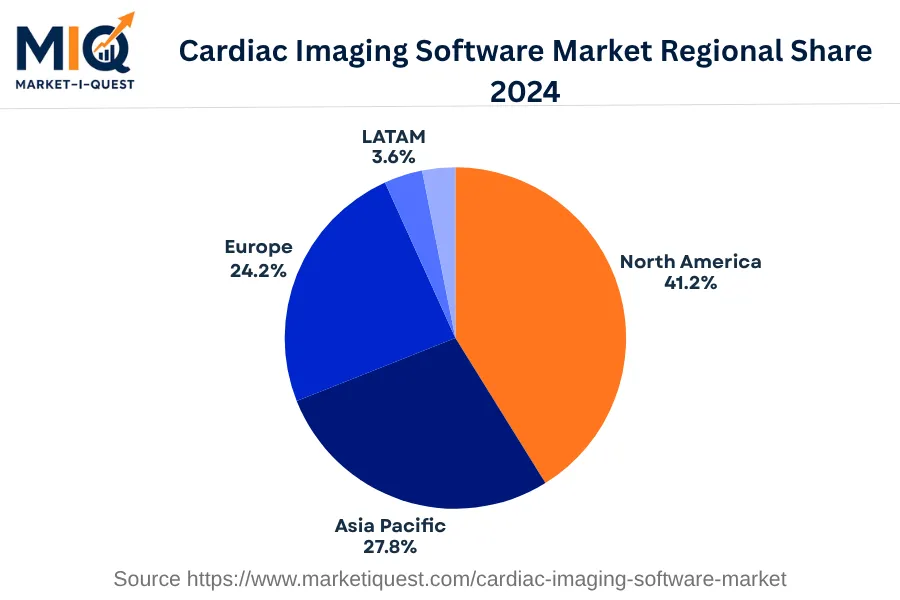
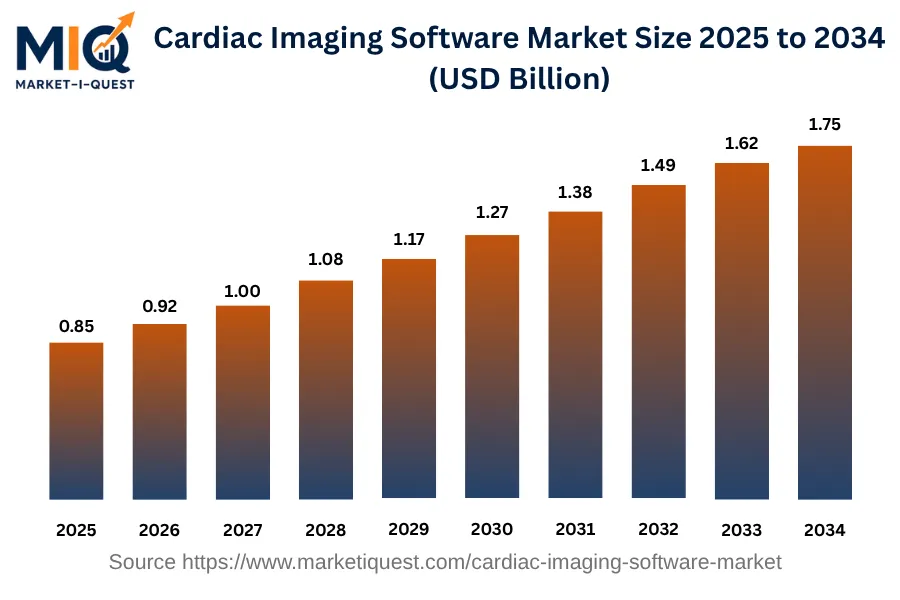
The Cardiac Imaging Software Market is estimated to rise from a size of USD 0.85 billion in 2025 to USD 1.75 billion by 2034, a trend reflecting a Compound Annual Growth Rate (CAGR) of 8.37%. This industry began with a market size of USD 0.78 billion in 2024 and is expected to experience consistent growth over the next decade. The increase in market size can be attributed to the rising demands for efficient cardiac health monitoring and the adoption of advanced, digitized medical technology in the healthcare industry across various regions. Speaking of regional dynamics in 2024, North America composed the largest share of the market at 41.1%, followed by Asia Pacific at 27.8%, Europe at 24.2%, Latin America at 3.6%, and the Middle East and Africa at 3.1%. This information implies a globally dispersed industry with leads in different regions.

Key Takeaways

  • By Imaging Modality - Magnetic Resonance led the Cardiac Imaging Software market in 2024.
  • By Application - Diagnostic Imaging held the predominant share in 2024 within the Cardiac Imaging Software market.
  • By End Use - Hospitals and Clinics held a leading position in the Cardiac Imaging Software market in 2024.
cardiac-imaging-software-market market size

Key Driving Factors

Adherence to Essential Health Coverage Policies

One driver of the cardiac imaging software market is the enforcement of Essential Health Coverage (EHC) policies worldwide. These policies mandate insurance coverage for a comprehensive set of services, including cardiac imaging, for early detection and management of heart disorders. Nations like the United States, with the Affordable Care Act, enforce EHC policies, encouraging healthcare providers to invest in cardiac imaging software to meet patient demand. Therefore, the existence and enforcement of EHC policies are pivotal in pushing the adoption of cardiac imaging software market. Accordingly, this indirectly encourages software developers to enhance and expand their cardiac imaging software offerings, further driving the market growth.

Integration with AI for Improved Diagnosis Accuracy

Another significant driving factor is the integration of artificial intelligence (AI) into cardiac imaging software, enhancing diagnosis accuracy. Clinicians across the globe are increasingly recognizing the importance of AI in diagnosing cardiac conditions, owing to its ability to analyze large amounts of data quickly and identify subtle patterns often missed by humans. Consequently, healthcare providers are motivated to adopt AI-integrated cardiac imaging software, stimulating vendors to incorporate AI technology into their offerings. This trend is gradually changing the landscape of the cardiac imaging software market as AI's integration is deemed essential to stay competitive, thereby driving the demand and further adoption.

Market Evolution by Timeline

2019-2023
The market saw an increasing demand from North America and Europe due to an ageing demographic suffering from cardiac ailments. Software such as GE's Reveal and Agfa's Cardiacvue shipped widely. The use of AI, though promising, was restricted due to regulatory constraints. Initial integration with existing medical systems was challenging. Procedure-based payment models encouraged the use of software in diagnosis. However, the high cost of implementation left it accessible only to large medical facilities and wealthy individuals. High out-of-pocket expenditure was a primary issue in developing regions.
2024
A milestone year as regulatory bodies like the FDA began giving clearance for AI-integrated cardiac imaging software. The focus on value-based care models grew, rewarding efficiency and quality of care; this drove the market further. Smartphone integration emerged as a new application, enabling remote monitoring and management of cardiac conditions. While the supply increased, there were some production delays due to disruptions in the supply chain. The provider-patient relationship shifted towards a more digital trend. Nonetheless, privacy and data security remained major concerns.
2025-2029
Supply chain issues mitigated with suppliers increasingly implementing advanced technology to support production. The move to home-based cardiac care and telemedicine took a significant leap forward owing to COVID-19 pandemic. Driven by the Asia-Pacific region, the market accepted smartphone-integrated software more readily. AI-based predictive analysis and risk scoring drove the software use richer. Partnerships between technology firms and medical institutions fostered growth. With such developments, the market saw a slight decrease in pricing. However, the ethical use of AI in healthcare remained a debated topic.
2030-2034
Widespread adoption of AI-infused cardiac imaging software was evident. Patients and healthcare providers took more proactive roles in prevention as real-time data monitoring became accessible in smartphones. This shift was boosted by government regulations enforcing value-based care. With new market entrants, pricing further decreased making technology accessible to middle-income groups. Globally, the Asia-Pacific region led the market growth. Potential concerns still included data privacy and the effect of AI integration on healthcare workforce.

Future Market Outlook

Future Opportunities

Given the present advancements in cardiac imaging technology, considerable opportunities are anticipated to emerge in personalized medicine and integrated healthcare solutions. With the ongoing initiatives for value-based care in the United States since 2014, healthcare providers are increasingly focusing on staying ahead of patient outcomes through precise diagnostics facilitated by advanced imaging software. Companies like Canon Medical Systems are actively collaborating with academic institutions to develop AI-enhanced imaging tools aimed at tailoring cardiac treatments to individual patients. The integration of cardiac imaging data with wearable health technology, as seen with Apple's ongoing health monitoring features in the Apple Watch series launched in 2023, presents avenues for more comprehensive patient management. Global efforts to enhance health data interoperability, propelled by the OECD's recommendations on health data exchange, will likely bolster collaboration among software vendors. Additionally, the push for electronic health records systems to adhere to strict interoperability standards indicates a trend toward harmonizing data across platforms, thus creating fertile ground for innovative software offerings. Markets in emerging regions, particularly Asia-Pacific, are expanding as healthcare systems modernize and invest in advanced technologies due to increased urbanization and aging populations. This evolving landscape suggests a robust framework for companies willing to explore partnerships that emphasize accessibility and innovation in cardiac imaging solutions.

Segmentation Analysis

By Imaging Modality

The market is divided into subsegments including Computed Tomography, Magnetic Resonance, Ultrasound Imaging, X-Ray Imaging, Combined Modalities, SPECT, OVUS, and OCT. Magnetic Resonance accounted for the largest revenue share while OCT is expected to grow at the fastest CAGR during the forecast period.

Largest Revenue Share

Magnetic Resonance

Market Share Leader

Magnetic Resonance occupies the largest revenue share in part due to its vast application scope across various medical disciplines, from neuroimaging to cardiovascular imaging. Its non-invasive nature and the potentially crucial detail it offers make it a preferred modality for many clinicians. Additionally, enhancements in MR imaging like the use of contrast agents and development of high-field MR systems have incited growth. Customer's preference towards non-ionizing imaging methodologies also drives its lead. More specifically, developed countries where cost is less of a factor and healthcare facilities are better equipped contribute a significant portion to MR's revenue. However, it's important to note that initial equipment expenses and high operational costs make this modality slightly less prevalent in developing regions. Purchasing is generally done through direct ordering or tenders, slightly favoring larger healthcare organizations with more robust procurement processes.

Fastest CAGR

OCT

Forecast Period Growth Leader

In stark contrast to established technology like Magnetic Resonance stands Optical Coherence Tomography (OCT), projected to grow at the fastest CAGR during the forecast period. This rapid growth can be attributed primarily to its expanding utility in ophthalmological practices and cardiovascular procedures. OCT's ability to provide high-resolution, micrometer-scale 3D imaging has driven its rapid adoption, making it a staple in ocular disease diagnosis and management. Moreover, technological advancements and product innovations are further spurring its rate of adoption. There are hurdle-like barriers to entry as more developing countries struggle to include OCT in their healthcare systems due to its high capital expense and necessity of trained personnel. Nevertheless, partnerships between OCT technology vendors and healthcare organizations can help alleviate these challenges and fuel faster growth, especially considering the urgency for more diagnostic methods in managing chronic diseases like glaucoma.

By Application

The market is divided into subsegments including Diagnostic Imaging, Image Guided Treatment, Patient Monitoring, and Others. Diagnostic Imaging accounted for the largest revenue share, while Patient Monitoring is expected to grow at the fastest CAGR during the forecast period.

Largest Revenue Share

Diagnostic Imaging

Market Share Leader

Diagnostic Imaging holds the largest market share chiefly due to the increased demand for early and precise diagnosis. The global trend of preventive care is driving a substantial volume of purchases. Increasing instances of chronic diseases, such as cancer and cardiovascular diseases, imply a greater need for diagnostic imaging. Expansion of healthcare coverage facilitates patient access, contributing to the revenue. At the same time, technology advancements in the diagnostic imaging space, from improved image quality to reduced scan times, have also significantly propelled the adoption. Furthermore, growing economies like India and China have seen a surge in the number of hospitals and diagnostic centres, increasing the scope of the diagnostic imaging segment. Regulatory bodies worldwide are progressively supporting the adoption of diagnostic imaging. However, it's essential to keep in mind that high equipment cost and stringent regulatory protocols may act as barriers to growth in the long term.

Fastest CAGR

Patient Monitoring

Forecast Period Growth Leader

The Patient Monitoring subsegment is expected to grow at the fastest rate due to several factors. At the forefront is the global rise in chronic diseases like diabetes and hypertension, necessitating constant monitoring. The integration of AI and machine learning for predictive analytics has also acted as a growth driver. Adoption barriers include initial high costs and the reluctance of older demographics to fully trust automated systems. However, strategic partnerships are being forged between tech companies and healthcare providers to promote product advancements and breakthroughs. Technology is acting as a catalyst, with wearable tech and remote monitoring systems becoming popular due to the Covid-19 pandemic. Policymakers are starting to understand the capex benefits, potentially leading to favorable policy revisions. In the short term, data security issues need to be addressed to facilitate seamless growth.

By End Use

The market further unravels into certain subsegments in terms of End Use, including Hospitals and Clinics, and Diagnostic Centers. Within this sphere, Hospitals and Clinics emerged as the segment with the largest revenue share, while Diagnostic Centers are projected to grow at an impressive pace, portraying the fastest CAGR outlook during the forecast period.

Largest Revenue Share

Hospitals and Clinics

Market Share Leader

Hospitals and clinics have proven to be the most significant revenue-generating subsegments in the base year 2024. The primary drivers for this predominantly high revenue are the direct access and sheer volume of patients they command. With comprehensive services under one umbrella, hospitals have the capacity to reach an extensive spectrum of demographics, thereby increasing their revenue. Additionally, the regulatory frameworks in many geographies sometimes mandate certain diagnostic or therapeutic procedures to be conducted in a hospital setting, thereby indirectly providing a steady stream of patients and revenue. The nature of the healthcare model, with its high switching costs for patients and the consequential consumer loyalty, bestows an edge to hospitals and clinics. Furthermore, the relatively high purchasing power and wider reach through various channels, including affiliations and partnerships with smaller clinics or centers, contribute to this segment's largesse of the market revenue.

Fastest CAGR

Diagnostic Centers

Forecast Period Growth Leader

Although the Diagnostic Centers subsegment might not have acquired the largest revenue share in 2024, it showcases a promising outlook in terms of growth. The prime factors propelling this growth are the increasing prevalence of chronic diseases, growing awareness about early diagnosis, and the integration of advanced technologies into their operations. As a result, more patients feel inclined to utilize their services, triggering an upsurge in the adoption rate. However, the challenge lies in the reliability of the Diagnostic Centers and their ability to maintain customer trust. Regulatory developments and healthcare reforms are rapidly emerging as catalysts in this subsegment’s growth trajectory. Adoption barriers such as expensive diagnostic tests can be offset by strategic partnerships with healthcare providers and insurance companies, and gradual capital investment in advanced diagnostic tools. Yet, it's essential to acknowledge the near-term risks pertaining to the privacy of patient information and accuracy in diagnosis, which could impact the future growth potential of this segment.

Competitive Analysis

Key Market Players

Major Manufacturers / OEMs

GE Healthcare
US
Siemens Healthineers
Germany
Philips Healthcare
Netherlands

Key Suppliers & Raw Materials

Zebra Medical Vision
US
Arterys Inc.
US
Circle Cardiovascular Imaging Inc.
Canada

Distributors, Integrators & Channel Partners

Capitol Imaging Services
US
RadNet, Inc.
US
Blue Sky Exchange
US

Porter’s Five Forces Analysis

This analysis assesses the competitive intensity and attractiveness of the Cardiac Imaging Software market.

Supplier Bargaining Power

Medium

Suppliers hold respectable power due to proprietary software and unique technical requirements.

Buyer Bargaining Power

High

Large hospitals and diagnostic clinics have purchasing leverage due to high-volume needs for cardiac imaging software.

Threat of Substitutes

Low

Low threat because few viable alternatives exist apart from Cardiac Imaging Software.

Threat of New Entrants

Medium

The high costs and regulatory barriers limit new entrants, but technological advancements could disrupt the market.

Competitive Rivalry

High

Intense rivalry among existing players, driven by differentiation in software accuracy and technological advancements.

Regional Analysis

Geographic market dynamics and growth opportunities across key regions

Global Market Outlook

cardiac-imaging-software-market market regional share

North America

In 2024, the North American market for cardiac imaging software demonstrated increased dynamism driven by technology adoption, regulatory compliance, and rising demand. Enhanced investment in the healthcare sector, fueled by government initiatives in the United States, Canada, and Mexico, amplified the need for advanced diagnostic tools like cardiac imaging software solutions. Regulations mandating better cardiac care hastened software adoption. Hospitals, diagnostics centers, and research institutions emerged as key customers, drawn to the precision, cost-effective benefits, and patient safety improvements the software offered. Wide acceptance of artificial intelligence and machine learning augmented healthcare capabilities and generated interest in sophisticated cardiac imaging software for accurate diagnoses. A rising number of partnerships between healthcare providers and software developers served to streamline the adoption process and improve patient outcomes.

Simultaneously, a significant trend was the shift towards cloud-based platforms that offered scalability, real-time data access, and better data management. Given the strict privacy laws in North America, especially the Health Insurance Portability and Accountability Act in the U.S., software market players prioritized the introduction of secure, compliant solutions. The base year also witnessed increased software integration within telemedicine services, likely a response to the dramatic rise in remote healthcare demands. Consequently, the North American cardiac imaging software market in 2024 reflected a sophisticated blend of technology, regulation, and evolving healthcare demands.

Asia Pacific

In the base year 2024, the Cardiac Imaging Software Market in Asia Pacific was underpinned by various drivers and trends. Key drivers included increased demand in populous countries including China and India due to rising prevalence of cardiovascular diseases exacerbated by lifestyle changes, and the adoption of advanced imaging technologies by healthcare establishments in developed markets such as Japan, Australia, and South Korea. Rising investments in healthcare digitalization, specifically by governments and private sectors in China and ASEAN markets, also stimulated the market. Additionally, pricing dynamics, particularly competitive pricing strategies by key market players, fueled the adoption of cardiac imaging software.

On the trends front, a shift towards cloud-based cardiac imaging software was palpable in markets such as Australia and Japan, driven by advantages in remote access to patient data. Buyers, predominantly healthcare providers, showed keen interest in integrated solutions offering multiple functionalities. Partnerships and M&A activities increased significantly, with many software providers partnering with healthcare providers and device manufacturers to expand their market footprint. Lastly, stricter enforcement of data privacy and security regulations across the region emphasized the need for compliant cardiac imaging software, ultimately guiding product development and feature enhancements.

Europe

In 2024, the Cardiac Imaging Software market in Europe perceives significant growth, favorably driven by strategic factors. Firstly, increased cases of cardiovascular diseases in countries like Germany, United Kingdom, and France propel the demand for efficient cardiac imaging software. Secondly, advancements in technology and investment by healthcare sectors across Europe, especially in Spain and Italy, enhance the adaptation of high-grade software, improving diagnosis efficiency and accuracy. Finally, government regulations mandating advanced cardiac care facilities in Nordics and Benelux have given impetus to the market, ensuring better supply dynamics and pricing.

Trends redefining the market in 2024 include buyers inclining towards AI-enabled cardiac imaging software for comprehensive insights. The shift from traditional diagnostic methods to cardiac imaging software, backed by technological superiority and enhanced functionality, is evident across the healthcare sector in Europe. Key players are found engaging in partnerships and M&As for bolstering their services and expanding their geographic footprint, particularly witnessed in Central and Eastern Europe. Also, an increase in enforcing policies for standardization of cardiac imaging software solutions can be seen to ensure their legitimacy and reliability by the European Union. Thus, it is apparent that the dynamics of the European Cardiac Imaging Software market in 2024 revolves around drivers and trends that push for technological modernization and better healthcare.

Latin America

In 2024, the cardiac imaging software market in Latin America was characterized by a notable rise in demand and technological uptake. Driving factors included increasing cardiovascular disease prevalence, augmented investment in healthcare in countries such as Brazil and Mexico, and a sharp rise in technology adoption across the region's healthcare sector. Regulatory changes, such as Mexico's reforms in digital healthcare, also acted as catalysts for the market's dynamism.

Key trends observed during the year encompassed changes in purchasing behavior within sectors like healthcare professionals, and government bodies. Customers in Brazil, Mexico, and Argentina increasingly preferred cloud-based solutions due to its ease of use and cost-effectiveness. Technological shifts towards AI-driven imaging analysis software became widely recognized in Colombia, Chile, and Peru. Channel dynamics also shifted as software vendors sought partnerships with local hospitals and clinics to increase their footprint. A surge in Mergers and Acquisitions (M&A) activities was evident as leading market players aimed to capitalize on opportunities in Latin America. In terms of policy enforcement, stricter government regulations on data security and patient privacy had significant implications on the cardiac imaging software market. Regions with robust healthcare systems like Buenos Aires, Sao Paulo, and Mexico City emanated strong demand, whereas less urbanized areas lagged due to limited access to advanced technology.

Middle East & Africa

In 2024, the Cardiac Imaging Software market in the Middle East and Africa experienced significant activity. Growth was primarily driven by an escalating demand for advanced healthcare facilities, increasing government investments in healthcare, and a surge in technological adoption across countries including Saudi Arabia, United Arab Emirates, and Qatar. Additionally, stringent healthcare regulations, particularly in Israel and South Africa, fueled market dynamics, compelling providers to upgrade their imaging capabilities, thereby boosting the software market.

Trends in the market were largely guided by shifts in buyer behavior towards preference for minimally invasive procedures and high-quality diagnostic platforms. The growing prevalence of cardiac diseases in countries like Egypt, Nigeria and Kenya augmented this shift. The healthcare sector emerged as the primary consumer, with the government sector also contributing to demand. Moreover, the year saw notable partnerships and mergers among market players aiming to enhance software quality and reach. A prominent trend was the growing policy enforcement across regions, mandating enhanced imaging standards to ensure optimal healthcare delivery. Lastly, the market underwent a significant technology shift, with providers increasingly adopting AI-based cardiac imaging software, particularly in the developed markets of Saudi Arabia and UAE, to improve diagnostic accuracy.

Recent Industry Developments

Latest market innovations, product launches, and strategic initiatives

May 2026

DESKi officially launched HeartFocus Link, an AI-guided cardiac imaging software package. The product functions by connecting a tablet via a simple HDMI setup to any existing cart-based ultrasound machine, displaying a patented 3D guidance system directly onto the live ultrasound feed to help non-specialist clinicians capture high-quality echocardiographic views.

March 2026

Merge announced a strategic integration partnership with Us2.ai within its newly released Merge Cardio 12.5 platform. The software partnership allows Merge’s clinical enterprise users to access FDA-cleared, automated echocardiogram measurement tools natively within their daily reporting workflows.

February 2025

Philips launched SmartSpeed Precise, a next-generation AI-powered MRI acceleration software, at the European Congress of Radiology (ECR). The platform leverages dual-AI engines to significantly speed up complex cardiac MR image acquisition while simultaneously improving baseline image quality.

Frequently Asked Questions