
Caps and Closures Market Snapshot

Key Players

  • Amcor (Australia)
  • Bericap (Germany)
  • Crown Holdings (US)
  • Albea S.A. (France)
  • Guala Closures (Italy)
  • Silgan Holdings Inc. (US)
  • RPC Group Plc (United Kingdom)
  • O.Berk Company LLC (US)
  • Blackhawk Molding Co. Inc. (US)
  • Tetra Laval International S.A. (Switzerland)

Market Size

Base Year 2024
$75.4 Bn
CAGR
5.68%
Forecast 2034
$131.01 Bn

Market Segments

By Type
  • Plastic Caps
  • Closures
  • Roll-on Balls
  • Other Caps and Closures
By End-Use Industry
  • Food
  • Beverage
  • Packaged Water Bottles
  • Pharmaceutical
  • Cosmetics
  • Automotive
  • Others

Market Dynamics

Drivers
  • Growing consumer demand
  • Increased packaging innovations
Restraints
  • Fluctuating raw material prices
  • Stringent environmental regulations
Opportunities
  • Rising Consumer Demand
  • Eco-friendly Material Innovation

Market Size

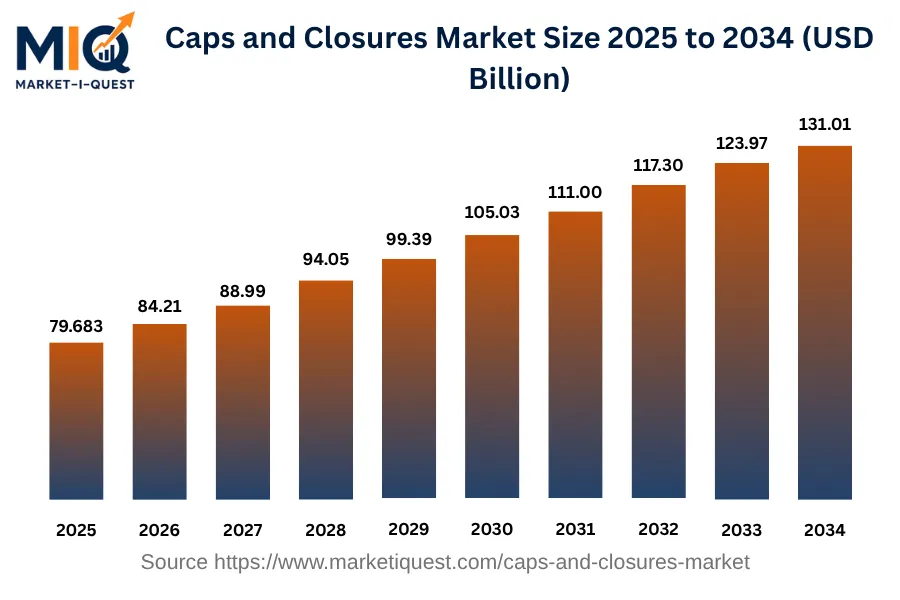
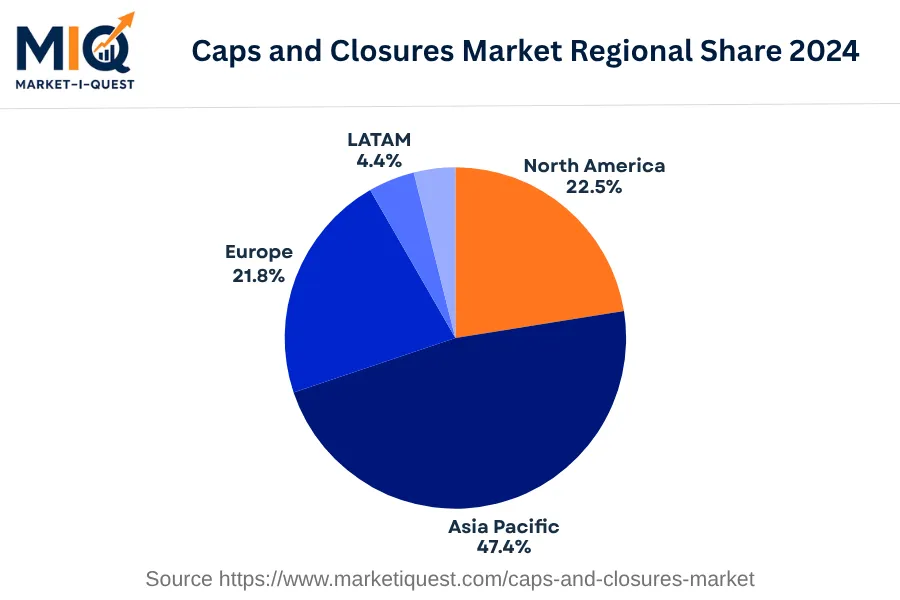
The Caps and Closures Market is expected to increase in size from USD 79.68 billion in 2025 to approximately USD 131.01 billion by 2034 at a compounded annual growth rate (CAGR) of 5.68%. Even from 2024, when the market was valued at USD 75.4 billion, a considerable growth trajectory is evident, underpinned by a consistently increasing annual growth rate. While acknowledging a steady progression, the largest part of this upward trend will manifest from 2025 onwards, peaking in 2034, virtually confirming the long-term sustaining power of the market. As of 2024, the regional market shares were distributed as follows: Asia Pacific leading the pack with 47.4%, closely followed by North America at 22.5% and Europe at 21.8%. The Latin America and Middle East and Africa regions held comparatively smaller shares at 4.4% and 3.9% respectively. The global spread in market control reflects the broad geographical appeal of the Caps and Closures market.

Key Takeaways

  • By Type - Plastic Caps led the Caps and Closures Market accounting for the highest market share.
  • By End Use - Pharmaceutical held major dominance in the caps and closures market in the base year.
caps-and-closures-market market size

Key Driving Factors

Regulatory norms for child-resistant packaging

One of the significant driving factors in the Caps and Closures market is the global enforcement of regulatory norms for child-resistant packaging. The Consumer Product Safety Commission (CPSC) requires certain household substances to be packaged in child-resistant packaging to prevent accidental poisonings. This mandate has led to increased demand in the production of child-proof caps and closures. Notably, these regulations extend to industries beyond just pharmaceuticals, encompassing household cleaning products, pesticides, and certain cosmetics. The cap and closure manufacturers are, thus, continually experimenting with designs and materials to ensure safety without compromising on convenience, thereby propelling market growth.
Growing prominence of e-commerce for personal care products

The second driver is the surge in online sales of personal care and household products, fueling the Caps and Closures market. The Covid-19 pandemic has rapidly accelerated the shift towards online shopping, increasing the need for quality packaging to withstand transportation and storage challenges. Caps and closures play a vital role in preventing leakage, maintaining product quality, and ensuring the products reach consumers in the best condition. This rise in online buying from an ever-expanding demographic present worldwide is pushing manufacturers to focus on innovative, user-friendly, and sturdy caps and closures, thus driving market expansion.

Market Evolution by Timeline

2019-2023
Between 2019 and 2023, the market witnessed a noteworthy shift towards plastic caps and closures, primarily driven by the increasing use of plastic packaging in the food and beverage sector across China, India, and Brazil. Additionally, the ongoing trend of lightweight packaging has positively impacted the demand for plastic closures in North America, and Europe. The key hurdles were the fluctuations in raw material prices impacting the supply chain and increasing concerns related to plastic waste. Policies promoting green and sustainable packaging solutions became prominent, thereby driving manufacturers towards innovation and research. The common pricing tendency was cost-based pricing, linked with the costs of raw materials. Risks included stringent packaging regulations and volatile raw material pricing.
2024
In 2024, fueled by the rise in e-commerce, the demand for caps and closures spiked, particularly from online retailers in US, UK, and Germany. Technological aspects like increasing use of biodegradable materials for closures were dominant. Manufacturers faced supply chain disruptions due to ongoing global trade tensions. Regulations focused on recyclability and reusability of packaging items intensified globally. The value-based pricing model became dominant where prices were based on the product's perceived value. Risks included increased competition from unorganized sector and inconsistent raw material supply.
2025-2029
Wallet, the buyer segment substantially shifted to ecommerce businesses and the pharmaceutical industry due to increasing online shopping and healthcare awareness respectively, stimulating demand predominantly in North America and APAC region between 2025 and 2029, while the supply-side witnessed broad acceptance of advanced closure technologies like push-to-turn and peelable seals. Major limiting factors were the rising costs of advanced closure models and the increasing pressure on manufacturers to reduce carbon footprint. To align with green initiatives worldwide, regulations encouraged use of renewable resources for manufacturing closures. There was a significant increase in partnerships and collaborations across the entire value chain. Major risks involved fluctuating energy costs and changes in consumer behaviour towards alternative closure solutions.
2030-2034
In the period between 2030–2034, it is likely that the demand from the beverage industry, including bottled water and non-alcoholic beverages, will surge owing to increasing health awareness across developing nations like India, and China. Adoption of smart closure technologies integrated with product authentication features will gain momentum, as they provide anti-counterfeiting solution. Policies are expected to become more strict regarding environmental impact of packaging solutions; regulations focusing on reducing carbon emissions will likely be enforced. The commercial models in this era could see a rise in integrated service contracts including product development, manufacturing, and logistics. However, the major risk would likely stem from the inability to scale manufacture of innovative, eco-friendly materials.

Future Market Outlook

Future Opportunities

The caps and closures market is poised for significant growth opportunities as companies align with global sustainability goals. The commitment of major brands, such as Procter & Gamble, to achieve 100 percent recyclable or reusable packaging by 2030 encourages innovations in closure designs. Moreover, the rising consumer awareness regarding environmental issues fuels demand for more sustainable materials, evidenced by companies like Ball Corporation exploring aluminum closures as a viable alternative, first highlighted in 2021. There is also a growing trend towards lightweighting closures to minimize material usage while maintaining functionality, a strategy adopted by numerous manufacturers worldwide. The integration of smart technologies, which allow for digitized consumer interactions, showcases a shift toward connected packaging, with firms like Nestlé piloting smart closures in specific markets beginning in 2023. The expansion of e-commerce drives the need for secure and durable closures, a trend increasingly recognized by packaging firms as their solutions must withstand shipping conditions. Collaborative research developments among universities and the industry are being established to innovate materials, as witnessed in the 2023 partnership between the University of Packaging Innovations and multiple companies. These evolving market dynamics, including regulatory pressures and changing consumer preferences for convenience and functionality, highlight that the caps and closures market will increasingly focus on sustainable practices and technological integrations, paving the way for diverse opportunities in the future.

Segmentation Analysis

By Type

The market is divided into subsegments including Plastic Caps, Closures, Roll-on Balls and Other Caps and Closures. The Plastic Caps subsegment accounted for the largest revenue share while the Roll-on Balls subsegment is expected to grow at the fastest CAGR during the forecast period.

Largest Revenue Share

Plastic Caps

Market Share Leader

Plastic Caps subsegment, as anticipated, is the most significant revenue contributor. The dominance is attributed to the pervasive usage of these caps in almost every packaging form due to their cost-effectiveness and flexibility in terms of shape, size, and color. Proliferation in consumer goods, especially food and beverage, pharmaceutical, and cosmetic industries, propels the demand. Consumers are attracted to plastic caps due to their appealing aesthetic, durability, and lightweight. The ability to incorporate tamper evidence and child resistance features also bolsters the demand. Drivers further include wide geographic coverage, robust supply chain operations, and mature manufacturing processes. Geographically, demand is spurred globally, with a particular emphasis on regions where the aforementioned sectors are expanding at a rapid pace. Switching costs are loftier than perceived as replacing machinery and molds dedicated for plastic cap production imposes significant capital expenditure that organizations are reluctant to bear.

Fastest CAGR

Roll-on Balls

Forecast Period Growth Leader

The subsegment with forecasts for the highest growth rates during the period is Roll-on Balls. Mainly embedded in cosmetic and personal care products such as deodorants and perfumes, they are significantly gaining traction owing to their easy application and convenience. The increasing focus on portable and travel-friendly packaging solutions propels their demand. Those benefiting from these drivers primarily include urban consumers prioritizing comfort and utility. The substantial capital expenditure necessary for technology and machinery to manufacture Roll-on Balls is a barrier for smaller manufacturers, placing market leaders at an advantageous position. However, partnerships and technology licensing deals could serve as potential catalysts for growth. Consumer awareness about product application and ignorance towards product benefits could act as near-term risks impeding growth. Furthermore, the environmental viability of plastic-based Roll-on Balls could be questioned amidst growing sustainability concerns.

By End-Use Industry

The market is divided into subsegments including Food, Beverage, Packaged Water Bottles, Pharmaceutical, Cosmetics, Automotive, and Others. The Pharmaceutical subsegment accounted for the largest revenue share, while the Packaged Water Bottles subsegment is projected to grow at the fastest CAGR during the forecast period.

Largest Revenue Share

Pharmaceutical

Market Share Leader

The Pharmaceutical subsegment dominates the market share in terms of revenue due to the crucial role this industry plays in human health and wellbeing. High demand for pharmaceutical products is driven by growing global populations, ageing demographics, and an increase in chronic and lifestyle-related diseases. This industry also benefits from extensive research and development activities, leading to the constant introduction of new drugs and treatment methods. The pharmaceutical sector is highly regulated across the globe, with firms not only having to meet strict quality and safety standards but also requiring approval for any new products. Furthermore, the high switching costs for customers, owing to the critical nature of these products, underpin a high continuity of demand. The existence of robust distribution channels, including hospitals and pharmacies, further enhance accessibility and market reach. Additionally, improving healthcare infrastructure, particularly in emerging economies, is also driving growth in the Pharmaceutical subsegment.

Fastest CAGR

Packaged Water Bottles

Forecast Period Growth Leader

The Packaged Water Bottles subsegment is anticipated to witness the fastest growth in the market. This can be attributed to a myriad of factors, both supply and demand-side. On the demand side, growing health consciousness among consumers has spurred the preference for bottled drinking water over other beverages. Concerns over the quality of tap water due to issues such as industrial pollution and poor infrastructure have also contributed to increased consumption. On the supply side, innovations in packaging technology, proliferation of eco-friendly bottles and improved distribution channels have augmented industry growth. Notably, partnerships between bottled water companies and retail stores have played a significant role in pushing sales. Meanwhile, there are some notable headwinds that could impact growth trajectories. Adverse perceptions around plastic waste and regulatory constraints pose as some challenges that the subsegment needs to navigate moving forward.

Competitive Analysis

Key Market Players

Manufacturers / OEMs

Amcor Plc
Australia
Crown Holdings, Inc
US
Bericap GmbH & Co. KG
Germany

Key Suppliers & Raw Materials

Dow Chemical Company
US
Dupont
US
Ineos Group AG
Switzerland

Distributors, Integrators & Channel Partners

TricorBraun
US
RPC M&H Plastics
UK
ALPLA-Werke Alwin Lehner GmbH & Co KG
Austria

Porter’s Five Forces Analysis

Analyzing the competitive dynamics in the Caps and Closures Market using Porter's Five Forces Framework.

Supplier Bargaining Power

Medium

Suppliers have a balanced power due to few alternatives for raw material sourcing.

Buyer Bargaining Power

High

Large volume buyers such as beverage companies can negotiate better prices.

Threat of Substitutes

Low

Substitutes for caps and closures, despite being available, are not as functionally efficient.

Threat of New Entrants

Medium

Entry is manageable with modest capital investment but brand establishment requires time.

Competitive Rivalry

High

Many established players compete on quality, innovation, and price in the mature market.

Regional Analysis

Geographic market dynamics and growth opportunities across key regions

Global Market Outlook

caps-and-closures-market market regional share

North America

In 2024, the Caps and Closures Market within North America demonstrated significant dynamism due to various drivers and emerging trends. Key drivers included regulatory changes in industries like food and beverages, pharmaceuticals, and personal care, advocating for enhanced packaging safety and sustainability. The introduction of advanced production technologies also spurred growth, yielding efficient, cost-effective solutions, with companies in the United States, Canada, and Mexico benefiting from ample investment in these technologies. Creative product design and diversification, evident mainly within the US sector, acted as a notable driver of customer demand.

On the trend front, consumer preference for convenient, easy-to-open packaging escalated. Concurrently, there was a noticeable increase in manufacturing partnerships, mergers, and acquisitions, particularly in the US and Canada, aiming at market expansion and capacity enhancement. Cross-sector collaboration between packaging and material science experts surfaced as an imperative trend, seeking to address the rising demand for sustainable, recyclable caps and closures. Strict enforcement of product safety and quality standards further shaped market trends. Key customer sectors incorporating these trends were healthcare and pharmaceuticals, food and beverage, personal care, and manufacturing, with pronounced activity in these industries reflecting on market behavior in North America.

Asia Pacific

In 2024, the Caps and Closures market in the Asia Pacific region experienced steady growth in demand due to various factors. The rise in demand was propelled by the expansion of food and beverage industries in countries like China, India, and Australia. Increased investment in innovative closure technologies in Japan and South Korea aimed to uplift product value through improved shelf-life and portability, further accelerating market growth. Fluctuating raw material prices across ASEAN region, however, posed a challenge to supply dynamics.

A noticeable trend was observed in consumer preference towards easy-to-open and reclosable packaging, particularly in the food and beverage sector. This stimulated a shift towards the production of more convenient and advanced cap and closure products. The enforcement of stringent environmental policies, especially in China and India, triggered a surge in the use of eco-friendly materials in cap and closure manufacturing. Simultaneously, strategic partnerships and M&A activities were prevalent among manufacturers to expand product portfolio and strengthen market positions, evident notably in Australia and the key ASEAN markets. In terms of customer sectors, the pharmaceutical and personal care industry showed a substantial uptake for caps and closures, primarily driven by the pursuit for product integrity and preservation of contents. The retail sector's aggressively growing e-commerce platforms further fueled the market growth, intensifying the need for durable and secure packaging.

Europe

In 2024, the European Caps and Closures Market showcased an impressive demand, fueled by various key drivers and trends. Dominant drivers included increasing demand from the beverage industry, particularly in Germany and the United Kingdom, and stricter regulations by European Union on packaging waste management, which compelled manufacturers to innovate more sustainable cap and closure solutions. Advancements in plastic engineering in Italy and Spain also led to the creation of cost-effective and durable products, further driving the market.

Shifts in consumer behavior were clear, with a rising preference for easy-to-open and resealable caps and closures in retail sectors across France, Nordic countries, and Benelux. This trend nudged manufacturers towards designing more user-friendly products. Concurrently, the incorporation of smart caps, propelled by tech adoption in Central & Eastern Europe, emerged as a notable trend. The growing number of mergers and acquisitions highlighted a vibrant competitive landscape, fostering innovation and fast adoption of new standards. Sustainability guidelines and policies, enforced more strictly in 2024, shaped both the manufacturing and usage of caps and closures. In response, sectors like healthcare, utilities, and manufacturing exhibited a rising adoption of eco-friendly closure solutions, underlining the market's dynamic nature and the interplay of regulations, technology, and end-user preferences.

Latin America

In 2024, Latin America's caps and closures market experienced noticeable development, fueled by regulatory shifts, technological adoption, and dominant economies' performance. The Brazilian government issued stricter packaging standards, catalyzing demand for unique and compliant closure solutions. Driven by increased investment in the food and beverage industry, Mexico's considerable size and advancing manufacturing sector presented lucrative opportunities. Argentina and Colombia, meanwhile, saw accelerated adoption of digital printing technology, improving product differentiation and driving up demand for customized caps. Offset by the region's economic instability, price fluctuations influenced supply dynamics, posing challenges to the market's consistent growth.

Consumer awareness and preferences, reinforced by product perception, drove behavioral shifts throughout the region. In Brazil and Peru, for instance, consumers gravitated towards tamper-evident closures, associating them with safety, thereby triggering market changes. E-commerce expansion in Argentina and Chile influenced distribution channels, propagating demand for durable and secure cap solutions in the packaging sector. Simultaneously, the region saw an uptrend in the integration of recyclable materials in cap manufacturing, exemplified in Mexico's efforts to advance sustainable practices. Partnerships and mergers became prevalent, particularly within the utilities and retail sectors, principally to jointly navigate the policy-driven landscape. Notably, the packaging industry across the region adapted to reflect new norms around caps and closures.

Middle East & Africa

In 2024, the Middle East and Africa (MEA) caps and closures market experienced a notable upsurge, driven by various factors and trends. Demand was high particularly in Saudi Arabia, UAE, and Qatar due to increased consumption in beverages sector and changing lifestyle. The influx of investment in manufacturing sectors in these countries also catalyzed the growth. In South Africa, regulations enforcing safer packaging standards for food products were a major driver in the market upturn.

An emerging trend was a shift toward more eco-friendly caps and closures, predominantly in Israel due to strict environmental policies. In addition, a significant shift towards technology and automation in production was visible in Nigeria and Kenya as they aimed to increase supply efficiency and reduce labor costs. In Egypt, significant market trends included various partnerships and mergers among caps and closures manufacturers to increase market competitiveness and penetration.

Key customer sectors across MEA included food and beverage, healthcare, and cosmetics. Oil and gas sector in Saudi Arabia also contributed significantly due to the secure packaging needs for export. Telecom sector in UAE, preferring easy-to-use and durable closures, also influenced market dynamics. Overall, the year 2024 witnessed robust growth impelled by diverse factors and trends in the MEA caps and closures market.

Recent Industry Developments

Latest market innovations, product launches, and strategic initiatives

February 2026

Amcor and Spadel co-designed a customized tethered cap for premium water brand Wattwiller made of HDPE and designed to be recyclable with PET bottles. The 26mm closure is lighter than the previous design and features a 'flower-shaped' surface to improve grip for consumers with limited dexterity.

July 2025

Closure Systems International (CSI) launched Defender-Lok™ a new child-resistant closure platform for OTC and nutraceutical applications. The closures are certified child-resistant and senior-friendly up to 33% lighter than conventional CRCs and support PolyCycle™ PCR resin integration.

Frequently Asked Questions