Capillary Blood Collection Devices Market Snapshot

Key Players

  • Becton Dickinson and Company (United States)
  • Greiner Holding AG (Austria)
  • Sarstedt AG & Co. KG (Germany)
  • Owen Mumford Ltd. (United Kingdom)
  • Terumo Corporation (Japan)
  • Nipro Corporation (Japan)
  • Improve Medical (China)
  • Radiometer Medical ApS (Denmark)
  • KABE Labortechnik GmbH (Germany)
  • Accriva Diagnostics (United States)

Market Size

Base Year 2024
$1.73 Bn
CAGR
7.24%
Forecast 2034
$3.48 Bn

Market Segments

By Device Type
Lancet Devices, Micro Collection Tubes, Blood Collection Kits
By Material Type
Plastic, Glass, Silicone
By Application
Diabetes Screening, Cardiovascular Disease Diagnosis, Hematological Disorders
By End Use
Hospitals, Diagnostic Laboratories, Home Healthcare

Market Dynamics

Drivers
  • Rising prevalence of diseases
  • Increased demand for non-invasive techniques
Restraints
  • Risk of bloodborne infections
  • High device costs
Opportunities
  • Rising prevalence of diseases
  • Technological advancements in collection devices

Market Size

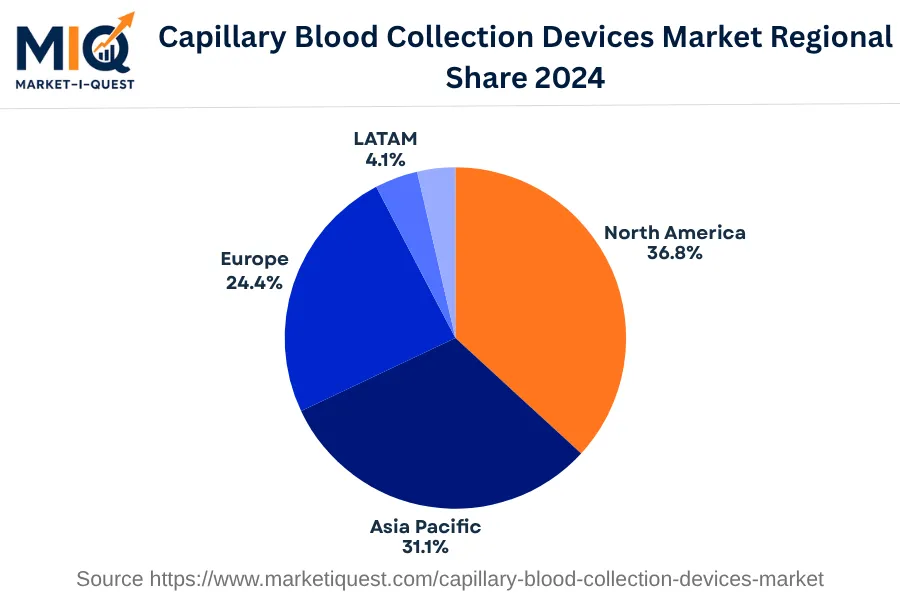
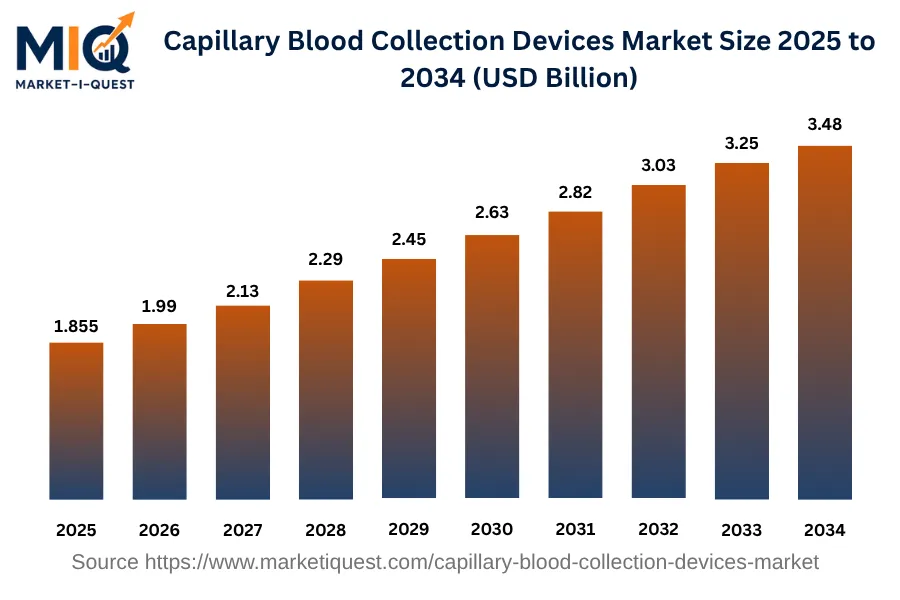
The Capillary Blood Collection Devices Market was sized at 1.73 billion USD in 2024 and grew to 1.86 billion USD in 2025. This substantial growth continued over the following years, reaching an impressive 3.48 billion USD in 2034. This represents a CAGR of 7.24% over the 10-year period spanning 2025 to 2034. The primary contributors to this growth include the steady rise in demand for diagnostic services, the surge in disease prevalence, and advances in product design and technology. This notable progression in the capillary blood collection devices market was also influenced by regional market shares. In 2024, North America held the highest share at 36.82%, followed by Asia Pacific at 31.14%, Europe at 24.36%, while Latin America and Middle East & Africa comprised smaller shares at 4.08% and 3.6%, respectively.

Key Takeaways

  • By Device Type - Lancet Devices held the majority share in the last fiscal year.
  • By Material Type - Plastic led the market by a predominant margin in the base year.
  • By Application - Cardiovascular Disease Diagnosis was the fastest-growing sector showing an upward trajectory in recent years.
  • By End Use - Hospitals had a commanding lead accounting for the highest usage of these devices.
capillary-blood-collection-devices-market market size

Key Driving Factors

Implementation of Stringent Safety Regulations

The rise in the market for capillary blood collection devices is significantly influenced by the implementation of stringent safety regulations worldwide. Bodies such as the United States Occupational Safety and Health Administration (OSHA) set standards for bloodborne pathogens, driving the adoption of safe and effective collection devices. These devices are designed to reduce the contamination risk during collection and minimize needlestick injuries. As human blood contains potentially harmful microorganisms, the higher standard safety prevents the spread of infectious diseases, promoting the importance and usage of such devices.

Increasing Adoption of Point-of-Care Testing

Point-of-Care (POC) testing is emerging as a trend in diagnostics, which significantly influences the Capillary Blood Collection Devices Market. These tests require small sample volumes, which can be conveniently collected using capillary blood collection devices. The ease, speed, and accuracy offered by POC testing have increased their adoption in several areas such as home healthcare and remote patient monitoring. The push for medical decision-making at or near the patient's location necessitates the need for these blood collection devices, thereby fueling their market growth.

Market Evolution by Timeline

2019-2023
From 2019-2023, the primary buyers in the Capillary Blood Collection Devices Market were diagnostic laboratories, hospitals, and homecare settings. The adoption rate was high in regions like North America and Europe due to the increased incidence of diseases requiring blood analysis. Suppliers such as Becton, Dickinson and Company were key players, with a wider product range. The integration with laboratory information systems increased, yet interoperability was a typical constraint. Regulations like the Clinical Laboratory Improvement Amendments in the U.S. influenced adoption heavily. Having a commercial model with competitive pricing was essential for suppliers due to the high buyer bargaining power. New contract models emerged, for example, bulk purchasing and long-term agreements.
2024
In 2024, there was an observed increase in demand for capillary blood collection devices from the pediatric and geriatric population due to ease of use in these segments. Countries like China and India witnessed a growth in the market because of increased disease prevalence and healthcare spending. Novo Nordisk came up with safety needles to maintain an integral part of their supply. The role of effective supply chain management was underlined to reduce costs. The European Union implemented standards concerning needlestick injuries, affecting market dynamics. Flat-rate deals became typical, allowing buyers to plan their spending better. Suppliers started facing procurement difficulties because of varying international regulations.
2025-2029
Between 2025-2029, demand will likely increase in underdeveloped regions, driven by the rollout of mass vaccination programs. International organizations like UNICEF is expected to become significant buyers for these devices. Teleflex Medical OEM might launch products with improved ease of use, setting a trend among suppliers. Advances in technology will likely witness increasing integration of devices with digital health platforms. GDPR regulations may affect the data handling process during collection and analysis. In the commercial model, partnerships with public health bodies will likely become common. Moreover, the establishment of local manufacturing units to bypass import regulations and taxation might become a successful strategy.
2030-2034
The period from 2030-2034 is expected to witness a surge in demand from homecare settings as a result of an aging population globally. The developing markets, particularly Southeast Asia, will likely become significant contributors due to evolving healthcare infrastructure. Suppliers might explore advanced technologies for efficient blood collection, while ensuring minimal pain. For instance, GN ReSound, is expected to design devices specifically for hearing-impaired individuals. There will likely uniform global standards by WHO for capillary blood collection, simplifying the regulatory landscape. Predictable pricing model might shift towards value-based care, making partnerships with insurance providers crucial.

Future Market Outlook

Future Opportunities

Future opportunities in the capillary blood collection devices market appear strengthened by ongoing regulatory support and technological advancements. With recent policy shifts in countries like Canada, pushing for broadened access to home healthcare solutions, manufacturers are well-positioned to develop new products that comply with heightened safety standards. The World Health Organization, guidelines, emphasized the need for reliable blood collection methods in diagnostics, further fueling interest in this segment. Additionally, research institutions are collaborating with companies like Roche to explore novel collection methods that require less blood volume. These collaborations hint at a future where smaller samples can yield clinically relevant insights, fostering expanded applications in chronic disease management. Furthermore, partnerships between software companies and device manufacturers have the potential to enhance data analytics, enabling real-time diagnostics via mobile platforms. As the elderly population continues to grow globally, particularly in Japan and Western Europe, the market may find opportunities in developing devices that cater specifically to this demographic's needs. Moreover, as healthcare continues to pivot towards patient-centric models, incorporating telehealth solutions into capillary blood collection can leapfrog traditional barriers to access. This strategic alignment with broader healthcare trends, like personalized medicine and preventive care, is set to allow companies to innovate and provide tailored solutions, paving the way for growth in this niche yet evolving market.

Segmentation Analysis

By Device Type

The market is divided into subsegments including Lancet Devices, Micro Collection Tubes, and Blood Collection Kits, with Lancet Devices accounting for the largest revenue share while Micro Collection Tubes are expected to grow at the fastest CAGR during the forecast period.

Largest Revenue Share

Lancet Devices

Market Share Leader

Lancet Devices are leading in terms of revenue. This can be attributed to a number of drivers that stem from both customers and the industry itself. Firstly, there has been a substantial increase in the prevalence of infectious diseases globally. This has surged the demand for Lancet devices used for diagnostic testing. In terms of customer preferences, Lancet Devices boast minimal pain in blood sample collection due to their designs, driving more patients towards their use. Furthermore, these devices are also used widely across different geographical regions to perform capillary blood sampling procedures efficiently, thus contributing to the revenue increment. In terms of geography, multiplication in occurrences of diabetes worldwide has triggered the escalating demand in different regions. The regulatory and supply-side of the Lancet Devices market also play a significant role, with several governments supporting the extensive use of these devices for diagnostic testing in their healthcare policies.

Fastest CAGR

Micro Collection Tubes

Forecast Period Growth Leader

Micro Collection Tubes is the fastest growing subsegment, several factors point to their growing dominance. Technological advancements are playing a major role in this growth, with new innovations allowing for more efficient and reliable collection and storage of blood samples for clinical laboratory tests. Healthcare facilities are also increasingly adopting the use of Micro Collection Tubes as they offer a user-friendly design for medical professionals and patients, contributing to their increase in popularity. Furthermore, private and public spending on healthcare and promising collaborations to improve the product's efficiency are serving as catalysts for growth. This subsegment is expected to outshine the others in terms of growth in the coming years according to the assumptions based on the common market structure.

By Material Type

The market is divided into subsegments including Plastic, Glass, and Silicone. Plastic accounted for the largest revenue share while Silicone is expected to grow at the fastest CAGR during the forecast period.

Largest Revenue Share

Plastic

Market Share Leader

Plastic constitutes the largest subsegment by revenue in the base year of 2024 due to its versatile functionality and cost-effectiveness. The widespread use of plastic in numerous industries, from packaging to electrical and automotive, showcases its versatility and drives its demand. In the context of cost, plastic materials are generally cheaper and easier to mass-produce than glass or silicone, making it an appealing choice for manufacturers aiming to reduce costs. Furthermore, the lightweight nature of plastic, compared to glass and silicone, offers efficient and less costly transportation. Besides cost and versatility, plastic's durability in terms of resistance to breakage also contributes to its large revenue share. Although concerns related to environmental sustainability present challenges, recycling efforts and improvements to biodegradable plastics can help maintain the growth of this subsegment.

Fastest CAGR

Silicone

Forecast Period Growth Leader

Silicone shows the most robust growth forecast. This strong outlook can be traced back to a few key drivers. Silicone's thermal stability, resistance to weather and radiation, and flexibility make it a preferred material in various high-temperature applications and harsh environmental conditions fields where traditional plastics fail. Also, there's an increasing preference for Silicone in healthcare and food and beverage industries, given its biocompatible and non-toxic properties. As for adoption barriers, the relatively higher cost of Silicone could potentially inhibit its growth; yet, increased demand from medical, automotive, and electronics industries, factors that can drive down production costs through economies of scale, can be regarded as catalysts for growth.

By Application

The market is divided into subsegments including Diabetes Screening, Cardiovascular Disease Diagnosis, and Hematological Disorders. In 2024, the Diabetes Screening subsegment accounted for the largest revenue share, while the Cardiovascular Disease Diagnosis subsegment is expected to grow at the fastest CAGR.

Largest Revenue Share

Diabetes Screening

Market Share Leader

The Diabetes Screening sector is the most revenue-driving subsegment as of 2024. The major factor contributing to its dominance is the rise in global incidence of diabetes, fueled by an increase in obesity and unhealthy lifestyles. With the World Health Organization predicting that diabetes will be the 7th leading cause of death by 2030, the demand for early and effective screening methods is higher than ever. In addition, advancements in technology have paved the way for the development of better diagnostic tools, contributing to the market share of this subsegment. Regional wise, the Asia Pacific region is a significant consumer due to its large population base and increasing awareness of early diabetes detection. Diabetes screening processes have also become a mandatory part of regular health checkups in many countries, boosting revenue. Also, patient purchasing behaviour has shifted towards preventive healthcare, further accelerating screening test demands.

Fastest CAGR

Cardiovascular Disease Diagnosis

Forecast Period Growth Leader

The Cardiovascular Disease Diagnosis subsegment is predicted to grow at the fastest CAGR. Several factors are promoting growth in this area, including the rising global incidence of cardiovascular diseases, fueled by an aging population and sedentary lifestyles. The technological advancements in diagnostic methods, such as the introduction of AI and ML, are removing barriers to adoption, facilitating quicker and more precise diagnostics. Government policies supporting early diagnosis and treatment of heart disease also act as a catalyst for this subsegment. Besides, significant investments in the development of health infrastructure and access to advanced diagnostic services are expected to propel the market.

By End Use

The market is divided into subsegments including Hospitals, Diagnostic Laboratories, and Home Healthcare. Hospitals accounted for the largest revenue share while Home Healthcare is expected to grow at the fastest CAGR during the forecast period.

Largest Revenue Share

Hospitals

Market Share Leader

The Hospital segment enjoys the largest revenue share in the end use market. This can be attributed to the numerous factors impacting revenue generation in these establishments. Primarily, hospitals are the primary care centers and the first point of contact for serious and complex health conditions that require technologically advanced medical interventions. They provide a wide range of diagnostic, emergency, treatment, and other services. Additionally, this subsegment enjoys a stronghold due to increased government spending on healthcare infrastructure, expansion of multi-specialty hospitals and the rising influx of patients for treatment of varied diseases. Moreover, hospitals in developed and developing countries are increasingly adopting advanced medical and diagnostic devices to provide enhanced healthcare services. High patient dependency, government funding, and a wide array of healthcare service offerings are some reasons that contribute to hospitals holding the highest market share. In essence, their comprehensive care completes a value proposition that encourages purchasing, promising stable revenues.

Fastest CAGR

Home Healthcare

Forecast Period Growth Leader

Home Healthcare has been identified as the fastest-growing subsegment in the current market framework. There are multiple catalysts to this trend. An aging global population shifts demand towards regular, non-emergency care that can be conveniently provided at home. Additionally, technological advancements have made several diagnostic and therapeutic devices accessible and easy to use, fueling the growth of home care. The adoption and implementation of home healthcare services are also encouraged by the cost-effectiveness and minimized risk of hospital-acquired infections. However, with increased partnerships between home healthcare agencies and hospitals, and clear policy guidelines designed to streamline the process, robust growth in this subsegment is anticipated.

Competitive Analysis

Key Market Players

Manufacturers / OEMs

Greiner Holding AG
Austria
Becton, Dickinson and Company
US
Sarstedt AG & Co.
Germany

Key Suppliers & Raw Materials

Cardinal Health
US
Medtronic
Ireland
Thermo Fisher Scientific Inc.
US

Distributors, Integrators & Channel Partners

McKesson Corporation
US
Henry Schein
US
VWR International, LLC
US

Porter’s Five Forces Analysis

Analysis of the competitive forces acting on the Capillary Blood Collection Devices Market.

Supplier Bargaining Power

Medium

Suppliers controlled by technological advancements and raw material availability.

Buyer Bargaining Power

High

Buyers have numerous options with regard to different types, sizes, and brands of devices.

Threat of Substitutes

Low

Switching to alternative testing methods require new types of devices, increasing capex.

Threat of New Entrants

Medium

Regulatory barriers and high R&D costs somewhat limit new entrants.

Competitive Rivalry

High

High competition among established players, differentiation mostly based on innovation and price.

Regional Analysis

Geographic market dynamics and growth opportunities across key regions

Global Market Outlook

capillary-blood-collection-devices-market market regional share

North America

In 2024, the North American market for capillary blood collection devices witnessed significant traction. This growth was mainly driven by the increasing prevalence of diseases requiring regular blood testing, stringent regulations for safe blood collection, and the rising adoption of advanced technologies. The demand for these devices in the U.S. spiked, largely due to an aging population and increasing needs for home care solutions. In Canada and Mexico, increased healthcare expenditure and government initiatives to promote safe blood collection practices influenced the market.

Simultaneously, trends such as a shift towards minimally invasive techniques for blood collection, customer preference for portable devices, and increased reliance on online sales channels shaped the market dynamics. U.S. market players engaged in strategic partnerships and acquisition activities to secure a competitive edge while Mexico saw a rise in the adoption of digital healthcare solutions. Standardization in the design and operation of collection devices also became a focal point of policy enforcement in Canada. Key sectors that utilized capillary blood collection devices included healthcare, clinical laboratories, home diagnostic centers, and blood donation centers. This reflects the wide acceptance of these devices across various domains, affirming the North American market's steady customer base in 2024.

Asia Pacific

In 2024, the market for capillary blood collection devices in the Asia Pacific region demonstrated significant growth. This escalation was driven by increasing healthcare expenditures and medical diagnostic advancements, particularly in countries such as China, India, and Japan. Moreover, improved healthcare infrastructure coupled with government-led initiatives to raise public health awareness in South Korea and key ASEAN countries bolstered the market. Similarly, higher investment inflow in the healthcare sector and adoption of technologically advanced devices were evident in Australia. This was aided by favorable reimbursement policies which impacted the pricing dynamics and further stimulated market expansion.

Trends in 2024 include a shift in consumer behavior, adopting more preventive health measures and regular screenings, leading to increased demand for collection devices. In response, manufacturers invested in innovation and produced more user-friendly, efficient devices. There was a spike in partnerships, particularly in India and China, where domestic businesses associated with international manufacturers to expand their market footprint. In terms of application, hospitals remained the most significant customers, followed by diagnostics centers across the region. Simultaneously, the use of collection devices marked an uptick in sectors like manufacturing and retail, particularly in Australia, as a part of routine employee health checks. Hence, these prevalent dynamics in 2024 attribute to both the robustness and potential of the region's capillary blood collection devices market.

Europe

In 2024, the European Capillary Blood Collection Devices Market showed noteworthy dynamics. Contributing factors included the rising prevalence of diseases requiring blood diagnosis, robust investment in healthcare infrastructure, and the increased adoption of minimally invasive diagnostic procedures. In particular, regulatory frameworks favoring safe blood collection practices substantially influenced the market. Furthermore, the competitive pricing strategy adopted by major market players influenced supply-demand dynamics as well.

Sweeping trends in this market included a shift toward disposable blood collection devices due to hygiene and safety preferences, which significantly impacted consumer behavior. Rapid advancements in technology led to the increased popularity of plastic-made devices, aiding the prevention of contamination. In terms of channel dynamics, online sales gained remarkable traction due to its convenience, catalyzing market growth further. In 2024, the market continued to be driven by needs from the healthcare sector, particularly hospitals, diagnostic centers, and blood banks across Germany, the UK, France, Italy, Spain, the Nordics, Benelux, and Central & Eastern Europe. Notably, policy enforcement for safe blood collection practices became stringent in these countries, re-enforcing industry standards. This suggests an increased emphasis on patient safety and quality care, illustrating the evolving priorities within the European Capillary Blood Collection Devices Market.

Latin America

In 2024, the Capillary Blood Collection Devices Market in Latin America (LATAM) saw significant evolution due to several factors. Demand increased, driven by the rising prevalence of chronic diseases across Brazil, Mexico, Argentina, Colombia, Chile, and Peru. Furthermore, governmental regulations that promoted primary healthcare and disease screening accelerated market growth. Technological advancements and adoption also substantively influenced the market. Portable and low cost devices gained preference due to their ease of use and affordability. Moreover, investment in healthcare infrastructure and the expansion of diagnostic centers across LATAM significantly bolstered supply dynamics.

Several trends were observed during 2024, including an escalated preference for disposable devices amongst healthcare providers due to hygiene concerns. The market also leaned towards non-invasive techniques for blood collection, particularly from pediatric and geriatric patient groups. Mandatory compliance with blood safety regulations in various countries further shaped these trends. A shifting focus towards home healthcare services, especially in Argentina, called for the widespread adoption of skin puncture devices. Additionally, the retail sector saw increased consumer inclination towards purchasing safety lancets, reflecting concerns over needlestick injuries. Technological improvements in device design and operation were also witnessed, demonstrating the market’s dynamic nature and potential. Overall, the LATAM capillary blood collection devices market in 2024 revealed important insights into consumer preferences and health sector influences.

Middle East & Africa

In 2024, the Capillary Blood Collection Devices Market demonstrated significant growth in the Middle East and Africa, primarily driven by the rising prevalence of diseases necessitating regular blood testing. Notably, the healthcare sectors of countries like Saudi Arabia, United Arab Emirates, Qatar, and South Africa spearheaded this growth due to increased investments in healthcare infrastructure and steeper adoption of advanced diagnostic technologies. Demand surged in these nations, accompanied by comprehensive regulatory frameworks ensuring quality control of these devices.

Parallelly, changes in buyer behavior trends were observed. A shift towards minimally invasive procedures saw increased usage of capillary blood collection devices in diagnostic centers, clinics, and home care. Moreover, several countries initiated partnerships and mergers, emphasizing the role of capillary blood collection devices in efficient diagnosis and patient monitoring. For instance, private healthcare centers in Nigeria and Kenya collaborated with manufacturers for a steady supply of these devices. Regulatory bodies in Israel mandated stringent standards for these devices to assure patient safety and accuracy of results. Across the region, the manufacturing and retail sectors played vital roles in device supply and distribution. Advancements in the telecom sector facilitated connected healthcare solutions using these devices. Pertinently, the government and financial sectors also contributed by providing funding and establishing policies for device procurement and usage.

Recent Industry Developments

Latest market innovations, product launches, and strategic initiatives

December 2025

Hims & Hers Health, Inc. entered into a definitive agreement to acquire YourBio Health, Inc., a Boston-based pioneer in capillary whole blood sampling technology. YourBio's TAP® device uses bladeless microneedles thinner than an eyelash to collect high-quality capillary blood samples in seconds, without the pain of traditional fingerstick or venipuncture. The transaction was expected to close in early 2026, subject to regulatory approvals.

Frequently Asked Questions