
Calcined Anthracite Market Snapshot

Key Players

  • RHEINFELDEN CARBON (Germany)
  • Elkem (Norway)
  • Asbury Carbons (USA)
  • Ningxia Wanboda Carbons & Graphite Co. Ltd. (China)
  • Gas Calcined Anthracite Coal (USA)
  • Resorbent (Czech Republic)
  • Shri Kalindi Coal Company (India)
  • IndoCarb Solutions LLP (India)

Market Size

Base Year 2024
$3.64 Bn
CAGR
1.7%
Forecast 2034
$4.31 Bn

Market Segments

By Type
  • Gas
  • Electrical
By Application
  • Pulverized Coal Injection
  • Basic Oxygen Steel Making
  • Electric Arc Furnaces
  • Others

Market Dynamics

Drivers
  • Rising steel production
  • Increasing demand in electric furnaces
Restraints
  • High operational costs
  • Strict environmental regulations
Opportunities
  • Calcined Anthracite adoption in steel manufacturing
  • Calcined Anthracite use in energy production

Market Size

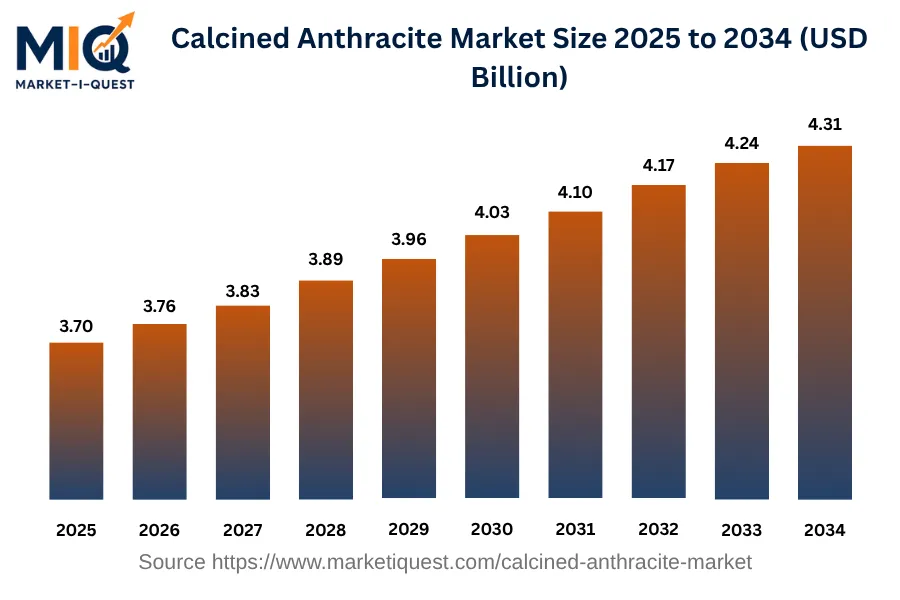
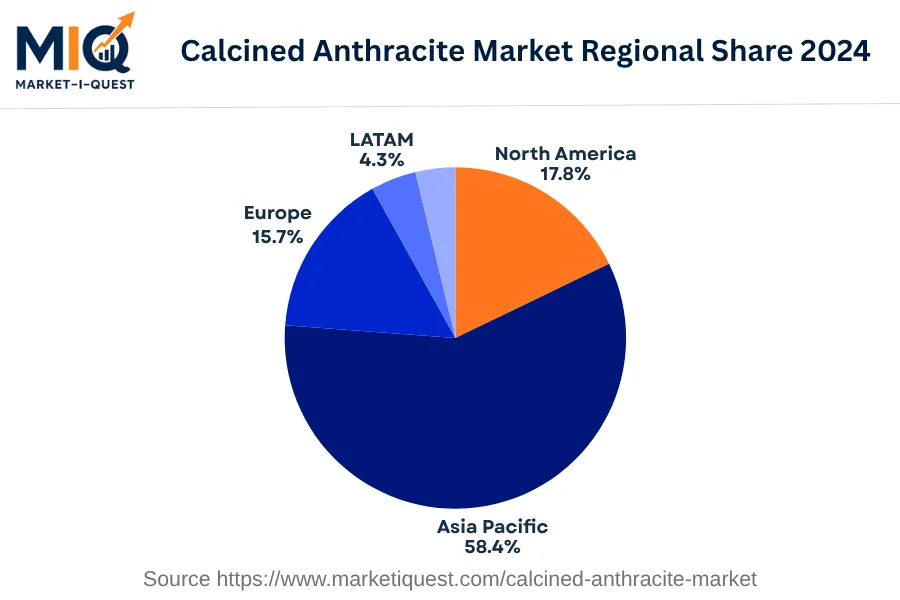
The Calcined Anthracite Market is projected to increase from 3.70 billion USD in 2025 to 4.31 billion USD in 2034, logging a CAGR of 1.7%. The increment is gradual over the years, underpinned by the consistent surge in demand. Tracking the growth course from an initial value of 3.64 billion USD in 2024, the market sees a slight ascend to 3.70 billion USD by 2025, thereafter maintaining the upward trajectory to achieve the 2034 estimation. In 2024, the regional share mix was dominated by Asia Pacific with a commanding 58.36% of the total market, followed by North America and Europe with 17.84% and 15.72% respectively. Meanwhile, LATAM and MEA had a comparatively lower share, representing 4.31% and 3.77% of the overall market respectively. These regional share proportions contributed to the overall progression of the Calcined Anthracite Market within the observed period.

Key Takeaways

  • By Type - Gas held a significant position in the Calcined Anthracite Market in 2024.
  • By Application - Basic Oxygen Steel Making showcased rapid expansion during the forecast period.
calcined-anthracite-market market size

Key Driving Factors

Shift Towards Environmentally-Friendly Manufacturing Processes

Increasingly stringent environmental regulations are driving industries to reduce their environmental impact. The calcined anthracite market is impacted by such shifts, considering that the calcination process results in a cleaner-burning coal. This cleaner coal is highly desired within metallurgy and energy generation industries, as it significantly reduces the emission of harmful pollutants. As environmental regulations like the Clean Air Act in the United States and the European Industrial Emissions Directive tighten their requirements on industrial pollution, the market for calcined anthracite gains momentum. Industries see calcined anthracite as an attractive solution to comply with these regulations, without sacrificing their operational efficiency.
Increased Utilization in Steel Manufacturing

The growing need for high-quality raw materials in steel manufacturing substantially pushes the demand for calcined anthracite. Calcined anthracite, known for its low impurity content and high carbon content, is widely used in the process of manufacturing steel as a cost-efficient substitute for traditional coke. As an essential part of the steel formulation process, it is utilized to improve the strength and durability of the final product. With the ongoing global infrastructural development and growing automobile industry, the demand for steel is increasing. This surge significantly propels the calcined anthracite market, as manufacturers continue to leverage its benefits in their production processes to meet the high steel demand.

Market Evolution by Timeline

2019-2023
Between 2019 and 2023, primary buyers of calcined anthracite include steel manufacturers, specifically in Asia-Pacific regions like China and India. The use of calcined anthracite in steel production has been observed due to its high fixed carbon content and low sulfur content. Supplies have been predominantly provided by China, demonstrating integration maturity. However, mine closures in China have posed constraints on the supply. From a policy perspective, China has implemented stricter environmental norms affecting the extraction of anthracite. Commercially, long-term contracts have been the prevailing model, with scant fluctuations in prices given the constraints in supply. Risks in this period were mainly associated with Chinese policy shifts and supply bottlenecks.
2024
In 2024, steel manufacturers continued to be the primary consumers of calcined anthracite. The demand notably rose in the United States and European regions. Production technology shifted to electrically calcined anthracite due to its energy efficiency. Constraints persisted due to production limitations and the impact of China's environmental regulations. These dynamics induced a trend of partnerships between buyers and suppliers to ensure stable procurement. Market risks were centered around supply chain disruptions and competitive price pressures influenced by the tightening global regulations on mining practices.
2025-2029
From 2025 to 2029, spiking demand in electrically powered industries spread the buyer segment beyond steel manufacturers to battery manufacturers, primarily in the US, Germany, and South Korea. The supply technology continued to lean towards electrically calcined anthracite for environmental efficiency. The implementation of global carbon-emission norms influenced this adaptation. In terms of commercial model, a mix of spot contracts and long-term agreements was observed. The introduction of carbon emission trading schemes presented a potential risk, affecting the operations of anthracite mines and further intensifying supply constraints.
2030-2034
Between 2030 and 2034, the significance of hardware manufacturing in fast-growing tech regions like Silicon Valley drove up demand. Power generation industries also emerged as a buyer segment due to calcined anthracite's use as electricity conductor. Dissipation of supply constraints was noted with breakthroughs in anthracite extraction technology and increased global operations adopting emission-friendly mining methods. Policies continued to pivot around minimizing carbon emissions, directly affecting the mining regulations. Flexible pricing models emerged catering to the differing needs of the expanded buyer segments. However, geopolitical instability and stricter environmental regulations introduced potential risks in the market offering.

Future Market Outlook

Future Opportunities

The future landscape for calcined anthracite presents multiple opportunities influenced by current industry dynamics. In 2024, the increasing regulation of carbon emissions in regions such as the European Union will likely compel industries to adopt more sustainable practices, thereby driving demand for calcined anthracite as an eco-friendly alternative in various applications. Leading steel producers are recognizing the need for sustainable materials, as evidenced by recent commitments made by organizations like the World Steel Association to enhance sustainability in member operations. Additionally, the introduction of electric vehicles has prompted the battery manufacturing sector to seek high-performance materials, and calcined anthracite's unique properties may become highly sought-after in this context. Partnerships among manufacturers and research institutions, such as the collaboration revealed in 2023 between a prominent mining company and a university for advanced research in carbon materials, highlight the trend toward innovation. The increasing focus on renewable energy projects, including those in countries like India and Australia, emphasizes the role of calcined anthracite in energy-intensive applications, creating pathways for market entry. Furthermore, the cement industry's ongoing transformation, accelerated by efforts to meet environmental standards and lower carbon footprints, hints at a rising incorporation of calcined anthracite in blends. These evolving industry demands and regulatory frameworks are likely to shape a favorable environment for the calcined anthracite market, enabling participants to explore and harness these potential opportunities effectively.

Segmentation Analysis

By Type

The market is divided into subsegments including Gas and Electrical. The Gas subsegment accounted for the largest revenue share while the Electrical subsegment is expected to grow at the fastest CAGR during the forecast period.

Largest Revenue Share

Gas

Market Share Leader

In 2024, the largest revenue share in the market came from the Gas subsegment. A significant factor contributing to this revenue dominance is the widespread dependence on gas, especially in industries that require high energy outputs such as manufacturing and heat-processing industries. Gas is favored due to its efficiency, making it the primary choice in high-intensity industrial applications. Additionally, gas infrastructures are well-developed globally, providing ease of supply and making it a go-to source of energy for industrial, commercial, and residential uses. Besides, regulatory movements pushing for cleaner, alternative fuels have somewhat less effect on the gas segment than on coal, another major fossil fuel, due to gas' relatively cleaner burn. While sustainable energy sources are the ultimate target, the transition is a process, and gas is seen as a feasible intermediate step, thus ensuring its sustained importance in the energy market.

Fastest CAGR

Electrical

Forecast Period Growth Leader

Despite gas holding the largest revenue share in 2024, the Electrical subsegment is touted for its rapid growth. This growth can largely be attributed to technological advancements driving increased energy efficiency and the widespread adoption of electricity across various sectors. Regulations encouraging clean energy adoption act as another major catalyst. Governmental initiatives globally are promoting the switch to forms of energy with lesser environmental footprints, catapulting electricity, especially when generated from renewable sources, into the spotlight. On the other hand, existing barriers include infrastructural challenges and investment costs for overhauling established systems for renewable electricity. However, as technology advances improve yield and reduce cost, and as regulatory and socio-economic pressures to adopt clean energy increase, the growth rate in the Electrical subsegment is poised to surpass that of other forms of energy.

By Application

The market is divided into subsegments including Pulverized Coal Injection, Basic Oxygen Steel Making, Electric Arc Furnaces, and Others; with Basic Oxygen Steel Making accounting for the largest revenue share, while Electric Arc Furnaces is expected to grow at the fastest CAGR during the forecast period.

Largest Revenue Share

Basic Oxygen Steel Making

Market Share Leader

Basic Oxygen Steel Making has been identified as the subsegment leading in revenue generation in 2024. This dominant position in the market can be credited to its advantages over traditional methods, which have driven its adoption across the globe. Firstly, Basic Oxygen Steel Making is a time-efficient method, making it a favorable option for industries looking to optimize production times. Furthermore, it has a high capacity for steel production, resulting in high output levels. Geographically, it is significantly adopted in countries with large-scale steel industries, such as China and India, where rapid industrialization provides a vast customer base. Regulatory environments that promote efficient and less pollutants emitting methods also favor this technique, contributing to its large market share. Supply of raw materials, the purchasing criteria of cost-efficiency, quality, and production speed, coupled with the high switching costs for established plants, maintains the subsegment’s dominance in the market. These industries also face a Limited threat from new entrants due to the high capital needed to set up steel production plants, which protects the market's revenues.

Fastest CAGR

Electric Arc Furnaces

Forecast Period Growth Leader

On the contrast, the Electric Arc Furnaces subsegment is projected to witness the fastest growth. Primarily, this growth is predicted due to its capability to melt a broad spectrum of scrap metals, providing a cost-effective and flexible solution for steel production. Technological advancements like the use of computerized systems for precise heat control act as growth drivers. Policy regulatory favoring scrap metal recycling and the high capital expenditure involved in setting up new steel plants are inciting companies to adopt Electric Arc Furnaces. Partnerships with energy providers for cheap and renewable electricity further enhances its adoption as it reduces the operational costs. However, risk factors such as the cost and availability of scrap metal and highly energy-intensive operation could potentially slow down the growth rate. Also, the risk of market saturation as more industries adopt this method should be considered.

Competitive Analysis - Calcined Anthracite Market

Key Market Players

Manufacturers / OEMs

Elkem Carbon AS
Norway
Ningxia Wanboda Carbons & Graphite Co., Ltd
China
Asbury Carbons
US

Key Suppliers & Raw Materials

Alcoa Corporation
US
RWE AG
Germany
Russian Coal Group
Russia

Distributors, Integrators & Channel Partners

Dextrose Energy
France
MSquare Minmetals (India) Pvt. Ltd
India
Oxbow Corporation
US

Porter’s Five Forces Analysis

The following provides an analysis of competition, potential entry, and substitution threats, and bargaining power in the Calcined Anthracite Market.

Supplier Bargaining Power

High

Few suppliers and high dependence on them for raw anthracite contribute to their bargaining power.

Buyer Bargaining Power

Low

Application specificity and lack of effective substitutes reduce buyer bargaining power.

Threat of Substitutes

Low

Scarcity of equally efficient and cost-effective substitutes lowers this threat.

Threat of New Entrants

Medium

High set-up costs deter entry, but growth opportunities may still attract new firms.

Competitive Rivalry

Medium

Existence of several dominant players results in moderate competitive rivalry.

Regional Analysis

Geographic market dynamics and growth opportunities across key regions

Global Market Outlook

calcined-anthracite-market market regional share

North America

In 2024, the North American market for calcined anthracite was primarily driven by increased demand from the steel industry and stringent environmental regulations. The industry's growth was fueled by the surge in steel production in the United States, where calcined anthracite's superior properties, such as high carbon content and thermal conductivity, are preferred. New environmental regulations in Canada requiring companies to lower their carbon emissions have also promoted the use of this low-sulphur, high-carbon fuel. Meanwhile, certain trends reshaped the calcined anthracite market. One of the most prominent was the shift towards enhanced product quality and sustainability. In response to this trend, numerous enterprises strategically invested in advanced calcination technologies to reduce impurities and improve fuel efficiency. A second key trend observed was the government-driven policy enforcement supporting renewable energy, effectively reducing dependency on conventional coal in power generation sector in Mexico.

Furthermore, market dynamics witnessed strategic partnerships and mergers and acquisitions aimed at expanding product portfolios and achieving competitive advantage. For instance, several major U.S. manufacturers teamed up with Canadian suppliers to secure a stable supply of high-grade anthracite. Lastly, the increased use of digital platforms for trade and procurement reflected a shift in buyer behavior, enabling easier access to this critical raw material in the manufacturing and retail sectors.

Asia Pacific

In 2024, the Calcined Anthracite Market in the Asia Pacific accounted for a substantial share in the global market. Rising demand from leading industries such as steel, glass, and cement, primarily due to high carbon content and thermal efficiency, drove the market. Regulatory policies in China promoting cleaner fuels amplified the growth. Furthermore, advancements in technology for the better processing of anthracite supported the market. Consistent investment inflow, especially in mining activities in India and Australia, bolstered the supply dynamics.

In terms of consumption trends, industries migrated towards high-quality Calcined Anthracite as a cost-efficient and environmentally friendly alternative to traditional coal. China exhibited a robust demand for purified Anthracite, particularly from the steel manufacturing sector, given its high fixed carbon content and minimal impurities. In Japan and South Korea, strict environmental regulations encouraged the adoption of Calcined Anthracite across various sectors including utilities, manufacturing, and retail. Meanwhile, strategic partnerships for technology sharing and M&A activities were noticeable trends among the industry players in key ASEAN markets, aiming to ensure consistent quality and supply. Enforcement of key environmental policies by governments in India and Australia led to an increased demand for this cleaner fuel from the energy sector, thus bolstering the overall market momentum in the region.

Europe

In 2024, Europe's Calcined Anthracite Market witnessed significant developments driven by diverse factors. Increased demand for Calcined Anthracite in steel production, particularly in countries like Germany and the United Kingdom, drove market momentum. Furthermore, French and Italian investments in clean energy and environmental regulations promoting sustainable practices necessitated the use of this high-temperature carbon-rich material, impacting supply dynamics. Moreover, enhanced adoption of advanced technological solutions in Spain and Central & Eastern Europe, coupled with pricing attractions, bolstered the market growth.

Trends signifying shift in buyer behavior were evident. In Nordics and Benelux, companies noticeably inclined towards partnerships and M&A with anthracite mining firms, signifying a strategic shift towards secure sourcing. Increased enforcement of environmental standards across Europe necessitated the use of high-quality anthracite in manufacturing sectors, including automotive and heavy industries. In addition, the retail sector's growing interest in Calcined Anthracite's carbon products and solutions was a significant trend. The significant sectors leveraging the Calcined Anthracite in the base year of 2024 were utilities, manufacturing, and retail due to its efficiency and versatility. Its adoption was palpable in governments' efforts to adhere to stringent environmental standards, further driving the growth of the Calcined Anthracite Market in Europe during the year.

Latin America

In 2024, the Calcined Anthracite market in Latin America showed resilience in the face of prevailing conditions. The demand was largely driven by an increase in the number of industrial projects throughout the region, particularly in Brazil and Mexico. The implementation of environmental regulations prompted companies to invest in cleaner energy sources, leading to a spike in the acquisition of Calcined Anthracite. Moreover, technological advancements catalyzed market growth as sophisticated technologies for Anthracite processing were embraced in Argentina and Colombia.

Market trends observed in the base year included a shift in buyer behavior, mostly from utilities and manufacturing sectors. There was a considerable move towards low-sulfur Calcined Anthracite due to its high carbon content and environmental benefits. This shift attributed to an increased enforcement of carbon emission standards throughout the region. Channel dynamics were also under transition, with a noticeable preference towards direct purchasing from manufacturers. Lastly, partnerships and mergers & acquisitions played a significant role in determining the market dynamics. Notably, Chile and Peru witnessed a surge in partnerships between local and international mining companies, thereby stimulating the market's growth. The adoption of these strategies was key in maintaining a steady flow of Calcined Anthracite in the market amid regional economic challenges. The LATAM Calcined Anthracite market's resilience in 2024 demonstrates the region's capacity to adapt to changing market conditions.

Middle East & Africa

In 2024, the Middle East and Africa witnessed substantial activity in the Calcined Anthracite market, heavily influenced by a dynamic interplay between demand factors, technology adoption, investment, and pricing. Rapid industrialization across the region fueled a surge in demand, particularly in Saudi Arabia, Nigeria, and South Africa, where energy-intensive industries like oil and gas, utilities, and manufacturing sector demonstrated higher usage. Investment in the market increased in the United Arab Emirates, spurred by favorable government policies promoting clean energy solutions. Embracing advanced technology also played a vital role, with countries like Kenya, Israel, and Egypt adopting technologies that increase Calcined Anthracite's performance levels. A shift in supply dynamics also impacted pricing, further stimulating market growth in the region.

Changes were also evident in key trends, including a shift in buyer behaviour towards eco-friendly alternatives coupled with stricter policy enforcement towards cleaner manufacturing techniques. This was particularly notable in Qatar and South Africa, both taking steps to reduce their carbon footprint. The rise of strategic partnerships also emerged as a trend, with M&A activities witnessed in the oil and gas sector, primarily in Saudi Arabia and the United Arab Emirates. Finally, with the implementation of stricter health and safety standards, the demand for high-quality Calcined Anthracite increased, especially in the manufacturing sector, shaping the market landscape in 2024.

Recent Industry Developments

Latest market innovations, product launches, and strategic initiatives

March 2026

Rheinbraun Brennstoff GmbH completed a series of technical facility upgrades at its carbon processing hubs in Europe. The modernization integrates advanced process controls into its industrial kilns, enhancing the carbon consistency of its gas calcined anthracite (GCA) lines to support heavy foundry sectors.

January 2026

Tata Steel expanded its electric arc furnace (EAF) operations in India, driving up domestic demand for high-grade calcined anthracite. The compound is increasingly utilized as a high-purity carbon additive over pet coke to optimize thermal efficiency and reduce footprint emissions.

Frequently Asked Questions