Building and Construction Plastics Market Snapshot

Key Players

  • BASF SE (Germany)
  • Dow Inc (USA)
  • DuPont de Nemours Inc. (USA)
  • Solvay SA (Belgium)
  • Arkema Group (France)
  • Borealis AG (Austria)
  • LyondellBasell Industries N.V. (Netherlands)
  • Toray Plastics (America) Inc. (USA)
  • Saudi Basic Industries Corporation (SABIC) (Saudi Arabia)
  • LG Chem Ltd. (South Korea)

Market Size

Base Year 2024
$134.89 Bn
CAGR
6.5%
Forecast 2034
$253.21 Bn

Market Segments

By Type
  • Thermoset
  • Thermoplastic
By Application
  • Pipes and Fittings
  • Roofing and Flooring
  • Windows and Doors
  • Cladding and Facades
  • Structural Components
  • Insulation
  • Others
By End Use
  • Residential
  • Commercial
  • Industrial

Market Dynamics

Drivers
  • Increasing urbanization trends
  • Advancements in plastic materials
Restraints
  • Regulatory limitations
  • High product cost
Opportunities
  • Rising demand for energy-efficient buildings
  • Global urbanization and infrastructure needs

Market Size

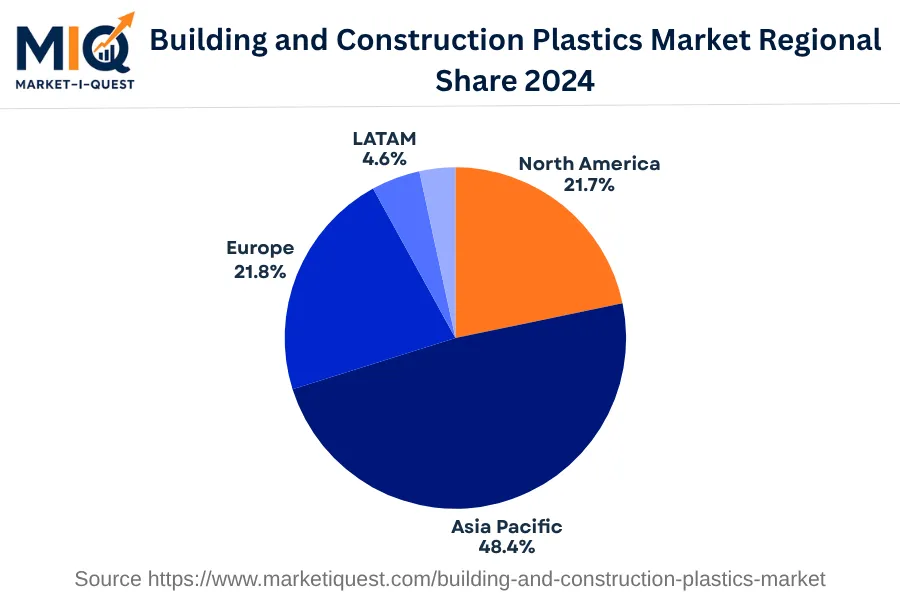
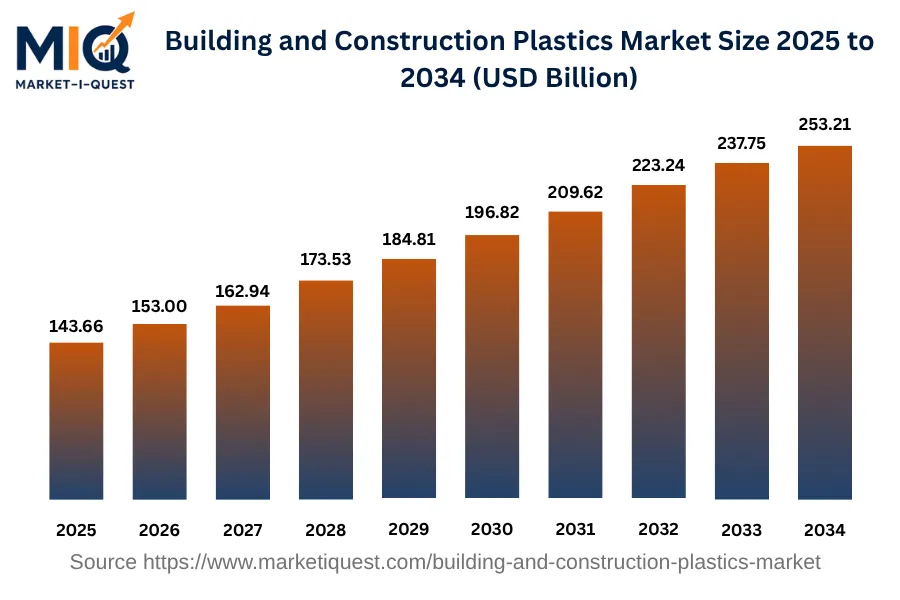
The Building and Construction Plastics Market, with a value of $143.66 billion in 2025, is projected to grow to an estimated $253.21 billion by 2034, marking a CAGR of 6.5%. This rise in value is witnessed as a steady upward trajectory over the forecasted period. However, the market share distribution indicated North America holding 21.7%, Europe held 21.8%, while Latin America and the Middle East and Africa held smaller portions, at 4.6% and 3.4% respectively. Meanwhile, Asia Pacific dominated the market share with 48.4%.

Key Takeaways

  • By Type - Thermoset held the leading market position in 2024.
  • By Application - Structural Components dominated with significant market share in 2024.
  • By End User - Industrial subsegment led the market accounting for a substantial share in 2024.
building-and-construction-plastics-market market size

Key Driving Factors

Stringent Energy Efficiency Regulations

Governmental regulations globally are becoming increasingly stringent regarding energy efficiency in buildings, which is significantly influencing the building and construction plastics market. Plastic materials such as polyvinyl chloride and polystyrene are commonly used for insulation purposes for maintaining temperature levels in buildings, reducing energy consumption. These materials provide superior insulation compared to traditional materials such as wood or metal. Countries, namely the United States and those of the European Union, are imposing stricter rules to attain better energy efficiency ratings in buildings. Builders and manufacturers in these regions are therefore increasing their use of insulating plastics to comply, driving the market growth.

Rapid Urbanization in Emerging Markets

Rapidly urbanizing economies, especially in Asia and Africa, are experiencing significant growth in the building and construction sector. This growth is driven by increasing population and the demand for improved infrastructure leading to an increased demand for construction materials, including plastics. Plastics offer various advantages over traditional construction materials such as durability, ease of installation and resistance to water and chemicals. Thus, builders in these emerging markets frequently opt for plastics to expedite construction processes and ensure long-term durability of their projects, directly increasing the uptake of plastics in the building and construction market.

Market Evolution by Timeline

2019-2023
During this period, North America emerged as a key region with a strong demand for construction plastics due to robust investments in residential and commercial infrastructure. The primary demand drivers include thermoplastic composites for roofing and water & waste management components. In terms of supply, major plastic manufacturers like DowDuPont and BASF were actively shipping modified polymers like Polyvinyl Chloride (PVC) for construction applications. Policy wise, the introduction of EU's Construction Product Regulation (CPR) influenced adoption by mandating specific safety parameters for construction elements. On the commercial front, contractors typically opted for a purchase model, buying in bulk from wholesalers.
2024
In 2024, Asia-Pacific countries including China and India witnessed a rise in their construction activities, thus driving demand for construction-grade plastics. High-performance polymers such as Polycarbonate were largely demanded for safety glasses and sound barriers. Manufacturers were accelerating the production and supply of these materials on a large scale. The International Code Council (ICC) began the drafting of codes to regulate plastic usage in construction. The contract-to-delivery model was prevalent among builders, supported by online platforms. The regulation of single-use plastic raised sustainability concerns.
2025-2029
The demand for construction plastics might continue to grow in this period in Middle-East countries, primarily for insulation and piping systems. Technological advancements might lead to the development of Light Transmitting Concrete (LitraCon) which will likely gain popularity. However, high production costs is expected to act as a constraint. The revision of Eurocodes will likely be introduced by European Committee for Standardization (CEN) may advocate for sustainable use of plastic materials. An increase in long-term lease agreements will likely observe, often including maintenance services. Uncertainty regarding durability is expected to act as a major risk, driving additional quality inspections.
2030-2034
By this time, the demand for biodegradable construction plastics will likely pick up in areas such as the UK and Germany. The supply might be served by prominent firms including Mitsubishi Chemicals and Arkema who are projected to expand their product range to include biodegradable variants. The United Nations Environment Programme (UNEP) might introduce new sustainable regulations setting a global standard. Shifts may observe towards a rental model for construction plastics, in response to the growing focus on sustainability.

Future Market Outlook

Future Opportunities

As current trends in sustainability and technology converge, significant opportunities are emerging within the building and construction plastics market. With sustainability mandates firmly established, manufacturers globally are responding actively; for example, in 2022, DuPont launched its EcoCircle program, aimed at promoting the recycling of construction plastics. Additionally, the increasing focus on energy-efficient buildings is fostering demand for advanced polymer insulators, as evidenced by Owens Corning’s 2023 launch of new insulation products designed with improved thermal properties. Collaboration among industry players is becoming essential as companies look to develop holistic solutions, the International Plastics Association facilitated a summit focusing on integrating sustainable practices into construction. Another promising area is the adoption of composite materials, exemplified by the 2023 partnership between Covestro and a leading architecture firm to utilize polycarbonate in structural applications. Regulations surrounding carbon emissions are also pushing innovation; by 2024, the California Air Resources Board will enforce stricter emission standards, prompting builders to seek low-emission materials. These developments suggest that stakeholders who prioritize innovation in sustainable and technologically advanced building materials will be better positioned to meet emerging regulations and market demands.

Segmentation Analysis

By Type

The market is divided into subsegments including Thermoset and Thermoplastic. Thermoset accounted for the largest revenue share while Thermoplastic is expected to grow at the fastest CAGR during the forecast period.

Largest Revenue Share

Thermoset

Market Share Leader

Thermosets are currently the dominant subsegment within the market due to their inherent properties and wide-ranging applications across various industries. Their high-temperature endurance, insulation properties, and resistance to corrosives make thermosets indispensable in sectors such as automotive, aerospace, and electronic industries. Furthermore, thermosets can often be made from renewable sources, reducing environmental impact and tying into wider sustainability goals. Geographically, the lion's share of revenue comes from established markets, where outsourcing of production to countries with lower labor costs influences the market dynamics. Notably, this analysis is made based on industry standards and observable trends, new developments or unexpected market shifts could disrupt the status quo.

Fastest CAGR

Thermoplastic

Forecast Period Growth Leader

Expected to have the highest CAGR, Thermoplastic subsegment signifies the future growth potential within the market. This high growth trajectory primarily results from the recyclability and reusability of thermoplastics, addressing the increasing environmental and sustainability concerns. Furthermore, their versatility allows for a wide array of applications in growing sectors like Retail, Packaging and Consumer Goods industries. Nevertheless, barriers exist in the form of higher initial cost and production complexities that can dampen the pace of adoption. Advanced technologies, regulatory support promoting recycling, and strategic partnerships for technological advancements can act as catalysts for Thermoplastic growth.

By Application

The market is divided into subsegments including Pipes and Fittings, Roofing and Flooring, Windows and Doors, Cladding and Facades, Structural Components, Insulation and Others. In 2024, Structural Components accounted for the largest revenue share while Pipes and Fittings is expected to grow at the fastest CAGR during the forecast period.

Largest Revenue Share

Structural Components

Market Share Leader

The dominance of the Structural Components subsegment in 2024 can primarily be attributed to its essential role in any construction process. A building gains its strength and support from its structural components which makes the demand for these components non-negotiable and prevalent in several regions. The demand is further driven due to the ongoing urbanization and increasing infrastructure development globally. Regulatory bodies globally have been strengthen the regulations for building safety, further making durable and standardized structural components a must-have in all types of construction. The purchasing decisions in this subsegment are majorly driven by durability, load-bearing capacity and the compliance of the products with the government regulations, making customers gravitate towards established vendors who offer high-quality and compliant products.

Fastest CAGR

Pipes and Fittings

Forecast Period Growth Leader

The Pipes and Fittings subsegment is expected to grow at the fastest CAGR due to several factors playing catalysts. Technological advancements have made pipes and fittings more durable and cost-effective, thus driving higher adoption. Regulations mandating water supply and sanitation in new buildings have created a consistent market for pipes and fittings. This subsegment is also witnessing an increased investment in research and development for innovative and sustainable products to reduce the environmental impact of plumbing. Partnerships and collaborations between manufacturers and building contractors have evolved as a strategic approach to cater to customized requirements. However, these barriers are being alleviated gradually with governments providing subsidies on quality products and infrastructural developments initiating skill-enhancement programs for labour.

By End Use

The market is divided into subsegments including residential, commercial, and industrial. In 2024, the Industrial segment accounted for the largest revenue share while the Residential subsegment is expected to grow at the fastest CAGR during the forecast period.

Largest Revenue Share

Industrial

Market Share Leader

The Industrial subsegment leads in revenue generation, illustrating a pivotal role within the market structure. This comes on the heels of the growing industrialization and the consequent surge in demand for energy-efficient solutions. Industrial operations often require high energy demand and are consistently on the lookout for cost-effective and performance efficient solutions. Hence, industries tend to invest significantly in superior energy alternatives, driving the revenue of this subsegment. Factors such as geographical location and regional regulations also fuel the growth, particularly in regions with stringent environmental policies. Economies of scale and the demand for a stable power supply to avoid production losses further solidify this subsegment's revenue lead. Industrial buyers prioritize purchasing elements such as long-term reliability, regulatory compliance, and energy efficiency.

Fastest CAGR

Residential

Forecast Period Growth Leader

The Residential subsegment indicates an impressive compound annual growth rate. Factors contributing to this growth include the global shift towards green living coupled with public and private initiatives promoting energy efficiency and self-sufficiency in homes. The drop in renewable energy costs and the rise of innovative home appliances have reduced barriers for homeowners to adopt energy-efficient solutions. Additionally, government incentives such as tax benefits and subsidies for green home improvements work as catalysts to foster faster growth. However, with increasing investments in awareness campaigns and strategic partnerships with housing agencies, the residential sector's adoption rate is expected to witness a significant increase.

Competitive Analysis

Key Market Players

Manufacturers / OEMs

BASF SE
Germany
Dow Chemical Company
US
Solvay SA
Belgium

Key Suppliers & Raw Materials

Saudi Basic Industries Corporation (SABIC)
Saudi Arabia
INEOS
UK
LyondellBasell Industries
Netherlands

Distributors, Integrators & Channel Partners

Reliance Industries Limited
India
ExxonMobil Chemical
US
Formosa Plastics Corporation
Taiwan

Porter’s Five Forces Analysis

A comprehensive assessment of the competitive dynamics prevailing in the Building and Construction Plastics market.

Supplier Bargaining Power

Medium

Driven by OEM partnerships, proprietary materials, yet constrained by numerous substitute suppliers.

Buyer Bargaining Power

High

Numerous alternatives and buyer-sensitivity to price changes characterise the sector.

Threat of Substitutes

High

Substitutes like metal and wood readily available, guided by cost, durability and sustainability factors.

Threat of New Entrants

Medium

Capital entry barriers exist, but are offset partly by fast technological advancements.

Competitive Rivalry

High

Intensely competitive market with several established players and price-based competition.

Regional Analysis

Geographic market dynamics and growth opportunities across key regions

Global Market Outlook

building-and-construction-plastics-market market regional share

North America

In 2024, the North American building and construction plastics market showed dynamic growth driven by several key factors. Increases in residential and commercial construction activities across the U.S., Canada, and Mexico led to surging demand for PVC and PE plastics. An upswing in infrastructure investment, particularly in the US, fueled heightened demand for construction plastics. Furthermore, regulatory reforms promoting energy efficiency in buildings fostered the use of plastic insulation products, while technological innovations enhanced plastics' durability and applicability, lifting market growth.

On the trends front, there was a discernible shift towards green building practices in North America. This emphasized the rising use of recyclable construction plastics like PET. Distinct shifts in buyer behavior endorsed the increased use of prefabricated plastic components, expediting construction processes. Advances in e-commerce expanded the distribution channels for construction plastics, with partnerships and mergers becoming common amidst suppliers to maximize reach. Stringent adherence to building standards such as LEED certification encouraged the preference for high-quality, sustainable plastic materials. Notably, sectors utilizing construction plastics included government infrastructure projects, housing developers, commercial real estate, and manufacturing facilities. Their specific needs and growing environmental consciousness shaped the North American building and construction plastics market in 2024.

Asia Pacific

In 2024, the Building and Construction Plastics Market in the Asia Pacific witnessed substantial growth due to various factors. A rise in infrastructural development projects, particularly in China, India, and key ASEAN markets, drove the demand for construction plastics. Moreover, regulations encouraging the use of environmentally friendly materials in Japan and South Korea amplified the market's growth. Investment in polymer technology adopted by manufacturers for efficient plastiс production further stimulated the market dynamics.

The trend of shifting towards green building solutions prompted the usage of recycled and reusable plastic materials. Procurement departments in enterprise sectors increasingly preferred suppliers with sustainable production credentials. In China and Australia, government policies enforcing the use of fire-resistant construction plastics set new standards in the market. The technological shift was apparent in India, with advanced construction plastics for improved insulation and durability becoming more prevalent. Manufacturers strengthened their market presence through partnerships and M&As, such as the notable deal between Japan's Toray Industries and South Korea's SK Chemicals. These drivers and trends largely shaped the Building and Construction Plastics Market in the Asia Pacific in 2024. The market, heavily influenced by enterprise, government, and manufacturing sectors, maneuvered towards reduced environmental impact and improved construction quality. The regulatory environment and technological innovations continue to have a pronounced effect on the market dynamics.

Europe

In 2024, the Building and Construction Plastics Market in Europe exhibited considerable growth due to material optimization in construction. Advancements in resin technologies boosted demand as products like polyvinyl chloride (PVC) and polyethylene displayed improved durability, lighter weight, and lower cost compared to traditional building materials. Lax regulations from the European Union on the use of recycled plastics in construction further stimulated the market, fostering conscious eco-friendly practices among manufacturers. On the supply side, the ramp-up in ethylene production, particularly from Germany, resulted in favorable pricing, prompting increased consumption.

Trends influencing the market included a rising preference towards energy-efficient buildings, propelling the use of insulative plastics in real estate and government infrastructure projects. Moreover, the increase in public-private partnerships for infrastructure development both in Central Eastern Europe and Nordics pointed towards growing acceptance of plastic materials. The adoption of bioplastics, mainly in Italy and Spain, reflected a significant shift towards sustainable alternatives in construction plastics. Another noticeable trend was the reinforcement of stringent standards, especially from France and the U.K. to alleviate plastic waste concerns. This sparked the development of innovative recycling technologies changing the dynamics of product supply, enforcing a circular economy approach within the market. Overall, the year marked a phase of transformation aligning to the principles of sustainability, affordability, and efficiency.

Latin America

In the base year of 2024, the Building and Construction Plastics Market in Latin America (LATAM), centered around Brazil, Mexico, Argentina, Colombia, Chile, and Peru, exhibited significant growth and dynamism. Strong demand factors primarily drove this, with rapid urbanization leading to increased construction activities and consequently, heightened demand for plastics in this sector. Technological advancements had a transformative impact, enabling the development of lightweight, cost-effective, and energy-efficient plastic materials for construction. Furthermore, government regulations pushing for environmentally friendly and sustainable construction practices bolstered the market's growth.

Several notable trends were observed. There was an evident skew towards green building materials, catalyzed by greater consciousness about environmental sustainability among buyers. This saw an uptake in the use of recycled plastics in construction. The development of advanced plastics with enhanced physical properties, such as durability and thermal insulation, also emerged as a growing preference, responding to the need for better construction efficiency and cost savings. Numerous partnerships and mergers were witnessed, largely prompted by companies seeking to diversify their offerings and enhance their competitive positioning. Various sectors, including manufacturing, retail, and government, actively leveraged these plastic materials in their construction projects, further accelerating market growth. Overall, the LATAM Building and Construction Plastics Market in 2024 was marked by innovation, sustainability, and strategic collaborations, all of which animated significant growth in the industry.
Middle East & Africa

In 2024, the Building and Construction Plastics Market in the Middle East and Africa observed a significant growth. Demand surged due to rapid urbanization and growth in the construction sector, particularly in countries like Saudi Arabia, UAE, and Qatar. Additionally, governments across the region, such as in Egypt and Nigeria, introduced regulations promoting the use of eco-friendly and energy-efficient materials in construction, thus driving adoption of plastics. Technological innovation in manufacturing processes led to better quality and durability of construction plastics, influencing market growth in regions like South Africa and Kenya. The volatile prices of conventional construction materials also pushed industries to seek cost-effective alternatives, driving further demand.

As for market trends, there was a notable shift towards green building materials, prompting plastic manufacturers to invest in sustainable production methods in regions like Israel. Another significant trend was the increased public-private partnerships for infrastructure projects, propelling the consumption of construction plastics. Key consumers of construction plastics included the government for public infrastructure, the oil and gas sector for rigs and pipelines, utilities for housing projects, healthcare for medical facility construction, and manufacturing for industrial buildings. The adoption of construction plastics was markedly high in these sectors owing to their need for durable, cost-effective, and customizable materials.

Recent Industry Developments

Latest market innovations, product launches, and strategic initiatives

March 2026

Global chemical distributor Azelis formalized an exclusive distribution agreement with Milliken & Company across India. The partnership expands Azelis' footprint in the local coatings, adhesives, sealants, and elastomers (CASE) sectors through Milliken's specialty polyurethane colorant lines.

December 2025

Westlake Corporation shuttered three core North American manufacturing plants, including a major facility in Aberdeen, Mississippi. The closures permanently removed roughly 1 billion pounds of annual suspension Polyvinyl Chloride (PVC) production capacity to optimize operational margins amid global overcapacity.

March 2025

RadiciGroup High Performance Polymers inaugurated a new 17,000-square-meter manufacturing facility in Brazil. The capital investment scales production lines by 15%, targeting regional demand for high-performance technopolymers used in structural construction applications and metal-substitution engineering.

Frequently Asked Questions