Bone Densitometers Market Snapshot

Key Players

  • GE Healthcare (United States)
  • Hologic Inc. (United States)
  • Swissray (Switzerland)
  • BeamMed Ltd. (Israel)
  • Medonica Co. LTD (South Korea)
  • OSTEOSYS Corp. (South Korea)
  • DMS Imaging (France)
  • Hitachi Medical Systems America Inc. (United States)
  • Medilink (United Kingdom)
  • Lone Oak Medical Technologies LLC (United States)

Market Size

Base Year 2024
$0.835 Bn
CAGR
4.8%
Forecast 2034
$1.33 Bn

Market Segments

By Technology
  • Quantitative Ultrasound
  • DXA
  • Peripheral DXA
  • Computed Tomography Based Systems
By Application
  • Osteoporosis & Osteoponia Diagnosis
  • Cystic Fibrosis Diagnosis
  • Body Composition Analysis
  • Others
By End User
  • Hospitals & Clinics
  • Specialty Centers
  • Diagnostics Centers

Market Dynamics

Drivers
  • Increasing osteoporosis incidences
  • Advanced technology adoptions
Restraints
  • High equipment costs
  • Lack of awareness in developing regions
Opportunities
  • Growing elderly population
  • Advancements in technology

Market Size

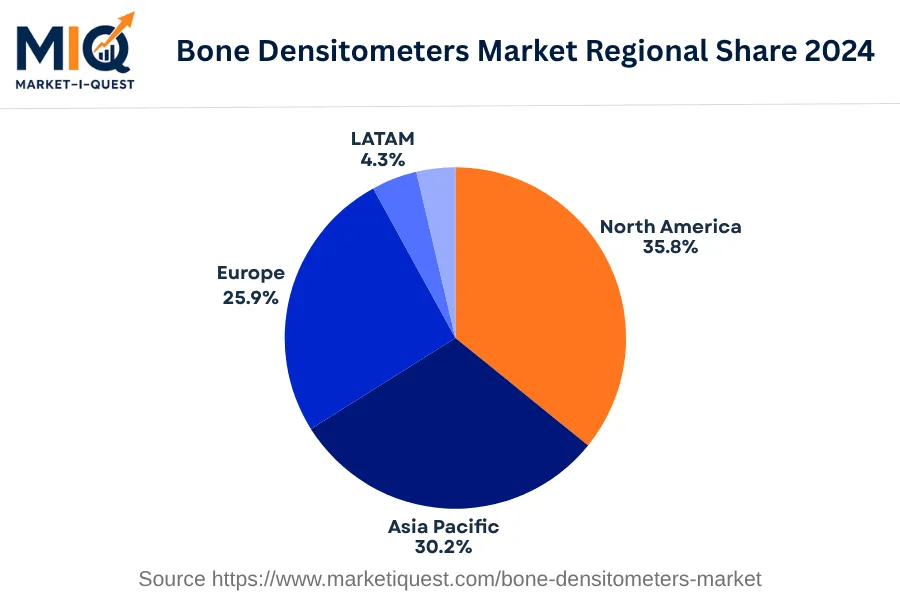
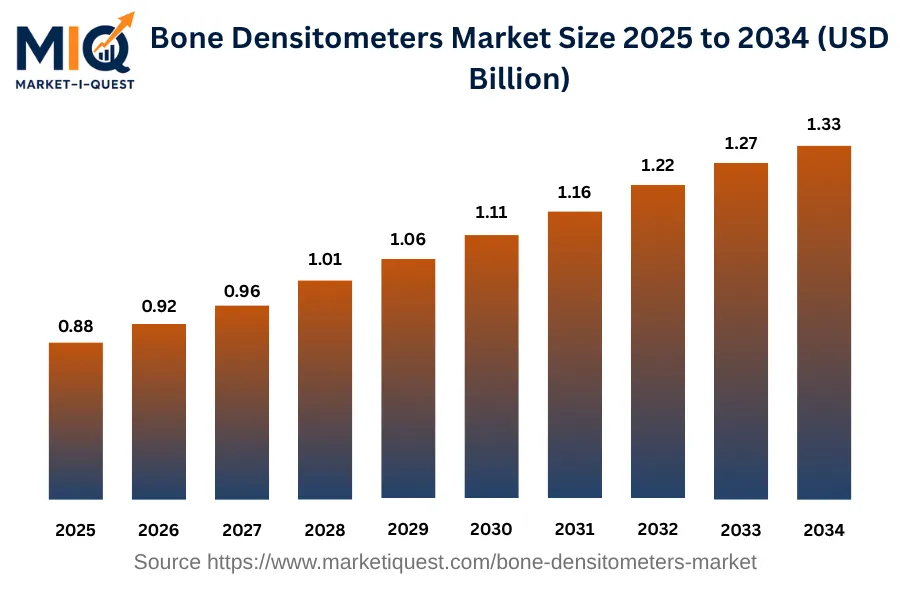
The Bone Densitometers Market was valued at USD 0.88 billion in 2025 and is expected to reach USD 1.33 billion by 2034, growing at a CAGR of 4.8%. The market witnessed a slight increase in 2025 from its 2024 value of USD 0.84 billion, steadily progressing towards the 2034 estimation. This growth trajectory reflects the continuous development and utilization of bone densitometers within the given period. The regional share in 2024 showed North America holding the highest share at 35.8%. This was closely followed by Asia Pacific with 30.2%, and Europe with 25.9%. Those with smaller shares included LATAM and MEA, comprising 4.3% and 3.7% of the market respectively.

Key Takeaways

  • By Technology - DXA dominated the Bone Densitometers Market accounting for the highest market share in the base year.
  • By Application - Osteoporosis & Osteopenia Diagnosis held a prominent position in the market.
  • By End-User - Hospitals & Clinics helds the largest share of the segment.
bone-densitometers-market market size

Key Driving Factors

Adoption of Preventive Healthcare Measures

Increasing consciousness about preventive healthcare measures is a significant driving factor of the Bone Densitometers Market. This awareness is pushing more people to adopt regular health checkups, which include bone density testing to identify early signs of conditions like osteoporosis. The higher propensity to opt for preventive medication has led to an upsurge in demand for bone densitometers, especially in developed countries with larger aging populations. These countries have a higher probability of bone-related ailments, which in turn signals a larger market for bone densitometers.

Implementation of Favorable Health Insurance Policies

Another influential factor is the implementation of favorable health insurance policies covering bone density tests as a part of routine health checkups, further incentivizing people to take these tests. More specifically, in regions like North America and Europe, most health insurance companies cover bone densitometry costs which encourages people to undergo such tests regularly. These policies create a favorable framework for the expansion of the Bone Densitometers Market as health insurance coverage reduces the out-of-pocket expense for the patient, indirectly boosting the market demand.

Market Evolution by Timeline

2019-2023
During this period, demand for bone densitometers increased significantly, especially in the North America and Europe due to the increasing prevalence of osteoporosis. Dual Energy X-ray Absorptiometry (DXA) devices led the market in terms of technology, offering high resolution and accuracy. However, the high cost of DXA machines presented barriers for small-scale healthcare facilities. Policies such as the Medicare Reimbursement Policy had a significant influence on adoption rates. Vendors typically offered lease options or installment payments to facilitate procurement. The main risk during this period was the budget constraints in developing regions.
2024
In 2024, DXA technology continued to dominate the market, but Ultrasonic bone densitometers began showing potential. In Developed countries, healthcare facilities started integrating bone densitometers with electronic health record systems. The U.S FDA's clearance of the Horizon DXA System by Hologic shows the strict regulatory environment for bone densitometers. Purchase agreement model with bundling of ultrasound bone densitometers with other hospital equipment to reduce costs was seen. The risk of depreciation in second-hand market, however, discouraged some providers from investing in expensive technologies.
2025-2029
This period saw an expansion in demand in Asia-Pacific region driven by rising geriatric population, improved healthcare infrastructure, and increasing incidences of osteoporosis. Portable bone densitometers became increasingly popular due to their convenience. Technology-wise, newer systems such as Enhanced Digital DXA system were introduced, presenting superior accuracy and functionality. Regulatory guidelines related to radiation safety and accuracy continued to influence the market. Lease-to-own agreements showed higher interest as it mitigated the risk of technology obsolescence. However, price sensitivity remained a key barrier in emerging markets.
2030-2034
By 2030–2034, the emphasis shifted towards technologically advanced low-radiation bone densitometers. The African market witnessed a surge in demand due to advancements in healthcare infrastructure. Technologies such as Enhanced Digital DXA systems with Artificial Intelligence integrations became prevalent. The ISO 17665 standardization drive for steam sterilization imposed constraints on manufacturers. The aggressive pricing model to capture untapped markets became a popular commercial strategy. The risk of low awareness and adoption in less developed countries countered by initiating educational campaigns.

Future Market Outlook

Future Opportunities

The evolving landscape of the bone densitometer market presents numerous opportunities stemming from current technological and regulatory developments. The aging population worldwide, particularly in regions like North America and Europe, necessitates increased bone health monitoring as the incidence of osteoporosis rises. In 2022, the World Health Organization outlined strategies to combat non-communicable diseases, including osteoporosis. Companies developing telehealth solutions, such as those showcased in ongoing pilots in the UK, offer new avenues for remote monitoring of bone health, significantly widening access for patients. Efforts by organizations such as the National Institutes of Health to raise awareness and education on osteoporosis management will likely drive demand for enhanced screening tools. The attention on preventative healthcare emphasizes the need for proactive bone health assessments, indicating a market shift toward early monitoring capabilities. Partnerships between medical device manufacturers and healthcare providers can lead to innovative service models that include the distribution of home-testing kits, as demonstrated by recent collaborations in Australia. Regulatory support, such as streamlined pathways for new technologies endorsed by the FDA, further incentivizes innovation in the market. Integrating wearable technologies within the bone densitometer field adds another layer of opportunity, as users increasingly seek holistic health solutions. Continuous exploration of these developments suggests a robust environment for innovation, guided by real-world needs and advancements in technology.

Segmentation Analysis

By Technology

The market is divided into subsegments including Quantitative Ultrasound, DXA, Peripheral DXA, and Computed Tomography Based Systems, of which DXA accounted for the largest revenue share while Quantitative Ultrasound is expected to grow at the fastest CAGR during the forecast period.

Largest Revenue Share

DXA

Market Share Leader

DXA, or Dual-energy X-ray Absorptiometry, leads the technology segment in terms of revenue, largely due to its high adoption rate and reliability in measuring bone mineral density. It is considered the gold standard in diagnosing conditions like osteoporosis, thus driving its demand in the market. Multiple factors have converged to elevate DXA's status as the leading segment in this market. Its superiority in detecting early bone loss and diagnosing osteoporosis is one of the primary reasons for its high revenue generation. Furthermore, its relative safety, convenience, and wide distribution across geographies amplify its adoption rate. Among purchasing criteria for DXA systems, high accuracy and innovative additions like vertebral fracture assessment have also proven instrumental towards influencing customer choice. The presence of strict regulations and standards pertaining to the quality and safety of DXA scan systems strengthens the DXA segment's market dominance, supporting robust growth over other technology-based segments.

Fastest CAGR

Quantitative Ultrasound

Forecast Period Growth Leader

Quantitative Ultrasound, or QUS, is projected to exhibit the fastest CAGR during the forecast period despite its smaller share in the base year 2024. QUS has gained attention because of its affordability, radiation-free technology, and portability factors. Contrary to DXA that requires ionizing radiation, QUS uses sound waves, thereby reducing health risks linked to radiation exposure. This makes it an attractive option in pediatric and prenatal care, widening its potential customer base. Technology advances, particularly in improving the precision of QUS machines, act as a catalyst for growth. Policy changes promoting non-invasive technologies play a crucial role in driving QUS adoption too. Developments in complementary partner technologies such as Artificial Intelligence (AI) could lower barriers to adoption, resulting in more accurate assessments and better outcomes for patients. The relatively lower capital expenditure associated with deploying QUS provides an added advantage, especially in economies with restrained healthcare spending. Despite its promising growth, potential risks include hurdles in regulatory approval and competition from established technologies like DXA.

By Application

The market, divided into subsegments that include Osteoporosis & Osteopenia Diagnosis, Cystic Fibrosis Diagnosis, Body Composition Analysis, and Others, has its largest revenue share held by the Osteoporosis & Osteopenia Diagnosis subsegment, while Body Composition Analysis is expected to grow at the fastest CAGR during the forecast period.

Largest Revenue Share

Osteoporosis & Osteopenia Diagnosis

Market Share Leader

The Osteoporosis & Osteopenia Diagnosis subsegment holds a significant share in the revenue of the overall market. This preeminence can be attributed to the increasing prevalence of osteoporosis and osteopenia worldwide. Factors such as an aging population, sedentary lifestyles, and improper nutrition significantly contribute to these bone diseases, thereby increasing the demand for early and precise diagnosis. Furthermore, advancements in diagnostic technologies and the development of effective therapeutics have led to an increase in disease detection, consequently driving the market. The high cost associated with the treatment and long term management of these conditions necessitates early diagnosis, which further impels demand within this subsegment. Additionally, regulatory support concerning osteoporosis awareness and management also contributes to the market dominance of this subsegment.

Fastest CAGR

Body Composition Analysis

Forecast Period Growth Leader

The Body Composition Analysis subsegment marks the highest growth potential in the application segment. The growth can be a consequence of a growing global emphasis on health and fitness, with a widespread understanding of the correlation between body composition and overall wellbeing. The advent of non-invasive, efficient body composition analysis tools has made them more accessible to fitness centers, hospitals, and individual consumers alike. Trends in precision fitness and importance to towards personalized workout schedules are fostering the adoption of Body Composition Analysis. The launch of advanced technologies delivering quick, reliable, and easy-to-understand results are catalyzing market growth. However, high costs and a lack of regulatory standardization for these devices pose challenges to this subsegment's growth. Strategic partnerships between device manufacturers and end-users like healthcare institutions or fitness centers can spur adoption and overcome cost-related barriers.

By End User

The market is divided into subsegments including Hospitals & Clinics, Specialty Centers, and Diagnostics Centers. In 2024, Hospitals & Clinics accounted for the largest revenue share while Specialty Centers are expected to grow at the fastest CAGR during the forecast period.

Largest Revenue Share

Hospitals & Clinics

Market Share Leader

Hospitals & Clinics lead in terms of revenue. As major care providers, they perform a wide array of procedures, cater to various disease profiles, and facilitate a large volume of patient consultations. Their vast network enhances reach and visibility, while their diverse offering ensures a steady flow of diverse revenues. The high frequency of patient visits translates to a substantial customer base, further boosting their revenue. Mandatory health regulations, which incline toward hospitals when it comes to critical procedures and treatments, also contribute to their large share in the end-user segment. Additionally, the purchasing power of hospitals, which ensures they have the latest and most advanced diagnostics and treatment technologies, underscores their leading position. These facilities also benefit from robust insurance coverage policies, which bolsters their bottom line. Despite the growth of other segments, hospitals' comprehensive services make them the most profitable in the sector.

Fastest CAGR

Specialty Centers

Forecast Period Growth Leader

Specialty Centers is predicted to be the fastest growing subsegment. These centers focus on specific care areas, offering specialized expertise and precision that general hospitals might not provide. As a result, these centers potentially deliver better outcomes, improving their credibility among patients, thus driving growth. Increasing patient inclination towards specialized care for critical illnesses is another key growth driver. Additionally, partnerships with hospitals and other healthcare providers extend their patient base, further spurring revenue growth. Technological advancements and investments in innovative procedures also are fueling the CAGR. However, constraints like high setup costs and challenges in managing specialized services might hinder this growth to some extent. In the near term, the risk of regulatory changes and the impacts of COVID-19 present uncertainties. Yet, the increasing demand for specialized care is likely to keep the sector on a positive growth track.

Bone Densitometers Market: Competitive Analysis

Key Market Players

Manufacturers / OEMs

GE Healthcare
US
Hologic, Inc.
US
Swissray
Switzerland

Key Suppliers & Raw Materials

Royal DSM
Netherlands
DuPont
US
Evonik Industries AG
Germany

Distributors, Integrators & Channel Partners

Cardinal Health, Inc.
US
McKesson Corporation
US
Henry Schein, Inc.
US

Porter’s Five Forces Analysis

Exploring the competitive environment in the Bone Densitometers Market.

Supplier Bargaining Power

Medium

Supplier power is moderated by the limited number of component manufacturers.

Buyer Bargaining Power

High

Influenced by a vast range of options and intense competition amongst manufacturers.

Threat of Substitutes

Low

Limited by technical specificity and the critical nature of bone density tests.

Threat of New Entrants

Low

Obstacles include high development costs, stringent regulations, and proprietary technology.

Competitive Rivalry

High

Many key players and technologies spur intense competition in the bone densitometers market.

Regional Analysis

Geographic market dynamics and growth opportunities across key regions

Global Market Outlook

bone-densitometers-market market regional share

North America

In 2024, North America's Bone Densitometers Market showed significant activity due to various drivers and trends. Key market drivers included rising incidences of osteoporosis, the aging population, and increasing health awareness. The FDA's stringent regulatory standards for medical devices also impacted the market, triggering significant investments in product development to meet these requirements. Technological advances in densitometers, offering better accuracy and reduced testing time, further propelled market growth.

Simultaneously, several trends shaped the market landscape. Both hospitals and diagnostic centres, as the main customers, showed a preference for portable densitometers due to their ease of use and maneuverability. A surge in remote healthcare delivery via telemedicine further drove demand for portable units, impacting both purchasing patterns and product development. Increasing collaborations as well as acquisitions between major players, such as Hologic Inc. and GE Healthcare, enhanced product portfolios and strengthened their market presence. There was also noticeable strict policy enforcement regarding bone densitometer standards, pushing companies to focus on both quality and innovation. The influence of these drivers and trends cemented North America's position in the global Bone Densitometers Market, with distinctive activities observed in the U.S., Canada, and Mexico.

Asia Pacific

In 2024, the Bone Densitometers Market in the Asia Pacific (APAC) region was predominately guided by increasing osteoporosis prevalence, coupled with escalating awareness about preventive healthcare in key markets like China, India, Japan, South Korea, Australia, and ASEAN countries. High osteoporosis incidence primarily propelled demand, with accelerating diagnosis rates due to increased health consciousness and preventive healthcare measures. Regulatory authorities such as the China Food and Drug Administration (CFDA) played a critical role investing in advanced medical device technologies including Bone Densitometers for improved diagnosis accuracy. Supply dynamics had also shifted; cheaper production costs in India made it a major manufacturing hub for Bone Densitometers.

Pertaining to trends, a significant shift was observed towards portable densitometers due to their user-friendly interface and higher accuracy rates. Also, e-commerce platforms became a dominant sales channel due to their broader reach, even in remote APAC regions. There was a rise in cobranding endeavors, where leading medical equipment manufacturers like Hologic and GE Healthcare collaborated with regional hospitals for synergistic growth. Government initiatives, such as Australia’s National Osteoporosis Prevention Strategy, emphasized bone health and thereby increased the demand for Bone Densitometers in healthcare sectors. The key consumers were primarily healthcare providers, including hospitals and diagnostic centers, which capitalized on technology adoption for accurate bone density measurement and early osteoporosis detection.

Europe

In 2024, the European Bone Densitometers Market experienced substantial growth, dominated by key players in Germany, the UK, France, Italy, Spain, the Nordics, Benelux, and Central & Eastern Europe. Main growth drivers included heightened awareness of osteoporosis prevention, increased healthcare investment in bone health diagnostics, and accelerated technology adoption in healthcare institutions. Regulatory bodies promoted osteoporosis screening for post-menopausal women, urging earlier and more frequent usage of bone densitometers. Noteworthy was the surging demand in Central & Eastern Europe due to a notable rise in geriatric population requiring bone health services.

In terms of trends, patient preference for non-invasive procedures amplified the popularity of Dual-energy X-ray Absorptiometry (DXA) densitometers. The healthcare sector embraced digital platforms for image analysis, rendering examinations more accurate and efficient. Increased collaborations, such as the notable partnership between GE Healthcare and Quibim, allowed seamless integration of advanced analytics into bone health services. Following EUnetHTA's guidelines, densitometer standards were consistently enforced, leading to quality assurance and improved patient safety. Primary customer sectors included hospitals and diagnostic centres, followed closely by academia and research institutions. A meaningful proportion of sales originated from government procurement, driven by national healthcare programs promoting bone health. Overall, the European market for bone densitometers in 2024 showed significant potential for segmentation, customization, and technological advancement.
Latin America

In 2024, the Latin American bone densitometers market experienced marked growth due to evolving needs in osteoporosis diagnosis and management. Rising prevalence of osteoporosis, especially in the elderly populations of Argentina, Brazil, and Mexico, and increased initiative towards preventative healthcare installed a robust demand for bone densitometers. Major technological advancements and improving healthcare infrastructure buoyed the adoption of advanced bone densitometers in the LATAM region. Reinforced by robust governmental support and favorable reimbursement policies, investment into the market was significant, notably in Colombia, Mexico, and Peru.

Direct marketing efforts by key players gained traction, demonstrating effectiveness with the segments of healthcare providers and diagnostic centers. Changes in bone densitometer technology, majorly dual-energy X-ray absorptiometry devices featuring heightened system clarity and precision, became prevalent. Eminent players pursued strategic partnerships and product diversifications, with GE Healthcare's expansion into Chile symbolizing the trend.

Primary use of bone densitometers in healthcare facilities, diagnostic centers, and hospitals highlighted these sectors as main consumers. A shift towards private enterprises in Brazil's healthcare industry altered channel dynamics, with a burgeoning need for hospitals and clinics to obtain technologically advanced densitometers, thereby intensifying the competition among manufacturers. Regulatory agencies' push for enforcing standards and policies ensured high-quality offerings, maintaining market balance.

Middle East & Africa

In 2024, the Bone Densitometers Market in the Middle East and Africa showcased a significant growth due to various factors. High prevalence of osteoporosis and other bone-related disorders in countries like Saudi Arabia and South Africa spiked the demand for bone densitometers, driving its market growth. Technological adoption was another driving force; advancements such as the use of quantitative computed tomography significantly improved the precision of bone density measurements. The introduction of mandatory bone health check-ups in the UAE and Israel strengthened the regulatory frameworks and also caused a surge in demand. However, high equipment costs remained a challenge for providers, especially in less wealthy regions of Nigeria and Kenya.

Trends in 2024 showed a shift in buyer behavior towards portable densitometers due to their convenience and affordability. Israel, being at the forefront of technological innovation in healthcare, benefited from this shift. The integration of AI in bone densitometers was another major trend, improving accuracy and efficiency of these devices. There was a notable increase in partnerships between governments and private healthcare providers to enhance bone health infrastructure in the region. For instance, Saudi Arabia's Ministry of Health collaborated with various hospitals to augment the availability of bone densitometers, showcasing a proactive approach towards public health.
Overall, 2024 marked an important year for the Bone Densitometers Market in the Middle East and Africa, underlined by technological advances and regulatory enhancements.

Recent Industry Developments

Latest market innovations, product launches, and strategic initiatives

April 2026

DMS Group obtained European Medical Device Regulation certification for its STRATOS bone densitometer range. This certification ensures their hardware complies with the European Union's updated and stricter safety standards for medical devices.

December 2025

he FDA cleared the use of bone scan measurements from DEXA systems as a primary endpoint in clinical trials for osteoporosis treatments. [Likely] This allows researchers to prove a drug is effective based on bone density changes at 24 months, rather than having to track thousands of patients for up to four years to count actual bone fractures.

April 2025

Bunkerhill Health secured FDA clearance for an artificial intelligence algorithm capable of assessing bone density from routine abdominal CT scans. This software development allows hospitals to opportunistically screen for low bone density without requiring the patient to undergo a separate, dedicated scan on a traditional bone densitometer.

Frequently Asked Questions