Body Contouring Devices and Procedures Market Snapshot

Key Players

  • Allergan
  • Inc. (United States)
  • BTL Industries Inc. (United Kingdom)
  • Cynosure LLC (United States)
  • Cutera Inc. (United States)
  • Syneron Medical Ltd. (Israel)
  • Lumenis Ltd. (Israel)
  • Merz Pharma GmbH & Co. KGaA (Germany)
  • Alma Lasers (Israel)
  • ZELTIQ Aesthetics Inc. (United States)
  • Venus Concept (Canada)

Market Size

Base Year 2024
$2.84 Bn
CAGR
6.8%
Forecast 2034
$5.48 Bn

Market Segments

By Type
Invasive, Non-invasive
By Age Group
Below 35 Years, 35 to 50 Years, Above 50 Years
By Gender
Female, Male
By Application
Skin Tightening, Cellulite Treatment, Fat Reduction, Body Toning and Sculpting, Others
By End User
Hospitals, Specialty Clinics, Cosmetic Surgery Centers, Others

Market Dynamics

Drivers
  • Growing health and fitness trends
  • Increasing disposable income
Restraints
  • High treatment costs
  • Regulatory approval challenges
Opportunities
  • Rising Cosmetic Surgery Demands
  • Innovative Technological Advancements

Market Size

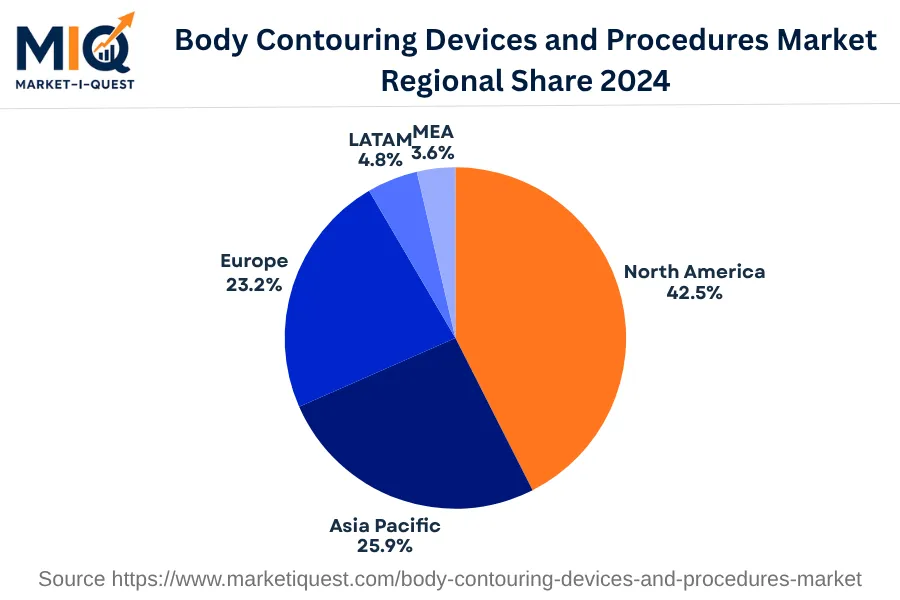
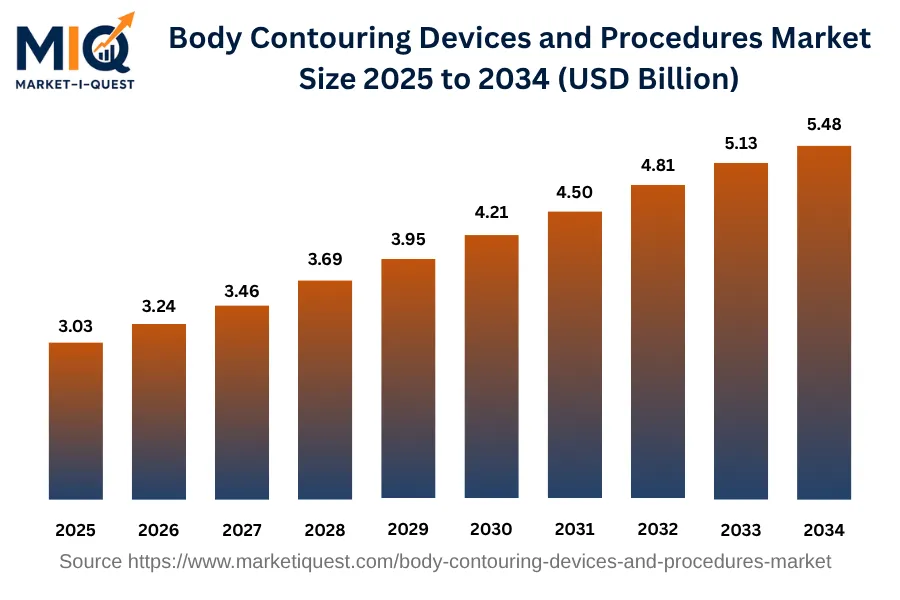
The Body Contouring Devices and Procedures Market stood at USD 2.84 billion in 2024 and increased to USD 3.03 billion in 2025. By the end of 2034, the market size is expected to reach USD 5.48 billion, posting a CAGR of 6.8%. This rise in market value from 2025 to 2034 indicates a consistent growth in the adoption and implementation of body contouring devices and procedures. The uptrend is influenced by increasing consumer awareness and technological advancements that made these procedures more efficient and less invasive over the decade. On a regional aspect in 2024, North America held the largest share of the market with 42.5%, followed by Asia Pacific with a share of 25.9%. Europe accounted for a 23.2% share while Latin America and Middle East & Africa recorded smaller shares of 4.8% and 3.6% respectively.

Key Takeaways

  • By Type - Invasive procedures held a leading position in terms of popularity and usage.
  • By Age Group - 35 to 50 Years age group held the largest market share.
  • By Gender - the Female segment accounted for a higher percentage in the market.
  • By application - Fat Reduction led the Body Contouring Devices and Procedures Market in 2024.
  • By End-User - Hospitals registered strong growth in the market.
body-contouring-devices-and-procedures-market market size

Key Driving Factors

Increasing Public Emphasis on Body Aesthetics

Modern societies around the globe are more conscious about not just their health, but also body aesthetics. This societal trend of prioritizing physical appearance has led to an increased acceptance of cosmetic procedures, specifically body contouring. People are pursuing body contouring procedures as a means to improve their physique after substantial weight loss or pregnancy. Fitness influencers and celebrities endorsing body contouring has contributed to this trend's normalization, making it a more socially acceptable practice. This emphasis on aesthetics over health alone pushes the adoption of these devices and procedures in cosmetic clinics and hospitals globally.

Surge in Post-Bariatric Surgery Procedures

Post-bariatric surgery, patients often undergo substantial weight loss which results in saggy skin tissues. These situations require body contouring procedures for reshaping and toning the body. While these procedures were previously considered highly cosmetic and not necessary, healthcare providers now recognize them as integral to the patient's overall recovery process. The growing number of bariatric surgeries across the world subsequently calls for a parallel growth in the demand for contouring procedures post-surgery. Therefore, the rise in bariatric surgeries provides a concrete driving force for the body contouring devices and procedures market.

Market Evolution by Timeline

2019-2023
Higher aesthetic consciousness focused the demand for body contouring devices and procedures in the United States and Europe. Major suppliers were medical device companies like BTL Industries, Lumenis Inc., and Alma Lasers Ltd. Products like VelaShape III and SculpSure were well-received due to their non-invasive nature and effectiveness. Price competitiveness remained moderate in this period. Commercial partnerships were common, often through distributors or affiliate marketing programs. Regulatory environment was stringent, with strict compliance under FDA and CE. For instance, BTL's 'Exilis Ultra 360' required FDA approval in the U.S. Trade-offs in terms of delayed results and minor side effects were the notable risks during this time.
2024
The year 2024 saw high demand from Asia Pacific region due to increasing healthcare expenditure. Ageing population was significant driver for the adoption rate. Technological barriers impeded the supply chains and increased prices, owing to limited supplier capacity. ZERONA and Vanquish ME by Erchonia and BTL respectively were popular choices. Regulations like Asia-Pacific medical device regulation (APAC MedDev) significantly influenced the manufacturers. Distributor and Manufacturer relationship became more direct and transparent. High equipment cost and limited treatment coverage under health insurance were concerns.
2025-2029
The growing urge for physical fitness intensified demand across the globe. Invasive procedures came into prominence due to improved equipment technology. Suppliers included newer brands like BodyTite and FaceTite from InMode. Laser-assisted lipolysis (LAL) was dominant. Increasing penetration in middle-income countries boosted the total addressable market. Specialized clinic collaborations gained popularity. High investment in R&D helped manufacturers to meet the stringent global and regional standards like ISO 13485. But, the need for multiple sessions posed a threat to customer acquisition.
2030-2034
The demand growth slowed due to market saturation in prominent regions. However, African countries presented new market prospects. Cryolipolysis became the preferred technology due to its non-invasiveness. Zeltiq's CoolSculpting was a competitive product. However, the supply was bifurcated due to regional manufacturers' growing capabilities. Regulatory steps were stringent, emphasized on safer treatments. Global contracts and partnership models prevailed. The expenditure models witnessed a shift towards EMIs and funding with promotional deals becoming a key trend. The lack of universally effective procedures and potential health risks still presented challenges.

Future Market Outlook

Future Opportunities

The body contouring devices and procedures market presents multiple future opportunities that capitalize on current trends and consumer preferences. As of 2023, there is increasing demand for personalized treatment plans tailored to individual patient needs. Companies like Cynosure are investing in technologies that facilitate customized procedures based on genetic and biomarker analysis. Furthermore, the rise in telemedicine solutions, particularly following the COVID-19 pandemic, has prompted an interest in remote consultations for body contouring. Collaboration between telehealth platforms and aesthetic clinics is forming a bridge for patients who seek expert advice from the comfort of their homes. The emphasis on safety is also expected to shape the future landscape, as regulatory bodies tighten approval processes amid increasing scrutiny. Consequently, companies that prioritize clinical studies and transparent reporting of patient outcomes, such as Merz Aesthetics, are likely to hold a competitive edge. Moreover, expanding markets in Asia-Pacific, particularly in countries like South Korea and Japan, show promising potential due to cultural shifts towards aesthetic procedures. Manufacturers will need to tailor their offerings to accommodate diverse consumer preferences influenced by local beauty standards, suggesting a nuanced approach will be crucial for success in various global markets.

Segmentation Analysis

By Type

The market is divided into subsegments including invasive and non-invasive types where invasive accounted for the largest revenue share while non-invasive is expected to grow at the fastest CAGR during the forecast period.

Largest Revenue Share

Invasive

Market Share Leader

The invasive segment is currently the dominant sub-segment, garnering the majority of the market's revenue. The nature of invasive procedures, which typically imply a high level of complexity, require more skilled professionals and sophisticated equipment, leading to higher prices and, consequently, higher revenue. The key drivers of this dominance are an ageing population and the increased prevalence of chronic diseases necessitating invasive interventions. Additionally, technological advancements have allowed for more safe and efficient invasive procedures, boosting the demand further. While regulatory structure also plays a crucial role in shaping the demand, as more strict regulations and guidelines are set in place for invasive procedures resulting in increased product costs which adds to revenue. Geographically, the demand for invasive procedures is more significant in developed regions where accessibility to advanced healthcare facilities is prevalent and payment capacities are high. The barriers to switch from invasive to non-invasive procedures are high mainly due to equipment costs and specific patient needs which may warrant invasive over non-invasive procedures.

Fastest CAGR

Non-invasive

Forecast Period Growth Leader

Non-invasive sub-segment is poised for the fastest growth rate during the forecast period. The primary catalyst for growth is the technological innovation and advancement that allows non-invasive treatments to become more accurate and reliable. Additionally, the preference for non-invasive procedures is increasing due to lower risk of infection, less pain, reduced downtime, and faster recovery. Barriers to adoption such as lack of awareness and technical knowledge are being diligently tackled with new partnerships between industry players and government bodies aiming to increase accessibility across different regions. However, significant capex requirements and policy challenges remain as growth risks. Explicitly, extensive capital investment in non-invasive technology may deter small and mid-sized facilities opting for such procedures. Meanwhile, policy challenges related to the approval of non-invasive techniques can also slow down the segment's expansion. In light of these factors, the non-invasive segment is expected to outpace the invasive market growth.

By Age Group

The market is divided into subsegments including 'Below 35 Years', '35 to 50 Years', and 'Above 50 Years'. The '35 to 50 Years' subsegment accounted for the largest revenue share, while the 'Below 35 Years' subsegment is expected to exhibit the fastest growth rate during the forecast period.

Largest Revenue Share

35 to 50 Years

Market Share Leader

The age group sub-segment '35 to 50 Years' represents a cohort with a combination of financial stability and willingness to spend, which positions them as the most lucrative age group for many products and services. Often settled in their careers, this demographic is typically at the peak of their earning potential, allowing them to spend more on both necessities and luxuries. High purchasing power is a major driver for the impressive revenue from this segment. They tend to prioritize items like housing, healthcare, retirement planning and the education of their children. Furthermore, with most of the millennial population falling into this group, there is an increased demand for digital and technology-driven products and services, shaping market trends. Given that this age group is more likely to be employed full-time, they also have higher disposable income compared to the younger segment. Their economic influence is further extended because they often make purchasing decisions not only for themselves but for their older and younger family members too.

Fastest CAGR

Below 35 Years

Forecast Period Growth Leader

The 'Below 35 Years' subsegment is forecast to grow at the fastest rate. Specifically, this is driven by the changes in lifestyle, significant technological advancements and increasing digital influence over this generation. This age group is more likely to seek out and adopt new technologies, trends or behaviors compared to the older generations. The growth of e-commerce and digital services is highly correlated with this demographic, who tend to prioritize convenience and adaptability. Starting from diverse fashion trends to the latest gadgets, this demographic are leading adopters of new products and services. However, there are potential barriers to adoption which could slow the market's growth. These barriers include financial constraints due to lower income levels and higher student debts. Younger consumers are also more sensitive to issues like privacy and sustainability, demanding transparency from companies they patronize. Despite these challenges, evolving retail and technological landscapes imply promising growth for this segment.

By Gender

The market is divided into subsegments including Female and Male. Females accounted for the largest revenue share while the Male subsegment is expected to grow at the fastest CAGR during the forecast period.

Largest Revenue Share

Female

Market Share Leader

The Female subsegment has the largest revenue in 2024 due to an array of factors. Product offerings that emphasize personalization, versatility, and unique design features have been decisive in driving consumer choice, which tends to be dominated by Female consumers. While Male consumers are not far behind, the desire for products that offer an intersection of form and function, coupled with the capacity for customization, have propelled the Female subsegment to its leading position. Moreover, brands in this marketplace have been emphasizing on building customer loyalty by understanding the key purchasing criteria of their prime consumers, most notably, women. Their retail strategies frequently include enhancing buyer experience at brick and mortar stores and developing engaging online platforms. The potential switching costs for the customers are also minimized by offering a variety of choices. Additionally, key industry players have been proactive in complying with regulations, ensuring an uninterrupted supply chain and hence, retaining their market prominence. Lastly, fem-centric advertising has been instrumental in cultivating customer preferences, solidifying the Female segment's revenue leadership.

Fastest CAGR

Male

Forecast Period Growth Leader

The Male subsegment is set to witness the fastest CAGR growth. This can be attributed to various growth drivers, including an increasing awareness among males regarding personal grooming and health, facilitated by the rise of men's lifestyle influencers, which is boosting demand for inclusion of diverse product lines. The industry's growth is further stimulated by technological advancements that provide improved online shopping experiences, broadening access to products. Notwithstanding this robust growth, there are also adoption barriers. Males often report a sense of being underserved by the marketing, availability, and diversity of products for men, suggesting a lack of gender balance in the product offering. This sentiment and the accompanying call to action is a catalyst for change in this industry. It is triggering investment in capacity expansion and partnership with influential male personalities to promote these products. Nonetheless, there are near-term risks such as excessive competition and a certain level of brand skepticism among males. Overcoming these barriers would be pivotal in maintaining the anticipated growth trajectory.

By Application

The market is divided into subsegments including Skin Tightening, Cellulite Treatment, Fat Reduction, Body Toning and Sculpting, and Others. In 2024, Fat Reduction accounted for the largest revenue share, while Skin Tightening is expected to grow at the fastest CAGR during the forecast period.

Largest Revenue Share

Fat Reduction

Market Share Leader

Fat reduction commands the largest market share, primarily due to the rising global obesity rates and growing consumer adoption of non-invasive methods for fat loss. The increasing demand for body contouring treatments and weight loss services where fat reduction is essential leads to its prime position in the sector. Advances in aesthetic devices making them more efficient and less painful have also been a significant driving factor in the adoption of these treatments. Additionally, the growing prevalence of lifestyle diseases associated with obesity in developed and developing economies and the subsequent impact on public health budgets underline the need for fat reduction treatments. Consumers are increasingly opting for non-surgical treatments for fat reduction due to their convenience, lower cost and reduced recovery time compared to invasive methods, further fuelling market revenues for this subsegment.

Fastest CAGR

Skin Tightening

Forecast Period Growth Leader

Skin Tightening subsegment is forecast to grow at the fastest rate due to an increasing population of aging people, keen to maintain their youthful looks and willing to invest in non-surgical aesthetic treatments. As people age, the skin loses its elasticity and begins to sag, presenting a prime opportunity for the skin tightening industry to step in with non-invasive treatments. In addition, advancements in medical technology have led to the development of more effective and less painful skin tightening treatments, making them more attractive to potential consumers. However, the high cost of these treatments remains a barrier to wider adoption. In the near term, partnerships between aesthetic treatment providers and device manufacturers are expected to mitigate this to a degree by offering innovative, cost-effective solutions which should help in driving the growth of this subsegment.

By End User

The market is divided into subsegments including Hospitals, Specialty Clinics, Cosmetic Surgery Centers, and Others. Hospitals accounted for the largest revenue share while Cosmetic Surgery Centers is expected to grow at the fastest CAGR during the forecast period.

Largest Revenue Share

Hospitals

Market Share Leader

Traditionally, hospitals have been focal to the healthcare industry due to their comprehensive services and wide coverage. They offer a vast range of medical, surgical and diagnostic services hence necessitating diversified market products, fostering significant revenue inflow. Besides, hospitals cater to a larger patient pool due to their established infrastructure and accessibility, further bolstering their market stature. Additionally, favorable government funding and policies uphold the financial robustness of these establishments, endorsing larger procurements and high-end technologies. Moreover, hospitals often align with academia, propelling advancements in treatment methodologies, and thus requiring advanced products and solutions. Compliance towards regulatory norms and patient safety standards also encourage hospitals to invest in top-grade market offerings, securing sustained revenue generation. Continuous patient inflow, combined with repeated purchase requirements and contractual collaborations with market players, also serve as significant financial stimulants within this subsegment.

Fastest CAGR

Cosmetic Surgery Centers

Forecast Period Growth Leader

The Cosmetic Surgery Centers are emerging as the fastest-growing subsegment. This trend can be attributed to the significant rise in aesthetic consciousness and the increasing societal acceptance of cosmetic surgical procedures in recent years. The subsegment's growth is further fueled by the advancements in minimally invasive surgical techniques and the introduction of innovative products, making procedures more accessible, efficient, and safe. Patient preference for private, specialized clinics for cosmetic procedures due to reasons like individual personalized care, privacy, and quicker service, is also favoring this subsegment's progress. The increased availability of capital owing to the rise in investments in the cosmetic industry can trigger technological advancements, fostering market expansion. However, the high procedure cost, coupled with the risk of post-surgical complications, can pose a short-term barrier to adoption. Measures such as strategic alliances or partnerships for technological transfer can complement the segment's growth trajectory.

Competitive Analysis

Key Market Players

Manufacturers / OEMs

Allergan Plc.
Ireland
BTL Industries
US
Lumenis
Israel

Key Suppliers & Raw Materials

Johnson & Johnson
US
Galderma S.A.
Switzerland
Alma Lasers
Israel

Distributors, Integrators & Channel Partners

Zimmer Biomet
US
Invasix Aesthetic Solutions
US
Cutera
US

Porter’s Five Forces Analysis

A comprehensive analysis of the competitive landscape in the Body Contouring Devices and Procedures Market.

Supplier Bargaining Power

Medium

Suppliers have moderate power due to proprietary technology and need for specialized equipment.

Buyer Bargaining Power

Low

Buyers have low power as there are fewer alternatives, and procedures & devices are priced high.

Threat of Substitutes

Low

Low threat due to the lack of viable substitutes for body contouring procedures and devices.

Threat of New Entrants

High

High entry barrier due to high research and development costs, regulatory pressures, and advanced technical expertise requirement.

Competitive Rivalry

High

High competitive rivalry due to the presence of major market players and constant technological advancements.

Regional Analysis

Geographic market dynamics and growth opportunities across key regions

Global Market Outlook

body-contouring-devices-and-procedures-market market regional share

North America

In 2024, North America is a significant market for body contouring devices and procedures. Underpinning this demand is the prevalent desire for aesthetic improvements and the increasing prevalence of obesity. Rising disposable income in countries such as the U.S. and Canada fuels these demands, making body contouring procedures more accessible. Technological advancements, like non-invasive procedures and efficient devices, further drive the market, encouraged by healthcare investors venturing into the aesthetic industry. However, high procedure costs remain a hindering factor, particularly in Mexico, affecting the market's supply dynamics.

Trends shaping this sector revolve predominantly around non-invasive procedures, driven by consumers' preference for less aggressive interventions with shorter recovery times. This trend manifests in the rising demand for ultrasound-based body contouring devices in the U.S. Additionally, there's an observable shift in provider preferences, with many hospitals partnering or merging with specialized clinics, trying to cater to consumer needs while optimizing operational efficiency. In terms of policy, continuous enforcement of the U.S. Food and Drug Administration regulations shapes the quality and safety standards in this market. Lastly, a noteworthy change in buyer behavior sees increased inquiries into procedure financing options, reflecting the market's direction towards affordability and accessibility. These trends reflect the interplay of technology, regulatory standards, and shifting consumer patterns shaping North America’s body contouring devices and procedures market in 2024.

Asia Pacific

In 2024, the body contouring devices and procedures market in the Asia Pacific witnessed considerable growth. Market drivers included increasing obesity rates and rising awareness around body image, especially in China, Australia, and South Korea, fueling demand for non-invasive and minimally invasive body contouring procedures. Medical tourism in India and the ASEAN market had a significant impact on the increased adoption of these procedures. Improved technology in body contouring devices, such as laser and ultrasound tools, made procedures safer and more efficient, particularly in developed markets like Australia and Japan.

Trends highlighted consumer preference for non-surgical procedures due to their cost-effectiveness and short recovery times. The popularity of medical tourism in India promoted advanced body contouring devices, luring international patients keen on combining healthcare and leisure. Rising collaborations between hospitals and body contouring device manufacturers in China and Japan were also observed, reflecting efficient supply chain strategies. Strict regulation and policy enforcement, especially in China and Japan, improved the standard of procedures and prevented illegal medical practices.

The healthcare sector remained the dominant client in the body contouring devices and procedures market, but the market also saw growth among private clinics and beauty centers. Technology adoption was particularly high in clinics catering to medical tourists, where the demand for high-quality, cost-effective procedures was strong.

Europe

In 2024, the European market for body contouring devices and procedures showed significant dynamism due in part to increased health awareness and the desire for aesthetic improvements among the population. One key driver was the wide adoption of advanced technologies by healthcare providers in Germany, the United Kingdom, and France, leading to improved outcomes and reduced downtime post-procedure. Regulatory changes, particularly in the UK and Benelux, around safety and efficacy of these devices also bolstered market growth.

A trend towards non-invasive procedures was noticeable, chiefly in Italy and Spain, where there was considerable investment in technological advancements. A crucial trend was the growth of partnerships between device manufacturers and clinics or healthcare facilities, occurring predominantly within Central & Eastern Europe. This collaborative approach allowed for better device availability and increased service offerings.

In terms of sectors, the retail sector appeared particularly engaged with body contouring devices, offering at-home solutions that have seen popularity within the Nordics. The healthcare sector also remained a strong customer, with hospitals and clinics across Europe utilizing these devices for both minor and major procedures. From a policy enforcement perspective, stricter standards around device certification and procedure qualification have been prominent in France, setting the tone for effective oversight across the European market.

Latin America

In 2024, the body contouring devices and procedures market in Latin America witnessed significant augmentation. The growth was driven primarily by the soaring demand for non-invasive alternative procedures for weight management, particularly in Brazil and Mexico. Additionally, increasing healthcare investment by governments, such as that by Argentina and Colombia, boosted the availability and awareness of these cutting-edge procedures. Another critical driver was the adoption of advanced technology in cosmetic procedures in countries like Chile and Peru, thereby enhancing the treatment efficacy.

Market trends were marked by changes in customer behavior; more consumers were inclined toward body contouring procedures due to their fast results and minimal recovery time. A striking shift was toward hybrid procedures involving both surgical and non-surgical approaches to body contouring. Furthermore, partnerships blossomed across the region as medical device companies in Argentina sought alliances with healthcare facilities for better outreach. Notably in Brazil, stricter policy enforcement increased the standard of these procedures, ensuring greater patient safety.

This market's predominant customers were individuals with obesity and other weight-related issues. However, the healthcare sector also accounted for significant demand for body contouring devices and procedures, thus indicating a robust market dynamic in Latin America for the specified year.

Middle East & Africa

In 2024, the Body Contouring Devices and Procedures Market experienced significant incremental growth throughout the Middle East and Africa, predominantly within Saudi Arabia, UAE, South Africa, Nigeria, Kenya, and Israel. Critical demand drivers included a rising middle class, increasingly health and beauty-conscious consumers, and advancements in non-invasive cosmetic procedures. Emerging technologies and the introduction of sophisticated devices escalated the market activity across these regions. The increasing investments from healthcare institutions, along with supportive government policies for medical device importation and use, particularly in Israel and South Africa, stimulated the market acceleration.

In terms of trends, non-surgical treatments like radiofrequency and high-intensity focused ultrasound were prevalent, spearheaded by the growing preference for less invasive methods with minimal recovery time. Additionally, the uptick in medical tourism, notably in UAE and Saudi Arabia, attracted a global customer base seeking superior cosmetic services at competitive pricing. Lastly, strategic collaborations and partnerships between regional hospitals and global device manufacturers were witnessed, aiding technology transfer and enhancing healthcare service standards in cosmetic treatment. This market movement primarily catered sectors like healthcare and hospitality which included government-driven health institutions, private boutique health clinics, and luxury hotels offering wellness services. As the regional population's beauty aspirations grow, so does the Body Contouring Devices and Procedures Market.

Recent Industry Developments

Latest market innovations, product launches, and strategic initiatives

May 2026

Apyx Medical received expanded FDA clearance to add power liposuction capabilities to its AYON Body Contouring System, integrating fat removal and tissue contraction into a single platform.

May 2026

MShape Beauty launched the EMShape Neo Prime, a compact desktop device that uses magnetic muscle training and radio frequency to simultaneously build muscle and reduce fat.

January 2026

Turret Capital launched Sable, a new biotech company utilizing licensed technology from Columbia University to create topical body creams designed to physically shrink fat cells and maintain body sculpting results.

Frequently Asked Questions