
Blood Pressure Transducers Market Snapshot

Key Players

  • Medtronic (Ireland)
  • Becton Dickinson (United States)
  • Johnson & Johnson (United States)
  • Smiths Medical (United Kingdom)
  • Philips Healthcare (Netherlands)
  • Edwards Lifesciences (United States)
  • ICU Medical (United States)
  • Argon Medical Devices (United States)
  • Utah Medical Products (United States)
  • Memscap (France)

Market Size

Base Year 2024
$1.23 Bn
CAGR
7.3%
Forecast 2034
$2.49 Bn

Market Segments

By Technology
Digital, Wearable, Aneroid, Others
By Procedure
Non-Invasive, Invasive
By Type
Disposable, Reusable
By End-User
Hospitals, Ambulatory Surgical Centers, Home Care Settings

Market Dynamics

Drivers
  • Rise in hypertension cases
  • Advancements in transducer technology
Restraints
  • Limited product differentiation
  • Stringent regulatory policies
Opportunities
  • Growing geriatric population
  • Advancements in transducer technology

Market Size

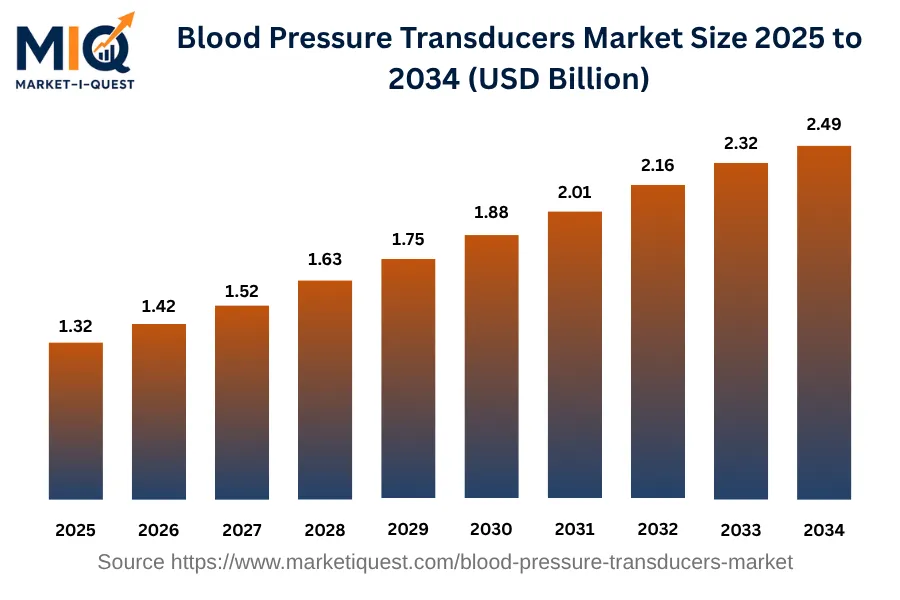
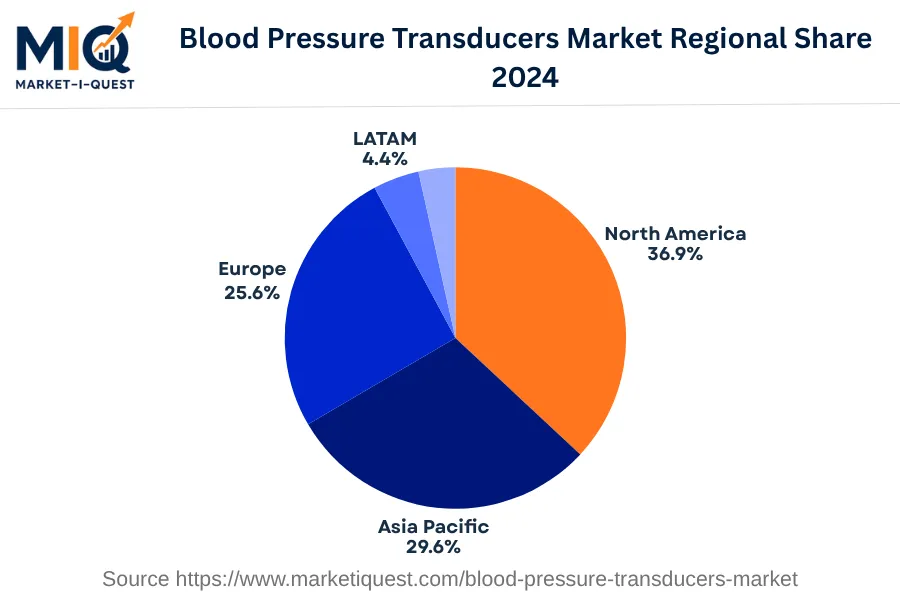
The Blood Pressure Transducers Market was sized at USD 1.32 billion in 2025 and is estimated to expand to USD 2.49 billion by 2034, growing at a CAGR of 7.3% over that period. The market experienced ascending growth from earlier standing of USD 1.23 billion in 2024. This growth is attributed mainly to the advancing medical equipment technologies and a surge in demand for non-invasive blood pressure monitoring systems. Concurrently, an increased prevalence of hypertension worldwide has presumably prompted significant investment in this sphere, potentially bolstering the market during these years. In 2024, the regional share of the Blood Pressure Transducers Market was divided among North America (36.9%), Asia Pacific (29.6%), Europe (25.6%), LATAM (4.4%), and MEA (3.5%).

Key Takeaways

  • By Technology - Digital blood pressure transducers led the market accounting for the majority share in recent years.
  • By Procedure - Invasive procedures dominated being the most commonly employed method.
  • By Type - Disposable transducers held a significant share of the market demonstrating a preference for single-use products.
  • By End-User - Hospitals were the leading users of blood pressure transducers indicating a high demand in acute care environments.
blood-pressure-transducers-market market size

Key Driving Factors

Adoption of Minimally Invasive Surgeries

In recent times, there is an increasing shift from traditional open surgeries to minimally invasive surgical procedures. This transformation is due to patients' demand for quicker recovery times and to reduce postoperative complications. Minimally invasive surgeries rely heavily on tools like blood pressure transducers for monitoring patient vitals and ensuring successful outcomes. These transducers provide real-time intraoperative data, which is critical in these intricate surgical methods. This shift in surgical methodology therefore intensifies the need for accurate blood pressure monitoring devices and pushes the adoption of blood pressure transducers in healthcare facilities globally, impacting their market growth.
Elevated Hypertension Instances due to Sedentary Lifestyle

The growth of blood pressure transducers market is significantly driven by the escalating prevalence of hypertension due to sedentary lifestyles. Long hours of desk jobs, unbalanced diet, less physical activities, and high stress contribute to increased hypertension cases. Hypertension, if undetected or uncontrolled, can lead to severe health complications like strokes and heart diseases. Regular monitoring of blood pressure becomes vital for these people. Blood pressure transducers enable the most accurate blood pressure measurement, making them a preferred choice over conventional devices, further driving the blood pressure transducers market.

Market Evolution by Timeline

2019-2023
In 2019–2023, hospital-based demand for blood pressure transducers increased in Asia, particularly in countries like India and China where healthcare infrastructure is rapidly improving. The use of disposables transducers become more widespread due to their benefits of reducing cross-contamination. Technology-wise, these years saw integration of blood pressure transducers with patient monitoring systems taking root, albeit still maturing. Yet, supply chain bottlenecks posed significant hindrances due to World Trade Organization's trade restrictions. These years also witnessed a declining pricing trend due to increased competition among manufacturers. On the downside, patients' safety concerns due to invasive nature of transducers emerged as a considerable challenge.
2024
In 2024, purchaser preferences shifted to non-invasive transducers powered by interest from elderly age groups and people with chronic conditions. Digital, non-invasive transducers began making their mark, backed by advancements in digital healthcare and telemedicine. North American regions saw a greater adoption due to their mature healthcare industry and regulatory landscape. Yet, as distributed patient monitoring became more complex, integration of technologies presented challenges. Few, large medical device players dominated the market maintaining premium pricing. Overall adoption was also influenced by FDA's guidelines on reducing nosocomial infection rates.
2025-2029
During 2025–2029, the market saw increased demand from home healthcare services, primarily triggered by countries like Canada and Australia where ageing populations are predominant. Remote blood pressure transducers, enabled by IoT, which could be integrated with smart devices, began gaining traction. However, these integrations lacked maturity and standardization. Government regulations around data privacy now governed use-cases and restricted uncontrolled dissemination of health data. As more players entered the market, prices dropped and contracts began to feature longer terms, bundled with other monitoring devices. Heightened concerns about cybersecurity as these devices connected to the internet were widespread.
2030-2034
The period 2030-2034 saw the demand increase from corporate wellness programs in Europe, aiming to reduce their healthcare costs. Wearable transducers with integrated AI for predictive analysis became popular in this segment. Technology maturity for such integrations reached a level of standardization owing to efforts from international bodies like the International Telecommunication Union aiming for global digital health standards. While some manufacturers maintained high prices for premium features, a low-cost segment also emerged. Contract structures started including device maintenance and replacement clauses as more dependency was put on these devices. Risks were generally related to device faultiness and individual health privacy breaches.

Future Market Outlook

Future Opportunities

The future of the blood pressure transducers market holds numerous potential opportunities driven by various factors currently shaping the industry landscape. Significant investments in home healthcare are emerging as patients seek reliable, user-friendly monitoring solutions post-pandemic. In March 2023, Philips announced a partnership with Amazon to deliver health management solutions, which may expand access to innovative blood pressure monitoring technologies. Furthermore, advancements in artificial intelligence and data analytics are expected to enhance the functionality of blood pressure transducers, allowing for improved predictive analytics on patient outcomes. The 2024 WHO guidelines will likely place greater emphasis on the individualization of hypertension treatment, promoting the adoption of personalized monitoring devices. Collaboration between healthcare providers and technology firms is becoming more common; for instance, in 2022, Abbott launched a novel blood pressure management program in partnership with select healthcare systems. This shift indicates a move towards integrated care solutions where blood pressure monitoring is part of a broader health ecosystem. Moreover, emerging markets in Asia-Pacific are witnessing increased healthcare expenditure, which will foster demand for advanced blood pressure transducers as these regions continue to enhance their healthcare infrastructures. This combination of technology integration, collaborative efforts, and emerging market demand will create new avenues for growth in the sector.

Segmentation Analysis

By Technology

The technology-driven market segments include Digital, Wearable, Aneroid, and Others. The Digital subsegment accounts for the largest revenue share while the Wearable subsegment is projected to possess the fastest CAGR during the forecast period.

Largest Revenue Share

Digital

Market Share Leader

In the technology segment of the market, the Digital subsegment accounts for the largest revenue share. The primary drivers include customer preference for digital solutions due to their ease of use, accuracy, and convenience. As healthcare units become increasingly digitized, the use of digital technology is increasing not only among patients but also among healthcare professionals. The increasing adoption is closely linked to features such as clearer readings and data management capabilities. Geographically, this subsegment has witnessed exponential growth in developed regions due to the high adoption rate and availability of advanced healthcare infrastructure. Further, digital technology's regulatory and supply aspects favor its deployment. Precise readings provided by digital devices cater to the purchasing criteria of the buyers. While initial costs may be considered high, the lack of recurring expenses and low switching costs make it a preferred choice. Considering the distribution channels, online sales have strengthened the market presence of the digital subsegment owing to the ease of comparing specifications and prices.

Fastest CAGR

Wearable

Forecast Period Growth Leader

The Wearable subsegment within the technology market is expected to grow at a rapid pace, representing the fastest CAGR. Factors driving growth include the rising trend of self-monitoring and preventive healthcare. Advancements in technology, including miniaturization and enhanced communication capabilities, are expected to serve as catalysts for growth. Consumer's shifting focus towards fitness and preventive healthcare will likely encourage rapid adoption of wearable devices. While initial cost and lack of consumer awareness serve as adoption barriers in certain geographies, strategic partnerships with healthcare institutions and targeted educational campaigns could mitigate these hurdles. In terms of risks, looming concerns remain regarding data privacy and accuracy of wearable devices. However, with continuous technological improvements and stringent regulatory policies, companies are expected to overcome these potential obstacles. Therefore, although the wearable technology market possesses certain challenges, the overall growth outlook appears positive and robust.

By Procedure

The market is divided into subsegments including Non-Invasive and Invasive procedures. In 2024, Invasive procedures accounted for the largest revenue share while Non-Invasive procedures are expected to grow at the fastest Compound Annual Growth Rate (CAGR) during the forecast period.

Largest Revenue Share

Invasive

Market Share Leader

Invasive procedures dominated the market in terms of revenue in the base year 2024. Several driving factors contribute to this leading position. First and foremost, invasive procedures are typically more complex, require greater skill and precision, and thus command higher prices. They often involve sophisticated medical technology and may require hospitalization, which further adds to the cost. Additionally, invasive procedures are often utilized as a last resort for conditions that cannot be managed by non-invasive methods, making them a necessity in certain medical cases. Geographically, regions with higher healthcare spending and advanced medical infrastructure such as North America and Europe contribute substantially to this segment's revenue. Furthermore, regulatory approvals for invasive techniques are stringent, ensuring high-quality standards and instilling patient trust. The purchasing criteria for invasive procedures, including necessity due to medical condition, recommendation by practitioner, and accessibility of services, also make this subsegment the market leader in terms of revenue.

Fastest CAGR

Non-Invasive

Forecast Period Growth Leader

Despite the large revenue from invasive procedures, non-invasive measures are expected to grow at the fastest CAGR. A confluence of factors is driving this growth. Patients are increasingly revealing a strong preference for non-invasive procedures, due to lesser pain, reduced recovery time, lower risk of infection, and overall less trauma associated with them. Technological advancements are also a major catalyst, as they allow for effective and efficient diagnosis and treatment without resorting to invasive techniques. Policies encouraging less intrusive medical procedures and promotions of a patient-friendly approach are also stimulating this growth. Partnerships among healthcare providers and technological firms to innovate and design non-invasive solutions are witnessing an uptick. Despite being touted as the future of medicine, non-invasive procedures aren’t without risks. These include the risk of inaccurate diagnosis or ineffective treatment in complex cases where invasive procedures would be more suitable. Nevertheless, the benefits appear to outweigh the risks in the eyes of patients, which is driving the fast-paced growth of this subsegment.

By Type

The market is divided into subsegments including Disposable and Reusable. In 2024, the Disposable subsegment accounted for the largest revenue share while the Reusable subsegment is expected to grow at the fastest CAGR during the forecast period.

Largest Revenue Share

Disposable

Market Share Leader

The disposable subsegment leads the market in revenue generation due to various factors. The primary driver is the heightened demand for single-use products in a myriad of sectors. Disposable products eliminate the costs and efforts associated with cleaning and maintenance, thus making them an appealing choice for businesses aiming to optimize their operations. Moreover, the tightening of health and safety regulations in many industries is pushing for the implementation of disposable items to limit the spread of contaminants and pathogens. Also, the global shift toward convenience and efficiency fuels the continuous growth of the disposable segment, with customers preferring disposable products for their time-saving features and the ease of use. Lastly, certain geographies with well-established supply chains and high disposable incomes, such as North America and Europe, contribute significantly to this subsegment's large revenue share in the base year, 2024.

Fastest CAGR

Reusable

Forecast Period Growth Leader

Given the ongoing emphasis on sustainability, the reusable subsegment is expected to grow at the fastest CAGR in the near future. Environmental concerns are driving more businesses to opt for reusable options to mitigate material consumption and waste production, despite the initial capital expenditure required. Besides, advancements in cleaning technology now allow efficient sterilization of these products, thereby assuaging hygiene concerns that previously hampered market growth. There are also higher levels of consumer awareness and regulatory pressure building up across various markets, promoting the use of reusable over disposable items. While initial adoption may be slower due to the higher upfront cost, partnerships and collaborations that streamline the recycling process could catalyze the growth of the reusable subsegment. However, challenges remain, including the need for frequent replacement and the risk of misuse and cross-contamination, which should be addressed to sustain this rapid growth trend.

By End-User

The market is divided into subsegments including Hospitals, Ambulatory Surgical Centers, Home Care Settings. In 2024, Hospitals accounted for the largest revenue share while Home Care Settings is expected to grow at the fastest CAGR during the forecast period.

Largest Revenue Share

Hospitals

Market Share Leader

Hospitals emerged as the subsegment with the highest revenue in 2024. The main drivers behind this dominance include the continuous expansion of hospitals and the growing need to upgrade their existing equipment with technologically advanced alternatives to better manage the increasing number of patients. As the backbone for providing critical healthcare services, hospitals require a comprehensive range of equipment from diagnosis tools to critical care equipment. Moreover, the implementation of strict regulations regarding the safety and efficacy of these devices compels hospitals to regularly purchase or lease new equipment, thereby ensuring a steady revenue stream for this subsegment. Other driving factors include the increasing incidences of chronic and acute diseases, aging infrastructure requiring replacement, and the growing adoption of advanced technologies in the healthcare sector.

Fastest CAGR

Home Care Settings

Forecast Period Growth Leader

Home Care Settings is projected to exhibit the fastest CAGR during the forecast period. Several factors contribute to this rapid growth. First, the rising aging population and increased incidence of chronic diseases are resulting in a greater demand for home care services, which in turn increases the need for home care equipment. Second, technological advancements have made it possible for several procedures and treatments to be conducted at home, thus eliminating the need for prolonged hospital stays and reducing healthcare costs. Third, the COVID-19 pandemic has fostered an increased awareness regarding the effectiveness of home care treatments, resulting in an escalated demand for home care equipment. However, it's worth noting there are also challenges present, including a lack of skilled home care service providers and resistance toward the adoption of advanced equipment among end-users due to high costs.

Competitive Analysis

Key Market Players

Manufacturers / OEMs

Medtronic
Ireland
Edwards Lifesciences
US
Becton Dickinson
US

Key Suppliers & Raw Materials

SJM International
US
Honeywell International
US
TE Connectivity
Switzerland

Distributors, Integrators & Channel Partners

Avanos Medical
US
GE Healthcare
US
Koninklijke Philips
Netherlands

Porter’s Five Forces Analysis

An analysis of the blood pressure transducers market using Porter's Five Forces framework.

Supplier Bargaining Power

Medium

Limited number of suppliers leading to moderate power over pricing and delivery.

Buyer Bargaining Power

Low

Highly specialised products and lack of equal alternatives limit buyers' bargaining power.

Threat of Substitutes

Low

Advanced, highly specific technology minimizes availability of direct substitutes.

Threat of New Entrants

Medium

High R&D costs and regulatory barriers somewhat deter market entry.

Competitive Rivalry

High

Several well-established companies compete intensively on price, quality, and innovation.

Regional Analysis

Geographic market dynamics and growth opportunities across key regions

Global Market Outlook

blood-pressure-transducers-market market regional share

North America

In 2024, the Blood Pressure Transducers market in North America underwent substantial maturing, defined by heightened demand, adoption of novel technologies, and rigid regulatory oversight. The steep rise in hypertension prevalence in the U.S., Mexico, and Canada inflected considerable demand, driving more investment into streamlining the manufacturing and distribution of transducers. Regulatory bodies such as the U.S. Food and Drug Administration (FDA) imposed stringent quality standards, further incentivizing companies to enhance their product quality through technological adaption.

Trends seen in 2024 in the healthcare sector shed light on the market dynamics. The consumer preference inclined toward wireless and portable blood pressure transducers for convenient and regular monitoring at home. Retail pharmacies and online platforms dominated the distribution, with an uptick in partnerships between manufacturers and these platforms to expand outreach. Telehealth practices are flourishing in the U.S., Canada, and Mexico, aiding the direct-to-consumer channel to expand considerably. Manufacturers were increasingly seen working under good manufacturing practices (GMP) to meet the rigorous standards of quality. Hospitals remained the major customer base, where the use of invasive blood pressure transducers is paramount for critically ill patients, while the adoption of non-invasive transducers increased in smaller healthcare settings due to their cost-effectiveness.

Asia Pacific

In 2024, the Blood Pressure Transducers Market in Asia Pacific experienced notable development. Key drivers included increased demand due to high prevalence of hypertension in countries such as China and India; favorable government regulations encouraging advanced healthcare infrastructure; sizeable investments in healthcare facilities in Japan, South Korea, and Australia; and increased adoption of novel technology, which improved the accuracy of measurements and diagnosis. The supply dynamics reflected the interest of manufacturers in exploiting opportunities presented by the expanding geriatric population suffering from cardiovascular diseases, thus influencing the pricing.

Market trends revealed shifts in buyer behavior with heightened consumer preference for digital transducers owing to their capability to integrate with mobile devices and applications. Technological advancements saw companies in the region investing heavily in developing wireless, wearable monitors. Channel dynamics showcased a strong lean towards online platforms due to the pandemic situation in 2024. An occurrence of collaborations was observed, especially between domestic and international players aiming to improve regional outreach. Lastly, there was stringent enforcement of standard protocols pertaining to blood pressure monitoring by med-tech companies. The primary sectors impacted included healthcare, utilities, and manufacturing industries, which adopted these transducers for employee health monitoring against the backdrop of rising workplace wellness programs.

Europe

In 2024, the blood pressure transducers market in Europe was marked by significant growth due to medical advances and increased governmental healthcare funding.

The market drivers mainly included higher adoption of innovative technology in healthcare facilities, increased healthcare spending by governments, particularly in countries such as Germany and the United Kingdom, and a rising prevalence of cardiovascular diseases across the region. Compliance with the European Union's strict regulations on medical product standards also played a decisive role in shaping the market dynamics.

Trends observed in 2024 exhibited shifts in buyer behavior towards non-invasive transducers, reflecting an increased concern for patient comfort and safety. Major European countries such as France, Italy, Spain, the Nordics, and Benelux showed keen interest in partnerships and mergers aimed at producing high-quality, reliable blood pressure transducers. The implementation of GDPR affected the digital data management associated with these devices, contributing to changes in their design and use.

Principal customers were governmental and private healthcare institutions, along with retail sales for home use. For instance, manufacturing of medical equipment spiked in Central and Eastern Europe, pushing the need for these transducers in local markets. Taken together, these factors indicated a robust and dynamically evolving blood pressure transducers market in Europe for the base year 2024.

Latin America

The Blood Pressure Transducers Market in Latin America witnessed significant growth in the base year 2024, fuelled by diverse factors. Increased cardiovascular disease prevalence facilitated a rise in demand, while healthcare investments to improve diagnostics and monitoring capacity further stimulated the market. Regulatory support in countries such as Brazil and Mexico, aimed at enhancing healthcare infrastructure, also propelled growth. Technological uptake, particularly digitization and wireless connectivity, further entrenched these devices in the healthcare system of LATAM's leading economies.

Major trends shaping the market include heightened buyer preference for non-invasive transducers attributed to patient comfort and safety concerns. We also observed a progressive shift towards digital and wireless blood pressure transducers, driven by increased efficiency and ease of integration with health information systems. Partnership activities primarily involved technology integrations to facilitate remote monitoring, a reflection of the telemedicine boom in countries like Argentina, Colombia, Chile, and Peru. Compliance with international manufacturing standards surfaced as a key criterion for product acceptance, reinforcing the importance of quality, safety, and reliability among both enterprise and government consumers in the healthcare sector. Overall, the Blood Pressure Transducers Market in Latin America, fueled by robust demand dynamics, regulatory support, and transformative technological trends, experienced substantive growth in 2024.

Middle East & Africa

In the base year 2024, the Blood Pressure Transducers Market in the Middle East and Africa demonstrated a strong momentum. Drivers included increased incidence of cardiovascular diseases especially in populous nations like Egypt, Nigeria, and South Africa, necessitating higher demand for effective monitoring solutions. Also, improved healthcare infrastructure in countries like Saudi Arabia and UAE, backed by robust government investment, intensified the market growth. Additionally, progressive technology adoption in regions like Israel drove the market by enhancing precision and efficiency of devices.

As for trends, a significant shift towards digital and wireless blood pressure transducers was observed, especially in tech-forward nations like Israel, UAE and Saudi Arabia. Buyers in these regions were primarily healthcare facilities, demonstrating preference for home-based monitoring solutions, fostering an increased demand for portable devices. Further, a surge in strategic partnerships transpired, particularly within the healthcare sectors in South Africa and Nigeria, geared towards improved product availability. Simultaneously, adoption of global standards in clinical practices for blood pressure monitoring was noticed across the user spectrum, from hospitals to home-care in Kenya, Egypt and Qatar, elevating the demand for standardized devices. The market activity in 2024 reflects a concerted effort across Middle East and Africa towards improved cardiovascular health management.

Recent Industry Developments

Latest market innovations, product launches, and strategic initiatives

May 2026

Oura announced the addition of a new blood pressure tracking feature alongside the release of its Ring 5 wearable device. Rather than functioning as a medical diagnostic tool, this software uses existing sensors to show overnight blood pressure trends and alert users to potential health risks, taking advantage of updated FDA guidelines.

July 2025

The FDA officially cleared the Aktiia G0 system, marketed to consumers as the Hilo band. This marked a massive regulatory milestone as it became the very first over-the-counter, cuffless blood pressure wristband approved for direct consumer use, paving the way for optical sensors to replace inflatable cuffs.

April 2025

BD launched an updated patient monitoring system that applies artificial intelligence directly to the data collected from hospital blood pressure transducers. By using AI to filter out noise and analyze the raw data from these transducers, the system is designed to help doctors detect patient instability much faster without requiring new hardware.

Frequently Asked Questions