Blood Glucose Monitoring Devices Market Snapshot

Key Players

  • Abbott Laboratories (United States)
  • Dexcom Inc. (United States)
  • LifeScan IP Holdings LLC (United States)
  • A. Menarini Diagnostics (Italy)
  • Sanofi (France)
  • Roche Diabetes Care AG (Switzerland)
  • Ypsomed AG (Switzerland)
  • Bayer AG (Germany)
  • Trividia Health Inc (United States)
  • ARKRAY Inc. (Japan)

Market Size

Base Year 2024
$17.68 Bn
CAGR
9.1%
Forecast 2034
$42.24 Bn

Market Segments

By Product
  • Self-Monitoring Devices
  • Continuous Glucose Monitoring (CGM) Devices
By Application
  • Type 1 diabetes
  • Type 2 diabetes
By End-User
  • Hospitals
  • Home Care Settings
  • Diagnostics Centres

Market Dynamics

Drivers
  • Rising diabetic population
  • Technological advancements in devices
Restraints
  • High device costs
  • Lack of patient awareness
Opportunities
  • Rising Diabetic Population
  • Technology advancements in Glucose Monitoring Devices

Market Size

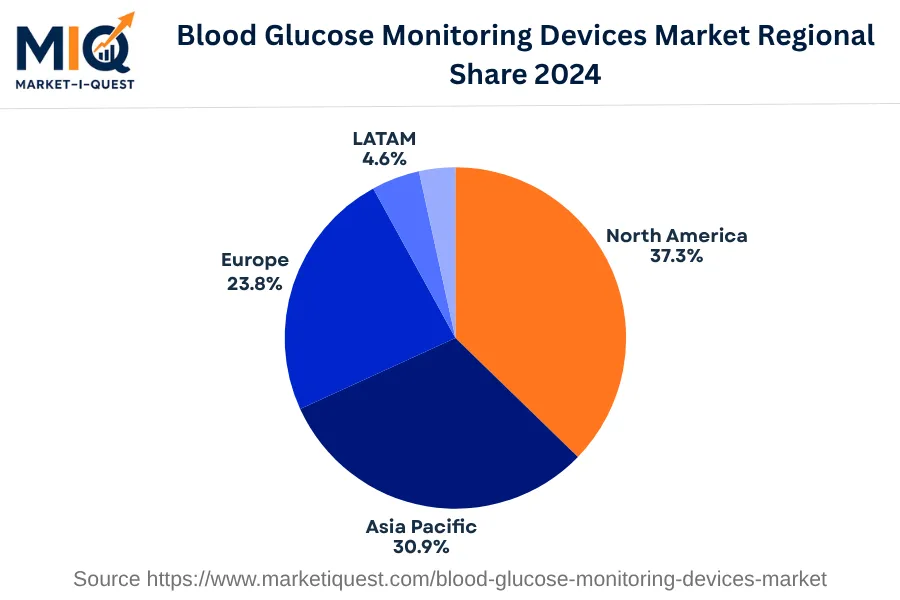
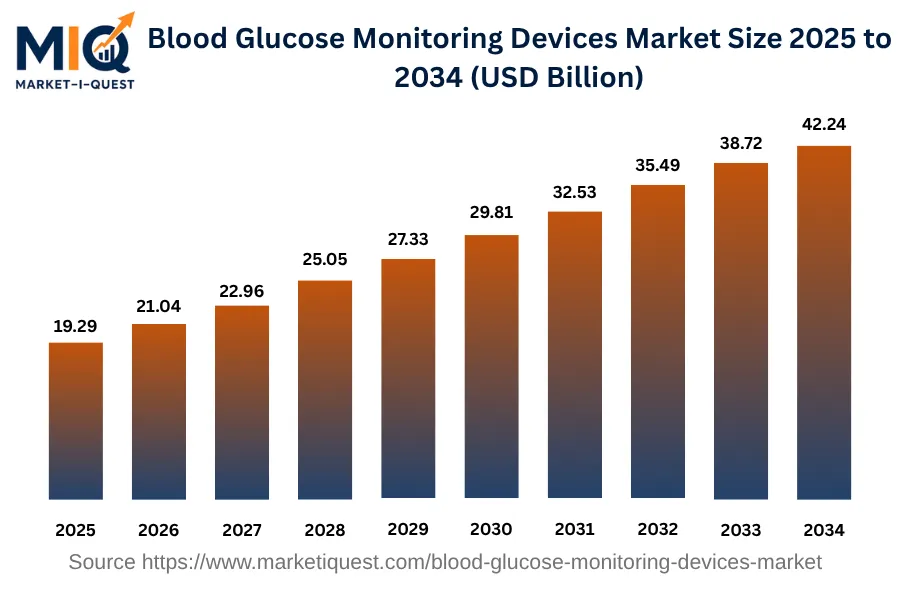
The Blood Glucose Monitoring Devices market, calculated in USD Billion, held a size of 19.29 in 2025 and will expand to reach 42.24 by 2034, growing at a CAGR of 9.1%. The market size has seen a consistent growth trajectory as from 17.68 in 2024 it grew to the aforementioned position in 2025. The decade-long span from 2025 to 2034 is characterized by continued market expansion likely due to factors such as consistent technological innovations and global increase in number of diabetic patients. In terms of regional shares in 2024, North America held 37.3%, Asia Pacific followed closely with 30.9%, Europe accounted for 23.8%, whereas LATAM and MEA contributed less significantly, with 4.6% and 3.4% respectively.

Key Takeaways

  • By Product - Self-Monitoring Devices held the majority of market share in the base year.
  • By Application - Type 2 diabetes led with a significant market demand and noteworthy share.
  • By End-User - Hospital largest growth share reflected the shifts in patient care trends.
blood-glucose-monitoring-devices-market market size

Key Driving Factors

Shift Towards Home-Based Care and Telemedicine

A significant driving factor in the blood glucose monitoring devices market is the shift towards home-based care and telemedicine due to the ongoing COVID-19 pandemic. The pandemic has forced healthcare providers and patients to leverage technology for managing chronic conditions like diabetes to reduce hospital visits and potential exposure to the virus. This shift to out-of-hospital management of diabetes has amplified the need for blood glucose monitoring devices that are user-friendly and suitable for home use. Patients increasingly value devices that facilitate easy sharing of data with their healthcare providers, accelerating growth in the market.

Rising Prevalence of Gestational Diabetes

Another critical driver in the blood glucose monitoring devices market is the rising prevalence of gestational diabetes among pregnant women worldwide. While gestational diabetes is a temporary condition that disappears post-pregnancy, it necessitates vigilant monitoring and management to prevent potential harm to the baby. Regular and accurate monitoring of blood glucose levels in the mother becomes vital during the pregnancy period. This has led to increased demand for easy-to-use, reliable, and affordable blood glucose monitoring devices, contributing significantly to the upswing in the market.

Market Evolution by Timeline

2019-2023
In this period, buyers largely consisted of people with diabetes, healthcare providers, and insurers. The buyers are drawn by the convenience of self-monitoring glucose levels at home and remote patient monitoring. The demand hotspots were North America and Asia Pacific due to high prevalence of diabetes. The main supply was traditional self-monitoring devices along with upcoming continuous glucose monitoring devices. However, integration with digital health platforms was immature. Regulatory hurdles like FDA's stringent regulations were a significant challenge for makers to launch innovative devices. Reimbursement policies were a key influencer as they dictated device affordability. The commercial model was predominantly sales with some rental models. A common risk was inaccurate readings, typically countered with regular device recalibration.
2024
In this year, there was a surge in patients' interest in adopting blood glucose monitoring devices due to the spread of COVID-19, causing increased health consciousness. The main regions of demand continued to be North America and Asia Pacific. The technology got refined, with artificial intelligence-equipped devices entering the market. However, the growth was limited due to high device cost. Policies like EU's new Medical Device Regulation (MDR) influenced the way these devices were approved. The pricing model remained primarily sales-based, and some partnerships emerged between device makers and insurers. The key risk remained device accuracy, which manufacturers were targeting with more advanced calibration technologies.
2025-2029
Demand continued to be consistently high in North America and Asia Pacific. The incorporation of IoT and better connectivity within the devices opened up opportunities for more healthcare providers to recommend these devices. Still, high prices limited adoption rates. The 'Diabetes Control Program' by WHO had a significant impact on market policies in many countries. The commercial model shifted towards a subscription-based model due to partnership with telehealth platforms. Risks shifted towards data safety as IoT brought about potential data breaches. Manufacturers and healthcare providers responded with enhanced data security measures.
2030-2034
By this period, demand for personal blood glucose monitoring devices grew substantially, especially in Africa due to increased disease awareness. Devices had superior connectivity and were integrated into comprehensive health management platforms. However, interoperability with various digital health platforms was still a challenge. The 'Affordable Diabetes Care Act' significantly influenced the access and adoption of such devices in several countries. Commercial models continued to be predominantly subscription-based but started incorporating elements of value-based purchasing. The security of health data was still a significant concern, typically met by adopting robust IT security standards.

Future Market Outlook

Future Opportunities

The future of the blood glucose monitoring devices market is poised for expansion driven by several current developments. The aging global population, particularly in regions such as North America and Europe, is significantly increasing the prevalence of diabetes, thereby creating a compelling need for effective monitoring solutions. The World Health Organization highlighted in 2021 that global diabetes prevalence has doubled since 1980, underscoring the necessity for innovative devices. As a response, many companies are shifting focus toward developing solutions tailored for specific demographics. In 2023, significant partnerships emerged, such as those between Roche and various health-tech startups, aimed at enhancing remote patient management solutions. Telehealth has gained prominence since the onset of the COVID-19 pandemic; hence, integrating glucose monitoring devices with telehealth platforms presents notable opportunities. Furthermore, as regulatory agencies continue to support the introduction of digital health technologies, manufacturers can expect to introduce more sophisticated devices compliant with evolving standards. The FDA's 2022 proposal to revise the Safer Technologies Program fits this trend, paving the way for streamlined device approvals. Additionally, blockchain technology is being explored for secure data management in diabetes care. A 2023 pilot project in Singapore demonstrated the feasibility of using blockchain for secure sharing of glucose monitoring data, indicating an emerging synergy between health data management and monitoring technologies.

Segmentation Analysis

By Product

The market is divided into subsegments including Self-Monitoring Devices and Continuous Glucose Monitoring (CGM) Devices. Despite the widespread usage of Self-Monitoring Devices, which contributes to the largest revenue, Continuous Glucose Monitoring (CGM) Devices is the segment that's expected to grow at the fastest pace.

Largest Revenue Share

Self-Monitoring Devices

Market Share Leader

Self-Monitoring Devices lead in terms of revenue due to a number of factors. They are highly affordable when compared with Continuous Glucose Monitoring (CGM) Devices which makes them more accessible especially in lower to middle income countries, contributing significantly to their revenue stream. Furthermore, due to their simplicity and user-friendly nature, they are the go-to choice for first-time blood sugar level monitoring device buyers. They are also the preferred device for casual or less frequent users who simply want to sporadically check their blood sugar levels, whereas continuous monitoring devices are utilized by hardcore diabetics who need round-the-clock monitoring. In addition, self-monitoring devices have a larger geographic reach with a strong presence even in remote locations of developing countries due to their longer history in the market. Lastly, regulations are also more lenient for self-monitoring devices compared to the stricter guidelines for CGM devices, further contributing to their larger revenue share.

Fastest CAGR

Continuous Glucose Monitoring (CGM) Devices

Forecast Period Growth Leader

Continuous Glucose Monitoring (CGM) Devices are expected to experience the fastest growth due to several factors. First, while the cost of CGM devices is currently higher, economies of scale and technological advancements should eventually reduce the price, leading to broader adoption. Furthermore, these devices offer continuous feedback, providing users with a more comprehensive understanding of their blood glucose levels throughout the day. This advanced feature is an important driver for adoption, particularly for those with more severe forms of diabetes needing constant monitoring. The increasing prevalence of diabetes mellitus worldwide, combined with the growing need for hassle-free glucose monitoring, should further drive growth in this segment. It's worth noting, however, that despite its potential for rapid growth, the high cost could hinder adoption in low-income countries, and regulatory hurdles might pose challenges for manufacturers.

By Application

The market is divided into subsegments including Type 1 diabetes and Type 2 diabetes. Type 2 diabetes accounted for the largest revenue share while Type 1 Diabetes is expected to grow at the fastest CAGR during the forecast period.

Largest Revenue Share

Type 2 diabetes

Market Share Leader

The reason behind Type 2 diabetes having the most revenue in 2024 is its widespread prevalence. It accounts for about 90 to 95% of all diagnosed diabetes cases in adults. This high prevalence means a larger customer base for therapeutics, which translates to larger returns. In terms of geography, the scenario particularly intensifies in emerging markets such as Asia and the Middle East where lifestyle changes and rapid urbanization have led to a spike in the number of patients. Regulation and supply also contribute to this trend, with ample availability and acceptance of diabetes management supplies like insulin pens, pumps, glucose monitors. The criteria for purchasing these tools is predominantly based on necessity, pushing up demand and therefore revenue. Finally, the channels for accessing these tools are plentiful including retail pharmacies, hospital pharmacies, and online pharmacies, easing purchase and thereby further increasing turnover for this segment.

Fastest CAGR

Type 1 diabetes

Forecast Period Growth Leader

Though not as common as Type 2, the growth rate for the Type 1 diabetes segment is expected to be high. Key drivers for this increased growth rate include rapid advances in technology for managing Type 1 diabetes and concerted efforts towards extensive research and development. On the technology front, innovations like artificial pancreas systems and glucose sensing are propelling the market forward. The increasing levels of capital expenditure by healthcare companies into these technological advancements are set to pay dividends. Furthermore, governments and healthcare organizations have recognized the need for focused research and are collaboratively working towards breakthroughs, which will expedite the discovery of novel treatment modalities. But some near-term risks could be resistance to adoption of new technologies due to lack of trust or regulation. Another barrier could be pricing, with costlier advancements potentially limiting widespread adoption, especially in less economically developed countries.

By End-User

The market is segmented into end-users including Hospitals, Home Care Settings, and Diagnostics Centres. Among these, Hospitals accounted for the largest revenue share while Home Care Settings are expected to grow at the fastest CAGR during the forecast period.

Largest Revenue Share

Hospitals

Market Share Leader

Hospitals generate the largest revenue in this sector due to several factors. Firstly, hospitals usually offer a wide variety of medical services encompassing diagnostics, treatment, surgeries, and emergency care which require numerous medical devices and supplies. Moreover, since hospitals cater to the largest patient demographic, the demand, and thus, revenue, is naturally higher. Furthermore, hospitals are typically better funded than other healthcare institutions, including government budgets and private investments, allowing them to procure more resources. The regulations governing hospital operations also mandate certain equipment and supply provisions, further driving demand. Additionally, technological innovations facilitating better diagnosis and treatment are first adopted by hospitals due to their capacity and resources, making hospitals indispensable in the healthcare infrastructure, resulting in a steady revenue stream.

Fastest CAGR

Home Care Settings

Forecast Period Growth Leader

While hospitals still dominate in terms of revenue, the fastest growing subsegment is Home Care Settings. This growth is driven by several key factors. An ageing population and an increased prevalence of chronic diseases have necessitated long-term care, leading many to choose home care over hospital stays for comfort and cost-effectiveness. Additionally, the emerging trend of remote patient monitoring, facilitated by advancements in telehealth technologies, is driving the growth of home care settings. Technological innovations, such as smart devices and IoT in healthcare, enable efficient home-based diagnostics and treatment, leading to increased adoption. However, barriers such as resistance to change from traditional care settings and data security concerns stall a more rapid adoption. Strategic partnerships with tech firms, incentivized by government policies promoting home-based care, can act as catalyst to overcome these barriers. Yet, frequent policy changes and capital expenditure on technology pose near-term risks.

Competitive Analysis

Key Market Players

Manufacturers / OEMs

Abbott Laboratories
US
Roche Diagnostics
Switzerland
Medtronic
US

Key Suppliers & Raw Materials

B. Braun Melsungen AG
Germany
Sanofi
France
Novo Nordisk A/S
Denmark

Distributors, Integrators & Channel Partners

McKesson Corporation
US
Henry Schein, Inc.
US
Cardinal Health, Inc.
US

Porter’s Five Forces Analysis

Analysis of forces shaping the competitive dynamics of the Blood Glucose Monitoring Devices Market.

Supplier Bargaining Power

Medium

Power limited by availability of multiple component suppliers and accessible technologies.

Buyer Bargaining Power

Low

High reliance and low complexity of devices limit patient bargaining power.

Threat of Substitutes

Low

Limited substitutes due to specificity of purpose and need of glucose monitoring.

Threat of New Entrants

Medium

Technological advancements could permit new entrants, hindered by strict regulations and heavy R&D investments.

Competitive Rivalry

High

Intense competition with numerous established players offering various innovative products.

Regional Analysis

Geographic market dynamics and growth opportunities across key regions

Global Market Outlook

blood-glucose-monitoring-devices-market market regional share

North America

In 2024, the North American market for blood glucose monitoring devices experienced significant growth propelled by various drivers and trends. Key drivers included increased prevalence of diabetes in the U.S., Canada, and Mexico, stronger emphasis on regular glucose monitoring by healthcare authorities, and advancements in technology fostering quick and accurate results. Enhanced reimbursements policies in the U.S., combined with widespread adoption of self-monitoring blood glucose devices in homecare settings, further fueled the market growth.

Notable trends centered around the shift towards more user-friendly, compact and non-invasive glucose monitoring devices, resonating with consumers' demand for convenience and accuracy. Innovations like continuous glucose monitoring systems gained popularity within diabetes management circles, streamlining at-home patient care while reducing the burden on healthcare providers. Integration of these devices with smartphones and digital platforms also emerged as a significant trend, driving patient engagement and facilitating remote consultation. There was an uptick in strategic partnerships and M&A among manufacturers aiming to expand their product portfolio and strengthen their market presence. Increased support from regulatory bodies like the FDA and Health Canada for novel, patient-centric devices was also observed. This growing market favored key sectors such as healthcare, digital health platforms, and homecare providers.

Asia Pacific

In 2024, the Asia Pacific market for blood glucose monitoring systems exhibited substantial growth, backed by several robust drivers and trends. Major driving factors included the rising prevalence of diabetes in countries such as China and India, along with the increased healthcare expenditure in Japan and South Korea. New regulations initiated by the Australian government also prompted better adoption of innovative monitoring technologies in the healthcare sector. Furthermore, strategic investments from ASEAN markets significantly upgraded the supply chain dynamics and pricing mechanisms of these devices.

Simultaneously, three key trends played into market growth. Firstly, a shift towards non-invasive blood glucose monitoring devices sparked a revolution in patient preferences. Secondly, the gradual integration of the Internet of Things (IoT) technology in these devices saw increased uptake by healthcare providers. Lastly, increased M&A activity amongst the region’s technology firms and healthcare providers streamlined the distribution channels, thereby promoting better accessibility of these devices.

Among sectors, healthcare providers and insurance companies mainly spurred demand, while technology manufacturers dominated the supply ecosystem. Finally, government-implemented health policies, especially in Australia, South Korea, and Japan, ensured improved acceptance and utilization of blood glucose monitoring systems.

Europe

In 2024, the European market for blood glucose monitoring devices was characterized by a robust growth impetus due to increasing diabetes prevalence, technological advancements, and significant investment in the sector. Germany, with its high diabetic population and established medical technology sector, led the regional market demand. Regulatory changes in the United Kingdom, emphasizing self-monitoring for diabetes management under NHS policies, likewise spurred device adoption. Increased healthcare spending and the rise of home care solutions in France, Italy, and Spain also intensified the demand for these devices.

Various trends emerged within this context. Buyer behavior demonstrated a shift towards more user-friendly and smart devices, often integrated with smartphone applications, especially in tech-savvy regions like the Nordics and Benelux. The industry saw significant partnerships and mergers amongst device manufacturers seeking to broaden their product portfolio and geographic reach, most notably in Central & Eastern Europe. Meanwhile, efforts to enforce standardization of devices in line with the EU Medical Devices Regulation enhanced product quality and safety. The market was predominantly driven by sectors such as healthcare, home care, and assisted living facilities, wherein accurate, reliable, and convenient glucose monitoring is critical for diabetes management. Subsequently, this led to the growth and increased competitiveness of the blood glucose monitoring devices market in the European region.

Latin America

In 2024, the Blood Glucose Monitoring Devices Market served a crucial role in the Latin American healthcare sector, specifically in Brazil, Mexico, Argentina, Colombia, Chile, and Peru. The market was primarily driven by the increasing prevalence of diabetes, enhanced healthcare infrastructure, and increased awareness about self-monitoring of blood glucose. Strong governmental support, such as Mexico's Universal Health Coverage program, fueled the adoption of these devices, while higher investment in healthcare by economies like Chile spurred the market growth.

Emerging trends encapsulated shifts towards technologically advanced products, like Continuous Glucose Monitoring Systems, primarily in technologically-savvy hubs such as Brazil and Argentina. Telehealth platforms gained traction in Peru and Colombia, reflecting patient preference for remote monitoring. Furthermore, significant partnerships, like Medtronic's alliance with health insurance companies in Mexico, represented strategic decisions for market expansion in LATAM.

The principal customers spanned from individual healthcare consumers to healthcare institutions, with enterprise-level purchases streaming from hospitals, clinics, and government health departments. Increased awareness of diabetes and the importance of blood glucose monitoring led to greater consumer demand. The trend of preventive healthcare in retail further pushed the acceptance of these devices, resulting in the LATAM market's robust performance in 2024.
Middle East & Africa

In 2024, the Middle East and Africa Blood Glucose Monitoring Devices Market experienced notable dynamics. Notable market drivers included accelerated diabetes diagnosis rates across major countries like Saudi Arabia, South Africa and Kenya, boosting demand for monitoring devices. Additionally, technological advancements, particularly in Saudi Arabia and Israel, fostered quicker adoption of digitized practices for glucose tracking. Increased healthcare investments, especially in the United Arab Emirates and Qatar, stimulated the supply dynamics.

Market trends exhibited significant shifts, with focus on user-friendly devices triggering consumer preference for Continuous Glucose Monitoring (CGM) devices over conventional self-monitoring of blood glucose systems. E-commerce penetration further amplified with extended online purchase of glucose monitoring devices in Egypt and Nigeria. Strategic partnerships and M&A activities became more prominent; a noticeable move was the alliance between renowned healthcare providers in South Africa and leading device manufacturers. Governments, particularly in Israel, tightened diabetes management policies, encouraging compliance with set standards. Key sectors utilizing these devices encompassed healthcare facilities and homecare settings, reflecting awareness and proactivity in diabetes management. Retail pharmacy chains, such as those in Saudi Arabia and the UAE, expanded their in-store assortment of these devices, catering to growing consumer needs.

Recent Industry Developments

Latest market innovations, product launches, and strategic initiatives

June 2026

The FDA cleared the Dexcom Stelo wearable glucose monitor for children aged two and older. This will drastically expand the user base because it is the very first time a continuous monitor can be purchased for kids without a doctor's prescription.

October 2024

Abbott expanded the rollout of its FreeStyle Libre 3 system across several international markets. This product allows users to track their sugar levels instantly by linking a tiny, disposable wearable sensor directly to their mobile phones.

Frequently Asked Questions