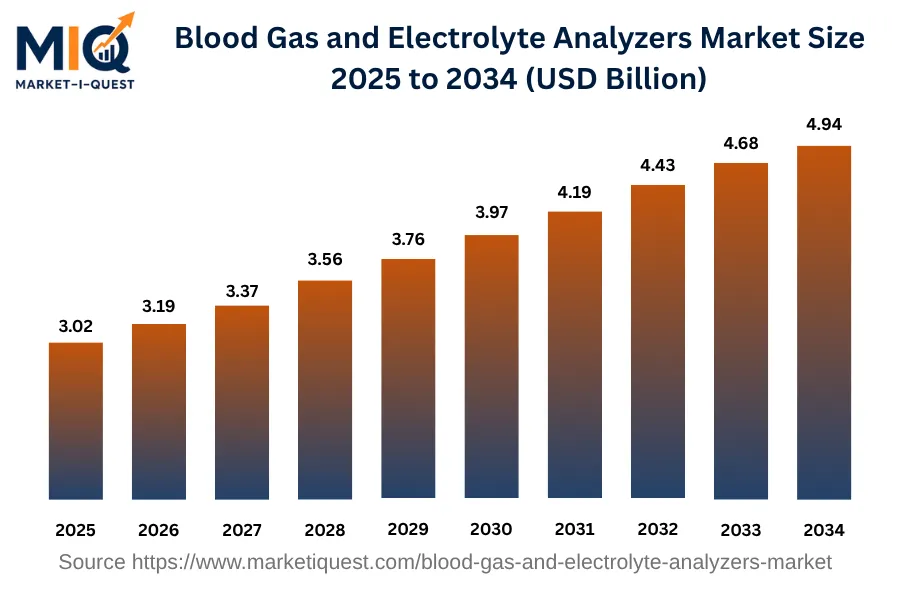
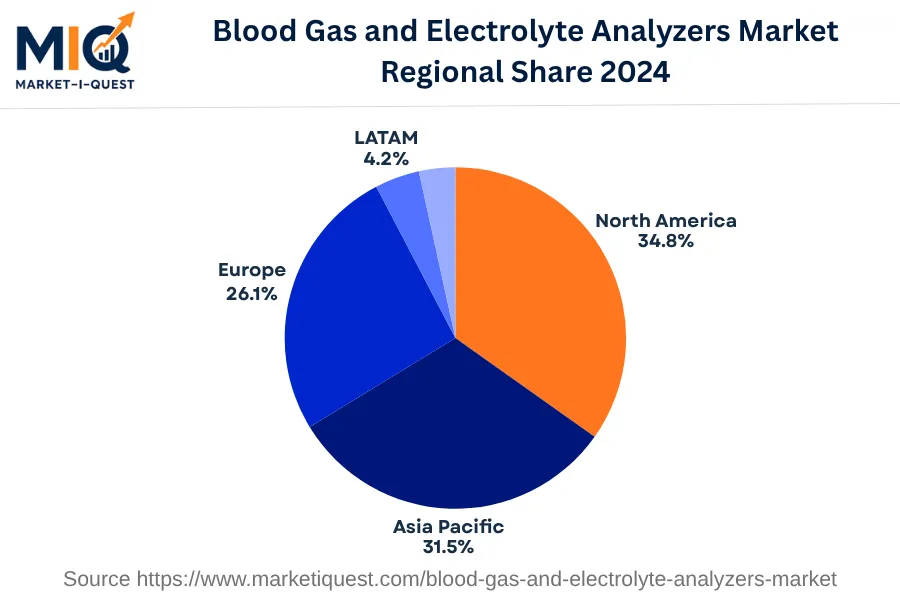
The global blood gas and electrolyte analyzers market is experiencing significant advancements driven by technological innovation. In August 2023, Abbott introduced the Alinity Remote, a system designed to enhance blood gas testing efficiency in various clinical settings. This analyzer is compatible with multiple testing parameters and aims to expedite decision-making in patient care. In 2022, the World Health Organization published guidelines emphasizing the importance of point-of-care testing for rapid diagnosis in resource-limited settings, thereby increasing demand for portable and easy-to-use analyzers. Simultaneously, companies like Siemens Healthineers have developed integrated platforms that combine various diagnostics capabilities, enabling seamless data management and patient tracking. The International Organization for Standardization has continued to refine its standards, with ISO 15189:2012 focusing on medical laboratory quality and competence, which is influencing laboratory practices worldwide. Furthermore, the integration of artificial intelligence for predictive analytics is on the rise, helping clinicians interpret blood gas results with greater accuracy. In 2023, Roche released the Cobas b 101, a compact point-of-care analyzer emphasizing user-friendly interfaces and rapid results. Regulatory bodies, including the U.S. FDA, are increasingly ensuring that these medical devices meet stringent safety and efficacy criteria, which fosters further technological advancements. As a result, the market is witnessing a shift towards more sophisticated, reliable, and rapid diagnostic solutions that enhance patient outcomes.