
Blood Flow Measurement Devices Market Snapshot

Key Players

  • Medtronic (Ireland)
  • Becton Dickinson and Company (United States)
  • Edwards Life sciences Corporation (United States)
  • GE Healthcare (United States)
  • Siemens Healthineers (Germany)
  • Koninklijke Philips NV (Netherlands)
  • Cook Medical (United States)
  • LivaNova (United Kingdom)
  • Terumo Corporation (Japan)
  • Cardinal Health (United States)

Market Size

Base Year 2024
$0.645 Bn
CAGR
5.4%
Forecast 2034
$1.09 Bn

Market Segments

By Product Type
  • Ultrasound Based Blood Flow Measurement Devices
  • Magnetic Resonance Based Flow Measurement Systems
  • Laser Doppler Flowmetry Devices
  • Thermal And Electromagnetic Flow Meters
  • Plethysmography Devices
By Application
  • Cardiovascular Diagnostics
  • Neurology Applications
  • Peripheral Vascular Assessment
  • Critical Care Monitoring
  • Research Applications
By End-User
  • Hospitals & Clinics
  • Specialty Centers

Market Dynamics

Drivers
  • Increasing cardiovascular disorders
  • Technological advancements in devices
Restraints
  • High device costs
  • Lack of trained professionals
Opportunities
  • Rising global geriatric population
  • Technological advancements in devices

Market Size

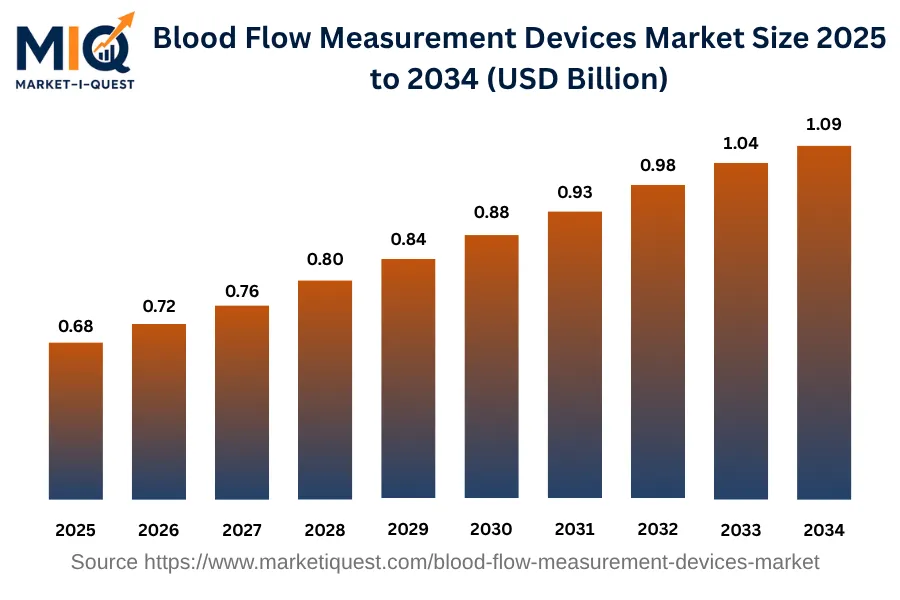
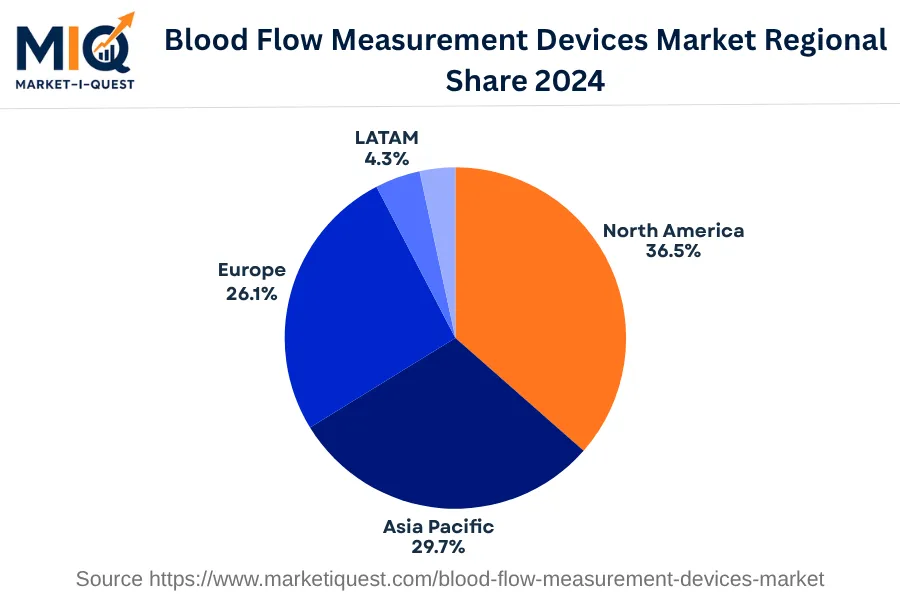
The Blood Flow Measurement Devices Market was sized at USD 0.68 billion in 2025 and is anticipated to grow to USD 1.09 billion by 2034, reflecting a CAGR of 5.4%. In 2024, the market size was USD 0.65 billion which grew to USD 0.68 billion in 2025, indicating an upward trajectory of the industry. This growth over the decade is driven by the increased usage of these devices in medical procedures to provide accurate representation of blood flow, detecting any abnormalities. The regional market share in 2024 was led by North America with a 36.5% stake, followed closely by Asia Pacific with a 29.7% share, and then by Europe at 26.1%. The regions with less prominence in this market yet crucial in terms of future potential are Latin America and the Middle East and Africa, with shares of 4.3% and 3.4% respectively.

Key Takeaways

  • By Product Type - Ultrasound Based Blood Flow Measurement Devices held the highest market share.
  • By Application - Cardiovascular Diagnostics led in market presence and usage.
  • By End-Use - Hospitals & Clinics were the top users of these devices.
blood-flow-measurement-devices-market market size

Key Driving Factors

Rise in Chronic Disorders

Chronic health conditions like cardiovascular diseases, diabetes, and obesity are all closely tied to abnormalities in blood circulation. As the number of individuals diagnosed globally continues to climb, primarily due to lifestyle changes and aging populations, there is a growing need for devices that can accurately measure and monitor blood flow. These devices provide critical data essential in diagnosis, disease management, and monitoring treatment effectiveness. Physicians and healthcare professionals are increasingly adopting blood flow measurement devices to identify early signs of potential disturbances in blood circulation, thus driving the expansion of the market. The ability to provide timely interventions helps to mitigate the severity of chronic conditions, thus improving patient outcomes and healthcare quality.
Shift Toward Home-based and Point-of-care Testing Technologies

The patient preference for non-invasive, home-based monitoring and point-of-care testing technologies is a significant driver for the blood flow measurement devices market. With the ongoing global pandemic, the need for remote patient care and monitoring has been further highlighted. By enabling patients to regularly monitor their own blood flow at home, it leads to increased convenience and reduced hospital visits. Blood flow measurement devices that are easy to use, portable, and reliable are highly sought after for at-home monitoring. Moreover, these devices aid in delivering faster, safer, and cost-efficient care. As such, device manufacturers are focusing on the development of portable and user-friendly blood flow measurement devices, further propelling the market growth.

Market Evolution by Timeline

2019-2023
During this period, hospitals and clinics, especially in developed regions like North America and Europe, showed increased adoption of blood flow measurement devices for diagnostics. Products featuring Doppler ultrasound technology, known for its convergence, were most widespread. Challenges generally involved high costs and a limited supply of advanced devices in developing regions. Also, lack of technical expertise in using these devices was a hurdle. Regulatory frameworks, like the FDA's Quality System Regulation (QSR), set the standard for quality assurance, affecting manufacturing processes. Contract-based procurement was typical with OEM partnerships being important for distribution. Unforeseen technical failures formed a risk that often resulted in product recalls.
2024
In 2024, demand from academic institutes and research-based healthcare facilities rose due to the applications of these devices in clinical trials and biotechnical research. Optical and non-invasive ultrasonic devices became more prominent, but their integration into existing systems was still immature. As a response, the FDA issued guidelines urging the industry to focus on data integrity and risk management. Fixed rate pricing models dominated, while device leasing emerged as a potential cost-controlling measure for healthcare institutions. Risks in this year centered on cybersecurity issues with the advent of smart and connected devices.
2025-2029
Demand patterns indicated a rise in home-based care in this period, with North America registering the largest users. The supply saw traditional manufacturers moving towards digital and portable devices. Iterate's InFlow and OutFlow models were key products scoring high on integration maturity. Policies like the EU's Medical Device Regulation (MDR) emphasized post-market surveillance. Devices were commonly sold through direct B2C channels, marking a shift from traditional B2B. The risk of accuracy errors surfaced due to the use of self-operated devices, giving rise to liability issues.
2030-2034
From 2030-2034, the Asia-Pacific region, particularly China and India, displayed growing device utilization due to rising health awareness and improved healthcare infrastructure. Wearable and smart blood flow measurement devices, despite initial hiccups, achieved better integration. The ISO 13485 standard became widely adopted, demonstrating a commitment to medical device quality management systems. Mixed pricing models, predominantly subscription-based, were in vogue. Partnerships with local dealers helped reach remote areas more effectively. Non-compliance with stringent standards led to barriers in commercial availability, dictating changes in manufacturing processes.

Future Market Outlook

Future Opportunities

The direction of the blood flow measurement devices market is shaped by the significant advancements in telehealth, driven largely by the COVID-19 pandemic's impact on healthcare delivery. For instance, in 2021, telemedicine platforms expanded rapidly, prompting healthcare providers to seek remote monitoring solutions for chronic conditions related to blood circulation. Partnerships between technology firms like Apple and medical research institutions, such as Stanford University, are exploring how smartwatch technology can monitor blood flow and vascular health. Regulations are evolving as well, with The FDA's Digital Health Center of Excellence launched in 2020 encouraging innovation in connected health devices. As of March 2023, the World Health Organization released a report emphasizing the need for effective chronic disease management through digital health technologies that monitor patient conditions remotely. Manufacturers now have an opportunity to enhance their devices with data analytics capabilities, improving decision-making processes for clinicians and ultimately benefiting patient outcomes. The rising prevalence of lifestyle-related diseases is also pushing demand for blood flow monitoring solutions in preventative medicine. In parallel, research grants awarded by National Institutes of Health in July 2023 emphasize funding for projects that aim to utilize emerging technologies in cardiovascular health assessments, indicating a future shift towards comprehensive health care ecosystems where blood flow measurement devices play a pivotal role.

Segmentation Analysis

By Product Type

The market is divided into subsegments including Ultrasound Based Blood Flow Measurement Devices, Magnetic Resonance Based Flow Measurement Systems, Laser Doppler Flowmetry Devices, Thermal And Electromagnetic Flow Meters, and Plethysmography Devices. Among these, Ultrasound Based Blood Flow Measurement Devices accounted for the largest revenue share, while Laser Doppler Flowmetry Devices is expected to grow at the fastest CAGR during the forecast period.

Largest Revenue Share

Ultrasound Based Blood Flow Measurement Devices

Market Share Leader

Ultrasound-based blood flow measurement devices have proven to be the most lucrative within the market. The revenue dominance can be attributed to numerous factors such as high accuracy and non-invasive characteristics of this device. The use of ultrasound allows for real-time imaging, which is highly valued in medical settings due to its immediate diagnostic insight. Moreover, they are typically less complex and lower cost compared to other technologies, making them a go-to for both healthcare professionals and hospitals seeking cost-effective solutions. Furthermore, these devices enjoy wide acceptance among physicians due to the ease of use and reliable results. The leading subsegment has a particularly strong presence in developed markets like North America and Western Europe where healthcare systems are more established and the expenditure on health tech is higher. Although these systems face competition from other more advanced technologies, their strong market position is underpinned by their trusted technology and widespread adoption.

Fastest CAGR

Laser Doppler Flowmetry Devices

Forecast Period Growth Leader

Laser Doppler Flowmetry Devices is identified as the fastest-growing subsegment, leveraging next-generation laser technology to measure blood flow. The move towards digitization and real-time analytics in healthcare is expected to act as a catalyst for the growth of this subsegment. Technological advancements, specifically the adoption of laser technology, have increased the accuracy and reduced the invasiveness of these devices, generating more interest from the medical community. At the same time, these devices have seen barriers in traditional healthcare setups due to their expensive setup costs. Looking ahead, collaborations between device manufacturers and healthcare providers, as well as a potential increase in capital investment towards product innovation, could help overcome these barriers. However, potential risks include any regulatory changes that may impose stricter requirements, which could affect their speed to market. Despite these challenges, the future for Laser Doppler Flowmetry Devices still seems promising.

By Application

By Application, the market can be divided into subsegments which include Cardiovascular Diagnostics, Neurology Applications, Peripheral Vascular Assessment, Critical Care Monitoring, and Research Applications. In the base year 2024, Cardiovascular Diagnostics accounted for the overall largest revenue share, while Neurology Applications are predicted to witness the fastest CAGR over the forecast period.

Largest Revenue Share

Cardiovascular Diagnostics

Market Share Leader

Cardiovascular diagnostics takes the lead in terms of revenue in the application segment. This is primarily driven by the increasing global incidence of cardiovascular diseases and the subsequent demand for diagnostic measures. The global rise in risk factors such as hypertension, obesity, and diabetes has led to a surge in cardiovascular diseases. There is a constant need for effective diagnostic methodologies to reduce the mortality associated with these diseases. Increased awareness about timely diagnosis, advancements in technology, and easy availability of diagnostic tools are further supporting the segment's growth. Geographically, regions with high disposable income and sophisticated healthcare infrastructure such as North America and Europe contribute significantly to the revenue, but rising healthcare concerns, initiatives, and investments in Asia-Pacific region shouldn't go unnoticed. High-value purchases from hospitals are expected, given their need for cutting-edge technology for better patient management. Regulatory support for product approval also eases the process, increasing supply and adoption within the medical community.

Fastest CAGR

Neurology Applications

Forecast Period Growth Leader

Despite not leading in revenue, Neurology Applications are anticipated to grow at the fastest CAGR over the forecast period. This is largely owing to the rising incidence of neurological disorders such as Parkinson's, Alzheimer's, epilepsy, and multiple sclerosis among others. The adoption hurdles can be mentioned as the requirement for specialized healthcare professionals and the high cost of technology. However, medical innovation has been a major catalyst for this subsegment. Advancements in neurology applications, fueled by increasing investment in R&D, technology partnerships, and capital expenditure on healthcare infrastructure improvement are key contributors to its growth. Additionally, policy support towards better neurological care, especially in developed economies, boosts this subsegment. But one must be wary of the near-term risks associated with regulatory changes and product recalls that could potentially disrupt the growth trajectory of this subsegment.

By End-User

The market is divided into features such as Hospitals & Clinics and Specialty Centers. Of these, Hospitals & Clinics accounted for the largest revenue share while Specialty Centers is expected to grow at the fastest CAGR during the forecast period.

Largest Revenue Share

Hospitals & Clinics

Market Share Leader

Hospitals & Clinics being the largest revenue sub segment can be attributed to several key factors. Firstly, hospitals and clinics have a broader reach, catering to a wider demographic with diverse medical needs over the specialized centers. This results in a higher patient turnover and therefore, a higher revenue generation. Secondly, Hospitals & clinics often have more comprehensive medical offerings, which increase their revenue sources as they offer a variety of diagnostic, outpatient, and inpatient services. Additionally, they often serve as the primary focal point for emergency services, hence, they are frequently visited and thus drive up revenue. Lastly, hospitals and clinics are widely spread geographically, as compared to specialized centers, leading to a broad customer base, driving their revenue share in the base year 2024.

Fastest CAGR

Specialty Centers

Forecast Period Growth Leader

On the other hand, Specialty Centers are anticipated to exhibit the fastest growth rate. The primary driver here is the focused expertise and superior treatments that these centers offer in particular medical fields, which result in an increased patient reliance for specialized cases. Additionally, the recent advancements in medical technology are being significantly adopted in specialty centers, assuring high quality healthcare, thus attracting more patients. Certain regulatory preferences and insurance policies also favor specialty centers, further driving their growth. However, their reach is not as widespread as hospitals or clinics, presenting expansion opportunities and thus, growth potential. The only obstacle could be the high capital expenditure required to set up such centers and the need to constantly stay updated with the cutting-edge medical technology. Still, the adoption rate is anticipated to compensate for these hurdles, fostering rapid growth.

Competitive Analysis

Key Market Players

Manufacturers / OEMs

Transonic Systems Inc
US
Medtronic
Ireland
Cook Medical
US

Key Suppliers & Raw Materials

Johnson & Johnson
US
Siemens Healthineers
Germany
Medline Industries, Inc
US

Distributors, Integrators & Channel Partners

Cardinal Health
US
Henry Schein Inc
US
McKesson Corporation
US

Porter’s Five Forces Analysis

This analysis evaluates the competitive forces impacting the Blood Flow Measurement Devices Market.

Supplier Bargaining Power

Low

Suppliers have low power due to diverse supply and standardized production materials.

Buyer Bargaining Power

Medium

Buyers have medium power due to ability to choose among multiple suppliers of devices.

Threat of Substitutes

Low

Low threat exists due to the specificity and reliability of these medical devices.

Threat of New Entrants

High

Ease of manufacturing and rising healthcare sectors induce more companies to enter this market.

Competitive Rivalry

High

High rivalry due to numerous global market players and technological advancements.

Regional Analysis

Geographic market dynamics and growth opportunities across key regions

Global Market Outlook

blood-flow-measurement-devices-market market regional share

North America

In 2024, North America's Blood Flow Measurement Devices market showed continued evolution, driven by several key factors. The growing prevalence of cardiovascular diseases and non-invasive surgeries amplified demand for precise blood flow measurement devices. Government regulations, such as those laid down by the United States' Food and Drug Administration (FDA), also mandated stringent standards for these devices, further promoting their adoption. Advances in technology played a significant role as well, with improved device accuracy and cost-effectiveness favoring market growth.

Trends in the North American market in 2024 included increased customer preference for digitized, portable devices that enable home care. This shift was seen in sectors like healthcare and retail. Alongside, the partnership and M&A activity accelerated, with companies such as Medtronic and GE Healthcare leading the pack in the pursuit of market expansion. The enforcement of strict quality control standards by regulatory bodies also influenced manufacturing practices.

In terms of customer focus, the healthcare sector was the frontrunner in the usage of blood flow measurement devices, due to their essential role in disease diagnosis and treatment monitoring. Simultaneously, enterprise buyers took advantage of improved technology to integrate these devices into health and wellness programs, demonstrating the widening scope of these tools beyond the purely medical realm.

Asia Pacific

In 2024, the Blood Flow Measurement Devices Market in Asia Pacific displayed strong growth dynamics. Key drivers included emerging economies like China and India, which escalated the demand due to increasing cases of cardiovascular diseases and growing healthcare expenditure. Strengthening healthcare infrastructure and expanding medical tourism in South Korea and the ASEAN region also boosted market performance. Furthermore, higher adoption of advanced technologies in Japan and Australia improved device precision, efficacy, and availability.

Interestingly, the trend of home-based healthcare treatments prompted manufacturers to shift focus from hospital-centric devices to user-friendly, portable options. This, in turn, elevated consumer engagement and adoption rates within Australia's mature customer base and China's rapidly developing healthcare consumer market. The application of digital platforms for storing and analyzing patient data became prevalent, especially within enterprises and government-backed healthcare institutions in Japan and South Korea. Additionally, India witnessed a surge in policy enforcement to regulate device prices and standardize procedures, ensuring accessibility of devices to masses.

The healthcare sector, particularly in key markets such as India and China, witnessed the formation of strategic partnerships and M&A activities to expand reach and leverage the untapped potential. Enhancements in device standards set by regulatory bodies in these regions further contributed to the market growth. Overall, the Blood Flow Measurement Devices market displayed a robust landscape in the Asia Pacific region in 2024.

Europe

In 2024, the European blood flow measurement devices market experienced significant growth, shaped by various drivers and trends. Increasing prevalence of peripheral artery diseases and diabetes primarily in Germany and United Kingdom, coupled with growing technological adoption in healthcare devices contributed to the market expansion. EU regulations supporting the development and approval of advanced medical devices also played a crucial role, specifically in France and Italy where the government invested heavily in healthcare technologies.

The market witnessed a growing preference for minimally invasive procedures, boosting demand for blood flow measurement devices in Spain, the Nordics and Benelux region. Notably, use of digital and portable devices emerged as a trend among healthcare providers and patients. Partnerships and mergers among key players, like the notable collaboration between German and UK companies shaped the market landscape, consolidating their stronghold across Europe.

Manufacturers in Central & Eastern Europe made significant strides in standardizing these devices, following EU policy enforcement. Primarily, hospitals and clinics, followed by homecare settings, were the key end-users of these devices. This market growth in 2024 reflects how investment, policy support and technology adoption drive developments in the healthcare technology sector, while also highlighting the importance of understanding evolving customer preferences and sector-wise needs.

Latin America

In 2024, the Latin America (LATAM) Blood Flow Measurement Devices Market exhibited strong growth, driven by a surge in healthcare expenditure, advancements in technology, and escalating prevalence of cardiovascular diseases. Key drivers included the adoption of non-invasive techniques in Brazil and Mexico, known for significant government investments in healthcare technology. Moreover, the urgency to manage lifestyle diseases such as obesity and diabetes fueled demand in countries like Argentina and Colombia.

Market trends illuminated shifting buyer preferences toward portable devices in Chile, due to their convenience and efficiency. In Mexico and Peru, digitalization was a prevailing trend, fostering partnerships between local health authorities and tech companies to improve accessibility and affordability of these devices. There was an increased adoption in sectors such as healthcare, retail, and manufacturing due to rigorous healthcare standards and policies in these countries.

Further, the rise of telemedicine in Brazil as a response to COVID-19 spurred demand for remote blood flow monitoring devices. Argentina saw increased product shifts towards devices with integrated smart technology features, setting a new industry standard. LATAM's vigorous enforcement of health policies bolstered the credibility of these devices, supporting their integration into mainstream healthcare operations. Thus, the LATAM Blood Flow Measurement Devices Market in 2024 was shaped by evolving technology, policy adherence, and an increasingly health-conscious population.

Middle East & Africa

In 2024, the Blood Flow Measurement Devices Market in the Middle East and Africa recorded critical activity. Drivers included heightened demand catalyzed by the escalating prevalence of cardiovascular diseases in countries like Egypt and South Africa. Increasing investment in healthcare infrastructure, particularly in wealthy states like Saudi Arabia, United Arab Emirates, and Qatar, accelerated the adoption of technologically advanced devices. Regulatory policies across the UAE and Saudi Arabia also favored market expansion by streamlining the approval process for innovative medical devices.

Emerging trends included a shift towards non-invasive devices in Israel and UAE owing to their accuracy, efficiency and minimal risk. Adoption of these devices was significant among healthcare service providers and hospitals. Particularly, in the government and private healthcare sector, the demand for ultrasound devices increased due to their versatility. Moreover, technological convergence was evident in Kenya and Nigeria, where integration with AI and IoT paved the way for real-time, remote monitoring capabilities. In South Africa, significant adoption was observed in diagnostic centers and outpatient settings. There was also an apparent trend of strategic partnerships among manufacturers and healthcare providers for shared expertise and resources. Moreover, growing compliance with international standards (ISO 13485) indicated rising quality assurance and patient safety measures across the region.

Recent Industry Developments

Latest market innovations, product launches, and strategic initiatives

March 2026

Flosonics Medical secured a national distribution contract with Vizient for FloPatch, the first wireless, wearable ultrasound device approved to measure blood flow. This development allows hospital systems to continuously monitor blood flow in a patient's neck to quickly determine if critically ill individuals, such as those in shock, need more intravenous fluids without requiring complex, invasive surgery.

March 2026

Perimed finalized a major strategic partnership with HC 21 UK, one of Europe's largest medical technology providers. This expansion is designed to scale the rollout of Perimed's laser-based blood flow scanners, which map skin circulation without physical contact to help doctors prevent tissue loss and amputations in patients with severe diabetes and restricted arteries.

February 2026

A new clinical trial protocol was officially launched to test the safety and effectiveness of using blood flow restriction devices on children with cerebral palsy during walking therapy. This represents a significant market expansion, as blood flow restriction technology has traditionally been marketed almost exclusively to adult athletes and orthopedic patients, entirely missing the pediatric rehabilitation sector.

Frequently Asked Questions