Biological Seed Treatment Market Snapshot

Key Players

  • BASF SE (Germany)
  • Bayer AG (Germany)
  • Syngenta AG (Switzerland)
  • Monsanto Company (US)
  • Dupont (US)
  • Novozymes (Denmark)
  • ITALPOLLINA S.p.A (Italy)
  • Koppert Biological Systems (Netherlands)
  • Plant Health Care (UK)
  • Precision Laboratories LLC (US)

Market Size

Base Year 2024
$1.52 Bn
CAGR
13.7%
Forecast 2034
$5.49 Bn

Market Segments

By Type
  • Microbials
  • Botanicals
By Crop Type
  • Oilseeds & Pulses
  • Cereals & Grains
  • and Fruits & Vegetables
By Function
  • Seed Protection
  • Seed Enhancement

Market Dynamics

Drivers
  • Rising awareness of organic farming
  • Stringent environmental regulations
Restraints
  • High development costs
  • Regulatory constraints
Opportunities
  • Increasing demand for organic produce
  • Developing agricultural biotechnology advancements

Market Size

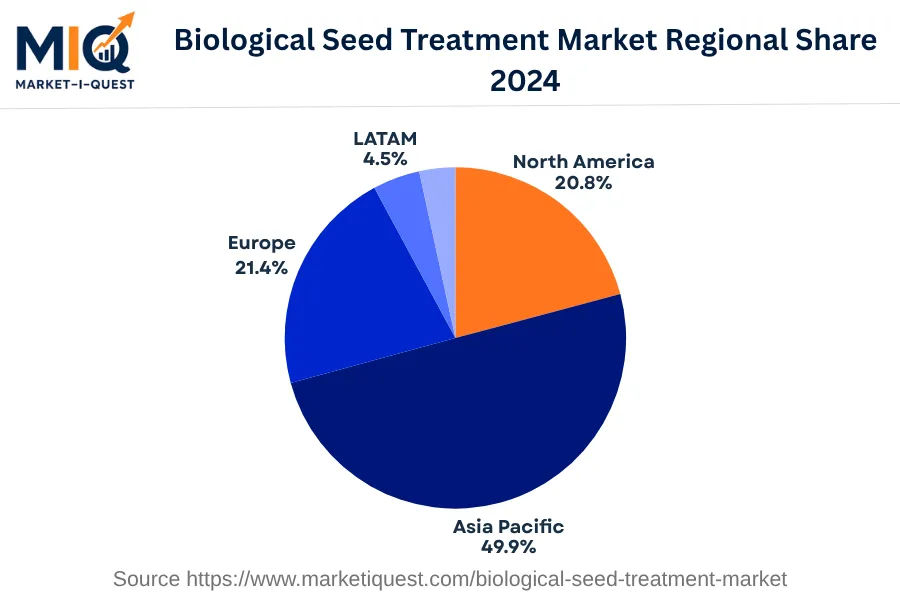
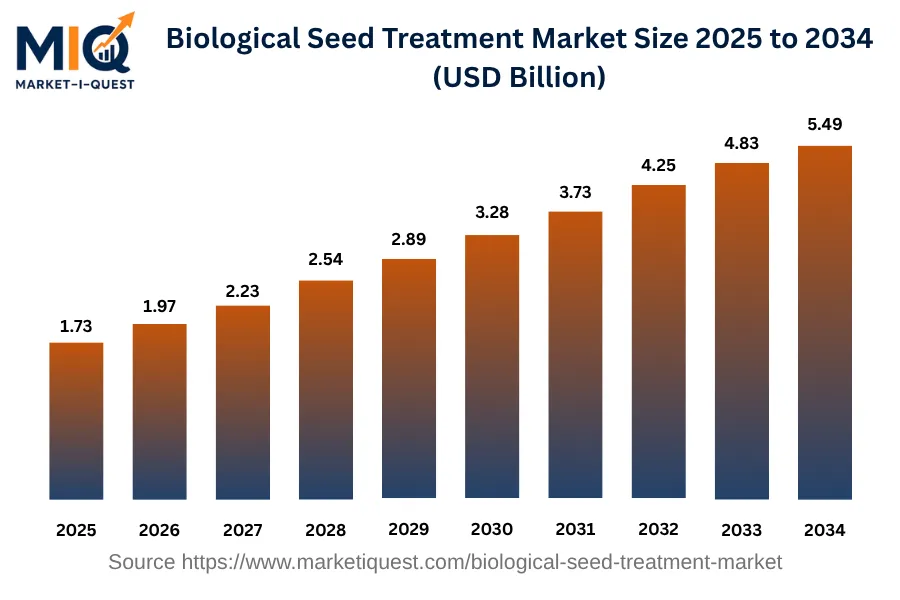
The Biological Seed Treatment Market was valued at 1.73 billion USD in 2025 and is expected to grow to 5.49 billion USD by 2034, recording a CAGR of 13.7% during the forecast period. This significant increase in market size from 2025 to 2034 is testament to the consistent growth exhibited by this market sector over nearly a decade. The market incrementally scaled from the initial value of 1.52 billion USD in 2024, leading up to its worth, as assessed in 2025. Regionally, in 2024, the market shares were distributed as follows: Asia Pacific had the lion's share with 49.92%, North America followed with 20.84%, Europe constituted 21.37%, whereas LATAM and MEA accounted for smaller chunks at 4.46% and 3.41% respectively. These figures demonstrate the concentration of the Biological Seed Treatment Market predominantly in the Asia Pacific, Europe, and North America regions.

Key Takeaways

  • By Type - Microbials held a significant share in the Biological Seed Treatment Market in the base year.
  • By Crop Type - Cereals & Grains segment led the market in terms of growth and offerings in the base year.
  • By Function - Seed Protection accounted for a significant share in the Biological Seed Treatment Market.
biological-seed-treatment-market market size

Key Driving Factors

Implementation of Sustainable Farming Practices

In the face of growing environmental concerns and climate change, there is a pronounced shift towards sustainable farming practices worldwide. Governments are enforcing regulations that discourage the use of chemical pesticides and fertilizers, pushing the farming community to adopt eco-friendly substitutes. Biological seed treatments, by being natural, sustainable and benign to the environment, perfectly fit this profile. Farmers are leveraging this seed treatment method as a way to enhance crop productivity while minimizing ecological footprint. This approach is increasing the demand in the biological seed treatment market, as it aligns with the regulatory measures and growing environmental consciousness globally.

Increasing Resistance to Chemical Pesticides

The prolonged use of chemical pesticides in agriculture has led to an increasing resistance among pests. This resistance necessitates the use of higher quantities of pesticides, which not only increases costs for farmers, but also exacerbates negative environmental impacts. Biological seed treatments are regarded as an efficient alternative to chemical pesticides. They utilize beneficial microorganisms to protect seeds from pests and diseases while enhancing plant growth and productivity. Given their effectiveness and lower risk of resistance development among pests, the use of biological seed treatments is gaining traction. This trend is an important driving factor in the growth of the biological seed treatment market.

Market Evolution by Timeline

2019-2023
With the rise of sustainable farming in regions such as North America and Europe, the demand for biological seed treatment grew modestly. Consumers, mainly large-scale farmers, used them primarily to enhance crop yields and suppress disease occurrences. Providers mainly consisted of agro-bio product manufacturers, who had facilitation centers in United States and Germany. However, their ability to scale up was often constrained by regulatory norms like the US EPA's Biopesticidal registration regulations. These regulations demanded stringent testing and verification. Services were usually sold on annual contracts, priced based on the crop yield uplift potential. However, supply inconsistences were commonly observed due to variability in biological material quality.
2024
2024 saw a shift in the global biological seed treatment market, with an increasing demand from Asia-Pacific, particularly from emerging economies like India and China. More farmers were realizing the benefits of organic farming, resulting in increased use of biological seed treatment. Expansions of facilities in these regions increased, but challenges relating to maintaining optimal environmental conditions for product efficacy were commonly faced. Regulatory ambiguity in these markets led to some businesses running into compliance issues. Pricing models continued as is, with the potential of higher crop yield defining costs, but issues in quality control led to some performance discrepancies.
2025-2029
During this period, Latin America also experienced a boom in its biological seed treatment market, primarily driven by their burgeoning organic product export businesses. However, the market still continued to be technology-driven, with North America and Europe leading in patented biological seed treatment innovations. Inevitable adoption of stringent regulations like the Common Agricultural Policy in European Union countries impacted the market and molded strategies. Cost structure remained relatively stable but supplier partnership models evolved with the inclusion of performance cost, where providers were compensated based on crop yield outcomes.
2030-2034
The development of standardized protocols from 2030-2034 to ensure product quality consistency boosted supply chain reliability. On the demand side, Africa entered the market late but with a swift uptake driven by increased awareness of sustainable farming. In response to bio-regulation harmonization efforts, companies like Bayer and Syngenta starting offering customized service packages including advisory for best-use practices. On the policy front, the United Nations Global Compact on Safe Biological Product Use played a pivotal role in promoting market dynamics. The earlier risk of inconsistent product quality was mitigated with advanced biotechnology tools ensuring product stability and hence, improving customer trust.

Future Market Outlook

Future Opportunities

As demand for sustainable agriculture practices continues to rise, there are substantial future opportunities within the biological seed treatment market. The United Nations’ 2023 report highlighted the potential of biological treatments to enhance soil health and increase crop yields, which aligns with global sustainability goals. Countries like India have seen a surge in organic farming practices, spurring local manufacturers to invest in biological seed treatment solutions tailored to regional crops. A notable case is the partnership between Syngenta and the Indian Council of Agricultural Research initiated in 2023, aimed at developing region-specific bio-agricultural solutions. The rise of e-commerce platforms also presents opportunities for distribution and awareness. In 2023, platforms in regions like Southeast Asia began focusing on agricultural inputs, which enables better access to biological seed treatments for remote farmers. Additionally, the continued decline of conventional pesticide use due to regulatory pressures worldwide creates a broader market for biological alternatives. The World Health Organization is also advocating for safer agricultural practices, which can motivate farmers to transition to biological treatments. Furthermore, emerging economies in Africa are focusing on improving agricultural resilience through the adoption of biological solutions, supported by governmental initiatives. These developments indicate that the biological seed treatment market holds a potential for growth driven by strong agricultural trends and collaborations aimed at promoting sustainable practices, aligning with global movements toward responsible farming.

Segmentation Analysis

By Type

The market is segmented mainly into two types: Microbials and Botanicals. In terms of revenue, Microbials took the majority share, while Botanicals are anticipated to display the fastest growth rate.

Largest Revenue Share

Microbials

Market Share Leader

Microbials represent the segment with the most substantial share of revenue in 2024. The profit dominance of this subsegment can be attributed to several factors intrinsic to the industry. Microbials are essential and widely used in several applications, thus, leading to a high demand. In agriculture and horticulture especially, microbials have become indispensable for the promotion of growth and prevention of plant diseases. Further, this demand is amplified due to the trend towards sustainable and organic farming practices, which heavily utilizes microbials. Even in terms of geographical factors, numerous agrarian economies are substantial markets for microbials, fuelling the revenue growth in this subsegment. Regulatory frameworks in several jurisdictions promoting environmental-friendly alternatives also contribute to the market dominance of microbials. In conclusion, the high demand, regulatory support, widespread application, and geographical factors make Microbials the subsegment boasting the largest revenue share.

Fastest CAGR

Botanicals

Forecast Period Growth Leader

Although Botanicals currently doesn't command the largest market share, it is posited to be the fastest-growing subsegment. This rapid growth can be attributed to several drivers. Firstly, changing consumer preferences towards natural and organic products is creating a favorable market for botanicals. With increasing awareness about the health benefits of natural products, consumers are seeking out products with botanical ingredients. Secondly, advancements in biotechnology have allowed the scientific community to discover new botanical compounds with several applications, driving more demand towards this subsegment. In terms of barriers, the high cost of extraction and processing botanicals may hinder the adoption to some extent. However, increasing investment in research, strategic partnerships, and new extraction technologies are expected to overcome these barriers progressively. As for risks, regulatory changes could impact the market development. All these factors point out that Botanicals, with their growing demand, innovative applications, and evolving supply dynamics, is the subsegment set to grow at the fastest pace.

By Crop Type

The market is divided into subsegments including Oilseeds & Pulses, Cereals & Grains, and Fruits & Vegetables. In the base year 2024, Cereals & Grains accounted for the largest revenue share while Fruits & Vegetables are expected to grow at the fastest CAGR during the forecast period.

Largest Revenue Share

Cereals & Grains

Market Share Leader

The Cereals & Grains subsegment leads the market in terms of revenue due to a combination of factors such as dietary habits, government policies, and climate conditions favoring grain production. Cereals and grains are staple foods in numerous economies worldwide, driving steady demand. Governmental agricultural policies and subsidies often prioritize grain production, which contributes to the segment's robust revenue generation. Moreover, grains are versatile crops that can prosper in a wide range of climates, expanding their cultivation area and potential harvest tonnage. From a customer perspective, consistent demand is driven by cereals and grains' central place in many diets, and the increasing capitalization on health-conscious trends, which sees grains as a rich source of dietary fiber. In terms of supply, advancements in farming techniques and machinery have enabled farmers to optimize their yield and maintain their production level, even under adverse conditions, thus supporting consistent market supply and revenue growth.

Fastest CAGR

Fruits & Vegetables

Forecast Period Growth Leader

The Fruits & Vegetables subsegment is projected to grow at the fastest CAGR during the forecast period. This growth is primarily driven by increasing awareness about the health benefits of consuming a diet rich in fruits and vegetables. Numerous health-centric initiatives and campaigns promote fruits and vegetables consumption, creating a catalyst for growth. Coupled with this, advancements in agricultural technology, such as precision farming and smart irrigation, are reducing possible adoption barriers by optimizing cultivation and improving yield per acre. However, weather-related risks and the higher susceptibility of fruits and vegetables to disease outbreaks compared to cereal crops pose a substantial near-term risk. The growth of this subsegment is expected to be also driven by the rise of retail channels, which has made fruits and vegetables readily accessible to a larger customer base.

By Function

The market is divided into two key subsegments namely, Seed Protection and Seed Enhancement, with Seed Protection generating the largest share in revenue and Seed Enhancement expected to grow at the fastest CAGR during the forecast period.

Largest Revenue Share

Seed Protection

Market Share Leader

Seed Protection holds the majority of the market share due to its critical role in ensuring crop yield and productivity. This segment leverages innovative technologies to protect seeds against potential threats such as pests, diseases, and unfavorable environmental conditions, thereby boosting their growing potential. Factors such as dynamic climate patterns, increased instances of crop diseases, and the global need to enhance food production to cater to the increasing population drive the demand for Seed Protection. The stringent regulations for effective seed treatment to minimize possible crop damage also underscore the segment's dominance. In particular regions, high barriers to entry and established customer relationships restrict the influx of new entrants, further solidifying the top players' market position. The purchasing decisions in this segment are influenced primarily by the product's effectiveness, cost, and its environmental impact, making it a competitive market where quality and value rule supreme.

Fastest CAGR

Seed Enhancement

Forecast Period Growth Leader

The Seed Enhancement subsegment is projected to witness the fastest growth rate in the industry. The key growth catalyst for this segment is shifting trends in agriculture industry towards advanced farming technologies, with an emphasis on maximizing crop yield and reducing crop loss. Seed Enhancement involves numerous treatments and coatings applied to seeds to speed up their germination and enhance their resistance against adverse farming conditions. While the initial investment seems high, the resultant yield and productivity benefits far outweigh the costs, making it an attractive segment for potential investors. Barriers to adoption might include lack of awareness about these advanced farming practices and restricted access in certain geographies. However, government initiatives and collaborations to promote sustainable farming and meet food security goals are set to accelerate this segment's growth. The targeted investments in R&D for advanced seed enhancement solutions also provide a positive outlook for this segment's future growth.

Competitive Analysis

Key Market Players

Manufacturers / OEMs

BASF SE
Germany
Bayer AG
Germany
Syngenta AG
Switzerland

Key Suppliers & Raw Materials

Corteva Agriscience
US
Marrone Bio Innovations
US
Incotec Group BV
Netherlands

Distributors, Integrators & Channel Partners

Bioworks, Inc.
US
Germains Seed Technology
UK
Plant Health Care
US

Porter’s Five Forces Analysis

The Biological Seed Treatment Market faces dynamics across suppliers, buyers, substitute products, new entrants, and existing competition.

Supplier Bargaining Power

Medium

Suppliers have power due to the specialized knowledge and equipment required in biological seed treatment production.

Buyer Bargaining Power

High

Buyers have power given the diverse suppliers in the market, and the lack of switching costs.

Threat of Substitutes

High

Emergence of traditional chemical seed treatments poses a great risk to biological substitutes.

Threat of New Entrants

Medium

New entrants must overcome regulatory barriers and investment in advanced technology.

Competitive Rivalry

High

Rapid technological advancement and innovation lead to high competitive rivalry in the market.

Regional Analysis

Geographic market dynamics and growth opportunities across key regions

Global Market Outlook

biological-seed-treatment-market market regional share

North America

In 2024, the North American Biological Seed Treatment Market saw sizable growth driven by a combination of factors, including demand for sustainable agriculture, governmental regulations, and technological advancements. The demand for environmentally friendly agriculture stimulated the market, with many North American farmers transitioning to biological seed treatments to enhance crop health and yield. Governmental regulations also played a critical role in driving the market; the U.S. Environmental Protection Agency’s rules emphasizing reduced chemical pesticides use engendered a shift towards biological seed treatments. Technological advancements further propelled the market, with improved product delivery mechanisms and superior efficacy making biological seed treatments a preferred choice for farmers.

In terms of trends, buyer behavior leaned towards producers offering comprehensive and integrated solutions. This focused on biological seed treatments combined with data analytics to provide actionable insight into crop health, leading to partnerships and M&A activity in the sector. Technological convergence and collaboration became industry norms. In the policy region, stricter enforcement of environmental standards in all three countries - the U.S., Canada, and Mexico - led to increased adoption of biological seed treatments. Notably, enterprise customers in the agriculture sector spearheaded the adoption, followed by government-backed agricultural entities. Thus, 2024 bore witness to a burgeoning North American Biological Seed Treatment Market, spurred on by regulations, consumer demand, and technological innovation.

Asia Pacific

In 2024, the Biological Seed Treatment Market in the Asia Pacific region, predominantly driven by China, India, Japan, South Korea, Australia, and ASEAN countries, exhibited significant growth. This escalation resulted from increased awareness regarding the environmental implications of synthetic chemical seed treatments, boosting the demand for alternatives. Regulatory bodies across the region further enforced policies promoting the use of biological seed treatments, driving manufacturers to invest in advanced technologies and processes.

Major trends shaping the Asia Pacific Biological Seed Treatment Market included a shift towards more organic and sustainable agricultural practices, particularly by enterprises in the agriculture sector and large-scale farmers. As consumers increasingly valued sustainability, retailers tailored their supply chains accordingly, thus bolstering market growth. Furthermore, technology adoption in the sector was notable, with bioinformatics playing an increasingly important role in improving the efficacy of biological seed treatments. Several strategic partnerships and M&A activities occurred within the industry, aiding in the regional expansion of key companies and contributing to the growing market.
Key sectors contributing to the demand were agriculture, horticulture, part of various government programs across the region. In terms of customer base, the primary purchasers of biological seed treatments were large-scale agrarian enterprises and small-scale rural farmers. Regulatory bodies also played a significant role by reinforcing standards and policies promoting the use of biological seed treatments.

Europe

In 2024, the European biological seed treatment market witnessed significant activity. Drivers included the increased demand for sustainable agriculture practices and stringent regulations for chemical pesticides, prompting farmers to adopt bio-seed treatments. Investment in agriculture technology surged, fueled by the European Union’s Common Agricultural Policy and its emphasis on minimizing agriculture's environmental footprint. Additionally, bio-seed providers capitalized on farmers' willingness to pay a premium for guaranteed higher crop yields.

Shifts in buyer behavior indicated a stronger preference for companies deploying bio-tech solutions offering traceability and safety. This led to product innovations, specifically tailored bio-seed coatings, aimed at improving plant health and resistance. A growing number of partnerships and mergers were observed within the market, aimed at broadening each entity's suite of bio-seed solutions and expanding the overall market share. The notable shift to digital channels for the purchase of bio-seeds was driven by the ease of comparing product offerings and customer reviews. Policy enforcement remained vigilant, underlining the necessity for adherence to EU organic standards. Major market participants included sectors such as agriculture and horticulture enterprises, organic farming cooperatives, government-backed farming initiatives, and sustainable farms trending in the retail sector. The market was especially prevalent in Germany and the United Kingdom, reflecting these countries' robust agriculture sectors and strong commitment to sustainable farming.

Latin America

In 2024, the biological seed treatment market in Latin America demonstrated significant growth due to increased awareness about sustainable farming and regulatory changes. The shift to less toxic farming procedures, prompted by environmental regulations, and strengthened by investment in bio-organic products, drove the market's energy. Brazil and Mexico led the region in technology adoption, optimizing biological seed treatments' efficiency for higher crop yields. Meanwhile, broad supply availability and competitive pricing stimulated purchasing power in Argentina and Chile.

Consumer preferences trended towards organic produce, mainly impacting buyer behavior in Colombia and Peru. This shift, combined with increased knowledge of the long-term benefits of biological seed treatments, influenced farmers and agricultural enterprises to adopt these products. Additionally, technological advancements in seed treatment applications continued to reshape the market in 2024. The year also marked a significant uptick in collaboration between agricultural enterprises and technology providers for more effective and efficient seed treatment solutions. In contrast to historical norms, policy enforcement targeted the reduction of chemical-based fertilizers and pesticides, stimulating the biological seed treatment market across Latin America. This prominence of sustainable farming practices, adopted by sectors including agribusiness, government agencies, and retail outlets, underscored the growing relevance of the biological seed treatment market in the region.

Middle East & Africa

In 2024, the biological seed treatment market in the Middle East and Africa experienced robust growth influenced by a range of drivers and shaped by emerging trends. High demand from countries including Saudi Arabia, Kenya, and South Africa, particularly driven by the agriculture, government, and manufacturing sectors, leveraged the adoption of biological seed treatment practices. Dominant drivers underscored the increased awareness of the benefits of sustainable farming and stringent government regulations on the use of chemical pesticides. The growing interest in organic food and health consciousness also fueled higher demand. Changes in climatic conditions necessitated the need to adopt bio-based seed protection methods making lucrative markets in countries like Nigeria and Egypt.

Significant market trends revealed consumer preference for bio-treated seeds due to their affordability, effectiveness, and eco-friendliness. The emergence of precision agriculture in countries such as Israel and the United Arab Emirates also influenced the market significantly. Additionally, the successful implementation of regulations by governments against harmful pesticides usage propelled the market in the base year. There was a notable rise in partnerships, as observed with the Qatar government’s partnership with local agricultural bodies to encourage biological seed treatment. This reflected a broader market trend leaning towards sustainable agriculture and encouraging the use of biologically treated seeds across the Middle East and Africa.

Recent Industry Developments

Latest market innovations, product launches, and strategic initiatives

November 2025

Syngenta and Amoéba SA formed a strategic partnership to commercialize a novel biological treatment for cereals and field crops. The bio-fungicide utilizes Willaertia magna lysate to target economically damaging wheat diseases like yellow rust, bolstering non-chemical tools for European and UK growers.

October 2025

Albaugh introduced BIOST 2G, a high-performance biological nematicide and insecticide seed treatment, to the U.S. row crop market. The product delivers broad-acre application stability and field efficacy comparable to synthetic chemistry benchmarks while reducing target nematode resistance.

Frequently Asked Questions