Bio-based Platform Chemicals Market Snapshot

Key Players

  • Braskem (Brazil)
  • BioAmber Inc. (Canada)
  • BASF SE (Germany)
  • Mitsubishi Chemical Corporation (Japan)
  • DowDuPont Inc. (US)
  • Novozymes A/S (Denmark)
  • NatureWorks LLC (US)
  • Royal DSM NV (Netherlands)
  • Koch Industries Inc. (US)
  • GC Innovation America (US)

Market Size

Base Year 2024
$16.5 Bn
CAGR
10.36%
Forecast 2034
$44.22 Bn

Market Segments

By Product Type
Pentanediol, Ethanol, Furfural, Hydroxymethylfurfural, 2 5-Furandicarboxylic Acid, Glycerol, Isoprene, Succinic Acid, 3-Hydroxypropionic Acid/Aldehyde, Levulinic Acid, Lactic Acid, Sorbitol, Xylitol, Others
By Type
Sugar, Syngas, Biogas, Oil, Algae, Others
By End Use
Industrial, Agricultural, Pharmaceutical, Others

Market Dynamics

Drivers
  • Increasing environmental concerns
  • Advancements in biotechnology
Restraints
  • High production cost
  • Lack of awareness
Opportunities
  • Increasing environmental awareness
  • High demand for sustainable products

Market Size

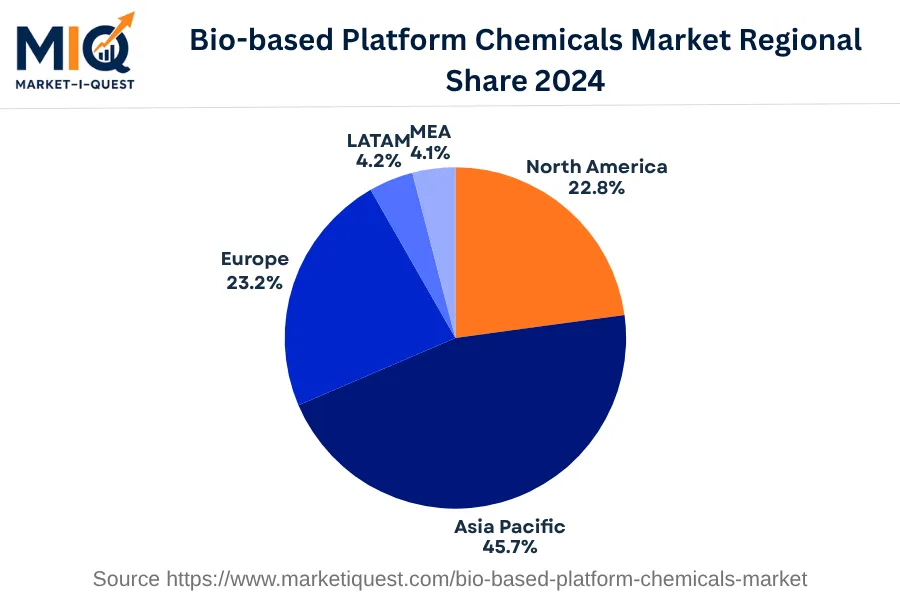
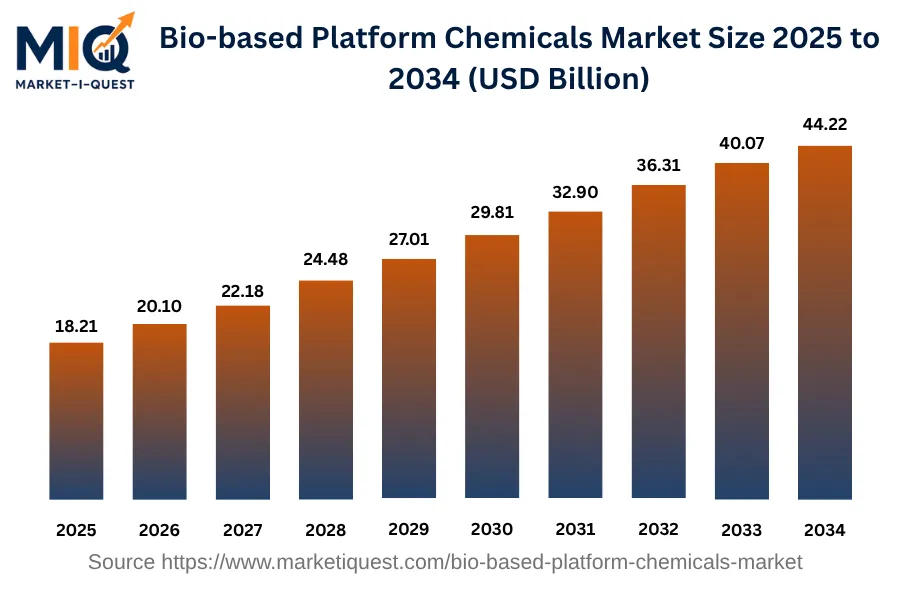
The bio-based platform chemicals market was valued at $18.21 billion in 2025, showing a growth from $16.50 billion in 2024. It continues on an upward trajectory through to 2034 when it peaks at $44.22 billion. The compound annual growth rate (CAGR) over this period is 10.36%. One of the factors contributing to this growth is the escalating demand for sustainable and green products, which has encouraged the shift towards the use of bio-based platform chemicals in various industries. Another factor is advancement in biotechnology, specifically the development of new bio-based platform chemicals. At the regional level in 2024, Asia Pacific led the market with a share of 45.73%, closely followed by Europe at 23.16% and North America at 22.84%. LATAM and MEA had considerably smaller shares at 4.21% and 4.06%, respectively.

Key Takeaways

  • By Product Type - Ethanol held a dominant position in terms of market share in 2024.
  • By Type - Oil led the market accounting for a major share in the market as of 2024.
  • By End Use - Industrial subsegment held the largest share of the segment of the market. growth.
bio-based-platform-chemicals-market market size

Key Driving Factors

Stricter Environment Regulations

In recent years, governments worldwide have been imposing stricter environmental regulations, particularly related to the utilization and disposal of petrochemicals. This is due to the significant environmental hazards associated with their use, including pollution and climate change. The bio-based platform chemicals market is directly benefiting from this regulatory shift, as these products serve as sustainable and less damaging alternatives to petrochemicals. Authorities in Europe and North America are actively promoting the adoption of bio-based materials in multiple industries, such as plastic and fuel. These policies have incentivized companies to shift their procurement preferences towards bio-based platform chemicals.

Competitive Cost Advantages

The cost of producing bio-based platform chemicals has significantly fallen due to advances in bioengineering and fermentation technology. These developments have made the production of bio-based platform chemicals more efficient and cost-competitive when compared to traditional petrochemicals. Additionally, fluctuating crude oil prices have amplified the economic unpredictability of petrochemicals. The relative cost stability of bio-based feedstocks offers an appealing alternative for industries reliant on these chemicals. These cost benefits are a substantial driving factor for the bio-based platform chemicals market, encouraging a growing number of manufacturers to shift their procurement processes towards bio-based materials.

Market Evolution by Timeline

2019-2023
During this period, Europe and North America had the highest demand for bio-based platform chemicals, driven by sustainability initiatives. Bio-plastics and bio-lubricants were the prominent segments due to their extensive usage in packaging, automobiles, and consumables. Providers offered components such as sugar, bio-glycerol, and lactic acid. However, inadequate feedstock supply posed a challenge. Policies like EU's Renewable Energy Directive encouraged the use of bio-based materials. Typical contracts involved long-term agreements with fixed pricing. Risks included market volatility and high production costs, alleviated through partnerships, optimizing feedstock usage, and enhancing production processes.
2024
In 2024, the buyer landscape diversified, including sectors like construction and clothing apparel showing interest in bio-based materials. China emerged as a significant market due to policies promoting green industries. Sustainable solvents gained popularity. Technology capabilities witnessed advancements with more efficient conversion processes. Regulatory encouragement from schemes like China's 13th Five-Year Plan for Ecological Environmental Protection supported market growth. Commercial models shifted towards usage-based pricing structures considering the high production costs. Lack of adequate infrastructure for smooth supply chain operations posed a risk within this year.
2025-2029
This phase saw increased demand from developing economies, including Southeast Asian regions, transitioning towards bio-based materials. Bio-foams gained popularity due to their application in insulation. Suppliers incorporated advanced biotechnological tools for streamlining production. Implementation of stricter emission standards, such as ASEAN's haze-free roadmap, boosted bio-based adoption. Moving away from long-term fixed contracts, a rise in performance-based agreements was observed. Producers faced the risk of fluctuating feedstock prices but mitigated this through securing future feedstock provisions.
2030-2034
Between 2030 and 2034, the usage of bio-based platform chemicals broadened to include electronics and energy sectors. Africa started showing significant demand due to local initiatives promoting sustainable growth. Bio-polymers became prominent because of their applications in 3D printing and electronics. The integration of AI in production processes improved operational efficiency. Policies like South Africa's National Climate Change Adaptation Strategy influenced market trends. Commercial dynamics saw a rise in variable pricing based on market conditions. Although supply-chain disruptions were a potential risk, investments in local production capacities helped in mitigating it.

Future Market Outlook

Future Opportunities

As regulatory pressures increase on traditional petrochemical industries, bio-based platform chemicals present substantial future opportunities for producers and end-users alike. The implementation of the Global Plastics Treaty in 2023 by the United Nations emphasizes the need for sustainable alternatives, positioning bio-based chemicals as potential substitutes for conventional plastics derived from fossil fuels. Companies like TotalEnergies have begun exploring bio-feedstocks to manufacture sustainable aviation fuels, showcasing the practical application of bio-based technologies. Furthermore, the growing consumer preference for environmentally friendly products is pushing brands to source bio-based chemicals, evident in Unilever’s commitment announced in early 2021 to increase the proportion of bio-based ingredients in its formulations. The development of circular economy initiatives, especially in Europe, is facilitating increased collaboration among companies to innovate novel bio-based chemicals derived from waste materials. Additionally, advancements in carbon capture and utilization technologies may create new pathways for converting CO2 into bio-based chemicals, with projects initiated by companies like Carbon Clean Solutions starting in 2022. Furthermore, the expansion of the bio-based product industry, supported by academic research institutions and collaborations worldwide, indicates rising research dedicated to optimizing the production of bio-based platform chemicals, ultimately enhancing market attractiveness across multiple applications in the future.

Segmentation Analysis

By Product Type

The market splits into numerous subsegments including Pentanediol, Ethanol, Furfural, Hydroxymethylfurfural, 2,5-Furandicarboxylic Acid, Glycerol, Isoprene, Succinic Acid, 3-Hydroxypropionic Acid/Aldehyde, Levulinic Acid, Lactic Acid, Sorbitol, Xylitol, and others. Of these, Ethanol has the largest revenue share, while 2,5-Furandicarboxylic Acid tends to grow at the fastest CAGR in the projected period.

Largest Revenue Share

Ethanol

Market Share Leader

In 2024, Ethanol accounted for the most significant share of revenue in the product type segment. This position is attributed to the versatile use of the compound. Ethanol, known for its integral role in the beverage industry, has found increasingly diverse applications in sectors ranging from pharmaceuticals to cosmetics, and most importantly, as biofuel in the energy sector. The global push towards renewable energy sources has contributed to the steady demand for biofuels like ethanol, leading to expanded revenue. Regulation in favor of biofuels in developed as well as developing countries across continents has further strengthened this trend. Purchasing behaviors are influenced by a surge in awareness about the critical need to use renewable energy, heightening the attractiveness of biofuels. These factors coupled with the low risk of switching costs in industries that already use alcohol-based products have contributed to Ethanol's preeminence in the market.

Fastest CAGR

2,5-Furandicarboxylic Acid

Forecast Period Growth Leader

Despite its modest current market size, 2,5-Furandicarboxylic Acid promises the fastest growth in the near future. As a key ingredient in creating polyethylene furanoate, a bio-based alternative to traditional PET, the use of 2,5-Furandicarboxylic Acid is set to skyrocket due to environmental policy shifts and consumer demand for sustainable packaging solutions. The initial high capital expenditure may hinder its immediate adoption, however, the long-term benefits including reduced carbon footprint and recyclability outweigh the initial costs. Additionally, companies are seeking joint ventures and partnerships to mitigate these costs and accelerate adoption. Government policies supporting bioplastics offer further incentives helping to overcome traditional barriers. However, the segment must be cautious of risks related to dependency on agricultural raw materials and food supply chain disruption. In essence, though nascent, the emerging demand for greener alternatives promises the robust growth of the 2,5-Furandicarboxylic Acid subsegment.

By Type

The market is divided into subsegments including Sugar, Syngas, Biogas, Oil, Algae, and Others. The Oil subsegment accounted for the largest revenue share, while the Algae subsegment is expected to grow at the fastest CAGR during the forecast period.

Largest Revenue Share

Oil

Market Share Leader

The Oil subsegment, within the context of the 2024 market structure, benefitted significantly from several key drivers. Strong industrial demand is at the forefront, where oil is oftentimes chosen as the primary fuel source in various manufacturing processes due to its high energy content and efficiency. Widespread infrastructure and distribution networks for oil also provide an advantage over alternative energy sources, which often require significant investments to reach the same scale. Geographically, regions with significant oil reserves such as the Middle East have a built-in supply advantage that contributes to revenue leadership. Regulatory controls on the oil market, such as OPEC supply agreements, can also impact market revenue by influencing global oil prices. Purchasing criteria within this segment generally lean towards providers offering reliable deliveries and competitive pricing, with customers often locked in via long-term contracts. The sophisticated trading infrastructure allows fluctuation in demand to be managed effectively, further securing oil's spot as the leading revenue subsegment.

Fastest CAGR

Algae

Forecast Period Growth Leader

Algae has been identified as the fastest growth prospect in the 2024 market outlook, even though it does not boast the largest revenue input. This subsegment stands out primarily due to technological advancement and sustainability policies that favor its development. In terms of technology, progress in genetic engineering and biotechnology provide reasons for optimism regarding economically viable algae biofuel production. From a policy perspective, an increased focus on sustainability and reduction of carbon dioxide emissions offers a robust environment for algae-based products. Industrial partnerships are increasing as companies strive to meet sustainability goals and limit dependence on traditional fossil fuels. The initial high capital expenditure required for algae cultivation plants is a near-term barrier, with the risk being offset by potential long-term returns. As the world continues transitioning towards green energy, the algae subsegment can breakthrough as a mainstream energy source, thus representing a significant growth opportunity.

By End Use

The market is divided into subsegments including Industrial, Agricultural, Pharmaceutical, and Others. The Industrial subsegment accounted for the largest revenue share while the Pharmaceutical subsegment is expected to grow at the fastest CAGR during the forecast period.

Largest Revenue Share

Industrial

Market Share Leader

The Industrial subsegment dominated the market in terms of revenues in 2024. This can be attributed to a multitude of key driving factors. First, rapidly growing industries such as manufacturing, construction, and power generation heavily rely on the market offerings. These sectors have high purchasing power and recurring requirements which sustain the market demands consistently. Additionally, robust distribution channels, consolidated through years of operation in the industrial sector, facilitate market access and penetration, amplifying profitability. The presence of large multinational corporations providing a stable customer base also contributes to this revenue dominance. Another contributing factor is the stringent regulatory environment concerning safety and operation standards in industries, mandating the use of certain offerings from this market. However, high switching costs deter customers from easily transitioning to alternatives, further anchoring the Industrial segment's revenue leadership.

Fastest CAGR

Pharmaceutical

Forecast Period Growth Leader

The Pharmaceutical subsegment is expected to witness the fastest growth over the forecast period. This projection is grounded on several pivotal growth drivers and envisioned advancements. The acceleration in worldwide pharmaceutical research and production, catalyzed by the rising global health concerns and diseases, is driving the increasing demand. Additionally, emerging innovations and partnerships in the pharmaceutical industry, coupled with escalating capital expenditure on infrastructure and technology, are catalyzing this growth outlook. Regulatory bodies are also encouraging the usage of advanced tech and solutions, providing further growth stimulus. However, barriers such as stringent regulations and complex approval processes can temper this growth rate in the near term. The technology adoption in developing regions might be slower due to the initial high costs involved, but as the technology becomes more accessible and affordable, its adoption is anticipated to increase, contributing to the subsegment's rapid growth.

Competitive Analysis

Key Market Players

Manufacturers / OEMs

BASF SE
Germany
Cargill
US
Bio-Amber Inc.
Canada

Key Suppliers & Raw Materials

Corbion
Netherlands
DuPont
US
DSM
Netherlands

Distributors, Integrators & Channel Partners

Novozymes
Denmark
Roquette
France
Mitsui & Co., Ltd.
Japan

Porter’s Five Forces Analysis

An analysis of the competitive forces within the Bio-based Platform Chemicals Market.

Supplier Bargaining Power

Medium

Suppliers gain leverage through proprietary knowledge in bio-based chemical production.

Buyer Bargaining Power

High

Many chemical producers exist, increasing competition and buyer choice.

Threat of Substitutes

Low

Bio-based chemicals have unique environmental benefits, reducing threat of substitutes.

Threat of New Entrants

Medium

Initial capital requirements and regulations moderate the threat of new entrants.

Competitive Rivalry

High

Numerous competitors and increasing demand for green solutions heighten rivalry.

Regional Analysis

Geographic market dynamics and growth opportunities across key regions

Global Market Outlook

bio-based-platform-chemicals-market market regional share

North America

In 2024, the North American bio-based platform chemicals market witnessed increasing momentum. Industry growth was primarily propelled by escalating consumer demand for green and sustainable products, principally in the U.S., and corresponding regulations aimed at limiting synthetic chemical usage. Enhanced investments in biotechnology research amplified the capacity for production of bio-based chemicals, with Canada taking significant strides in technology adoption, particularly in its robust forestry sector. Furthermore, supply chain dynamics saw shifts towards local sourcing due to heightened interest in reducing carbon emissions from transportation.

Trends underpinning the market included a noticeable adaptation towards bio-based chemicals across various sectors; governments and manufacturing industry players, notably in the U.S., demonstrated increased preference for bio-based alternatives in construction materials and packaging solutions. The automotive industry, especially in Mexico, tapped into the promise of bio-plastics for component manufacturing. Technological advancements also contributed to market transformation, specifically in bio-catalysis applications. Furthermore, strategic partnerships and M&A activities heightened, marked by joint ventures between technology firms and traditional chemical companies. Voluntary adoption of international standards for bio-based content, such as ASTM D6866 in the U.S., governed market practices while intensifying policy enforcement, particularly in Canada, further enhanced the credibility of this emergent sector.

Asia Pacific

In 2024, the Asia Pacific bio-based platform chemicals market witnessed robust growth due to a mix of regulatory stimuli and demand-supply dynamics. Governments in China, India, and Japan ramped up regulations favoring environmentally-friendly chemicals, driving manufacturers to switch to bio-based inputs. Increased investments in ventures in South Korea and Australia, targeted at enhancing bio-based platform chemical production, contributed to supply availability. The advent of sophisticated technologies, such as gene-editing and advanced fermentation, also facilitated efficient bio-based chemical production.

Market trends in 2024 revealed a growing consumer preference for sustainable products, pushing retail and manufacturing sectors to incorporate bio-based materials. Volatile fossil fuel prices also prompted a shift from petroleum-based to bio-based chemicals in the utilities sector. This year saw several partnerships, specifically in ASEAN markets, aimed at strengthening supply chains and promoting technical knowledge exchange in bio-based chemicals. Enforcement of carbon reduction policies across the region further underpinned the use of bio-based platform chemicals. In sectors like healthcare and manufacturing, the demand for bio-based platform chemicals experienced an upturn. In China, for instance, bio-based polyethylene terephthalate (PET) found extensive use in the manufacture of medical devices. Utility providers also showed an inclination toward bio-based chemicals to curtail carbon emissions, responding to stringent environmental policies.

Europe

In 2024, the European bio-based platform chemicals market was shaped primarily by increasing consumer interest in sustainability, government regulations, and advancements in technology. High demand for sustainable alternatives to petrochemical-based products by both consumers and manufacturers were significant growth drivers. In particular, the adoption of bio-based platform chemicals in industries like pharmaceuticals, personal care, and packaging was noteworthy. Governments across the region intensified these trends by enacting strict regulations favoring bio-based over fossil-based products to meet their climate targets. For example, France's Law on Energy Transition for Green Growth was influential in driving market demand.

On the supply side, significant investments in technological innovations further stimulated the market's expansion. Leaders like Germany and the United Kingdom led the charge, enhancing the production efficiency of bio-based platform chemicals through advanced biotechnologies and circular economy principles. These developments coincided with strengthening partnerships and mergers across the entire value chain, highlighted by downstream users integrating with bio-based platform chemical producers. Adhering to EU’s circular economy action plan, a clear shift towards bio-refineries addressing waste management was observed. A noteworthy trend in buyer behavior was the growing preference for brands prioritizing sustainability, amplifying the importance of bio-based platform chemicals in consumer goods industries. The enforcement of EU’s bio-economy strategy further catalyzed market dynamics by integrating bio-based platform chemicals into Europe's industrial strategy.

Latin America

In 2024, the bio-based platform chemicals market in Latin America was defined by refined stock availability and increased demand for environmentally friendly products. The key drivers propelling the demand included stricter environmental regulations in countries like Brazil and Argentina, where governments set up incentives to invest in bio-based technologies. In Mexico and Peru, a surge in investment in research and development by chemical manufacturing companies transformed the supply dynamics and increased the adoption of new processing technologies. Additionally, higher prices for traditional petrochemicals led industrial customers, especially in the manufacturing sectors, to seek out cost-effective and sustainable alternatives.

Trendwise, an escalating preference for greener consumer goods boosted the demand for bio-based platform chemicals across the region, with significant shifts in buyer behavior observed in Chile and Colombia. Technology advancements in bio-refining processes transformed production methods, optimizing efficiency and minimizing waste. Companies increasingly formed strategic partnerships and mergers, notably in Brazil and Mexico's bio-chemical sectors, to enhance production capabilities and market reach. The enforcement of green standards played a critical role in shaping the industry landscape, encouraging enterprises and utilities to prioritize the procurement of bio-based platform chemicals and thereby stimulating the market's growth.

Middle East & Africa

In 2024, the bio-based platform chemicals market in the Middle East and Africa indicated a resilient transition towards sustainable alternatives. Drivers of this shift were the broadening acceptance of bio-based products, governed by emerging environmental regulations such as Saudi Arabia's intentional Green Initiative. Moreover, companies in the United Arab Emirates and Qatar's diversified investments in bio-chemical manufacturing illustrated a rising commitment towards cleaner technologies.

Heightened consumer awareness on environmental impact was a key trend, promoting demand for bio-based platform chemicals in sectors such as manufacturing and retail. Additionally, technological advancements like Israel's bio-refinery innovation strengthened the product supply chain, impacting markets in Egypt and Kenya positively. Accompanied by the integration of digital platforms, these technologies diversified the sales channels across the region. Partnerships and mergers became increasingly prevalent, as seen in Nigeria and South Africa's petrochemical industries, fostering a collaborative ethos to ensure sustainability. Breakthroughs in bio-based chemical research, supported by governmental initiatives in countries like United Arab Emirates, initiated expected changes in standardizations and policy implementation, signaling a policy shift towards incorporating bio-economy in the broader strategy. This transformation showcased the accelerated reliance on bio-based platform chemicals across various sectors, including government, utilities, and healthcare.

Recent Industry Developments

Latest market innovations, product launches, and strategic initiatives

June 2026

NOROO Holdings was selected to lead a major South Korean government push to commercialize bio-based 3-HP, a high-value platform chemical used as a building block for next-generation sustainable materials.

January 2026

Kemvera advanced commercialization of its bio-acetic acid and bio-ethyl acetate manufacturing process by completing the process design package, a key step toward industrial-scale production.

Frequently Asked Questions