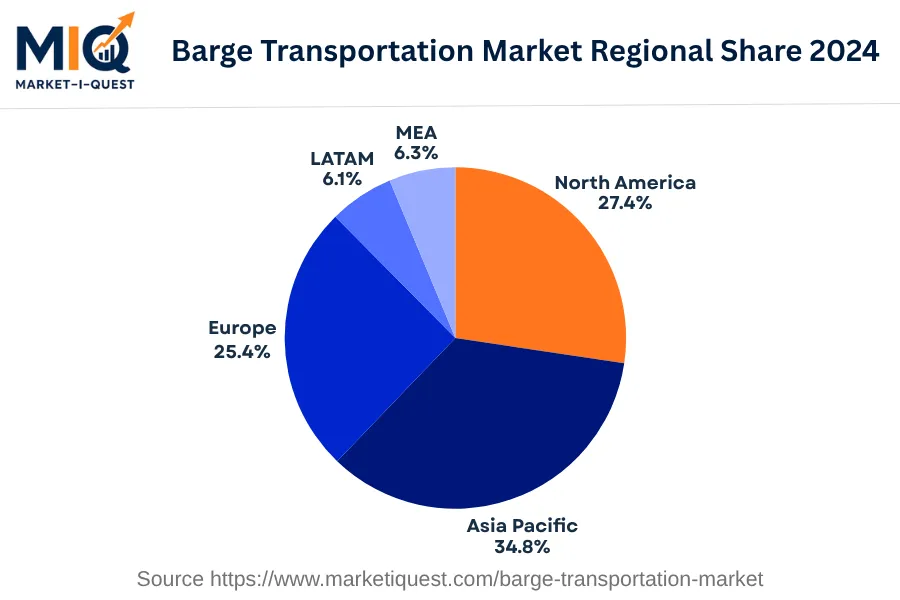
In 2024, the barge transportation market in Latin America, prominently driven by Brazil, Mexico, Argentina, Colombia, Chile, and Peru, was robustly influenced by emerging supply-demand dynamics, financial investments, evolving regulatory standards, and advanced technology adoption. Driving forces included substantial demand from sectors like utilities and manufacturing, encouraging barge transportation. Rapid industrial growth, particularly in Brazil and Mexico, necessitated cost-effective, bulk transportation methodologies, propelling the barge transportation market. Importantly, increased investment in port and inland water infrastructure, exemplified by the Southern Waterway Integration Project in Argentina, bolstered the barge transport system. Furthermore, the adoption of sophisticated navigation technologies optimized transportation efficiency, safety, and sustainability, thereby catalyzing the market.
Simultaneously, several trends framed the transportation landscape. For instance, a distinct shift towards automated and semi-automated barges became evident as businesses prioritized ease of operations and cost reduction. Environmental regulations impacted fuel choices, encouraging the use of cleaner, more efficient fuels in barge transportation. Strategic partnerships blossomed, such as the alliance between Colombia's National Infrastructure Agency and the private sector, profiting the transportation market. In terms of customer behavior, there was increased commoditization of barge usage for retail, agri-business, and the petroleum industry, reflecting the versatility of barge transport in fulfilling various logistic needs. Strong governmental emphasis on policy enforcement securing transportation safety and sustainability was another formative trend. This balance of drivers and trends illustrates the 2024 LATAM Barge Transportation market's nuanced evolution.