Automotive Domain Controller Market Snapshot

Key Players

  • Bosch (Germany)
  • Continental (Germany)
  • Aptiv (Ireland)
  • Denso (Japan)
  • ZF Friedrichshafen (Germany)
  • Valeo (France)
  • Harman (United States)
  • Marelli (Italy)
  • Visteon (United States)
  • TTTech Auto (Austria)

Market Size

Base Year 2024
$ 5.6 Bn
CAGR
11.2%
Forecast 2034
$ 16.19 Bn

Market Segments

By Domain
Powertrain, Body & Chassis, Infotainment, ADAS
By Vehicle Type
Passenger Cars, Commercial Vehicles
By Propulsion
Electric, IC Engine
By Application
Active Safety, User Experience, Body Control, Powertrain Management

Market Dynamics

Drivers
  • Growing demand for ADAS integration
  • Increased vehicle electrification trends
Restraints
  • High integration complexity
  • Limited standardization protocols
Opportunities
  • Integrated vehicle safety systems
  • OEM demand for centralized control

Market Size

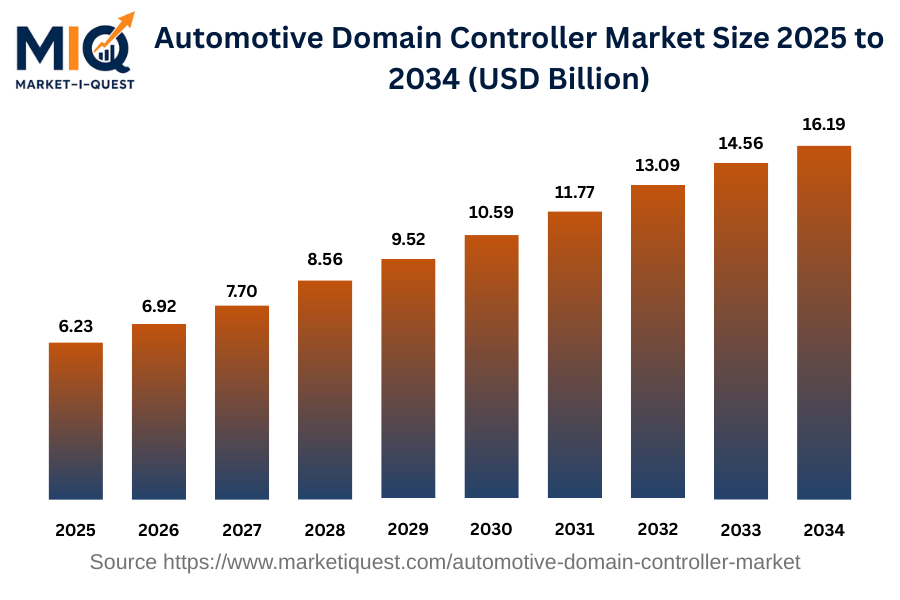
The Automotive Domain Controller Market size is 6.23 billion USD in 2025 and 16.19 billion USD by 2034, with a CAGR of 11.2%. Starting from 5.6 billion USD in 2024, the market experiences growth driven by advancements in technology and increasing demand for integrated vehicle systems.

Key Takeaways

  • By Domain - ADAS held the leading position accounting for a notable share in 2024.
  • By Vehicle Type - Passenger Cars expanded fastest indicating significant preferences in consumer choices for 2024.
  • By Propulsion - Electric is the fastest-growing segment reflecting a strong shift towards sustainable mobility solutions.
  • By Application - Active Safety led the market highlighting its critical role in enhancing vehicle safety features.
automotive-domain-controller-market market size

Key Driving Factors

Accelerating Adoption of Autonomous Vehicles

The successful development of autonomous vehicles critically depends on the implementation of automotive domain controllers, machines built to handle the complex interplay of sensors, applications, and vehicle subsystems. Autonomous driving technology is gaining momentum in areas including United States, China and several European countries, driven largely by companies striving for innovation, competitiveness, and addressing traffic congestion and road safety issues. The rising trend toward autonomous vehicles is thus expected to stimulate the automotive domain controller market, given the central role these controllers play in autonomous vehicle design and function.

Regulations for Intelligent Transportation Systems

There have been increased government initiatives across the globe promoting the adoption of Intelligent Transportation Systems (ITS). For instance, the European Commission's Institute for Transport claims that implementing ITS can reduce emissions and improve road safety. As a response, automotive industries have increased their investment in technologies like automotive domain controllers, which are vital for the effective functioning of ITS. This emphasis on ITS from regulatory bodies will continue to drive the automotive domain controller market growth.

Market Evolution by Timeline

2019-2023
From 2019 to 2023, the Automotive Domain Controller Market size witnessed significant changes. Major manufacturers like Volkswagen and Ford increased their investment in domain controllers for enhanced vehicle connectivity features. In Europe and North America, regulatory bodies pushed for higher vehicle safety standards, which led to market expansion. Key use cases included ADAS functions and infotainment systems. Tesla's use of centralized computing encouraged other brands, such as General Motors and BMW, to consider similar architectures. Supply chain constraints were evident due to silicon shortages, delaying launches of new models equipped with advanced domain controllers. The integration maturity was uneven, as many tier-one suppliers still relied on legacy systems. Pricing remained stable initially, but companies began to explore subscription-based models for software updates. Risks included cybersecurity threats and technological obsolescence, leading firms to prioritize robust security measures in their controller designs. Partnerships, like the collaboration between Bosch and NVIDIA, also arose to facilitate the development of AI-driven solutions.
2024
In 2024, the Automotive Domain Controller Market trend saw a noticeable shift towards electric vehicle (EV) integration. Companies, particularly in China and Germany, began adopting domain controllers optimized for electric powertrains. Standards such as ISO 26262 gained importance in product development, particularly for safety-critical functions. Customers increasingly sought comprehensive solutions that integrated multiple vehicle systems, from battery management to navigation. Supply chains improved as semiconductor manufacturers scaled production capabilities, easing past constraints. Pricing discussions shifted towards value-based pricing as software functionalities became more central to buying decisions. The market experienced a rise in joint ventures, like the partnership between Ford and Rivian to co-develop electric vehicles. However, regulatory scrutiny on data privacy became a critical challenge, necessitating stricter compliance measures. Companies responded by investing in in-house expertise focused on regulatory adherence. The shift led to a more collaborative ecosystem among automotive manufacturers, tech firms, and regulatory bodies, stringently defining roles within the value chain.
2025-2029
During the 2025 to 2029 period, the Automotive Domain Controller Market growth advanced further with the rise of autonomous vehicle technologies. Companies like Waymo and Baidu pushed boundaries on regulatory standards, establishing specific guidelines for SAE Level 4 autonomy. Major automotive markets, such as the United States and Europe, saw widespread implementation of domain controllers emphasizing real-time data processing and AI capabilities. Key buyers included fleet operators and ride-share companies, who valued the efficiency and lower long-term costs enabled by automated functions. Integration maturity improved as companies like Continental and Denso released more robust domain controller solutions, supporting diverse vehicle architectures. Competitive pricing strategies became prevalent as new entrants emerged, leading to more cost-effective options for manufacturers. Collaborations with tech firms, notably partnerships between GM and Microsoft, focused on cloud-based services for vehicle management. Risks included market volatility due to evolving regulations and public acceptance levels surrounding autonomous driving, prompting extensive consumer education initiatives.
2030-2034
From 2030 to 2034, the Automotive Domain Controller Market is likely to mature with full integration of smart features and comprehensive vehicle automation. Expect manufacturers to focus on sustainable practices aligned with global initiatives like the Paris Agreement, promoting electric vehicle adoption and energy-efficient technologies. Buyer segments may expand to include urban mobility service providers, pushing for advanced fleet management solutions. By this time, domain controllers will likely integrate advanced sensors and interface capabilities, driven by standards set by organizations like the ISO and UNECE. Supply chains are expected to be robust, with a diverse array of semiconductor suppliers mitigating past shortages. Pricing models may predominantly favor subscription and pay-per-use formats for software features, reflecting industry shifts towards a service-oriented approach. Partnerships could strengthen as automotive OEMs collaborate closely with software firms to enhance feature sets. Anticipated risks include ongoing cybersecurity challenges and regulatory compliance, requiring continuous investment in secure design and robust security frameworks to protect user data effectively.

Future Market Outlook

Future Opportunities

The automotive domain controller market opportunities are positioned for extensive growth driven by several ongoing trends and regulatory changes. The increased focus on vehicle electrification, notably evident in initiatives like the United States’ Infrastructure Investment and Jobs Act of 2021, encourages manufacturers to invest in domain controller technologies that efficiently manage electric drivetrains. In 2023, the International Automotive Task Force is expected to finalize recommendations on automotive cybersecurity, further necessitating advanced domain controllers to support robust security protocols against evolving cyber threats. Manufacturers like Ford are exploring the integration of domain controllers in their upcoming models to enhance vehicle connectivity and improve user experience through seamless infotainment systems. As 5G technology continues to roll out globally, automakers, such as BMW, are recognizing the potential of domain controllers to support high-speed vehicle-to-everything (V2X) communication, which can enhance safety and traffic management. Furthermore, the trend of increased automation in vehicles necessitates the development of domain controllers capable of real-time data processing, with companies like Bosch leading the charge with innovative solutions. With regional regulations governing emission standards and safety features becoming stricter, domain controllers will be essential in helping manufacturers comply while optimizing performance. Collectively, these factors suggest a trend towards greater reliance on sophisticated domain controllers, offering vast opportunities for innovation and market development.

Segmentation Analysis

The automotive domain controller market is segmented by Domain (Powertrain, Body & Chassis, Infotainment, ADAS), by Vehicle Type (Passenger Cars, Commercial Vehicles), by Propulsion (Electric, IC Engine), and by Application (Active Safety, User Experience, Body Control, Powertrain Management).

By Domain

The market is divided into subsegments including Powertrain, Body & Chassis, Infotainment, and ADAS. Powertrain accounted for the largest revenue share while ADAS is expected to grow at the fastest CAGR during the forecast period.

Largest Revenue Share

Powertrain

Market Share Leader

The Powertrain subsegment leads the automotive domain controller market share due to its critical role in vehicle performance and efficiency. As consumers increasingly prioritize fuel efficiency and lower emissions, manufacturers are investing heavily in advanced powertrain technologies such as hybrid and electric systems. Geographically, regions with stringent emissions regulations, like Europe and California in the United States, are seeing higher demand for innovative powertrain solutions. Additionally, large automotive companies are continuously enhancing their powertrain offerings to meet consumer expectations for power, reliability, and sustainability. The purchasing criteria for powertrains often revolve around efficiency, performance metrics, and technological advancements, making it imperative for manufacturers to stay ahead with R&D. The established supply chains further lower the switching costs for customers, driving loyalty towards brands that invest in reliable and efficient powertrain technologies. As such, the Powertrain subsegment serves as the backbone of the automotive industry, which is reinforced by ongoing regulatory frameworks and consumer trends toward sustainability and efficiency.

Fastest CAGR

ADAS

Forecast Period Growth Leader

The Advanced Driver Assistance Systems (ADAS) subsegment is poised for rapid growth driven by increasing consumer safety awareness and technological advancements. Enabling features like lane-keeping assist and adaptive cruise control are gaining traction as drivers seek enhanced safety and convenience. Regulatory bodies are also pushing for higher safety standards, which is catalyzing the adoption of ADAS technologies. However, challenges remain, particularly concerning the integration of these systems into existing vehicle architectures, which may deter some manufacturers from swift adoption. Furthermore, the capital expenditure required for R&D in ADAS technologies can be significant, creating a barrier for smaller players. Partnerships between technology firms and automotive manufacturers can expedite innovation, enabling faster rollout of new systems. Near-term risks include potential cybersecurity threats and the complexities involved in ensuring the reliability of ADAS functionalities. Nevertheless, as consumer demand for semi-autonomous features grows and investment in smart mobility increases, ADAS is expected to experience a significant CAGR, transforming the way vehicles are perceived and operated in the automotive landscape.

By Vehicle Type

The market is divided into subsegments including Passenger Cars and Commercial Vehicles, with Passenger Cars accounting for the largest revenue share while Commercial Vehicles are expected to grow at the fastest CAGR during the forecast period.

Largest Revenue Share

Passenger Cars

Market Share Leader

The Passenger Cars subsegment leads in revenue primarily due to the consistent demand from individual consumers and the existing infrastructure that supports personal mobility. This segment is underpinned by a consumer preference for fuel efficiency and advanced safety features, which drive purchasing decisions. Major geographical markets, particularly North America, Europe, and Asia-Pacific, have well-established automotive industries, allowing for robust sales. Regulatory factors also play a significant role; environmental standards and incentives for fuel-efficient vehicles encourage consumers to invest in passenger cars that meet these criteria. Additionally, the expansion of electric vehicle offerings has attracted environmentally conscious buyers, further enhancing the revenue potential for this subsegment. Customer loyalty toward established brands, along with various financing options available through dealerships, reduces switching costs and enhances sales. The combination of innovation, consumer demand for convenience, and supportive regulatory frameworks solidifies the Passenger Cars subsegment's leading position in the automotive domain controller market.

Fastest CAGR

Commercial Vehicles

Forecast Period Growth Leader

The Commercial Vehicles subsegment is projected to grow at the fastest CAGR driven by the burgeoning demand for logistics and transportation services across various industries. The growth of e-commerce has created an unprecedented need for efficient last-mile delivery solutions, which in turn boosts the demand for commercial vehicles. Innovations in vehicle technology, such as telematics and autonomous driving, are also acting as catalysts, improving fleet management capabilities and operational efficiencies. However, this subsegment faces some growth barriers, including the high upfront costs associated with purchasing commercial vehicles and the complexities involved in fleet integration. Additionally, fluctuating fuel prices and evolving regulatory frameworks regarding emissions could pose short-term risks for operators. Partnerships between vehicle manufacturers and tech companies are becoming increasingly important as they develop solutions that address these challenges. Overall, the potential for high returns makes Commercial Vehicles an attractive investment opportunity, despite the inherent risks associated with rapid industry changes.

By Propulsion

The market is divided into subsegments including Electric and IC Engine. IC Engine accounted for the largest revenue share while Electric is expected to grow at the fastest CAGR during the forecast period.

Largest Revenue Share

IC Engine

Market Share Leader

The IC Engine subsegment leads in revenue due to its entrenched position in various transportation and industrial applications. Forward momentum is driven by a well-established supply chain, extensive manufacturer experience, and broad consumer acceptance. Economically, IC Engines remain more affordable upfront, making them appealing to cost-sensitive markets. Additionally, regions with underdeveloped electrical infrastructure continue to rely heavily on IC Engines, as the lack of charging stations and power supply limits electric vehicle adoption. The automotive industry remains a critical customer base, supplemented by sectors like agriculture, where IC Engines are vital for machinery. Regulatory frameworks in many regions still favor IC Engine technologies, benefiting from established emissions standards rather than outright prohibitions. Considering the broad geographic reach, established distribution channels contribute to sustained revenue yields in this segment. Over time, these dynamics create substantial switching costs for customers who are deeply integrated into IC Engine frameworks, making it more challenging to transition to alternatives.

Fastest CAGR

Electric

Forecast Period Growth Leader

The Electric subsegment is positioned for the fastest growth, propelled by advancements in battery technologies and increasing environmental awareness among consumers. Governments worldwide are implementing favorable policies, providing incentives for electric vehicle adoption, which serves as a powerful catalyst for market expansion. Technological innovations, such as improved battery life and reduced charging times, are also enhancing consumer confidence and encouraging early adoption. While initially faced with barriers like high upfront costs and limited charging infrastructure, these issues are gradually being addressed through significant capital investments and strategic partnerships. Major automotive manufacturers are expanding their electric offerings, driving competition and innovation. Nevertheless, near-term risks exist, particularly related to fluctuations in raw material prices for batteries and potential regulatory shifts that may affect incentives. Market players must remain agile, focusing on customer education and infrastructure development to overcome these challenges and fully capitalize on the expected rapid growth in the Electric subsegment.

By Application

The market is divided into subsegments including Active Safety, User Experience, Body Control, and Powertrain Management. Active Safety accounted for the largest revenue share while User Experience is expected to grow at the fastest CAGR during the forecast period.

Largest Revenue Share

Active Safety

Market Share Leader

Active Safety leads the revenue share due to increasing regulatory pressures and consumer demand for enhanced vehicle safety features. Governments globally are implementing stricter standards aimed at reducing accidents, which drives the adoption of active safety technologies such as automatic emergency braking, adaptive cruise control, and lane-keeping assistance. These technologies appeal particularly to an expanding demographic of safety-conscious consumers, influencing purchasing decisions significantly. Major automotive manufacturers are prioritizing collaborations with technology providers to integrate advanced safety systems, thereby enhancing overall vehicle attractiveness. Regions with robust automotive markets like North America and Europe showcase greater revenue contributions, driven by higher standards of vehicle safety and consumer willingness to invest in these systems. Additionally, the rising cost of insurance tied to accident rates further incentivizes customers to implement more sophisticated active safety features, solidifying this subsegment's dominance in revenue generation within the automotive domain controller market.

Fastest CAGR

User Experience

Forecast Period Growth Leader

User Experience is anticipated to experience the fastest growth due to the increasing emphasis on in-car connectivity and personalization. The integration of advanced infotainment systems, voice recognition, and customizable user interfaces is transforming how consumers interact with their vehicles. Technology advancements, such as artificial intelligence and machine learning, enable manufacturers to tailor experiences to individual preferences, enhancing consumer satisfaction. However, the rapid pace of technological change poses adoption barriers, as manufacturers need to balance cost with consumer expectations. Partnerships between automakers and tech companies are emerging as vital catalysts, providing the necessary expertise and innovation. While the demand for seamless connectivity is rising, near-term risks include potential cybersecurity threats and regulatory scrutiny surrounding data privacy, which could slow adoption rates. Car manufacturers must also invest in robust infrastructure to support new features, making capital expenditure a critical consideration in the coming years.

Competitive Analysis

Key Market Players

The Automotive Domain Controller industryis competitive, with a mix of large established companies and smaller regional players. Most companies focus on improving their products/services, keeping prices attractive, and strengthening relationships with key customers. They also use partnerships, acquisitions, and new launches to expand their presence in existing and new markets. Overall, players compete on quality, reliability, and value, and competition is expected to remain strong over the forecast period.

Manufacturers / OEMs

Bosch
Germany
Continental
Germany
Denso
Japan

Key Suppliers & Raw Materials

NXP Semiconductors
Netherlands
Infineon Technologies
Germany
Texas Instruments
US

Distributors, Integrators & Channel Partners

Arrow Electronics
US
Avnet
US
Sierra Wireless
Canada

Porter’s Five Forces Analysis

This analysis evaluates the competitive dynamics of the Automotive Domain Controller Market. It highlights the forces affecting profitability and market strategy.

Supplier Bargaining Power

Medium

Suppliers can exert moderate power due to specialized components and limited alternatives.

Buyer Bargaining Power

High

OEMs have high bargaining power due to large order volumes and availability of alternatives.

Threat of Substitutes

Medium

Substitutes like advanced computing systems pose a moderate threat to domain controllers.

Threat of New Entrants

Low

High capital investment and strict certification make entry barriers significant.

Competitive Rivalry

High

Intense rivalry exists among established players driven by technological advancements and price competition.

Regional Analysis

Geographic market dynamics and growth opportunities across key regions

Global Market Outlook

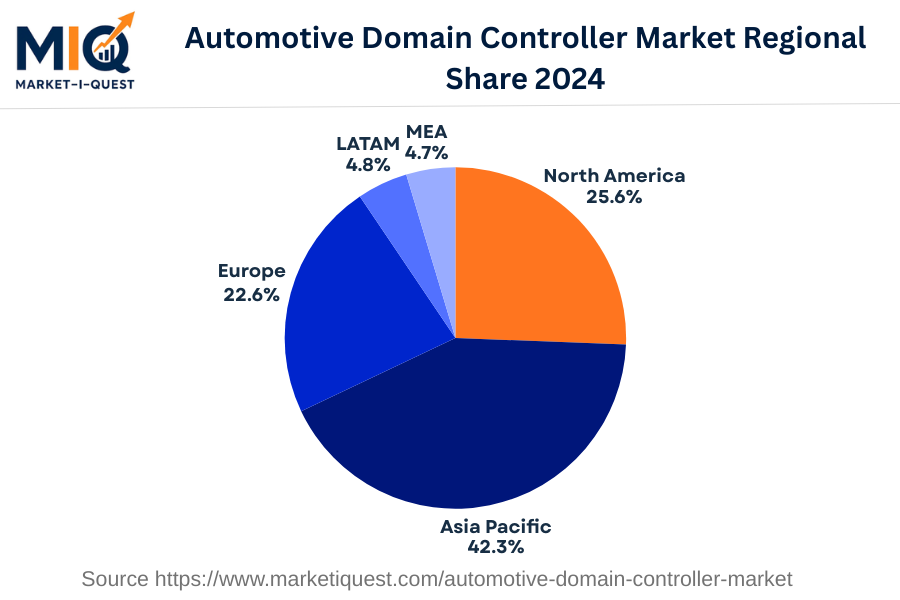
automotive-domain-controller-market market regional share

North America

In 2024, the North American Automotive Domain Controller market expansion is characterized by a shift toward centralized computing in vehicles, enhancing functionality and reducing wiring complexity. The demand for advanced driver-assistance systems (ADAS) drives market growth, as automakers invest in technology to meet consumer expectations for safety. Regulatory frameworks, particularly the National Highway Traffic Safety Administration (NHTSA) guidelines, accelerate the adoption of domain controllers by promoting standards for vehicle safety and connectivity.

The increasing prevalence of electric vehicles (EVs) further propels the market, as they require sophisticated control systems to manage power distribution and energy efficiency. A notable trend is the collaboration between automotive manufacturers and tech companies, aiming to integrate software solutions with hardware, exemplified by partnerships such as Ford and Google for cloud-based services.

Consumer preferences are shifting toward vehicles equipped with enhanced infotainment systems and connectivity features, prompting manufacturers to prioritize software development. Additionally, the rise of over-the-air updates enables OEMs to innovate post-sale, creating a need for flexible, updatable domain controllers. As North American automotive regulations tighten, adherence to environmental and safety standards shapes product offerings and influences customer purchasing decisions, reinforcing the importance of domain controllers in modern vehicle architecture.

Asia Pacific

In 2024, the Automotive Domain Controller (ADC) market in the Asia Pacific region is experiencing significant evolution influenced by various drivers and trends. The growing demand for advanced driver-assistance systems (ADAS) is spurred by stricter safety regulations across markets like China and India, with significant investments from OEMs to integrate ADC technology into new vehicle platforms. Enhanced connectivity features, driven by consumer expectations for higher vehicle automation, further stimulate development and adoption. In South Korea and Japan, technology advancements such as artificial intelligence and machine learning are facilitating more sophisticated ADC capabilities, attracting investment from tech firms and automotive players alike.

Trends indicate a shift towards electric and hybrid vehicles, with ADCs playing a critical role in managing vehicle functions efficiently. In response to competitive pressures, partnerships and mergers among automakers and technology providers have increased, as seen in initiatives across key ASEAN markets. Additionally, government policies promoting smart transportation and sustainable mobility are driving OEMs towards innovation in ADC solutions. Consumer behavior is also shifting, reflecting a heightened awareness of the importance of safety and connectivity features, especially among urban buyers in densely populated areas like Tokyo and Jakarta. These dynamics collectively shape the ADC landscape in the Asia Pacific for 2024.

Europe

In 2024, the automotive domain controller market in Europe is characterized by rapid digital transformation within vehicles, driven largely by increasing consumer demand for advanced driver-assistance systems (ADAS) and connectivity features. Regulatory pressures, such as the EU's Green Deal, are stimulating investments in electric and autonomous vehicles, leading OEMs to adopt integrated domain controllers for improved performance and compliance. Furthermore, advancements in semiconductor technology have facilitated the production of more powerful and efficient controllers, while supply chain recovery post-COVID-19 has enabled manufacturers to meet rising demand.

In terms of trends, consumer preferences are shifting towards electric and hybrid vehicles, with an emphasis on software-centric features, fostering collaboration among automotive firms and tech companies through strategic partnerships. Major automotive players in Germany and the UK are actively pursuing mergers and acquisitions to enhance their domain controller capabilities, responding to the need for integrated solutions. Additionally, the enforcement of safety and emissions standards has reinforced the necessity for robust domain controllers across various vehicle types, from personal vehicles in France to commercial fleets in Italy. As the market evolves, stakeholder engagement in standards-setting forums will be crucial for ensuring compliance while fostering innovation.

Latin America

In 2024, the Automotive Domain Controller market in Latin America is shaped by increasing demand for advanced vehicle technologies and regulatory pushes for higher safety standards. Brazil and Mexico are leading the charge, primarily due to their significant automotive manufacturing sectors, which necessitate the integration of sophisticated electronic systems. Government initiatives, such as Brazil’s National Policy on Automotive Industry, emphasize local production and innovation, catalyzing domestic investments in domain controller technology.

Consumer behavior is shifting, with a growing preference for connected and electric vehicles prompting manufacturers to enhance vehicle architectures. Notably, automotive companies are investing in partnerships with tech firms to accelerate the development of software-driven solutions. The rise of Electric Vehicle (EV) production is compelling firms to adopt integrated platforms that streamline operations and reduce costs.

Moreover, regulatory frameworks, such as those arising from the European Union’s standards influencing global practices, are fostering a drive toward compliance in emissions and safety, thus impacting production strategies across LATAM. Manufacturers are increasingly adopting centralized computing systems to meet these standards, transforming traditional automotive supply chains. This evolution highlights the crucial intersection of technology, consumer demand, and regulatory compliance in driving the automotive domain controller market within the region.

Middle East & Africa

In the base year 2024, the Automotive Domain Controller market in the Middle East and Africa is characterized by increasing demand for advanced vehicle connectivity and automation. Key drivers include stringent regulations promoting vehicle safety and emissions reductions, such as Saudi Arabia's Vision 2030 initiative aiming at sustainable transport. Significant investments in smart city projects in UAE and Qatar are driving technology adoption in automotive systems, enhancing the demand for integrated controllers. Additionally, supply dynamics are influenced by rising local manufacturing capabilities and partnerships with global automotive suppliers.

Trends in the region reflect a shift towards electric vehicles (EVs) and autonomous driving technologies, with governments in Israel and South Africa actively promoting these sectors through incentives and subsidies. Buyers are increasingly favoring vehicles with enhanced infotainment and connectivity features, prompting manufacturers to upgrade their offerings. Moreover, the collaboration between tech firms and automotive manufacturers is intensifying, exemplified by joint ventures focused on pioneering mobility solutions. Policy enforcement is also shaping the market, as various countries implement standards for vehicle cybersecurity and data privacy, particularly in the financial services sector, highlighting the need for robust domain controllers in modern vehicles.

Recent Industry Developments

Latest market innovations, product launches, and strategic initiatives

Jan 2026

Infineon Technologies and Flex announced a Zone Controller Development Kit to accelerate software‑defined vehicle architectures, providing a modular reference design for zone control units that simplifies power distribution, gateway, and motor‑control integration for next‑generation domain/zone controllers.

Apr 2025

Marelli announced it would unveil its new ProZone mid‑range zone control unit at Auto Shanghai 2025, targeting leadership in zone control units by 2026 and positioning the product as a core enabler of software‑defined vehicle E/E architectures.

Jan 2025

At CES 2025, LG Electronics and Qualcomm introduced the Cross Domain Controller (xDC) platform, which merges in‑vehicle infotainment and ADAS into a single Snapdragon Ride Flex–based SoC to reduce component count, cut costs, and support software‑defined vehicle roadmaps for automakers.

Frequently Asked Questions