
Automotive Camera Module Market Snapshot

Key Players

  • Robert Bosch GmbH (Germany)
  • Continental AG (Germany)
  • Denso Corporation (Japan)
  • Magna International Inc. (Canada)
  • Aptiv PLC (Ireland)
  • Valeo SA (France)
  • Samsung Electro-Mechanics (South Korea)
  • OmniVision Technologies
  • Inc. (United States)
  • LG Innotek Co.
  • Ltd. (South Korea)
  • Ficosa International S.A. (Spain)

Market Size

Base Year 2024
$ 10.68 Bn
CAGR
12.24%
Forecast 2034
$ 33.89 Bn

Market Segments

By Type
Single View Camera, Multi View Camera
By Module Type
Thermal, Infrared, Digital
By Distribution Channel
OEM, Aftermarket
By End Use
Passenger Cars, Light Commercial Vehicles, Heavy Commercial Vehicles

Market Dynamics

Drivers
  • Advanced driver-assistance systems
  • Rising vehicle safety regulations
Restraints
  • High production and integration costs
  • Limited standardization across components
Opportunities
  • ADAS and autonomous driving adoption
  • Surging demand for in-cabin monitoring

Market Size

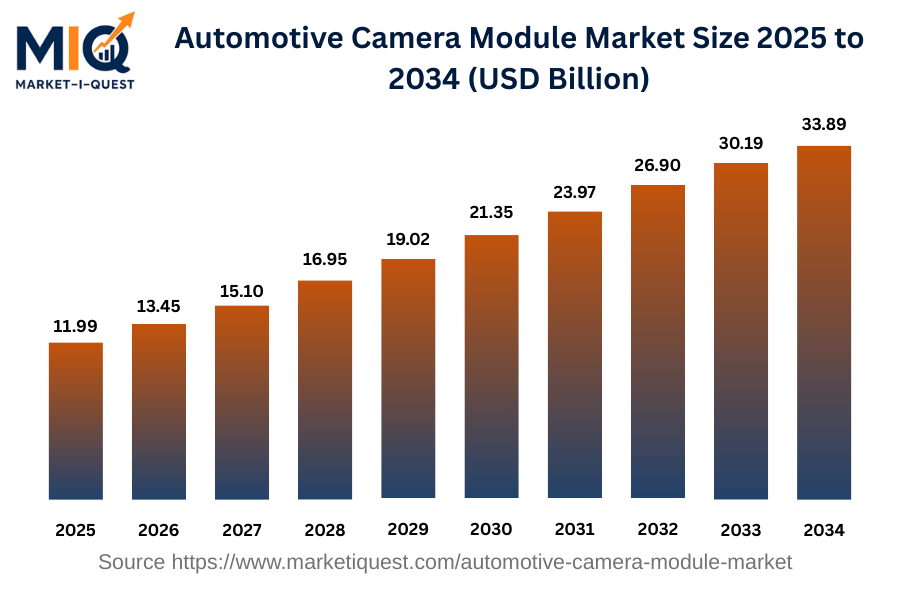
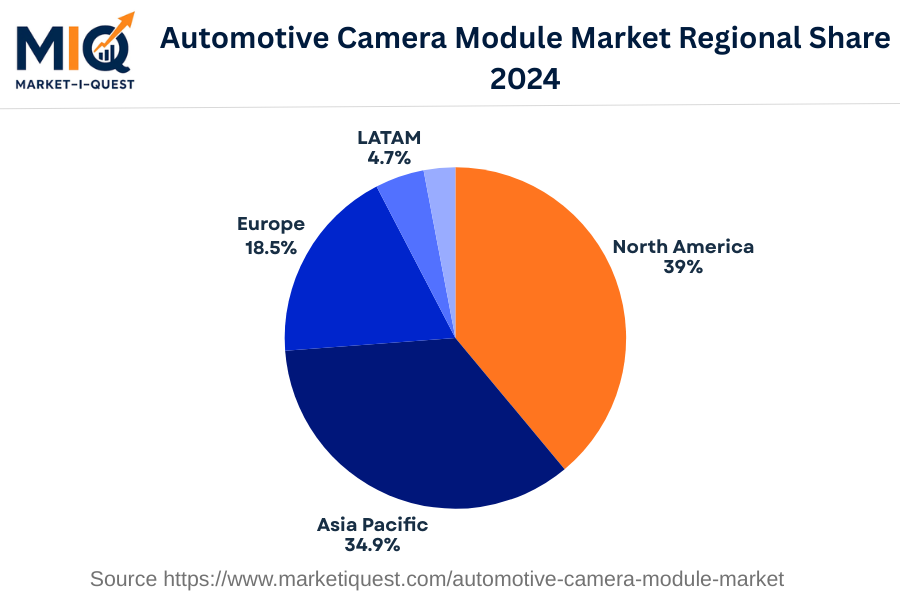
The Automotive Camera Module Market is valued at 11.99 billion USD in 2025 and is projected to reach 33.89 billion USD by 2034, with a compound annual growth rate (CAGR) of 12.2%. The market begins at 10.68 billion USD in 2024 and experiences steady growth, expected to almost triple in size by 2034. The growth is attributed to increasing vehicle safety standards and the rising demand for advanced driver assistance systems (ADAS). In 2024, the regional share mix is North America at 38.9%, Asia Pacific at 34.9%, Europe at 18.5%, LATAM at 4.7%, and MEA at 2.99%.

Key Takeaways

  • By Type - the Multi View Camera held a leading position in 2024.
  • By Module Type - the Thermal module grew fastest with a notable expansion in demand.
  • By Distribution Channel - the OEM channel dominated the market driving significant sales.
  • By End Use - Passenger Cars led the automotive camera module market with robust growth.
automotive-camera-module-market market size

Key Driving Factors

Implementation of Active Safety Regulations

One key driver for the automotive camera module market growth is enactment of strict active safety regulations by government entities. Countries like the United States, and regions like the European Union, demand new vehicles to have advanced safety systems, like rear view cameras or lane departure warning systems. To comply with these regulations, automotive companies are increasing incorporation of these camera-based safety features into their vehicle models, thereby fuelling demand in the automotive camera module market. These regulatory demands are particularly impactful as they cover both large established markets and emerging markets, providing a sustained market expansion driver.
Emergence of Autonomous Vehicles

The emergence of autonomous vehicles constitutes another decisive driving factor for the automotive camera module market. Autonomous driving heavily relies on sensor-input integration, which necessitates usage of camera modules to provide visual data. As self-driving technologies advance, vehicles equipped with this technology continue to utilize more sophisticated camera modules to improve the accuracy of autonomous navigation. Major automotive manufacturers and tech firms engaged in self-driving technology, including companies such as Tesla, Uber, and Waymo, are thereby directly contributing to an escalating demand for high-end automotive camera modules.

Market Evolution by Timeline

2019-2023
During this period, the demand for automotive camera modules surged primarily due to the rise in advanced driver-assistance systems (ADAS). Key buyers included automotive manufacturers like Toyota and Tesla, particularly in regions such as North America and Europe, where safety regulations were stricter. Integration maturity improved with major suppliers such as Bosch and Continental shipping multiple camera systems, including 360-degree surround view and rearview cameras. However, supply chain disruptions due to the pandemic placed constraints on production. Standards such as ISO 26262 began to influence adoption, particularly around safety and functional performance. Pricing for camera modules ranged from $25 to $200 depending on features, with tiered pricing structures emerging based on volume purchases. Contracts typically favored long-term partnerships due to the capital intensity of camera systems. Risks included technological compatibility issues with legacy systems, prompting automakers to invest heavily in software integration and redundancy planning to ensure seamless operation across diverse vehicle platforms.
2024
In 2024, regulatory frameworks became more defined, particularly with the introduction of the EU's General Safety Regulation, mandating advanced safety features. Significant buyers, including Volkswagen and Ford, prioritized these compliance measures, leading to increased orders for camera modules. Development focused on integrating AI for real-time image processing to enhance functionalities like pedestrian detection. Supply chain improvements were evident as component availability increased, reducing previous shortages. The price of camera modules showed a slight decline, attributed to competition among suppliers, including newer entrants like OmniVision Technologies. Contract models evolved to include performance-based agreements, ensuring suppliers met specific efficacy and reliability metrics. Notably, regions like China observed growth as local manufacturers began embracing these technologies. Risks persisted, particularly related to cybersecurity threats as vehicles became increasingly connected, prompting manufacturers to adopt more stringent data protection measures. Efforts focused on educating end-users about the importance of software updates to mitigate these risks effectively.
2025-2029
From 2025 to 2029, the automotive camera module market share experienced significant evolution as the move toward fully autonomous vehicles accelerated. Major buyers included ride-sharing companies such as Waymo and traditional OEMs expanding into self-driving technologies. New standards, like the UN Regulation No. 157 regarding automated vehicles, spurred further development and compliance efforts. During this period, manufacturers like Sony and STMicroelectronics launched higher-resolution camera systems, catering to advanced applications such as lane-keeping and blind-spot detection. Pricing began to stabilize, reflecting the maturity of technology and competitive pressures. Partnerships became crucial, with firms entering joint ventures to share R&D risks and resources, especially in regions like Southeast Asia, where manufacturing capacity expanded. Key risks involved regulatory changes that could impact vehicle testing protocols, leading to heightened uncertainty in project timelines. To mitigate these issues, companies focused on agile development processes and engaged with regulatory bodies early in the design phase to ensure all emerging standards were met.
2030-2034
In the years 2030 to 2034, the automotive camera module market trend is expected to undergo transformative changes driven by increasing acceptance of fully autonomous vehicles. Significant buyers will include tech companies like Apple and Google, expanding their roll into vehicular technology and contributing to a competitive landscape. Advancement in camera technologies, such as LiDAR integration, will enhance the operational capabilities within smart cities. Global standards such as ISO/PAS 21448 focusing on automated driving will influence product design and compliance. Pricing is anticipated to show variability based on performance characteristics like resolution and sensor type, with higher-end systems commanding premium prices. Supply chains will likely shift toward local manufacturing to reduce costs and respond quickly to innovation cycles. Risks associated with public trust in automated systems and potential liability issues may drive market players to invest heavily in public outreach and education campaigns. As cities and urban areas evolve, camera modules will play a critical role in smart infrastructure, influencing future urban mobility solutions.

Future Market Outlook

Future Opportunities

The current landscape of the automotive camera module industry presents several future opportunities driven by ongoing regulatory changes and technological adoption. For instance, as the European Union's General Safety Regulation introduced stricter requirements for safety features in 2022, manufacturers are under increasing pressure to improve the efficiency and functionality of their camera systems. In parallel, partnerships between tech companies and automotive OEMs are emerging; for example, in 2023, Qualcomm established a collaboration with General Motors to integrate advanced camera capabilities in next-generation vehicles, focusing on enhancing safety and user experience. Additionally, the rollout of 5G networks is expected to facilitate real-time data transmission from camera modules, which can significantly enhance vehicle-to-everything (V2X) communications. Countries like China are leading the charge in deploying smart transportation solutions, prompting local manufacturers to invest in complex camera systems that support autonomous features. Moreover, the rising demand for fleet management services is likely to drive development towards camera systems that enable advanced monitoring and analytics. As the push for environmental sustainability grows, automotive manufacturers are increasingly seeing the need for cameras that enhance not only safety but also fuel efficiency and electric vehicle performance, further expanding the market scope. This confluence of opportunities creates a promising future for companies invested in automotive camera technology.

Segmentation Analysis

The automotive camera module market is segmented by Type (Single View Camera, Multi View Camera), by Module Type (Thermal, Infrared, Digital), by Distribution Channel (OEM, Aftermarket), and by End Use (Passenger Cars, Light Commercial Vehicles, Heavy Commercial Vehicles).

By Type

The market is divided into subsegments including Single View Camera and Multi View Camera, with Single View Camera accounting for the largest revenue share while Multi View Camera is expected to grow at the fastest CAGR during the forecast period.

Largest Revenue Share

Single View Camera

Market Share Leader

The Single View Camera subsegment leads in revenue due to its established presence across various sectors such as security, automotive, and consumer electronics. Key drivers include the reliance on these cameras for surveillance applications, which continue to see high demand in both residential and commercial installations. Geographically, regions with significant investments in infrastructure and urban development, like North America and Asia-Pacific, are particularly lucrative markets for Single View Cameras. The regulatory landscape favors their use; many governments mandate security measures that include the installation of such cameras. Purchasing criteria primarily revolve around image quality, reliability, and cost-effectiveness, as buyers look for cameras that offer high-definition images at competitive prices. Additionally, switching costs are relatively low, which encourages adopters to move to advanced models as technology evolves. The distribution channels for Single View Cameras are well-established, with major retail and online platforms providing easy accessibility, further promoting sales. As consumer awareness of safety and security grows, along with technological advancements, the Single View Camera subsegment remains a dominant force, showing strong resilience against economic fluctuations.

Fastest CAGR

Multi View Camera

Forecast Period Growth Leader

The Multi View Camera subsegment is poised for rapid growth due to several key factors. First, advancements in technology, particularly in image processing and camera integration, are driving higher demand for multi-angle surveillance solutions. This aligns with the increasing need for comprehensive situational awareness in both residential and corporate settings. However, barriers to adoption exist, including higher upfront costs and the complexity of installation compared to Single View Cameras. Despite these challenges, partnerships between technology firms and security providers are catalyzing faster adoption by offering integrated solutions tailored to specific customer needs. Additionally, evolving industry regulations that emphasize enhanced security measures are creating a favorable environment for Multi View Cameras. The rising emphasis on smart city initiatives across various regions further fuels the demand, as these cameras are pivotal in urban surveillance systems. Near-term risks include potential market saturation and economic downturns that may impact capital expenditures in key sectors. Nevertheless, as businesses and municipalities recognize the value of robust security frameworks, Multi View Cameras are set to capture a significant share of the market, backed by a strong growth trajectory in the coming years.

By Module Type

The market is divided into subsegments including Thermal, Infrared, and Digital. Thermal accounted for the largest revenue share while Infrared is expected to grow at the fastest CAGR during the forecast period.

Largest Revenue Share

Thermal

Market Share Leader

The Thermal subsegment leads in revenue due to its established applications across various industries including manufacturing, automotive, and healthcare. The consistent demand for thermal imaging in safety and surveillance applications drives this segment, as organizations prioritize employee safety and risk mitigation. Furthermore, advances in thermal sensor technology have enhanced image quality and expanded application areas, making it a preferred choice for businesses. Geographically, North America and Europe are significant markets owing to their high adoption of advanced technologies and strict regulatory frameworks that necessitate monitoring systems in critical environments. The purchasing criteria are heavily influenced by accuracy, range, and reliability, compelling suppliers to innovate continually. The high switching costs associated with moving to alternative technologies also play a crucial role; once businesses invest heavily in thermal systems, they tend to remain loyal due to the comprehensive training and infrastructure already established.

Fastest CAGR

Infrared

Forecast Period Growth Leader

The Infrared subsegment is poised for the fastest growth driven by its increasing adoption in smart home technologies and industrial automation. As consumers seek enhanced safety and energy efficiency, infrared sensors and cameras are becoming integral in monitoring and controlling home environments. The technological advancements enabling better integration with IoT devices are significant catalysts for growth, simplifying the implementation process and fostering consumer interest. However, the adoption of infrared systems faces challenges such as initial setup costs and a steep learning curve for less tech-savvy customers. Partnerships between tech companies and established manufacturers are helping to ease these barriers by providing bundled solutions that demonstrate the technology's utility. Near-term risks include market saturation and potential competition from emerging technologies like LiDAR, which may appeal to the same customer base. Overall, infrared's growth trajectory will hinge upon demonstrating clear value through cost savings and effective safety solutions.

By Distribution Channel

The market is divided into subsegments including OEM and Aftermarket. The OEM subsegment accounted for the largest revenue share while the Aftermarket is expected to grow at the fastest CAGR during the forecast period.

Largest Revenue Share

OEM

Market Share Leader

The OEM subsegment dominates the market primarily due to its critical role in the production of new vehicles and equipment. Major automotive and machinery manufacturers rely heavily on OEM components, ensuring consistent demand from a sizable customer base. This demand is driven by key geographical markets such as North America, Europe, and Asia, where production rates and new vehicle sales remain robust. Regulatory standards also favor OEMs, as they often maintain stringent quality guidelines that resonate with consumers seeking reliability in performance. In addition, the established supply chains contributing to the OEM market create barriers for new entrants, enhancing brand loyalty among customers. Purchasing criteria are typically focused on quality assurance, compatibility, and longevity of components, which OEMs are well-positioned to fulfill. Switching costs are relatively high; consumers favor OEM parts due to their guaranteed quality and warranty support, reducing risks associated with using alternative suppliers. This combination of demand stability, regulatory compliance, and strong customer preference solidifies the OEM subsegment's leading revenue position in 2024.

Fastest CAGR

Aftermarket

Forecast Period Growth Leader

The Aftermarket subsegment is poised for rapid growth fueled by several key factors. A substantial increase in vehicle ownership across diverse demographics is driving demand for replacement parts and services. With the aging of existing vehicle fleets, the need for maintenance and upgrades further supports the surge in aftermarket activities. Essential catalytic factors influencing this growth include advancements in technology and the rise of e-commerce platforms that enhance accessibility for consumers. This digital shift enables quicker price comparisons and easier ordering, fostering increased consumer engagement. Nevertheless, adoption barriers remain, particularly regarding quality concerns and perceptions of reliability associated with non-OEM parts. Real and perceived risks surrounding compatibility and warranty implications can hinder some buyers from fully embracing aftermarket options. Additionally, rapid advancements in electric and autonomous vehicle technology present both opportunities and challenges; growth in these segments necessitates ongoing investment in knowledge and training from aftermarket providers. Firms that effectively navigate these dynamics and establish partnerships or innovative delivery methods will be well-positioned to leverage the anticipated growth in the Aftermarket subsegment.

By End Use

The market is divided into subsegments including Passenger Cars, Light Commercial Vehicles, and Heavy Commercial Vehicles. Passenger Cars accounted for the largest revenue share while Light Commercial Vehicles are expected to grow at the fastest CAGR during the forecast period.

Largest Revenue Share

Passenger Cars

Market Share Leader

Passenger Cars dominate the revenue share in the automotive market due to their widespread adoption, particularly in urban and suburban areas. The increasing purchasing power of consumers globally is propelling demand for personal vehicles. Additionally, stringent emissions regulations in many regions are driving advancements in fuel efficiency and the adoption of electric vehicles, enhancing consumer interest. The major markets, such as North America, Europe, and parts of Asia-Pacific, are witnessing ongoing infrastructure improvements, which attract investments and stimulate sales in the passenger car segment. Consumers often prioritize safety features, fuel economy, and overall performance when considering their purchase, which contributes to brand loyalty and repeat purchases. Manufacturers are offering a wider range of models to cater to diverse consumer preferences, from compact cars to SUVs and hybrids, solidifying their revenue-generating capabilities. Moreover, the digitization of sales channels and the rise of online purchasing reduces friction in the buying process. However, issues like semiconductor shortages and supply chain interruptions can temporarily disrupt availability, yet the resilience of consumer demand in established markets is expected to sustain the leading position of passenger cars in the revenue landscape.

Fastest CAGR

Light Commercial Vehicles

Forecast Period Growth Leader

Light Commercial Vehicles (LCVs) are experiencing rapid growth driven by e-commerce and last-mile delivery services. The shift towards online shopping has significantly increased demand for small delivery vehicles, making LCVs essential for businesses looking to streamline logistics operations. Additionally, the rise of small and medium enterprises supports adoption as these businesses require versatile and economical transport solutions. Geographically, regions with expanding urban populations, such as Asia-Pacific and parts of Latin America, are expected to fuel this growth as urbanization trends increase the need for efficient transport options. However, barriers such as high acquisition costs and regulatory challenges regarding emissions could hinder adoption in certain markets. To mitigate these challenges, technological advancements like electric LCVs and hybrid models are emerging. Partnerships between manufacturers and technology providers are catalyzing innovation in battery technology and fleet management solutions, enhancing the appeal of LCVs. In the near term, potential risks include fluctuating fuel prices which may affect operational costs and the overall economic climate impacting commercial investments. Nevertheless, the current trajectory suggests that LCVs will continue to gain market share at an accelerated pace as businesses adapt to changing consumer behaviors.

Competitive Analysis

Key Market Players

The automotive camera module market is competitive, with a mix of large established companies and smaller regional players. Most companies focus on improving their products/services, keeping prices attractive, and strengthening relationships with key customers. They also use partnerships, acquisitions, and new launches to expand their presence in existing and new markets. Overall, players compete on quality, reliability, and value, and competition is expected to remain strong over the forecast period.

Manufacturers / OEMs

Continental AG
Germany
DENSO Corporation
Japan
Valeo SA
France

Key Suppliers & Raw Materials

Texas Instruments Incorporated
US
Sony Corporation
Japan
OmniVision Technologies, Inc.
US

Distributors, Integrators & Channel Partners

Arrow Electronics, Inc.
US
Avnet, Inc.
US
Aptiv PLC
Ireland

Porter’s Five Forces Analysis

The Automotive Camera Module market is shaped by competitive dynamics and external pressures. Understanding these forces helps identify strategic opportunities and challenges.

Supplier Bargaining Power

Medium

Limited suppliers for specialized components create moderate bargaining power, leading to potential price fluctuations.

Buyer Bargaining Power

High

OEMs exert significant pressure on suppliers due to large order volumes and the availability of alternative manufacturers.

Threat of Substitutes

Medium

Emerging technologies, like LiDAR, pose a moderate threat but are not direct replacements for camera modules.

Threat of New Entrants

Low

High barriers such as capital investment and strict regulatory compliance limit new entrants in this market.

Competitive Rivalry

High

Intense competition among established players drives innovation and price competition, elevating market dynamics.

Regional Analysis

Geographic market dynamics and growth opportunities across key regions

Global Market Outlook

automotive-camera-module-market market regional share

North America

In 2024, the North American automotive camera module market is characterized by increased integration of advanced driver assistance systems (ADAS) across passenger and commercial vehicles. The demand is primarily driven by stringent safety regulations, such as the National Highway Traffic Safety Administration (NHTSA) mandates requiring rear visibility technology in new vehicles, which necessitate the installation of camera modules. Additionally, rising investments in electric vehicles (EVs) have accelerated the adoption of high-resolution cameras for improved sensor fusion and perception capabilities.

Market trends reveal a shift towards multi-camera systems, as manufacturers respond to consumer demands for enhanced safety and convenience features. Partnerships between automotive OEMs and technology companies are becoming prevalent as firms seek to leverage expertise in imaging technologies. Furthermore, an emphasis on sustainability is prompting manufacturers to explore lighter and more efficient materials for camera enclosures and optics. The retail sector is adapting to these technological advancements, with increased consumer awareness driving preferences for cars equipped with superior camera systems. Standards organizations are also reinforcing compliance requirements for image quality and performance, pushing manufacturers to innovate continually in their product offerings. Thus, the automotive camera module market in North America is poised for significant advancements driven by regulatory and consumer dynamics.

Asia Pacific

In 2024, the Automotive Camera Module Market in the Asia Pacific region is shaped by rapid advancements in vehicle safety standards and increasing consumer demand for advanced driver-assistance systems (ADAS). China and India, driven by stringent regulations like the China New Car Assessment Program (C-NCAP) and India’s Bharat New Vehicle Safety Assessment Program (BNVSAP), are pushing car manufacturers to integrate camera modules to enhance vehicle safety and performance. Technological advancements, particularly in image sensing and artificial intelligence, are also facilitating faster adoption of high-resolution camera systems across the region.

Significant trends include a shift towards electric vehicles, where integrating camera modules becomes essential for navigation and obstacle detection. Increased collaboration between automotive manufacturers and technology firms is seen as players like Sony and Samsung invest in developing innovative camera solutions tailored for vehicles. Within the ASEAN markets, particularly in Malaysia and Indonesia, rising disposable incomes are leading consumers to seek enhanced safety features, indirectly driving demand for camera modules. Additionally, government initiatives promoting smart infrastructure are influencing the integration of connected vehicle technology, emphasizing the need for sophisticated camera systems to support these developments in urban planning and traffic management.

Europe

In 2024, the automotive camera module market share in Europe witnessed significant growth driven by the rising demand for advanced driver-assistance systems (ADAS) and stringent safety regulations. The European Union’s General Safety Regulation mandates the inclusion of certain safety technologies, boosting demand for camera modules in vehicles. Major automakers, particularly in Germany and France, significantly invested in integrating these systems, driven by consumer preferences for safety and convenience features. Additionally, there was an accelerated adoption of advanced imaging technologies, such as 3D and thermal cameras, enhancing functionality and performance.

Trends reflected a shift in consumer behavior toward vehicles equipped with cutting-edge safety features, impacting purchasing decisions across segments. Partnerships between automotive manufacturers and technology firms increased, fostering innovation and facilitating access to advanced camera technologies. The market also observed a changing distribution dynamic, with an uptick in online sales of automotive components, driven by evolving buying habits particularly in the UK and the Nordics. Furthermore, the enforcement of policies promoting electric and autonomous vehicles catalyzed enhancements in camera module capabilities to meet compatibility demands. Overall, these dynamics established a robust environment for the automotive camera module sector within Europe.

Latin America

In 2024, the Automotive Camera Module Market demand in Latin America is shaped by increasing vehicle safety regulations and a rising demand for advanced driver-assistance systems (ADAS). Brazil and Mexico lead the demand, spurred by government mandates such as Brazil's Resolution No. 628, requiring certain safety features in new vehicles. Investment in vehicle safety technology is rising, propelled by both consumer demand for enhanced safety and the push for compliance with regional regulations.

Trends indicate a growing preference for integrated camera systems that enhance features such as parking assistance and collision detection. This shift influences OEM partnerships, as manufacturers seek collaborations with tech companies to streamline development. In Colombia and Argentina, consumer behavior is shifting toward higher-end vehicle models equipped with safety features, altering market dynamics towards premium automotive suppliers. Moreover, Chile and Peru are seeing increased channel shifts, with online platforms becoming vital for automotive accessory sales. Policies promoting sustainability are also influencing camera module design, incorporating eco-friendly materials. These developments reflect the evolving landscape in the LATAM automotive sector, where technology adoption and regulatory compliance are driving the market forward, particularly in key countries such as Brazil, Mexico, and Argentina.

Middle East & Africa

In 2024, the automotive camera module market expansion in the Middle East and Africa is characterized by significant growth driven by regulatory mandates and technological advancements. Governments in countries like Saudi Arabia and the UAE are implementing stringent road safety regulations, increasing the demand for advanced driver-assistance systems (ADAS). This regulatory environment encourages automotive manufacturers to invest in high-quality camera modules to comply with safety standards. Additionally, the growth of electric and autonomous vehicles in markets such as Israel and South Africa is spurring technology adoption, as these vehicles rely heavily on camera systems for navigation and obstacle detection.

Trends indicate a shift in buyer behavior toward integrated systems that offer multi-functionality, prompting manufacturers to enhance product features like night vision and enhanced imaging. The rise of e-commerce in regions such as Nigeria and Kenya is influencing channel dynamics, with a growing preference for online procurement of automotive components. Partnerships between automotive OEMs and technology firms, particularly in the UAE, are fostering innovation in camera technologies, driving product development. Furthermore, initiatives aimed at establishing uniform standards across the region are emerging, reflecting a collective effort to enhance safety protocols in transportation.

Recent Industry Developments

Latest market innovations, product launches, and strategic initiatives

Aug 2025

Infineon Technologies completed its $2.5 billion acquisition of Marvell's Automotive Ethernet business, enhancing high‑bandwidth data transfer from camera modules to ECUs in software‑defined vehicles and ADAS platforms, with a design‑win pipeline exceeding $4 billion by 2030.

Sep 2024

SENSING introduced the SG3‑AR0341C‑G2F‑H190X, a 3MP automotive camera module with 150 dB HDR, LED flicker mitigation, and low power consumption, optimized for ADAS surround‑view, rear‑view, and autonomous driving in compact form factors.

Jan 2024

Magna International released the VistaPro ADAS camera module, featuring high‑resolution fisheye and wide‑angle monocle cameras for superior object detection and recognition, supporting surround‑view and driver monitoring in production vehicles.

Frequently Asked Questions