Automotive Aluminum Market Snapshot

Key Players

  • Novelis (United States)
  • Constellium (France)
  • Hydro (Norway)
  • Alcoa (United States)
  • Arconic (United States)
  • Kaiser Aluminum (United States)
  • UACJ Corporation (Japan)
  • Norsk Metall AS (Norway)
  • Sapa Group (Norway)
  • China Zhongwang Holdings (China)

Market Size

Base Year 2024
$ 28.85 Bn
CAGR
10.1%
Forecast 2034
$ 75.51 Bn

Market Segments

By Type
  • Cast Aluminum
  • Rolled Aluminum
  • Extruded Aluminum
By Application
  • Body Structure
  • Powertrain
  • Suspension
  • Others
By End Use
  • Passenger Cars
  • Light Commercial Vehicles
  • Heavy Commercial Vehicles

Market Dynamics

Drivers
  • Lightweight vehicle demand
  • Stringent emission regulations
Restraints
  • High raw material procurement cost
  • Complex recycling and reprocessing methods
Opportunities
  • Lightweight vehicle manufacturing demand
  • Electric vehicle structural component use

Market Size

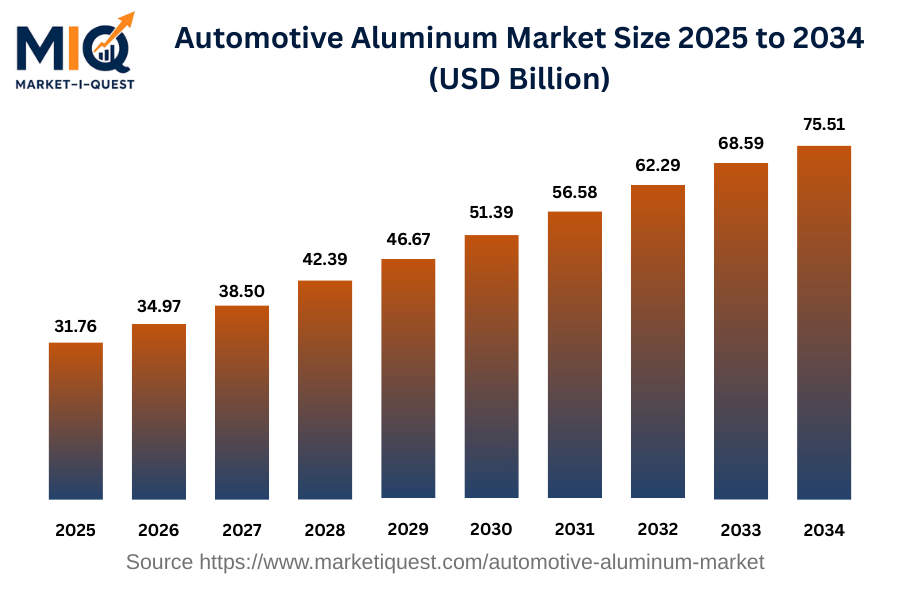
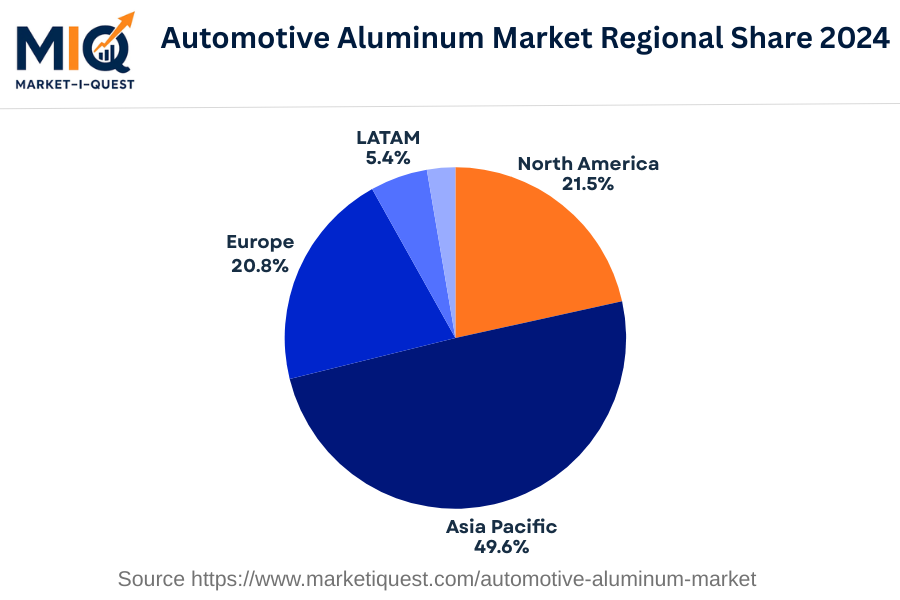
The Automotive Aluminum Market is valued at USD 31.76 billion in 2025 and reaches USD 75.51 billion by 2034, with a CAGR of 10.1%. The market starts at USD 28.85 billion in 2024, illustrating a consistent upward trajectory. The significant growth from 2024 to 2034 reflects increasing adoption of aluminum in automobiles for its lightweight properties, contributing to enhancements in fuel efficiency and overall vehicle performance. This trend supports manufacturers in meeting stringent environmental regulations and consumer demand for more sustainable options. In 2024, the regional share mix includes North America at 21.5%, Asia Pacific at 49.6%, Europe at 20.8%, LATAM at 5.4%, and MEA at 2.7%.

Key Takeaways

  • By Type - Rolled Aluminum held the leading position accounting for a notable share in 2024.
  • By Application - Body Structure grew fastest due to increased demand for lightweight vehicles in the automotive sector.
  • By End Use - Passenger Cars dominated the market accounting for substantial share driven by consumer preference for fuel-efficient vehicles.
automotive-aluminium-market market size

Key Driving Factors

Stringent Environmental Regulations

In recent years, environmental regulations have emerged as a key driving factor for the automotive aluminum market size. Governments across the globe are introducing stringent rules to reduce vehicular emissions, in response to both international climate agreements and growing public concern over air quality. Aluminum is lighter than traditional steel, therefore using it in vehicle manufacturing can significantly reduce a vehicle's weight, leading to greater fuel efficiency and lower CO2 emissions. Regulations like the European Union's CO2 standards, which demand major reductions in fleet-wide emissions, are thus forcing manufacturers to increase their use of lightweight materials such as aluminum. The financial repercussions of failing to meet these standards are considerable, further pushing manufacturers towards aluminum.

Shift Towards Electric Vehicles

The global shift towards electric vehicles (EVs) is another driving factor for the automotive aluminum market share. EV manufacturers are using aluminum extensively in their vehicles to offset the weight of batteries, maintain optimal driving range, and improve the energy efficiency. Tesla, for example, uses aluminum in its chassis and battery packs. As countries such as China, Germany, and Norway actively push for a transition to EVs to meet their environmental goals, the demand for aluminum in the automotive industry is expected to grow. Furthermore, with major automobile manufacturers like Ford and GM announcing plans to electrify their fleets, the future demand for automotive aluminum appears robust.

Market Evolution by Timeline

2019-2023
From 2019 to 2023, the automotive aluminum market opportunities saw significant uptake among original equipment manufacturers (OEMs) in regions such as North America and Europe. Car manufacturers like Ford and BMW integrated aluminum to meet fuel efficiency standards established by the Corporate Average Fuel Economy (CAFE) policies in the U.S. and the European Union's CO2 standards. The average aluminum content in vehicles increased due to its lightweight properties which aid in reducing emissions. Key suppliers like Alcoa and Novelis ramped up production capabilities, with Alcoa's rolling mill in Tennessee becoming operational to meet local demand. Partnerships formed between automakers and aluminum producers, focusing on the supply of flat-rolled aluminum products. However, supply chain disruptions from the COVID-19 pandemic affected availability. Pricing fluctuated, with aluminum prices rising by around 40% due to increased raw material costs and tariffs. Despite this, automotive manufacturers invested in aluminum recycling technologies to mitigate costs and improve sustainability.
2024
In 2024, the European Union implemented the Green Deal, compelling automotive manufacturers to incorporate more sustainable materials, including aluminum. Companies like Volkswagen began adopting aluminum in electric vehicle (EV) production to enhance range through weight reduction. The Chinese market also expanded aluminum use, supporting local manufacturers like Geely, which launched all-aluminum car models. Companies explored new alloys that provided enhanced strength while remaining lightweight. Investment in aluminum recycling initiatives grew as automakers aimed to meet circular economy guidelines established by local regulations. Supply chains remained volatile but improved through regional partnerships among industries. Contract types shifted towards long-term agreements, allowing suppliers like Rio Tinto and Norsk Hydro to secure stable pricing structures. However, challenges persisted, including potential regulatory changes affecting trade tariffs and environmental compliance, which could impact production costs and pricing strategies across regions.
2025-2029
During the period from 2025 to 2029, the adoption of aluminum in vehicles expanded significantly with increased investments in electric and autonomous vehicle programs. Companies like Tesla increased the aluminum content in their models to enhance energy efficiency. Innovations in casting technology led to lighter and more complex structures, reducing manufacturing time. In the U.S., the Advanced Lightweight Materials Manufacturing Initiative provided funding to support research in aluminum production techniques. Automakers began collaborating with aluminum producers to develop bespoke alloys tailored for specific vehicle requirements. The market saw the establishment of more recycling facilities, driven by principles outlined in the EU's Waste Framework Directive. Pricing dynamics leveled as supply chains normalized, yet fluctuations in the bauxite market posed risks. The trend toward direct procurement models became common, with automakers choosing to source materials from fewer suppliers to streamline operations and costs. Risks from geopolitical events affecting raw material prices continued to be a significant concern for stakeholders.
2030-2034
In the period from 2030 to 2034, the automotive aluminum market evolved with a focus on complete vehicle lifecycle sustainability. By this time, electric and hybrid vehicles dominated sales, with companies like Rivian and Lucid Motors leveraging aluminum extensively to reduce weight and improve battery performance. The International Organization for Standardization (ISO) established new standards on sustainable sourcing of aluminum, providing guidelines that suppliers needed to follow. Advances in manufacturing processes, such as 3D printing of aluminum components, became increasingly prevalent. Regulatory pressures from governments globally mandated higher recycling rates for aluminum, promoting a circular economy approach. Auctions for aluminum raw materials became common, shifting procurement strategies for automakers. Although the market remained competitive, innovations in production technology led to stable pricing. Risks associated with market saturation and competition from alternative materials such as carbon fiber and high-strength steel posed challenges as companies sought to differentiate and innovate their vehicle offerings.

Future Market Outlook

Future Opportunities

As the automotive sector continues to pivot towards sustainability, the demand for aluminum is likely to escalate. In 2022, the U.S. Department of Energy introduced the Vehicle Technologies Office, which promotes the use of advanced lightweight materials, including aluminum, in vehicle design, signaling a governmental push for innovation. This initiative is complemented by the rise of electric vehicles, such as the Tesla Model 3, which employs aluminum extensively to optimize range and performance. Manufacturers are exploring opportunities to enhance their supply chain by investing in aluminum recycling technologies, as demonstrated by the partnership between Novelis and the Aluminum Association in 2021, which aims to bolster the recycled-content aluminum market. Another opportunity lies in the potential integration of aluminum with composite materials, as seen in BMW’s Series 7, which incorporates hybrid materials to optimize performance while adhering to regulatory standards. Countries like China are focusing on infrastructure for electric vehicle production, creating a robust market for aluminum suppliers to cater to manufacturers. Furthermore, initiatives under the Paris Agreement drive the automotive industry towards compliance with lower emissions, heightening the focus on energy-efficient materials like aluminum. The ongoing research and development focusing on improving aluminum alloys and treatments present an avenue for enhanced performance and longevity, fostering collaborations between automotive manufacturers and material scientists. Thus, the evolving landscape hints at robust opportunities for growth in the automotive aluminum market.

Segmentation Analysis

The automotive aluminum market is segmented by Type (Cast Aluminum, Rolled Aluminum, Extruded Aluminum), by Application (Body Structure, Powertrain, Suspension, Others), and by End Use (Passenger Cars, Light Commercial Vehicles, Heavy Commercial Vehicles).

By Type

The market is divided into subsegments including Cast Aluminum, Rolled Aluminum, and Extruded Aluminum. Cast Aluminum accounted for the largest revenue share while Extruded Aluminum is expected to grow at the fastest CAGR during the forecast period.

Largest Revenue Share

Cast Aluminum

Market Share Leader

Cast Aluminum leads the market primarily due to its widespread application across various industries including automotive, aerospace, and consumer goods. The material's exceptional casting properties allow for complex shapes, enhancing design flexibility and reducing assembly costs. Key customer segments favor Cast Aluminum for its lightweight nature combined with high strength, making it invaluable for applications requiring durability without added weight. Geographically, regions such as North America and Europe are significant players, driven by robust manufacturing bases and stringent regulations that favor lighter materials for improved energy efficiency. Fluctuating raw material prices and regulatory demands for recycling and sustainability further favor Cast Aluminum, as it can be recycled with minimal loss of quality, appealing to environmentally conscious companies. Additionally, purchasing decisions are influenced by long-term supplier relationships and the reduced risk of switching due to established technical compatibility. Overall, Cast Aluminum's dominance is maintained by its versatility and the ongoing demand for lightweight yet strong materials in diverse end-use applications.

Fastest CAGR

Extruded Aluminum

Forecast Period Growth Leader

Extruded Aluminum is projected to witness the fastest growth in the market, influenced by a surge in demand from construction and infrastructure projects. Catalyst factors driving this growth include advancements in manufacturing technologies that enhance extrusion efficiency and lower production costs, making Extruded Aluminum an attractive option for architects and builders. Key obstacles to widespread adoption include challenges related to initial setup costs for extrusion facilities and the need for improved supply chain logistics to ensure timely delivery. However, policy catalysts, such as government incentives focusing on sustainable building practices, support this subsegment through fiscal aid for projects using energy-efficient materials. Furthermore, partnerships between extruders and construction firms are increasingly common, improving access to market opportunities while mitigating the risks associated with capital expenditures. Near-term risks involve fluctuations in raw aluminum prices, which could impact profit margins. Despite these challenges, the potential for application in high-demand, energy-efficient constructs positions Extruded Aluminum as a crucial growth area, appealing to evolving market needs and sustainability goals.

By Application

The market is divided into subsegments including Body Structure, Powertrain, Suspension, and Others. The Powertrain subsegment accounted for the largest revenue share while the Suspension subsegment is expected to grow at the fastest CAGR during the forecast period.

Largest Revenue Share

Powertrain

Market Share Leader

The Powertrain subsegment leads in revenue due to its critical role in vehicle performance and efficiency. As the automotive industry increasingly shifts toward electrification and fuel efficiency, innovation in powertrain technology becomes paramount. Key drivers include consumer demand for lower emissions and improved fuel economy resulting from stricter regulations globally, particularly in Europe and North America. Major manufacturers are investing significantly in hybrid and electric powertrains to meet government mandates and consumer preferences. The automotive supply chain has also adapted to these changes, with new partnerships in battery technology and electric components emerging. Customers prioritize powertrain performance when making purchasing decisions, leading to significant investments in R&D to enhance powertrain capabilities. Geographically, regions with strong automotive production capabilities like Germany, Japan, and the United States are particularly influential, creating competitive advantages through innovation. Switching costs are generally high due to the integration of powertrains with various vehicle systems, making it a mature yet dynamic segment.

Fastest CAGR

Suspension

Forecast Period Growth Leader

The Suspension subsegment is poised for the fastest growth due to increasing consumer preferences for advanced handling and ride quality in vehicles. The trend toward electric vehicles and the need for enhanced stability systems to support higher speeds and improved safety features are significant growth drivers. Technological advancements in active and semi-active suspension systems provide enhanced performance, attracting both manufacturers and consumers. Adoption barriers remain, including the higher costs associated with advanced suspension technologies and potential complexity in retrofitting existing models. However, a growing focus on passenger comfort and vehicle dynamics serves as a catalyst for further investment and innovation in this space. Partnerships between car manufacturers and specialized suspension system developers are key as they work to align product offerings with evolving consumer expectations. Regulatory pressures for improved vehicle safety will also bolster demand for better suspension systems. Near-term risks include supply chain disruptions and material costs which could impact the scalability of new suspension technologies, yet the overall positive market outlook remains strong.

By End Use

The market is divided into subsegments including Passenger Cars, Light Commercial Vehicles, and Heavy Commercial Vehicles. Passenger Cars accounted for the largest revenue share while Light Commercial Vehicles is expected to grow at the fastest CAGR during the forecast period.

Largest Revenue Share

Passenger Cars

Market Share Leader

The dominance of the Passenger Cars subsegment in revenue is primarily driven by consumer preferences for personal mobility solutions and increased urbanization. In regions such as North America and Europe, the demand for fuel-efficient and environmentally friendly passenger cars has surged, spurred by regulatory policies favoring low-emission vehicles and advancements in electric vehicle (EV) technology. Additionally, manufacturers are investing in novel designs and smart technologies to meet evolving consumer expectations for safety, convenience, and infotainment features. The availability of financing options has also made it easier for consumers to purchase cars, boosting sales. Furthermore, with the ongoing expansion of ride-sharing and car-sharing services, more individuals are seeking personal vehicles that cater to both their commuting needs and lifestyle choices. Companies in this subsegment are effectively leveraging marketing strategies that highlight sustainability and innovation, thereby appealing to a broader demographic. Consequently, the Passenger Cars category remains a primary revenue generator as it meets a diverse range of consumer needs amidst a competitive landscape.

Fastest CAGR

Light Commercial Vehicles

Forecast Period Growth Leader

The Light Commercial Vehicles subsegment is poised for rapid expansion driven by increasing e-commerce activities and the demand for flexible delivery options. As businesses increasingly adapt to online sales, the need for efficient logistics and transportation solutions has intensified, positioning light commercial vehicles as essential assets for urban deliveries. Technological advancements, such as telematics and automation, are enhancing fleet management capabilities, making these vehicles more appealing to logistics companies. Adoption barriers, including high initial costs and regulatory challenges in urban centers, may slow growth; however, various government incentives aimed at promoting green logistics are mitigating these issues. Furthermore, partnerships between vehicle manufacturers and logistics firms are emerging, enabling better service offerings and improved access to modern fleets. While the market faces near-term risks such as supply chain disruptions and fluctuating fuel prices, the overall demand for light commercial vehicles remains robust, fueled by the relentless growth in the e-commerce sector and ongoing urban infrastructural developments.

Competitive Analysis

Key Market Players

The automotive aluminum market is competitive, with a mix of large established companies and smaller regional players. Most companies focus on improving their products/services, keeping prices attractive, and strengthening relationships with key customers. They also use partnerships, acquisitions, and new launches to expand their presence in existing and new markets. Overall, players compete on quality, reliability, and value, and competition is expected to remain strong over the forecast period.

Manufacturers / OEMs

Alcoa Corporation
US
Constellium SE
Netherlands
Novelis Inc.
US

Key Suppliers & Raw Materials

Rio Tinto Group
Australia
Hydro Aluminum
Norway
Century Aluminum Company
US

Distributors, Integrators & Channel Partners

Thyssenkrupp AG
Germany
Boeing Distribution Services
US
Sapa Group
Sweden

Porter’s Five Forces Analysis

This analysis evaluates the competitive dynamics of the automotive aluminum market. It highlights the influence of various market forces on industry profitability.

Supplier Bargaining Power

High

Consolidated suppliers with specialized aluminum grades limit options for manufacturers, driving up costs.

Buyer Bargaining Power

Medium

Automakers can negotiate prices due to bulk orders, yet depend on aluminum’s unique properties.

Threat of Substitutes

Medium

While steel and composites are alternatives, aluminum’s lightweight advantages in fuel efficiency restrain substitution.

Threat of New Entrants

Low

High capital investment and regulatory compliance create significant entry barriers for new players.

Competitive Rivalry

High

Intense competition among established players with innovations in aluminum applications fosters aggressive pricing strategies.

Regional Analysis

Geographic market dynamics and growth opportunities across key regions

Global Market Outlook

automotive-aluminium-market market regional share

North America

In 2024, the North American automotive aluminum market size is characterized by increasing demand for lightweight materials to enhance vehicle efficiency and meet regulatory standards. Key drivers include stringent fuel economy regulations originating from the Corporate Average Fuel Economy (CAFE) standards in the U.S. and Canada, which push manufacturers to utilize lighter materials like aluminum to reduce emissions. Additionally, the rising consumer preference for electric vehicles (EVs) accelerates the adoption of aluminum due to its lightweight properties, which contribute to extended battery range.

Investment in aluminum production technologies is evident, with automakers collaborating with suppliers to develop advanced aluminum alloys that offer improved mechanical properties. Furthermore, supply dynamics are shifting as domestic production of primary aluminum is constrained by energy costs, prompting increased imports from Canada and Mexico.

Trends show a notable shift in buyer behavior, with OEMs increasingly prioritizing sustainability while selecting materials. Partnerships between automakers and aluminum producers are becoming more common, aiming to integrate aluminum in multi-material vehicle designs. Regulatory bodies are enforcing stricter recycling standards, compelling manufacturers to adopt recycled aluminum, thus impacting material sourcing strategies. Overall, the push for modernization within the automotive sector in North America is solidifying aluminum's role in vehicle manufacturing.

Asia Pacific

In 2024, the Automotive Aluminum Market trends in the Asia Pacific region are characterized by increasing demand driven by stringent regulations aimed at reducing vehicle weight and enhancing fuel efficiency. China remains the largest market, bolstered by government initiatives like the New Energy Vehicle (NEV) mandate, which demands lighter materials for better performance. India is witnessing rising investment in aluminum production, driven by expanding automobile manufacturing hubs and local sourcing commitments. Japan's emphasis on advanced automotive technologies is prompting a shift toward high-strength aluminum alloys, enhancing vehicle safety and performance. South Korea's automotive sector is embracing aluminum due to its recyclability, aligning with national sustainability goals.

Trends indicate a notable shift in buyer behavior, with consumers increasingly preferring lighter, more efficient vehicles, directly influencing manufacturers' material choices. Technological advancements in aluminum fabrication are streamlining production processes, thereby supporting faster integration into vehicle designs. Collaborative partnerships among automotive manufacturers and aluminum suppliers are becoming more common, enabling innovation in material applications. Additionally, policy enforcement regarding emissions standards is prompting companies across the region to adapt and incorporate aluminum as a significant component of their fleets, influencing supply dynamics and material pricing throughout the market.

Europe

In 2024, the automotive aluminum market in Europe is characterized by increasing demand driven by a strong push for lightweight vehicles to enhance fuel efficiency and reduce emissions. The EU's stringent regulatory framework, including the CO2 standards set forth in the European Green Deal, fuels investment in aluminum components as manufacturers aim to meet sustainability targets. Technological advancements in aluminum processing and recycling promote cost-effective production, further elevating supply dynamics. The rise in raw material prices also affects pricing strategies, incentivizing manufacturers to adopt aluminum to offset costs.

Simultaneously, significant trends are reshaping the market landscape. Buyers are increasingly focused on eco-friendly materials, prompting automotive companies to innovate their product offerings. The shift towards electric vehicles in Germany and the UK is driving demand for aluminum, given its favorable properties for battery casing and structural components. Collaborative partnerships among manufacturers, suppliers, and automotive firms are reinforcing supply chains, enhancing competitiveness within the sector. Compliance with new EU regulations is pushing local companies to invest in research and development of advanced aluminum alloys. In this dynamic environment, sectors such as manufacturing and utilities are particularly relevant, as they adapt to the rising standards and expectations surrounding aluminum in vehicle production.

Latin America

In 2024, the Automotive Aluminum Market in Latin America (LATAM) is shaped by increasing demand for lightweight materials to enhance fuel efficiency and compliance with rising environmental regulations. Brazil and Mexico lead the region, driven by growing automotive production and investments in electric vehicle (EV) infrastructure. The Brazilian government’s support for sustainability aligns with the adoption of aluminum in vehicle manufacturing, influencing manufacturers to optimize production processes.

Technological advancements in aluminum alloys are enabling better performance, encouraging auto manufacturers in Argentina and Colombia to shift their supply chains towards more innovative materials. Additionally, partnerships between local automakers and global suppliers are becoming commonplace, facilitating knowledge transfer and boosting production capacities in Chile and Peru.

Consumer preference is evolving, with a notable shift towards vehicles featuring advanced safety and lightweight materials, prompting manufacturers to respond with appropriate design changes. Furthermore, industry consolidation is evident as companies seek synergies through mergers and acquisitions to enhance product offerings and distribution networks. The enforcement of stricter emission standards across LATAM is fostering increased investment in aluminum technologies, driving broader acceptance among both enterprise and governmental sector buyers within the automotive landscape.

Middle East & Africa

In 2024, the automotive aluminum market in the Middle East and Africa is shaped by increasing demand for lightweight materials to enhance fuel efficiency and environmental sustainability. Key drivers include the push for stricter emission regulations, such as those seen in Saudi Arabia and the UAE, promoting the adoption of aluminum for vehicle manufacturing. Significant investments in automotive infrastructure, particularly in Qatar’s hosting of the World Cup, are also influencing market dynamics. Additionally, the rise of electric vehicle production, notably in South Africa and Nigeria, fuels demand for aluminum due to its recycling potential and lightweight properties.

Trends within the region reflect a shift toward advanced manufacturing technologies, including the use of automation and innovative aluminum alloys to enhance performance. Collaborative partnerships are emerging between automotive manufacturers and aluminum suppliers, as seen in joint ventures across Israel and the UAE, aimed at boosting local production capabilities. Simplified supply chain channels are being adopted, leveraging regional trade agreements to reduce costs. Furthermore, adherence to international standards, like ISO certifications in Egypt, emphasizes quality and sustainability, steering manufacturers toward high-performance aluminum solutions to meet evolving market expectations across various sectors including automotive, construction, and aerospace.

Recent Industry Developments

Latest market innovations, product launches, and strategic initiatives

Oct 2025

Linamar Corporation announced the acquisition of Aludyne's North American structural aluminum casting assets, including facilities in the US and Mexico, to expand its capabilities in high‑pressure die‑cast aluminum components for EV battery enclosures, chassis, and body structures.

Oct 2025

Alcoa Corporation outlined a $625 million capital expenditure plan for 2025, prioritizing expansion of aluminum production capacity specifically for automotive applications, including lightweight alloys for EVs and structural components to meet rising OEM demand.

May 2025

Emirates Global Aluminium (EGA) progressed plans for a $4 billion primary aluminum smelter in Oklahoma with 600,000 tonnes/year capacity, aimed at supplying domestic automotive needs (e.g., body panels, EV batteries) and reducing import reliance, with construction targeted post‑2026.

Frequently Asked Questions