Anti-Reflective Coatings Market Snapshot

Key Players

  • PPG Industries (United States)
  • EssilorLuxottica (France)
  • Nippon Sheet Glass (Japan)
  • AGC Inc. (Japan)
  • Carl Zeiss AG (Germany)
  • HOYA Corporation (Japan)
  • Optical Coating Laboratory (United States)
  • Royal DSM (Netherlands)
  • Xi’an Minghui Optoelectronic Technology (China)
  • Evaporated Coatings Inc. (United States)

Market Size

Base Year 2024
$ 5.84 Bn
CAGR
6.8%
Forecast 2034
$ 11.28 Bn

Market Segments

By Substrate
Glass, Silicon, Quartz, Sapphire, Plastic
By Resin
Epoxy, Polyurethane, Acrylic
By Technology
Electronic Beam Evaporation, Vacuum Deposition, Sol-Gel, Sputtering
By Application
Semiconductors, Electronic Devices, Eyewear, Solar Panels, Others

Market Dynamics

Drivers
  • Growing demand for eyewear products
  • Rising adoption of optical devices
Restraints
  • High production and raw material costs
  • Stringent environmental and safety regulations
Opportunities
  • Increased demand for eyewear
  • Growing adoption in electronics

Market Size

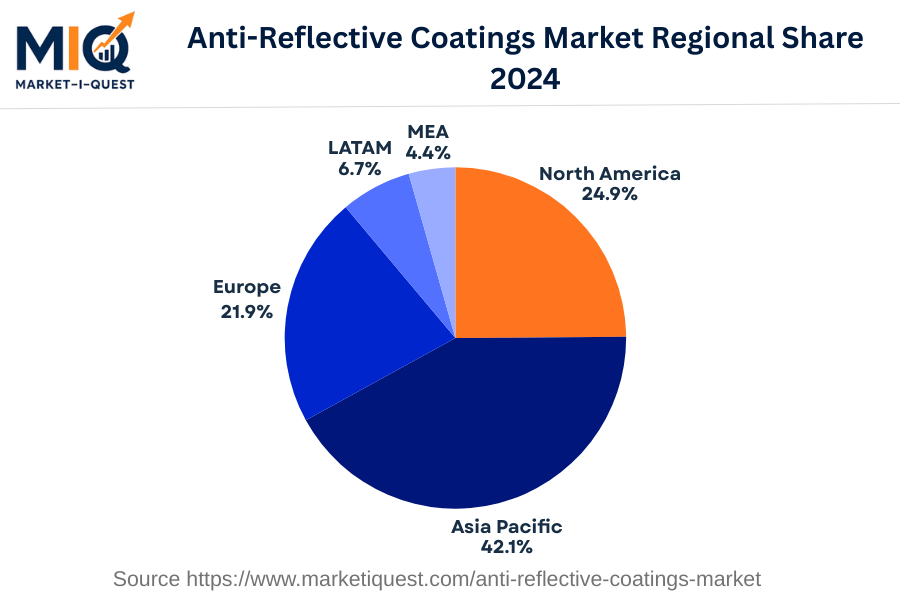
The Anti-Reflective Coatings Market is valued at 6.24 Billion USD in 2025 and 11.28 Billion USD in 2034, with a CAGR of 6.8%. The market starts at 5.84 Billion USD in 2024, indicating a steady growth trajectory over the decade. The growth path is illustrated by values such as 6.24 Billion USD in 2025 and 11.28 Billion USD in 2034. Factors contributing to this expansion include increased demand in various industries and advancements in coating technologies.

Key Takeaways

  • By Substrate - Glass held the leading position accounting for a significant share in the Anti-Reflective Coatings Market in 2024.
  • By Resin - Epoxy led the market recognized for its superior performance and extensive applications across various sectors.
  • By Technology - Sputtering grew fastest demonstrating its increasing adoption in cutting-edge manufacturing processes for Anti-Reflective Coatings.
  • By Application - Eyewear dominated the market showcasing substantial demand and innovation in product offerings throughout 2024.
anti-reflective-coatings-market market size

Key Driving Factors

Increasing Need for Energy-Efficient Solutions

In today's environmentally conscious era, efforts towards energy efficiency are ubiquitous. This extends to the realm of screens and displays, where anti-reflective coatings can play an integral role. The application of anti-reflective coatings helps to enhance display brightness and clarity without consuming additional energy - an appealing proposition for a wide array of industries, from electronics to automotive to building construction. This is a prime driver in the growth of the anti-reflective coatings market because energy-saving solutions are highly desirable across diverse sectors, globally necessitating the use of these coatings.

Surge in Demand for High-Quality Optical Equipment

High-quality optical equipment is crucial in sectors such as healthcare, research and development, and defense. In these, the clarity of vision provided by lenses and viewing panels can directly impact outcomes. Anti-reflective coatings play an essential role in these scenarios by reducing surface reflection to deliver clearer optics. This surge in demand for high-quality optical equipment in critical sectors is driving the market for anti-reflective coatings. Furthermore, with regulations becoming more stringent, particularly within the healthcare industry, use of such technology to improve equipment performance is even more important.

Market Evolution by Timeline

2019-2023
During the period from 2019 to 2023, the anti-reflective coatings market growth saw substantial interest from the eyewear sector, particularly in Europe and North America. Brands like EssilorLuxottica capitalized on the demand for coatings that reduce glare and enhance visual clarity for consumers. The automotive industry also adopted these coatings for headlights and display screens, benefiting from improved visibility under various lighting conditions. In terms of supply, manufacturers like PPG Industries and Zeiss released advanced coatings with better scratch resistance and durability. However, supply chain constraints, particularly due to semiconductor shortages, affected production timelines. Regulatory initiatives, such as the European Union's REACH compliance for chemical substances, also shaped material sourcing. Commercial models varied widely; many manufacturers opted for direct sales channels while others explored partnerships with optical retail chains. Risks included fluctuating raw material prices and competition from low-cost providers, prompting some firms to invest in innovation for premium offerings. This period laid the groundwork for future developments in the market.
2024
In 2024, the anti-reflective coatings market trend focused on sustainability and eco-friendly materials, driven by growing environmental regulations. The push for greener practices came from regions like the European Union as it tightened restrictions under the Green Deal initiative. Companies like Sherwin-Williams introduced coatings derived from renewable resources, aiming for better market alignment. Demand remained high from the consumer electronics sector, especially for smartphone screens, as features increasingly included high-resolution displays. Integrating anti-reflective coatings with advanced technologies like OLED or AMOLED became more prevalent. Rental contracts and subscription models emerged, particularly in sectors like rental equipment, enabling businesses to access the latest coatings with reduced upfront costs. This year also saw a rise in collaborative ventures, with firms pooling resources for R&D. Despite these opportunities, challenges like cost variability in raw materials and the potential for market saturation in niche applications made some manufacturers reconsider their production strategies and focus on innovation to stand out.
2025-2029
From 2025 to 2029, the anti-reflective coatings market began to witness stronger integration with smart technologies, particularly in augmented and virtual reality devices. Companies like Oculus and Microsoft incorporated these coatings to enhance display qualities and user experience. The automotive sector also continued to leverage these coatings, specifically in HUDs (heads-up displays) in cars, catalyzed by initiatives such as the U.S. Department of Transportation's focus on enhancing driver assistance technologies. Supply chains matured, and manufacturers began adopting a just-in-time inventory model to mitigate risks related to overproduction and demand fluctuations. Contracting shifted towards long-term partnerships with tech firms which allowed quicker adaptation to changing market needs. Regulatory frameworks, such as ISO standards for coating applications, further distinguished quality benchmarks in the industry. However, issues like the high cost of advanced coating materials and the associated barriers to entry for smaller firms posed risks. Some businesses are likely to invest heavily in innovation to overcome these challenges and remain competitive.
2030-2034
Looking towards 2030 to 2034, the anti-reflective coatings market is expected to reflect significant advancements driven by AI and machine learning optimization in application processes. Manufacturers like Axalta and Nippon Paint are likely to implement AI technologies to improve production efficiency and quality control. Greater emphasis on nanotechnology is anticipated, with coatings designed for specific applications in consumer electronics and aerospace. Major markets include Asia-Pacific, particularly China and India, where rising consumer markets drive demand in smartphones and wearables. Technological integration into supply chains is expected to facilitate real-time data analysis for inventory management. Regulatory pressures around sustainability are projected to escalate, particularly in North America and Europe, influencing raw material sourcing strategies. Commercial dynamics may shift towards performance-based contracts, emphasizing results over traditional pricing models. Risks include remaining competitive within a growing global market and adapting to rapid technological changes, which will necessitate ongoing investment in R&D. Businesses that cannot keep pace may face market challenges.

Future Market Outlook

Future Opportunities

Given the current landscape in 2023, the anti-reflective coatings market share is poised for significant progress driven by multiple developments. With increasing adoption of wearable technology, companies such as Google are looking into integrating AR coatings in augmented reality devices, suggesting substantial opportunities within the tech sector. Furthermore, as electric vehicles gain traction, manufacturers like Tesla are exploring anti-reflective coatings for automotive displays and windows to improve usability and safety. This follows the automotive industry’s growing focus on enhancing driver experience amid rising global interest in electric mobility. Additionally, advancements in healthcare technology have prompted hospitals to recognize the importance of anti-reflective coatings in medical imaging devices. Regulatory bodies like the FDA are also heightening scrutiny on the efficiency of optical devices, influencing R&D in the sector. Moreover, the trend towards sustainable manufacturing has elicited interest from companies such as PPG Industries, which are actively researching bio-based coating materials. In emerging markets, particularly in Asia, the increasing middle-class population shows a higher demand for consumer electronics, creating opportunities for manufacturers to incorporate advanced coatings into their products. Collaborations between tech firms and academic institutions will likely yield innovative applications of anti-reflective coatings, paving the way for future growth and diversification in the market.

Segmentation Analysis

The anti-reflective coatings market is segmented by Substrate (Glass, Silicon, Quartz, Sapphire, Plastic), by Resin (Epoxy, Polyurethane, Acrylic), by Technology (Electronic Beam Evaporation, Vacuum Deposition, Sol-Gel, Sputtering), and by Application (Semiconductors, Electronic Devices, Eyewear, Solar Panels, Others).

By Substrate

The market is divided into subsegments including Glass, Silicon, Quartz, Sapphire, and Plastic. Glass accounted for the largest revenue share while Quartz is expected to grow at the fastest CAGR during the forecast period.

Largest Revenue Share

Glass

Market Share Leader

The glass subsegment currently leads in revenue due to its extensive applications across various industries, including semiconductors, electronics, and optical devices. High demand from the consumer electronics sector, particularly for display technologies like smartphones and televisions, underpins this revenue dominance. Geographically, regions with strong manufacturing bases like East Asia, particularly China and Japan, contribute significantly to the revenue through exports and domestic consumption. The strong regulatory environment also plays a role, as quality standards for glass components in electronic devices push manufacturers to prefer established suppliers with proven reliability. Purchasing criteria in this segment predominantly focus on optical clarity, durability, and manufacturing capacity, further solidifying the position of established glass manufacturers. Additionally, the relatively high switching costs associated with changing suppliers due to compatibility issues with existing production lines ensure that current leaders maintain their market presence effectively. Overall, these factors create a favorable landscape for the growth and stability of the glass subsegment, boosting the Anti-Reflective Coatings Market growth.

Fastest CAGR

Quartz

Forecast Period Growth Leader

The quartz subsegment is poised for rapid growth driven by increasing demand in the telecommunications and electronics industries, particularly as technologies like 5G expand. This demand is catalyzed by quartz's superior properties, including thermal stability and electrical efficiency, making it essential for high-frequency applications. However, barriers to adoption exist, including the availability of high-quality raw materials and the requirement for specialized manufacturing processes, which can lead to supply chain vulnerabilities. Partnerships between technology firms and quartz suppliers are likely to mitigate these risks and stabilize supply. Additionally, advancements in quartz crystal technology aimed at enhancing performance and reducing costs will likely spur investment and accelerated adoption rates. The policy environment surrounding technology development and sustainability will also influence growth, with increasing grants and incentives promoting the use of advanced materials in electronics. Near-term risks include fluctuations in global demand and the impact of economic uncertainties, which may constrain investment in new production capabilities initially. Nevertheless, the trends indicate a clear opportunity for growth within the quartz subsegment, characterized by robust demand and innovation-driven expansion.

By Resin

The market is divided into subsegments including Epoxy, Polyurethane, and Acrylic. Epoxy accounted for the largest revenue share while Polyurethane is expected to grow at the fastest CAGR during the forecast period.

Largest Revenue Share

Epoxy

Market Share Leader

Epoxy resins lead the market in revenue primarily due to their widespread application across industries such as automotive, aerospace, and electronics. Their superior adhesive properties, excellent chemical resistance, and ability to withstand high temperatures make them the preferred choice for manufacturers. Additionally, the shift toward lightweight materials in automotive and aerospace applications drives demand for epoxy resins, as they enable the production of composites that meet stringent performance requirements while minimizing weight. North America and Europe represent significant markets for epoxy resins, propelled by stringent regulatory standards that favor the use of more robust and efficient materials. The construction sector also has a growing need for epoxy products due to their durability and performance characteristics, particularly in flooring and coatings applications. Customers prioritize quality and performance, leading to a preference for well-known manufacturers, which raises entry barriers for new players. With companies increasingly focusing on sustainable solutions, the development of bio-based epoxy resins is expected to further solidify their dominance in the market, as these materials align with environmental regulations and consumer preferences.

Fastest CAGR

Polyurethane

Forecast Period Growth Leader

Polyurethane is projected to exhibit the fastest growth due to its versatility and adaptability in various applications. The construction industry serves as a major growth driver, particularly for insulation applications, as the demand for energy-efficient materials rises. Moreover, innovations in the formulation of polyurethane are leading to the development of low-density and high-performance materials that meet specific customer needs in sectors like furniture, automotive, and coatings. However, adoption barriers include the fluctuations in raw material prices and the environmental concerns associated with certain production processes, which can deter some manufacturers from switching. Partnerships between raw material suppliers and end-users are becoming essential to develop tailored products that meet regulatory requirements more effectively. Additionally, government policies promoting energy efficiency and sustainable construction practices are expected to catalyze the growth of polyurethane in the near term. Nevertheless, risks associated with market volatility, particularly in sourcing raw materials, may pose challenges for sustained growth if not managed properly.

By Technology

The market is divided into subsegments including Electronic Beam Evaporation, Vacuum Deposition, Sol-Gel, and Sputtering. Sputtering accounted for the largest revenue share while Sol-Gel is expected to grow at the fastest CAGR during the forecast period.

Largest Revenue Share

Sputtering

Market Share Leader

Sputtering technology leads the market in revenue due to its extensive applications across various industries such as semiconductors, optics, and decorative coatings. The semiconductor industry's growing requirements for thin-film deposition are strongly boosting demand for sputtering, particularly in regions like Asia-Pacific where leading manufacturers are situated. Customers are often major electronic producers that necessitate high precision and repeatability, driving the demand further. Additionally, regulatory requirements for environmental sustainability are pushing manufacturers to adopt more advanced sputtering systems that offer efficient deposition with minimal waste. The total cost of ownership also plays a critical role, as customers prioritize equipment longevity and low maintenance costs. Offering such advantages, suppliers in the sputtering segment have built robust partnerships with key manufacturers, enhancing their market position. These factors create significant barriers for new entrants, yielding a mature but dynamic competitive landscape where established players can capitalize on their technological expertise and established customer bases, reinforcing their revenue leadership.

Fastest CAGR

Sol-Gel

Forecast Period Growth Leader

The Sol-Gel subsegment is forecasted to experience the fastest growth due to increasing interest in nanotechnology and advanced materials. The versatility of Sol-Gel processes allows for the development of coatings and films that have superior functional properties, which is appealing across multiple sectors, including electronics, healthcare, and renewable energy. However, adoption barriers such as the need for specialized equipment and technical expertise can hinder rapid market entry. Catalysts for growth include advancements in material science and governmental support for green technology initiatives, which encourage research in sustainable production processes. Partnerships between universities and companies are also driving innovation, creating pathways for commercial applications. Risks in the near-term may stem from fluctuations in raw material prices and competition with established deposition technologies like sputtering, which may maintain a stronger foothold. Nevertheless, the unique advantages offered by the Sol-Gel method ensure it remains an attractive option for manufacturers looking to innovate, fostering optimism for substantial market penetration in the upcoming years.

By Application

The market is divided into subsegments including Semiconductors, Electronic Devices, Eyewear, Solar Panels, and Others. Semiconductors accounted for the largest revenue share while Eyewear is expected to grow at the fastest CAGR during the forecast period.

Largest Revenue Share

Semiconductors

Market Share Leader

The semiconductor subsegment leads in revenue due to its critical role in powering a vast array of electronic devices and systems, ranging from consumer electronics to industrial applications. Major drivers include the increasing demand for advanced technologies such as artificial intelligence, IoT devices, and 5G infrastructure, which are heavily reliant on high-performance semiconductors. Geographically, Asia-Pacific, particularly countries like Taiwan and South Korea, remains the manufacturing hub, contributing significantly to revenue generation. Additionally, rigorous regulations and standards around quality and performance further bolster the semiconductor market. Customers prioritize suppliers who adhere to stringent compliance measures, as switching costs can be high due to integration complexities and the need for technological alignment. Established distribution channels and relationships with major device manufacturers also enhance market access, ensuring steady revenue streams. Overall, the semiconductor subsegment's dominance can be attributed to its indispensable nature in modern technology, making it a cornerstone of numerous industries.

Fastest CAGR

Eyewear

Forecast Period Growth Leader

The eyewear subsegment is set to experience rapid growth driven by increased consumer awareness regarding eye health and a rising prevalence of digital eye strain. Factors such as an aging population and the booming use of technology are propelling demand for corrective lenses and blue light-blocking eyewear. While access to affordable eyewear could be considered a growth barrier in certain regions, partnerships between eyewear brands and tech companies are emerging, facilitating innovation in product offerings. Additionally, policies favoring preventive healthcare measures are enhancing adoption rates of eyewear products. Near-term risks include economic fluctuations impacting consumer spending and fierce competition that may pressure pricing. However, as consumers increasingly prioritize eye care as part of their overall health regimen, the eyewear subsegment is positioned for significant expansion, driven by both technological advancements and shifting consumer habits.

Competitive Analysis

Key Market Players

The Anti-Reflective Coatings Industry is competitive, with a mix of large established companies and smaller regional players. Most companies focus on improving their products/services, keeping prices attractive, and strengthening relationships with key customers. They also use partnerships, acquisitions, and new launches to expand their presence in existing and new markets. Overall, players compete on quality, reliability, and value, and competition is expected to remain strong over the forecast period.

Manufacturers / OEMs

PPG Industries, Inc.
US
BASF SE
Germany
Saint-Gobain S.A.
France

Key Suppliers & Raw Materials

Merck KGaA
Germany
3M Company
US
Heraeus Holding GmbH
Germany

Distributors, Integrators & Channel Partners

Techno-UMG
US
Optical Coating Technologies
US
Thorlabs, Inc.
US

Porter’s Five Forces Analysis

This analysis evaluates the competitive dynamics within the Anti-Reflective Coatings Market. Key factors influencing market structure and profitability are examined.

Supplier Bargaining Power

Medium

Suppliers face moderate power due to the specialized materials required but are limited in number.

Buyer Bargaining Power

High

Consumers can switch easily between brands, increasing their negotiating leverage over prices and quality.

Threat of Substitutes

Medium

Alternative coatings exist, but unique benefits of anti-reflective coatings limit substitution.

Threat of New Entrants

Low

High capital investment and technical expertise create significant barriers for new market entrants.

Competitive Rivalry

High

Numerous competitors with similar offerings intensify price competition and innovation efforts.

Regional Analysis

Geographic market dynamics and growth opportunities across key regions

Global Market Outlook

anti-reflective-coatings-market market regional share

North America

The Anti-Reflective Coatings Market share in North America in 2024 is driven by increasing demand across various sectors, particularly in electronics, automotive, and healthcare. The proliferation of smartphones and other electronic devices fuels the need for high-performance anti-reflective coatings, reducing glare and improving visibility. Regulatory standards, such as those set by the U.S. Environmental Protection Agency (EPA), promote the adoption of coatings that enhance energy efficiency and safety in automotive applications. Additionally, investments in innovative coating technologies, including nano-coatings, are reshaping product offerings, making them more durable and effective.

Trends indicate a shift in buyer behavior toward multi-functional coatings that offer enhanced qualities such as scratch resistance alongside anti-reflective properties. E-commerce platforms are becoming increasingly important channels for distributing these coatings, allowing manufacturers to reach a wider audience directly. Furthermore, partnerships between coating manufacturers and tech companies are emerging to develop customized solutions for specific applications, particularly in the optics sector. Policymaking, especially related to sustainability and environmental impact, influences manufacturing standards, compelling companies to innovate and comply with new regulations. These dynamics reflect a mature and evolving market landscape within the region.

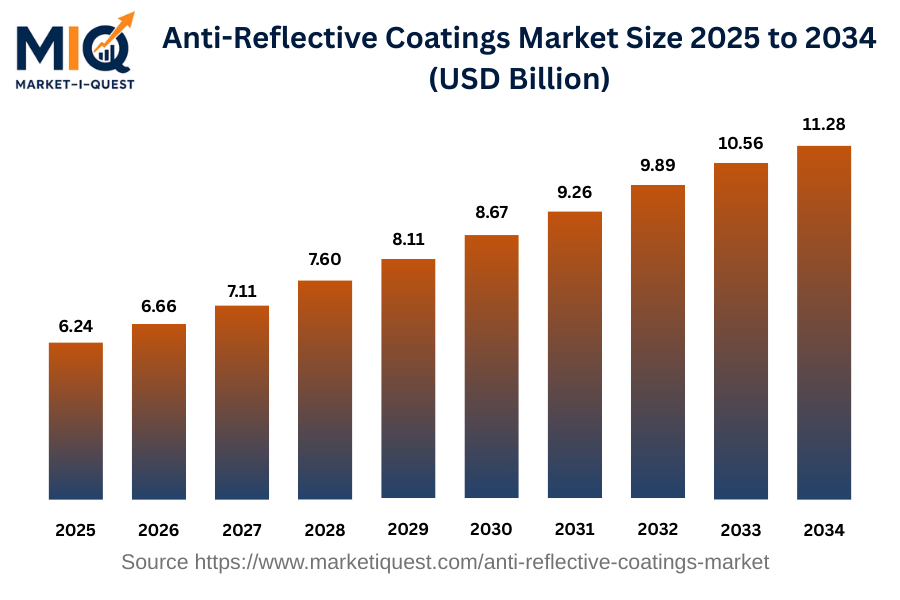
Asia Pacific

In 2024, the anti-reflective coatings market in the Asia Pacific region is driven by increasing demand from the optical industry, particularly for eyeglasses and smartphones, where enhanced visibility and aesthetic appeal are essential. Regulatory mandates in countries like India and Japan, aiming to improve energy efficiency and reduce glare in architectural applications, are further propelling market growth. Significant investments in technology are evident as companies adopt advanced deposition techniques, improving coating durability and performance, which enhances the competitive landscape across China and South Korea. Additionally, fluctuating raw material prices influence supply dynamics, affecting product pricing and availability across the region.

Buyer behavior reflects a growing preference for high-quality, durable coatings among consumers, while industries such as healthcare and electronics are increasingly mandating quality standards for optical components. Innovations in nano-coating technologies are reshaping product offerings, leading to more efficient and versatile solutions. Channel dynamics are shifting as online retail platforms gain traction, enhancing accessibility for smaller manufacturers. Collaborations between coating producers and technology firms are common, as evident in partnerships aimed at developing next-generation materials. Overall, regional policies are reinforcing the importance of sustainable practices, thereby shaping operational strategies across markets in Asia Pacific.

Europe

In 2024, the European anti-reflective coatings market size is shaped by increasing demand for enhanced optical performance across various sectors. A significant driver is the growing adoption of anti-reflective coatings in the eyewear industry, particularly in Germany and France, where consumer preferences lean towards products that offer superior clarity and comfort. Regulatory support from the European Union, emphasizing sustainability and energy efficiency, also encourages investment in advanced coating technologies. Technological advancements in nanostructured coatings facilitate better performance and broader application in sectors such as electronics and automotive, where glare reduction is critical.

Current trends reveal a noticeable shift towards multifunctional coatings that combine anti-reflective properties with anti-fog and scratch-resistant features, appealing to health and safety-conscious consumers, especially in the United Kingdom and Italy. E-commerce continues to transform distribution channels, allowing manufacturers to reach end-users directly, while partnerships between coating producers and major eyewear brands are becoming more prevalent, enhancing product offerings. Additionally, compliance with EU standards on transmission efficiency is driving innovations in product formulations across the Benelux and Nordic regions. As institutions, particularly in healthcare, mandate high-performance optical solutions, demand for anti-reflective coatings intensifies across multiple sectors.

Latin America

The Anti-Reflective Coatings market in Latin America (LATAM) in 2024 is characterized by its growth driven by multiple factors across key countries. In Brazil, increasing investments in the electronics sector are boosting demand for optical components in consumer devices, while Mexico is seeing heightened adoption of anti-reflective coatings in automotive manufacturing due to rising safety standards. Argentina's government has enacted regulations that encourage cleaner production methods, further driving interest in advanced coatings. Additionally, technological innovations in coating application processes are creating more durable and cost-effective solutions, facilitating broader market access.

Trends indicate a shift in consumer preferences towards higher-quality optics in consumer electronics, with buyers increasingly valuing product performance over price. The rise of e-commerce in retail channels is accelerating the distribution of coated products, especially glasses and screens. Collaborations between technology providers and coating manufacturers are emerging, as seen in Chile, where firms are seeking to enhance product offerings through joint ventures. Furthermore, the introduction of stricter policies regarding environmental sustainability is pressuring industries to adopt more eco-friendly coating solutions, a trend evident in Peru’s manufacturing sector. Overall, these dynamics position the Anti-Reflective Coatings market for a transformative year within LATAM.

Middle East & Africa

In 2024, the Anti-Reflective Coatings market opportunities in the Middle East and Africa are shaped by a surge in demand driven by diverse industrial applications, particularly in oil and gas, healthcare, and consumer electronics. The rising adoption of high-tech devices in countries like Saudi Arabia and the UAE is significantly increasing the need for effective coatings to enhance visibility and reduce glare. Regulatory frameworks mandating energy efficiency and sustainability, notably the Saudi Vision 2030 goals, sustain investments in advanced coating technologies. Simultaneously, the market benefits from declining raw material costs, enabling price competitiveness.

Trends indicate a growing preference for eco-friendly coatings, aligning with increasing consumer awareness and governmental policies promoting sustainable practices. There is also a notable shift towards online sales channels as buyers in South Africa and Nigeria seek accessible purchasing options. Collaborations among manufacturers and technology firms are enhancing product offerings, as seen in partnerships like those between UAE firms and international suppliers. Furthermore, strict compliance with international standards in sectors like healthcare is influencing customer decisions, further galvanizing the market for specialized coatings across the region. This evolving landscape reflects both the region's unique challenges and its commitment to technological advancement.

Recent Industry Developments

Latest market innovations, product launches, and strategic initiatives

Jan 2025

ZEISS introduced DuraVision Gold, a premium anti‑reflective lens coating with a subtle golden reflex, designed to be three times easier to clean than existing ZEISS coatings and to offer high scratch resistance and visual comfort for premium eyewear users.

Frequently Asked Questions