
Advanced Process Control Market Snapshot

Key Players

  • Aspen Technology (United States)
  • ABB Ltd. (Switzerland)
  • Emerson Electric Co. (United States)
  • Honeywell International Inc. (United States)
  • Rockwell Automation Inc. (United States)
  • Siemens AG (Germany)
  • Schneider Electric SE (France)
  • Yokogawa Electric Corporation (Japan)
  • General Electric Co. (United States)
  • Mitsubishi Electric Corporation (Japan)

Market Size

Base Year 2024
$2.65 Bn
CAGR
11.78%
Forecast 2034
$8.07 Bn

Market Segments

By Type
  • Advanced Regulatory Control
  • Multivariable Model Predictive Control
  • Inferential Control
  • Sequential Control
  • Compressor Control
By Revenue Source
  • Software
  • Services
By Application
  • Oil & Gas
  • Pharmaceuticals
  • Power
  • Food & Beverages
  • Petrochemicals
  • Chemicals
  • Semiconductors
  • Others

Market Dynamics

Drivers
  • Increasing demand for efficient processes
  • Rise in automation industries
Restraints
  • High implementation costs
  • Technology complexity
Opportunities
  • Increasing automation industries
  • Increasing demand in emerging countries

Market Size

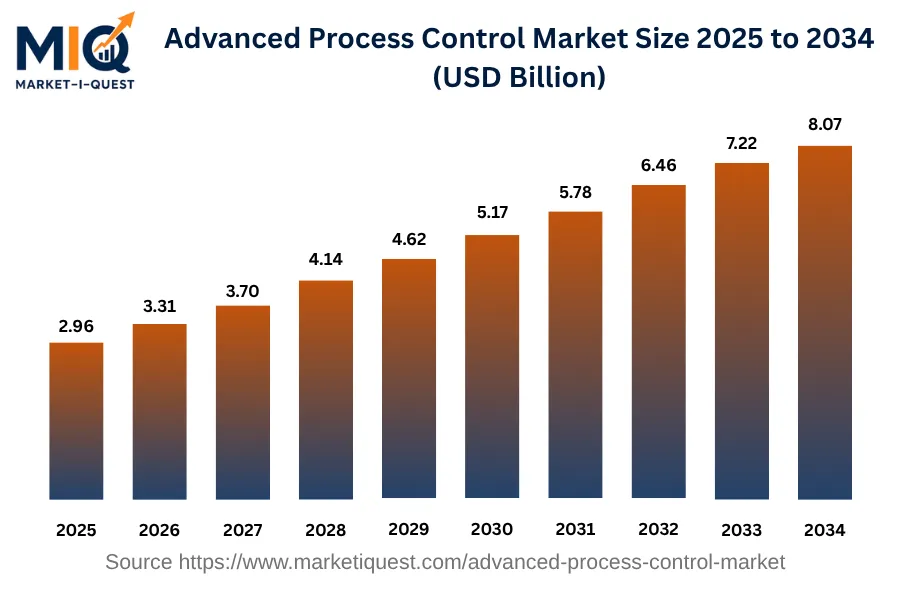
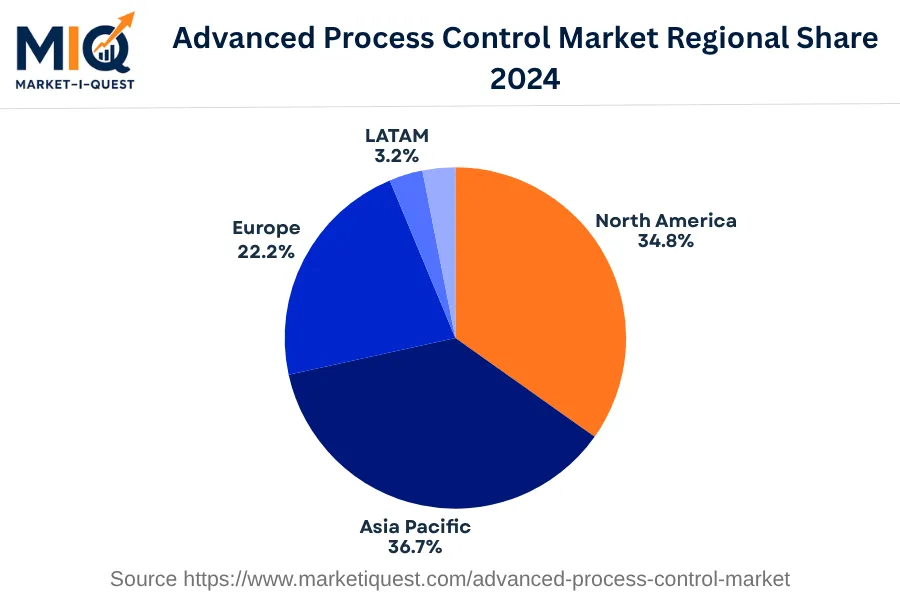
The Advanced Process Control Market was valued at $2.96 billion in 2025, increased from $2.65 billion the previous year. It is projected to grow to $8.07 billion by 2034, with a Compound Annual Growth Rate (CAGR) of 11.78%. This sizeable increase over the ten-year period is indicative of the continual growth within this market sector. The market has been steadily expanding over the period from 2025 to 2034, primarily due to the increasing demand for high-quality products at low costs, which has been driving the need for more efficient manufacturing and process control. In terms of regional share as of 2024, Asia Pacific accounted for the highest proportion with 36.7% of the market, North America followed closely with a 34.8% share, Europe held 22.1%, while both Latin America and the Middle East and Africa were each responsible for a comparatively modest 3.1%.

Key Takeaways

  • By Type - Advanced Regulatory Control held the predominant share.
  • By Revenue Source - Software accounted the largest share of the market.
  • By Application - Oil & Gas led the segment commanding a pivotal role in the market.
advanced-process-control-market market size

Key Driving Factors

Implementation of Industry 4.0 Policies and Practices

Industry 4.0 or 'The Fourth Industrial Revolution' is a significant driver for the advanced process control market. This initiative represents a move towards automation and data exchange in manufacturing technologies, including the cyber-physical systems, the Internet of Things (IoT), and cloud computing. Therefore, businesses are keen to modernize their manufacturing protocols to secure a competitive edge, leading to an increased adoption of advanced process control solutions. Companies leverage these solutions to optimize their complex industrial processes, particularly in industries like chemicals, power, and petrochemicals. Thus, the accelerating implementation of Industry 4.0 practices globally is propelling the growth of the advanced process control market.
Increasing Adoption in Pharmaceutical Manufacturing

A key factor propelling the advanced process control market is its increasing use in the rapidly evolving pharmaceutical industry. Pharma manufacturing processes often require strict controls to ensure the consistency, safety, and efficiency of their products. The introduction of Good Manufacturing Practices (GMP) regulations in pharma have made the need for strict process controls even more apparent. Advanced process control systems allow these companies to meet these stringent standards and significantly improve their batch-to-batch consistency. The systems also enable real-time monitoring and adjustments, reducing errors, and speeding up the time-to-market for new drugs. As pharmaceutical companies continue to focus on improving their manufacturing processes, advanced process control adoption is likely to rise.

Market Evolution by Timeline

2019-2023
During this period, evolving manufacturing sectors, notably petrochemical and pharmaceutical companies, were early buyers of Advanced Process Control (APC). Their reason was to enhance process optimization, reducing waste and increasing efficiency, primarily in North-America. Supplier side saw the successful shipment and pilot projects of predictive modeling and regulatory control technology. However, constraints were faced in integrating these with existing setups. Influencing the adoption were regulatory standards like ISO 50001 focused on enhancing energy efficiency. Usually, the commercial model was mainly software licensing with prescribed maintenance contracts. However, the notable factor was a drop in software costs due to increasing competition. Risks included lack of skilled labor to manage these systems and initial integration complexity.
2024
In 2024, increasing automation in industries from automotive to power generation leveraged APC, greatly in the Asian market. Newer technologies like comprehensive real-time optimization (RTO) meant better energy efficiency and predictive capabilities. Still, integration remained a crucial challenge. The introduction of the Industrial Internet of Things (IIoT) standards by international regulatory bodies influenced wider adoption. A shift was noticed in commercial models as more suppliers offered APC as a service (APCaaS), reducing upfront investment for buyers. The main risk continued to be the dearth of specially trained personnel.
2025-2029
During this time, further penetration into other sectors such as food & beverage, and water treatment was seen, especially in Europe due to stricter regulatory compliance. Technologically, machine learning capabilities started to feature in APC solutions. This brought enhanced predictability but also added complexity to integration. Regulatory bodies promoted AI and ML in industrial setups, driving adoption. A hybrid model of licensing and subscriptions for supplementary cloud storage was commonly seen, offering financial flexibility to buyers. Risks during this period included data security concerns and growing complexity of system management.
2030-2034
By this period, nearly all industries were utilizing APC due to their comprehensive benefits. However, specific small-scale industries were still lagging due to cost concerns. Technologically, the majority of APC shipped was AI-based, even as pilot projects for quantum computing capabilities in APC began. Regulatory bodies like the Environmental Protection Agency (EPA) tightened the rules for waste management, prompting more adoption. Commercial models saw a shift towards pay-per-use plans. Meanwhile, cybersecurity remained the biggest risk and had to be actively managed.

Future Market Outlook

Future Opportunities

The future of the advanced process control market presents numerous opportunities driven by current trends and regulatory landscapes. The ongoing pursuit of sustainable practices is evident as various governments, including those in the European Union, work to meet the objectives set out in the Green Deal established in December 2019, aimed at reducing carbon emissions across industries. Consequently, companies specializing in APC solutions are likely to focus on energy-efficient technologies that align with environmental regulations. Additionally, collaboration between technology providers and industrial firms is expected to expand as seen in the March 2023 partnership between Schneider Electric and Google Cloud, highlighting a shared commitment to enhancing operational efficiency using cloud-based APC methods. The demand for customized solutions is also rising, especially in the pharmaceutical sector, where stringent regulations by the FDA are pushing for precision in manufacturing processes, providing a strong incentive for tailored APC implementations. Furthermore, advancements in data analytics are expected to create new opportunities for predictive maintenance and operational continuity, evidenced by ongoing projects within the automotive industry in Japan. Training and upskilling initiatives are gaining traction, with organizations like ISA providing certifications for professionals specializing in APC technologies. As industries continue to seek digital transformation, the integration of advanced data visualization tools will increasingly facilitate better decision-making in sectors ranging from food processing to chemicals, thereby driving sustained interest in advanced process control solutions.

Segmentation Analysis

By Type

The market is divided into subsegments including Advanced Regulatory Control, Multivariable Model Predictive Control, Inferential Control, Sequential Control, and Compressor Control. Advanced Regulatory Control accounted for the largest revenue share while Sequential Control is expected to grow at the fastest CAGR during the forecast period.

Largest Revenue Share

Advanced Regulatory Control

Market Share Leader

The Advanced Regulatory Control subsegment is currently leading the market in terms of revenue. This can be attributed to its widespread usage and acceptance in several industries, particularly those requiring process automation, such as chemical, oil and gas, and refining industries. These controls are designed to improve process performance and profitability by maintaining a process at its optimal operating point, which results in cost savings and increased efficiency. Advanced regulatory control systems are known for their ability to handle complex processes, thus allowing industries to adhere to regulatory standards and enhance overall production quality. Their ability to optimize the usage of raw materials and energy consumption further increases their demand. Geographically, developed regions with mature industrial sectors represent the biggest customers. These reasons, coupled with the increasing adoption of automation, are driving the revenues for the Advanced Regulatory Control subsegment. Still, it is critical to note that this analysis is based on standard industry behaviors and certain unforeseen factors may alter this forecast.

Fastest CAGR

Sequential Control

Forecast Period Growth Leader

The Sequential Control subsegment is expected to witness the fastest growth due to a variety of factors. Emerging economies are modernizing their industrial sectors, particularly in manufacturing, where sequential controls are used to achieve sequential operations in machines. These controls offer the advantage of precision and consistency in tasks, leading to high-quality output and reduced wastage. Their adoption is being catalyzed by advances in technology enabling user-friendly interfaces and integration with various equipment and systems, creating a more streamlined and efficient production process. On the policy front, increasing regulatory pressures for quality and safety standards in manufacturing processes are encouraging adoption. Barriers to entry like the high capital investments required for initial setup and skills barriers among the workforce could affect the rate of adoption. However, the benefits of streamlining manufacturing processes, improving product quality, and meeting regulatory standards outweigh these challenges in terms of long-term gains. The assumption here is based on the standard market dynamics and could change with macroeconomic trends.

By Revenue Source

The market is divided into subsegments including Software and Services. Software accounted for the largest revenue share while Services is expected to grow at the fastest Compound Annual Growth Rate (CAGR) during the forecast period.

Largest Revenue Share

Software

Market Share Leader

Software segment emerged as the largest revenue contributor in the year 2024. This could be attributed to the increasing demand for efficient, reliable, and cost-effective solutions in various sectors. The growth of this particular segment could also be credited to the ongoing digital transformation across numerous verticals, pushing the demand for more software integration. The need for streamlining operations, improving efficiency, and reducing costs has driven businesses to adopt more software-based solutions. Furthermore, the implementation of regulations which enforce certain standards in different industries has acted as a catalyst for the adoption of software across these different sectors. The high switching costs and the subsequent lock-in effect have further contributed to the stability of the software subsegment's revenue stream. Geographically, the adoption of software solutions is considerable in developed economies due to the presence of well-established and technology-oriented industries.

Fastest CAGR

Services

Forecast Period Growth Leader

Although the Services segment did not lead in revenue in the base year 2024, it is projected to experience the fastest growth in the ensuing years. This growth is largely driven by the rapid technological advancements which have expanded the depth and breadth of service offerings. There has been a growing need for services that ensure the efficient running of these software solutions. Apart from installation, the service segment also includes updates, maintenance, and customer support which are crucial for ensuring smooth software performance. Enterprises today seek more comprehensive services that offer value beyond mere maintenance. With regards to adoption barriers, the generally high costs of services may deter small to medium enterprises. However, strategic partnerships and subscription-based pricing models may help catalyze adoption. In terms of risk, substantial initial capital expenditures (Capex) could present a barrier. Despite these hurdles, increasing awareness about the benefits of these services could stimulate growth in the forecast period.

By Application

The market is divided into subsegments including Oil & Gas, Pharmaceuticals, Power, Food & Beverages, Petrochemicals, Chemicals, Semiconductors, and Others. Among these, the Oil & Gas sector accounted for the largest revenue share, while the Semiconductors sector is projected to demonstrate the fastest growth, boosted by technological advancements.

Largest Revenue Share

Oil & Gas

Market Share Leader

The Oil & Gas sector emerged as the leading revenue-generator in 2024, owing to a myriad of driving factors. A considerable chunk of this revenue is attributed to the consistent global demand for energy, with oil and natural gas remaining the primary sources. The segment further benefits from extensive downstream activities like refining and processing. Moreover, specific regulations compelling companies to adopt cleaner fuels have added to the fuel demand, increasing revenue. Geographically, nations rich in oil & gas reserves, like the Middle East countries, significantly contribute to this high revenue. The purchasing criteria in the sector rotate around reliability and efficiency. Furthermore, the high switching costs associated with significant capital investment in setting up oil & gas projects limit options and strengthen the segment's revenue generation ability. Finally, the channelized trade through government and numerous private entities worldwide consistently maintains the demand-supply chain, further supplementing the revenue growth.

Fastest CAGR

Semiconductors

Forecast Period Growth Leader

The Semiconductors sector is forecasted to have the highest Compound Annual Growth Rate (CAGR). This growth is spurred by several catalysts. Chief among them is technology; the rise of AI, IoT, and advanced computing demands more semiconductor usage. Similarly, government policies encouraging electronics production, a key user of semiconductors, stimulate market growth. Significant capital expenditure in semiconductor R&D also fuel advancements in this field. Strategic partnerships within the industry for shared technology creation are a crucial catalyst as well. However, adoption barriers exist; mainly, the high cost of semiconductors and technical know-how required for its usage in new areas. Near-term risks include geopolitical tensions affecting supply chains and the rapid pace of technology making it hard for companies to keep up. However, given the escalating demand from various sectors such as automotive, consumer electronics, and IT, the segment is expected to overcome these challenges and present significant growth opportunities.

Competitive Analysis

Key Market Players

Manufacturers / OEMs

ABB
Switzerland
Siemens
Germany
Yokogawa Electric
Japan

Key Suppliers & Raw Materials

Schneider Electric
France
General Electric
US
Honeywell
US

Distributors, Integrators & Channel Partners

Rockwell Automation
US
Emerson Electric
US
OMRON
Japan

Porter’s Five Forces Analysis

A comprehensive analysis for the dynamics driving competition within the Advanced Process Control market.

Supplier Bargaining Power

Medium

Controlled by a smaller set of vendors, creating non-competitive sourcing environments.

Buyer Bargaining Power

High

Clients have multiple sophisticated options and can easily switch between APC solution providers.

Threat of Substitutes

Medium

Existing alternatives like traditional process control systems can potentially replace advanced options.

Threat of New Entrants

Low

High entrance barriers due to complex technology requirements and significant capital investment.

Competitive Rivalry

High

Intense competition caused by presence of multiple well-established international players.

Regional Analysis

Geographic market dynamics and growth opportunities across key regions

Global Market Outlook

advanced-process-control-market market regional share

North America

In 2024, the Advanced Process Control (APC) market in North America was defined by an accelerated adoption rate across various industries. Stringent environmental regulations in the U.S., Canada, and Mexico compelled industries like manufacturing and utilities to upgrade their systems, hence driving up the demand for APC solutions. Corporate investments in technology adoption also surged, particularly in the U.S., to improve operational efficiencies. Furthermore, the emergence of data-driven supply chain dynamics bolstered the application of APC in automating and optimizing the flow of goods across the region.

There was a noticeable shift in buyer behavior towards solutions that incorporate machine learning and artificial intelligence capabilities, as enterprises strived for data-driven decision making. The proliferation of Internet of Things (IoT) technology also influenced product development and shifted channel dynamics towards integrated, cloud-based solutions. Partnerships and mergers and acquisitions (M&A) were perceived as strategic endeavors, with tech giants such as IBM and Microsoft acquiring smaller APC solution providers to consolidate their market hold. Lastly, the enforcement of policy standards across the healthcare sector, notably the enforced digitization in the U.S., emphasized the necessity for advanced, precise, and compliant systems, further underlining the importance of APC solutions.

Asia Pacific

In 2024, the Advanced Process Control (APC) Market in Asia Pacific saw intensified activities in automation solutions, attributed to numerous driving forces. Increasing manufacturing productivity and consistency pushed demand, as evidenced by substantial investments in APC across China and India's robust automotive and manufacturing ecosystems. South Korea's commitment to digitizing its utility services prompted an uptick in APC, and regulatory forces in Japan - specifically government initiatives promoting Industry 4.0 - invigorated the APC market. Furthermore, heightened adoption of AI-driven APC in Australia's mining sector exemplified the trend for technological advancement.

Shifts in technology adoption directed market trends. Enterprises in China showed preference for multivariable predictive control, while Australia leaned more towards simplified APC, with emphasis on accessibility. Interestingly, Japan experienced significant partnerships between traditional tech and manufacturing firms for joint development of APC solutions. Across ASEAN markets, a trend towards real-time APC emerged, underpinned by government policy enforcement on digital transition and data management. The consumer electronics manufacturing sector in India and South Korea took precedence in terms of APC adoption, reflecting shifting buyer expectations for product quality and consistency. The 2024 Asia Pacific APC market was thus characterized by diverse drivers and evolving industry trends, underpinned by technological advances and government regulations.

Europe

In 2024, the Advanced Process Control (APC) market in Europe was characterized by the high engagement of industries like manufacturing, healthcare, and utilities, driven by the need for improved operational efficiency. The crucial drivers included robust investments in digital transformation and Industry 4.0, solidifying the reliance on real-time data analytics. Moreover, the enforcement of stringent environmental regulations across key markets like Germany and the UK required industries to leverage APC to minimize waste and optimize resource usage. Another significant driver was the gradual adoption of technologies like AI and IoT by major corporations in Europe, especially in Italy, Spain, and Benelux, which, necessitated integrated APC solutions.

On the trends front, the market witnessed strategic M&A activities, particular across the Nordics and Central & Eastern Europe, aimed at technological upgradation and expansion of product portfolios. Additionally, buyer behavior indicated a preference towards cloud-based APC solutions, owing to their scalability and cost-effectiveness, pushing service providers to recalibrate offerings. Furthermore, policy enforcement around data security, such as GDPR, shifted the focus towards robust, secure APC systems. Another key trend was rising collaboration between APC vendors and local governments, particularly in the UK and France, seeking to improve public utilities infrastructure. The dynamics marked by these drivers and trends confirmed the pivotal role APC played in technologically advanced, regulatory-compliant operations across Europe in 2024.

Latin America

In 2024, the Advanced Process Control (APC) market in Latin America was characterized by tech adoption, diverse customer segments, and regulatory efforts. A rise in digital transformation initiatives among enterprises and governments drove the demand for APC systems in countries like Brazil and Mexico, the region's largest markets. Notably, heavy investments in Argentina's energy sector expanded the market further, spurred by governmental regulations mandating increased operational efficiency.

APC adoption was also spurred by a shift towards automated systems in manufacturing industries across Colombia, Peru, and Chile, a trend mirrored by increasing price competitiveness in the supplier landscape. However, this rapid technology adoption faced potential bottlenecks in supply dynamics, with challenges surrounding adequate skilled workforce for deployment and maintenance of APC systems remaining prominent.

Buyer behavior saw a significant shift, as businesses in retail and utilities prioritized APC implementation to enhance productivity, predict system disturbances, and curtail operational costs. Another notable trend was the growth in partnerships and M&As, with APC vendors and local firms collaborating to widen their reach. This was particularly seen in Brazil and Mexico where firms aimed to navigate local regulations more efficiently. The year-end also revealed growing policy enforcement related to data privacy, bringing forth new compliance challenges for APC providers. This market evolution underscores the importance of APC in LATAM's digital modernization journey.

Middle East & Africa

In 2024, the Advanced Process Control (APC) market in the Middle East and Africa was primarily driven by increased investment in automation technologies and stringent regulatory compliance demands. Rising process complexities in sectors like oil and gas, utilities, and manufacturing particularly in Saudi Arabia, United Arab Emirates, and Qatar necessitated the adoption of APC solutions boosting the market growth. In addition, the integration of Industry 4.0 strategies by manufacturing firms in South Africa, Nigeria, and Kenya also increased demand. Increased energy costs across the region also incentivized the adoption of APC to improve energy efficiency and reduce operational costs.

Simultaneously, the year marked noticeable trends in the APC market. The shift towards cloud-based solutions was prevalent as it allowed for better data integration, real-time process monitoring and control. Partnerships and collaborations, especially in Israeli tech firms, were visible trends, reinforcing the market's expanding scope. The Egyptian government’s digital transformation plan saw the increased adoption of APC systems in national utilities and telecom sectors. In addition, growing policy enforcement around environmental sustainability pushed industries towards more sustainable process control methods, paving the way for APC’s popularity in 2024. The demand for APC was thus multi-sectoral, covering areas like government, oil and gas, utilities, telecom, and manufacturing.

Recent Industry Developments

Latest market innovations, product launches, and strategic initiatives

February 2026

ABB Ltd. officially launched its Automation Extended program. The system update is engineered to modernize distributed control architectures by embedding advanced analytics, machine learning, and cloud deployment options directly at the platform layer, facilitating scalable deployment of advanced process control solutions without halting continuous operations.

March 2025

Siemens AG successfully completed the acquisition of Altair Engineering Inc. for an enterprise value of approximately $10 billion. The transaction centers on embedding Altair’s high-performance simulation, digital twin framework, and data analytics tools directly into the Siemens Xcelerator ecosystem to scale next-generation advanced process control applications.

Frequently Asked Questions