Adhesive Equipment Market Snapshot

Key Players

  • H.B. Fuller Company (United States)
  • Henkel AG & Company (Germany)
  • 3M Company (United States)
  • Sika AG (Switzerland)
  • Arkema (France)
  • Ashland Global Holdings Inc. (United States)
  • Mapei SpA (Italy)
  • Tesa SE (Germany)
  • Dow Chemical Company (United States)
  • Beijing Comens New Materials Co. Ltd (China)

Market Size

Base Year 2024
$33.70 Bn
CAGR
5.6%
Forecast 2034
$58.11 Bn

Market Segments

By Product
  • Industrial Hot Melt
  • Adhesive Controllers
  • Cold Glue Applicators
  • Pneumatic Adhesive Applicators
  • Adhesive Pumping Systems
  • Adhesive Application Guns
  • Others
By Application
  • Packaging
  • Construction
  • Lamination

Market Dynamics

Drivers
  • Increasing industrial applications
  • Rising packaging industries
Restraints
  • High production costs
  • Regulatory compliance challenges
Opportunities
  • Rising industrialization globally
  • Increasing demand for packaged goods

Market Size

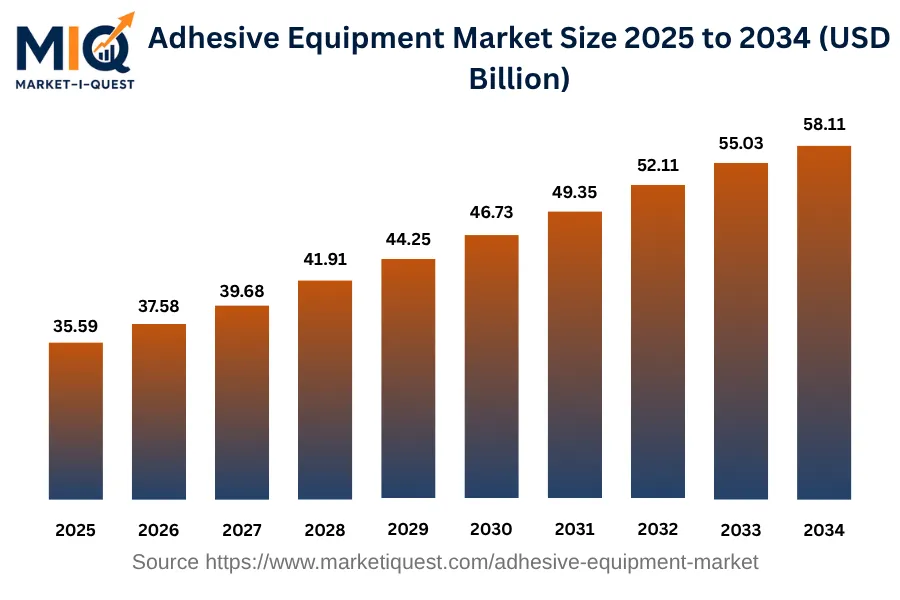
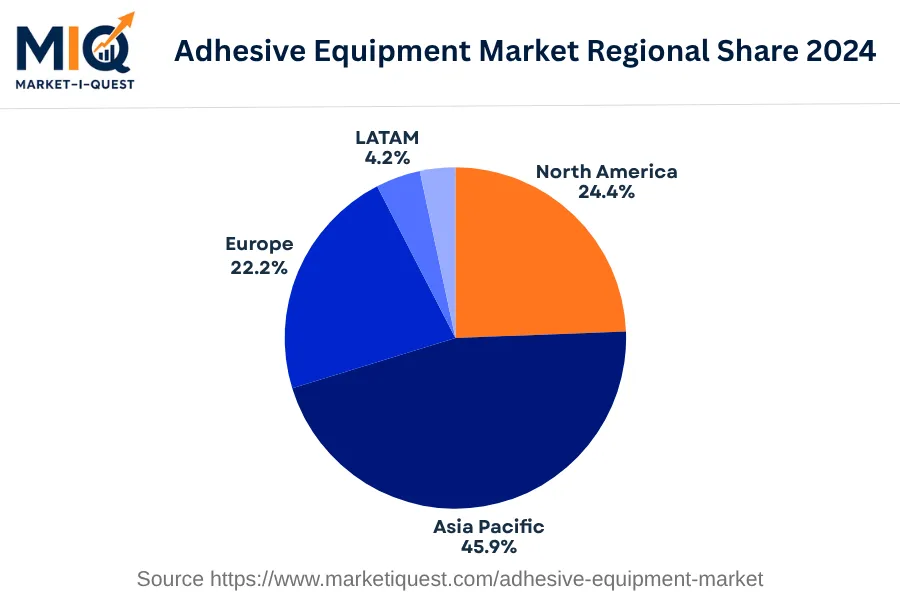
The Adhesive Equipment Market size stood at USD 35.59 billion in 2025 and will grow to USD 58.11 billion by 2034, expanding at a CAGR of 5.6%. This industry has seen steady expansion over the defined period. The growth trajectory includes an increase in market size from USD 33.7 billion in 2024 to USD 35.59 billion in 2025, representing a rise of 1.89 billion within a year. By the end of 2034, the market is projected to reach USD 58.11 billion, signifying a total increase of approximately 22.52 billion within a decade. The regional share in 2024 was distributed as follows: North America held 24.4%, closely followed by Europe with 22.2%. However, the dominant market was Asia Pacific contributing almost half, specifically 45.9% of the total market. On the other hand, the smaller contributors were LATAM and MEA with 4.2% and 3.3% respectively.

Key Takeaways

  • By Product - Industrial Hot Melt held a leading position in the market in 2020.
  • By Application - Packaging led accounting for a significant share in 2020.
adhesive-equipment-market market size

Key Driving Factors

Stricter Quality Control Procedures in Manufacturing

In recent years, global manufacturing industries have been adhering to stricter quality control procedures to ensure the durability and reliability of products. Application of adhesives is a fundamental part of these processes. Ineffective application or weak adhesion can result in product failures posing safety risks and damaging brand reputation. Consequently, industrialists are continuously seeking adhesive equipment that can consistently deliver precise and efficient results. This behavior is driving significant adoption and spend in the adhesive equipment market. The market is evolving with the engineering of equipment that satisfies high precision applications and strict regulatory quality standards (such as ISO 9001:2015), especially in industries like automotive, aerospace, and electronics where adhesion plays a vital role in product performance.
Increasing Emphasis on Sustainable Practices in Industrial Processes

As international awareness and regulatory pressure about environmental and health hazards grows, many business sectors are progressively adopting greener, more sustainable practices. In line with this, manufacturing companies are shifting towards using adhesive equipment that can apply environmentally-friendly adhesives and sealants without compromising the quality or efficiency of their products. This equipment is designed to reduce waste, optimize adhesive consumption, and minimize volatile organic compound (VOC) emissions. Market players who offer such eco-friendly and economical adhesive equipment solutions are consequently witnessing greater market share and growth. Industries such as packaging, furniture, construction, and consumer goods are among those spearheading this shift towards sustainable adhesion processes.

Market Evolution by Timeline

2019-2023
In this period, the adhesive equipment market experienced substantial demand from the packaging and automotive industries. Particularly in the Asia-Pacific region, increased manufacturing activities necessitated bonding machinery. PVA adhesives, hot melt adhesives, and pressure-sensitive adhesives became popular. The supply chain struggled with material scarcity, raising equipment prices. New technologies like dispensing robots and automatic adhesive applicators deployed were not fully integrated. Regulations, like the Emission Standards for Volatile Organic Compounds (VOC's), shaped the market, pushing adhesives towards eco-friendly compositions. Contracts were typically long-term, with OEM partnerships common to save costs. The main risk was the uncontrolled prices of raw materials, which disrupted production.
2024
The strongest demand in 2024 was seen in Europe, predominantly due to its booming construction industry. Adhesives were widely used in building materials like laminated veneer lumber. The supply of innovative equipment offering higher precision and faster curing time was observed. However, the integration of these modern technologies remained a challenge. The market complied with regulatory standards like ISO 14001, obliging manufacturers to consider environmental impact. Service contracts became popular, includeing maintenance and after-sales support. The discovery of asbestos in some adhesive equipment served as a significant risk, leading to numerous recalls.
2025-2029
Demand surged in this period, propelled mainly by the fast-growing electronics sector in the US. The need for miniaturization led to an uptick in precise bonding materials. The market started to cope with new equipment integrating artificial intelligence and robotics. Although the advancement was promising, it was limited by a lack of skilled workforce. The RoHS compliance certification played a vital role, limiting the use of hazardous substances. The value-based pricing model was common, given the high sophistication of the machines. The escalating trade war between the US and China was a significant risk during this period, which induced uncertainties in the supply chain.
2030-2034
The years 2030 through 2034 saw heightened demand from the healthcare industry across the globe. The increased production for fast-healing medical adhesives propelled the market. Advanced machines that facilitated hot-melt biocompatible adhesives dominated. Some struggle remained with seamless integration of AI in these devices. This period saw regulatory measures like the FDA guidelines for biocompatible adhesives, changing the market dynamics significantly. Hybrid purchasing, including leasing and buying options, was a prevalent business model due to the high cost of advanced machines. The persisting challenge during this period was the sheer pace of technological advancements which threatened to outpace current workforce skills.

Future Market Outlook

Future Opportunities

The adhesive equipment market is positioned for growth in several key areas based on current trends in sustainability and digitalization. The European Union's Green Deal launched in 2019 has initiated stringent environmental regulations, creating substantial demand for eco-friendly adhesive formulations. Companies like Sika have responded by investing in research and development to create sustainable adhesives that meet these emerging standards. Furthermore, the growing use of adhesives in electric vehicle production aligns with the automotive industry's shift toward electrification. As major manufacturers such as Tesla ramp up production, suppliers of adhesive technologies are likely to find increased opportunities. In 2023, Ford unveiled plans to integrate advanced adhesive technologies in their EV models, emphasizing the industry's evolution. The rise of e-commerce, accelerated by the pandemic, has also spurred demand for innovative packaging solutions that utilize adhesives effectively. Notably, in 2021, Amazon introduced new packaging methods that significantly incorporate adhesive technology. In addition, the implementation of stricter safety regulations, such as OSHA's Hazard Communication Standard, influences manufacturers to develop safer adhesive materials. Overall, the global focus on sustainability, electrification of transport, and evolving regulatory landscapes presents numerous avenues for advancement in the adhesive equipment market. Companies that adapt to these changing needs stand to benefit significantly as they navigate future challenges and opportunities.

Segmentation Analysis

By Product

The market is divided into subsegments including Industrial Hot Melt, Adhesive Controllers, Cold Glue Applicators, Pneumatic Adhesive Applicators, Adhesive Pumping Systems, Adhesive Application Guns, and Others. Industrial Hot Melt accounted for the largest revenue share while the subsegment of Pneumatic Adhesive Applicators is expected to grow at the fastest CAGR during the forecast period.

Largest Revenue Share

Industrial Hot Melt

Market Share Leader

Industrial Hot Melt leads in terms of revenue in the adhesive equipment market due to the widespread use in numerous industries. The robustness and effectiveness of hot melt adhesives in binding products have contributed to their increased demand. Industrial hot melts provide exceptional bond strength and durability, which are vital parameters for industries such as packaging, woodworking, automotive, and electronics. Moreover, with the growth of these industries, especially in emerging economies, the demand for industrial hot melt adhesives is likely soaring. The ability to resist moisture and chemicals also places hot melt adhesives in a favourable position in the adhesives market. Stringent government regulations regarding product quality and safety also contribute to the popularity of this subsegment. Manufacturers prefer them due to the lower unit costs and efficiency of application. Customer trends toward durable and high-strength products also favor industrial hot melts over conventional adhesives.

Fastest CAGR

Pneumatic Adhesive Applicators

Forecast Period Growth Leader

The subsegment of Pneumatic Adhesive Applicators is anticipated to exhibit the fastest growth in the forecast period. The growth can be attributed to the numerous benefits they offer including increased precision, high speed, and even adhesive distribution. Market trends towards improved product efficiency and quality control are driving the demand for these applicators. Expansion in sectors such as textile, your automotive, construction, and packaging that largely employ adhesives for multiple processes is likely to further boost the demand. Adoption of advanced technologies, incorporating intelligent systems, is improving the performance and versatility of pneumatic adhesive applicators, making them an appealing choice over traditional methods. Policy developments promoting sustainability also contribute to their demand, as pneumatic applicators minimize waste generation. However, higher initial investment costs and requirement of regular maintenance may pose challenges to the widespread adoption of pneumatic adhesive applicators in the near term.

By Application

The market is divided into subsegments including packaging, construction, and lamination. Packaging accounted for the largest revenue share, while construction is expected to grow at the fastest CAGR during the forecast period.

Largest Revenue Share

Packaging

Market Share Leader

Packaging holds the dominant position in the market due to various factors. As an integral part of the modern life, packaging serves multiple purposes, from preserving food quality and extending shelf life for perishable goods, to providing information and appealing consumers. This widespread use generates a high demand for packaging applications in industries such as food & beverage, pharmaceutical, and consumer goods. The market also benefits from the increasing e-commerce activities, which heavily rely on packaging for the safe transportation of goods. Moreover, companies have been particularly focused on developing sustainable and eco-friendly packaging to meet both consumer preferences and regulatory standards. This shift towards sustainability is fostering innovation and contributing to the growth of the packaging segment.

Fastest CAGR

Construction

Forecast Period Growth Leader

The construction subsegment is predicted to grow the fastest in the forecasted period. This can be attributed to the global population growth and ensuing demand for housing and infrastructure development, which in turn is fueling the construction industry. The surge in urban migration and the continued investment in city development and smart cities are further driving the demand for construction materials. On the technology front, the adoption of advanced materials and sustainable building practices, motivated by environmental concerns and regulations, are expected to catalyze the market growth in this segment. Yet, the segment growth might face hurdles due to the cyclical nature of the construction industry, potential economic downturns and supply chain disruptions.

Competitive Analysis

Key Market Players

Manufacturers / OEMs

3M
US
Henkel AG
Germany
H.B. Fuller
US

Key Suppliers & Raw Materials

DuPont
US
Ashland Global
US
Evonik Industries AG
Germany

Distributors, Integrators & Channel Partners

Kimball Midwest
US
Fastenal
US
MSC Industrial Supply Co.
US

Porter’s Five Forces Analysis

A detailed examination of the adhesive equipment market forces and competitive environment.

Supplier Bargaining Power

Medium

Limited suppliers and high raw material costs somewhat enhance their negotiation status.

Buyer Bargaining Power

High

Large range of adhesive equipment varieties boosts buyer bargaining power.

Threat of Substitutes

Low

Unique functionalities of adhesive equipment reduce threat of substitutes.

Threat of New Entrants

High

Low capital requirements and simple technology invites more market entrants.

Competitive Rivalry

High

Increased number of suppliers results in high market competition.

Regional Analysis

Geographic market dynamics and growth opportunities across key regions

Global Market Outlook

adhesive-equipment-market market regional share

North America

In 2024, North America's adhesive equipment market was predominantly driven by manufacturing, construction, and packaging industries. High demand for efficient and durable bonding solutions propelled investment and adoption of technologically advanced equipment. Strict adherence to environmental regulations in the U.S. and Canada necessitated low-VOC adhesive equipment, impacting market dynamics considerably. Increased electronics manufacturing in Mexico generated significant market demand, with cost-effective adhesive solutions being prioritized.

Significant trends in 2024 highlighted a shift towards digital and automated adhesive equipment solutions, influenced by an increased emphasis on operational efficiency and precision. Strong growth in e-commerce across North America impacted channel dynamics, necessitating robust packaging solutions, and thereby influencing the adhesive equipment market. Partnerships and mergers and acquisitions were rampant within the sector, as businesses sought market expansion and broadened product portfolios. Adoption of industry standards and stringent policy enforcement remained essential, governed by safety concerns. Key customer sectors included manufacturing, particularly in the automotive and electronics industries, and construction. Significant use was also observed in packaging, given the thriving e-commerce and retail sectors. While the government and healthcare sectors made use of adhesive equipment, their scale of use was comparatively less. Health and safety protocols in these sectors dictated specific equipment requirements, affecting market offerings.

Asia Pacific

In 2024, the Asia Pacific adhesive equipment market emerged notably due to robust industrialization and advancement of technology. Driver factors for this market were unabated demand from manufacturing sectors in China, India, and key ASEAN countries, favorable government regulations supporting industrial growth, aggressive industrial investments, and rapid adoption of advanced adhesive application technologies. Enhanced supply dynamics and competitive pricing fueled adoption rates across numerous sectors.

Market trends observed were driven by shifts in buyer behavior favoring automated, high precision and quick-cure adhesive systems, especially in high-volume manufacturing sectors such as automotive, electronics, furniture, and packaging. Notable product innovational shifts included a greater demand for hot-melt adhesive equipment, predominantly in the packaging industry of Japan, South Korea, and Australia. There was also a visible shift towards e-commerce channels for procurement of adhesive equipment by small and medium-scale industries. Partnerships and M&As became a key strategic route for major players to expand their customer base across the Asia Pacific. Government and healthcare sectors also recognized adhesive equipment's potential, adopting advanced systems for various applications. Manufacturing, retail and utility sectors emerged as significant customers for sophisticated adhesive equipment, with a preference for domestic suppliers, boosting local manufacturing in this market.

Europe

In 2024, the adhesive equipment market in Europe exhibited robust growth, significantly characterized by a rising demand from diverse industries, technology adoption, and stringent regulations. The market drivers included a surge in demand from end-user sectors such as healthcare, manufacturing, and retail, increasing the need for effective bonding and sealing solutions. Industrial investments in the incorporation of high-tech adhesive dispensing systems fueled market growth. Regulatory policies, particularly in Germany and the United Kingdom, contributed significantly by setting high standards for industrial adhesives, thereby accelerating equipment upgrades and adoption of efficient technologies.

Market trends encompassed a shift in buyer behavior towards eco-friendly and energy-efficient adhesive equipment, primarily observed in France, Italy, and the Nordics. Innovative product development and tech-driven shifts, especially in hot-melt adhesives equipment, marked a key trend within the market. Distribution channel dynamics in Europe's adhesive equipment market were primarily shaped by partnerships and mergers & acquisitions. E-commerce emerged as an increasingly popular sales channel owing to its convenience and expansive product range. The enforcement of European Union's industrial emission standards further nurtured the market growth by encouraging the adoption of environmentally friendly adhesive equipment. The strong regulatory framework, coupled with evolving technological trends, set the stage for the adhesive equipment market's expansion in 2024.

Latin America

In 2024, Latin America's adhesive equipment market growth was mainly led by manufacturers across various sectors. Three key drivers were significant. Demand surged in the automotive and electronics industries in countries such as Brazil and Mexico, requiring advanced adhesive solutions for precision-based manufacturing processes. Regulatory pressure in Argentina and Colombia regarding environmental sustainability increased the uptake of bio-based adhesives, which contribute less to pollution. Enhanced technology adoption, particularly in Chile and Peru's booming construction sector, allowed for improved distribution and application of adhesives, reducing costs and boosting efficiency.

Purchase behavior shifted towards more robust machinery, marking a trend for durability alongside ease-of-operation as vital features. Digital transformation in adhesive equipment became evident, with enhancements in the automation of adhesive application processes, particularly from Brazil and Mexico. A noteworthy trend was partnerships and M&A activity, primarily among suppliers and distributors, to expand their reach and diversify their product offerings. The enforcement of stricter quality standards across the region was observed, demanding more reliable adhesive solutions. Sectors driving adhesive equipment demand included automotive and electronics manufacturing, construction, and retail due to a combination of regulatory push, technology adoption, and changing market dynamics.

Middle East & Africa

In 2024, the Adhesive Equipment Market in Middle East and Africa was shaped by various drivers and evolving trends. Key drivers included increased requirements of adhesive equipment in the manufacturing sector in economies such as Saudi Arabia and South Africa. Technological advancement in Israel, particularly within the thriving startup sector, facilitated adoption of sophisticated adhesive solutions leading to market growth. In Nigeria and Kenya, growing construction activities necessitated robust adhesive equipment, where frequently changing weather conditions were a challenge.

Market trends revealed a surge in demand for eco-friendly adhesive equipment due to stringent government policies in Egypt and the UAE. Several companies in these countries spearheaded partnerships for research and development in this field. In Qatar, changing buyer behavior leaned towards automated adhesive solutions within the oil and gas industry, prompting key market players to shift product designs. Meanwhile, a standardization trend was identified across all Middle Eastern countries due to a policy enforcement from regional trade alliances. Key sectors utilizing adhesive equipment included manufacturing, construction, and oil and gas. In the retail sector, adhesive equipment witnessed increased use in packaging in countries like South Africa and Israel, signifying a potential growth area in the 2024 market landscape.

Recent Industry Developments

Latest market innovations, product launches, and strategic initiatives

March 2026

The company bought LJD Packaging, an East Coast distributor. This purchase directly expands their ability to supply adhesive equipment and materials used for everyday printing, labeling, and product assembly.

January 2026

Henkel signed an agreement to purchase ATP Adhesive Systems. This buyout allows Henkel to add water-based tapes to its product line, which serve as a safer, more environmentally friendly alternative to older chemical-heavy adhesives.

February 2025

The company's packaging division launched the Spectra Link Controller. This is a central touchscreen system that allows factory operators to monitor and run multiple different glue and packaging machines from one single interface, removing the need to check each machine individually.

Frequently Asked Questions