Untitled Report Snapshot

Key Players

  • Johnson & Johnson (United States)
  • Baxter International Inc. (United States)
  • Medtronic plc (Ireland)
  • C. R. Bard Inc. (United States)
  • Integra LifeSciences Corporation (United States)
  • Mölnlycke Health Care (Sweden)
  • Sanofi (France)
  • Getinge AB (Sweden)
  • Becton Dickinson Company (United States)
  • FzioMed Inc. (United States)

Market Size

Base Year 2024
$1.02 Bn
CAGR
7.6%
Forecast 2034
$2.12 Bn

Market Segments

By Product
  • Synthetic
  • Natural
By Type
  • Film
  • Gel
  • Liquid
By Application
  • Gynecological Surgeries
  • Cardiovascular Surgeries

Market Dynamics

Drivers
  • Increasing surgical procedures
  • Advancements in Barrier technology
Restraints
  • High product costs
  • Regulatory approval challenges
Opportunities
  • Expanding surgical procedures
  • Untapped emerging markets

Market Size

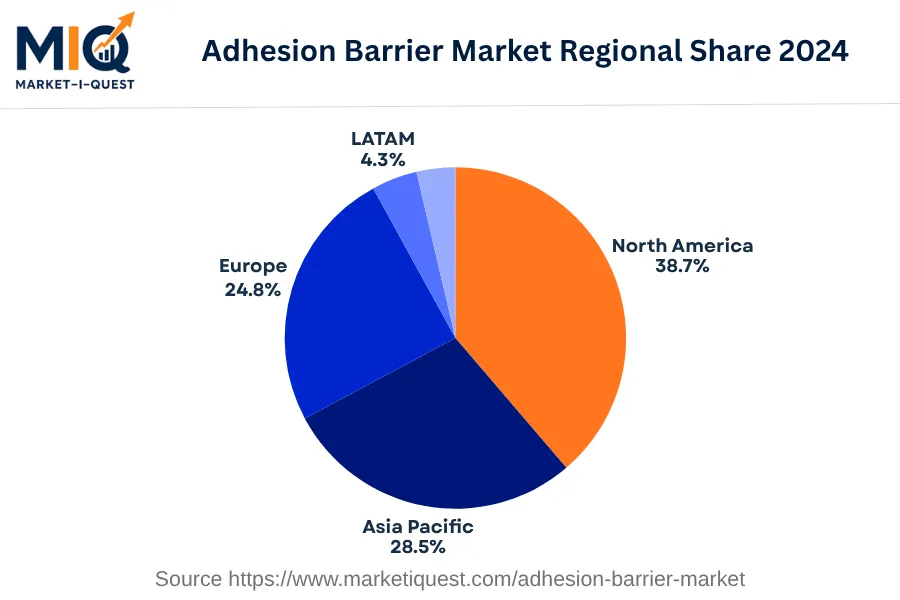
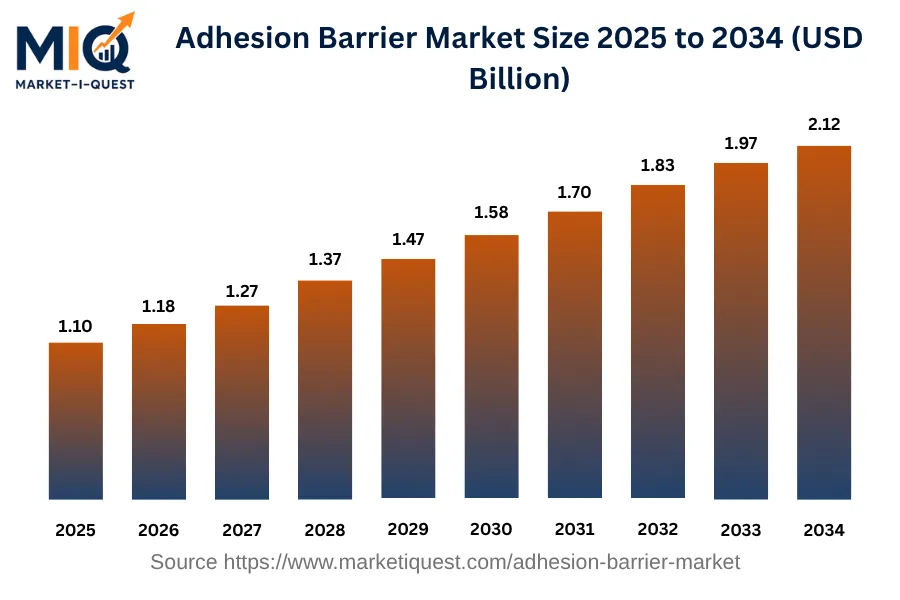
The Adhesion Barrier Market size stood at 1.02 Billion USD in 2024, increased to 1.10 Billion USD in 2025, and is projected to reach 2.12 Billion USD in 2034, growing at a CAGR of 7.6%. The market experienced growth over this period due to advancing technology in adhesion barriers and an increase in the number of surgeries requiring these barriers. Additionally, the rise in geriatric population and the accompanying increase in age-related surgeries also contributed significantly to the market growth. Lastly, awareness of these products among patients and healthcare professionals facilitated the rise in demand. The regional market shares in 2024 were: North America at 38.7%, Asia Pacific at 28.5%, Europe at 24.8%, Latin America at 4.3%, and the Middle East and Africa at 3.7%.

Key Takeaways

  • By Product - Synthetic held significant share in the market base year.
  • By Type - Film being the most growing form in various medical procedures recently.
  • By Application - Cardiovascular Surgeries catapulted into the leading position accounting for a high percentage of usage.
adhesion-barrier-market market size

Key Driving Factors

Increasing Prevalence of Chronic Diseases

The adhesion barrier market is primarily driven by the escalating prevalence of chronic diseases worldwide. Chronic conditions like obesity, diabetes, cardiovascular diseases can often lead to post-surgical adhesions. As per World Health Organization, the number of chronic disease cases are on a continual rise due to lifestyle and diet changes. The greater the number of chronic disease patients, the higher the chances of complications post surgeries that require the usage of adhesion barriers. This situation propels the increased adoption of adhesion barriers in medical procedures, thereby driving the growth in the adhesion barrier market.

Regularization of Minimally Invasive Surgeries

The recent surge in the adoption of minimally invasive surgeries is another key factor that prompts the growth of the adhesion barrier market. Minimally invasive surgical techniques, such as laparoscopy, are increasingly being used to minimize surgical complications. And, while these techniques have been greatly beneficial, they also increase the risk of inter-organ adhesions. This risk necessitates the use of adhesion barriers, which prevent the formation of such adhesions and protect patients' safety. As more healthcare providers switch to these types of surgeries, they are also likely to adopt adhesion barriers as a preventative measure, thus enforcing a positive impact on the adhesion barrier market.

Market Evolution by Timeline

2019-2023
During this period, Adhesion Barrier Market stepped onto the scene as a comprehensive solution employed extensively by surgeons to mitigate post-operative adhesion formation, majorly in North America and Europe. The majority of demand was driven by hospitals and ambulatory surgical centers. Existing suppliers launched new products, mainly based on hyaluronic acid, contributing to the supply. Regulatory bodies such as the FDA and EU MDR influenced the adhesion barrier landscape and enforced specific standards pertaining to the production, packaging, and distribution. Fixed pricing was the typical commercial model, with usual contracts being B2B purchases. However, the major challenge faced was the risk of potential healthcare-associated infections.
2024
This year saw rise in demand from Asian markets as increase in cases of abdominal surgeries necessitated the use of adhesion barriers. Launch of resorbable adhesion barriers was a noticeable trend in the supply side. The Asia-Pacific region pushed for standardized regulations similar to western counterparts. The commercial models began shifting towards volume-based contracts due to increased procurement. Safety concerns related to the use of synthetic materials and scarcity of adequately trained personnel remained the major risks. Hospitals started implementing training programs to boast this shortcoming, resulting in moderate growth of the market.
2025-2029
This period marked an increase in demand for film form adhesion barriers by surgical centers in North America. Emergence of innovative products, specifically based on Regenerated Cellulose, characterized the supply. Updating and customization of standards by regulatory bodies happened according to the advancements, while collaborations between manufacturers and hospitals facilitated research and development. Companies started providing tailored contracts as part of their commercial models catering to specific institutions' needs. Risks involved in the period included the risk of potential immunity responses caused by the use of bioabsorbable adhesion barriers.
2030-2034
Increased demand of gel form adhesion barriers among small and medium-sized hospitals in developing Asian and African markets characterized this period. Major contributors to the supply included novel polymers with improved efficiency and safety profile. Meanwhile, response to the WHO safe surgery initiative led many countries to enforce stricter policies on use and procurement of the barriers. Bundled payment models gained popularity, with return offers and discounts on bulk purchases. However, countries with limited healthcare infrastructure saw disparity in access to adhesion barriers thus presenting a continuous challenge.

Future Market Outlook

Future Opportunities

The shift towards minimally invasive surgical techniques highlights significant opportunities within the adhesion barrier market. As healthcare systems advocate for shorter recovery times and reduce hospital stays, adhesion barriers capable of improving postoperative outcomes will likely gain traction. In 2022, the World Health Organization emphasized the need for innovation in surgical care, thereby stimulating R&D in effective surgical adhesion solutions. Many medical device companies are exploring strategic partnerships with hospitals to conduct clinical trials focusing on the effectiveness of adhesion barriers. For instance, a collaboration initiated by Baxter International in 2021 involved multiple hospitals testing their newly developed product, demonstrating promising results in reducing postoperative adhesions. Moreover, emerging markets in Asia, particularly India and China, are increasingly prioritizing advanced healthcare technologies, as evidenced by the Indian government's push for improved surgical facilities in its 2023 health initiative. Investment in education and training regarding adhesion prevention methods also presents opportunities for market players. The surgeon community is placing greater emphasis on understanding the use of adhesion barriers, as revealed during the 2023 International Congress of the World Society of Emergency Surgery. Additionally, environmental sustainability is becoming a focal point, prompting manufacturers to develop eco-friendly materials used in barrier products. These trends collectively identify clear avenues for market expansion and product innovation, illustrating the potential evolution in the adhesion barrier landscape.

Segmentation Analysis

By Product

The market is divided into subsegments including Synthetic and Natural, with the Synthetic segment accounting for the largest revenue share while the Natural segment is expected to grow at the fastest compound annual growth rate (CAGR) during the forecast period.

Largest Revenue Share

Synthetic

Market Share Leader

The Synthetic subsegment presently dominates in terms of revenue generation. This superior performance is driven by a myriad of factors. Conventional industries such as automotive, packaging, construction, and electronics have a massive demand for synthetic products due to their durability, flexibility, and cost-effectiveness. Geographically, regions with intensive industrialization such as Asia-Pacific are significantly contributing to the synthetic market's solid revenue streams. Regulatory impacts are also at play. In many jurisdictions, companies focus on environment-friendly synthetic production methods, thus giving a boost to this subsegment. Customers primarily prefer synthetic products for their ability to replicate natural counterparts' functionalities with enhancements at a lower price. The purchasing criteria mostly revolve around cost, functionality, and durability, for which synthetic products often have the upper hand. The predominant sales channels are direct and distributor-based sales. Switching costs from natural to synthetic could be high since it may require revamping of production facilities, thus creating a sturdy market for synthetic products.

Fastest CAGR

Natural

Forecast Period Growth Leader

The Natural subsegment, albeit presently smaller in revenue size, holds the most promise in terms of prospective compound annual growth rate (CAGR). There are several reasons behind this anticipated surge. Firstly, the rising consumer awareness about sustainability and backlash against the harmful impact of synthetic products is pushing firms towards natural alternatives. Additionally, the increasing regulatory pressures to reduce carbon footprint serve as a catalyst for the growth of the natural subsegment. Besides, technological advancements are improving the processing and performance of natural products, ultimately making them a viable, high-quality alternative to synthetic substitutes. Moreover, purchase decisions are increasingly governed by environmental factors, thus pushing companies to invest in developing natural product lines. However, high initial investments and technology adoption barriers pose potential risks. Governments and public entities incentivize such shifts by offering grants, subsidies, and partnerships to defray such capital expenditures and transition barriers.

By Type

The market is divided into subsegments including Film, Gel, and Liquid. As of the base year 2024, Film accounts for the largest revenue share, while Liquid is expected to grow at the fastest CAGR during the forecast period.

Largest Revenue Share

Film

Market Share Leader

The Film subsegment dominates the market primarily due to its versatile qualities and broad usage across several industries including food and beverage, pharmaceuticals, cosmetic, and electronics. Film packaging provides excellent barrier properties against moisture, gases, light, and aroma, guaranteeing product integrity. Its high tensile strength and durability make it the preferred choice for manufacturers. This segment has established strong supply chains, efficient production processes, and robust regulatory adherence, contributing to its dominance. Geographic regions with mature markets such as North America and Europe contribute significantly to its revenue due to high demand. Additionally, the existing infrastructure and market practices favor film over the other types, thereby supporting the segment's revenue profile. Film's position as the subsegment with the largest revenue share is also due to high switching costs related to equipment and process modifications.

Fastest CAGR

Liquid

Forecast Period Growth Leader

Anticipated to grow at the fastest CAGR in the future, the liquid segment benefits from evolving market trends and growing technological advancements. A major driver is the increasing consumer demand for convenient and sustainable packaging solutions in markets such as food and beverage, consumer goods, and healthcare. This segment garners interest due to liquid packaging's lightness and ability to minimize waste, making it more popular among eco-conscious customers. The advent of new and more efficient production technologies promise a better economies of scale, leading to increased adoption by manufacturers. Despite these advantages, significant challenges remain, primarily on the regulatory front, possible supply chain disruptions, and initial capital expenditure requirements. Strategic partnerships within the value chain and policy support to overcome these hurdles can accelerate this segment's growth during the forecast period.

By Application

The market is divided into subsegments including Gynecological Surgeries and Cardiovascular Surgeries, with Cardiovascular Surgeries accounting for the largest revenue share while Gynecological Surgeries is expected to grow at the fastest CAGR during the forecast period.

Largest Revenue Share

Cardiovascular Surgeries

Market Share Leader

Cardiovascular surgeries dominate the segment in terms of revenue due to several factors. The primary driver is the continuous rise in the prevalence of cardiovascular diseases (CVDs) globally, underpinned by factors such as aging, unhealthy lifestyle choices, and the sharp increase in obesity levels. These factors concurrently lead to a high demand for cardiac interventions, consequently driving revenue growth in this subsegment. Moreover, technological advancements in minimally invasive procedures have led to safer and more efficient surgical outcomes, further increasing the adoption of these procedures. The cardiovascular surgeries segment is also bolstered by strong health infrastructure in developed nations and increasing investment in the healthcare sector across developing economies. It should be mentioned that stiff regulation mandates high standards, making high-quality, costly surgeries more prevalent. Focused purchasing criteria on patient safety and surgical efficacy, paired with high switching costs in surgical methodologies, also contribute to this subsegment's commanding revenue share.

Fastest CAGR

Gynecological Surgeries

Forecast Period Growth Leader

On the other hand, Gynecological Surgeries is expected to experience the fastest CAGR. The primary growth driver is the rising global awareness around women's health, leading to more frequent consultations and preventive screenings. This contributes to an increased identification of gynecological conditions requiring surgical intervention. Technological advancement has led to the development of minimally invasive and robot-assisted gynecological surgeries, acting as a positive catalyst for this market subsegment. Partnerships between healthcare providers and technology companies have also aided the adoption of these advanced surgical options. Despite facing barriers like high capital expenditure and resistance to change in traditional surgical practices, the gradual acceptance and execution of such advanced surgeries hint towards robust growth. However, potential short-term risks may include policy changes affecting healthcare funding or sudden fluctuations in device pricing, which may influence this subsegment's growth trajectory.

Competitive Analysis

Key Market Players

Manufacturers / OEMs

Johnson & Johnson
US
Sanofi
France
Baxter International
US

Key Suppliers & Raw Materials

Ashland Inc.
US
DowDuPont Inc.
US
BASF SE
Germany

Distributors, Integrators & Channel Partners

Cardinal Health
US
McKesson Corporation
US
Medtronic
Ireland

Porter’s Five Forces Analysis

This analysis evaluates the competitive environment of the Adhesion Barrier market.

Supplier Bargaining Power

Low

Limited suppliers and higher switching cost reduce supplier bargaining power.

Buyer Bargaining Power

High

Ample product availability and low switching cost results in high buyer bargaining power.

Threat of Substitutes

Medium

Alternative wound healing solutions present a moderate threat of substitution.

Threat of New Entrants

Low

High regulatory requirements and significant research and development costs hinder new entrants.

Competitive Rivalry

High

The presence of major global players leads to high competitive rivalry in the market.

Regional Analysis

Geographic market dynamics and growth opportunities across key regions

Global Market Outlook

adhesion-barrier-market market regional share

North America

In 2024, the North American Adhesion Barrier Market experienced significant advancement, primarily driven by increasing technological adoption, regulatory norms, and burgeoning demand in healthcare.

Accelerated investments in advanced adhesion barrier technologies were fueled by the escalating need to reduce post-surgical complications in major surgeries, augmenting market growth. Regulatory support, radiating predominantly from the U.S., streamlined the approval process of novel adhesion barriers, contributing to the market expansion. The high-prevalence of diseases requiring surgeries, especially in the aging population across North America, stimulated the demand for adhesion barriers.

Trends within the adhesion barrier market portrayed a clear shift towards absorbable products due to their critical use in reducing postoperative surgical adhesions. Increased buyer preference for efficient and cost-effective bioresorbable adhesion barrier solutions constituted a notable market trend. Collaborations and M&A activities gained momentum, like the acquisition of Sanofi's Synthorx by pharmaceutical giant, North America, expanded product portfolios and strengthened market presence. Mandatory adherence to stringent FDA and Health Canada policies assured the quality of products, fostering trust among users, predominantly in the healthcare sector.

Healthcare field, involving hospitals and clinics, dominated the user segment due to incessant surgical procedures in these facilities, further catalyzing the Adhesion Barrier Market in North America in 2024.

Asia Pacific

In the base year of 2024, the Adhesion Barrier Market in the Asia Pacific region characterized a thriving medical sector with substantial technological integration. Underpinning market growth were factors such as increased healthcare investments, amplified patient awareness, advances in medical technology, and the escalating prevalence of chronic diseases. For instance, increased healthcare spending in countries like China and India expedited the adoption of advanced medical technologies, fostering market growth. The evolving regulatory environment in APAC, marked by heightened stringency, further bolstered market expansion by stimulating increased product standardization and quality control in the adhesion barrier industry.

Market trends in 2024 reflected a significant shift in buyer behavior and tech advancements. A rising inclination towards minimally invasive surgeries amongst patients in Japan, South Korea, Australia, and key ASEAN markets underscored the increased uptake of bio-absorbable adhesion barriers. The market growth was also fueled by an enhanced distribution channels, with the emergence of e-commerce platforms augmenting the accessibility and convenience of procurement for end-users in the healthcare sector. Furthermore, strategic partnerships and M&As emerged as a prime development strategy, such as the joint ventures among medical device manufacturers in APAC. This improved the quality and capabilities of devices, offering an adjunct for the robust market landscape in 2024. Consequently, these drivers and trends shaped a promising Adhesion Barrier Market in the Asia Pacific region in 2024.

Europe

In 2024, Europe's adhesion barrier market remained strongly rooted in the dynamic healthcare sector. The market's growth was driven primarily by the rising frequency of surgeries, resultant adhesion complications, and the need for effective adhesion prevention measures. The increased funding in healthcare research & development (R&D) and technological advancements, especially in Germany, the United Kingdom, France, and Italy, also propelled the market. Further, the cost-efficacy of adhesion barriers, particularly in Central & Eastern Europe, and the Benelux region, stimulated demand as healthcare providers sought to minimize postoperative complications.

Parallel to these drivers, several market trends were emerging. The Nordic countries, for instance, showcased a notable inclination toward synthetic adhesion barriers due to their high effectiveness and safety. Product innovations were significant, with France and Italy leading in the development of advanced, bioresorbable adhesion barriers. Channel dynamics shifted, too, as digital platforms provided wider access to these products, particularly in Spain. Furthermore, Germany witnessed several strategic partnerships and mergers and acquisitions (M&As) among prominent healthcare companies aiming to expand their reach in the adhesion barrier market. Lastly, stringent policy enforcement, particularly in the United Kingdom, prompted the market to adhere to high-quality standards, impacting product development. Hence, the European adhesion barrier market in 2024, was a blend of demanding health conditions, innovative technologies, reshaped channels, and strict policies.

Latin America

In 2024, the Latin American Adhesion Barrier Market witnessed substantial growth due to a variety of unique factors and consumer trends. On the driver side, increasing surgical procedures, especially in Brazil and Mexico, boosted demand for adhesion barriers. As healthcare investments reached new heights in Argentina and Colombia, the adoption of advanced technologies like bio-absorbable adhesion barriers expanded the market further. Additionally, governmental regulations on surgical safety in countries like Chile and Peru introduced new opportunities for superior adhesion barrier products.

Process modifications affected the market setup significantly. An increased preference for minimally invasive surgeries was observed across healthcare providers, thereby influencing changes in adhesion barrier applications. Further, escalating awareness on postoperative complications, propelled by initiatives from health organizations, drove higher acceptance of adhesion barriers within the medical community. A shift towards online and direct-to-provider channels streamlined the distribution of these materials, while mergers and acquisitions, such as in Brazil’s healthcare tech sector, resulted in increased market consolidation. Lastly, stricter adherence to medical product standards affected the quality and variety of adhesion barriers available in the region.

In conclusion, 2024's Adhesion Barrier Market dynamics in Latin America were shaped by multifaceted drivers and evolving consumer trends, significant among them being increased healthcare investments, tech adoption, procedural evolution, and policy adherence.

Middle East & Africa

In 2024, the adhesion barrier market in Middle East and Africa affirmed a steady growth due to numerous drivers and emerging trends. Primary drivers included increased investment by regional healthcare sectors, particularly in Saudi Arabia and United Arab Emirates, and a rise in abdominal surgery procedures in Egypt and South Africa. Technological advancements, especially in synthetic adhesion barriers, alongside an increased focus on reducing post-surgical complications, uplifted demand in Kenya and Nigeria.

Simultaneously, the pronounced trend is a sharp shift towards bioresorbable adhesion barriers in large markets like Qatar and Israel, influencing others’ buying behavior. The rise in strategic partnerships and acquisitions, particularly within the healthcare and manufacturing sectors, also played a crucial role in shaping the market. Concerning policy enforcement, in Saudi Arabia, the Ministry of Health's stringent standards for product approval intensified competition among manufacturers, pushing for innovative, high-quality products.

This dual dynamic of demand drivers and evolving trends positively shaped the adhesion barrier market across the Middle East and Africa in 2024, boosting growth within the healthcare sector and permeating secondary sectors such as manufacturing.

Recent Industry Developments

Latest market innovations, product launches, and strategic initiatives

November 2025

ARC Medical released the first successful human safety data for its new liquid-based surgical barrier during a global medical conference, proving the liquid can safely prevent tissues from sticking together after an operation.

September 2025

The FDA granted official market approval for the first medical device specifically designed to treat and prevent severe tissue scarring inside the uterus.

Frequently Asked Questions