Acute Repetitive Seizures Market Snapshot

Key Players

  • UCB (Belgium)
  • Neurelis Inc. (United States)
  • Pfizer Inc. (United States)
  • Eisai Co. Ltd. (Japan)
  • Bausch Health (Canada)
  • Biocodex (France)
  • Alexza Pharmaceuticals (United States)
  • Teva Pharmaceuticals (Israel)
  • Zogenix Inc. (United States)
  • Sanofi S.A. (France)

Market Size

Base Year 2024
$5.28 Bn
CAGR
7.4%
Forecast 2034
$10.78 Bn

Market Segments

By Product
  • USL-261
  • NRL-1
  • AZ-002
  • Diastat Rectal Gel
  • Others
By Route of Administration
  • Oral
  • Injectable
  • Others

Market Dynamics

Drivers
  • Rising global epilepsy prevalence
  • Increasing therapeutic advancements
Restraints
  • Limited treatment options
  • High cost of medication
Opportunities
  • Emerging epilepsy treatments
  • Increasing healthcare expenditure

Market Size

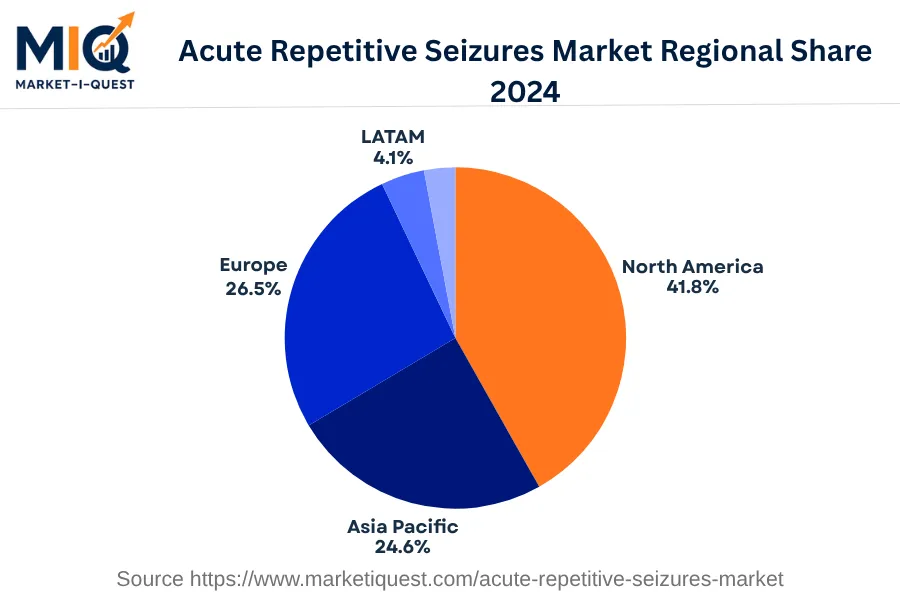
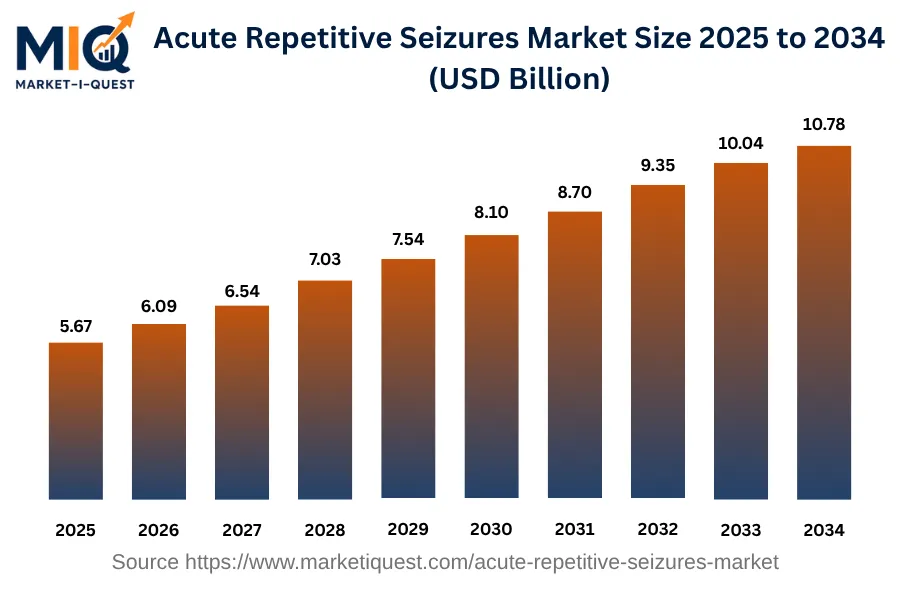
The Acute Repetitive Seizures market was valued at $5.67 billion in 2025 and it is projected to reach a valuation of $10.78 billion by 2034, reflecting a CAGR of 7.4%. Starting from a market size of $5.28 billion in 2024, the sustained surge in market value can be attributed to increased emphasis on the development of advanced treatments for acute repetitive seizures and hike in investment in robust clinical studies. Besides, continual technological innovations in the healthcare sector also fuelled the market growth. In 2024, the market showed a distinct regional share mix - North America led with a contribution of 41.8%, followed by Europe at 26.5%, and Asia Pacific with a 24.6% share. The regions witnessing the least market share were Latin America (LATAM) at 4.1% and the Middle East and Africa (MEA) at 2.96%.

Key Takeaways

  • By Product - NRL-1 held a substantial position in 2024 marking a durable preference in acute repetitive seizures treatment.
  • By Route of Administration - Oral route led the market signifying its widely accepted method of drug administration in 2024.
acute-repetitive-seizures-market market size

Key Driving Factors

Increased Approval of Novel Treatments

In recent years, regulatory bodies, principally the U.S. Food and Drug Administration, have granted approval to several novel drugs for the treatment of acute repetitive seizures (ARS). These authorized treatments offer better clinical outcomes, opening up an effective way to manage ARS, thereby making for a crucial driver for the growth of the ARS market. Fresh treatments receive attention from clinicians, patients, as well as their caregivers, as they strive to improve the quality of life for patients. This shift towards approved novel therapies is creating a rising demand for these new treatments, thereby driving the Acute Repetitive Seizures market.

Growing Awareness about ARS and Its Management

Growing awareness among healthcare professionals, patients, and the public about the debilitating nature of ARS and the imperative for early and effective management is a clear driving force behind the Acute Repetitive Seizures market. Patient advocacy groups, healthcare institutions, and government initiatives are playing a significant role in this effort, providing education about the severity of ARS and the potential complications if left unmanaged. Increased knowledge leads to more proactive approaches to control the condition, including using medications that are specifically approved for treating ARS. This awareness creates an escalation in the uptake of ARS-related products, which contributes to the expansion of this market.

Market Evolution by Timeline

2019-2023
In this period, the primary demand came from hospitals and research organizations in North America and Europe as they sought safe and effective antiepileptic drugs. Use cases extend from emergency departments to at-home use by caregivers. In supply, the FDA approval of UCB's nasal spray NAYZILAM in 2019 provided a new option for acute repetitive seizure treatment. Nasal spray application indicates integration maturity, with focus on rarely invasive, convenient administration methods. During this time, strict international regulations for drug approvals and clinical trials were significant. Commercially, biopharmaceutical contracts often involved partnerships between research institutions and corporations. The major risk faced was the high attrition rates in CNS drug development, indicating possible delays or discontinuation of potential treatments due to strict safety checks and efficacy standards.
2024
In 2024, developing countries saw an increase in demand as increased awareness of acute repetitive seizures led to more diagnosis. Supply saw the emergence of more personalized medicine, targeting individual's specific genetic mutations causing the seizures. In the policy area, loosening regulations for genetic testing were seen, allowing more accessible diagnostic practices. On the commercial front, pricing models shifted towards value-based pricing, taking into account the effectiveness of the treatment. The major risk this year were the ethical considerations of genetic testing, which were mitigated by comprehensive consent processes and privacy laws.
2025-2029
In the latter part of the decade, demand surged in hospitals and clinics in Asia Pacific tied to increased healthcare expenditure and awareness. Supply saw more use of wearable devices for seizure detection, showing a trend towards non-invasive monitoring technologies. In terms of policy, the HIPAA Act was enforced more rigorously ensuring patient data privacy amidst increased use of technology. Commercially, partnerships evolved to include technology companies in the development of wearables. Interestingly, the risk of misdiagnosis through wearable technology surfaced, and was typically addressed through rigorous testing and calibration of devices.
2030-2034
Demand in this timeframe came from a mix of hospitals, care homes, and households globally as prevalence of epilepsy increased in aging populations. In terms of supply, advancements in Machine Learning and AI enabled better predictive models for seizures, thus aiding in prevention strategies. Existing regulatory policies adapted to cover AI-based models ensuring effective and safe use. Commercially, subscription models became popular for AI predictive systems. Risks in these years centered around accuracy and reliability of AI prediction, with false upwards or downwards prediction having critical consequences. Providers mitigated this through continuous AI monitoring and iterative learning models.

Future Market Outlook

Future Opportunities

Looking forward, the acute repetitive seizures market presents pivotal opportunities due to demographic shifts and increasing research interest. The World Health Organization reported in 2022 that 50 million people globally are affected by epilepsy, drawing attention to the urgent need for innovative treatments and management solutions in neurology. Countries like Canada and the United Kingdom are experiencing a surge in clinical trials exploring new anticonvulsants, driven by an increasing recognition of treatment-resistant epilepsy. In 2023, initiatives like the NIH’s NeuroNext program actively support research into novel therapeutic methods, emphasizing the incorporation of advanced genetic testing in treatment protocols. As personalized medicine gains traction, there will be heightened demand for individualized therapies aligned with genetic profiles. Furthermore, the rise of telehealth platforms spurred by the pandemic has encouraged healthcare providers to incorporate digital health solutions into routine care, thus opening avenues for remote monitoring tools. Collaborative research networks are forming across nations, including the United States and Australia, to enhance data sharing and promote dialogue among experts, paving the way for comprehensive understanding in seizure management. Such efforts represent a shift in addressing not only symptoms but also underlying causes of epilepsy through tailored approaches. The confluence of technological and clinical advances presents robust prospects for stakeholders aiming to address the unmet needs of patients with acute repetitive seizures in the evolving healthcare landscape.

Segmentation Analysis

By Product

The market is divided into subsegments including USL-261, NRL-1, AZ-002, Diastat Rectal Gel, and Others. NRL-1 accounted for the largest revenue share while AZ-002 is expected to grow at the fastest CAGR during the forecast period.

Largest Revenue Share

NRL-1

Market Share Leader

NRL-1 leads the pack in terms of revenue, informed by its superior credibility and wide acceptability in the market. It effectively addresses the needs and expectations of consumers, creating a strong customer base. Furthermore, the regulatory environment favors NRL-1, and with little regulatory uncertainty, the subsegment is able to sustain its significant market share. Geographically, its wide distribution network allows it to tap into various promising markets, further enhancing its revenue stream. Its popularity is reinforced by customer purchasing criteria that socially validate NRL-1's effectiveness and value proposition. The price and ease of access also play significant roles in its leading position. In an industry where switching costs can be high, NRL-1 benefits from customer loyalty and the reluctance to switch to uncertainty. Lastly, NRL-1's effective use of both online and offline marketing channels contributes to its substantial market reach, thus compounding its revenue lead.

Fastest CAGR

AZ-002

Forecast Period Growth Leader

AZ-002 is predicted to be the fastest-growing subsegment in the market, driven by several factors. Technological advancements have allowed AZ-002 to overcome conventional constraints, leading to increased adoption rates. The commitment of capital expenditure towards research and development initiatives by innovative companies, along with strategic partnerships aimed at improving product efficiency and differentiation, have also significantly propelled growth. However, there are some challenges to the growth of AZ-002. Adoption barriers exist primarily due to the lack of awareness and understanding of the product's technicalities, causing hesitation among potential customers. Moreover, near-term risks, such as sudden regulatory changes and potential market saturation, could slow growth. Despite these potential challenges, the forecasted growth of AZ-002 remains strong given its novel application areas and the rapid increase in its customer base, predicted due to partnerships and continuous technological enhancements.

By Route of Administration

The market is diversified by route of administration, with subsegments including Oral, Injectable, and Others. The Oral subsegment accounted for the largest revenue share while the Injectable subsegment is anticipated to expand at the fastest compounded annual growth rate during the forecast period.

Largest Revenue Share

Oral

Market Share Leader

The oral subsegment represents the highest revenue share in the base year of 2024. This leadership position is mainly due to convenience and ease of administration as compared to other routes like injectables. Most people, especially in the geriatric population, prefer an oral route of administration due to fear or discomfort from injections. Oral dosage forms such as tablets and capsules have a comprehensive range of applications, from over-the-counter drugs to prescribed medicine. Regulatory bodies across the globe have laid down guidelines specifying the quality and safety standards for oral drugs, further ensuring their extensive use. Moreover, companies prefer the oral route for their medication, as investing in this space positions them to potentially offer a better patient experience, thereby driving product uptake and improving supply side dynamics. Therefore, with broader customer acceptance and easy purchasing criteria, the oral subsegment leads the market in terms of revenue.

Fastest CAGR

Injectable

Forecast Period Growth Leader

The Injectable segment is forecasted to be the fastest-growing route of administration. The primary driver is the growing demand for biologics and biosimilar drugs which usually cannot be administered orally and instead require injections. Biologics have become a key therapeutic solution for various chronic diseases, including diabetes and cancer, leading to a higher demand for injectable administration. Furthermore, technological advances are reducing the barriers for adoption, such as pain and fear of injection, via developments in self-injection devices like pen injectors and autoinjectors. Government policies encouraging home healthcare, capex in advanced medical infrastructure, and strategic partnerships among pharmaceutical companies are catalysts for this growth. Yet, possible near-term risks include rigorous regulatory guidelines for the approval process and adverse events associated with injectable drugs.

Competitive Analysis

Key Market Players

Manufacturers / OEMs

UCB Pharma
Belgium
Pfizer Inc.
US
Eisai Co., Ltd
Japan

Key Suppliers & Raw Materials

Lonza Group AG
Switzerland
BASF SE
Germany
DuPont
US

Distributors, Integrators & Channel Partners

Cardinal Health
US
McKesson Corporation
US
Medline Industries
US

Porter’s Five Forces Analysis

Analysis of the Acute Repetitive Seizures market, exploring competitive dynamics and industry structure.

Supplier Bargaining Power

Medium

Controlled by few pharmaceutical companies; raw material sourcing can impact costs.

Buyer Bargaining Power

Low

Critical nature of condition and lack of alternative solutions lower buyer power.

Threat of Substitutes

Low

Few substitutes are present due to the highly specialized nature of treatment.

Threat of New Entrants

High

High profitability and demand may attract new firms, despite high R&D costs.

Competitive Rivalry

High

Intensity heightened by presence of major pharmaceutical corporations vying for market share.

Regional Analysis

Geographic market dynamics and growth opportunities across key regions

Global Market Outlook

acute-repetitive-seizures-market market regional share

North America

In 2024, the North American market for Acute Repetitive Seizures (ARS) underwent vital maneuvers. Stricter FDA regulations led to an uptick in demand for higher-quality therapeutics. Technology adoption by healthcare bodies in the U.S., Mexico, and Canada induced advancements in ARS diagnosis, fortifying the market's health. Investment in research and development spurred the production of comprehensive treatment strategies along with careful managing of ARS supply dynamics. Drug pricing, although complex, saw alterations due to regulatory pressures, impacting overall market dynamics.

Notably consumer impressions influenced buying behavior, signaling a shift towards more personalized and home-based ARS care. This trend, articulating the importance of medical device manufacturers in developing at-home seizure prediction tools, reflected significant inroads. The announcement of novel partnerships that range from pharmaceutical firms to digital tech companies expanded channel dynamics, fueling the overall ARS market in North America. Stringent enforcement of health policies pertaining to ARS treatment adhered to a stricter standard, which bolstered trust in the market. Amidst these transformations, multi-sector collaborations evolved as a key trend, witnessing active participation from the enterprise, healthcare, and government sectors in an attempt to add value to ARS management. Hence, in 2024, the North American ARS market stands amplified, demonstrating valuable progressions fashioned by influential drivers and market trends.

Asia Pacific

In the base year 2024, the Acute Repetitive Seizures (ARS) Market witnessed significant growth in the Asia Pacific region. Major drivers included increased investment in healthcare, higher incidence of epilepsy, and advancements in seizure therapeutics. Countries such as China and India experienced a surge in ARS cases due to a rapidly aging population and increased stress levels, contributing to demand. Japan and South Korea's government policies favored improved diagnosis and treatment of ARS, while robust investment in ARS research propelled the market in Australia.

Key trends observed were a rise in technological adoption for diagnostic tools and increased use of personalized treatments in healthcare sectors. Buyer behavior shifted towards advanced seizure therapeutics due to better efficacy and limited side effects. We noticed increased collaborations between pharmaceutical companies, healthcare providers and research institutions aimed at expediting drug development. Pharmaceutical giants like Eisai and UCB had significant stake in the markets of Japan, South Korea and Australia. Compliance with regulatory standards such as Japan’s Pharmaceuticals and Medical Devices Agency's guidelines became essential as governments enforced stricter rules to ensure drug safety. Consequently, the ARS market in the Asia Pacific saw measurable growth, owing to a mutually inclusive circle of advanced treatment options, increased disease incidence and substantial healthcare investment. The influence of these factors was particularly observed across healthcare, research and pharmaceutical sectors.

Europe

In 2024, the Acute Repetitive Seizures (ARS) market in Europe demonstrated a dynamic landscape. Multiple factors drove the market's evolution such as increased healthcare investment in countries like France and Germany, leading towards enhanced ARS diagnosis and treatment accessibility. The UK's innovative regulations promoted increased technology adoption, thus shifting supply dynamics in favour of more advanced ARS treatment options. The competitive pricing of novel ARS drugs implemented particularly in Spain and Italy spurred market demand.

Trends generally revolved around the modification of customer behavior concerning ARS treatment. Patients across Germany, Nordics, and Benelux increasingly seek personalized treatment plans, prompting the healthcare sector to adapt. In Central and Eastern Europe, a trend of partnerships and M&As between major pharmaceutical companies and local entities was discernible, further driving the proliferation of improved ARS management strategies. The shift towards digital health platforms for ARS management was another key dynamic, predominantly visible in the United Kingdom and France. Italy witnessed the rigorous policy enforcement to maintain the quality of ARS drugs in the market.

Overall, in 2024, increased investment, regulatory changes favoring tech adoption, competitive pricing, partnerships and M&As, and digitalization largely guided the state of the ARS market across Europe, affecting retail, healthcare, and pharmaceutical sectors.

Latin America

In 2024, the Acute Repetitive Seizures (ARS) market in Latin America was shaped by numerous factors. Increasing prevalence of epilepsy, a major cause of ARS, significantly drove demand for relevant medications, especially in large countries like Brazil, Mexico, and Argentina. Greater investment was seen in healthcare and drugs, as governments like Colombia and Chile prioritized neurological disorders. Rapid technological adoption in countries such as Peru also contributed towards a more robust diagnostic infrastructure, facilitating early detection of ARS.

Consumer behavior shifted as ARS awareness campaigns, particularly in Mexico and Brazil, resulted in increased healthcare consultations and compliance with treatment regimes. There was also a surge in remote consultations and the use of telemedicine due to technological advancements, allowing a more efficient management of ARS patients.

Strategic partnerships and mergers between pharmaceutical companies and local distributers increased, with a primary focus on enhancing drug delivery procedures and supply chain efficiency. In Brazil and Argentina, policy enforcement became stricter, with regulations being implemented to secure affordable access to ARS medications. The primary sectors involved were healthcare, pharmaceuticals and technology, leveraging digital platforms for diagnostics and treatment. In 2024, the LATAM ARS market faced dynamic shifts driven by demand, investment, technological progression, and robust policy enforcement.

Middle East & Africa

In 2024, the Acute Repetitive Seizures (ARS) market in the Middle East and Africa showed significant activity. Health infrastructure investments, especially in medically advanced countries like Saudi Arabia, UAE, and Israel, drove increased access to epileptic treatments. Additionally, efforts to deepen understanding of neurologic disorders among healthcare providers in these regions fostered demand for ARS-related therapeutic solutions. Furthermore, collaborations among the government sector, healthcare, and pharmaceutical industries enhanced distribution networks, making ARS therapies more accessible.

Shifts in awareness about ARS, fuelled by health education initiatives in Nigeria, Kenya, and South Africa, positioned these countries as emerging markets for epileptic treatments. Enhanced digital healthcare services, particularly noted in Egypt and Qatar, presented a new channel for ARS treatments. Qatar's National Health Strategy 2018-2022, aimed at digitizing health services, accelerated the adoption of telemedicine, facilitating remote consultations for seizure management. Israel, a global leader in health tech, showcased significant partnerships offering advanced technological solutions for ARS management.

However, substantial disparities in access to ARS treatment in rural and underprivileged urban areas, notably in regions lacking adequate healthcare infrastructure, presented a challenge. Despite these hurdles, the ARS market in the Middle East and Africa exhibited stepped-up activity, presenting opportunities for focused investments and partnerships in 2024.

Recent Industry Developments

Latest market innovations, product launches, and strategic initiatives

December 2025

Real-world data utilizing digital seizure diaries was presented at the American Epilepsy Society Annual Meeting. This data highlighted the high prevalence of prolonged seizures and validated the need for faster-acting, at-home treatments to manage seizure clusters before they escalate.

May 2024

An international expert panel published new consensus recommendations that introduced "rapid and early seizure termination" (REST) as a new treatment strategy. The goal is to treat seizure clusters immediately at home to prevent them from progressing into a severe, prolonged medical emergency.

Frequently Asked Questions